
Introduction
In the vast landscape of logistics and transportation, commercial trucks rearview mirror warnings emerge as a crucial topic that impacts safety and efficiency. With an increase in road traffic and the complexity of navigating diverse terrains, understanding the importance of side rearview mirror warnings on commercial trucks is essential. These warnings serve as a critical buffer against potential accidents, alerting drivers to blind spots and obstacles that might not be visible in standard mirrors. Without these warnings, the risks escalate dramatically-leading to accidents that not only threaten the lives of drivers and other road users but can also result in significant financial losses for logistics companies due to damaged goods, legal liabilities, and increased insurance costs.
As a pivotal resource for logistics professionals, this article will delve into the mechanics and advantages of having rearview mirror warnings on commercial trucks. We will explore the technology behind these warnings and how they can significantly mitigate risks on the road. By shedding light on this vital safety feature, we aim to provide insights that logistics and delivery vehicle owners can leverage to enhance their operational safety and efficiency. For further understanding of the impact of trailer orders on truckload margins, check out our article on trailer orders impact truckload margins as we address a related aspect of commercial truck operations.

Importance of Side Rearview Mirror Warnings in Commercial Trucks
The inclusion of side rearview mirror warnings in commercial trucks is crucial for multiple reasons, including road safety, regulatory compliance, and accident prevention. These mirrors are essential tools that aid truck drivers in maintaining awareness of their surroundings, especially in busy logistics and delivery environments where the risk of accidents is elevated.
Enhanced Road Safety
Side rearview mirror warnings serve as a lifesaving feature by significantly improving the driver’s field of vision. According to the National Highway Traffic Safety Administration (NHTSA), incidents involving trucks are often linked to blind spots that can be mitigated through proper mirror usage. Their warnings are particularly vital during maneuvers such as lane changes, turns, or reversing, where visibility is restricted. With data indicating that nearly 20% of truck accidents are associated with visibility issues, the adoption of effective mirror technology becomes paramount for improving road safety, thereby benefiting both drivers and pedestrians alike.
Cost-Effectiveness Through Accident Prevention
Investing in technology that includes enhanced side rearview mirror warnings ultimately leads to accident prevention, reducing costs associated with vehicle repairs, insurance premiums, and potential legal liabilities. Statistics reveal that the presence of side mirrors and their warnings can vastly decrease the likelihood of accidents occurring in urban environments, where tight spaces and heavy traffic create challenging conditions. In fact, the efficiency of these mirrors has been correlated with a 65% reduction in incidents attributed to confusion in proximity or direction.
Regulatory Compliance
Moreover, compliance with regulatory standards mandates that commercial trucks feature mirrors designed accurately to meet safety requirements. The FMVSS 111 standard requires specific measurements for truck mirror sizes to ensure driver visibility. Non-compliance can lead to penalties and increased operational costs for logistics companies. Therefore, side rearview mirror warnings not only improve safety but also help companies adhere to necessary regulations, ultimately enhancing overall operational efficiency.
Connecting to Logistics and Delivery Industries
In the logistics and delivery sectors, where timely and safe transportation is critical, incorporating advanced safety features such as side rearview mirror warnings is imperative. Fleet operators who prioritize safety measures can expect smoother operations, reduced incidents, and a positive reputation among clients and stakeholders alike. Their commitment to accident prevention through enhanced safety features proves beneficial not just for their bottom line but also contributes to a culture of safety within the industry.
By recognizing the significance of side rearview mirror warnings, logistics professionals can implement strategies to promote road safety and compliance, substantially lowering their risk of accidents and elevating the standard of transportation safety throughout their operations. For more insights on improving safety measures in your fleet, learn more about industry trends.
Ultimately, the installation and proper use of side rearview mirror warnings manifest a proactive approach to safety, making them indispensable in securing a sustainable and legally compliant trucking operation.
Comparing Side Rearview Mirror Warning Technologies for Commercial Trucks
In the evolving field of commercial trucking, side rearview mirror warning technologies are crucial for ensuring safety on the roads. Below is a detailed table showcasing various technologies available for these warnings, including their pros and cons:
| Technology | Pros | Cons |
|---|---|---|
| Side Mirror Cameras | – Improved visibility eliminating blind spots – Enhanced safety during lane changes – Better image clarity in poor weather – Reduced aerodynamic drag, improving fuel efficiency |
– High installation costs – Potential technical issues (image lag or dirt) – Drivers may struggle with distance perception compared to mirrors |
| Blind Spot Detection Systems | – Alerts drivers to nearby vehicles in adjacent lanes – Reduces accidents caused by blind spots – Uses radar and camera technology to provide precise alerts |
– Risk of ‘alert fatigue’ leading to ignored warnings – Regular maintenance required for efficiency – Calibration necessary for accuracy |
| Cross-Traffic Alerts | – Alerts drivers of approaching traffic while reversing – Enhances situational awareness for safer maneuvering |
– Can lead to distraction if alerts are too frequent – May require training to fully utilize functionality |
This framework enables logistics and freight companies to choose the right technology that suits their operational needs while increasing safety on the road. For a deeper understanding of the impacts of such technologies, you can learn more about the latest trends in trucking technology.
Conclusion
With the present advancements in warning technologies, commercial trucks are becoming safer and more efficient. By evaluating options such as side mirror cameras and blind spot detection systems, fleet owners can significantly enhance their operational safety and efficiency.
Regulations Governing Side Mirror Warnings for Commercial Trucks
In the logistics and construction industries, compliance with regulatory standards for side mirrors on commercial trucks is crucial for ensuring safety on the roads and minimizing accident risks. Several federal and international regulations govern the requirements for these mirror systems.
U.S. Regulations
In the United States, the Federal Motor Carrier Safety Administration (FMCSA) mandates specific rules regarding mirrors for commercial trucks. According to 49 CFR Part 393.65, each commercial motor vehicle (CMV) must possess at least two side mirrors: one on each side of the truck cab, in addition to a rearview mirror to provide direct rearward visibility. These mirrors must be positioned and adjusted correctly to give a clear view of adjacent highway traffic lanes and to extend visibility at least 200 feet behind the vehicle. Failure to comply may lead to vehicles being declared ‘out-of-service’ during inspections, resulting in both operational setbacks and fines.
International Standards
On an international scale, regulations can vary significantly. For instance, the European Union Regulation (EU) No 167/2013 requires heavy-duty vehicles to be equipped with mirrors that meet certain safety standards, including the ECE R46 specifications, which ensure adequate optical performance and adherence to safety requirements. These regulations stipulate that mirrors must allow for a sufficient field of view, especially in urban settings where pedestrians and cyclists are present.
Canadian Standards
In Canada, similar standards are enforced through the Motor Vehicle Safety Regulations by Transport Canada. These regulations stipulate that all commercial trucks must have adequately positioned side mirrors that allow drivers to clearly see both behind and beside their vehicles. Notably, these mirrors must conform to the CSA Z96 standard, ensuring that they provide unobstructed views and remain functional under all operational conditions.
Best Practices for Compliance
Apart from the mandatory requirements from federal and international authorities, operational best practices suggest utilizing a combination of different mirror types. The National Highway Traffic Safety Administration (NHTSA) recommends employing various mirrors, such as wide-angle and lower-mounted supplemental mirrors, to build a comprehensive view that eliminates blind spots. Enhancing mirror systems to include integrated designs not only fulfills compliance but also significantly improves road safety by allowing drivers to maintain better awareness of their surroundings.
By adhering to these regulations and embracing best practices in truck safety compliance, logistics and construction companies can enhance their operational safety and ensure that their fleets adhere to necessary transport regulations. For more insights on truck safety compliance, check out our detailed guide on truck safety regulations.
“The side rearview mirrors on commercial vehicles are not optional safety features-they are critical for detecting blind spots and monitoring traffic in adjacent lanes. A driver who fails to use these mirrors properly is significantly increasing their risk of a sideswipe or lane-change collision.” – Dr. Alan J. Maki, senior safety analyst at the Commercial Vehicle Safety Alliance (CVSA).
Potential Costs of Not Having Side Rearview Mirror Warnings
The absence of side rearview mirror warnings in commercial trucks introduces significant financial risks for logistics and delivery companies. These risks reflect both the direct costs associated with accidents and the indirect costs stemming from operational inefficiencies and increased insurance premiums.
Direct Costs of Accidents
According to recent research, the average cost of a truck accident exceeds $87,000 for medium and heavy truck crashes. Furthermore, non-fatal injury incidents can soar to over $304,000 in costs. When these accidents occur, they not only affect the immediate parties involved but also create a ripple effect throughout the logistics chain, leading to extended periods of downtime and increased expenses for the companies involved.
Impact on Operations
Logistics companies face substantial operational challenges in the aftermath of truck accidents. Data indicates that accidents result in an average operational downtime of over 3 days. This downtime translates directly into missed deliveries, decreased customer satisfaction, and potential loss of contracts. Moreover, the need for rerouting can strain resources, forcing companies to allocate additional capital towards securing alternative transportation methods.
Increased Insurance Premiums
With increased accident rates, companies are likely to see a rise in their insurance premiums. Insurance claims associated with truck accidents can reach into the hundreds of thousands of dollars, thereby affecting the overall profitability of these companies. The legal and administrative costs tied to processing these claims further inflate expenses.
Diagramming the Financial Implications
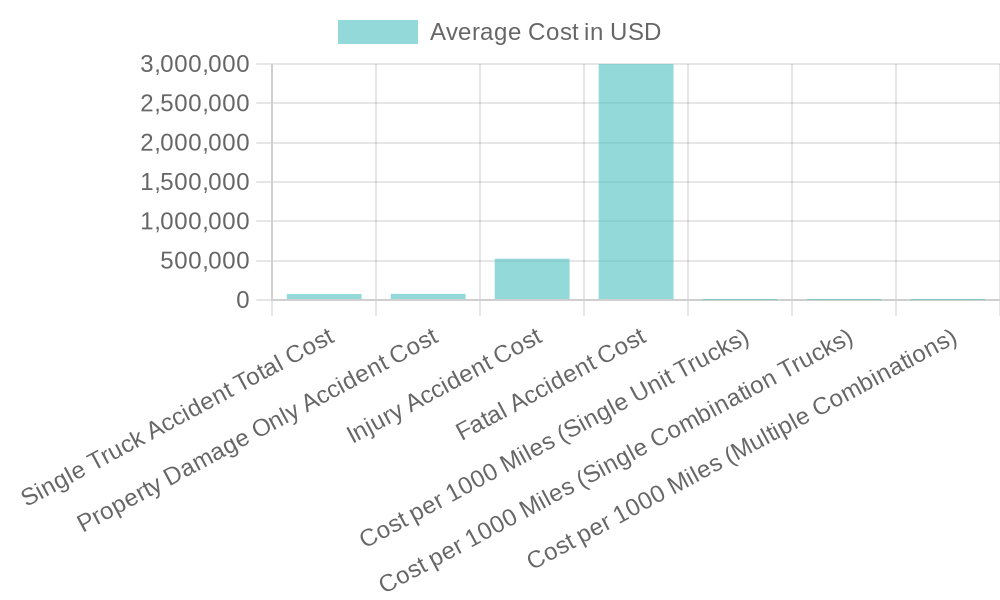
Figure – Average Costs of Truck Accidents
Here, we can see a breakdown of the costs associated with various types of truck accidents, from minor property damage to fatal accidents. This data underlines the extensive costs that logistics companies absorb in the event of accidents.
Conclusion
In summary, the costs of truck accidents manifest not only in the form of immediate repair and medical bills but significantly through higher operational costs, increased insurance premiums, and diminished reliability in service. Investing in safety features such as side rearview mirror warnings is crucial for logistics companies aiming to mitigate these risks.
For further insights on how these financial implications unfold in your operations, consider reading about the impact of logistics efficiencies on profitability and exploring ways to enhance your fleet’s operational safety and reliability.
Accident Statistics Related to Mirror Warnings in Commercial Trucks
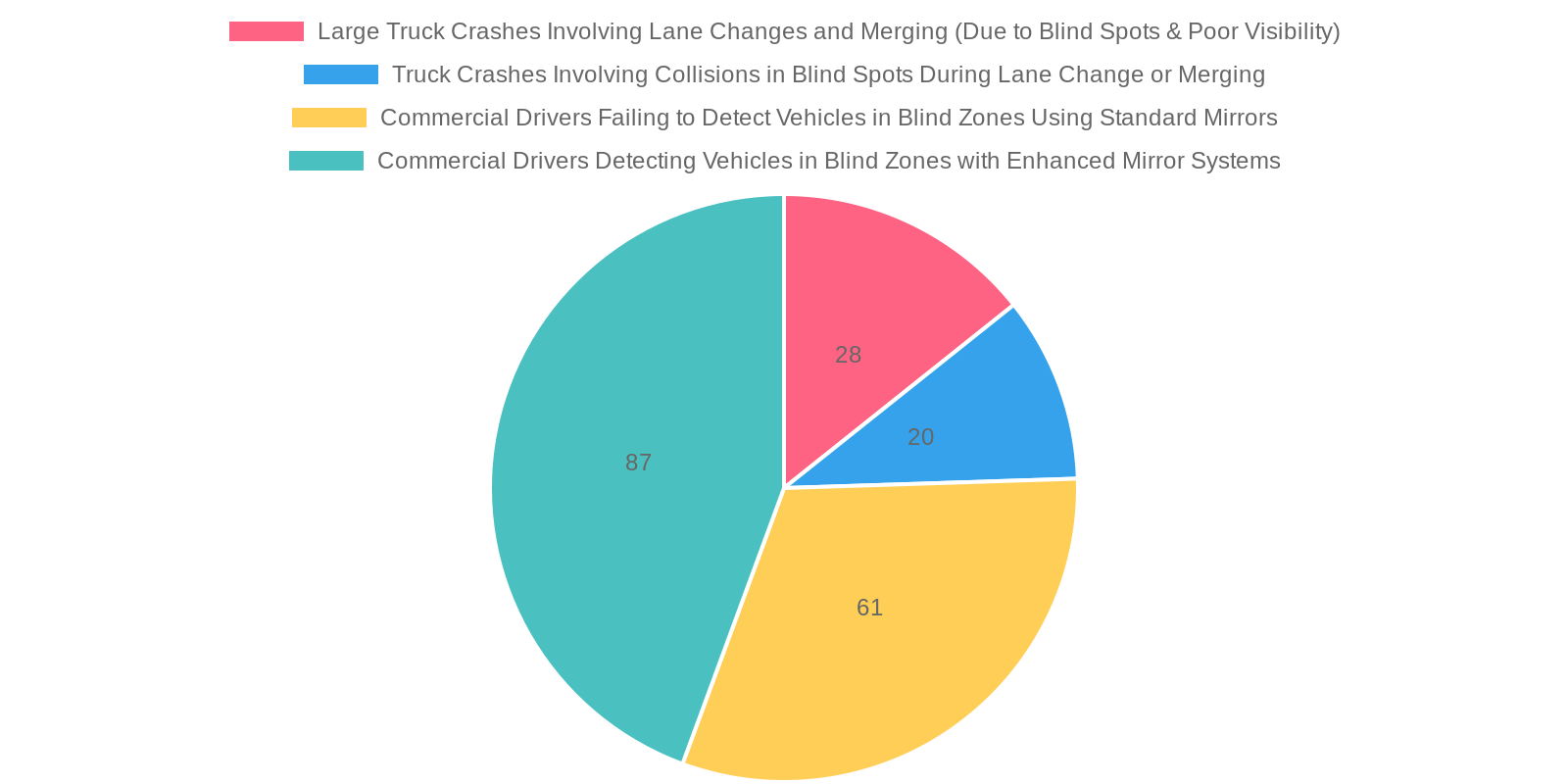
This chart highlights critical statistics surrounding accidents related to commercial trucks that lack proper mirror warnings, emphasizing the need for enhanced safety measures.
Key Statistics:
| Category | Percentage |
|---|---|
| Large Truck Crashes Involving Lane Changes and Merging (Due to Blind Spots & Poor Visibility) | 28% |
| Truck Crashes Involving Collisions in Blind Spots During Lane Change or Merging | 20% |
| Commercial Drivers Failing to Detect Vehicles in Blind Zones Using Standard Mirrors | 61% |
| Commercial Drivers Detecting Vehicles in Blind Zones with Enhanced Mirror Systems | 87% |
Sources:
These statistics conclusively demonstrate the risks faced by drivers and other road users when proper mirror warnings are not utilized. Being proactive in addressing these issues is crucial for enhancing safety and reducing accidents.
Key Benefits of Implementing Side Mirror Warnings in Commercial Trucks
Equipping commercial trucks with side rearview mirror warnings presents a myriad of safety advantages, making it a necessity for logistics companies striving for enhanced safety in their operations. Below are the core benefits of adopting these effective solutions:
1. Improved Visibility
Side mirror warnings play a crucial role in enhancing the overall visibility for truck drivers. Traditional mirrors can create blind spots, posing significant risks during lane changes and turns. Advanced side view technologies, such as electronic mirrors, provide a clearer view of the surroundings by eliminating blind spots. This improved visibility is particularly vital in urban settings where cyclists and pedestrians are frequently encountered.
2. Enhanced Safety Features
Integrating side mirror warnings with technologies such as Side Protection Assist can lead to a reduction in accidents involving vulnerable road users by up to 50%. The system leverages radar sensors to detect objects and trigger warnings, allowing drivers to be alerted of potential hazards ahead and facilitating safer maneuverability. Studies show these systems can also decrease serious injuries in related accidents by over 40%.
3. Driver Alertness
By consolidating critical warnings in one location, side mirror warnings minimize driver distraction. This system uses multi-stage alerts that can include visual indicators and voice commands, ensuring that drivers can respond quickly to potential dangers without diverting their attention from the road. Promoting constant awareness among drivers is essential for maintaining safety on the highways.
4. Economic Efficiency
While the initial investment in advanced side mirror warning systems may seem substantial, the long-term financial benefits can be significant. With fewer accidents, the costs associated with vehicle repairs, insurance claims, and liability can decrease, leading to lower operational costs. Moreover, technologies such as MirrorCam improve aerodynamics, which can reduce fuel consumption, offering an additional layer of cost savings.
5. Regulatory Compliance and Public Image
As safety regulations become stricter, incorporating side mirror warnings enables logistics companies to comply with the latest safety mandates. Furthermore, demonstrating a commitment to safety enhances the company’s reputation, contributing positively to its public image. Adoption of such safety measures reflects corporate responsibility and prioritizes the well-being of drivers and the public.
In conclusion, the integration of side mirror warnings in trucks not only enhances safety but also acts as an effective solution to improve operational efficiency and regulatory compliance. For further insights on logistics solutions and safety enhancements, explore our recent articles and learn about regulatory updates.
Conclusion
In the realm of commercial trucking, the significance of side rearview mirror warnings cannot be overstated. These warnings are not just regulatory benchmarks but pivotal safety enhancements that protect drivers, pedestrians, and fellow road users alike. The presence of side mirror warnings assists truck drivers in minimizing blind spots and improves awareness during crucial maneuvers such as lane changes and turning. Research indicates that effective use of warning systems can significantly reduce accident rates involving large vehicles, addressing critical safety concerns in the industry. As a logistics or construction enterprise leader, you owe it to your fleet and your community to prioritize such safety features that can literally mean the difference between life and death on the road.
At Summit Fairings, we understand the importance of safety in commercial trucking. By investing in safety-enhancing modifications, you not only comply with regulations but also elevate your ride to new standards of safety and performance. Transform your machine with state-of-the-art features that ensure your drivers are not only informed but also protected against potential hazards. Visit Truck Plus today to explore our range of solutions that are designed to enhance your truck’s performance and safety standards. Don’t wait-make the transition to a safer, more reliable trucking operation today!