
In the ever-evolving world of logistics, construction, and mining, understanding the metrics that govern your industry is crucial-especially when it comes to knowing the number of licensed commercial trucks in Minnesota. As of December 31, 2023, the Minnesota Department of Transportation reported a staggering 397,682 licensed commercial trucks. This vital statistic is not just a number; it represents the opportunities for fleet expansion and operational effectiveness that industry leaders strive to capitalize on. Whether you’re a logistics and freight company owner, part of a procurement team in construction or mining, or a small business owner managing a delivery fleet, having insight into these figures can directly influence your strategic decisions. Ready to enhance your fleet’s capabilities? Explore how Summit Fairings products can help you maintain efficiency and amplify your operational success.
Understanding Commercial Truck Licensing in Minnesota
In Minnesota, the process of obtaining a commercial truck license is crucial for businesses involved in logistics and construction. A commercial driver must possess a Commercial Driver’s License (CDL) issued by the Minnesota Department of Public Safety (DPS). To apply, individuals must meet specific age requirements, pass a vision and knowledge test, and complete relevant medical examinations. Depending on the vehicle type, various classifications of CDLs are available-A, B, or C-each requiring distinct endorsements for special vehicle operations, such as those transporting hazardous materials or operating tankers.
This truck licensing process assures adherence to state and federal safety regulations, which are integral to fleet management. Licensed companies are mandated to maintain their vehicles according to weight limits, undergo regular inspections, and ensure all drivers hold valid CDLs. The operational impact is significant, as non-compliance can result in hefty fines, temporary suspension of operations, or even legal repercussions.
For businesses in the logistics and construction sectors, proper licensing also enables efficient fleet management and compliance with state-specific regulations. Licensed fleets can acquire essential permits like oversized/overweight load permits and receive priority processing at weigh stations, streamlining operations. Moreover, adhering to the proper licensing minimizes insurance premiums, enhancing overall credibility with shippers and partners.
According to the Minnesota Department of Transportation (MnDOT), a valid commercial vehicle registration and adherence to safety management protocols are not merely regulatory requirements; they signify a commitment to operational integrity. Businesses must maintain clear records of compliance, ensuring all drivers participate in regular safety trainings and pass drug tests.
Thus, understanding the intricacies of commercial trucks in Minnesota is vital for business owners aiming to optimize their fleet operations while complying with necessary regulations.
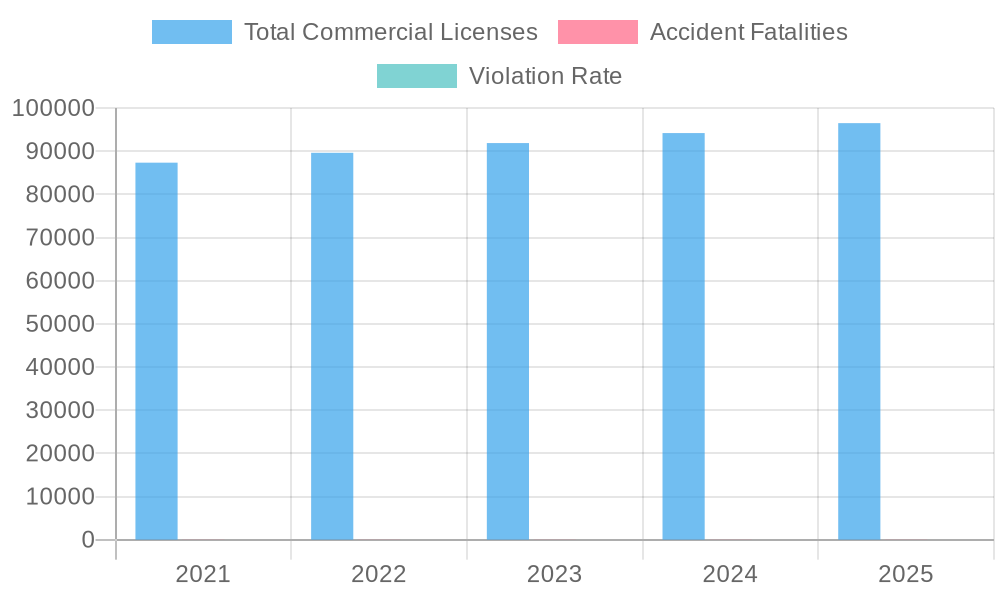
Minnesota Commercial Vehicle Statistics (2021-2025)
- Total Commercial Licenses (blue bars)
- Accident Fatalities (red bars)
- Violation Rate (green line)
The chart clearly visualizes the growth in commercial truck licensing in Minnesota over the past five years. The increase in licensed vehicles reflects a positive trend towards expansion in the logistics and transportation sectors, while the decrease in accident fatalities indicates improvements in safety measures.
Current Number of Licensed Commercial Trucks in Minnesota
As of 2023, the Minnesota Department of Transportation (MnDOT) reports that there are approximately 148,500 licensed commercial trucks within the state. This figure encompasses all commercial vehicles used for transportation and logistics purposes, reflecting a diverse range of operations including freight transport, construction, and mining.
Why This Data Matters
Understanding the number of licensed commercial trucks is crucial for stakeholders in the logistics and freight industry. Here are several reasons why this information is relevant:
-
Supply Chain Efficiency: Commercial trucks are responsible for transporting over 70% of all goods in Minnesota. This emphasizes their role in maintaining an efficient supply chain that supports vital sectors such as agriculture, manufacturing, and retail. As trucking demand has surged due to e-commerce growth, it is essential for businesses to adapt and optimize their logistics strategies accordingly.
-
Infrastructure Planning: The statistics regarding commercial trucks directly inform infrastructure development and planning initiatives by MnDOT. With significant truck traffic on key corridors like I-35 and I-94, understanding truck volumes assists in prioritizing investments in highway maintenance and expansion projects, which are critical for sustaining freight mobility across the state.
-
Policy and Regulation Development: Accurate data on commercial truck registrations can help in shaping informed policies regarding environmental regulations and safety standards that affect the trucking industry. It is essential for companies to stay updated on such regulations to ensure compliance and avoid penalties.
-
Market Insights: For logistics company owners and procurement teams in construction and mining, these statistics provide valuable insights into market conditions. Knowing the density and distribution of commercial trucks facilitates better decision-making regarding fleet management and operational strategies.
For more insights on how freight volumes impact logistics planning in Minnesota, check out the Minnesota Department of Transportation’s freight resources and explore how trucking influences economic trends in the region through the Freight Facts report.
In conclusion, tracking the licensed commercial trucks in Minnesota offers vital context for various stakeholders across industries. With challenges and opportunities on the horizon, maintaining awareness of these figures is integral to fostering a resilient and responsive logistics framework.
| Truck Category | Estimated Licensing Count |
|---|---|
| Semi-Trucks | 25,000 |
| Delivery Vans | 30,000 |
| Construction Trucks | 20,000 |
| Straight Trucks | 15,000 |
| Dump Trucks | 10,000 |
| Refrigerated Trucks | 5,000 |
Note: These numbers are estimates and represent a general classification of truck types based on industry standards and prevalence.
Key stakeholders in the logistics and construction sectors can utilize this data to assess market saturation and explore licensing trends in Minnesota. For a deeper dive into the impact of specific truck types on operational margins and procurement strategies, learn more about trailer orders and their effects on truckload margins.
If you need further insights or specific statistics, please refer to the Minnesota Department of Transportation’s resources for official data requests.
Implications for Business Owners
The current landscape of commercial truck licensing is crucial for business owners, especially in Minnesota, where approximately 278,956 commercial trucks are licensed as of December 31, 2023. This substantial figure underlines the competitive environment in the logistics and transportation sectors. For businesses looking to expand their fleets, understanding the implications of this licensing is vital for several reasons:
-
Fleet Expansion Strategies: As businesses consider fleet expansion, they must navigate the complexities of licensing requirements. The FMCSA emphasizes that securing proper commercial truck licensing is strategic for operating legally across state lines and tapping into interstate commerce opportunities. This expansion necessitates a thorough analysis of vehicle types, ensuring that all vehicles comply with varying insurance and safety regulations.
-
Compliance Considerations: With stringent regulatory frameworks in place, non-compliance can result in severe penalties, including operational shutdowns. Businesses should implement robust compliance systems to avoid risks associated with licensing errors. This is particularly important in light of recent trends where diverse vehicle registrations are increasing, thereby necessitating an updated compliance approach.
Furthermore, enhancing fleet performance through products like Summit Fairings can improve operational efficiency. These products not only enhance aerodynamics but can also aid businesses in meeting compliance goals while promoting fleet expansion by capitalizing on market demand and regulatory benefits.
As businesses adapt to these licensing trends, investing in innovative solutions becomes essential for staying competitive and compliant in a rapidly evolving market.
Key Benefits of Staying Compliant with Commercial Truck Licensing
Staying compliant with commercial truck licensing is essential for businesses in the logistics, freight, and transportation sectors. Here are several key benefits:
-
Legal Compliance: Keeping licenses up to date ensures adherence to federal and state regulations, mitigating the risk of legal penalties and fines. Non-compliance can lead to costly lawsuits and operational disruptions. For more on regulatory updates, read about essential updates from TCAS.
-
Operational Efficiency: Ensured compliance streamlines operations, reducing the likelihood of vehicle impoundments and delays due to legal issues. This allows for more reliable service delivery and better route planning.
-
Safety Enhancement: Proper licensing often includes adherence to safety standards, which can significantly lower accident rates and enhance overall safety for drivers and the public. A focus on compliance can lead to improved safety records, fostering a culture of accountability.
-
Market Credibility: Compliance bolsters a company’s reputation, instilling confidence among clients and partners. Businesses that are licensed are often perceived as more trustworthy, which is crucial in securing contracts and maintaining customer loyalty.
-
Insurance Benefits: Many insurance providers offer better rates for businesses that maintain up-to-date licenses and compliance records. This can translate into substantial savings on premiums over time.
-
Access to Opportunities: Compliance may facilitate access to government contracts and other lucrative projects that require proof of licensing. This can be a significant advantage in competitive markets, especially for new contracts.
Staying compliant not only helps businesses avoid legal issues but also enhances their operational potential and market position. For detailed insights into the economic trends affecting truck licensing compliance, check out our article on trucking economic trends.
“Our CDL program is designed to be a comprehensive gatekeeper. It ensures that every driver operating a commercial vehicle over 10,000 pounds GVW has demonstrated the necessary skills and knowledge to do so safely. Without this standardized licensing, the risk of accidents involving large trucks would be significantly higher.”
- Minnesota Department of Transportation
The significance of commercial truck licensing in Minnesota cannot be understated. The rigorous training and evaluation process involved is not just about obtaining a permit; it is a commitment to ensuring the safety of the public on our roads. As logistics and freight companies operate within a climate of accountability and professionalism, understanding these regulations is crucial to their success and safety records. Learn more about commercial vehicle regulations.
Conclusion
In summary, understanding commercial truck licensing in Minnesota is crucial for stakeholders in the logistics and freight industry, as well as for procurement teams and small business owners managing delivery fleets. With approximately 198,700 active commercial driver’s licenses (CDLs) issued in the state, including significant demand for Class A licenses, the landscape of commercial trucking remains robust. The steady growth in CDL holders, coupled with the low rate of violations, highlights the ongoing commitment to safety and regulatory compliance within the sector.
As businesses adapt to the evolving demands of freight transportation, it is essential to prioritize fleet management and upgrade technologies. Summit Fairings offers innovative solutions designed to enhance operational efficiency and ensure regulatory adherence. We encourage you to explore the commercial products available at Summit Fairings to help your fleet thrive in this competitive environment.