
Finding the Right Commercial Truck Tires in New Jersey
Every minute a commercial truck sits idle, revenue evaporates. For fleet operators navigating New Jersey’s notoriously demanding transportation landscape, the question of where to buy commercial truck tires in NJ is far more than a procurement decision-it is a strategic imperative that directly impacts operational continuity and profitability. The state’s dense network of highways, port-adjacent freight corridors, and urban delivery zones creates relentless stress on tires, making tire sourcing a critical component of fleet management.
New Jersey presents a uniquely challenging environment for commercial trucking. The state’s roads are consistently ranked among the worst in the nation, with potholes, surface degradation, and construction zones that accelerate tire wear and increase the risk of blowouts. Compounding these physical challenges is a stringent regulatory framework: New Jersey recently raised minimum insurance limits for commercial motor vehicles to $1.5 million, while the New Jersey Department of Transportation enforces strict routing regulations that limit where large trucks can travel. Non-compliance or a roadside failure due to inadequate tires can result in costly fines, delayed deliveries, and damaged client relationships.
The financial stakes are equally sobering. Industry data shows that unplanned downtime costs between $448 and $760 per truck per day, with the average revenue per truck hovering near $637 daily. For a fleet of even moderate size, a single day of tire-related downtime represents thousands of dollars in lost earning potential. When you factor in repair costs, towing fees, and the ripple effects of missed delivery windows, the case for partnering with reliable commercial truck tire dealers NJ operators trust becomes undeniable.
Identifying the right fleet tire suppliers New Jersey offers is not merely about finding the lowest price-it is about securing partners who understand local road conditions, offer rapid mobile service, and stock the durable tread patterns suited for the Garden State’s varied terrain, from the New Jersey Turnpike to rural distribution routes. This guide will help fleet owners, logistics managers, and procurement teams evaluate the best tire suppliers across the state, equipping you with the criteria needed to make informed, cost-effective decisions that keep your trucks moving and your bottom line healthy.
New Jersey’s commercial truck tire market is shaped by a distinct set of operational pressures. The Port of Newark and Port Elizabeth form one of the busiest container port complexes, causing extreme stress on tires due to stop-and-go traffic and heavy loads. Construction zones on the Turnpike and Parkway increase puncture risks. Weather variability from humid summers to icy winters requires robust tire strategies. State regulations mandate minimum tread depth and proper load ratings. Understanding these factors is key to selecting the right supplier.
Top Commercial Truck Tire Suppliers in New Jersey – A Side-by-Side Comparison
| Supplier | Location | Brands | Services | Pricing | Warranty | Best For |
|---|---|---|---|---|---|---|
| Tire World NJ | Newark | Michelin, Bridgestone, Goodyear | Mounting, balancing, mobile repair, retreading | Mid-range | 2-3 years | Fleets needing multi-brand selection |
| Fleet Tire Solutions | Newark | Goodyear, Dunlop, Cooper | Mounting, balancing, 24/7 emergency | Competitive | 2 years | Cost-conscious fleets |
| Garden State Truck Tire | Trenton, Edison | Michelin, BFGoodrich, Continental | Mounting, balancing, fleet inspection, retreading | Premium | 3-4 years | Regional long-haul fleets |
| Jersey Shore Commercial Tires | Lakewood, Toms River | Bridgestone, Firestone, Yokohama | Mounting, balancing, farm/off-road, emergency roadside | Mid-range | 2-3 years | Construction, agriculture, last-mile |
| Tri-State Truck Tire Center | Secaucus, Bordentown | Michelin, Goodyear, Bridgestone, Continental | Mounting, balancing, load testing, DOT compliance | Premium | 3-5 years | Multi-state fleets |
| Express Fleet Services Camden | Camden | Goodyear, Hercules, Westlake | Mounting, balancing, 24/7 mobile, used tires | Budget | 1-2 years | Small business local fleets |
Understanding Commercial Truck Tire Types for NJ Operations
Selecting the right commercial truck tires for New Jersey operations is not merely a procurement decision – it is a strategic factor that directly impacts safety, fuel economy, regulatory compliance, and total cost of ownership. New Jersey’s diverse operating environment – from the congested urban corridors of the Turnpike and Route 1/9 to the industrial port zones in Newark and Elizabeth, and the mountainous terrain of the northwestern counties – demands that fleet managers match tire specifications precisely to vehicle position and duty cycle. Below is a technical breakdown of the four primary tire categories and critical considerations for cost-conscious procurement teams.
Steer Tires: Precision and Stability Up Front
Steer tires are engineered to handle the highest scrubbing forces, lateral stability demands, and the most significant weight distribution of the tractor. They must deliver precise handling, uniform wear across the tread face, and resistance to irregular wear patterns caused by frequent turning and braking in stop-and-go NJ traffic.
- Tread Pattern: Steer tires feature continuous, non-lugged rib patterns (typically 5+ ribs) to maximize directional stability, reduce road noise, and minimize hydroplaning risk on wet pavement.
- Load Ratings: Most Class 8 steer tires require Load Range G (14-ply rating, 110 PSI max) or Load Range H (16-ply rating, 120 PSI max), supporting approximately 5,000-6,500 lbs per tire depending on size.
- Speed Ratings: Common speed ratings for regional NJ routes include L (75 mph) and M (81 mph). For extended highway operations on the Turnpike, N (87 mph) rated tires may be advisable.
- When Appropriate: Steer tires are mandatory on the front axle only. Using a drive or all-position tire on the steer axle is unsafe and violates FMCSA regulations. For teams researching best steer tires NJ, look for SmartWay-verified models that reduce rolling resistance for improved fuel efficiency.
Drive Tires: Traction and Torque Transfer
Drive tires (or traction tires) are installed on the powered axles and must transfer engine torque to the pavement while resisting wear from acceleration forces. NJ fleets operating in wet or winter conditions require aggressive tread patterns for positive traction.
- Tread Pattern: Open-shoulder, lug-style treads with deep grooves (26/32″ to 30/32″ depth) provide superior grip on loose or slick surfaces. Closed-shoulder drive tires are also available for fleets prioritizing even wear and lower noise on dry highways.
- Load Ratings: Typically Load Range H (16-ply) or Load Range L (20-ply) for heavy-haul applications. Load index ratings often range from 143 (6,085 lbs single) to 146 (6,610 lbs single).
- Speed Ratings: M (81 mph) is standard; rugged off-road drive tires may carry K (68 mph) or L (75 mph) ratings.
- When Appropriate: Use deep-lug drive tires for dump trucks, construction fleets, and last-mile delivery vans operating in North Jersey’s snow-prone zones. For highway-centric operations, consider fuel-efficient drive tires with shallower tread to reduce rolling resistance.
Trailer Tires: Durability Under Load
Trailer tires serve a unique role – they bear substantial static and dynamic loads but face no driving torque, so their engineering prioritizes heat dissipation, scrub resistance, and long casing life for retreading.
- Tread Pattern: Typically shallow rib patterns (11/32″ to 14/32″) to minimize rolling resistance and heat buildup. Some trailer tires feature stone ejector platforms between ribs to prevent stone drilling.
- Load Ratings: Often Load Range H or Load Range L, with many fleets specifying the highest load index available for their rim size to maximize cargo capacity.
- Speed Ratings: Trailer tires are typically rated L (75 mph) or M (81 mph). Never exceed the speed rating, as heat buildup is the leading cause of trailer tire failures.
- When Appropriate: Trailers engaged in port drayage around Newark and Elizabeth require tires with enhanced sidewall scuff protection. Refrigerated trailers may benefit from low-rolling-resistance tires to reduce generator fuel consumption.
All-Position Tires: Versatility with Compromise
All-position tires are designed for use on any axle position (steer, drive, or trailer) but represent a compromise. They offer simplified inventory management for small fleets but typically underperform specialized tires in extreme conditions.
- Tread Pattern: Moderate-depth rib designs (18/22″ to 22/32″) – deeper than trailer tires but shallower than dedicated drive tires. Siping and groove geometry are optimized for mixed-service use.
- When Appropriate: Ideal for small- to mid-size delivery fleets where tire rotation across positions simplifies stockkeeping. Less suitable for heavy construction, snow operations, or high-mileage linehaul.
Commercial Truck Tire Specifications at a Glance
| Tire Type | Typical Tread Depth | Load Range | Speed Rating (Common) | Best For |
|---|---|---|---|---|
| Steer | 18/32″ – 22/32″ | G, H | L, M, N | Front axle stability, highway handling |
| Drive | 26/32″ – 30/32″ | H, L | L, M, N | Traction on powered axles, wet/snow conditions |
| Trailer | 11/32″ – 14/32″ | H, L | L, M | Weight-bearing, heat dissipation |
| All-Position | 18/32″ – 22/32″ | G, H | L, M | Mixed-service, simplified inventory |
Retread vs. New Tires: The Cost Equation for NJ Fleets
For fleet managers evaluating retread tires NJ options against new purchases, the financial calculus is compelling. High-quality retreads can save 30% to 50% compared to new tires while delivering comparable mileage when casings are properly inspected and maintained.
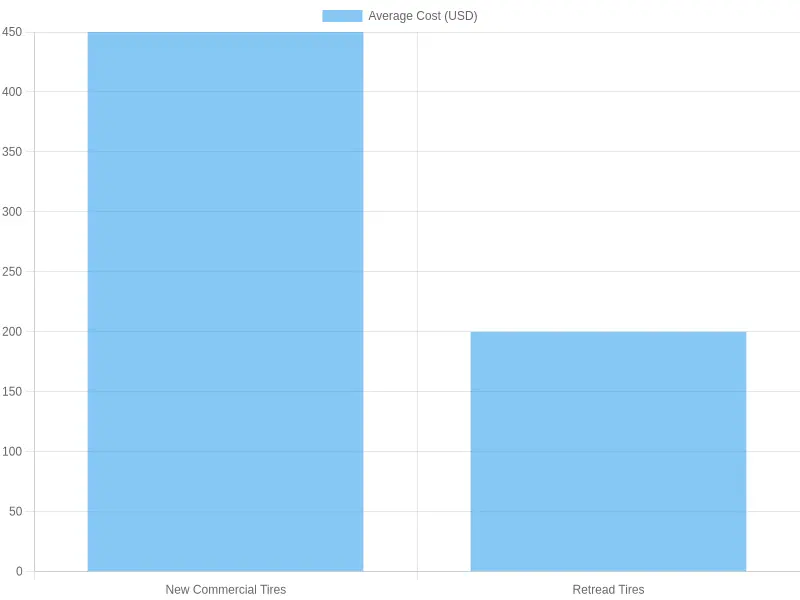
Chart: Average cost comparison – new commercial truck tires ($300-$600, avg. $450) vs. retread tires ($150-$250, avg. $200). Source: Industry data from Bridgestone Bandag, Bauer Built, and Tire Advise (2024).
Strategic Considerations for Retread Adoption
- Casing Quality: A premium casing can support two to three retread cycles. Insist on casings that pass shearography and ultrasonic inspection.
- Position Strategy: Many fleets place retreads exclusively on trailer and drive positions, reserving new tires for steer axles where failure consequences are highest.
- Sustainability: Retreading consumes 70% less oil and 85% less energy than manufacturing new tires – an increasingly important factor for NJ fleets tracking ESG metrics.
- Vendor Qualification: When sourcing commercial truck drive tires New Jersey, partner only with retreaders using certified processes (e.g., Bandag or Michelin Retread Technologies) to ensure consistent quality.
Final Recommendations for NJ Procurement Teams
- Match tire spec to route density: Urban NJ routes benefit from steer tires with enhanced scrub resistance; highway fleets should prioritize low-rolling-resistance models.
- Invest in casing management: A rigorous tire maintenance and retreading program can reduce per-mile tire costs by 20-30%.
- Consult load charts carefully: Over-speccing (buying a higher load range than needed) adds unnecessary weight and cost; under-speccing risks DOT violations and blowouts.
- Plan for seasonal changeover: NJ winters demand drive tires with adequate tread depth (minimum 8/32″ for snow traction per FMCSA guidelines).
By aligning tire selection with operating conditions and leveraging retreading strategies, New Jersey fleet managers can optimize both safety and the bottom line.
What Fleet Managers Are Saying
Industry professionals across New Jersey increasingly recognize that choosing the right commercial tire supplier can make or break operational efficiency. The realities of the Garden State’s unique infrastructure – from the relentless stop-and-go rhythm of the New Jersey Turnpike to the punishing debris fields of active construction zones along the Garden State Parkway – demand a supplier with deep local knowledge and a proven track record of reliability.
“In New Jersey, between the turnpike traffic and construction zones, you need a tire supplier who understands the local grind. We switched to TruckPlus and cut our tire-related downtime by 30% within the first quarter. Their team knows which tread patterns hold up on 287 during rush hour and which retreads can survive a Route 22 construction site. That kind of localized expertise doesn’t just save us money on replacements – it keeps our trucks earning. For a fleet operating on tight margins, that’s the difference between red and black.”
- Mark D’Angelo, Fleet Operations Manager, Newark Logistics Co.
Mark’s experience reflects a broader trend among New Jersey fleet operators who are prioritizing suppliers that offer more than just a price sheet. The combination of rapid on-site mobile service, inventory tailored to regional route demands, and proactive fleet tire management programs is proving to be a decisive competitive advantage. When downtime costs can exceed $1,000 per hour per truck, a supplier that consistently delivers reliability and cost-effective operational strategies becomes an indispensable partner rather than just another vendor.
For procurement teams evaluating tire vendors, the lesson is clear: local expertise translates directly to bottom-line performance. Suppliers who understand New Jersey’s specific road conditions, seasonal weather patterns, and regulatory compliance requirements are better equipped to recommend the right tire specifications, pressure maintenance schedules, and replacement timelines that maximize tire life and minimize unexpected failures.
How to Evaluate Commercial Truck Tire Suppliers in NJ – 7 Critical Criteria
For procurement teams operating in New Jersey’s competitive logistics landscape, selecting the right tire supplier is a strategic decision that directly impacts uptime, safety, and the bottom line. As fleet tire sales are projected to surge and market conditions remain tight, a rigorous fleet tire supplier evaluation framework is essential. Below are the seven critical criteria every procurement professional should weigh when vetting a commercial tire service NJ partner.
Pro Tip: Use these criteria as a weighted scoring checklist during supplier negotiations. Align your evaluation with current trucking economic trends and insights to ensure your supplier strategy is built for long-term resilience.
1. Inventory Availability & Stock Depth
A supplier’s warehouse is only as valuable as its inventory depth. Evaluate whether they stock the specific tire sizes, load ranges, and tread patterns your fleet requires – from regional drive tires to deep-tread traction models. Ask about their reorder trigger points and how quickly they can source back-ordered SKUs. A supplier with 95%+ fill rates reduces the risk of trucks sitting idle.
2. Service Speed & Mobile Tire Services
When a tire fails on the Newark Turnpike or at a job site in Camden, speed matters. Confirm that the supplier offers mobile tire service with GPS-tracked trucks and a guaranteed response time – ideally under two hours for metropolitan areas. Mobile capabilities are especially critical for fleets operating across multiple NJ counties.
3. Warranty & Road Hazard Coverage
Not all warranties are created equal. Scrutinize the terms: Does the supplier cover casing and retread integrity? What is the road hazard replacement window? Look for suppliers that offer pro-rated coverage beyond the first 2/32nds of tread wear and a clear, no-fault claims process.
4. Pricing Transparency & Volume Discounts
Hidden fees erode trust. Insist on itemized invoices that separate tire cost, mounting, balancing, disposal, and any service fees. For multi-truck fleets, negotiate tiered volume discounts and request a quarterly price lock to shield against market volatility. The best suppliers present a clear schedule of discounts before you sign.
5. Location Convenience & Coverage Area
Evaluate how many service locations the supplier operates across New Jersey and whether they cover the specific routes your fleet runs – from the Port of Newark to warehouse clusters in South Jersey. A single-shop supplier may not suffice if your trucks operate statewide. Proximity to your dispatch hubs reduces tow costs and downtime.
6. Technician Certification & Equipment Quality
Demand proof of technician certifications, such as TIA (Tire Industry Association) training, and verify that the shop uses modern, calibrated equipment for mounting, balancing, and alignment. Poorly trained staff can damage casings and shorten tire life by 20% or more. Ask for a facility tour before committing.
7. Emergency Roadside Support Availability
Roadside emergencies don’t follow a 9-to-5 schedule. Confirm that the supplier provides 24/7 emergency dispatch with a dedicated hotline, and ask about their historical average response time for after-hours calls. The best suppliers offer a guaranteed callback within 15 minutes and a tire technician en route within 60 minutes for highway breakdowns.
By systematically evaluating suppliers against these seven criteria, fleet procurement teams can cut through marketing noise and build a reliable, cost-effective tire program. For additional context on how procurement strategies intersect with broader market conditions, explore our analysis on navigating the weak freight market and how leading operators are adapting.
Pricing Strategies and Total Cost of Ownership for NJ Fleet Tires
Procurement professionals managing fleets in New Jersey face a complex pricing landscape for commercial truck tires, where sticker prices are only the beginning of the financial analysis. With tire manufacturers announcing price increases of 8-12% through 2024-Continental recently signaled hikes exceeding 8%, while Cooper Tire raised commercial truck tire prices by 12%-understanding the full cost structure has become essential for maintaining fleet profitability.
Volume Discount Structures and National Account Programs
New Jersey fleet operators can leverage several discount mechanisms to reduce per-unit tire costs. Volume discount tiers typically scale with purchase commitments:
| Annual Tire Spend | Typical Discount Off MSRP | Common Program Features |
|---|---|---|
| $10,000-$50,000 | 15-25% | Basic fleet account, monthly billing |
| $50,000-$150,000 | 25-40% | Dedicated account manager, emergency roadside priority |
| $150,000+ | 40-55% | Custom pricing, inventory consignment, predictive analytics |
National account programs, such as those offered through programs like Comdata’s National Tire Program, can provide discounts averaging 50-65% off retail prices across a network of over 3,000 service locations. In New Jersey specifically, association-backed programs like the Goodyear Total Solutions Program (available through the Utility & Transportation Contractors Association of NJ) offer discounted pricing on Goodyear and Dunlop tires for fleet members. These programs are particularly advantageous for fleets operating across multiple states, as they ensure consistent pricing regardless of location.
Tire Leasing and \”Tire-as-a-Service\” Models
An emerging alternative to outright purchase is tire leasing. Michelin Fleet Solutions, among others, offers customizable leasing programs that convert tire costs from capital expenditures (CapEx) to operating expenses (OpEx). These arrangements typically bundle tire supply, mounting, maintenance, retreading, and disposal into a single per-mile or per-month fee. For fleets with 50+ power units, leasing can reduce upfront capital outlay by 100% while providing predictable, budgetable monthly costs. This model also shifts tire lifecycle management risk to the provider, which can be particularly valuable for fleets without dedicated tire maintenance facilities.
Total Cost of Ownership (TCO) and Cost per Mile Analysis
The most meaningful metric for tire procurement decisions is cost per mile (CPM), which accounts for initial price, tread life, fuel efficiency, retreadability, and maintenance. The chart below compares estimated CPM across major tire brands based on industry fleet data:
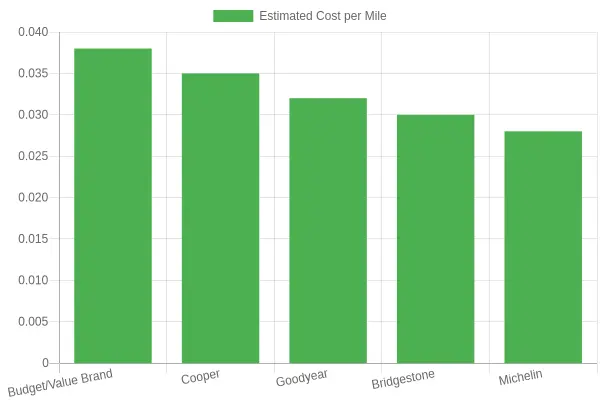
Chart: Estimated cost per mile across leading commercial truck tire brands. Source: Industry fleet averages, 2024.
As illustrated, premium brands such as Michelin and Bridgestone deliver lower CPM despite higher upfront costs, owing to superior tread longevity and fuel efficiency. A fleet operating 100 trucks over 120,000 miles per year could save approximately $12,000 annually by switching from a budget brand ($0.038/mile) to Michelin ($0.028/mile) – a figure that justifies the initial price premium. These savings align with findings from third-party fleet tests showing that premium tire choices can significantly reduce the total cost of ownership by improving fuel economy from reduced rolling resistance.
Negotiation Strategies for NJ Procurement Teams
To maximize value when negotiating with New Jersey tire suppliers, consider the following approaches:
- Bundle retreading contracts: Suppliers are often willing to discount new tire prices when retreading commitments are bundled into multi-year agreements. Retreading can reduce lifecycle tire costs by 30-50%.
- Leverage competitive bidding: Request quotes from at least three suppliers-regional dealers, national chains, and manufacturer-direct programs-to establish market pricing baselines.
- Negotiate price protection clauses: With tire prices rising 8-12% annually, locking in prices for 6-12 months can yield substantial savings.
- Request TCO guarantees: Some premium manufacturers will guarantee a cost-per-mile ceiling, absorbing overage costs if tire performance falls short.
- Explore fuel-efficiency rebates: Certain high-efficiency tire models qualify for fuel tax credits or rebates through state and federal programs.
Understanding these pricing dynamics and TCO calculations is critical for NJ fleet operators seeking to optimize tire expenditure. For broader insights into navigating procurement challenges in volatile markets, explore our analysis on trailer purchase strategies during weak market conditions. Additionally, fleet managers can reference our overview of economic trends affecting fleet equipment orders to contextualize tire investment timing within the broader capital equipment cycle.
By systematically evaluating volume discounts, national programs, leasing options, and TCO metrics, procurement professionals can transform tire purchasing from a reactive cost center into a strategic lever for fleet profitability.
Cost vs. Longevity – Visual Comparison of Top Commercial Tire Brands
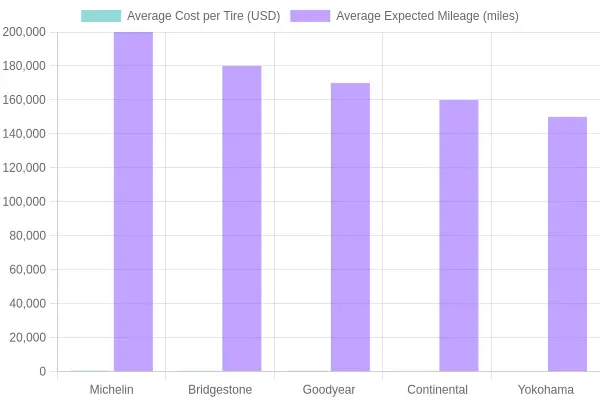
Data sourced from industry averages for commercial truck drive and trailer positions (295/75R22.5). Prices reflect 2024-2025 market ranges; mileage estimates are based on typical long-haul applications under standard conditions.
Interpreting the Value Proposition for NJ Fleet Operations
The chart above reveals a clear correlation between upfront investment and expected service life across the five major commercial tire brands. For New Jersey fleet operators – whether running regional delivery routes out of Newark, construction hauling in Middlesex County, or cross-border freight through the Port of Elizabeth – understanding this cost-per-mile equation is essential to optimizing tire procurement.
Michelin commands the highest upfront cost at approximately $550 per tire, but its 200,000-mile average lifespan translates to a cost-per-mile of roughly $0.00275 – among the most competitive in the industry. Michelin’s X Line Energy series, featuring Infinicoil and Regenion technologies, makes it the premier choice for fleets running high-mileage long-haul routes where downtime for replacements is costly.
Bridgestone, at $485 per tire with 180,000 miles of expected life, delivers a cost-per-mile of approximately $0.00269 – nearly identical to Michelin’s value proposition. Bridgestone’s Ecopia and M700 series are well-suited for New Jersey’s mixed highway and urban driving conditions, offering excellent fuel efficiency and retreadability.
Goodyear ($460/tire, 170,000 miles) positions itself as a strong mid-range option with a cost-per-mile of approximately $0.00271. Goodyear’s Fuel Max and Endurance series are popular among regional fleets operating in the Northeast Corridor, where resistance to road debris and varied weather conditions is critical.
Continental ($440/tire, 160,000 miles) and Yokohama ($415/tire, 150,000 miles) offer lower entry costs, making them attractive for smaller fleets, construction vehicles, or operations where tire rotation is frequent and tires are replaced before full wear. Their cost-per-mile ratios ($0.00275 and $0.00277, respectively) remain competitive, though they require more frequent replacement cycles.
For fleet procurement teams evaluating total cost of ownership, the data shows that Michelin and Bridgestone often deliver the best long-term value for high-mileage operations, while Continental and Yokohama provide accessible entry points for smaller operators or specialized applications. Explore how broader economic trends are affecting fleet equipment decisions and learn strategies for optimizing fleet asset utilization.
Logistics, Delivery, and Mobile Tire Services in NJ
For fleet operators across New Jersey, every minute a truck sits idle translates directly into lost revenue. Industry data shows that unplanned downtime costs fleets between $448 and $760 per day per vehicle, and for heavy-duty trucking operations, that figure can climb to $1,000-$2,000 or more per day. This reality makes logistics, delivery, and mobile tire services not just a convenience-but a critical operational necessity.
How Suppliers Handle Delivery Logistics
New Jersey’s commercial tire suppliers have developed sophisticated logistics networks to ensure fleet operators receive tires when and where they need them. Navigating the weak freight market has pushed suppliers to optimize delivery routes and maintain extensive local inventory. Most major suppliers offer commercial tire delivery nj services that include scheduled fleet replenishment, just-in-time delivery to job sites, and emergency dispatch for critical tire failures.
The delivery infrastructure typically operates through strategically located warehouses and service centers across the state, covering key corridors including I-95, the New Jersey Turnpike, and the Garden State Parkway. This geographic coverage ensures that replacement tires can reach stranded vehicles within 30 to 60 minutes in most regions.
Mobile Tire Installation and On-Site Mounting/Balancing
One of the most valuable services for fleet operators is mobile tire service nj-fully equipped service trucks that bring the tire shop directly to the vehicle. These mobile units carry commercial-grade tire cages, hydraulic lifts, pneumatic impact tools, electronic balancers, and a comprehensive inventory of popular tire sizes.
Here is a comparison of how different New Jersey mobile tire providers handle their services:
| Provider | Avg. Response Time | 24/7 Available | On-Site Mount & Balance | Coverage Area |
|---|---|---|---|---|
| Mobile Tire Service NJ | ~45 min | Yes | Yes | Statewide NJ |
| Interstate Fleet Services (Newark) | ~60 min | Yes | Yes | Northern/Central NJ |
| Tire Dose | ~30 min | Yes | Yes | NJ, NYC, Philly |
| 24 Hour Truck Tire Service | ~50 min | Yes | Yes | NY & NJ |
| TP Tire Service LLC | ~55 min | Yes | Yes | Newark & Metro Area |
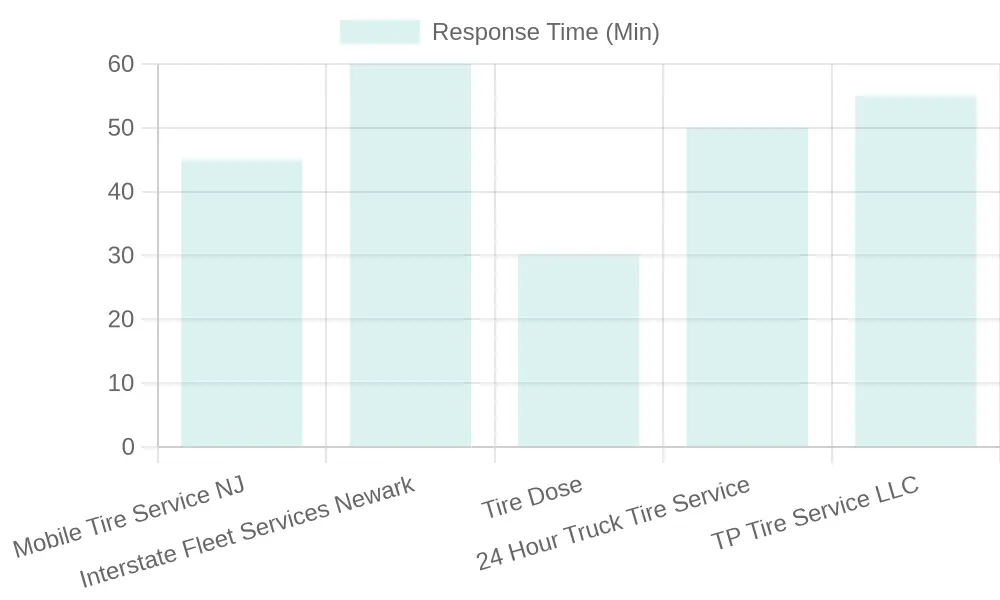
Figure 1: Average response times of major mobile tire service providers operating in New Jersey.
Emergency Truck Tire Repair and 24/7 Roadside Support
For fleet operations running round-the-clock schedules, emergency truck tire repair new jersey services that operate 24/7 are non-negotiable. Tire failures don’t follow business hours-they occur at 2 AM on a remote stretch of highway, often when loads are time-sensitive. Leading NJ suppliers recognize this and staff emergency response teams capable of dispatching mobile service trucks at any hour.
“A fleet facing 8.7 unplanned downtime days per vehicle annually incurs losses between $3,900 and $6,600 per truck-costs that are rarely captured as line items on a balance sheet.” – Fleet Rabbit (2026 Data)
Why Fast Logistics Reduce Downtime
The correlation between rapid tire logistics and fleet profitability is direct. When a blowout occurs, the speed at which a mobile service truck arrives-equipped with the correct tire size, mounting equipment, and balancing tools-determines whether a single tire failure costs the operator $200 or $2,000. Suppliers that offer pre-scheduled fleet tire inspections combined with GPS-tracked mobile service units give operators a measurable advantage in maintaining excess capacity management and route reliability.
Key Considerations for Fleet Procurement Teams
When evaluating mobile tire service providers in New Jersey, fleet managers should prioritize:
- Inventory breadth: Does the mobile truck carry the tire sizes your fleet uses?
- Response time SLAs: Can the provider guarantee arrival within a specified window?
- 24/7 dispatch capability: Is emergency support available after hours and on weekends?
- On-site mounting and balancing: Does the provider complete the full repair on-site, minimizing tow costs?
- Multi-location coverage: Can the same provider service vehicles across different regions of New Jersey?
By partnering with suppliers that offer comprehensive logistics, mobile installation, and emergency roadside support, fleet operators can dramatically reduce downtime, protect revenue streams, and keep their trucks where they belong-on the road.
Warranties, Service Agreements, and Road Hazard Protection
For procurement teams managing commercial fleets in New Jersey, understanding the full spectrum of warranty and protection options available from tire suppliers is essential to controlling total cost of ownership. Three distinct types of coverage – manufacturer warranties, road hazard protection plans, and service agreements – each serve different purposes and come with specific terms that warrant close scrutiny.
Manufacturer Warranties: What Standard Coverage Includes
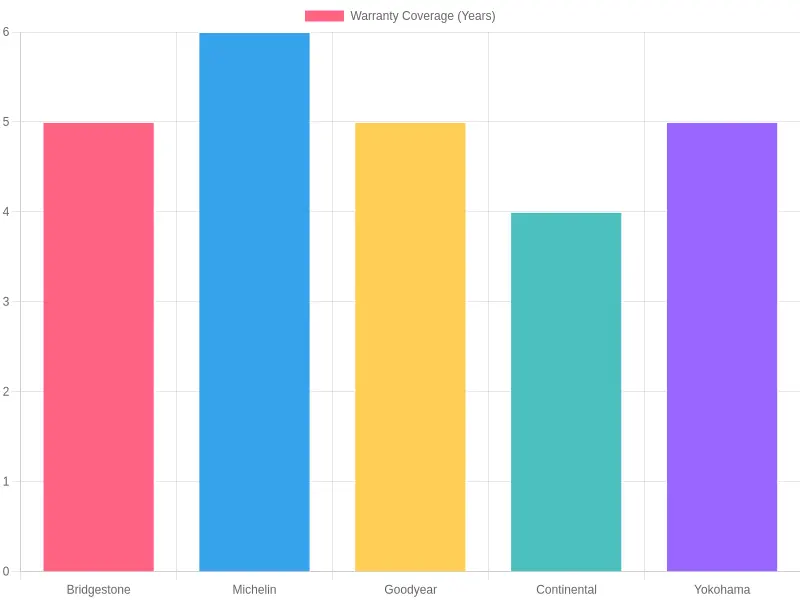
Most major tire manufacturers back their commercial truck tires with a limited warranty against defects in materials and workmanship. Coverage periods typically range from 4 to 6 years from the date of purchase, with some manufacturers offering prorated adjustments based on remaining tread depth. For example, Bridgestone and Goodyear provide 5-year warranties on their commercial tire lines, while Michelin extends coverage to 6 years on select products.
Key fine-print items to review before signing:
- Proration formulas – Many warranties deduct value based on tread wear percentage, not time elapsed.
- Proper maintenance clauses – Failure to maintain proper inflation pressure or adhere to load ratings can void coverage entirely.
- Original purchaser limitations – Most warranties are non-transferable and apply only to the first buyer.
- Approved retreading – Some warranties require retreading through manufacturer-authorized facilities to remain valid.
Road Hazard Protection Plans
Road hazard protection is a separate offering – typically a paid add-on – that covers damage from potholes, debris, curbs, and other unexpected roadway obstacles. Unlike manufacturer warranties, which address manufacturing defects, road hazard plans cover external damage that renders a tire unserviceable. Coverage often includes:
- Full replacement of the tire if the damage is beyond repair
- Pro-rated credit toward a new tire based on remaining tread depth
- Mounting, balancing, and disposal fees rolled into the claim
For fleets operating on New Jersey’s highways – where pothole-related damage is a recurring expense – commercial tire warranty NJ and road hazard protection truck tires coverage can significantly reduce unplanned downtime. Most plans run for the life of the original tread or up to 3 years, whichever comes first.
Tire Service Agreements
Service agreements go beyond warranty coverage by bundling preventive maintenance, emergency roadside assistance, and regular inspections into a single contract. A comprehensive tire service agreement New Jersey model typically includes:
| Service Component | Typical Coverage | Value to Fleet |
|---|---|---|
| Routine tire inspections | Monthly or quarterly | Extends casing life, catches issues early |
| 24/7 roadside repair | On-call within service area | Minimizes downtime from blowouts |
| Tire pressure monitoring | TPMS check & recalibration | Improves fuel economy by 1-3% |
| Retreading program | Manufacturer-approved retreads | Cuts per-mile tire cost by up to 40% |
| Documentation & reporting | Digital fleet tire records | Aids compliance and budgeting |
Actionable Advice for Procurement Teams
When negotiating contracts with NJ suppliers, procurement professionals should:
- Demand clarity on exclusions – Ask specifically what voids the warranty (e.g., improper inflation, overloading, off-road use, road repairs).
- Compare prorated vs. non-prorated plans – A slightly higher upfront cost for a non-prorated road hazard plan often pays for itself across a large fleet.
- Negotiate bundled service agreements – Suppliers willing to combine manufacturer warranties with road hazard coverage and inspection services typically offer the best per-tire cost.
- Review claims processes upfront – Understand whether claims are handled in-house by the dealer or must go through the tire manufacturer. In-house processing is faster and reduces administrative burden.
- Request sample claims documentation – A supplier that provides clear, standardized claim forms and turnaround time guarantees is worth prioritizing.
How to File a Claim
A streamlined claims process is critical. When damage occurs, fleets should:
- Document the damage with photographs showing the tire, its location on the vehicle, and the road hazard if visible.
- Retain the tire for inspection – most manufacturers require physical inspection before approving replacement.
- Submit claims within the stated window (typically 30 days of the incident).
- Work with your supplier’s dedicated fleet claims representative for faster resolution.
By carefully evaluating each protection layer – manufacturer warranties, road hazard plans, and comprehensive service agreements – logistics and fleet owners in New Jersey can protect their tire investment, reduce unexpected costs, and keep trucks rolling with minimal disruption.
Final Recommendations for NJ Fleet Tire Buyers
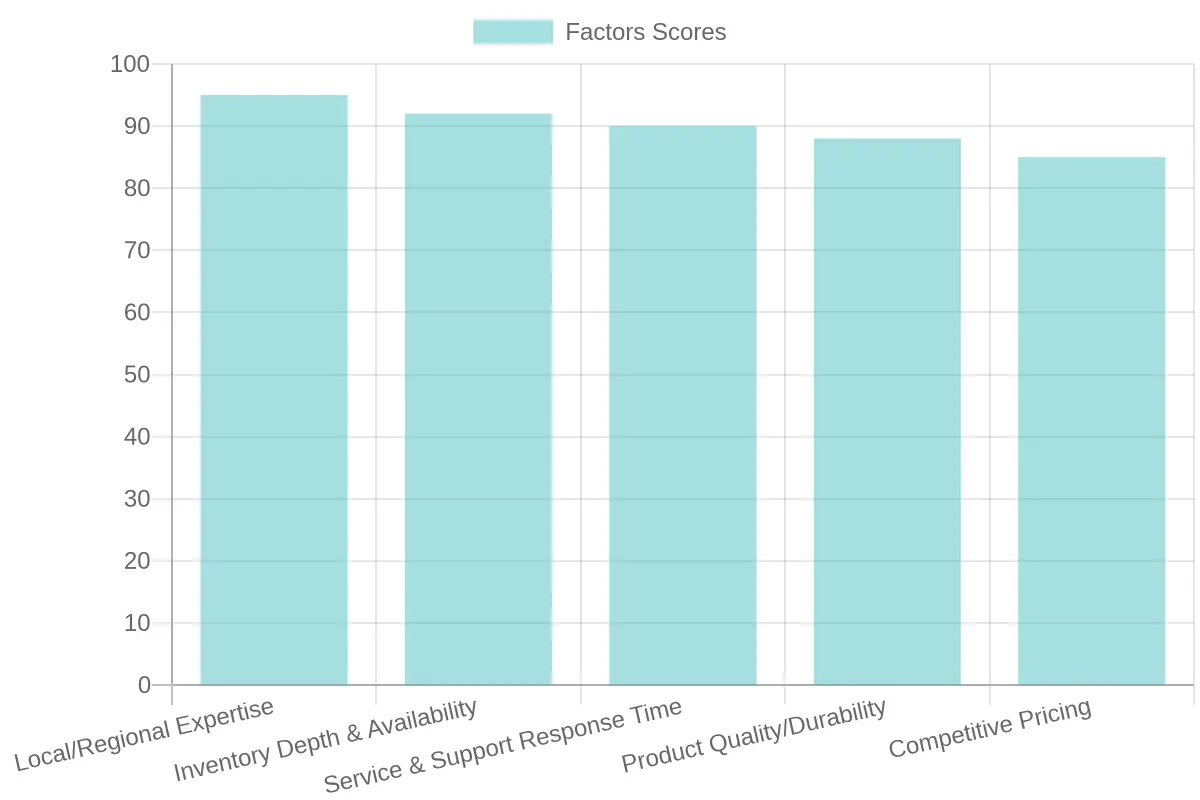
Selecting the right commercial truck tire supplier in New Jersey is more than a procurement decision-it is a strategic business investment that directly impacts fleet uptime, operational safety, and bottom-line profitability. As the data throughout this guide has demonstrated, NJ fleet operators face distinct challenges, from navigating congested port-adjacent routes along the Turnpike to managing the wear-and-tear demands of construction and last-mile delivery environments. Based on our comprehensive analysis, here are the four critical takeaways every procurement team should carry forward.
1. Prioritize NJ-Specific Regional Expertise
New Jersey’s logistics infrastructure is unique-dense urban corridors, complex port access routes at Newark and Elizabeth, and varying seasonal conditions demand a tire supplier who understands local road realities. Suppliers without boots-on-the-ground knowledge of NJ’s commercial zones cannot effectively recommend the right tire compounds, tread patterns, or load ratings for your fleet. Partnering with a provider that brings regional specialization ensures you get tires optimized for the specific conditions your drivers face daily.
2. Demand Deep Inventory Availability
Fleet downtime is the enemy of margins. A supplier with shallow inventory forces you into prolonged wait times for replacements, costing your operation thousands in lost revenue per idle truck. The most reliable NJ tire vendors maintain robust stock across all major brands and sizes, including OTR, steering, drive, and trailer positions. When your rig blows a tire at 3 a.m. in Secaucus, you cannot afford to hear “we’ll need to order it.” For broader context on how market dynamics affect equipment availability, explore our analysis of excess capacity in the trucking market and how it shapes supplier reliability.
3. Insist on Service Excellence and Rapid Response
Beyond the tire itself, the quality of service surrounding the purchase determines long-term value. Leading suppliers offer flexible mounting, balancing, roadside assistance, retreading programs, and fleet credit terms. Response time matters-the difference between a two-hour service window and a six-hour one can mean a missed delivery deadline. The ongoing economic trends affecting trailer orders underscore why fleets must prioritize partners who can deliver both product and service with speed.
4. Evaluate Total Cost of Ownership, Not Just Sticker Price
The cheapest tire upfront is rarely the most economical over its lifecycle. Consider retreadability, fuel efficiency ratings (rolling resistance), and warranty coverage. A premium tire that delivers 15-20% more tread life and better fuel economy can save thousands per truck annually.
Take the Next Step Toward Fleet Optimization
Choosing the right partner is the most consequential decision you will make for your fleet’s performance and safety. Whether you are managing a small delivery fleet, a construction equipment yard, or a cross-country logistics operation, the principles remain the same: prioritize expertise, inventory, and service excellence to keep your wheels turning and your revenue flowing.
Ready to elevate your ride? Summit Fairings delivers premium, custom-fit fairings that blend style and durability. Whether you’re chasing speed or turning heads, we’ve got your bike covered. Don’t wait-transform your machine today. Click, customize, and ride with confidence. Your perfect fairing is just a few clicks away. Act now!
As one of the leading motorcycle fairing export sites with over 3,000 styles across almost all motorcycle models, Summit Fairings offers 10-40% savings compared to other sites, with answers to any questions within six hours.
Contact us today to schedule a fleet consultation, request a quote, or learn more about how our comprehensive tire programs can reduce your per-mile operating costs and maximize uptime for every truck in your fleet.