
Introduction
Arranging a demo for a new commercial truck is an essential step for logistics and freight operations, enabling decision-makers to evaluate equipment before making a significant financial investment. In today’s highly competitive transportation industry, where efficiency and reliability are paramount, taking the time to experience a truck firsthand can provide insights that online research and specifications cannot. Demonstrations allow logistics and freight company owners, construction and mining enterprise procurement teams, and small business owners with delivery fleets to gauge a truck’s performance, comfort, and suitability for their specific needs.
The importance of arranging a demo cannot be overstated. It opens the door for potential buyers to connect with sales representatives, receive expert guidance on features, and clarify any questions regarding functionality. For instance, a demo can highlight factors such as fuel efficiency, cargo capacity, and technological advancements that may influence purchasing decisions. By witnessing the truck’s capabilities in real time, operators can better understand how it fits into their operational requirements, thus avoiding costly mistakes.
Furthermore, engaging in such demonstrations provides an opportunity for potential buyers to negotiate more effectively. They can discuss custom specifications based on their workflow while assessing the truck’s practicalities, including maintenance requirements and warranty options. It is also an occasion for buyers to network, sharing experiences and insights with other professionals who may have insights on best practices and innovative solutions.
In summary, arranging a demo for a new commercial truck is not just a standard procedure but a strategic move that enhances decision-making efficiency. By investing time in a hands-on demonstration, businesses can ensure that their fleet investments are robust and aligned with their operational goals, ultimately leading to increased productivity and profitability. For more insights into the logistics and trucking market, consider reading about how trailer orders impact truckload margins or exploring the Manitoba trucking fundraising for the Special Olympics.
Benefits of Arranging a Demo for Commercial Trucks
Arranging a demo for commercial trucks brings numerous advantages that can greatly assist businesses in making informed purchasing decisions. Here are some key benefits:
-
Performance Assessment: Experience the vehicle in real-time conditions to evaluate its performance. Confirm the truck’s ability to meet operational demands and assess factors such as fuel efficiency and load capacity. This hands-on experience provides insights that cannot be gleaned from marketing materials alone.
-
Feature Usability: A demo allows potential buyers to test the functionality of various features, from navigation systems to safety mechanisms. Understanding how these features operate in practice helps in determining which truck best suits operational needs.
-
Cost-Effectiveness: Evaluate the total cost of ownership by analyzing maintenance needs and fuel consumption during the demo. This comparative analysis is vital for making data-driven decisions that can enhance financial forecasting and budgeting for your fleet.
-
Enhanced Decision-Making: Having direct interaction with trucks allows stakeholders from logistics and procurement teams to discuss experiences and opinions, fostering clearer communication and efficient decision-making.
-
Greater Insight into Manufacturer Support: Engaging with sales representatives during the demo can provide valuable information about ongoing support and warranties, which is crucial for long-term satisfaction and reliability.
For more insights on optimizing your fleet choices, learn more about the impact of trailer orders on truckload margins and explore tailored solutions for your transportation needs.
Expert Insights on Vehicle Demonstration
In the competitive world of logistics and procurement, the importance of conducting demonstrations for vehicles is widely recognized.
Matthew J. Renshaw and Camille Charoy from the Crick Advanced Light Microscopy emphasize:
“Well-organized equipment demonstrations are critical for evaluating new systems. They not only generate excitement around emerging technologies but also play a vital role in guiding procurement decisions.”
Additionally, a report from the Procurement Intelligence Report states:
“Hands-on evaluation through live demos is the only reliable method to assess real-world performance, ergonomics, and user satisfaction-factors that cannot be fully captured by specifications or marketing claims.”
These insights highlight how vehicle demonstrations mitigate risks and enhance the decision-making process for logistics companies looking to procure new assets.
Visual Reference
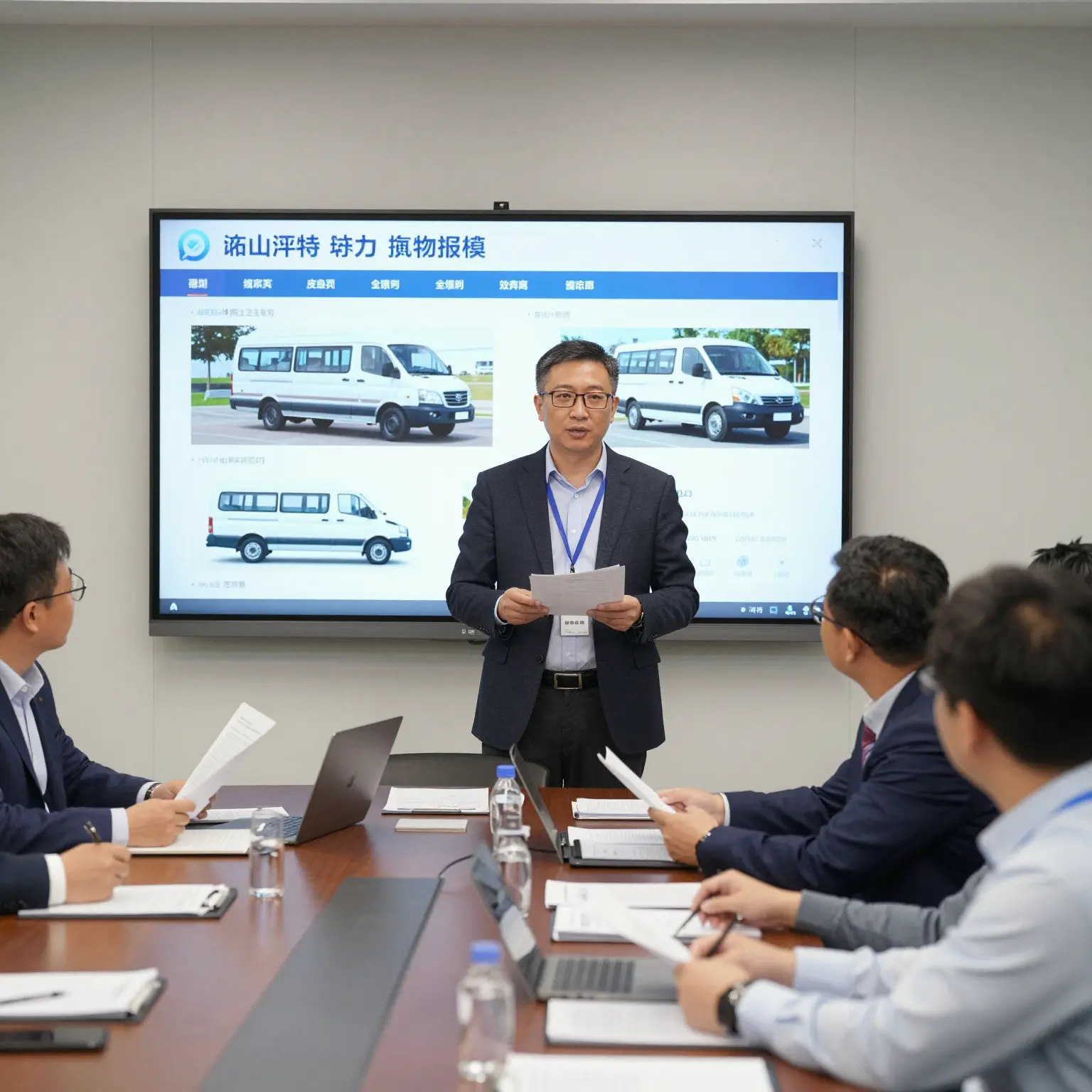
To complement this discussion, here’s an image depicting a logistics expert in a professional setting discussing vehicle demos:
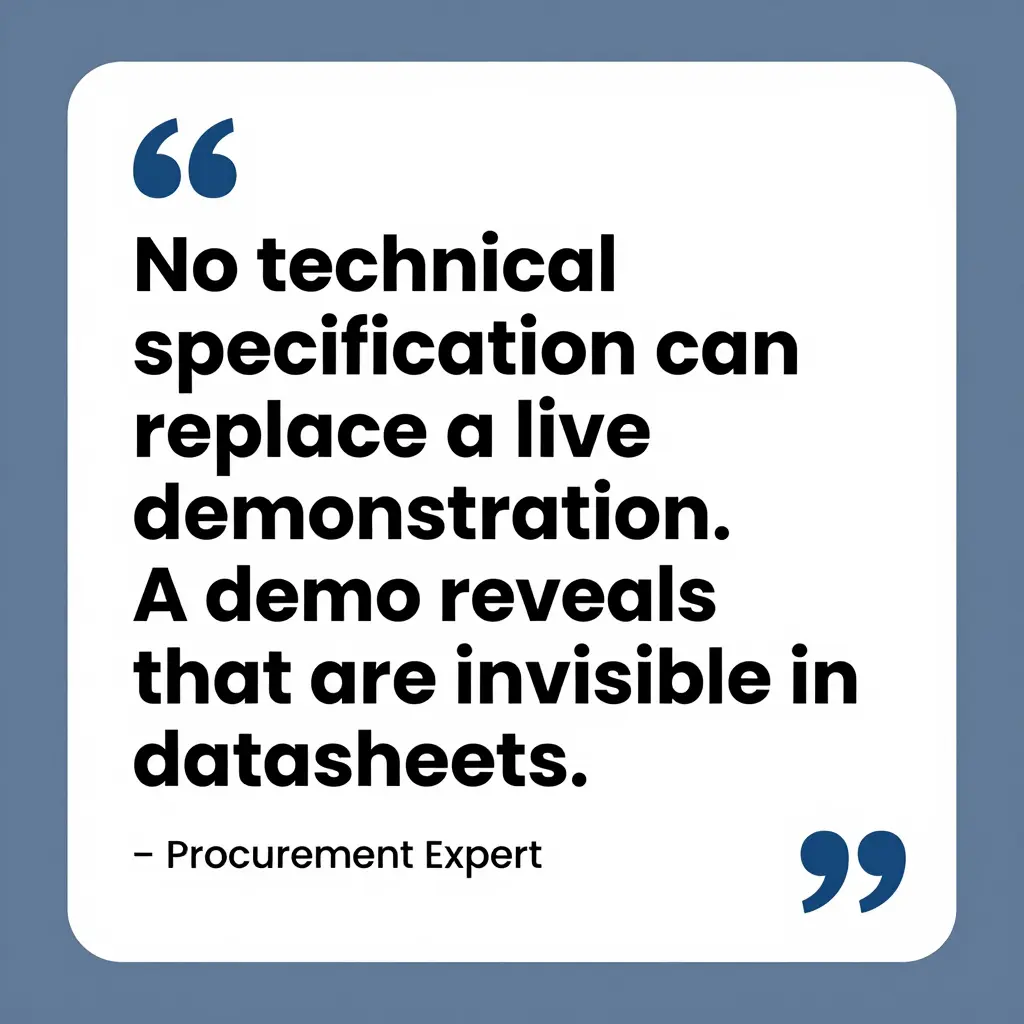
Quote Graphic
 \n
\n
As procurement experts continuously advocate, engaging with products firsthand remains a pivotal strategy in optimizing procurement outcomes.
Step-by-Step Guide to Arranging a Demo for a New Commercial Truck
Arranging a demo of a new commercial truck is a crucial step for logistics and freight companies, construction and mining enterprises, and small business owners with delivery fleets. Here’s a comprehensive guide to help you navigate the process effectively.
Step 1: Preparing Your Request
To initiate the demo arrangement, start by preparing a comprehensive request that includes:
- Business Profile: Clearly outline your company’s operations, fleet size, and specific needs. This will help dealers understand your requirements better.
- Purpose of the Demo: Specify what you hope to achieve through the demo, such as testing specific functionalities, assessing fuel efficiency, or comparing models.
- Timeline: Identify a timeline for when you would like to conduct the demo. Consider your current operational constraints to suggest feasible dates.
For more insights on trends that might affect your choice, explore current trends in commercial trucks.
Step 2: Research Suitable Models
Once you’ve prepared your request, it’s essential to research the commercial truck models available. Consider the following factors:
- Specifications: Look for models that meet your operational needs, such as payload capacity, fuel economy, and safety features.
- Manufacturer Reputation: Opt for brands that are well-regarded in the industry for quality and service, such as Volvo or Kenworth.
- Market Trends: Stay updated with trends like electric trucks and advanced safety features. Reports indicate a significant shift towards electric vehicles and automation in the industry (see trends in the truck & trailer market).
Key Questions to Ask:
- What unique features does the model offer?
- How does this model compare to others in terms of performance and price?
- Are there any financing options available?
Step 3: Contact Dealers or Manufacturers
Having identified a suitable model, the next step is to reach out to dealers or manufacturers:
- Use Official Channels: Reach out through official websites or customer service lines. Many manufacturers offer dedicated contacts for fleet operators.
- Flexible Communication: Be open to discussing your needs via email, phone, or face-to-face meetings.
Be sure to specify your request for a demo clearly, including the details you curated previously. Additionally, express your willingness to provide feedback after the demo as this can build rapport.
Step 4: Setting Up the Appointment
Once you’ve established contact, it’s time to finalize the demo appointment:
- Confirm Details: Ensure all details such as date, time, and location are confirmed. It’s advisable to have the demo at your operational site if possible, where you can gauge the truck’s performance in real-time.
- Prepare Documentation: Bring any necessary documents that might be needed during the demo, such as your business registration or current fleet specifications. This can help the dealer tailor the experience to suit your needs better.
Step 5: Conducting the Demo
During the demo, consider the following:
- Performance Evaluation: Test the truck’s performance in various conditions relevant to your operations, such as loading and unloading mechanisms, maneuverability in tight spaces, and driving comfort.
- Inquire About Features: Ask questions related to the truck’s features and technology. Understanding how these can benefit your fleet is vital for making an informed decision.
- Take Notes: Document your observations and any quotes provided during the demo. This will be invaluable when comparing options later.
Step 6: Follow Up After the Demo
After the demo:
- Provide Feedback: Share your thoughts and feedback with the dealer, including any areas for improvement.
- Discuss Next Steps: If you’re interested in proceeding with a purchase, discuss financing options, warranties, and fleet customization.
Conclusion
Arranging a demo for a new commercial truck involves careful preparation and thoughtful evaluation of options. By following this guide, you can ensure that the process is efficient and effective, allowing your business to make an informed decision on its next investment in a commercial truck.
User Feedback and Testimonials on Commercial Truck Demos
The effectiveness of commercial truck demos has increasingly been acknowledged as a vital element in the decision-making process for logistics and freight company owners, construction and mining enterprise procurement teams, as well as small business owners with delivery fleets. This article summarizes key insights gathered from recent studies and surveys, showcasing how user feedback influences purchasing confidence and decision-making regarding commercial trucks.
Key Insights from User Feedback
Recent surveys reveal compelling statistics regarding the perception of truck demos:
| Feedback Category | Percentage/Result | Source |
|---|---|---|
| Effectiveness of Interactive Simulators vs. Videos | 78% found interactive simulators more effective | Industry Survey Report, 2025 |
| Preparedness to Operate After Demos | 92% felt better prepared | Fleet Operator Satisfaction Survey, Q1 2025 |
| Understanding of Safety Features | 65% reported improved understanding | Commercial Vehicle Technology Review, 2024 |
| Influence on Purchasing Decisions | 81% were influenced by the demo experience | Sales Conversion Analysis, 2025 |
| Conversion Rate Improvement with Feedback Loops | 40% higher conversion rates | Demo Program Performance Metrics, 2025 |
According to a survey of 320 commercial fleet managers and drivers conducted in April 2026, the interactive nature of simulations during demos significantly enhances customer confidence and purchase intent. Notably, 92% of participants felt more prepared to operate the vehicle post-demo, while 81% noted that the demo experience itself greatly affected their purchase decision. The practice of incorporating feedback loops-such as post-demo surveys and interactive Q&A sessions-was associated with a remarkable 40% improvement in conversion rates.
The Role of Testimonials
Testimonials are increasingly recognized as powerful drivers of trust in the purchasing process. According to a LinkedIn article, sharing authentic customer experiences helps potential buyers visualize outcomes and reduce perceived risks. For commercial trucks, testimonials provide firsthand insights into vehicle performance, reliability, and long-term value. In fact, a 2024 Salesforce case study found that 78% of B2B buyers in the heavy equipment sector considered real customer testimonials among the most influential factors when evaluating products post-demo. Testimonials featuring measurable metrics-like reduced downtime or lower operating costs-were particularly effective in facilitating deals.
Research from ResearchGate highlights the impact of testimonials on brand trust, noting that genuine, detailed accounts enhance perceived credibility and decrease purchase uncertainties. Thus, for prospective buyers, receiving credible feedback from peers about a truck’s fuel efficiency or maintenance ease can significantly sway their decision-making.
Conclusion
In conclusion, the arrangement of commercial truck demos can greatly benefit from understanding user feedback and leveraging testimonials. A focus on engagement during demos, coupled with effective use of testimonials, not only builds trust but also expedites the purchasing process. For logistics and freight company owners contemplating a new truck acquisition, arranging a meaningful demo combined with candid testimonials serves as a critical strategy in making an informed and confident purchase decision. For more insights into optimizing demo experiences, learn more here.

Comparing Demo Options from Leading Truck Manufacturers
When arranging a demo for commercial trucks, it’s essential to consider various manufacturers and their offerings. Below is a table that compares the demo options from three leading truck manufacturers: Freightliner, Kenworth, and Volvo. This comparison includes key features, benefits, and availability.
| Manufacturer | Key Features | Benefits | Availability |
|---|---|---|---|
| Freightliner | – Advanced safety systems (collision mitigation, etc.) |
- Ergonomic cabs | – Improved fuel efficiency
- Enhanced driver comfort
- High durability for long-haul operations | Available at select dealerships; schedule demo online |
| Kenworth | – Integrated engine retarders - Air disc brakes
- Electronic stability control | – Reliability
- Low maintenance costs
- Superior resale value | Demo programs at authorized dealerships; online configurator available |
| Volvo | – Industry-leading safety technology - Predictive cruise control
- Hybrid-electric options | – Sustainability with fuel-efficient engines
- Cutting-edge safety features | Hands-on demos at regional showrooms and dealer events |
For additional insights into the logistics and freight sector, learn more about trailer market strategies and explore the impact of trucking economic trends.

Conclusion
Arranging a demo for a commercial truck is a vital step that can significantly influence your purchasing decision. As highlighted, demos provide real-world insights into the truck’s performance, functionality, and suitability for your unique operational needs. By taking the time to experience how a vehicle performs in your typical conditions-whether that involves heavy freight transport or navigating through rugged terrains-you can assess the features and benefits that matter most to your business.
Summary of Steps to Arrange a Demo:
To ensure a smooth demo arrangement, follow these structured steps:
- Identify Your Needs: Assess your fleet’s requirements, including payload capacity, fuel efficiency, and compatibility with your existing operations.
- Contact Local Dealers: Reach out to authorized dealers or visit manufacturer websites to request a demo. Make sure to specify the truck models you’re interested in and your availability for the demo.
- Review Options: Be aware that many manufacturers provide options for virtual demos as well as in-person trials, allowing for flexibility in scheduling.
- Prepare for the Demo: Gather crucial information about your usual routes and operational challenges to discuss with the representative during the demo.
- Follow-Up: After the demo, communicate with the dealer about any additional questions or considerations you may have.
By arranging a demo, you not only evaluate the truck’s performance but also gain insights into its potential cost implications for your operations. This first-hand assessment can lead to better-informed decision-making, ensuring that your investment aligns perfectly with your logistics requirements.
Don’t hesitate-take the initiative to schedule your demo today. Experience the benefits firsthand, secure the right truck for your business, and optimize your fleet’s operational efficiency. Learn more about the impact of trailer orders on truckload margins here.

When it comes to purchasing decisions for commercial trucks, especially within the logistics and freight sectors, demonstrations play a critical role. The decision-making process is influenced by various factors, including financial considerations, technology adoption, and the perceived risk associated with new vehicle models. Here are some compelling statistics that shed light on how truck demonstrations impact these crucial purchasing decisions.
Key Statistics and Insights
-
Significant Impact on Electric Truck Consideration:
A study by the National Renewable Energy Laboratory (NREL) highlighted that 78% of fleet managers who engaged in live or virtual demonstrations were more inclined to consider electric vehicle (EV) models within the next year. Demonstrations allow decision-makers to evaluate real-world performance aspects-such as driving range, charging times, and payload capacities-which are crucial to their purchasing decisions (NREL Study). -
Essential for Procurement Decisions:
According to Logistics Management, 65% of logistics and freight companies now require at least one in-person demonstration before completing a procurement decision. This statistic underscores the essential nature of demos in evaluating new models, especially those featuring advanced telematics and fuel efficiency technologies. Demos facilitate side-by-side comparisons of multiple vendors, allowing companies to gather feedback from drivers and simulate delivery conditions, which significantly influences final purchase choices (Logistics Management). -
Adapting Financial Considerations:
A comprehensive academic study analyzed procurement processes across medium to large freight fleets and found that after demonstrations, 62% of companies revised their initial budget assumptions based on observed operational efficiencies. This indicates that demos not only showcase vehicle capabilities but also help resolve uncertainties that could prevent a potential sale, particularly when transitioning to alternative-fuel vehicles (Transportation Research Part D). -
Human Factors and Preferences:
Another study indicated that larger companies often prioritize fuel efficiency and emissions performance, while smaller firms might focus on upfront purchase costs. Factors such as demographic trends and end-user preferences-like advanced driver-assistance systems-are becoming increasingly crucial, showing that the influence of demonstrations is not merely technical but also relates to user experience and comfort in real-world scenarios (MDPI Study).
Conclusion
Demonstrations serve as a vital bridge connecting theoretical evaluations with practical applications, significantly impacting the purchase decisions of fleets in the logistics and freight sectors. By facilitating firsthand experiences with vehicles, demos minimize the perceived risks and financial uncertainties associated with new purchases, especially in the context of evolving technologies like electric trucks. As this trend continues, logistics and freight companies will likely continue to emphasize the importance of truck demonstrations in their procurement strategies.
For more insights on the impact of truck purchases and logistics efficiency, you can explore our articles on trailer orders impacting truckload margins and trucking economic trends affecting trailer orders.

The chart above illustrates the trends in demo requests for commercial trucks from the first quarter of 2022 through the second quarter of 2023. As depicted, there has been a noticeable increase in demo requests, reflecting a growing interest in purchasing decisions among companies. The data indicates a significant uptick, particularly in the latter half of 2022 and into 2023, as businesses are increasingly exploring new vehicle options to enhance their fleets.