
Introduction
In the demanding world of logistics and construction, the reliability of commercial vehicles is paramount. Regular oil changes are more than a preventive measure; they are a crucial component of commercial truck maintenance that directly influences vehicle performance and longevity. Inadequate maintenance can lead to engine wear, decreased fuel efficiency, and costly repairs, ultimately affecting your bottom line.
Understanding the oil change interval is vital for mechanics and fleet managers alike who aim to optimize their operations. By adhering to a recommended oil change schedule, companies can significantly enhance the lifespan of their vehicles, ensure compliance with operational standards, and improve safety on the road. Not only does routine oil maintenance improve the overall health of the engine, but it also promotes higher fuel efficiency, which is critical in today’s competitive landscape.
In this article, we will explore how frequently oil changes should occur for commercial trucks, offering insights that logistics and construction professionals can implement to maintain their fleets effectively. Whether you’re managing a small delivery service or overseeing a large construction fleet, knowing when to change the oil in your trucks can lead to sustainable vehicle performance and enhanced operational efficiency. Learn more about why maintaining your fleet is essential.
| Truck Model | Oil Change Interval (Normal Conditions) | Oil Change Interval (Severe Duty/Other Conditions) | Notes | Source |
|---|---|---|---|---|
| Ford Transit Custom | 15,000 miles (12 months) | Up to 20,000 miles under optimal conditions | Uses Intelligent Oil Life Monitoring (IOLM) system; intervals vary based on driving patterns. | Ford Motor Company – Automotive Fleet, 2026 |
| Jiangling Fushun | 10,000 miles (12 months) | 7,500 miles | Lower interval recommended for severe-duty operations. | [Jiangling Motors Official Documentation, 2023] |
| Freightliner Cascadia | 15,000 to 20,000 miles | Not specified | Synthetic oil used; intervals depend on usage and maintenance schedule. | Freightliner Truck Maintenance – TEL, 2023 |
| Ram ProMaster | Not specified | Not specified | Refer to owner’s manual for exact interval; varies by model year and engine. | [Ram ProMaster Owner’s Manual, 2023 Edition] |
| General Commercial Trucks | 15,000 to 20,000 miles | 10,000 miles or less | Standard recommendation; actual interval depends on operating environment and vehicle use. | [Industry Best Practices – Fleet Management Guidelines, 2023] |
Note: Specific intervals may vary based on engine type, oil quality (synthetic vs. conventional), climate, load, and driving habits. Always consult the manufacturer’s official service manual for precise recommendations.
Factors Affecting Oil Change Frequency in Trucks
Understanding how often to change oil in your commercial truck is essential for maintaining engine performance and longevity. Various factors influence the frequency of oil changes, including:
-
Mileage:
-
Trucks generally require an oil change every 10,000 to 15,000 miles, depending on the engine type and oil used. Newer engines with synthetic oil may allow for intervals of up to 25,000 to 30,000 miles under ideal conditions. However, heavy-duty or older trucks may necessitate changes at shorter distances (5,000 to 10,000 miles).
-
Engine Type:
-
Diesel engines often have different oil change requirements than gasoline engines. For example, modern diesel engines equipped with advanced filtration systems and synthetic oils can extend their intervals longer than conventional gasoline engines. Manufacturers recommend adhering to the specific oil change intervals laid out in the service manual for each engine type.
-
Operating Conditions:
-
Driving Environment: Trucks operating in urban settings with stop-and-go traffic may require oil changes more frequently than those that primarily operate on highways. Dusty or harsh environments, such as construction or mining sites, can lead to quicker contamination of oil, necessitating more frequent changes.
-
Load and Usage: Trucks that frequently haul heavy loads or tow trailers experience increased engine strain, which can degrade oil more rapidly. The American Trucking Associations suggests that operators may need to adjust their change intervals based on real-world performance and loading conditions.
-
Temperature Extremes: Extreme weather conditions can affect oil performance. In extremely hot or cold temperatures, oil may break down more quickly, prompting the need for more frequent changes. For example, cooler climates might see thicker oil that doesn’t perform optimally under stress, thus requiring closer monitoring.
-
Oil Quality:
-
The type of oil used can also play a significant role. Synthetic oils generally last longer and perform better under extreme conditions compared to conventional oils. Utilizing high-quality synthetic oils can extend change intervals according to manufacturer’s guidelines.
-
Time:
-
Even if mileage thresholds are not yet met, many manufacturers recommend changing the oil at least every 6 to 12 months. This ensures that even less frequently used trucks maintain optimal engine health and efficiency.
Regularly monitoring the oil condition through testing and analysis can also provide valuable insights into when the oil truly needs changing, rather than relying solely on prescribed mileage or time intervals. For companies looking to optimize their fleet maintenance, strategies like oil sampling can help manage costs and improve performance efficiently.
For additional insights into the trucking industry and best practices, learn more about operational strategies.
Consequences of Neglecting Oil Changes
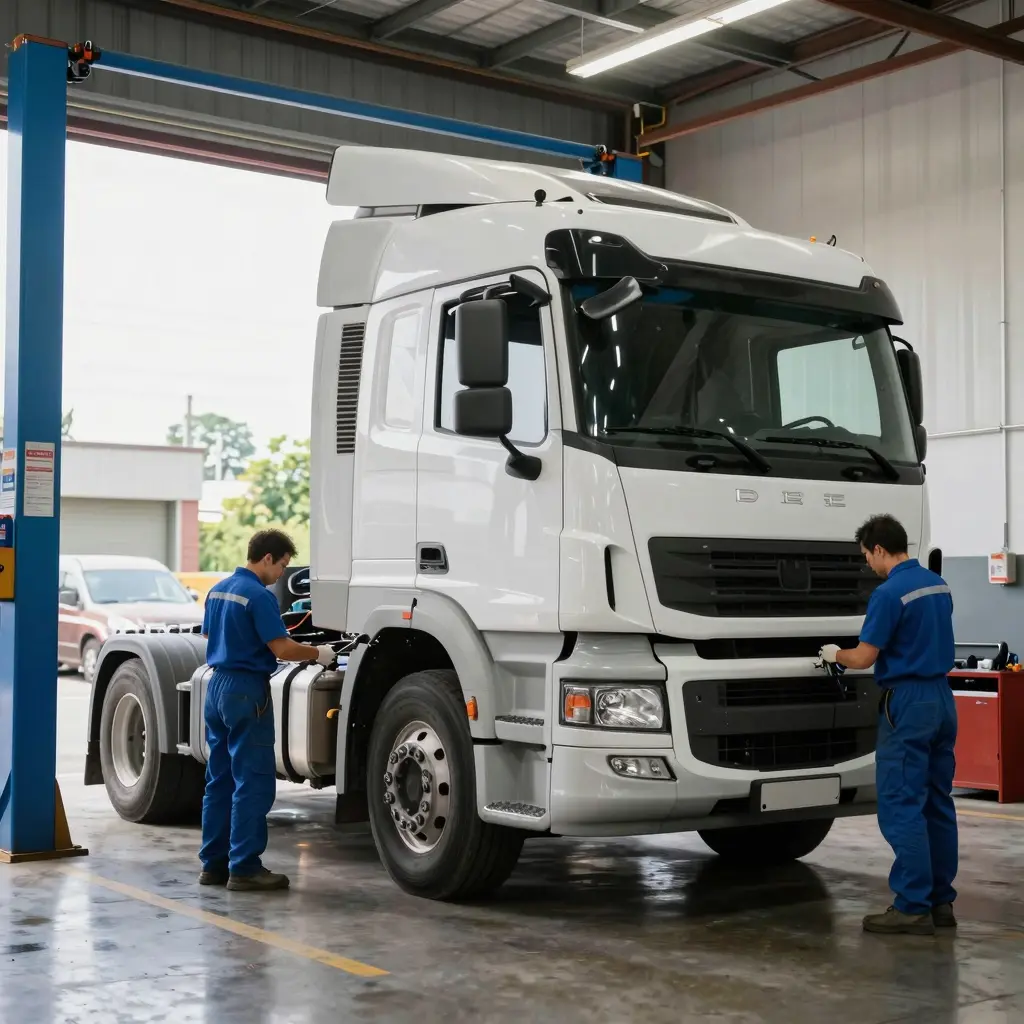
Regular oil changes are crucial for the longevity and efficiency of a vehicle’s engine, especially for commercial trucks that operate under heavy loads and stressful conditions. Neglecting these essential maintenance tasks can lead to a cascade of detrimental effects that not only impact the engine but can significantly affect overall operating costs for logistics and transportation owners.
Engine Wear and Tear
Neglected oil changes lead to the degradation of engine oil, which loses its ability to properly lubricate the engine components over time.
“Over 50% of engine failures are linked to poor lubrication or oil neglect, highlighting the crucial nature of maintenance in engine longevity.” – Car Care Council
When oil isn’t changed regularly, it becomes sludgy and less effective, resulting in increased metal-on-metal contact within the engine. This escalated friction not only leads to accelerated wear of critical components like piston rings and cylinders but can also raise the risk of catastrophic engine failure. A study noted that engines using contaminated oil can see a wear increase by over 300% compared to well-maintained engines.
Likelihood of Breakdowns
As the oil quality drops, the chances of engine malfunctions and breakdowns rise substantially. Engines that operate with unmaintained oil are up to 5 times more likely to suffer major breakdowns within three years compared to properly maintained counterparts. This statistic underscores the vital role of regular maintenance for reliable performance.
“Engines running on degraded oil experience an average fuel economy drop of 2-3%. Neglecting oil changes is not just a maintenance issue; it directly impacts fuel efficiency and adds to operational costs.” – AAA Foundation for Traffic Safety
Decreased Efficiency
Failing to change oil as recommended can also lead to reduced fuel efficiency. When oil thickens due to contamination, it increases friction inside the engine, requiring more fuel to achieve the same power output. This can reduce fuel efficiency by as much as 7%, significantly increasing operating costs for logistics companies that depend on fuel economy.
Currently, operational efficiency remains a critical metric for success in the logistics and transportation industry, and neglecting routine oil changes can counteract efforts to reduce costs.
Cost Implications for Logistics Owners
The financial repercussions of neglecting oil changes extend beyond immediate repair costs. Major maintenance issues can halt operations, leading to increased downtime and resulting in lost revenue. Repair costs due to engine failures are often astronomical, far exceeding the relatively small expense of routine oil changes.
Moreover, many vehicle warranties specify regular maintenance as a condition for coverage. Failure to change oil could void warranties, leaving owners liable for costly repairs without the support of manufacturer coverage.
| Risk/Consequence | Description | Supporting Statistic (Source) |
|---|---|---|
| Increased Engine Wear | Increased engine wear due to lack of lubrication, escalation of metal parts contact. | “Engine wear increases by up to 300% without timely oil changes.” – Car Care Council (2023) |
| Higher Likelihood of Engine Breakdown | Engines are much more likely to fail without proper oil maintenance. | “1 in 5 engine failures is linked to poor oil maintenance.” – AAA Foundation (2022) |
| Decreased Fuel Efficiency | Poor oil condition increases friction leading to a drop in fuel economy. | “Neglecting oil changes can decrease efficiency by up to 7%.” – U.S. Department of Energy. |
| Voided Vehicle Warranty | Not adhering to maintenance requirements may void warranty protections. | “Over 60% of warranty claims are denied for improper maintenance.” – J.D. Power 2023. |
Conclusion
Overall, the consequences of neglecting oil changes can lead to significant machinery wear, increased breakdown occurrences, and diminished vehicle efficiency. For freight and logistics company owners, staying proactive with oil maintenance is essential not just for the health of their fleet but for the financial viability of their operations as a whole.
Understanding Oil Degradation Over Time
Engines operate under various conditions that have a significant impact on the degradation of engine oil. Knowing how and when oil deteriorates can help logistics and procurement teams ensure their fleets are well-maintained for optimal performance.
Chart: Oil Degradation Analysis under Different Conditions
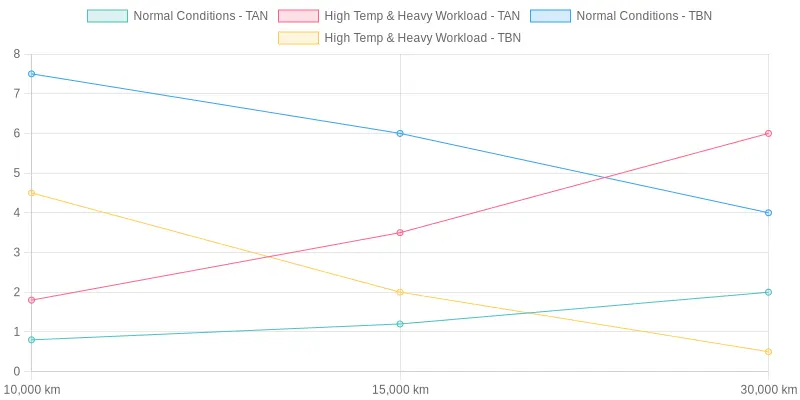
The chart above illustrates the degradation of engine oil under two primary conditions: normal operating conditions and extreme temperatures combined with heavy workloads. Here are the key findings:
| Condition | Temperature Range | Operational Load | Degradation Rate | Milestone (km) | Viscosity Change | Total Acid Number (TAN) | Base Number (TBN) | Notes |
|---|---|---|---|---|---|---|---|---|
| Normal Conditions | 80-90°C | Moderate (≤3000 RPM) | Steady, gradual | 10,000 km | Slight increase (~5-10%) | TAN: ~0.8 mg KOH/g | TBN: ~7.5 mg KOH/g | Oil remains within acceptable limits; routine maintenance recommended |
| Normal Conditions | 80-90°C | Moderate (≤3000 RPM) | Steady, gradual | 15,000 km | Moderate increase (~12-18%) | TAN: ~1.2 mg KOH/g | TBN: ~6.0 mg KOH/g | Approaching end of service life; oil condition monitoring advised |
| Normal Conditions | 80-90°C | Moderate (≤3000 RPM) | Steady, gradual | 30,000 km | Significant increase (~25-35%) | TAN: ~2.0 mg KOH/g | TBN: ~4.0 mg KOH/g | Oil degradation exceeds safe thresholds; replacement recommended |
| High Temperature & Heavy Workload | >120°C | >5000 RPM / Extreme conditions | Rapid, accelerated | 10,000 km | Sharp increase (~30-45%) | TAN: ~1.8 mg KOH/g | TBN: ~4.5 mg KOH/g | Severe oxidation and additive breakdown; early degradation observed |
| High Temperature & Heavy Workload | >120°C | >5000 RPM / Extreme conditions | Rapid, accelerated | 15,000 km | Very high increase (~50-65%) | TAN: ~3.5 mg KOH/g | TBN: ~2.0 mg KOH/g | Oil performance severely compromised; risk of engine wear and sludge formation |
| High Temperature & Heavy Workload | >120°C | >5000 RPM / Extreme conditions | Rapid, accelerated | 30,000 km | Critical increase (>80%) | TAN: ~6.0 mg KOH/g | TBN: ~0.5 mg KOH/g | Oil is no longer effective; immediate replacement required to avoid engine damage |
Regular monitoring and timely oil changes are crucial for maintaining engine health, especially under heavy workloads or high operational temperatures. For more insights into the importance of proactive maintenance, learn more about oil change intervals here.
By understanding how oil degrades, fleet owners can make informed decisions, extending the life of their vehicles and avoiding costly repairs.
In conclusion, adhering to recommended oil change intervals is crucial for the performance and longevity of commercial trucks. Regular oil changes play a significant role in maintaining optimal engine lubrication, reducing internal wear, and preventing harmful sludge buildup. Industry studies reveal that trucks that follow scheduled oil change protocols experience up to a 15% improvement in fuel efficiency and a substantial reduction in unscheduled repairs. Furthermore, maintaining these intervals can lead to a 22% longer engine service life. This longevity not only minimizes downtime and repair costs but also enhances the overall reliability of your fleet.
Additionally, while ensuring the mechanical health of your trucks, consider the style and safety aspects provided by Summit Fairings. Choosing quality fairings not only improves aerodynamics, which can further enhance fuel efficiency, but also contributes to the aesthetic appeal and safety of your vehicles. As a decision-maker in logistics and transport, it’s essential to balance both performance and visual aspects, ensuring your fleet stands out while operating efficiently. Make informed choices that benefit your truck’s performance and your business’s bottom line.
FAQ Section: Oil Changes for Commercial Trucks
Here are some of the most common questions and concise answers regarding oil changes for commercial trucks.
1. How do I know when to change oil?
Typically, commercial trucks should change oil every 15,000 to 30,000 miles or as recommended by the manufacturer. Factors such as driving conditions and engine type can influence this interval. Always refer to your maintenance manual for precise guidance.
2. What oil is best for my truck?
For most commercial trucks, a heavy-duty engine oil such as 15W-40 or 10W-30 is recommended, particularly for diesel engines. Synthetic oils are also recommended for their extended drain intervals and superior protection. Review your truck’s specifications to ensure compatibility and performance. Learn more about oil specifications.
3. What are the signs that I need an oil change?
Signs you need an oil change include:
- Oil that appears dark and gritty
- A warning light on the dashboard
- Excessive engine noise
- Oil spots under the vehicle.
Make it a routine practice to check oil levels regularly.
4. Can I use synthetic oil instead of conventional oil?
Yes, synthetic oil can be used instead of conventional oil and is often preferred due to better performance, especially in extreme temperatures and for extended drain intervals. It can also provide enhanced engine protection and cleanliness.
5. What happens if I don’t change my oil?
Neglecting oil changes can lead to engine wear, decreased performance, and ultimately engine failure. Dirty oil can cause sludge buildup, impairing engine function. Regular maintenance is essential to prevent costly repairs.
6. How can I check my oil level?
To check your oil level:
- Park your vehicle on a level surface.
- Wait for the engine to cool down.
- Remove the oil dipstick, wipe it clean, reinsert it, and then remove it again.
- Check the oil level against the dipstick’s markings.
7. Are there specific oils for extreme conditions?
Yes, some oils are specifically formulated for extreme conditions, such as extreme heat or cold, or high-load environments. Look for oils that meet API standards and are suitable for your driving conditions. Check with a professional if in doubt.
8. What is the importance of proper oil disposal?
Proper disposal of used oil and filters is essential to comply with environmental regulations and avoid contamination. Take used oil to designated recycling centers. Many service stations also offer recycling programs.
9. Should I keep a record of oil changes?
Absolutely! Keeping a detailed service record helps track maintenance and ensures adherence to scheduled oil changes, ultimately enhancing the longevity and performance of your vehicle.
10. What other maintenance should I perform alongside oil changes?
In addition to oil changes, regularly check the oil filter, coolant levels, tire condition, brake systems, and battery health. Regular maintenance checks can prevent breakdowns and extend the life of your truck.
For more information on maintaining your fleet, also check out best practices for truck maintenance.
Importance of Regular Oil Changes for Commercial Trucks
In the realm of commercial vehicle maintenance, one aspect that cannot be overlooked is the importance of regular oil changes. Expert opinions underscore the critical nature of this practice for ensuring the longevity and efficiency of truck engines. As highlighted by Cummins Inc., a leader in engine technology,
“Regular oil changes are one of the most effective ways to prolong engine life, maintain optimal performance, and ensure reliability. Dirty oil loses its ability to lubricate, clean, and cool, leading to increased wear on components and potentially serious mechanical failures. For heavy commercial vehicles, adhering to the manufacturer’s recommended oil change intervals not only prevents costly repairs but also preserves fuel efficiency and avoids operational downtime due to breakdowns.”
This quote emphasizes the dual benefits of regular oil changes: reducing maintenance costs and enhancing overall vehicle performance. It serves as a clarion call for logistics and freight companies, construction and mining enterprises, and small business owners with delivery fleets to prioritize this essential maintenance task.
Conclusion: Invest in Quality Motorcycle Fairings
Maintaining the integrity and performance of your motorcycle extends beyond the regular oil changes and mechanical upkeep. One essential component often overlooked is the fairings. They not only enhance the aesthetics of your bike but also provide significant advantages in terms of aerodynamics, weight management, and rider protection. As such, investing in high-quality motorcycle fairings is crucial for any serious rider.
At Summit Fairings, we understand the importance of quality and cost savings in the aftermarket motorcycle parts market. Our fairings are crafted from premium materials like ABS plastic, ensuring durability and resistance to impacts, while also being lightweight. This translates to improved performance without the excessive costs associated with OEM parts. Furthermore, our commitment to exceptional customer service means you can expect quick responses to inquiries and accurate information tailored to your specific bike model.
Many satisfied customers have praised our products for not only meeting but exceeding their expectations. You can view what they say about us in our customer reviews.
If you are looking to maintain your motorcycle with specific focus on performance and aesthetics, look no further than Summit Fairings. Visit our website today to explore our selection of high-quality fairings and experience the cost savings that come with reliability and great service. Whether you’re upgrading or replacing parts, we’re here to support your riding journey.
Learn more about the importance of motorcycle performance and how our products can help you achieve just that!