
Matching OEM Paint Codes on Aftermarket Fairings: Tint Shifts and Touch Up Cost
Aftermarket fairings rarely match a factory finish straight out of the box, and the mismatch usually traces back to the paint code or to how the panel was sprayed. This guide covers how to read and cross-reference OEM paint codes, where tint shifts come from, and what a touch up job costs. It is written for the two groups who care most about a factory-correct finish: collision and refinish shops, and riders restoring or customizing their own bikes.
Why OEM Paint Code Accuracy Matters for Aftermarket Motorcycle Fairings
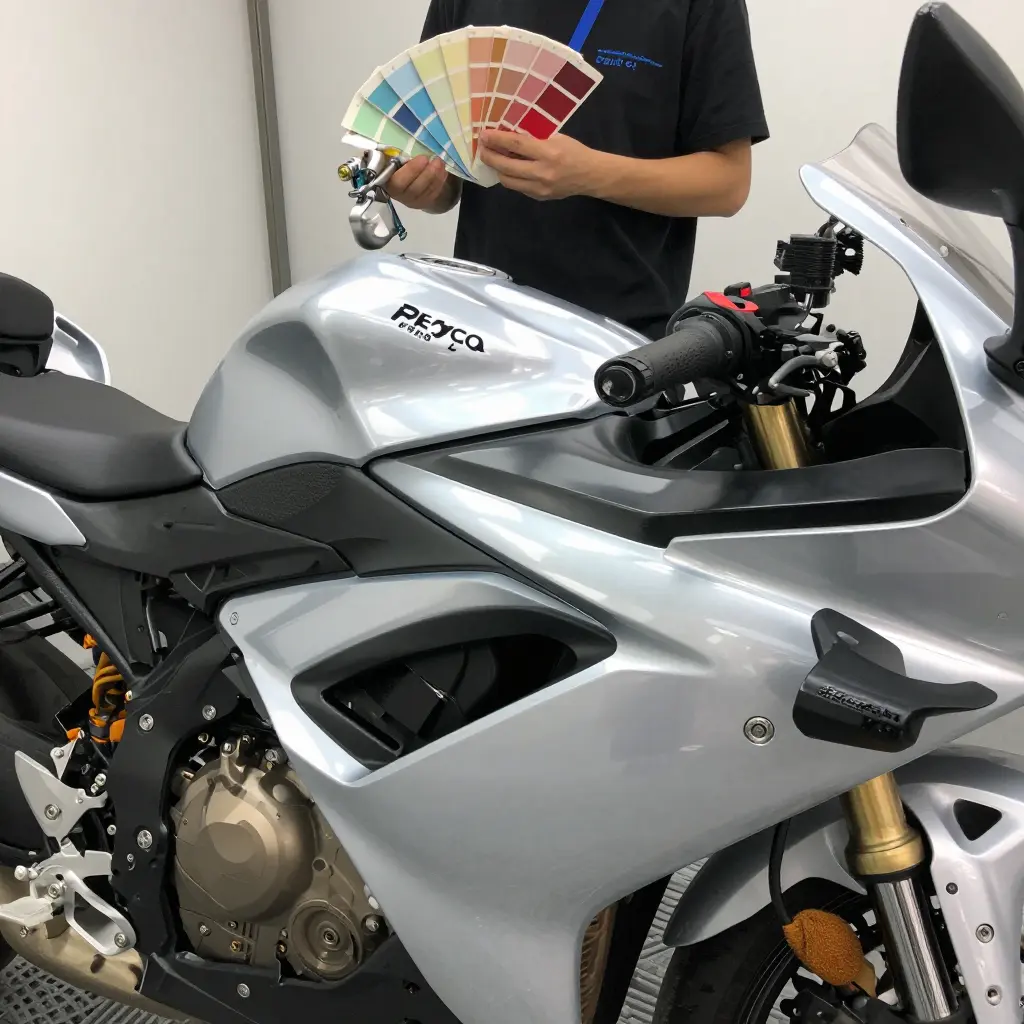
When a rider replaces damaged plastic, the new parts should disappear into the rest of the bike. That only happens if the aftermarket motorcycle fairings carry the correct OEM paint code. Paint code matching is what makes the repair look like it was never needed.
Color Consistency Across Panels
The tank, side fairings, and tail section sit inches apart under the same light. A small tint shift that would hide on a car is obvious here, and the bike reads as a patchwork instead of one factory finish. Get the color right across every panel and the machine looks whole.
Resale and Repair Value
Buyers, dealers, and insurance adjusters look at finish quality. A bike with a clean, uniform OEM match holds its resale value better than one with visible color drift. For a shop, the same consistency means fewer comebacks and less rework on every job.
Shop Reputation and Customer Satisfaction
Riders talk. A shop that gets new panels to match the factory finish on the first try earns the bigger jobs; repeated mismatches cost it those jobs. Verifying the paint code before mixing takes a few minutes and prevents most of those failures.
Understanding Tint Shifts When Matching OEM Paint Codes
A tint shift is a visible difference in hue, chroma, or value between a repainted panel and the original factory finish, even when the refinisher used the correct OEM paint code. The new paint reads slightly greener, redder, darker, or lighter than the surrounding bodywork under the same light. An OEM paint code is a recipe, not a color sample: it identifies a formulation, and small variations in ingredients, application, and environment push the final appearance away from the original. The industry calls this color drift, and it is one of the most common reasons aftermarket fairings do not match a factory finish exactly.
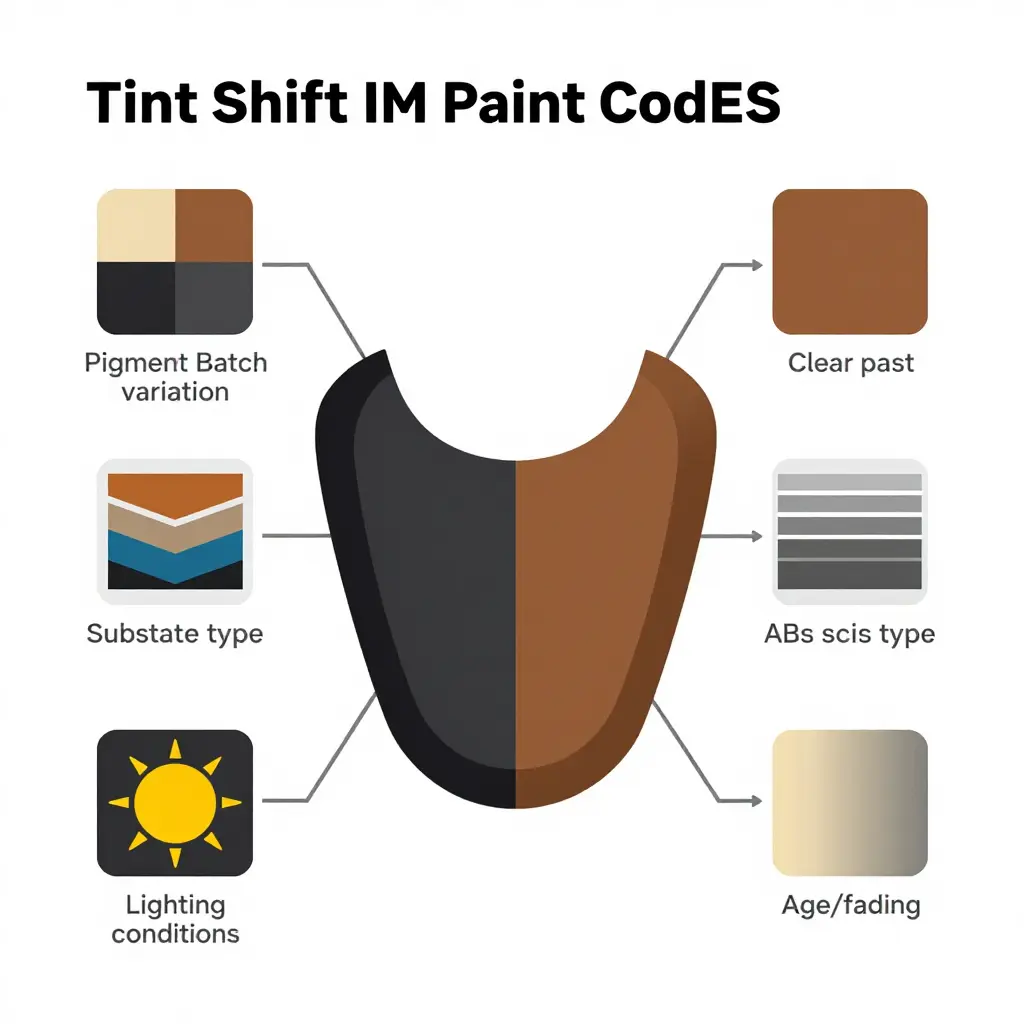
Why Tint Shifts Happen
Pigment batch variation. Pigments are produced in lots, and each lot carries a small tolerance. Two cans mixed to the same formula months apart can sit a shade or two apart. Metallic and pearl colors are especially sensitive because their appearance depends on the size and orientation of the metallic flakes, not just the base pigment.
Clear coat differences. Clear coat is not perfectly transparent. Its chemistry, gloss level, and UV additives change how light passes through and reflects off the color coat beneath. A factory clear coat and an aftermarket clear coat rarely share the same optical profile, so the same base coat can look different once each is sealed.
Primer base color. Paint is translucent to a degree. A sealer or primer in a different shade tints the color coat above it. If the OEM used a light gray primer and the repair shop uses a dark sealer, the topcoat reads darker than the original.
Substrate type. ABS plastic fairings, steel, and aluminum absorb and hold heat differently, and they reflect light differently at the edges. Plastic also flexes, which affects how paint cures and how much solvent remains, and both change the final gloss and color.
Lighting conditions. A tint that is invisible under fluorescent shop lights can be obvious in direct sunlight, and the reverse happens too. Judge a match outdoors in neutral daylight before you commit.
Age and fading of the original paint. OEM finishes oxidize, chalk, and shift as UV exposure breaks down pigment and clear coat. A five-year-old factory panel is no longer at its original color, so a perfect match to the paint code can still look wrong beside the aged panel.
The Practical Takeaway
A tint shift is a normal result of mixing, applying, and aging paint, not automatically a mistake. Knowing these six variables lets a refinisher choose a blendable formulation and tell the customer what to expect when comparing aftermarket fairings to factory bodywork.
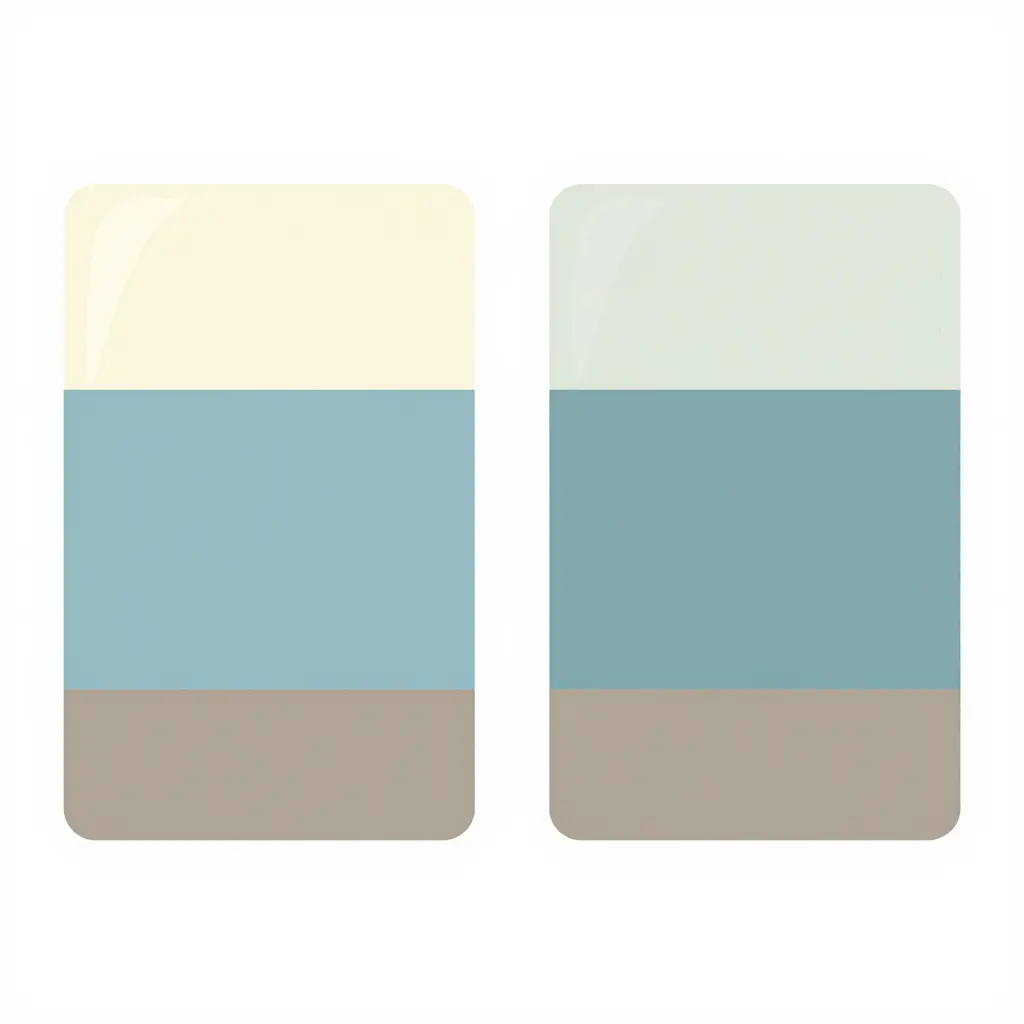
The diagram above shows the three-layer paint stack on a typical fairing. On the left, the layers sit in a matched, harmonious tone. On the right, only the middle base coat shifts slightly, yet the entire panel reads as a noticeably different shade. That is why an OEM paint code match can still look “off” on an aftermarket fairing.
OEM Paint Code Matching: Original Parts vs. Aftermarket Fairings
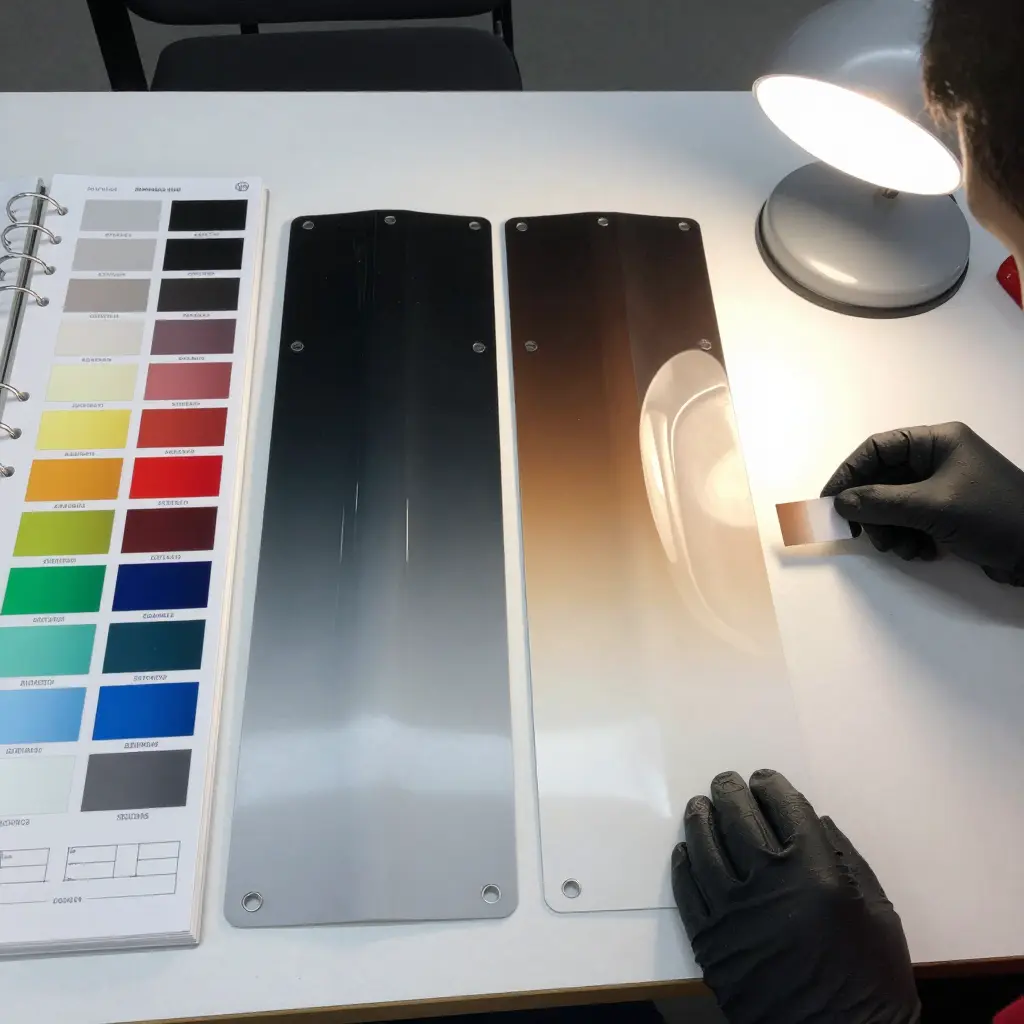
How closely a replacement fairing matches the rest of the bike depends on whether you buy original parts or aftermarket fairings, and on how well the supplier reproduces your OEM paint codes. That difference shows up in both color accuracy and cost.
Original parts. Factory parts carry a paint code stamped on the bodywork or listed in the manufacturer’s service catalog. Factories maintain large color libraries that tie each code to an exact formula. Because the finish is applied under controlled conditions, one code usually equals one mixture. Even so, colors drift between model years and assembly plants, which is why variant codes matter.
Aftermarket fairings. Aftermarket fairings do not come off the factory line, so paint code matching depends on the supplier’s own color library and testing process. A dependable supplier starts with your OEM paint codes, then cross-references them against formulas built from thousands of real-world samples.
Spray-out testing. Spray-out testing is the safety check. Before a fairing ships, technicians spray a test panel and compare it with the original under daylight and shop lighting. This step catches the tint shifts that a formula alone can hide.
Color variants. Many colors share a base name but split into several variant codes, each tuned to a specific year or plant. Skipping the variant check is the most common cause of a visible mismatch.
| Factor | Original OEM Parts | Aftermarket Fairings |
|---|---|---|
| Color source | Factory stamp and service catalog | Supplier color library built from real samples |
| Matching basis | One code, one controlled formula | OEM paint codes plus cross-referencing |
| Quality check | Factory-controlled finish | Spray-out test panel |
| Main risk | Drift between model years and plants | Missed color variants |
| Typical cost | Dealer pricing | Often 10-40% lower |
Suppliers such as summitfairings.com work from more than 3,000 styles and confirm the correct OEM paint codes and color variants before an order leaves the warehouse. Because they sell outside the dealer channel, buyers can pay 10-40% less than prices on other sites, and the team answers matching questions within six hours instead of leaving shops to wait.
Touch Up Cost: What Drives the Price When Matching OEM Paint Codes on Aftermarket Fairings
Matching an OEM paint code on aftermarket fairings is rarely one spray and done. The budget is not just the first pass of paint; it is everything around it. Touch up cost is the sum of materials, mixing, labor, tools, and the corrections needed when color matching drifts off target.
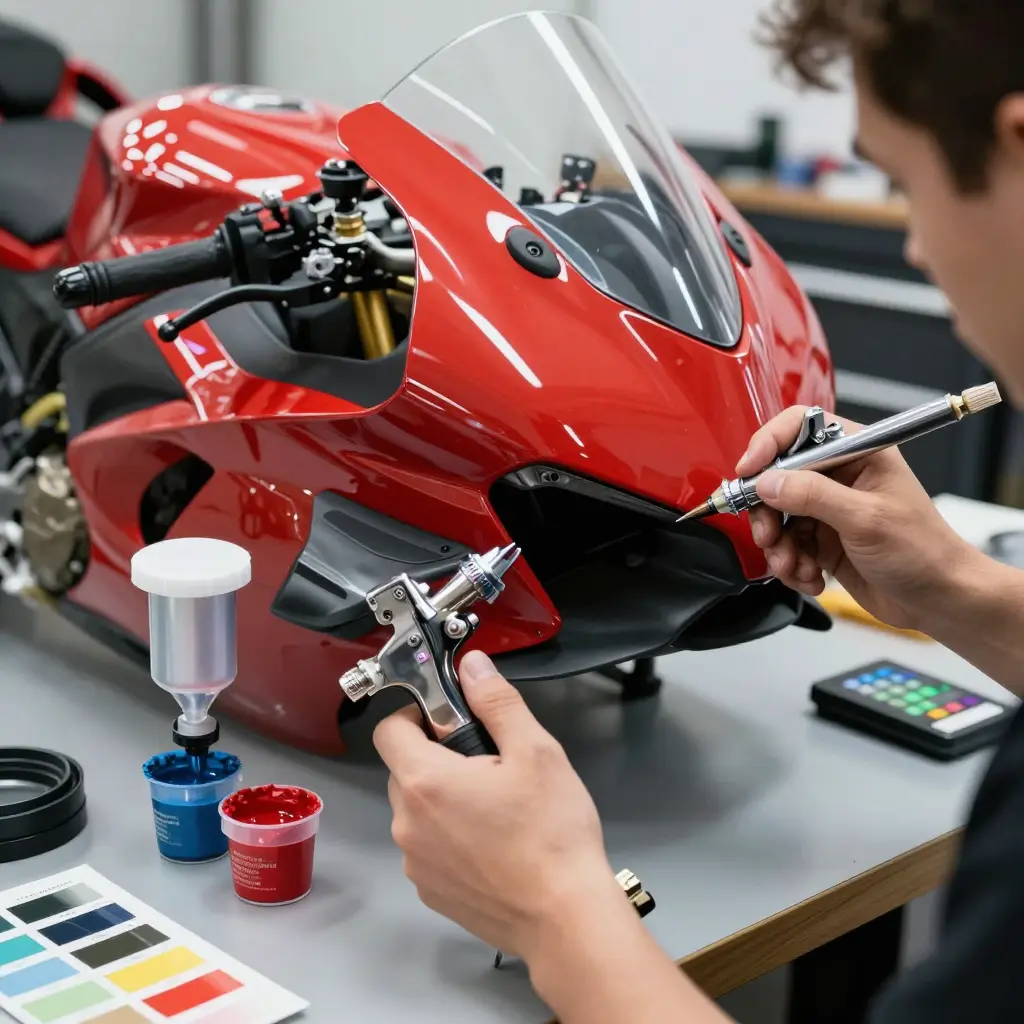
The Core Cost Components
Paint quantity needed. A small scuff on motorcycle fairings may need only a few ounces, while a full panel repaint can consume a full pint or more of basecoat, plus clearcoat and reducer. Larger coverage means more product, more waste, and higher material spend per job.
Custom color mixing fees. Factory codes are a starting point, not a guarantee. Aftermarket fairings from different molds and suppliers often need tint adjustments, so a shop charges for color matching scans, trial sprays, and mixing bench time.
Labor time. Prep, sanding, masking, blending, and curing all bill by the hour. Blending a repair into an adjacent panel takes far longer than a spot fix.
Tools and materials. Airbrushes and touch up guns for small work, full spray guns, a compressor, mixing cups, and a color scanner add up. DIY buyers pay once; shops amortize these but still pass on consumables.
DIY Touch Up vs. Shop-Level Repair
Two paths for a typical fairing scuff:
| Cost Component | DIY Touch Up | Shop-Level Repair |
|---|---|---|
| Paint quantity | Touch up pen or small bottle | Pint to full panel mix |
| Color mixing | Pre-matched aerosol, limited shades | Scanner plus custom tint blend |
| Labor time | 1 to 2 hours | 4 to 8 hours |
| Tools | Hand tools, optional airbrush | Spray guns, booth, compressor |
| Skill risk | Visible seams, uneven gloss | Blended, uniform finish |
How Tint Shifts Raise Touch Up Cost
Tint shifts multiply the bill. A color that lands slightly off the OEM paint code can look right in the booth and wrong in daylight, and fixing it means respraying the whole panel or blending into the neighbors, which doubles paint and labor.
That makes rework the biggest single cost driver. Every failed color match burns fresh materials and booth hours, and the next attempt can fail too. On motorcycle fairings with metallic or pearl finishes, the flop and angle-dependent hues make each retry riskier.
Shops that calibrate color matching early keep touch up cost predictable. It is the same discipline as cutting operational costs in any fleet or workshop budget: accuracy at the start prevents expensive corrections later.
What Actually Drives Your Touch Up Bill
The invoice for matching an OEM paint code on aftermarket fairings is a stack of small costs, and the paint itself is not always the largest one. The chart below breaks a typical touch up job into its components.
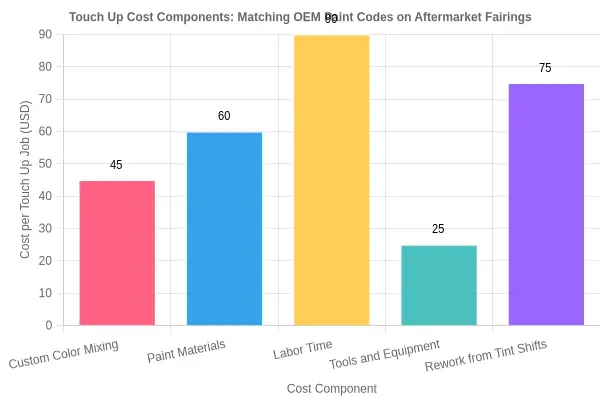
Caption: Each bar is an illustrative cost component of a single touch up job when matching an OEM paint code on an aftermarket fairing. The y-axis shows cost per job in USD, and the x-axis lists the component. Labor time and tint shift rework dominate the total, which is why mismatched shades cost far more than the paint in the can.
From the chart:
- Labor time ($90) is the single largest line item. Chasing a correct shade through multiple mixes eats hours faster than any material cost.
- Rework from tint shifts ($75) is the silent budget killer. When the mixed color drifts from the OEM code under different lighting, the whole panel gets re-done.
- Tools and equipment ($25) stays low only because most shops already own a spray setup and a mixing scale.
- Custom color mixing ($45) and paint materials ($60) scale with how far the aftermarket shade sits from the factory reference.
The cheapest way to cut touch up cost is not cheaper paint but a correct shade on the first pass, since that single variable controls both your labor hours and your rework spend.
The flowchart above traces the path every shop follows when color-matching an OEM paint code to a new aftermarket fairing: read the code, order the correct paint, run a spray-out to verify the match, then finish with the final touch up. Run it as a checklist on every job so tint shifts do not sneak past.
FAQ: Matching OEM Paint Codes on Aftermarket Fairings
Can aftermarket fairings truly match OEM paint codes?
Yes, in most cases. Reputable suppliers mix paint using the manufacturer’s OEM paint codes, so a properly finished set of aftermarket fairings can come very close to the factory color. The match depends on the exact code, the paint brand used, and how carefully the shop applies the clear coat.
What causes tint shifts on painted fairings?
Tint shifts usually come from a few sources: paint mixed to an approximate color rather than the exact OEM paint codes, clear coat that has yellowed from UV exposure, and age-related fading on the original factory panels. Even a correct formula can look slightly off if the spray technique or the number of coats differs from the factory finish.
How much does touch up cost, and what affects the price?
Most touch up cost falls in the $25 to $150 range for a small kit or single-panel repair, while a full multi-panel respray can run several hundred dollars. The price depends on panel size, whether the shop needs a custom color mix, and whether blending into adjacent panels is required.
How long does color matching take?
A single-panel color match typically takes one to three days once the paint arrives, including mixing, spraying, and curing. Full fairing sets can take one to two weeks because each panel is matched and blended separately, and special colors may need extra lead time for formula verification.
Does summitfairings.com support color matching across its 3,000+ styles?
Yes. Summit Fairings offers color matching across its full catalog of more than 3,000 fairing styles, letting riders request specific OEM paint codes at checkout. Confirm the code and finish (gloss, matte, or metallic) before ordering so the final panels avoid tint shifts.
Do auto repair shops need special equipment to match OEM paint codes?
Not always, but a spectrophotometer and a calibrated mixing system greatly improve accuracy. Many shops rely on their paint supplier’s database and a quality spray booth to reproduce OEM paint codes consistently on aftermarket fairings.
Conclusion: Getting OEM Paint Codes Right the First Time
Matching OEM paint codes on aftermarket fairings decides whether a repair blends in or draws the eye to a mismatched panel. Accurate color matching matters, tint shifts are a normal outcome rather than a rare defect, and both feed directly into your touch up cost.
For repair shops, the routine matters: verify the factory code before ordering, spray a test card before committing to a full panel, and build a realistic allowance for tint variation into every estimate. For riders, expect slight variation, budget for professional blending on complex finishes (pearls, metallics, and three-stage colors), and compare the price of a pre-painted aftermarket panel against a custom spray before deciding.
The cost drivers stay the same either way: paint type, the number of panels involved, blending labor, and whether the color needs a custom mix. Keep those in view and neither a shop nor a rider gets surprised at the counter.
When you are ready to source panels, summitfairings.com lists over 3,000 styles at prices 10-40% lower than other sites and answers questions within six hours. Whether you order in volume or refresh a single bike, starting from the correct OEM paint codes and planning ahead for tint shifts keeps your aftermarket fairings project on time and on budget.