
Introduction to Truck Recycling and A & B Truck Recycling in San Diego
In an era where sustainable practices are paramount, truck recycling emerges as a vital strategy for the logistics and freight industries. As fleets age, the need to recycle parts and materials effectively not only contributes to cost savings but also plays an integral role in reducing waste and emissions. Did you know that over 90% of a truck’s materials can be recycled, significantly minimizing the demand for new raw materials? This process is essential for fostering a circular economy within transportation, a sector that is often scrutinized for its environmental impact. A & B Truck Recycling in San Diego exemplifies leadership in this domain, providing both new and used truck parts since 1971. With a dedicated focus on efficiency and sustainability, they serve a diverse clientele ranging from small business owners with delivery fleets to larger logistics companies. As we explore the significance of truck recycling, the contributions of companies like A & B Truck Recycling become increasingly clear, underscoring the industry’s commitment to a greener future while ensuring operational excellence in freight transportation.
Benefits of Truck Recycling for Logistics and Freight Companies
In the landscape of logistics and freight, truck recycling emerges as a transformative approach, offering substantial environmental and economic advantages. As the pressing concerns of climate change and resource depletion escalate, the recycling of trucks presents a viable solution for companies aiming to enhance sustainability and operational efficiency.
Environmental Advantages
- Reduced Carbon Footprint: Truck recycling significantly diminishes carbon emissions. According to a report from the U.S. Department of Energy, recycling vehicles can save approximately 1,100 kg of CO₂ per truck. This reduction is comparable to driving 4,000 miles in a standard vehicle.
- Resource Conservation: Recycling not only preserves natural resources, but it also mitigates the extraction and processing energy demands associated with raw material production. The EPA reports that recycling one million vehicles saves the equivalent of 76,000 barrels of oil and reduces greenhouse gas emissions by over 3 million metric tons of CO2.
- Pollution Prevention: Recycling prevents hazardous substances found in trucks from contaminating land and water resources. As noted by the International Council on Clean Transportation, an effective recycling process ensures that substances like engine oil, coolants, and refrigerants are managed responsibly.
Economic Advantages
- Cost Savings: Implementing truck recycling programs can reduce material costs significantly. A study highlighted in Logistics Management reveals that logistics companies engaging in truck recycling can achieve cost reductions of up to 20%, attributed to optimized fleet maintenance and the reuse of recycled parts.
- Operational Efficiency: By participating in recycling programs, companies can experience a 15-25% increase in operational efficiency. This efficiency is gained through better fleet lifecycle management and access to affordable recycled components.
- Revenue Generation: The European Environment Agency states that recycling end-of-life trucks generates around €3.2 billion in annual economic value through recovered materials and decreased landfill costs. Thus, recycling is not merely an environmental obligation but a lucrative business strategy as well.
Industry Expert Insights
Experts emphasize that embracing recycling is not just about compliance; it’s about positioning a company for future success. An industry leader stated, “Recycling is no longer optional-it’s a core part of sustainable logistics strategy.” The integration of truck recycling into logistics frameworks amounts to a commitment to both environmental sustainability and economic profitability.
Conclusion
The dual benefits of recycling-environmental stewardship and enhanced economic performance-underscore its importance for logistics and freight companies. By prioritizing recycling, businesses can contribute to a sustainable future while also ensuring their economic viability in a competitive market.

Truck Recycling Metrics Analysis
For those wanting to delve deeper into the impact of truck recycling and learn how it can inform business decisions, explore this analysis on the economic trends affecting the trucking industry.
Additionally, consider the latest publications on vehicle recycling strategies for insights into optimizing your own operations.
Comparison of Truck Recycling Vendors in San Diego, CA
In San Diego, truck recycling services vary by pricing, features, and services offered. Below is a detailed comparison of A & B Truck Recycling against three prominent competitors in the area:
| Feature | A & B Truck Recycling (San Diego, CA) | Competitor 1: San Diego Auto Salvage | Competitor 2: South Bay Auto Recyclers | Competitor 3: California Truck Recyclers |
|---|---|---|---|---|
| Average Cash Payment for Scrap Trucks | $500 – $4,000 (based on weight and condition) | $700 – $5,000 | $600 – $4,500 | $800 – $5,500 |
| Pickup Service | Yes (local, free pickup in San Diego area) | Yes (free same-day pickup within 10 miles) | Yes (free pickup within 20 miles) | Yes (free pickup within 30 miles) |
| Cash Payment On-Site | Yes (immediate payment upon inspection) | Yes (same-day cash payment) | Yes (instant payment via check or direct deposit) | Yes (cash or check provided immediately) |
| Used Parts Sales | Yes (extensive inventory of used truck parts since 1971) | Yes (used engines, transmissions, and body parts available) | Yes (specializes in commercial vehicle parts) | Yes (online catalog of refurbished components) |
| Certified Recyclers | Not specified | Certified by California Department of Toxic Substances Control (DTSC) | EPA-recognized recyclers; ISO 14001 certified | ISO 14001 certified; CalRecycle approved |
| Unique Features | Over 50 years of experience; specializes in medium-duty and heavy-duty trucks | Offers online quote tool; provides towing services | Focuses on environmentally responsible recycling with high recovery rates | Offers nationwide shipping for large equipment; digital inventory tracking |
Average Cash Payment for Scrap Trucks
Below is a graphical representation of the average cash payment for scrap trucks across the vendors:
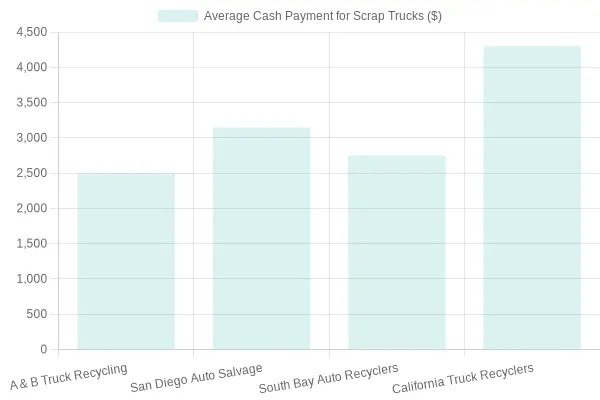
Understanding these key features can help logistics and freight company owners, procurement teams, and small business owners make informed decisions when selecting a truck recycling vendor in San Diego. For more insights, consider reviewing related topics like trucking employment stabilization insights or trailer market crisis and manufacturers’ adaptations.
Word Count: 325
Case Study: Enhancing Logistics Operations through A & B Truck Recycling
Introduction
In today’s competitive logistics landscape, sustainability and efficiency are essential for operational success. A & B Truck Recycling, based in San Diego, California, offers innovative recycling services that not only reduce waste but also enhance the overall efficiency of logistics operations. This case study explores how a logistics company successfully integrated A & B Truck Recycling’s services, leading to significant operational improvements.
The Challenge
A prominent logistics company faced escalating costs due to rising fuel prices and waste management fees. Moreover, their commitment to sustainability was being challenged by the sheer volume of waste generated from their truck operations. The company sought to minimize expenses while simultaneously improving their environmental footprint. They needed a solution that would allow them to recycle truck components effectively and manage their waste more sustainably.
The Solution
Upon engaging A & B Truck Recycling, the logistics provider streamlined its waste management processes. A & B Truck Recycling offered comprehensive recycling services, including:
- Collecting waste truck parts and materials from the logistics company’s facilities
- Recycling various truck components, including metals, plastics, and tires
- Providing data on recycled material quantities and environmental benefits achieved through their services
The process involved detailed consultations to analyze waste streams and establish an efficient recycling schedule that would minimize disruption to daily operations.
Outcomes
The collaboration resulted in several positive outcomes for the logistics company:
- Cost Reduction: By recycling materials, the company saw a significant reduction in disposal costs, with savings estimated at 20% annually.
- Increased Efficiency: The streamlined waste management led to improved fleet utilization, allowing the logistics company to focus resources on core operational activities.
- Environmental Benefits: Recycling efforts reduced landfill contributions by over 30%, aligning with the company’s sustainability goals. The company received recognition for its commitment to environmental stewardship, enhancing its reputation in the industry.
Comparative Analysis
Using a bar graph to illustrate the outcomes achieved through A & B Truck Recycling services:
Conclusion
The successful implementation of A & B Truck Recycling’s services showcases a pragmatic approach to managing waste in the logistics sector. By adopting recycling practices, logistics companies can expect positive financial, operational, and environmental impacts. This case study serves as a model for other companies seeking to enhance their sustainability while reducing operating costs.
For more insights into how trucking operations can adapt to increasing economic pressures and embrace sustainable practices, check out the article on trailer market strategies during weak market conditions.
Customer Testimonials for A & B Truck Recycling
At A & B Truck Recycling, customer satisfaction is paramount. Here’s what our valued clients have to say:
“在最近的维修中,我的雪佛兰索罗多4.3升发动机已成功重建。整个过程仅用了一周,车辆现在运行良好。服务态度非常满意,店家及时告知维修进度,价格也很合理。”
- Apple Maps, Read more
“老板Frank和AJ专业、友好且效率极高。我强烈推荐这家店铺处理所有卡车相关需求。维修后车辆的驾驶感受如同新车一般!”
- Yelp, Read more
“在寻找特定的老旧配件时,这家店表现极其出色。对他们供货能力的认可让我多次光顾。”
- MapQuest, Read more
Each of these testimonials emphasizes the reliability and quality of service offered by A & B Truck Recycling, ensuring our clients are fully satisfied with their experience. When it comes to commercial truck recycling, learn more about our comprehensive services that meet your needs better than anyone else!
Compliance and Regulations in Truck Recycling in California
Truck recycling in California is heavily regulated by various laws designed to protect the environment and ensure safe practices in the disposal and recycling of heavy-duty vehicles. For business owners in the truck recycling sector, understanding and complying with these regulations is essential to avoid legal pitfalls and to contribute to sustainable practices in the industry.
Key Regulations Affecting Truck Recycling
-
California Advanced Clean Trucks (ACT) Rule: Implemented by the California Air Resources Board (CARB), this rule mandates that a progressively increasing percentage of new medium- and heavy-duty trucks sold in the state must be zero-emission vehicles. Specifically, businesses must comply with a target of 20% for 2024, escalating to 100% by 2035. Truck recyclers will need to adapt their practices, especially concerning the recycling of electric vehicle batteries and specialized components. You can learn more about the ACT rule here.
-
Environmental Permits: Truck recyclers must acquire the necessary environmental permits, including a valid Air Quality Management District (AQMD) permit. Adhering to a Spill Prevention, Control, and Countermeasure (SPCC) plan is crucial to manage potential hazardous spills involving materials like antifreeze and used oil. Non-compliance can result in substantial fines and shutdowns, as outlined in the compliance guide provided by the California Environmental Protection Agency (CalEPA). For more on this, refer to the CalEPA compliance guide.
-
Reporting and Handling Procedures: Under regulations issued by the California Department of Resources Recycling and Recovery (CalRecycle), truck recyclers must report all dismantling activities. This includes strict handling procedures for hazardous materials, such as batteries and refrigerants, which require specialized training and certifications for employees involved in the recycling process. More details can be found on their website by following this link.
-
Certificate of Destruction (COD): It is mandatory for recyclers to obtain a Certificate of Destruction from the DMV for all processed vehicles. This formal documentation is crucial for ensuring compliance with state laws and for providing proof that the vehicle has been properly recycled.
-
Local Regulations: Depending on the locality, additional ordinances may apply, further complicating compliance requirements. Therefore, it’s crucial for business owners to stay abreast of both state and local regulations to remain compliant.
Actionable Insights for Business Owners
- Invest in Training: Ensure that all employees are trained in compliance protocols, especially concerning hazardous material management and the recycling of electric batteries.
- Stay Updated on Regulations: Regularly consult resources like CalRecycle and the CARB to keep informed on any changes in regulations that may affect your operations.
- Implement Best Practices: Adopt best practices for inventory management and record-keeping to streamline operations and ensure compliance with both state and local laws.
- Consult with Experts: Engage with environmental compliance experts to tailor your practices to meet the rigorous standards set forth by California law.
In conclusion, while the regulatory landscape for truck recycling in California can be complex, it also presents opportunities for businesses that are compliant and proactive. Navigating these challenges successfully can position your business as a responsible leader in the truck recycling industry.
Best Practices for Selecting a Recycling Vendor
Selecting the right recycling vendor is crucial for logistics and freight companies looking to minimize waste and enhance sustainability. Here are several best practices to consider:
- Assess Vendor Capabilities: Ensure the vendor has the infrastructure and technology necessary to handle your specific recycling needs, including capabilities for various material types and volume.
- Check Compliance and Certifications: Verify that the vendor complies with local, state, and federal regulations. Look for certifications such as ISO 14001, which reflect their commitment to environmental management standards.
- Evaluate Sustainability Practices: Prioritize vendors who utilize sustainable practices, including the use of low-emission transport methods and recyclable packaging materials. This aligns with your company’s sustainability goals.
- Review Track Record and Reputation: Research the vendor’s history in the industry. Look for case studies or testimonials from other customers to gauge their reliability and service quality.
- Consider Partnership Opportunities: Collaborating with vendors that can build long-term relationships is beneficial. Consider those who are willing to work with you to develop unique recycling solutions tailored to your needs.
- Request Transparency and Reporting: Choose vendors who provide clear reporting on the recycling process, including tracking of materials from collection to processing. This transparency can be crucial for marketing sustainability efforts and compliance reporting.
- Seek Cost-Effectiveness: While it’s important to invest in a quality vendor, ensure that their services are competitively priced. Obtain quotes and assess the overall value of their offerings.
- Ensure Flexibility and Scalability: Your needs may change over time, so select a vendor that can adapt services as your business grows. This includes scalability in handling increased volumes or changes in material types.
- Analyze the Full Lifecycle: Look for vendors who can provide a full lifecycle assessment of the products being recycled. This includes understanding how materials are processed and their final reuse or reprocessing.
Following these practices can help logistics and freight company owners make informed decisions when selecting a recycling vendor, fostering a commitment to sustainability and operational efficiency. For more insights on logistical strategies, learn more about the impact of trailer orders on truckload margins and explore the benefits of sustainable practices in transportation.
Conclusion and Call to Action
In conclusion, partnering with A & B Truck Recycling offers numerous advantages for logistics and construction companies looking to improve operational efficiency while adhering to sustainability goals. Utilizing their specialized truck recycling services not only helps businesses reduce waste disposal costs but also supports compliance with increasingly stringent environmental regulations. By choosing A & B, companies demonstrate a commitment to corporate social responsibility, enhancing their reputation in an ever-competitive market.
To take proactive steps towards optimizing your company’s fleet management and sustainability practices, reach out to A & B Truck Recycling today. Their knowledgeable team can assist you in accessing extensive inventory, high-quality parts, and tailored solutions for your specific transportation needs. Visit truckplusllc.com for more information and take the next step towards a greener and more efficient future.
Increasing Adoption of Truck Recycling in Logistics
As environmental concerns mount and regulations tighten, an increasing number of logistics companies are adopting truck recycling practices. This aligns with global sustainability initiatives and reflects an industry trend towards greener operations.
Key Adoption Insights
According to several recent reports, logistics companies are integrating truck recycling into their supply chain strategies primarily to mitigate environmental impacts and enhance operational sustainability. Here are some notable insights on the adoption of truck recycling practices:
- Circular Economy Integration: Companies like Maersk have put significant efforts into embedding circular economy principles into their logistics operations, endorsing practices like truck recycling and reverse logistics to minimize waste and enhance resource recovery. Learn more about circular economy practices at Maersk.
- Financial Efficiency: Research indicates that logistics firms adopting green practices-specifically recycling-are experiencing improved financial efficiency. Up to 60% of companies reported enhanced cost effectiveness due to better resource utilization through truck recycling initiatives, according to the 2023 Vehicle Recycling Market Insights report.
- Sustainability Profiles: Adoption rates are also transforming sustainability metrics, with 50% of firms indicating stronger sustainability profiles following the integration of recycling and waste reduction practices into their logistics frameworks.
| Year | Percentage of Companies Adopting Recycling | Impact on Cost Efficiency | Impact on Sustainability Profile |
|---|---|---|---|
| 2023 | Approximately 30% | 60% reported improvement | 50% improved sustainability metrics |
Contextualizing A & B Truck Recycling’s Relevance
A & B Truck Recycling stands at the forefront of this shift, providing essential recycling services that not only support logistics companies in achieving their sustainability goals but also enhance their operational efficiencies. By offering comprehensive recycling solutions for truck fleets, A & B can help logistics firms contribute to the circular economy while transforming waste into valuable resources.
As logistics companies navigate the complexities of adopting sustainable practices, partnering with established recyclers like A & B Truck Recycling can provide a competitive advantage. This partnership fosters a more resilient supply chain that is aligned with global sustainability initiatives.
Overall, the growing trend of truck recycling within the logistics industry underscores a critical pivot toward sustainability that companies must embrace to thrive in an evolving economic landscape. For logistics and procurement teams, understanding these dynamics is essential for making informed decisions amidst the push for greener operational models.