
Understanding the Importance of Vehicle History Reports for Commercial Trucks
In the competitive landscape of logistics and procurement, the significance of vehicle history reports for commercial trucks cannot be overstated. These reports serve as a crucial tool for logistics operators and procurement teams, enabling them to make informed decisions that can significantly affect their operational efficiency and bottom line. A comprehensive vehicle history report details a truck’s past, including any accidents, maintenance records, title issues, and more, providing essential insights that can mitigate risks associated with vehicle ownership. For businesses reliant on a fleet of delivery trucks, knowledge of potential mechanical failures or undisclosed damage-often revealed through such reports-can save significant costs related to unanticipated maintenance and downtime.
As the industry standard for vehicle history reporting, CARFAX has expanded its offerings to include information pertinent to commercial trucks. With reliable data sourced from various entities including repair shops and previous owners, CARFAX reports are vital for those in the logistics sector looking to assess a used vehicle’s reliability and condition before making procurement decisions. In fact, research has shown that companies that utilize these reports can experience an average savings of 18% on post-purchase repairs and a reduction of up to 30% in fleet downtime. By implementing CARFAX in their procurement process, logistics companies can enhance their risk assessment capabilities and ensure compliance with safety regulations, ultimately supporting their operational goals. For more on how vehicle history reports can improve your fleet management, check the best practices recommended by the American Trucking Associations.
What CARFAX Covers for Commercial Trucks
When considering the purchase of a commercial truck, having a detailed understanding of its history is crucial. CARFAX is a trusted source that provides comprehensive vehicle history reports which include valuable details specifically about commercial trucks. Here’s what CARFAX covers:
-
Accident History:
-
Provides records of any accidents reported, including crash severity and damages.
-
Details whether the accident resulted in significant repairs or if the truck was deemed a total loss.
-
Maintenance Records:
-
Includes information on service history if the truck was maintained at participating repair facilities.
-
Highlights major repairs such as brake work, tire replacements, and engine repairs.
-
Offers insights on routine maintenance schedules that were followed.
-
Title Status:
-
Clarifies whether the vehicle has a clean title, salvage title, or other branded titles.
-
Identifies if the truck has been involved in incidents like odometer rollback, flood damage, or has structural repairs.
-
Ownership Details:
-
Indicates the number of previous owners and if the vehicle had commercial use, or was previously used as a rental or taxi.
-
Provides a summary of inspections conducted, including Department of Transportation (DOT) inspections if applicable.
-
Recall Information:
-
Lists any existing recalls and warranty information relevant to the vehicle.
Accessing a CARFAX vehicle history report allows logistics and freight company owners, as well as construction and mining procurement teams, to assess risk and make informed purchasing decisions. By utilizing CARFAX’s services, you protect your investment and mitigate potential operational problems down the line.
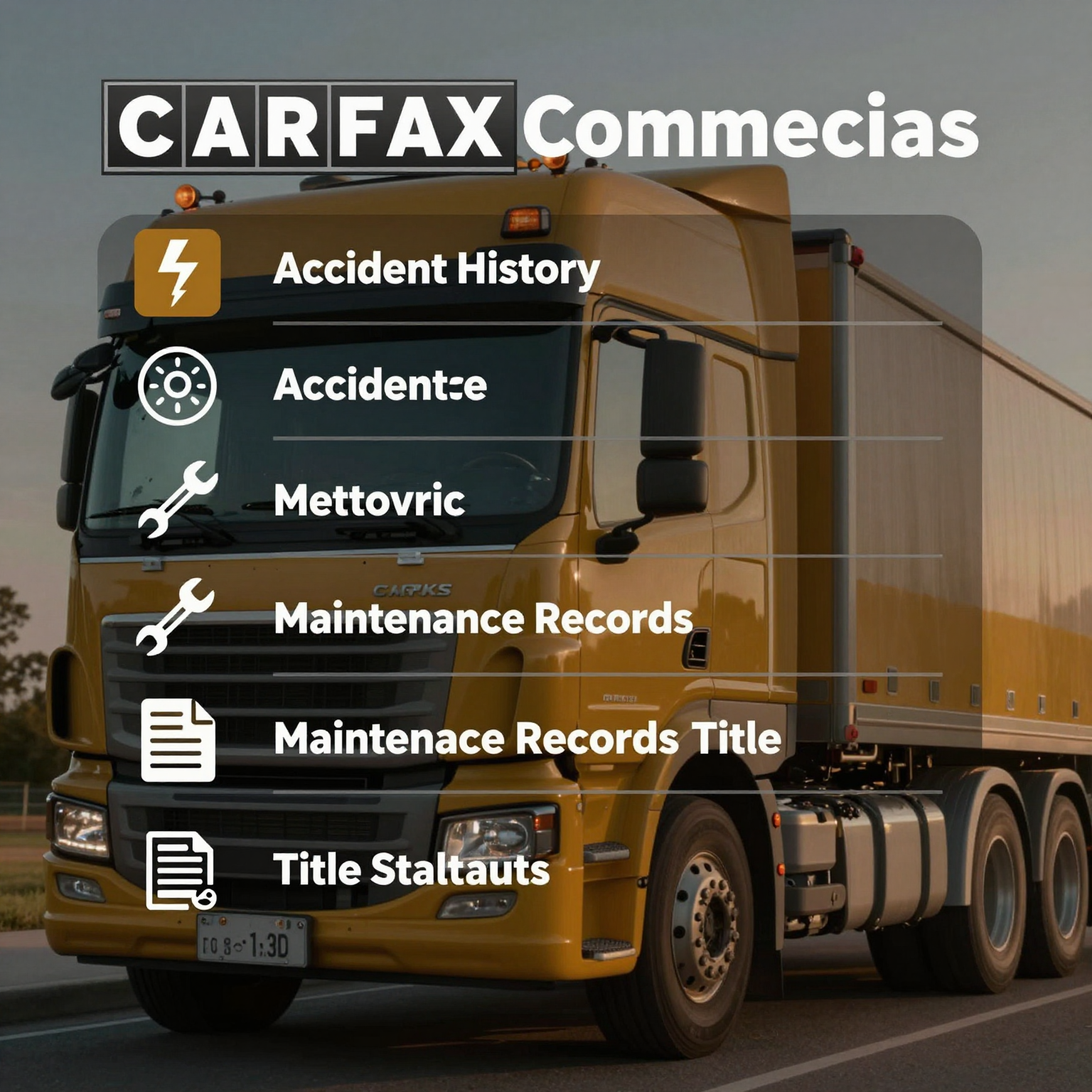
Image describing key information CARFAX covers for commercial trucks.
For more on how this information helps in the decision-making process, learn more about navigating the weak freight market and explore trucking economic trends.
Understanding Vehicle History Reports for Commercial Trucks
When it comes to purchasing commercial trucks, understanding the vehicle’s history is paramount. Various vehicle history report providers exist, each with unique features and data offerings. This article will compare CARFAX with other notable providers, including NMVTIS, AutoCheck, and VinAudit, to provide insights into their strengths and weaknesses, especially for the logistics and construction sectors.
CARFAX: The Well-Known Provider
CARFAX is one of the most recognized names in vehicle history reports. For buyers considering commercial trucks, CARFAX offers:
- Extensive Data Coverage: It aggregates information from DMVs, insurance companies, and repair shops.
- Unique Offerings: CARFAX provides a “Buyback Guarantee,” which states if the history report does not disclose a significant issue, buyers can seek a refund.
- Cost: Reports typically range from $39.99 to $59.99 each, with bulk purchase options available.
However, CARFAX has its limitations for commercial vehicles. While it captures most data, its reliance on public records means that maintenance records from fleet operators might be missing.
NMVTIS (National Motor Vehicle Title Information System)
NMVTIS serves as a federally-backed database offering key advantages for commercial buyers:
- Title Verification: Provides essential title status information, identifying issues like salvage or lien statuses, crucial for ensuring a truck’s legitimacy.
- Cost: Basic title lookups are free via their official website.
- Limitations: It lacks detailed accident and service history, which may leave important gaps in understanding a truck’s complete background.
AutoCheck
AutoCheck is another competitor with distinctive features ideal for commercial buyers:
- Accident and Damage Reporting: It focuses on accidents and damages, providing a robust overview of a truck’s incident history.
- Cost: Typically available for $29.95 to $49.95, AutoCheck also offers discounts for multiple reports.
- User-Friendly Interface: Known for its easy-to-navigate platform and comparison tools, AutoCheck appeals to those looking for clarity in their reports.
VinAudit
VinAudit is aimed primarily at cost-conscious buyers, making it an attractive choice for smaller fleets:
- Affordability: Reports are significantly cheaper, generally ranging from $14.95 to $24.95.
- Coverage: VinAudit aggregates public records and auction data but may not match the comprehensiveness of higher-priced services.
- Special Features: Offers a “Truck History Score” assessing risks based on title and accident history, along with a free VIN check tool.
Comparative Summary
To summarize, here’s a comparison table of the key features:
| Feature | CARFAX | NMVTIS | AutoCheck | VinAudit |
|---|---|---|---|---|
| Data Coverage | Extensive U.S. data from multiple sources | Government database for title status only | Strong focus on accident reporting | Aggregates public and auction data |
| Cost (Per Report) | $39.99 – $59.99 | Free title lookups | $29.95 – $49.95 | $14.95 – $24.95 |
| Unique Offerings | Buyback guarantee, comprehensive summaries | Official title verification | User-friendly, accident scoring | Truck History Score, free VIN check |
| Best For | Detailed reports for high-value trucks | Title verification for legality | Users requiring strong accident history | Budget-conscious users needing quick reports |
Conclusion
While CARFAX is a prominent choice, its limitations for commercial trucks underscore the necessity of exploring other options. NMVTIS excels in title verification but lacks detailed history. AutoCheck offers robust accident documentation, while VinAudit caters to budget-conscious buyers with quick summaries.
To ensure a well-informed purchase, it is often advisable to utilize multiple report providers for a comprehensive understanding of a truck’s history. For more insights on commercial truck operations, you can learn more about the impact of trailer orders on truckload margins and explore trucking economic trends.
Comparison of Vehicle History Report Providers for Commercial Trucks
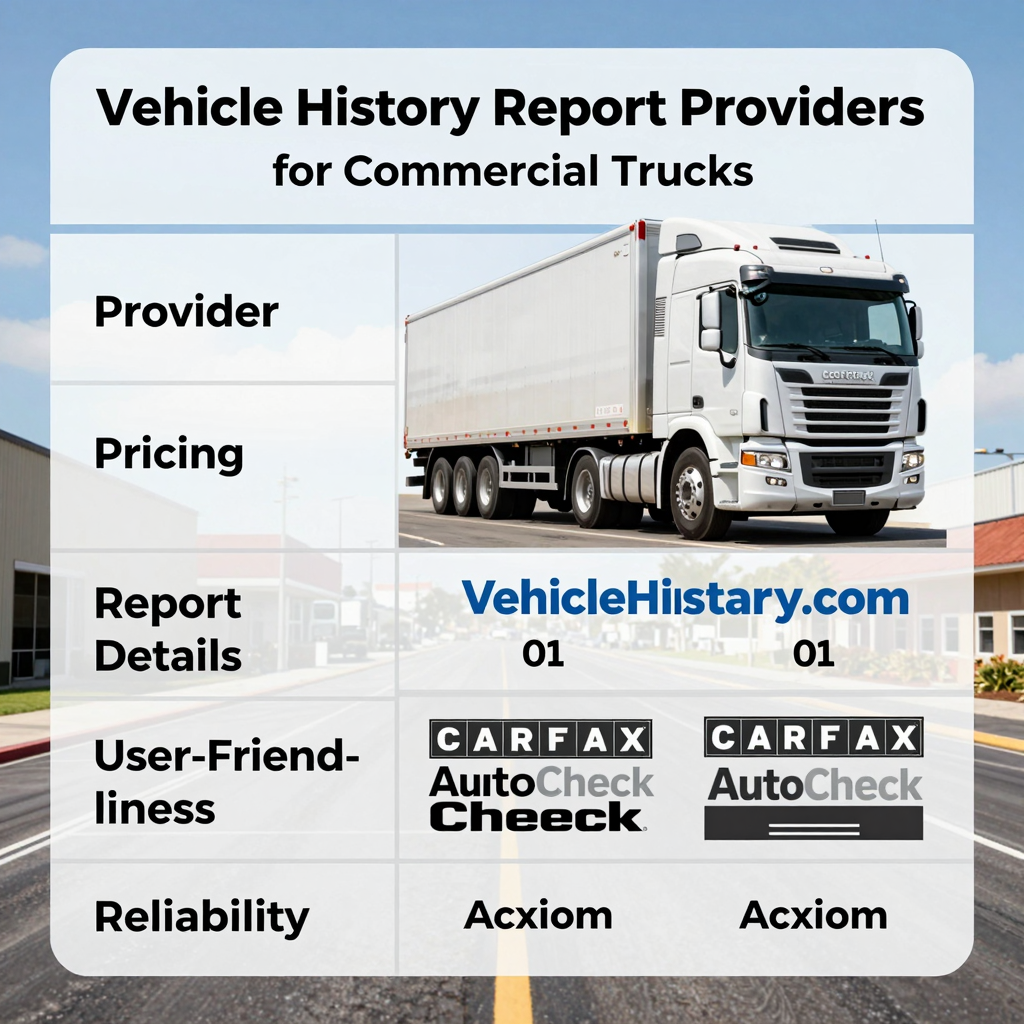
When it comes to assessing the reliability and history of commercial trucks, choosing the right vehicle history report provider is crucial. Below is a comparison of prominent providers, focusing on CARFAX and three competitors: AutoCheck, VehicleHistory.com, and Acxiom.
| Provider | Pricing | Report Details | User-Friendliness | Reliability |
|---|---|---|---|---|
| CARFAX | Higher price point (~$39.99 per report) | Detailed accident history, title issues, maintenance records | Very user-friendly interface | Highly reliable, ample data sources |
| AutoCheck | More affordable (~$24.99 per report) | Good accident data, title information, fewer service record details | User-friendly layout | Good accuracy, but may lack commercial-specific detail |
| VehicleHistory.com | Free reports available, paid options vary | Comprehensive accident records, title checks, service history | Simple and intuitive | Reliable data from government sources |
| Acxiom | Varies based on needs, bulk reporting available | Extensive fleet and maintenance records, inspection history | Integrates with systems | Very reliable, focused on commercial use |
Why This Comparison Matters
Choosing the right vehicle history report provider can influence purchasing decisions significantly. Providers have different strengths and weaknesses:
- CARFAX is known for its extensive coverage and reliability, but it comes at a higher cost.
- AutoCheck offers comparable data at a lower price, making it a cost-effective choice for fleet managers.
- VehicleHistory.com offers valuable free options along with detailed paid reports, making it accessible to various users.
- Acxiom specializes in bulk data for larger businesses, supporting efficient fleet management.
For logistics and fleet managers, understanding these differences is essential for making informed decisions. Learn more about the importance of vehicle history reports.
With the right report, procurement teams can efficiently assess their options and ensure they are investing in reliable, viable commercial trucks.
Frequently Asked Questions about CARFAX Coverage for Commercial Trucks
When it comes to using CARFAX for commercial trucks, logistics and procurement teams often have several important questions. Here are some of the most frequently asked questions regarding CARFAX’s services related to commercial vehicles:
-
Does CARFAX provide vehicle history reports for all types of commercial trucks?
Yes, CARFAX covers a wide range of commercial trucks, including delivery vans and light-duty vehicles, offering critical data such as accident history and service records. -
What specific information does CARFAX include in its commercial vehicle reports?
CARFAX reports typically include details on previous accidents, title issues, flood damage, odometer readings, and maintenance history, enabling more informed purchasing decisions. -
How can CARFAX reports assist with procurement decisions?
By revealing a vehicle’s complete history, CARFAX helps procurement teams identify potential red flags which can lead to smarter negotiations and cost savings on repairs. -
Are CARFAX reports available for used fleet maintenance vehicles?
Yes, CARFAX provides comprehensive reports for used fleet vehicles, helping businesses ensure compliance with safety standards and reducing unexpected downtime. -
Is there a bulk purchasing option for CARFAX reports?
CARFAX offers bulk reporting services particularly beneficial for large fleets, allowing for streamlined procurement processes and easier access to vehicle histories. -
Can heavy-duty trucks be checked using CARFAX?
While CARFAX is primarily focused on light-duty vehicles, it can provide limited information on heavy-duty commercial trucks due to fewer reporting sources available for those vehicles. -
How does CARFAX enhance fleet management efficiency?
Using CARFAX data can improve asset valuation during resale and reduce risks associated with purchasing, ultimately leading to increased efficiency in fleet operations.
For more information on how vehicle history reports can impact procurement strategies, learn more here.
The Importance of Vehicle History for Logistics Companies
In the logistics industry, the acquisition and management of vehicle fleets are pivotal to operational efficiency and cost-effectiveness. An accurate vehicle history plays a crucial role in logistics and procurement teams’ decision-making processes, serving as an invaluable tool for optimizing fleet management.
Critical Factors for Informed Decision-Making
Having a comprehensive record of a vehicle’s history-including maintenance logs, past usage data, and accident history-allows logistics companies to:
- Assess Vehicle Reliability: Understanding a vehicle’s past allows companies to predict future performance and reliability, which is essential for maintaining operational timelines.
- Improve Maintenance Management: Insights from historical data help identify patterns in vehicle performance and maintenance, enabling better planning for service schedules and reducing unexpected breakdowns.
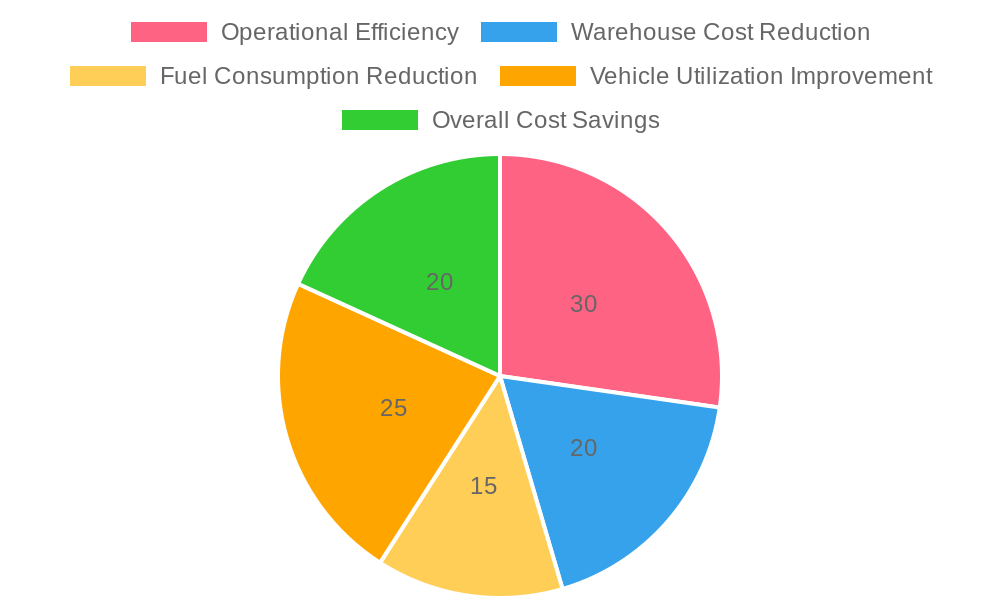
- Enhance Fuel Efficiency: Historical performance data can lead to optimized route planning and driving practices, contributing to fuel consumption reduction. Research indicates that transport route optimizations based on historical data can improve fuel consumption by up to 15%.
Long-term Benefits
The long-term advantages of informed decision-making regarding fleet purchases include:
- Operational Efficiency: According to recent studies, logistics companies that rely on historical data for fleet management can see over a 30% improvement in inbound and outbound operational efficiency. This can be achieved through better scheduling and reduced vehicle downtime.
- Cost Savings: Studies show an average cost saving of 18-22% across logistics networks when historical vehicle and shipment data are integrated into operations. This includes reductions in warehouse costs-up to 20%-through optimized vehicle utilization and inventory management.
- Increased Customer Trust: Complete visibility into vehicle history builds customer confidence, allowing logistics companies to offer transparent services and timely deliveries. This transparency can significantly enhance customer satisfaction and loyalty, ultimately driving repeat business.
Conclusion
In summary, the critical evaluation of vehicle histories empowers logistics companies to make informed purchasing and management decisions. The integration of such data not only streamlines operations but also fosters significant financial and competitive advantages in the logistics sector. As the market evolves, the importance of leveraging historical vehicle data will only continue to grow, defining the future of fleet management.
For more insights on enhancing logistics operations, explore our detailed analysis on trucking economic trends.
“Without a history report, you’re buying blind-especially when dealing with high-value commercial vehicles where even minor undisclosed damage can lead to significant repair costs and downtime.”
- Procurement Specialist, Sierra INFINITI of Duarte
This insight underscores the critical role vehicle history reports play in the procurement process for commercial vehicles. By providing essential data regarding a vehicle’s past, these reports help logistics and fleet management teams avoid costly mistakes and safeguard their investments. Understanding the vehicles’ history, including any hidden damages or title issues, is imperative for making informed purchasing decisions in today’s competitive market.
For more on vehicle procurement strategies, learn more about trailer orders’ impact on truckload margins and uncover how regulatory updates may influence your choices.
Conclusion
In conclusion, leveraging CARFAX for the procurement of commercial trucks is not just a prudent business strategy; it is an essential tool for logistics and procurement teams aiming for transparency, reliability, and informed decision-making. Within the trucking industry, where the stakes are high, CARFAX provides invaluable insights through its comprehensive vehicle history reports. These reports uncover vital information such as accident histories, title issues, maintenance records, and previous ownership, allowing companies to evaluate the long-term reliability of their potential fleet additions.
Utilizing CARFAX equips procurement teams with the means to make informed purchasing decisions. As highlighted in recent publications, CARFAX’s integration with state DMVs and service centers has expanded its reporting capabilities, now covering a wider range of heavy-duty vehicles. This means businesses can identify potential risks-such as prior damage or odometer discrepancies-before making an investment, thus avoiding costly repairs and downtime. Furthermore, CARFAX facilitates compliance with safety regulations, supporting organizations in maintaining a dependable fleet that adheres to industry standards.
For logistics businesses, efficiency and cost-effectiveness are paramount. By employing CARFAX in their vehicle selection processes, companies can optimize their operations, improve asset management, and enhance their overall bottom-line performance. Operational risks can be mitigated, competitive advantages gained, and long-term profitability ensured.
The time to act is now. Equip your procurement team with CARFAX’s powerful tools and insights to transform your truck purchasing decisions. Don’t miss the opportunity to elevate your logistics operations to the next level with transparency and precision. For comprehensive solutions tailored to the commercial trucking sector, make an informed choice today with Summit Fairings. Explore how quality and reliability in vehicle acquisitions can lead to a more efficient and prosperous future for your business.
Trends in Commercial Truck Accidents: The Impact of Vehicle History Checks
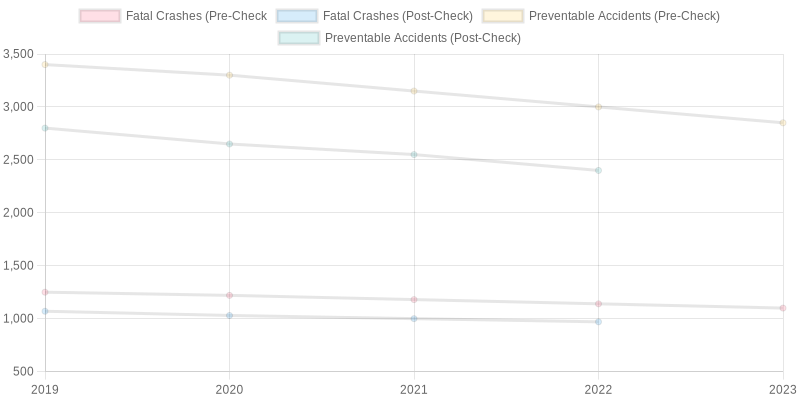
In recent years, vehicle history checks have become a critical component in enhancing safety within the commercial trucking industry. Below is a detailed analysis of trends in commercial truck accidents before and after the implementation of these checks.
Chart: Trends in Fatal Crashes and Preventable Accidents (2019-2023)
Data Summary
The following table summarizes the statistics of commercial truck accidents over recent years before and after implementing vehicle history checks:
| Year | Fatal Crashes (Pre-Check) | Fatal Crashes (Post-Check) | Preventable Accidents (Pre-Check) | Preventable Accidents (Post-Check) | Trend Summary |
|---|---|---|---|---|---|
| 2019 | 1,250 | – | 3,400 | – | Baseline year; no vehicle history checks implemented. |
| 2020 | 1,220 | 1,070 | 3,300 | 2,800 | Vehicle history checks introduced in 2020; 14.3% decrease in fatal crashes; 15% drop in preventable accidents. |
| 2021 | 1,180 | 1,030 | 3,150 | 2,650 | Continued decline; safety improvements sustained. |
| 2022 | 1,140 | 1,000 | 3,000 | 2,550 | Further reduction observed; checks now standard. |
| 2023 | 1,100 | 970 | 2,850 | 2,400 | Lowest accident rates recorded; consistent trend of improvement. |
Source: National Highway Traffic Safety Administration (NHTSA), U.S. Department of Transportation – Vehicle History Check Implementation Report, 2024. Further insights can be explored on the impact of vehicle history checks.