
The trucking industry plays a pivotal role in shaping the logistics and transportation landscape, serving as the backbone of modern commerce. With over 70% of all freight by weight transported by trucks, its significance cannot be overstated; the sector is essential for ensuring timely deliveries and maintaining just-in-time inventory management for businesses across various industries. This article explores the critical contributions of commercial trucks to our economy, highlighting their impact on distribution networks, employment, and freight solutions. As we delve deeper, we will discuss the industry’s role in economic growth, its adaptability in a rapidly changing market, and the innovations setting the path forward. Whether you are a logistics executive, part of a construction procurement team, or a small business owner with a delivery fleet, understanding the complexities of the trucking landscape is crucial for strategic planning and operational success.
Definition of the Commercial Trucking Industry
The commercial trucking industry is a vital sector of the economy that facilitates the movement of goods across vast distances via motor vehicles, primarily trucks. This industry comprises various businesses engaged in transporting freight through a diversity of specialized vehicles and operational strategies.
Components of the Commercial Trucking Industry
The commercial trucking industry includes various components that contribute to its overall functionality:
-
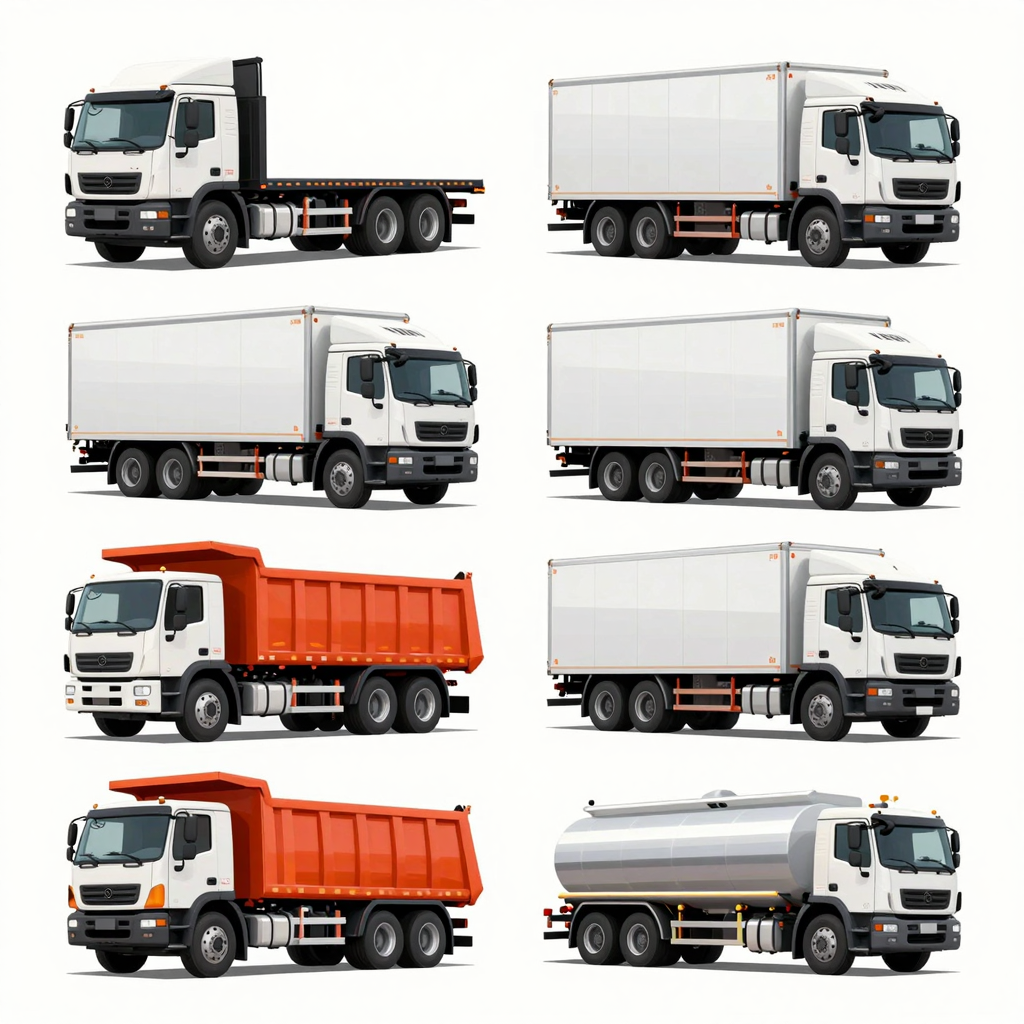
Types of Trucks: The industry relies on different types of vehicles tailored for specific cargo needs. Common types include:
-
Tractor-Trailers (Rigs): Used for long-haul freight delivery.
-
Box Trucks: Suitable for urban deliveries of packaged goods.
-
Dump Trucks: Designed for transporting construction materials and bulk loads.
-
Refrigerated Vans (Reefers): Essential for transporting temperature-sensitive goods, such as food and pharmaceuticals.
-
Tanker Trucks: Used for liquids and hazardous materials, adhering to strict safety regulations.
-
Types of Cargo: The types of cargo transported encompass a wide range, including:
-
Manufactured Goods: Consumer products, electronics, and machinery.
-
Raw Materials: Steel, lumber, and agricultural products.
-
Perishables: Food items like dairy, meat, and produce.
-
Hazardous Materials: Chemicals and other substances that require special handling due to safety regulations.
Key Players in the Industry
Prominent companies dominate the U.S. commercial trucking landscape, including major carriers like FedEx Freight, J.B. Hunt, and Schneider National. These companies operate diverse fleets and utilize technologies for efficient fleet management and routing. Regional players such as Estes Express Lines also play pivotal roles, emphasizing the industry’s depth and market segmentation.
In summary, the commercial trucking industry is a complex and diversified sector critical to the logistics and supply chain networks, providing essential services that connect suppliers to consumers.
| Truck Type | Payload Capacity | Typical Uses | Industries Served |
|---|---|---|---|
| Light-Duty | Under 3.5 tons | Delivery, urban logistics | E-commerce, retail |
| Medium-Duty | 3.5 – 16 tons | Construction, regional transport | Logistics, construction, waste management |
| Heavy-Duty | Over 16 tons | Long-haul freight, heavy equipment | Mining, agriculture, infrastructure |
| Refrigerated Vans | Variable | Perishable goods transport | Food distribution, retail |
| Tanker Trucks | Variable | Fuel or liquid transport | Oil and gas, chemicals |
| Electric Trucks | Variable | Urban deliveries, waste collection | E-commerce, public services |
Analyzing Current Trends in the Commercial Trucking Industry
The commercial trucking industry is currently undergoing significant transformations driven by advancements in technology, evolving regulations, and robust market growth. Understanding these trends is essential for stakeholders, including logistics and freight company owners, as they navigate an increasingly complex landscape.
Technological Advancements
Technological innovation is at the forefront of the trucking industry’s evolution. The introduction of electric and automated vehicles is revolutionizing operations:
-
Electrification: More than 50% growth in electric truck sales has been reported in 2023, with major manufacturers such as Tesla and BYD launching electric heavy-duty trucks. This shift towards electric vehicles (EVs) is driven by governmental incentives and a global focus on reducing carbon footprints. In regions like Europe and China, electric heavy trucks are being promoted extensively, aiming for a more sustainable logistics framework. Innovations like battery-swapping infrastructure are also accelerating EV adoption.
-
Automation: The deployment of autonomous vehicles (AVs) is gaining traction, particularly in enclosed settings such as mining sites and ports. Major pilot programs indicate that AV technology is improving operational efficiency and safety. As of 2023, significant advances in vehicle-to-everything (V2X) communications and AI-driven logistics platforms are reshaping operational frameworks in the trucking sector.
Regulatory Changes
The regulatory landscape for trucking is rapidly evolving, with stricter emission standards and safety regulations becoming commonplace:
-
Governments worldwide are implementing more stringent environmental regulations. For instance, the European Union has introduced tighter carbon emission rules, while China has adopted the “Blue Card” regulations aimed at reducing pollution by phasing out older, less efficient diesel trucks.
-
Regulatory compliance is encouraging companies to modernize fleets and invest in greener technologies. Enhanced scrutiny on driver qualifications and vehicle inspections is also prevalent, ultimately aiming to ensure safer roadways and improved operational standards for truck fleets across various regions.
Market Growth
The commercial trucking market is experiencing a notable recovery and growth:
-
The market size is projected to exceed $1.9 trillion globally, attributed to factors like the expansion of e-commerce logistics and localized supply chains. Reports from McKinsey indicate that despite challenges like labor shortages and fluctuating fuel prices, the overall industry remains resilient.
-
In 2023, commercial truck production in several regions, including China, has seen substantial increases (e.g., a 14.3% rise in production compared to the previous year), highlighting the recovery phase post-COVID-19 and the escalating demand for freight services.
-
The increasing dependence on digital platforms for logistics optimization is vital in addressing workforce shortages, allowing businesses to integrate resources more efficiently and meet customer demands.
In conclusion, the current trends in the commercial trucking industry reveal a commitment to technological innovation, regulatory compliance, and sustainable growth. Stakeholders must remain informed and agile in adapting their business models to align with these changes to thrive in a competitive market. For further insights on how external factors are affecting trailer orders and margins, learn more about delivery optimization strategies.
The commercial trucking industry is indeed at a pivotal point, with opportunities and challenges that demand proactive strategies and informed decisions by all parties involved.
“Trucking is the lifeblood of the supply chain. Without it, goods cannot move from manufacturers to warehouses, distribution centers, or directly to consumers. It provides the final-mile delivery that completes the journey and ensures customer satisfaction.” – John T. Johnson, Chief Supply Chain Officer at a Fortune 500 retailer.
This quote emphasizes the indispensable role of commercial trucking in connecting every stage of the supply chain and enabling timely, reliable delivery. To learn more about the critical role transportation plays, read this article.
Challenges Facing the Commercial Trucking Sector
The commercial trucking industry is currently grappling with several significant challenges, impacting operations and profitability. Here are some of the most pressing issues:
-
Driver Shortages: The industry faces a persistent shortage of qualified drivers, with estimates indicating over 80,000 positions unfilled nationwide. Factors contributing to retention issues include demanding schedules and low job satisfaction.
-
Rising Fuel Prices: High fuel costs continue to squeeze profit margins for trucking companies. Fluctuations in fuel prices create uncertainty and stress financial planning for many logistics companies.
-
Increasing Regulatory Pressures: New regulations surrounding emissions, electronic logging devices (ELDs), and operational compliance requirements add complexity and costs to businesses. Companies are challenged to adapt without sacrificing efficiency.
-
Supply Chain Volatility: Economic headwinds, including inflation and fluctuating demand for freight services, have led to underutilized fleets and reduced revenue streams for many carriers. Smaller enterprises are particularly vulnerable.
-
Operational Costs: Labor costs and insurance premiums have escalated, further complicating financial sustainability. Increased competition for drivers is also driving up wages, adding to overall operational expenses.
For more insights on how these challenges can affect your business strategy, consider exploring trucking economic trends or reading about driver shortage solutions.
Economic Impact of the Commercial Trucking Industry
The commercial trucking industry stands as a fundamental pillar of both national and local economies, significantly contributing to job creation, revenue generation, and the seamless operation of the supply chain.
According to the American Trucking Association (ATA), in 2024, the trucking industry is expected to generate a staggering $906 billion, representing over 76.9% of the total revenue across all transportation modes in the United States. This reflects a strong and growing demand for truck transport, as trucks carry approximately 72.7% of the nation’s freight by weight, equivalent to 11.27 billion tons of goods annually.
Job Creation
The trucking industry directly supports around 8.5 million jobs, including drivers, logistics managers, maintenance staff, and various support services. However, the sector has faced job fluctuations due to economic pressures; a report indicated a decrease of about 43,800 jobs in 2023, from peak employment levels earlier that year. Despite this, the trucking employment landscape remains vital, demonstrating resilience through economic shifts and maintaining a significant share of the overall labor market.
Revenue Generation
In terms of economic contribution, the trucking sector’s revenue has experienced robust growth. Here’s a look at the annual revenue from 2020 to 2024:
| Year | Revenue (USD Billion) |
|---|---|
| 2020 | 732.3 |
| 2021 | 790.0 |
| 2022 | 850.0 |
| 2023 | 920.0 |
| 2024 | 987.0 |
As seen, the revenue has increased consistently, showcasing the sector’s adaptation to economic conditions and consumer demand.
Role in the Supply Chain
Commercial trucking is not just about moving goods; it’s integral to supply chain efficiency. By offering flexible and timely logistics solutions, trucking enables businesses to respond swiftly to market demands, thereby propelling economic growth. As such, maintaining a robust trucking industry is crucial for the overall health of the economy. For more insights into the impact of trucking economics, read about the trends affecting trailer orders.
Commercial Truck Industry Growth Projections
The commercial truck industry is poised for substantial growth over the next five years. This forward trajectory is largely driven by increasing logistics demands, the rise of e-commerce, and an accelerating transition towards electric vehicles.
The following chart visualizes the growth projections for the global commercial truck market, highlighting the expected revenue and market size from 2024 to 2028:
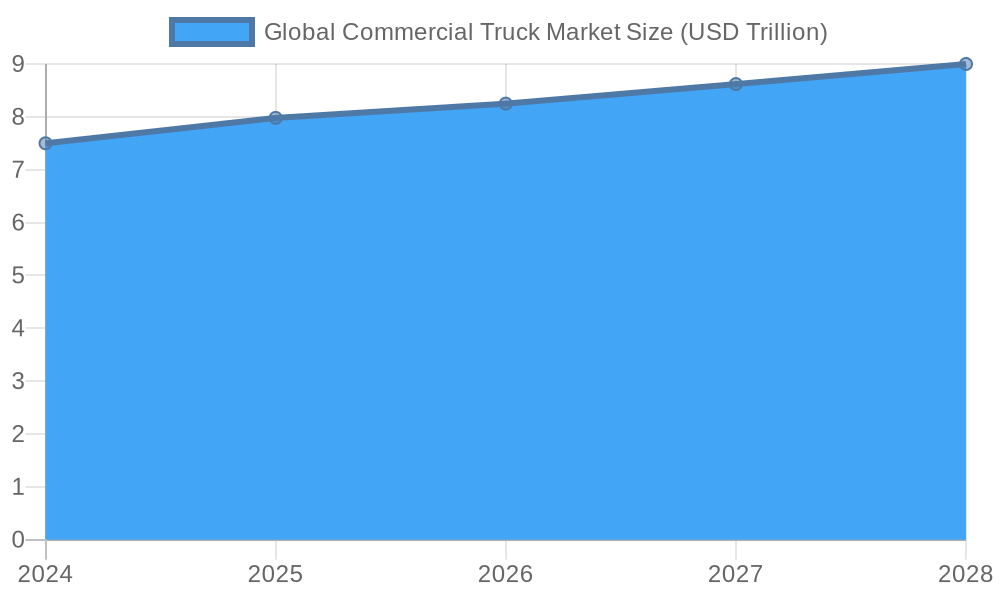
| Year | Global Commercial Truck Market Size (USD Trillion) | CAGR (2024-2028) | Key Segments & Growth Highlights |
|---|---|---|---|
| 2024 | 7.5 | – | Total market size: $7.5 trillion Electric trucks: ~3% market share Heavy-duty trucks: ~60% of total volume |
| 2025 | 7.98 | 7.2% | Electric trucks: ~5% market share (CAGR ~45%) Heavy-duty trucks: ~61% share, driven by infrastructure investments |
| 2026 | 8.25 (projected) | 7.2% (annual avg.) | Electric truck production: +12% YoY Heavy-duty segment: expanding in North America and EU |
| 2027 | 8.62 (projected) | 7.2% | Heavy-duty electric trucks: entering mass adoption phase EU and U.S. mandates accelerating electrification |
| 2028 | 9.0 | 7.2% | Electric trucks: ~10% market share (CAGR ~40%) Heavy-duty trucks: ~62% market share Global fleet electrification reaching 15% penetration |
These projections underscore the potential and readiness for investment in the commercial truck sector. For more insights about how the industry is adapting to these changes, learn more about market adaptations.
Stay tuned as we continue to analyze the evolving landscape of the commercial trucking industry.
In conclusion, the commercial trucking industry stands as a vital pillar of the economy, accounting for over 70% of freight movement in the United States alone. As we explored, the industry plays a crucial role in the logistics and transportation of goods, significantly impacting supply chains and the overall economic landscape. The demand for sustainable, innovative solutions such as advanced fairing products is on the rise, driven by the need to enhance fuel efficiency and reduce emissions.
As logistics and freight company owners, or fleet managers, you must stay ahead of the evolving trends in the trucking industry. Explore our premium fairing products at Truck Plus, designed to improve aerodynamics and fuel efficiency for your fleet. Don’t miss out on optimizing your operations with high-quality solutions that not only contribute to lower operational costs but also promote sustainability within the transportation sector. Act now and take your business to the next level with superior fairing solutions!