
Understanding the role of women in the commercial trucking industry is crucial for logistics and freight company owners, construction and mining procurement teams, and small business owners with delivery fleets. As of October 2024, women constitute 9.5% of professional truck drivers with a Commercial Driver’s License (CDL) in the U.S., a slight decline from previous years. This statistic is reflective of a broader dialogue on gender diversity in a traditionally male-dominated profession. Furthermore, examining contrasting locations such as China, where the percentage is much lower, allows for a global perspective on this trend. This article will delve into current statistics, historical trends, and the barriers and opportunities that exist for women aspiring to join this sector, providing essential insights for industry stakeholders.
Tracking the Road to Parity: How Many Women Drive Commercial Trucks in the United States—and Why the Numbers Matter
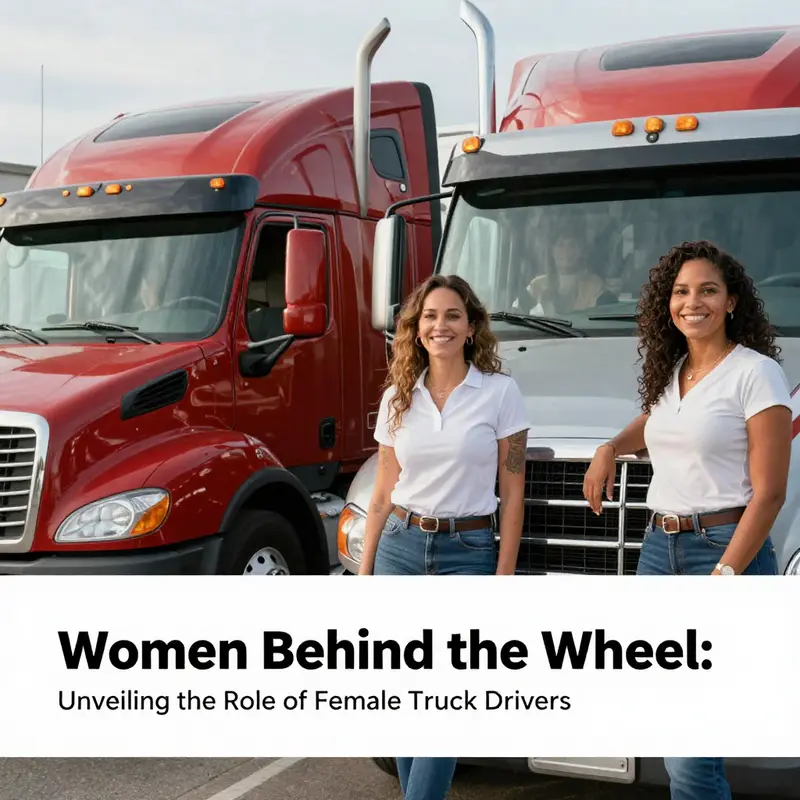
On the open road, numbers often mask human stories. The question of how many women hold Commercial Driver’s Licenses and drive professionally in the United States sits at the intersection of workforce demographics, family life, education pathways, and the evolving economics of transport. Recent data compiled by the Women in Trucking Association (WIT) in October 2024 place the share of women among CDL holders at 9.5 percent. That figure marks a continuing presence at the wheel, yet it also represents a retreat from the previous year’s level of about 12 percent. The change prompts a careful look at not just headcounts, but the conditions that shape who sits behind the wheel, who leaves the profession, and who is encouraged to join. The broader arc is easier to gauge when we pair today’s numbers with historical baselines and with global context, because the trucking industry remains a global, gendered profession even as it becomes more diverse with each new cohort of drivers.
Long before the most recent octet of statistics, the tale of women in trucking was already one of steady, albeit incremental, progress. In 2018, the U.S. counted 234,234 professional female truck drivers, representing roughly 6.6 percent of the total CDL driver workforce. Those early numbers underscored a stark reality: women were a minority inside an occupation built on rigor, reliability, and long hours away from home. Since then, the industry has seen more women stepping into the cab, often driven by a blend of personal aspiration and systemic shifts—improved training programs, more flexible scheduling options, and a growing recognition that a diverse driver pool can help address demand pressures in a market prone to shortages during peak seasons. Still, the 2018 figure also serves as a baseline that helps to anchor the more recent 9.5 percent statistic in October 2024, reminding us that momentum does not always translate into rapid leaps, but rather into a gradual expansion of the lane available to women in trucking.
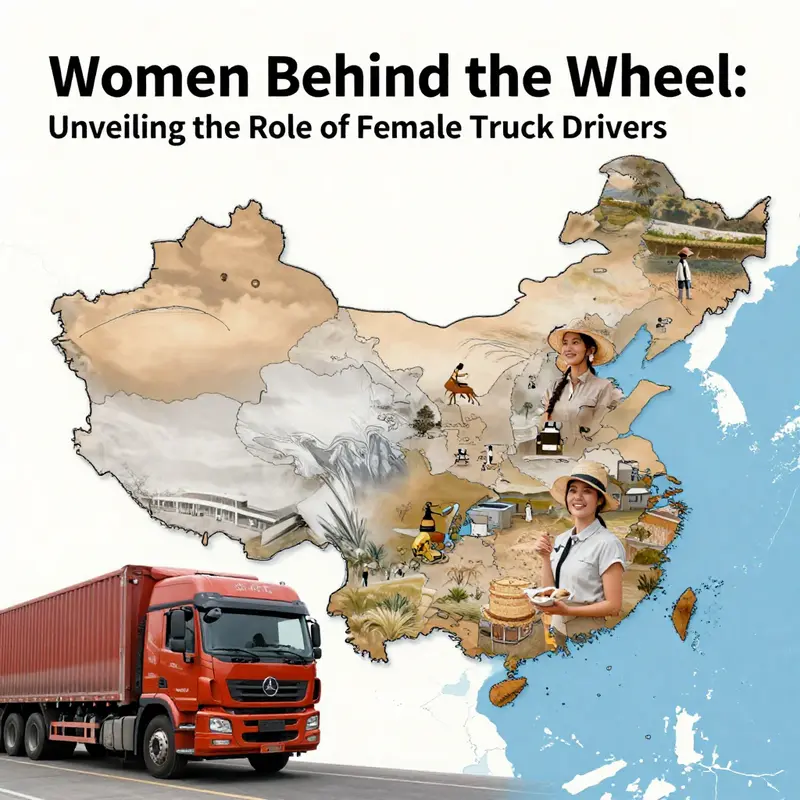
The United States is not alone in this evolution. Globally, women remain a minority in the commercial trucking workforce, but representation is trending upward in many regions. In China, for example, female commercial truck drivers account for about 4.2 percent of the driver population, equating to more than 100,000 women within a total of roughly 3 million drivers. Those regional contrasts matter because they illuminate the social and economic frameworks that enable or constrain women’s participation in heavy-vehicle occupations. Cultural norms, education pipelines, access to training, and policy incentives all shape the likelihood that a girl or young woman sees trucking as a viable career path and sticks with it through the demanding miles and the time away from family that truckers often navigate.
Within the United States, the data landscape is uneven, and interpretation requires nuance. The 9.5 percent figure for women CDL holders as of late 2024 reflects a complex interplay of recruitment, retention, and attrition. For every woman who earns a CDL and lands a long-haul assignment, there may be others drawn toward regional routes, shorter trips, or alternative roles within the trucking ecosystem—positions that nonetheless keep many women in the broader world of freight. The fluctuation from 12 percent the prior year could signal seasonal hiring patterns, changes in workforce composition, or shifts in how the industry classifies and reports its worker base. It could also reflect evolving employment opportunities tied to regulatory changes, market demand, or even the geographic distribution of jobs that are accessible to women with varying levels of experience and family responsibilities.
A crucial frame for understanding these numbers is the broader labor-market context. The trucking industry has long faced cyclical demand and tight labor supply, and those dynamics have significant implications for women who are choosing or re-choosing this field. When freight demand surges, carriers seek drivers aggressively, and that can reduce the friction of entering the field, especially for qualified women who may have faced barriers in the past. Conversely, during slower periods, companies may tighten training pipelines or rely more on experienced drivers, which can affect the turnover rates among women who are early in their careers. The net effect is a workforce that sometimes expands in steps rather than leaps, as employers test new recruitment strategies, new training formats, and new scheduling models designed to attract a more diverse driver base.
In this landscape, data from credible sources become more than numbers; they become touchpoints for policy-makers, educators, and industry leaders who are trying to design pathways that widen participation without compromising safety or efficiency. The numbers underscore the persistent underrepresentation of women in trucking, but they also reveal a notable trend: more women are viewing trucking as a long-term career option rather than a temporary or transitional role. This shift is reinforced by a growing body of anecdotal and survey-based evidence indicating that women who enter trucking frequently bring strong communication skills, meticulous attention to safety, and a collaborative approach to dispatch and operations that can enhance team dynamics on the road.
What does it take to convert interest into sustained participation? Several threads weave into the fabric of long-term success for women in trucking. First, access to high-quality, practical training matters. The pathway from classroom instruction to the cab is not always seamless, and programs that connect training with real-world experience—mentored rides, regional routes, and progressive load assignments—can help new drivers gain confidence and reduce early-career attrition. Second, scheduling flexibility can make a meaningful difference for those balancing caregiving responsibilities, which historically have been disproportionately borne by women. A shift toward more predictable home time, regional driving options, and customer-friendly routes can markedly improve retention without sacrificing productivity. Third, workplace culture and safety climate are powerful determinants. When female drivers report feeling respected, heard, and supported by supervisors, fleets see lower turnover and higher job satisfaction. These are not abstract notions; they translate into improved on-road decision-making, fewer miscommunications, and more consistent service delivery for shippers and customers.
The chapter that follows in this article series delves into how these factors intersect with the numbers we’ve just outlined. Here we remain focused on the thread that binds them: the human stories behind the statistics. Each percentage point represents a voice, a route choice, and a set of daily realities that can make the difference between a driver’s staying in the profession or pursuing a different path. When women in trucking are supported by targeted recruitment efforts, mentorship networks, and policies that ease the tension between work and family life, the ratio of female CDL holders tends to improve—not just in the abstract but in measurable improvements to safety, reliability, and driver retention.
To connect the present data to the broader industry trends, it helps to look at how the market is evolving around capacity and demand. The trucking sector has experienced periods of tight capacity, followed by adjustments as freight volumes fluctuate and new technologies emerge. In times of excess capacity, competition for drivers can become less intense, opening doors to more deliberate, long-term recruitment strategies that benefit women who may have taken a break from the field or who entered trucking from non-traditional routes. Conversely, during tight-market phases, carriers intensify their outreach efforts to fill critical roles, testing programs that target underrepresented groups, including women, with scholarships, paid apprenticeships, or targeted outreach in communities and technical schools that feed into CDL training pipelines. The interplay between market cycles and recruitment investments helps explain why the share of women can rise or fall in ways that are not strictly tied to the adoption of new safety rules or infrastructure investments.
For readers who want a sharper picture of how current labor-market realities intersect with gender diversity in trucking, consider how broader market signals—such as the pace of freight demand, equipment utilization, and fleet modernization—shape the incentives behind who gets hired and who remains on the road. In the near term, the industry’s labor equation is increasingly influenced by efforts to recruit from nontraditional labor pools, including women who may be drawn to trucking after exploring other career paths. These efforts are often bundled with digital tools that streamline onboarding, simulate real-world driving conditions, and track performance in a way that makes the early stages of a trucking career more transparent and less intimidating for new entrants. When combined with supportive cultural norms and family-friendly scheduling, these tools can help convert initial interest into a durable career.
As this chapter unfolds, the numbers themselves serve as a prompt for action as well as a metric of progress. If nine and a half percent of CDL holders are women today, and if that figure fluctuates around that mark, the challenge is to turn the tide by strengthening the structures that enable women to pursue and sustain trucking as a vocation. That means investing in classrooms that reflect diverse backgrounds, funding mentorship and internship programs that pair seasoned truckers with novices, and designing employment models that respect the realities of modern family life while maintaining the safety and reliability that customers rely on every day. It also means telling a fuller, more accurate story of what it means to be a woman driver in the United States: the long hours on the road, the balance of independence and teamwork, the pride of delivering essential goods, and the ongoing effort to make the cab a space where every qualified driver—regardless of gender—has the opportunity to excel.
For those who want to explore related market dynamics beyond the pure demographics, a broader look at current and evolving trucking-market conditions can provide useful context. For example, readers may encounter analyses that discuss how capacity changes influence hiring strategies, including targeted programs aimed at expanding the pool of potential women drivers. Such discussions often highlight the link between macro-market signals and micro-level decisions within fleets, including how scrappage rates, maintenance cycles, and route optimization influence where and when new drivers are brought on. In this sense, the demographic numbers become part of a larger narrative about resilience and opportunity in an industry that moves goods across vast distances, across borders, and across cultures.
In sum, the 9.5 percent figure for women CDL holders in October 2024 represents both a current snapshot and a hinge point for future growth. It is a reminder that progress in this space is not just about pushing a higher percentage point onto a chart. It is about constructing a system in which women feel seen, supported, and capable of progressing to leadership roles within trucking—whether behind the wheel, in maintenance bays, in dispatch offices, or in fleet-management roles that shape policy and practice for years to come. The trend line suggests that more women will drive the industry forward, but only if the engines of recruitment, training, and cultural change are maintained and improved. As industry stakeholders press ahead, they should keep the human dimension at the center: the stories of women who choose trucking, the barriers they encounter, the mentors who help them, and the measurable gains in safety, reliability, and economic vitality that come when a more diverse driver cohort is truly in motion.
Internal link note: For readers interested in how market dynamics relate to capacity and driver supply, see the discussion on excess capacity in the trucking market insights. This linked topic provides a bridge between workforce diversity and the economic conditions that shape hiring decisions in fleets of all sizes. Excess capacity in the trucking market insights.
External reference for further statistical context: broader national trends and the trajectory of female representation in trucking are also captured in external data sources. The Statista page referenced here collects ongoing statistics and analyses that complement the WIT figures, offering a multi-year view of how women’s participation in trucking has evolved and what factors influence those changes. External link: https://www.statista.com/statistics/897595/female-truck-drivers-us/
null
null
How Female Representation in Commercial Trucking Has Evolved: Numbers, Momentum, and Remaining Hurdles
Shifts Over Time: Numbers, Drivers, and Obstacles
The presence of women in commercial trucking has changed noticeably over recent years. Where once female drivers were rare, their share of the workforce now registers in the single digits and, in many places, is steadily rising. That shift is not random. It reflects demographic changes, focused recruiting, policy adjustments, and a growing recognition that the industry must diversify to meet labor needs.
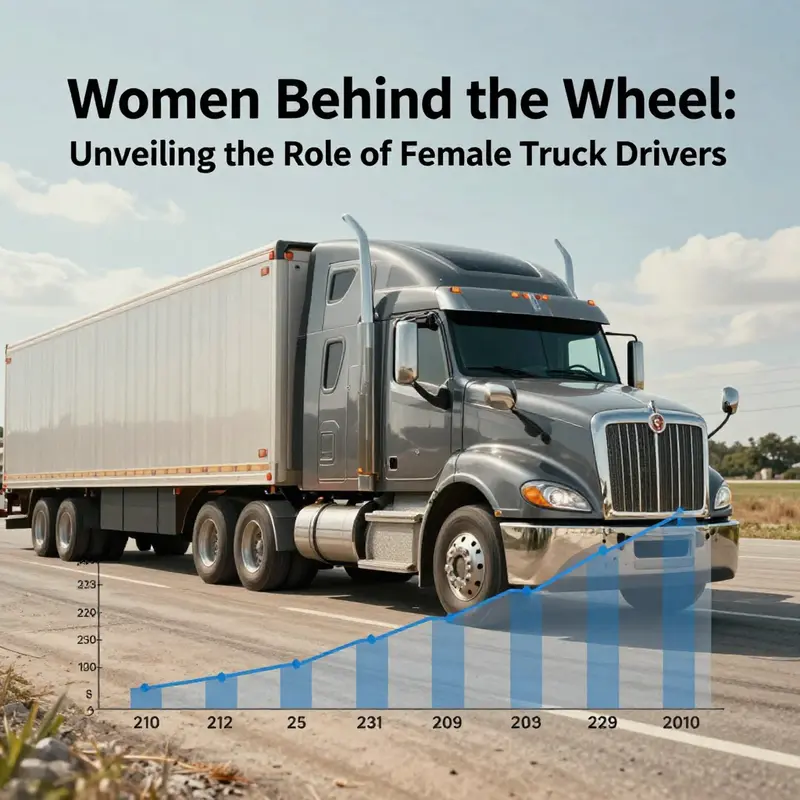
In the United States, the most up-to-date, comprehensive figures show that women made up 9.5% of commercial drivers holding a CDL as of October 2024, according to an industry association report. That number is a snapshot of a complex trend. It follows years in which the female share climbed from very low levels; for instance, data from national labor sources indicated the women’s share passed the 8% mark in recent years after decades of minimal growth. News analysis published in 2019 noted a 68% rise in the number of professional female truck drivers between 2010 and 2019, demonstrating the momentum that has built over the past decade.
International comparisons highlight both progress and variation. In China, women are a smaller share of commercial truck drivers—about 4.2%—yet that ratio represents more than 100,000 women in a driver population of roughly 3 million. Elsewhere, the female share varies widely by country and by the type of freight operation. Specialized sectors, regional differences, and regulatory environments all shape participation rates. Globally, the trend is upward: women remain a minority, but their representation continues to grow as recruitment and retention efforts mature.
Why the rise? Several concrete forces are at work. First, chronic driver shortages have pushed fleets to widen their candidate pools. Many carriers now target women actively, adapting job ads and outreach to be more inclusive. Second, operational changes have improved working conditions in ways that matter to many women. More predictable routes, regional assignments, and home-time guarantees reduce the long stretches away from home that once deterred prospective drivers. Third, investments in safety, lighting, and vehicle amenities make long-haul work less isolating and more comfortable for all drivers. Fourth, training programs and apprenticeships aimed at underrepresented groups lower barriers to entry.
Those shifts are supported by industry organizations and advocacy groups that work to remove cultural and practical obstacles. Mentorship networks, female-focused training cohorts, and on-the-road guidance help new drivers acclimate. Companies that adopt family-friendly policies, flexible scheduling, and better communication about career pathways often see improved recruitment and retention among women.
At the same time, progress has not been linear. The October 2024 figure showing 9.5% female representation followed a prior year figure of 12% reported by the same association, suggesting a modest decline over that interval. Such year-to-year fluctuations reflect the sensitivity of participation rates to economic cycles, hiring patterns, and data collection methods. A single-year drop does not erase the broader decade-long gains, but it does signal that momentum depends on sustained attention. Labor market shocks, shifts in freight demand, and changes in retention can produce short-term reversals.
Regional and sectoral differences matter a great deal. Long-haul truckload operations still tend to have lower female representation than local delivery, busier urban pick-up and delivery roles, or specialized logistics segments. Urban and regional carriers that involve more predictable schedules report higher percentages of women among drivers. Differences in pay structures, benefits, and work-life balance expectations explain much of this variation. Where carriers offer consistent home time and clear career ladders, the pool of women applicants grows.
Economic context also influences the numbers. Recessions and slowdowns reduce hiring and can disproportionately affect new entrants. Conversely, periods of tight capacity and rising freight demand increase hiring and open more doors to women seeking entry into the field. The late 2020s labor landscape, including signals of job recovery and stabilization, interacts with recruitment practices to shape female representation. For a practical perspective on employment recovery patterns in trucking and how they affect hiring pipelines, see the recent analysis of trucking job recovery and stabilization signals.
Barriers to continued growth remain, however. Practical issues such as the design of truck cabs and sleeper berths, availability of sanitary facilities at truckstops, and safe parking options continue to influence retention. Pay and hours-of-service constraints can create tension between adequate compensation and the need for regular home time. Cultural barriers—persistent beliefs about gender roles and workplace norms—still discourage some women from considering driving as a long-term career. Addressing these barriers requires both engineering solutions and cultural change.
Data limitations complicate our understanding of trends. Different datasets use different definitions—CDL holders, professional drivers currently employed, or people who drive trucks as part of broader occupational categories. Surveys vary in frequency and in the granularity of demographic reporting. This heterogeneity can produce apparent contradictions in year-to-year figures. To monitor progress accurately, the industry needs consistent, detailed, and timely data on gender, tenure, job type, and reasons for leaving or staying.
Policy and employer actions that sustain growth are concrete and measurable. Onboarding programs that pair new drivers with experienced mentors reduce early attrition. Investments in safer truckstop facilities and female-friendly amenities ease day-to-day challenges. Offering regional routes, part-time or flexible schedules, and clear paths to advanced equipment operator roles makes the field more attractive long-term. Compensation structures that reward performance while ensuring predictability help retain talent. Equally important, visible leadership commitments and inclusive workplace cultures signal to prospective hires that trucking is open to everyone.
Technology also plays a role. Navigation, telematics, and route optimization reduce stress and idle time. Automated safety systems make operations safer and less taxing. Online training platforms lower the cost and time needed to acquire a CDL. While automation may change the nature of driving work over time, in the near term these technologies can make the job more accessible and appealing to a broader population.
Looking forward, sustaining and accelerating female representation will hinge on aligning industry needs with targeted interventions. Recruitment campaigns must be matched by retention-focused investments. Policymakers and industry groups should prioritize data collection and fund research into what works in different contexts. Continued support for training pipelines, including apprenticeships and partnerships with vocational schools, will be essential. Employers that experiment with scheduling, equipment design, and workplace amenities can demonstrate scalable solutions.
The rise of women in trucking is both a numbers story and a systems story. The numbers show clear progress from a low baseline toward a more inclusive workforce. The systems behind those numbers—recruitment practices, work design, facilities, technology, and culture—determine whether gains endure. Small changes at the carrier level, like offering safer parking or clearer career pathways, compound across the industry when combined with public policy and organized support efforts.
For readers seeking the primary statistical source that tracks occupational and demographic labor information, consult the national labor statistics repository. It provides detailed, regularly updated datasets that underpin much of the analysis of workforce trends.
External reference: https://www.bls.gov/
Internal resource: For additional context on employment recovery and how it affects hiring pipelines in trucking, see the industry analysis of 2024 job recovery and stabilization signals. https://truckplusllc.com/2024-trucking-job-recovery-stabilization-signals-hope/
Turning the Wheel: Overcoming Barriers and Unlocking Opportunities for Women Truck Drivers
Barriers and Opportunities in Context
The commercial trucking sector offers steady pay, clear career paths, and essential economic value. Yet women remain a small minority among drivers. Recent data shows women hold about 9.5% of Commercial Driver’s Licenses in the United States, a drop from 12% the prior year. Internationally, representation varies; in China about 4.2% of commercial truck drivers are women, accounting for more than 100,000 drivers in a pool of roughly three million. Globally, the share of female truck drivers is rising slowly. That growth masks a complex mix of persistent barriers and emerging openings that shape whether women enter, stay, and advance in trucking.
Safety concerns shape many decisions. Surveys show safety tops the list of deterrents for women considering driving careers. Female drivers commonly report feeling vulnerable on long-haul routes and at isolated stops. Harassment, verbal abuse, and the very real threat of assault make some routes and rest areas unwelcoming. One 2024 industry survey found nearly 60% of women cited safety as a primary factor affecting job satisfaction and career longevity. Safety is not only about physical risk. Fear and the constant need to plan around possible danger add stress that compounds fatigue and isolation.
The industry’s built environment and equipment were not always designed for a more gender-diverse workforce. Cab ergonomics, access to protective clothing and tools, and the location and cleanliness of restrooms and shower facilities influence daily comfort. Small design choices—seat shapes, control layouts, curtain configurations—matter when they accumulate over months and years on the road. Women also face workplace culture issues. Stereotypes about suitability and stamina can translate into biased dispatching, fewer desirable routes, and limited advancement. When an environment tolerates crude language or dismissive behavior, even capable drivers opt out.
Scheduling and family logistics present another barrier. Long-haul work disrupts caregiving and household roles. Many women still shoulder disproportionate domestic responsibilities, making unpredictable or extended absences less feasible. Shorter-route and regional driving offer more balance, but those jobs sometimes pay less or lack advancement. When employers offer rigid schedules and little flexibility, the talent pool narrows. Recruitment and training pipelines also show gaps. Outreach often targets traditional pools, and training programs may unintentionally signal a male-centric culture. Lack of visible role models, scarcity of women instructors, and limited mentorship discourage candidates from persisting through licensing and early career stages.
Despite these hurdles, meaningful opportunities are reshaping the field. Industry initiatives now include mentorship networks, specialized training cohorts, and dedicated outreach that present trucking as a viable long-term career for women. These efforts reduce isolation and create professional pathways. Peer mentoring and alumni networks provide social proof that a sustainable, safe career is possible. Employers are beginning to rethink retention strategies with attention to scheduling flexibility, route assignment equity, and family-friendly benefits.
Technology is an accelerating opportunity. Modern security systems, from perimeter sensors to remote locking, reduce vulnerability during stops. Real-time tracking and two-way communications cut response times when drivers signal distress. In-cab emergency alert apps and integrated telematics allow rapid contact with dispatch and law enforcement. Cameras and other monitoring systems can deter harassment and document incidents, improving the chances of meaningful corrective action. Vehicle innovation around ergonomics, lighting, and climate control creates a more comfortable workspace for everyone.
Training and recruitment strategies are evolving. Women-only cohorts and targeted scholarships lower the entry barriers and foster early community. Virtual training modules allow learners to prepare without the pressure of male-dominated classroom settings. Outreach that addresses concerns frankly—covering safety protocols, legal rights, and reporting channels—builds trust. Partnerships with workforce organizations and placement programs bridge candidates to employers and help align expectations on both sides. For insight on placement and training initiatives, see Trucking HR Canada’s placement program benefits, which illustrate practical support models.
Advocacy and public awareness play a central role. Nonprofit organizations, professional associations, and advocacy groups amplify women’s experiences and press for policy change. They work to normalize women on the road and challenge stereotypes that limit opportunities. High-visibility campaigns and awards spotlighting women drivers build role models and inspire prospective entrants. Legislative attention to workplace protections, stricter consequences for harassment, and improved rest area funding can reduce environmental deterrents.
Economic signals also matter. When demand for drivers rises, recruiters often widen their search and invest more in retention. Conversely, industry contraction can make employers more conservative in hiring, reducing experimental pipelines for underrepresented groups. Even in uncertain cycles, trucking’s baseline wage stability and benefits remain compelling. Employers that combine competitive pay with improved safety, predictable scheduling, and clear career ladders will attract more diverse talent.
Retention depends on practical workplace changes. Clean, secure rest areas and reliable restroom access reduce day-to-day friction. Employer policies that prioritize incident reporting and rapid response build trust. Equitable assignment of routes and loads removes a subtle but powerful source of bias. Training for supervisors and co-workers on respectful behavior and unconscious bias creates a safer culture. Where employers pair these policies with measurable outcomes—reduced incidents, improved retention, and higher satisfaction—change gains momentum.
Career diversity within trucking expands opportunity too. Not all opportunities require long-haul driving. Local and regional routes, specialized freight handling, and roles in logistics or safety management provide alternatives with different demands. Women who start behind the wheel may transition into training, recruitment, compliance, or fleet operations. That internal mobility is a retention lever. Employers who create visible pathways from driving roles to leadership and technical positions signal that trucking offers a sustainable career, not just a job.
Data collection and transparency are essential. Accurate, frequent reporting on gender representation, route assignments, incident rates, and retention allows employers and policymakers to measure progress. Rights-based protections backed by data make it easier to advocate for targeted facilities and investments. For example, mapping incident hotspots by route and time can justify funding for improved lighting, staffing, or monitoring at specific locations.
Challenges remain. Some safety risks stem from infrastructure and public policy beyond any single employer’s control. Rest area funding, rural law enforcement response times, and cross-jurisdictional reporting vary widely. Broader shifts—such as automation—bring both promise and uncertainty. Automation may change job tasks and route dynamics, and those transitions must be managed in ways that do not reinforce existing inequities.
Yet the overall narrative is not static. The decline in U.S. female CDL holders from 12% to 9.5% underscores how fragile gains can be. It reminds stakeholders that progress requires continuous attention. At the same time, the slow global rise in female drivers proves change is possible. When industry leaders, community groups, and policymakers align efforts, the road becomes safer and more accessible.
For employers, the path forward includes concrete steps: invest in security and facilities, redesign schedules with flexibility, fund targeted training and mentorship, and collect transparent metrics. For advocacy groups, the focus remains on removing stigma and pressuring for policy and infrastructure improvements. For women entering the field, community networks, mentor relationships, and clear information about safety measures make a critical difference.
The combined effect of these changes can reshape trucking. Improved safety technologies and infrastructure reduce the daily hazards that drive talented women away. Better recruitment, training, and retention practices increase the pipeline. Stronger reporting and enforcement of misconduct create environments where women can thrive. And as more women gain visibility in diverse roles across fleets and logistics, the stereotype of trucking as a male-only vocation fades.
These shifts do more than change numbers. They strengthen the industry’s resilience and talent base. They broaden perspectives on how freight moves and who moves it. They create career opportunities that support families and communities. The challenge is coordinating action across many stakeholders. But the gains—measured in better safety, higher retention, and more equitable careers—are well worth pursuing.
For additional resources on diversity, inclusion, and current industry efforts, see the American Trucking Associations’ Diversity & Inclusion page: https://www.trucking.org/advocacy/diversity-inclusion
Final thoughts
The presence of women as commercial truck drivers is essential to fostering a more diverse and effective workforce in the logistics and transportation sectors. While progress has been made, with 9.5% of U.S. truck drivers being female and global trends reflecting increased representation, significant barriers remain. Acknowledging these challenges is key for industry leaders, such as logistics company owners and fleet operators, to effectively integrate women into their teams. The evolving landscape presents opportunities that stakeholders can leverage to support women’s participation, ultimately enriching the industry with varied perspectives and enhanced performance. By prioritizing inclusivity and addressing obstacles, the commercial trucking sector can pave the way for a robust future.