
The captivating Dodge Ram truck commercial, known as ‘So God Made a Farmer,’ has resonated deeply with various sectors, particularly those involved in logistics, construction, and delivery services. With Tim McGraw’s heartfelt narration, the ad symbolizes respect for hard work and dedication, core values that align with the mission of business leaders in these fields. This article will dissect McGraw’s role in the ad, explore its cultural significance, and track the evolution of Dodge Ram’s advertising strategies, providing insights for fleet managers, procurement teams, and entrepreneurs looking to make an impact.
Behind the Mic: Tim McGraw’s Heartfelt Anthem Driving the New Dodge Ram Truck Commercial
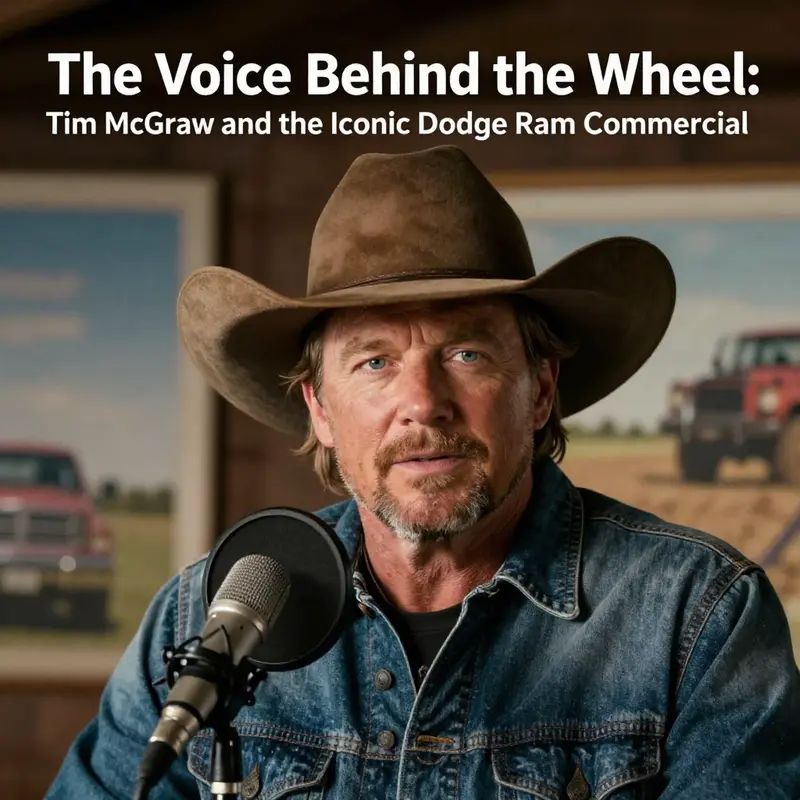
When Dodge Ram decided to pair its rugged image with an equally powerful soundtrack, they turned to one of country music’s most enduring voices. Tim McGraw lends his distinctive tone and his own song, “Meanwhile Back at the Ranch,” to the latest truck commercial. The result is more than a typical product spot. It becomes a compelling narrative that links the brand’s heritage to real-life values of perseverance, independence, and community.
From the opening guitar strum, McGraw’s voice grounds the visual story in authenticity. Viewers see rolling fields, sun-dappled farm equipment, and hands weathered by honest labor. As he sings, the lyrics weave an emotional thread: life on the land is demanding but deeply rewarding. In under ninety seconds, the spot bridges the gap between a modern pickup and the spirit of rural America.
Tim McGraw’s career spans decades, yet his voice remains as resonant as ever. Raised on a family ranch in Louisiana, he experienced firsthand the rhythm of dawn-to-dusk work. That background made him a natural fit to voice a campaign celebrating the same ideals that built his music. Fans recognize the genuine connection he brings to any song about home, hard work, and the unspoken bonds of communities.
“Meanwhile Back at the Ranch” itself is a masterclass of songwriting simplicity. The melody flows with a steady, unhurried beat, evoking machinery and routine chores. Lyrics reference shovels turned to plows, tables set for family meals, and the steady hum of tractors that lull a newborn to sleep. In the commercial, those lines mirror images of spinning wheels, dusk skies, and the satisfying click of a pickup door closing at day’s end.
Selecting this track was a strategic choice. Rather than outsourcing to a studio band, Dodge Ram executives and their creative partners opted for an original recording by McGraw. That decision adds layers of credibility. When viewers hear an artist of his stature singing about ranch life, it feels less like an advertisement and more like a shared story of values passed down through generations.
The commercial’s production marries high-definition cinematography with close-up shots of grime, sweat, and genuine smiles. McGraw’s vocals—a mix of gravel and warmth—become a character in their own right. They guide the viewer’s eye from the roar of the engine to the soft glow of headlights cutting through evening mist. It’s a deliberate dance between sound and image that elevates each scene.
Emotional resonance drives modern branding, and this ad exemplifies that principle. Research shows that viewers remember commercials with memorable music 35 percent more than those with generic soundtracks. By tapping McGraw’s fan base and country music enthusiasts, the spot extends its reach beyond typical automotive audiences. It speaks to listeners who associate his voice with an authentic way of life.
Beyond sales metrics, the campaign underscores Dodge Ram’s commitment to community. It aligns with brand-led initiatives like Trucks for Change supports Habitat for Humanity, reinforcing a culture of giving back. When McGraw sings about lending a hand, viewers see tangible projects supported by both the artist and the automaker. That synergy deepens emotional ties and fosters loyalty.
In the wider landscape of automotive advertising, featuring a chart-topping artist adds prestige. Yet it’s not merely a celebrity cameo. McGraw co-wrote “Meanwhile Back at the Ranch,” ensuring the message remains genuine. Many ads rely on licensing popular songs, but this collaboration goes further. It roots the commercial in original content crafted specifically for the Dodge Ram audience.
Comparisons inevitably arise with previous campaigns, like the iconic “So God Made a Farmer” narration. While that spot relied on spoken word and archival images, the new ad employs melodic storytelling. Both use rural motifs, but McGraw’s singing injects a fresh energy. It speaks to a new generation of farmers, ranchers, and drivers who blend tradition with modern technology.
Looking ahead, Tim McGraw’s partnership with Dodge Ram may evolve into extended series or digital content. His presence in this campaign sets a precedent for deeper creative collaborations. Whether it’s behind-the-scenes footage of life on a working ranch or interactive social media experiences, the possibilities are wide open. Fans already speculate on live performances tied to truck events and community fundraisers.
Music and marketing converge most powerfully when both elements share a common story. In this case, Tim McGraw’s voice and Dodge Ram’s brand promise align seamlessly. The result is a commercial that transcends product promotion. It offers a narrative about resilience, family, and the open road. For a closer look at how McGraw’s anthem merges with powerful imagery, watch the official video: https://www.youtube.com/watch?v=9cGJZv6Ks7o
The Voice Behind the Ram: Chris Stapleton, Brand Mythmaking, and the Modern Truck Anthem

The question of who sings the new Dodge Ram truck commercial invites more than a simple name-dropped answer. It opens a doorway into how a commercial breathes when voice, image, and intention align. In 2024, the Ram campaign shifted its sonic signature to a voice that feels both weathered and expressive, a timbre that carries the weight of long road trips and quiet, stubborn pride. Chris Stapleton provides the vocal core for a spot that treats the truck not merely as a machine but as a vessel for a larger social script—the resilience of working people, a sense of independence, and a craftsman’s devotion to doing the job well, even when no one is watching. The choice is not accidental. It is a carefully choreographed negotiation between artist, brand, and a broad audience that spans rural and urban sensibilities, between the instant recall of a jingle and the enduring pull of a folk-inflected ballad about perseverance. To understand why the ad lands with such gravity, one must situate Stapleton within the Ram’s evolving mythos and within the advertising terrain that treats music as a primary vehicle for meaning rather than a passing mood enhancer.
The Ram brand has long cultivated a relationship with country music as a living archive of American labor, skill, and grit. The 2014 campaign that many viewers remember—So God Made a Farmer—used a spoken-word cadence and a montage of farms, barns, and trundling tractors to celebrate farmers and the people who stand behind the harvest. Tim McGraw became the recognizable voice that tethered the vehicle to agrarian tradition while also reframing the brand as a partner in everyday heroism. The 2024 shift to Chris Stapleton preserves that core idea—truth-telling, durability, and a sense that the road is a proving ground—but it reframes it through a singer whose artistry foregrounds a different aspect of that heritage. Stapleton arrives with a voice that seems to rise from the earth itself, a deep, resonant instrument that feels weathered by miles and warmed by a life lived with craft and purpose. The result is a sonic emblem that blends country authenticity with a contemporary, cinematic polish. This is not simply a background track; it is the emotional engine of the spot, turning a visual ode to machinery into a narrative about character.
The campaign’s visuals reinforce this sonic shift. The commercial stages the Ram against open skies and long horizons, landscapes that invite contemplation and a sense of scale. The truck becomes a protagonist that traverses space with a quiet, almost elemental confidence. The Ram logo, rather than being displayed as a mere brand mark, shows up as a symbol of reliability, a seal of integrity that carries through the screen into the viewer’s memory. The music and imagery work in tandem to cultivate a mood rather than a quick sale. The tempo is steady, the cadence deliberate, and the mood is reverent without tipping into solemnity. In this sense, Stapleton’s performance is less about a catchy hook and more about a sustained emotional arc—one that honors the labor that builds, maintains, and moves communities forward. The song’s themes—resilience, independence, the dignity of quiet effort—are not slogans but sensory experiences. When Stapleton’s voice fills the frame, the audience is invited to imagine the truck as a partner in a daily ritual: waking up early, facing the weather, and delivering what needs delivering with steady hands and a stubborn refusal to quit.
This approach reflects a broader shift in advertising where music becomes a central character in storytelling. Audiences increasingly want a sound that can live beyond the thirty-second slot, a melody that can accompany a longer thought about who we are as a people and what we value in our work. Stapleton’s vocal identity—a blend of Kanye-worthy sincerity and the unadorned honesty of a man who has sung through hard times—fits that appetite. His voice does not lean on flashy vocal tricks; it leans into a sense of gravity and gravity’s companion, grace. In the Ram spot, this is precisely the effect: even as the camera lingers on metal, steel, and the endless road, it is the human voice that gives the product its heart. The juxtaposition makes the vehicle feel more than a tool; it becomes a vessel for a cultural claim about American craftsmanship and the stubborn beauty of doing a job well, day after day.
To examine why Stapleton’s presence matters, it helps to situate him within a lineage of artists who, through advertising, become voices for larger cultural narratives. The country music ecosystem has long operated as a public commons where songs act as communal currencies. When a brand aligns itself with a singer who embodies a particular ethos—the authenticity, the lived-in warmth, the sense of place—advertising becomes less about selling a product than about endorsing a worldview. Stapleton’s music, noted for its rootsy textures, spare instrumentation, and emotionally unguarded storytelling, offers a sonic texture that listeners associate with realness. The Ram spot then leverages that association, inviting viewers to project their own experiences of work, discipline, and perseverance onto the image of the truck and the landscape through which it moves. In this arrangement, the voice is not merely an accompaniment; it is an ethical claim about who is worthy of attention, whose labor deserves a soundtrack, and which kinds of lives should be celebrated on prime-time screens. The ad thus participates in a broader cultural moment in which music and brands co-author a national narrative about identity and worth.
The decision to feature Stapleton also signals a deliberate move to broaden the campaign’s audience. Stapleton’s appeal spans generations and geographies: his music resonates with longtime country fans, but his crossover gravitas has also attracted listeners who might not identify as traditional country consumers. The Ram campaign, in embracing this broader appeal, is not diluting its core message but expanding its circle of resonance. The voice becomes a bridge across rural and urban divides, a shared vocabulary that can be spoken in living rooms and on job sites alike. In practice, this means the advertisement can be interpreted as both a tribute to blue-collar roots and a nod to contemporary professional culture that prizes resilience and independence. The song’s mood—somber yet hopeful, intimate yet expansive—provides a sonic weather system that supports the visuals and invites the viewer to linger, to reflect, to feel more than a desire to own a truck. In a media environment saturated with fast cuts and high-energy soundtracks, a patient, soulful vocal line cuts through as a form of storytelling discipline. It asks the viewer to listen before deciding, to absorb the texture of meaning before judging the utility of the product.
The cultural significance of this advertising moment rests on its alignment with a larger trend in branding that places workers and their stories at the center of national myths. The Ram campaign does not merely tell a prospective buyer that the truck can perform a task; it frames a social value system around which the audience can orient themselves. The voice blends with the stark beauty of the landscapes to offer a compact ethnography of American labor: a world in which what you build matters, how you show up matters, and the way you carry yourself through hardship matters just as much as the finished product. This is not sentimentality for its own sake. It is marketing as cultural anthropology, a careful reading of what viewers want to believe about themselves and about the communities that sustain them. The choice of Stapleton, with his distinctive fusion of ruggedness and tenderness, makes the anthropology feel earned. The ad does not demand belief in a flashy myth; it earns it through a patient, almost architectural build of atmosphere, character, and consequence.
The minimalism of the visual approach plays a significant supporting role in this architecture. There is a restraint to the imagery: the truck moves through expansive space under dramatic skies, the camera lingers on weathered textures and the quiet strength of metal that has seen miles of road and weathering. This restraint echoes the vocal approach—no ostentatious riffs or showy production flourishes, just a voice that commands attention through gravity and sincerity. In such a setup, the audience is invited to fill in their own stories. A farmer, a mechanic, a long-haul driver, a mom or dad who knows the value of perseverance—each viewer can superimpose a personal history onto a shared cultural frame. The ad becomes a public theater for individual memory, and Stapleton’s voice becomes the conductor of that theater, ensuring that the personal and the public harmonize rather than clash. The result is a commercial that feels less like a transactional message and more like a cultural offering—an invitation to participate in a national conversation about dignity, resilience, and the quiet heroism of everyday work.
That invitation is extended through an understanding of music as memory work. Stapleton’s delivery does not rely on a single line that will be quoted in social feeds; instead, it relies on an ongoing emotional thread that can attach itself to various moments of a viewer’s day. This is how a campaign becomes sticky. The tune threads into morning commutes, drives along open highways, or the moment of reflection after a long shift. It creates a mnemonic by which the brand can be recalled not only for the functionality of the truck but for the feeling of belonging to a story about American labor and craftsmanship. The acoustic identity becomes a badge of shared experience, something that a viewer can carry forward after the screen goes dark. In an era when advertisers wrestle with the challenge of ad fatigue and the fragmentation of attention, the Ram campaign with Stapleton embodies a strategy that prizes emotional stickiness over quick, disposable engagement.
To connect this sonic strategy with the broader market discourse, it is useful to consider how industry observers view such campaigns. The cultural significance of pairing a voice with a landscape and a brand’s emblem is discussed in industry commentary that frames music-driven advertising as a way to manufacture consent for a particular set of values—grit, reliability, independence, and a reverence for the work that makes a nation possible. The ad’s resonance is intensified by its refusal to overspecify the narrative. Instead of narrating a complex plot, it offers a distilled, universally legible story about character and consequence. That clarity—an economy of meaning—allows Stapleton’s voice to operate as a sonic compass, guiding viewers through an emotional terrain that feels intimate yet expansive. In a marketplace crowded with sensory stimuli, such a compass helps a campaign cut through the noise without sacrificing depth. The Ram spot thus becomes a case study in how to balance nostalgia and modernity, tradition and ambition, in a single, cohesive moment that lingers in memory.
This enduring resonance also has implications for how the brand is perceived by different segments of the market. Longtime fans of Stapleton may find in this advertisement a familiar gravitational pull toward authenticity and craft, while new listeners may be drawn in by the movie-like sweep of the visuals and the universal appeal of resilience. The campaign thus negotiates a bridge between the old economy of manual labor and the new economy of skilled, independent work that values initiative and perseverance. It is a reminder that the music accompanying a product can transmute the product into a symbol that carries a social promise. The truck becomes not only a tool for labor but a companion in the ongoing work of building and sustaining communities. The advertiser, by aligning with Stapleton, signs on to a cultural project—one that insists that value is earned, not handed over, and that the road, with all its uncertainty, remains a place where character can be proven every day.
In the end, to ask who sings the new Ram commercial is to ask what the campaign is trying to teach about who we are. The answer is a persuasive synthesis: a voice that embodies the traits the brand claims to honor, paired with images that honor the places where work happens and the people who do not seek applause but do the job with quiet fidelity. Chris Stapleton’s contribution is more than a vocal performance; it is a proof of concept for a modern brand narrative that honors labor in a way that feels human and honest. It is a reminder that in a world of rapid digital turnover, a voice grounded in lived experience can still carry the weight of a shared national memory. The result is a commercial that not only introduces a product but also invites a conversation about what it means to be reliable, to show up, and to take pride in the work that carries a community forward. As audiences watch and listen, they are asked to participate in a small but meaningful rite: the recognition that the road is long, the work is real, and the sound that accompanies the journey can make the miles feel a little lighter—and the world a little more knowable.
For readers who want to explore the broader context of how trucking industry dynamics intersect with media narratives, consider this related topic: Trailer Orders Impact Truckload Margins, which examines the ebbs and flows of capacity and demand that shape how brands present their messaging to an industry audience. Trailer Orders Impact Truckload Margins.
External resource: Adweek’s coverage of the Dodge Ram campaign with Chris Stapleton provides industry commentary on how the ad is received and interpreted by marketers and audiences alike. https://www.adweek.com/brand-marketing/dodge-ram-commercial-chris-stapleton/
Voices on the Open Road: The Evolution of a Pickup Campaign and Its Soundtrack
The open road is more than a setting in modern advertising. It is a corridor of memory, momentum, and expectation. When a major American automaker unfolds a new chapter for its flagship pickup line, the soundtrack becomes part of the story as much as the frame, the lines, and the gleam of metal under sun. This chapter traces how the voices behind the campaign have shifted over time, how the music has threaded through those campaigns, and why the evolution matters for brands that want to feel both timeless and current. In the earliest era of the campaign that many listeners remember as the voice of the road, a country star lent his narration to a tribute to the people who till the land and power the nation. The figure behind that iconic narration was Tim McGraw, whose voice carried a warmth that could be felt in the bones of farmers, small-town shopkeepers, and every driver who has learned to read the weather in the wind and the road in the glare of a setting sun. The ad itself—a quiet, solemn celebration of labor and perseverance—emerged not as a commercial for a machine but as a hymn to the people who make up the backbone of rural and small-town life. The choice of voice mattered as much as the imagery, because the voice is the bridge between memory and aspiration. It invites the audience to hear a story of steadiness, of work that matters whether the machine is idling at dawn or roaring down a highway in pursuit of what comes next. In this sense, the campaign built a language of trust. The voice was not merely marketing; it was a reaffirmation of shared values. And yet the road does not stand still. A new installment arrived, one that reframed the narrative and, with it, the musical accompaniment that gives a contemporary pulse to the timeless themes the campaign had begun to sketch. The latest chapter in this long-running correspondence between brand storytelling and popular music unfolds under the banner of a tracking concept called Evolution. The ad’s soundtrack surges with the energy of a rock anthem, a root in American rock history that carries a different kind of authority than the country delivery of the earlier piece. The song behind the latest creative is a track with a legacy of its own. It is a nod to the raw, open-road spirit that so many brands want to evoke when they claim the road as their proving ground. The band credited with performing the track has a name that has become almost a shorthand for classic road music, and the reemergence of their signature sound signals a deliberate shift in the sonic texture of the campaign. The baritone of the old voice and the electric surge of the new track share a common purpose: to invite viewers into a story of competence, resilience, and freedom. The old ad was a call to a particular audience—the people who keep farms, small businesses, and rural communities moving. The new piece broadens that audience by appealing to a broader set of road users—the people who crave the thrill of maneuvering modern machinery in a landscape that is increasingly complicated by traffic, technology, and changing infrastructure. The music is a navigational instrument that marks the turn from reverence for labor to celebration of capability. The old approach offered a quiet, earnest confidence; the new one delivers a brisk, confident charge. The contrast is not a repudiation but an evolution—an expansion of the brand’s sonic vocabulary that remains anchored to a fundamental respect for work, place, and identity. This is not merely a matter of tempo or tempo changes. It is a deeper conversation about how audiences perceive authenticity in a world where nostalgia competes with immediacy and where audiences have access to an astonishing range of soundtracks with which to curate their own emotional experiences. The new campaign leans into that complexity by pairing a well-known rock anthem with the visual rhythm of modern capability. The result is a blend that sounds familiar enough to feel earned, yet fresh enough to feel urgent. The ad invites viewers to hear a narrative about evolution: from the steady, patient endurance celebrated by the earlier voice to the accelerated, high-performance self-assurance signaled by the newer track. The music acts as an emotional accelerant, hinting at a shift from agrarian reverence to a broader sense of road-tested mastery. In that sense, the ad speaks to a particular moment in American consumer culture where heritage and innovation are not enemies but partners. The past lends weight to the present, and the present offers a doorway to the future. The auditory strategy mirrors this synthesis. Where the old narration anchored the story in human face and hand, the new soundtrack harnesses the power of a song historically associated with freedom and motion. The marriage of a classic rock sound with cutting-edge design suggests a brand that wants to be seen as both timeless and unapologetically modern. The choice of song signals that the audience is invited to hear the road not as a relic of the past but as a space for possibility. The music’s tempo, the rhythm of the editing, and the cadence of the voiceover work in concert to draw a single thread through the entire narrative: that modern capability does not erase the dignity of labor; it amplifies it. The ad does not simply showcase a vehicle; it extends a promise to drivers who measure success in what they can accomplish on a long haul, in the city’s suburb, or along a backcountry byway. The new piece, in its sonic architecture, says that the road has changed, but the heart of the traveler remains the same. The evolution is not about discarding the past; it is about reinterpreting it for a generation that consumes media at speed and with a keen ear for authenticity. That is where music serves as the catalyst. The soundtrack does not merely accompany the imagery; it is a companion to the viewer’s sense of self in motion. It helps translate the visual elevation of the vehicle into a visceral sense of momentum. If the old campaign was a portrait of quiet endurance, the new one is a portrait of kinetic confidence. And yet, for those who study brand storytelling, the continuity is the point. The core of the campaign remains a tribute to people who work with their hands, solve problems on the fly, and navigate a world where the road rarely lies still. The musical shift is a reminder that audiences, even when they cherish tradition, crave experiences that mirror the pace of contemporary life. In this sense, the evolution is less a break from the past and more a negotiation with it. It acknowledges that the road has always demanded more from those who travel it and that modern travelers expect more from the machines that carry them. The soundtrack becomes a conduit for a broader conversation about capability, safety, reliability, and the romance of the open road. The voice remains a guiding arc in the narrative, but the tonal center has moved toward a broader cultural resonance. It is not that one voice was better or worse; it is that each voice speaks to a different facet of the same underlying truth: the road is a shared space where work, family, aspiration, and memory converge. The decision to pair a legendary rock anthem with the visual story is, in this sense, a strategic choice as much as an artistic one. It leverages an existing cultural memory to quicken recognition and deepen emotional impact. Listeners who grew up with the song hear a familiar cadence, a signal that this is more than a marketing moment—it is a statement about identity and belonging. They are invited to recognize a continuity of values even as the technology and design of the vehicles have advanced beyond the older models. In the end, the question of who sings the new campaign is not merely about celebrity or notoriety. It is about how a brand persuades audiences to feel a certain way about a product that sits at the intersection of practicality and adventure. The voice behind the older campaign is Tim McGraw, whose earthy warmth anchored the message in human-scale experience and rural pride. The new chapter awakens that same sense of pride but broadens its reach through music historically linked to rebellion, motion, and the open road. The result is a sonic arc that keeps faith with the past while inviting new viewers to imagine themselves behind the wheel of a vehicle designed for precision and pursuit. And as markets shift and supply chains bend under new pressures, the advertisement’s music and message become more than entertainment. They turn into a cultural signal about who is in control when the road gets crowded: the driver who respects the journey, trusts the machine, and moves forward with confidence. The narrative of evolution, then, is not solely about the vehicle’s features. It is about the evolving relationship between maker, user, and the road itself. It is about how a society that once celebrated quiet endurance can also celebrate the thrill of power when it is tempered by responsibility and safety. The soundtrack, with its urgent tempo and time-tested groove, helps to harmonize those values in a way that is accessible to a broad audience. In this moment, the music becomes a shorthand for the entire enterprise: a brand story that honors the past while leaning into the present, one that invites viewers to listen for the cadence of progress as it unfolds on the highway of daily life. For scholars of advertising, the shift from a country vocalization to a rock-based anthem offers fertile ground for examining how sonic branding adapts to changing audience expectations. It raises questions about how audiences interpret authenticity when a voice bridge expands from a single rural identity to a more diverse and dynamic set of experiences. It invites reflection on how the emotional language of a campaign can be recalibrated to maintain trust while inviting excitement. It reminds us that music in advertising is not an afterthought or a pleasant garnish; it is a structural ingredient that shapes memory, mood, and decision-making. The audience, after all, does not simply watch an image and hear a tune; they feel a resonance that makes a brand feel like part of their own journey. When a campaign successfully guides that resonance, it leaves a trace that lingers long after the screen goes dark. The narrative of the current piece thus accomplishes more than selling a vehicle. It codifies a philosophy about how people relate to power, how they measure reliability, and how they see themselves when they embark on a new stretch of road. The music helps to calibrate those feelings, serving as the compass that orients the viewer toward a sense of purpose and possibility. As with any long-running campaign, the challenge lies in keeping the core message intact while allowing new energy to permeate the storytelling. The decision to incorporate a rock anthem signals a conscious effort to modernize without erasing heritage. It is a reminder that readers, viewers, and listeners are not characters in a static narrative; they are agents who carry forward their own stories as they move through traffic, weather, and time. And in that sense, the chapter of this campaign that centers on “who sings the new campaign” becomes a story about attention, alignment, and the complex alchemy of audience connection. The voice may be the first and last cue, but it is the music—the pulse behind the visuals—that invites a traveler to lean in, to listen, and to imagine themselves in the driver’s seat of a machine built to meet modern demands with old-fashioned dependability. The result is a harmonious blend of past and present, a campaign that respects the labor of yesterday while pursuing the challenges of today with a cadence that feels unmistakably forward-looking. The road keeps moving, and so does the soundtrack that marks its voyage. For anyone curious about how brands orchestrate memory and momentum, this evolution offers a compact study of how sound shapes perception, how voice embodies a promise, and how a single track can carry a campaign across seasons, demographics, and the changing texture of the road itself. The conversation continues as new iterations arrive, and the listening audience grows ever more discerning. Yet the underlying pattern remains visible: the most enduring campaigns are those that listen to their audience as much as they lead it, and that know how to translate a journey into a shared rhythm. If the road is life’s long highway, the soundtrack is the compass that keeps travelers oriented—toward trust, toward excitement, and toward the sense that, no matter where the next mile goes, someone has prepared for it with the same steady hands and the same open heart that have guided generations of road-weary travelers forward. This is the essence of evolution in sound and story: a bridge between what has worked and what can work again in a world that increasingly values both tradition and audacity. For readers who would like to explore the visual embodiment of this narrative, the official campaign materials present an opportunity to experience the interplay between image and sound as it was intended by the creators. The soundtrack’s impact becomes most legible when paired with the imagery that accompanies it, revealing how a brand negotiates meaning in a crowded media landscape. In the end, the question of who sings the new campaign is less about celebrity or notoriety than about the function of voice within a carefully calibrated ecosystem of sound, sight, and story. Tim McGraw gave voice to a rural chapter that felt intimate and enduring. The current era assigns the road an electric tempo, and a band that embodies the sense of motion that modern drivers crave. The conversation about the open road, the work that fuels it, and the machines that carry it forward continues to evolve, and the soundtrack remains a vital score in that ongoing dialogue. For those who study the arc of brand storytelling, this evolution is a reminder that the road never stops teaching. The notes change, but the destination—the sense of belonging to a community of travelers—remains a constant anchor, guiding audiences toward a future where work, memory, and momentum ride together into the next mile. To those who follow the campaign closely, the evolution is clear: the road keeps expanding, and the sound track keeps pace, underscoring a shared belief that reliability, grit, and the freedom to move remain central to the American road saga. As the journey continues, viewers can expect the union of voice and rhythm to adapt again, and they can trust that the road will respond with the next chord, the next edit, the next moment when memory and momentum align in a single, unmistakable click of the accelerator. For a sense of the original soundscape and its place in this broader dialogue, viewers can explore the newly minted chapter in the campaign’s history by visiting the official video record. For a direct hearing experience of the current musical pairing, you can view the campaign’s latest moment in the vast archive of online video materials. The intersection of these familiar instincts and fresh energy will likely shape audiences’ relationship with the road for years to come, as the campaign continues to define what it means to move forward with confidence and pride. External resource: https://www.youtube.com/watch?v=7v4QcBkZs6w
Final thoughts
Tim McGraw’s association with the Dodge Ram truck commercial has not only amplified the brand’s message but has also cemented its place in American culture as a tribute to those who embody hard work and resilience. For business leaders in logistics, construction, and small fleet management sectors, the ad serves as a reminder of the values necessary for success in their fields. Engaging with such cultural narratives can enhance brand loyalty and connection with consumers, reinforcing that true strength is built on dedication and integrity.