
Understanding the manufacturing landscape of commercial trucks is critical for logistics and freight companies, construction enterprises, and small business owners with delivery fleets. The production of commercial vehicles occurs across several key regions worldwide, notably in the United States, Europe, and China. Each region offers distinct advantages, from technological innovation to cost-effective production. This article provides an in-depth exploration of where commercial trucks are made, focusing on global manufacturing hubs, the major players in the industry, the rise of China’s influence, and effective sourcing strategies. Each chapter contributes a different perspective, allowing readers to gain a comprehensive understanding of the complexities of the commercial truck manufacturing industry.
Where Commercial Trucks Are Made: Tracing the Global Hubs of Heavy-Duty Manufacturing

The question of where commercial trucks are made reveals more than a list of factories; it uncovers the architecture of a global supply network built to move goods, people, and economies. While production happens in many countries, a few regions stand out for the scale, the sophistication of their ecosystems, and their strategic locations. The result is a mosaic in which clusters specialize, share, and compete, all in response to demand that travels with trade, regulation, and technology. In this broader map, China anchors the landscape as a dominant force in the worldwide market for heavy-duty trucks and electric models. Within its vast manufacturing footprint, the Shandong region rises as a central hub, a large, mature cluster where the supply chain for heavy vehicles has grown dense and interconnected. The concentration of suppliers, component manufacturers, and assembly plants creates a self-reinforcing cycle: more suppliers attract more OEMs, which in turn attract additional logistics and support services. Yet China’s geographic advantage is not merely about scale; it also includes a specialization gradient. Provinces such as Henan are carving out niches for specific vehicle types that benefit from scalable production lines and competitive pricing. Specialized platforms are developing there for drivable food trucks and other niche commercial vehicles, illustrating how regional strengths translate into targeted capabilities. Alongside Henan, other inland provinces and neighboring regions contribute to a broader ecosystem that underpins both the volume and the customization that buyers increasingly expect. In the same breath, there are centers focused on a different class of vehicles—those built for heavy-duty tasks, with high durability and specialized hydraulics, bodies, and chassis configurations. Across the riverine and industrial landscapes of Hubei, for instance, producers have cultivated lines dedicated to special-purpose vehicles, including heavy dump trucks, concrete mixers, and emergency vehicles. The result is an environment where scale coexists with a degree of customization that can be coordinated through a common quality language and a shared logistics backbone. Europe offers a contrasting but equally important narrative. While the continent hosts several manufacturers who compete on precision, technology, and safety, the traditional strength lies in regions known for engineering excellence rather than sheer volume. In the German heartland of Baden-Württemberg, a culture of high-precision engineering and rigorous supplier networks propels premium commercial vehicles. The emphasis here is less about mass production in a single location than about integrating design, testing, and manufacturing into a seamless loop that yields high-performance trucks with sophisticated safety features and a strong emphasis on lifecycle value. Across southern Europe, other nations contribute through specialization in luxury segments and in vehicles tailored to regional needs, from urban-restricted urban transport solutions to rugged long-haul configurations. Italy and France illustrate how European clusters diversify—balancing traditional craftsmanship with modern manufacturing methods and advanced avionics, engine control, and braking systems—without sacrificing reliability or real-world durability. North America adds another dimension to the global picture, with a robust domestic base that emphasizes integration, logistics, and efficiency. In the United States and Canada, production facilities are distributed to align with regional supply chains, workforce availability, and market proximity. The focus here is on a blend of heavy assembly capacity and an ecosystem of suppliers who can deliver components, engines, and drivetrains with tight tolerances and predictable lead times. The Midwest and Southwest serve as anchors for complex assembly lines, supported by a mature transportation and logistics network that reduces time to market and strengthens after-sales service. Japan presents a different axis of production, rooted in a longstanding reputation for quality and reliability. Core manufacturing activity centers around a cluster of cities where engineers, technicians, and suppliers collaborate under strict standards to uphold performance and durability. The emphasis on process discipline and continuous improvement translates into vehicles that are known for longevity and predictable maintenance. In this landscape, the adherence to international standards, including those governing quality management systems and supplier qualification, helps ensure consistent performance across generations of vehicles. Together, these regions illustrate how geography shapes capability. Scale in one region complements specialization in another, while proximity to a dense web of suppliers enables rapid iteration and customization. The global truck-making map is thus not a single line of production but a network of interconnected nodes that support the supply chains for components, bodies, drivetrains, and electronics. It is a system that rewards clusters with mature ecosystems—where suppliers, logistics providers, and assembly plants operate in concert—and it also rewards resilience, because the industry must adapt to shifting trade flows, evolving regulation, and the rapid pace of technology. Buyers seeking reliable suppliers, especially for components or electric commercial vehicles, often weigh the advantages of China’s well-entrenched automotive ecosystems against the strengths of European precision and North American integration. The decision is rarely about a single factory; it is about the ability to source a complete, compliant, and scalable set of parts and assemblies from a network that can flex with demand, weather regulatory shifts, and sustain performance across the vehicle’s lifecycle. This is where due diligence becomes a core capability. Quality and compliance standards vary across suppliers and regions, so buyers and fleets benefit from rigorous supplier evaluation, audits, and transparent traceability. A well-structured sourcing strategy in this space often blends multiple regions to balance cost, risk, and capability. The global hubs also reflect a broader shift toward electrification and advanced propulsion. As more fleets pilot electric and hybrid models, the manufacturing premises adapt by expanding their plant footprints with battery modules, high-voltage systems, and fast-charging interfaces. This requires not only new lines but new ecosystems of testing and validation, software calibration, and safety certification. The cross-border nature of the supply chain makes regulatory clarity essential. In practice, buyers encounter a patchwork of standards that must be harmonized to ensure seamless integration across markets. The path toward harmonization is gradual and iterative, driven by industry associations, policymakers, and the OEMs themselves, who must align on interfaces, data standards, and performance benchmarks to support the reliability fleets demand. Within this evolving framework, the narrative of global truck production also unfolds as a story of resilience. Firms and regions that can attract skilled labor, maintain stable energy costs, invest in automation without sacrificing flexibility, and cultivate supplier networks after the disruption of events or tariffs tend to emerge stronger. That resilience is often undergirded by a culture of continuous improvement and a commitment to safety, both on the factory floor and on the road. The way forward for buyers is to recognize that a single plant rarely tells the story of a vehicle’s entire life cycle. Instead, the chapters of that story are written in the shared lines of the global supply chain—the factories that produce components, the assembly plants that piece them together, and the service networks that keep fleets moving. For deeper insight into cross-border dynamics and regulatory considerations that touch these supply chains, this discussion can be complemented by industry perspectives on bridging border barriers and meeting insights, which offer practical context for navigating the complexities of international trade in trucking. Bridging border barriers meeting insights. As buyers weigh regional strengths, they also weigh the value of close collaboration with suppliers across borders to drive reliability, innovation, and cost containment. In the end, the geography of truck manufacturing is not simply a map of places where vehicles are built; it is a map of capabilities, partnerships, and continuous negotiation with a global market that demands performance, safety, and efficiency at every mile of travel. For a broader lens on how these ecosystems interlock with the broader industrial landscape, further exploration of online marketplaces and sourcing networks can provide context on how buyers discover and compare manufacturers in a landscape that increasingly prizes traceability and responsible sourcing. For more on global sourcing options, see broader industry listings at the following external resource: https://www.alibaba.com/trade/search?fsb=y&IndexArea=industryen%2Fcommercialtrucks&CatId=&SearchText=commercial+trucks.
Made in the United States: The Industrial Heartbeat Behind America’s Commercial Trucks
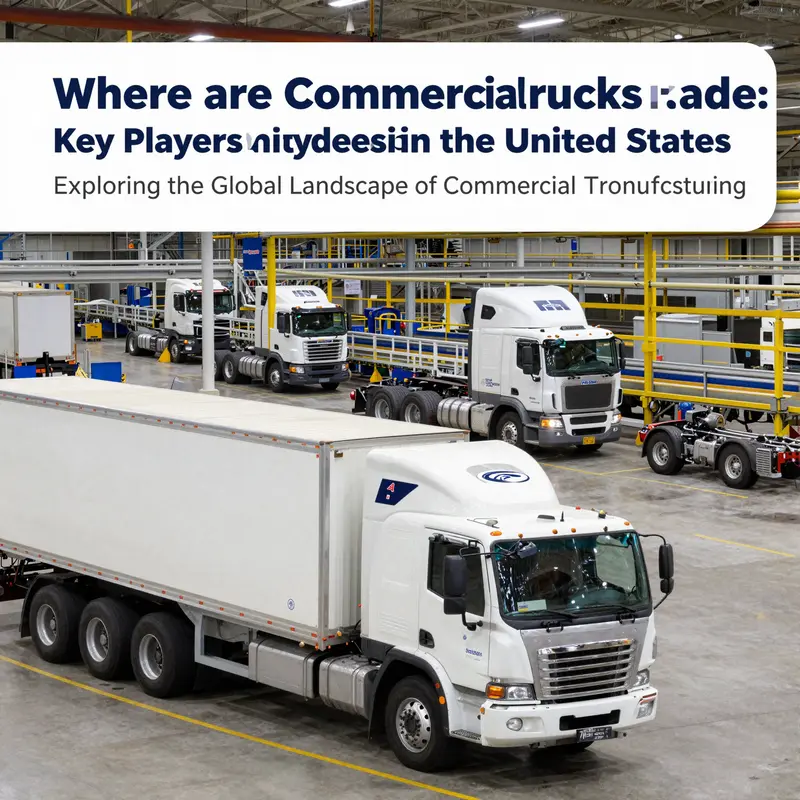
The question of where commercial trucks are made is best answered as a map rather than a single point. In the United States, production rests on a constellation of plants distributed across states and regions, each working within a broader ecosystem that connects engineering, machining, and assembly to a national freight network. This is not merely about where a chassis is welded or an engine dropped in; it is about proximity to suppliers, labor pools, and the highways that move finished vehicles from assembly lines to countless fleets coast to coast. The domestic trucking industry remains a cornerstone of manufacturing in the United States, and the footprints of its major players reveal a deliberate strategy: place capacity where demand is strongest, near transportation corridors, and within reach of the components and subassemblies that define modern heavy- and medium-duty trucking. The result is a dispersed but integrated landscape that supports both long-haul efficiency and regional versatility, strengthening the country’s ability to respond to shifts in freight volumes, fuel economics, and regulatory expectations.
One of the defining features of the American manufacturing picture is its blend of global and local ownership. A German automaker’s North American division maintains several large plants across the country, producing the nation’s workhorse heavy-duty trucks from multiproduct facilities that also coordinate the production of engines and drives. In the Pacific Northwest, Midwest, and Southeast, these facilities anchor regional supply chains, often feeding multiple assembly lines through a single plant or a network of nearby factories. The plants associated with this division are positioned to serve both the long-haul market and the regional distribution segment, reflecting a strategy that values scalability, uptime, and the flexibility to introduce electrified or alternative driveline options as demand and policy evolve. The presence of such a large, integrated operation underscores how the United States leverages global know-how while preserving domestic control over a substantial portion of its core commercial vehicle production.
In the Midwest and the South, American manufacturers and their international partners maintain a steady cadence of activity across several flagship locations. DTNA, a division of a German automaker, runs well-known production sites in Portland, Oregon; Detroit, Michigan; and Mount Holly, North Carolina. Each plant plays a distinct role in the assembly of Class 8 heavy-duty trucks intended for long-haul and regional service. The Oregon facility emphasizes plant efficiency and modular build strategies, while the Michigan location serves as a hub for advanced manufacturing skills and integration with nearby suppliers. In North Carolina, the Mount Holly complex enables a blend of assembly lines that connect to a dense network of component makers along the Atlantic seaboard and into inland distribution hubs. The strategic spread across these sites helps stabilize production against weather, supply disruptions, and local labor dynamics, ensuring that fleets can be kept on the road with minimal downtime.
Another core pillar of U.S. truck manufacturing is the PACCAR group, which operates under the Kenworth and Peterbilt brands but, for our purposes, represents a model of diversified regional production. The company maintains facilities in Denton, Texas; Normal, Illinois; and Laramie, Wyoming. Denton serves as a gateway to the Southwest, tying into a broad freight corridor that moves goods between Mexico, Texas, and the Midcontinent. Normal anchors midwestern capacity, benefiting from a skilled workforce and a mature supplier ecosystem that supports high-value components and comprehensive testing programs. Laramie provides a strategic high-altitude site where cold-weather operation and endurance testing can be conducted and new drivetrains or cab configurations can move into production with reduced logistical risk. These sites illustrate a deliberate layering of capabilities—regional assembly, testing, and integration—so that a single platform can be adapted to varied duty cycles and customer requirements across the country.
Navistar International, another pillar in the U.S. truck-building narrative, centers its primary production activities at Springfield, Ohio. This facility embodies the classic midsize-city manufacturing model: robust skilled labor, access to major highways and rail lines, and a mature supplier base that can support the full spectrum of medium- and heavy-duty applications. Ohio’s industrial heritage translates into a workforce adept at complex assembly, powertrain integration, and quality assurance, all essential to delivering durable trucks that fleets rely on for construction, municipal services, and regional distribution. The Springfield plant’s role in the International brand portfolio underscores the importance of a dedicated facility that can coordinate engines, transmissions, and chassis within a single campus, simplifying the supply chain while maintaining the flexibility to introduce modern features and safety technologies.
Ford and General Motors also anchor the U.S. truck-building map with facilities that emphasize durability, reliability, and a long-term view of commercial fleets. In Dearborn, Michigan, Ford’s heavy-duty truck programs reflect a manufacturing heritage built on rugged engineering and continuous improvement. The Dearborn site blends legacy processes with modern automation, enabling efficient production of vehicles designed for demanding work in construction, utilities, and regional delivery roles. In Arlington, Texas, GM’s operations contribute to a regional cluster that supports light- and medium-duty work trucks designed to serve fleets across urban, suburban, and rural environments. These plants demonstrate how U.S. installments can harmonize the needs of diverse markets—from the high-volume, lower-margin segments to the more specialized, higher-margin configurations—within a single corporate footprint.
Taken together, these sites form a national network that aligns manufacturing capacity with demand rhythms in a way no single factory could. The locations are chosen not only for labor availability but also for access to ports and intermodal hubs, ensuring that finished trucks can be shipped efficiently to dealers and fleet customers across the country. The assembly lines themselves are increasingly modular, allowing manufacturers to reconfigure lines quickly as technology shifts from traditional powertrains toward electrified or hybrid options. This adaptability matters because the freight industry is undergoing gradual but meaningful changes in propulsion, safety systems, and telematics. The ability to introduce new configurations without a total plant redesign is a competitive advantage in a market where orders can swing with economic cycles, fuel prices, and the pace of regulatory change.
Alongside the obvious advantages of domestic production, there is a broader conversation about where final assembly fits within the global supply chain. Buyers increasingly scrutinize where critical components are sourced, how quality is assured, and whether a supplier can deliver at scale while meeting safety and emissions standards. The domestic facilities described here do not operate in isolation; they sit within a dynamic web of suppliers and engineering teams that span continents. For buyers seeking reliable suppliers—especially for components or electric commercial vehicles—strategic sourcing from a broader ecosystem is common. The tension between cost, speed, and compliance pushes manufacturers to optimize not just a single plant but an entire network of suppliers, logistics providers, and testing facilities. In this context, capacity planning and supply chain resilience become as important as the paints and welders that bring a body together.
Capacity dynamics also shape where and how new investment occurs. Industry observers often discuss the question of excess capacity and how it influences orders and expansion plans. In the United States, the balance between domestic plant utilization and import competition is delicate, with cyclical freight demand, labor productivity, and capital expenditure playing pivotal roles. The strategic placement of plants near major corridors helps ensure that a rise in demand for long-haul fleets translates into timely production and delivery. It also minimizes transit time for finished vehicles and reduces the risk of bottlenecks at ports or border crossings, a consideration that grows increasingly important as fleets explore electrified options and more stringent safety requirements. For readers following the broader market, this question of capacity—and the way it informs future plant openings or retooling—is central to understanding how America remains a competitive production locus in a global industry. Excess capacity in the trucking market insights.
Beyond the plants themselves, the American production story is inseparable from the people who design, test, and refine these machines. Highly skilled mechanics, engineers, software specialists, and quality assurance teams collaborate across campuses and vendor sites to push standard trucks toward higher efficiency, safer operation, and better uptime. Engines and transmissions, whether produced on-site or sourced from nearby suppliers, must meet rigorous durability and emissions criteria. The result is a mature manufacturing environment where continuous improvement routines—kaizen-inspired processes, lean manufacturing, and advanced automation—strengthen the reliability fleets rely on. The workforce is supported by a regional ecosystem of training programs and technical schools that feed the industry with talent prepared to tackle the challenges of modern propulsion, connectivity, and vehicle integration. As electrification and connectivity mature, these sites adapt by incorporating battery integration work, software updates, and data-collection capabilities that make the trucks not only more productive but also more intelligent about how they operate in real-world conditions.
Viewed through a broader lens, America’s truck-building map illustrates how domestic production coexists with global supply networks. The United States remains a powerful hub for heavy- and medium-duty trucks, with plants that are strategically placed to support fast turnarounds, high-quality output, and compliance with domestic standards. This is not a national story alone; it is part of a long-running dialogue about how to balance manufacturing sovereignty with the benefits of global collaboration. The chapters that follow will contrast this landscape with Europe’s emphasis on premium engineering and safety innovations and with Asia’s scale-driven production and rapid electrification. For now, the American map reveals a pragmatic approach: invest in a distributed network of capable facilities, cultivate a trusted supplier base, and maintain the agility to adapt as the freight world evolves.
External resource: https://www.daimlertrucksna.com
European Engineering as a Driver of Global Truck Manufacturing: Innovation, Platforms, and Precision
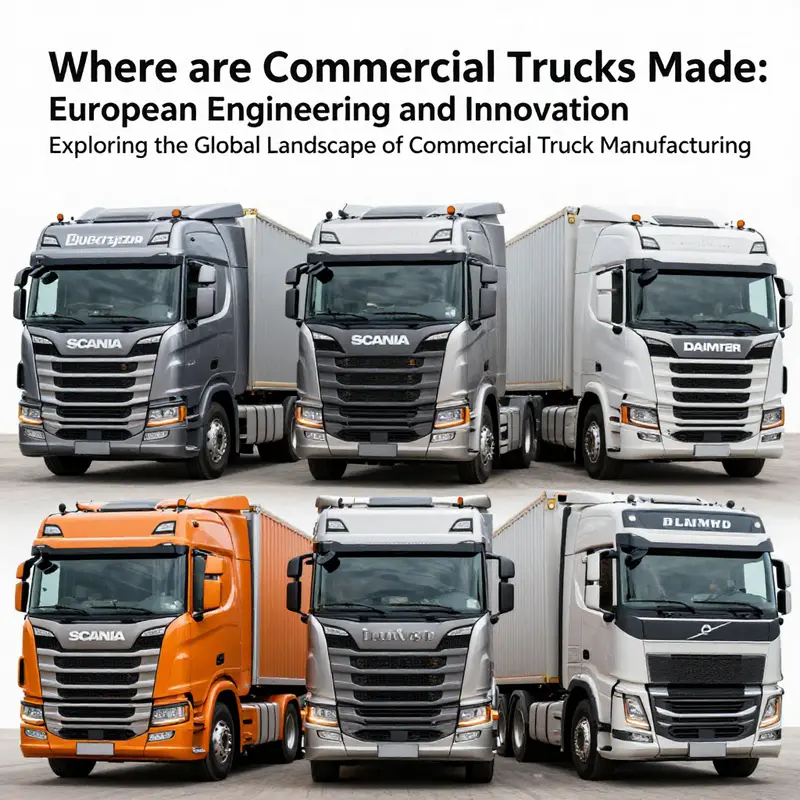
European engineering has long stood as a beacon for precision, safety, and durability in commercial trucking. The continent’s manufacturing milieu is characterized not merely by the assembly lines themselves but by the dense networks of engineers, suppliers, test facilities, and standards bodies that shape every wheelbase, axle, and control system. In this environment, the emphasis tends to be on highway performance, long-haul reliability, and a rider experience that keeps operators comfortable during extended journeys. It is a philosophy that treats the truck as a highly disciplined integration of mechanical robustness, advanced sensing, and intelligent controls, rather than a single, optimized engine in a steel frame. The result is vehicles whose design priorities balance efficiency with safety, and that are expected to perform consistently across a broad spectrum of climates, geographies, and regulatory regimes.
If one looks closely at the European approach, certain strands emerge with remarkable clarity. First, there is an enduring focus on high-end engineering and engineering-driven quality. The work happens across a landscape of specialized campuses and industrial clusters where design studios sit alongside testing rigs, wind tunnels, and heavy-duty road simulators. In this ecosystem, engineers obsess over every detail that affects real-world operation: aerodynamics that shave fuel use on long stretches, suspension systems tuned to absorb the worst highway imperfections, and braking systems calibrated for predictable response even in challenging braking conditions. The safeguarding of driver and payload through sophisticated sensing and control algorithms—collectively known as driver assistance and safety systems—has been a central pillar. These features aren’t marketing add-ons; they are integral to how European trucks manage long value chains, reduce downtime, and deliver predictable total cost of ownership to fleets that run thousands of miles across borders each week. The attention to long-term durability and serviceability, from components to chassis, underwrites confidence for operators who rely on their vehicles as critical infrastructure in daily supply chains.
The second defining strand is the strategic use of modular platform strategies. Across European manufacturers, the idea is to create common, scalable architectural platforms that can spawn multiple models and configurations while preserving tight engineering controls and quality standards. This approach allows for rapid adaptation to different markets without sacrificing the core engineering ethos. In practice, modular platforms enable shared components, standardized interfaces, and synchronized production schedules. They also pave the way for more predictable upgrades as technologies evolve—such as electrification, advanced propulsion controls, and connectivity features—without forcing a complete redesign of the underlying architecture. The outcome is a more resilient supply chain, where components and subassemblies can be sourced, tested, and substituted with minimal disruption. A practical illustration of this interdisciplinary approach to chassis and platform design can be seen in smart chassis developments. This internal link points to how modular thinking translates into tangible chassis innovations that can be adapted across markets and use cases, reinforcing the idea that European engineering favors flexible, but rigorously tested, design frameworks over product-by-product customization alone.
Those modular strategies are complemented by a dense ecosystem of suppliers and partners who specialize in sub-systems that must perform at exacting standards. The European model embeds a culture of collaboration among OEMs and high-precision suppliers, where suppliers are not merely vendors but co-developers who help push performance, reliability, and safety forward. This collaboration extends beyond the factory floor into testing and validation arenas, where vehicles are subjected to a battery of trials that mimic the harshest conditions truck drivers may face. It is not unusual to find testing programs that push aerodynamics, thermal management, and structural integrity to the edge of what is feasible, thereby creating a buffer of reliability for fleets that demand consistent performance across seasons and regions. In this environment, standards and compliance matter not just as regulatory checklists but as design constraints that shape every decision, from material choices to software architectures.
The European achievement in engineering is also about how these vehicles integrate with broader freight systems. The highway-focused strengths of European trucks—endurance under long-haul duty, quiet operation, and a calm, controlled ride—made them natural anchors for premium long-distance services and high-value freight segments. The emphasis on efficiency and driver comfort feeds directly into fleet branding and service quality, enabling operators to market reliability and uptime alongside speed. As the world modernizes its trucking fleets with electrification and digital controls, Europe’s engineering culture offers a rigorous playbook for how to balance the competing demands of range, payload, charging infrastructure, and total cost of ownership. Even as production hubs spread globally across continents with distinct labor markets and incentives, the European approach continues to shape the expectations fleets bring to any supplier, whether for a drivetrain, a cabin, or an integrated telematics suite.
This cross-pollination does not occur in a vacuum. It interacts with the realities of a global production network where major regions specialize in different strengths. Europe remains a leader in premium engineering, safety systems, and modular design philosophies, while other regions contribute scale, cost efficiencies, and rapid access to large markets and their own ecosystems of components and software. Buyers seeking dependable suppliers for components or electric commercial vehicles increasingly pursue the efficiency advantages generated by China’s automotive ecosystems, as noted in industry assessments. Yet, the quality benchmarks and technical standards that originate in European engineering provide a critical reference point, guiding due diligence and aligning expectations across the supply chain. The upshot is a global industry that borrows the best ideas from each hub, then instruments those ideas within a framework of rigorous testing, standardization, and continuous improvement. In this context, the question of where are commercial trucks made dissolves into a richer picture: production happens in multiple places, but the signature of European engineering remains a defining influence on how modern trucks are designed, built, and operated.
The narrative of European excellence also includes a forward-looking emphasis on electrification and advanced propulsion. Engineers here have spent decades refining chassis control, weight distribution, and energy management to maximize efficiency, safety, and driver confidence. As electrified powertrains become more common, these same engineers apply their insights to battery placement, thermal control, and recharge regimes that minimize downtime for fleets. The emphasis on modularity and standard interfaces in European platforms makes it easier to accommodate new powertrains and software updates without sacrificing reliability or safety. These traits—engineered resilience, modularity, and a relentless focus on the driver experience—are what enable European manufacturers to push the envelope while remaining attuned to the practical realities of long-haul operations and cross-border logistics.
For readers exploring the broader global map of truck manufacturing, the European lens offers a reminder that manufacturing is as much about mindsets as it is about machines. It highlights the importance of a calibrated balance between innovation and practicality, between the push for cutting-edge features and the discipline required to deliver dependable, field-proven products. The result is vehicles that not only travel farther and safer but also help fleets optimize maintenance schedules, reduce interruptions, and manage total costs with greater predictability. This narrative aligns with the larger arc of the industry: as markets evolve, the combination of European engineering rigor, modular platform strategy, and a collaborative supplier network remains a steady anchor for a rapidly changing global transportation landscape. External studies that investigate the engineering principles behind today’s trucks provide a deeper theoretical context for these observations, offering insights into the design decisions that underpin performance, safety, and efficiency in modern commercial vehicles: https://www.sciencedirect.com/science/article/pii/S2352146523000897
Where Commercial Trucks Are Made: Tracing China’s Rise and the New Global Factory Map
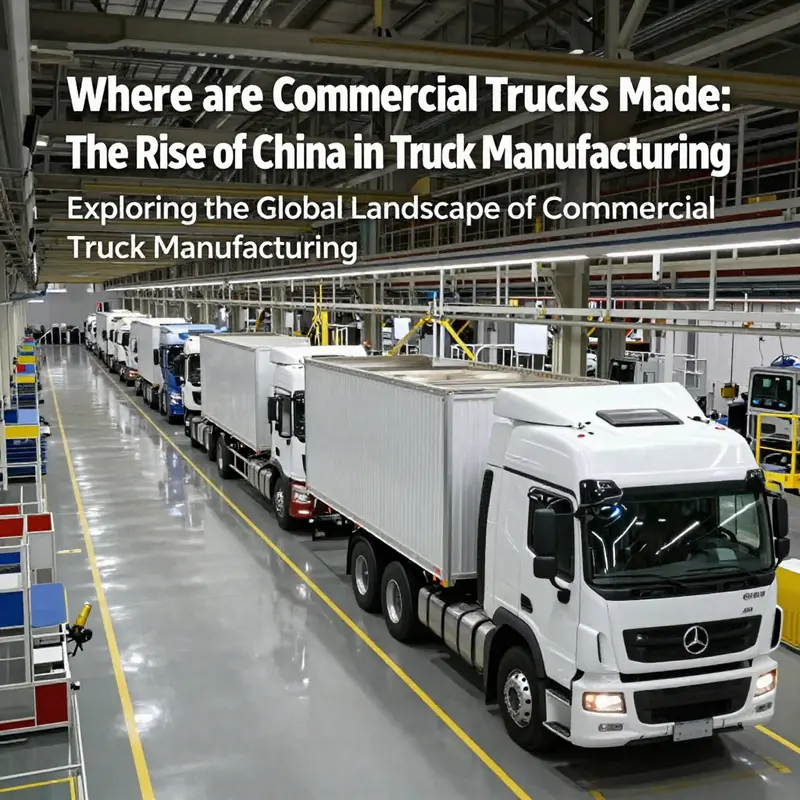
The question of where commercial trucks are made is less a simple answer than a narrative about global industrial policy, supply-chain ecologies, and the shifting balance of demand. For decades, truck manufacturing has followed a multi-polar pattern: large, technically sophisticated markets in the West alongside expanding production in Asia and other regions. Today, that pattern is being rewritten by the rise of a manufacturing powerhouse in mainland China, a development that reshapes not only where trucks are built but how entire fleets are conceived, sourced, and deployed across continents. The core of this transformation rests on the scale and integration of China’s industrial ecosystem. Within a few clustered corridors, you find raw materials, critical components, specialized tooling, and the skilled labor that binds them into a complete vehicle. In Guangdong, Jiangsu, Zhejiang, and Henan, dense networks link stamping, welding, cab assembly, powertrain integration, and final build-out. The result is a manufacturing tempo that can align with economies of scale, one of the essential drivers behind today’s MHCV—medium and heavy commercial vehicle—production. Mainland China has grown into the world’s largest producer and exporter of MHCVs, defined by weight thresholds that exceed six metric tons. This leadership isn’t merely a matter of quantity; it reflects a broader capacity to coordinate local demand with export ambitions, to align with government policies favoring industrial growth, and to harness the rapid adoption of green technology. While some regions depend on imported designs or outsourced modules, the Chinese trucking ecosystem has matured into a self-reinforcing loop: demand fuels investment, investment expands capability, and capability reduces costs. The result is a competitive cost structure that supports not only domestic sales but a robust export position as well. The practical effect is that a substantial share of the world’s MHCVs, including long-haul, construction, and urban logistics platforms, now emerges from a single domestic engine room. This doesn’t erase the role of other regions, but it has redefined the baseline. Europe remains a center of premium engineering and advanced safety features. It is a region that concentrates high-value capabilities—drive-train integration, aerodynamics, and sophisticated control systems—into vehicles destined for complex operating environments and demanding regulatory regimes. The continent’s manufacturing logic emphasizes quality, performance, and durability, often with strict compliance to emission and safety standards that reflect both policy and consumer expectations. In practice, European production lines tend to specialize in higher-end configurations and customized solutions that command premium price points. Across the Atlantic, the United States sustains a substantial domestic footprint. Assembly facilities and regional supply chains support a broad spectrum of brand families and configurations suitable for long-haul, regional distribution, and construction markets. The U.S. industry balances the benefits of a mature logistics network with the constraints of regulatory regimes and shifting demand cycles. It remains a hub for integrated testing, certification, and service networks that enable fleets to keep running in some of the most demanding logistics corridors in the world. The United States also serves as a magnet for global manufacturers seeking proximity to North American customers and to a supply-chain community that values speed, reliability, and after-sales coverage. Against this backdrop, the dynamics of where trucks are made extend beyond national borders. A growing number of international manufacturers are locating or expanding facilities in China to leverage the country’s scale and ecosystem. A major European OEM, for example, has signaled plans to establish a new global manufacturing facility in China. The move is intended to shorten lead times, optimize regional supply chains, and better respond to local demand patterns, especially in markets moving decisively toward electrification and natural gas propulsion. Even as these shifts unfold, the Chinese market itself is rapidly innovating. Since 2023, sales of natural gas-powered trucks have surged, spurred by policy support, refueling and recharging infrastructure, and a broader push to reduce urban and regional pollution. This momentum has opened new avenues for gas-powered platforms that suit short-haul operations, regional distribution, and construction tasks, helping China build a broader portfolio for zero-emission medium- and heavy-duty transport. The pace of change also reflects a more deliberate alignment between government direction and industrial strategy. Policymaking has targeted green technology adoption, manufacturing upgrading, and export expansion. In practical terms, this means more robust incentives for scale, better access to financing, and a regulatory environment that rewards efficiency and clean-tech integration. Within this context, a few domestic manufacturers have earned reputations for performance, reliability, and efficiency in heavy-duty and long-haul segments. They illustrate how a localized, integrated ecosystem can deliver trucks tailored to long-distance freight, rugged work sites, and dense urban logistics—with the flexibility to adapt to evolving technology and customer needs. Yet, as with every large industrial system, quality and compliance remain essential considerations for buyers and fleet operators alike. The sheer breadth of production capacity creates a spectrum of quality, variances in component sourcing, and differing levels of rigor in certification and testing. Diligent buyers understand that a robust due-diligence process is not optional but foundational. This is especially true for components and powertrains that influence performance, fuel efficiency, and emissions. The growing prominence of China in truck manufacturing also translates into a broader discussion about sourcing strategy. For purchasers seeking reliability and value, strategic sourcing from China’s established automotive ecosystems has become commonplace. At the same time, buyers must navigate a patchwork of standards, supplier capabilities, and quality control practices. The right approach hinges on transparent audits, traceable supply chains, and clear alignment with safety and environmental standards. In this landscape, the idea of “made in” becomes more nuanced than a place on a badge. It can mean regional assembly, global supply-chain coordination, or a hybrid approach where components sourced from multiple continents converge on a single production line. The shift toward a China-centered production model does not erase the importance of other regions. Instead, it highlights a new global map in which plants operate within a web of regional hubs, each optimizing different parts of the value chain. The result is a more resilient picture: a multi-hub world where the speed and cost of production reflect the interplay of policy, market demand, and technological progress. Within this broader narrative, policy and industry requirements increasingly push toward standardization and compliance across borders. This is where the reference to ongoing conversations among manufacturers and regulators becomes meaningful. Clear guidance on emissions, safety, and interoperability helps ensure that the expansion of production capacity in one region does not become a barrier to cross-border trade or fleet deployment. For buyers and fleet operators, the implications are practical and direct. A China-centric production base can boost supply-chain resilience and shorten lead times for regional demand. It can also present new setup considerations, such as the need to harmonize component specifications, validate supplier performance, and manage currency and tariff dynamics. As a buyer, one might weigh a mixed sourcing strategy that leverages the scale and cost benefits of Chinese production while maintaining regional assembly or finalization in other markets to optimize delivery timelines and regulatory compliance. In the end, the question of where trucks are made is a lens into a larger story about how the global trucking system is evolving. It is a story of scale and specialization, where ecosystems inside certain regions magnetize investment, talent, and innovation. It is a story of policy and market signals converging to drive green technology adoption, fueling a broader transformation of vehicle design, powertrains, and logistics strategy. And it is a story of how a single country’s industrial architecture can redefine the yardsticks for global supply, export dynamics, and fleet performance. For readers who want to dive deeper into the policy and market drivers behind these shifts, one insightful angle is the emphasis OEMs now place on emissions clarity and regulatory conformity. A common thread in this discussion is the need for clearer emissions guidelines and a more predictable regulatory environment across markets. OEMs seek clarity in emissions regulations, and that search for stable, transparent rules is shaping decisions about where to locate new production, how to configure supply chains, and which regions to prioritize for green technology adoption. See the discussion that highlights this cross-border compliance challenge in this referenced industry resource: https://truckplusllc.com/oems-seek-clarity-in-emissions-regulations/. Beyond the policy and product considerations, the broader takeaway remains that the modern commercial truck is part of a global machine—one that moves freight with increasing efficiency, resilience, and environmental sensitivity. The rise of a Chinese manufacturing core does not merely shift production; it redefines the economics of scale, the strategic value of regional clusters, and the tempo at which new propulsion and safety technologies reach fleets around the world. In that sense, the global map of truck manufacturing is less a fixed atlas and more a living diagram that reflects how policy, demand, and technology co-evolve. For authoritative, data-driven perspectives on China’s leadership in truck and bus exports, see the external analysis at S&P Global, which offers a broader view of how the region’s production capabilities shape the global market: https://www.spglobal.com/marketintelligence/en/insights/analysis/mainland-chinas-leadership-in-truck-and-bus-exports.
Global Foundries, Local Edges: The Making of Commercial Trucks and the Quiet Rules of Quality
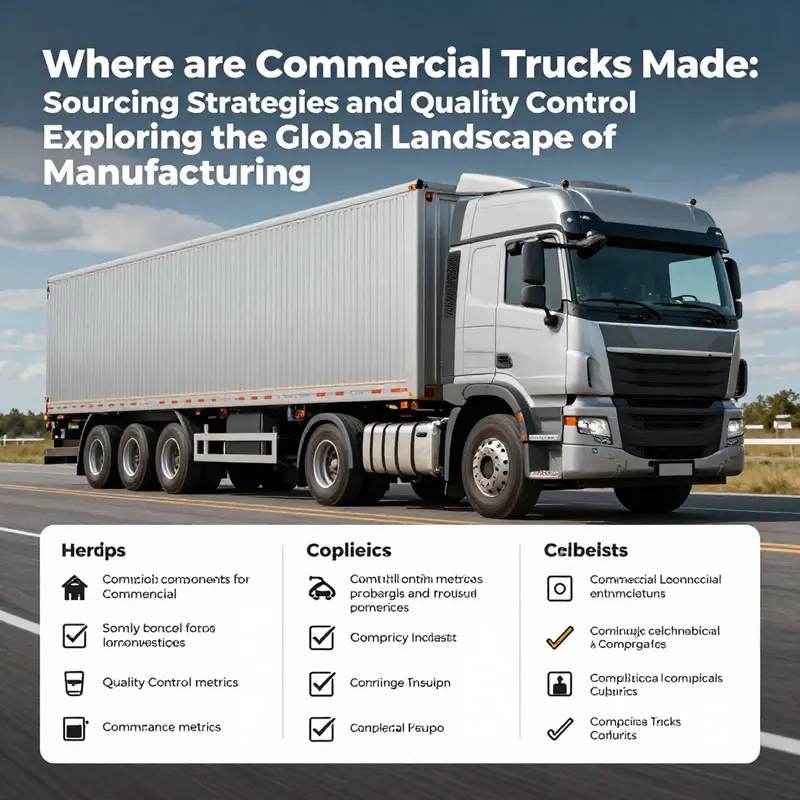
This chapter explains how commercial trucks are produced across a global network, with a dominant hub coordinating chassis, powertrains, and final assembly, while regional centers specialize in components, premium engineering, and after-sales service. It discusses factory layouts, process integration, quality control, sourcing strategy, and how modular architectures enable customization and resilience in a world of evolving electrification and regulatory demands.
Final thoughts
In conclusion, understanding the global landscape of commercial truck manufacturing provides valuable insights for logistics and procurement teams. By recognizing the strengths of manufacturing hubs in the United States, Europe, and China, businesses can make informed decisions that enhance their fleet operations and sourcing strategies. As the industry continues to evolve, particularly with the rise of electric models and advancements in technology, staying updated on these trends will be crucial for maintaining a competitive edge in the market.