
The walking beam suspension system is a cornerstone of commercial truck design, offering a blend of durability and functional mechanics that has been pivotal in heavy-duty applications. This system operates differently than modern independent suspensions, but it remains critical for specific trucking strategies, particularly in logistics and heavy construction environments. In the following chapters, we will dissect the mechanics behind walking beam suspensions, weigh their advantages and disadvantages, compare them against modern systems, explore their niche applications, and gaze ahead into future innovations in the trucking landscape. By understanding walking beam suspensions, logistics and fleet professionals can make informed decisions tailored to their operational needs.
Walking Beam Suspensions: How a Simple Lever Shapes Load, Traction, and Ride on Heavy Trucks
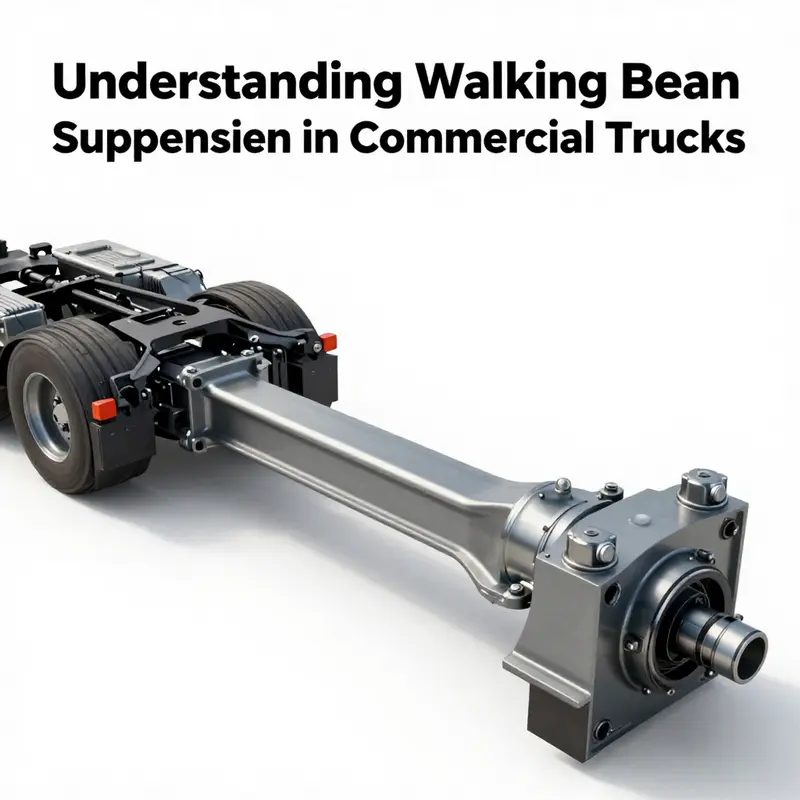
A walking beam suspension is more than a stubborn relic of heavy trucking; it is a purposeful arrangement of levers and pivots that translates the road’s rough rhythm into a more controllable ride for both chassis and cargo. Far from a single bar under the axle, this system unfolds as a network of interconnected beams that sit beside the vehicle’s centerline, each one tuned to share load and temper impact through a balanced, lever-driven motion. The core idea is deceptively simple: by linking the axle to the frame with a pivoting beam, the wheels can encounter irregularities in the pavement and transfer only part of that shock to the frame, while the remaining energy finds a path through the beam network. In practice, the mechanism behaves like a carefully choreographed dance of weights and arms, where the front and rear wheels on an axle do not operate in isolation but influence each other through the angular relationships and pivot points of the beams. The result is a suspension that is rugged in construction and predictable under heavy loads, with a track record of reliability that has kept walking beam configurations in service long after more modern systems emerged in other applications.
The typical arrangement on each side of the vehicle centers on a primary beam and two secondary beams. These beams are mounted so they can pivot at specific locations and connect to the axles and the frame in a way that preserves a predetermined load-sharing relationship between tandem axles. The primary beam sits in a pivotal relationship with the frame, generally supported at its midpoint, which anchors the entire system and sets the baseline for how the axle loads are distributed through the beam network. The two secondary beams, in turn, link the front and rear axles to the primary beam through their own pivot points. This configuration creates a three-beam sequence that can walk or pivot as each wheel encounters a bump, dip, or other irregularity. The mechanical intent is not to isolate each wheel completely; it is to dampen the shock and spread it across the structure so that the chassis sees a smoother, more manageable input, while the wheels maintain contact with the road surface as consistently as possible under heavy payloads.
What makes the walking beam design particularly notable is its emphasis on robust, non-sliding connections. Unlike suspensions that rely on sliding joints or preload-based components, walking beams use pivot joints to transfer loads and motions. That characteristic minimizes friction losses and wear under demanding use, which is a major reason why such suspensions have endured in certain segments of the trucking world. The pivot-based connections enable the system to accommodate a wide range of axle spacings and frame configurations, making it adaptable to various heavy-duty layouts without sacrificing strength. The trade-off, of course, is ride comfort. The same lever action that distributes weight and absorbs jolts across the beams also couples the wheels in a way that reduces the level of isolation from the road, especially on rough surfaces. For operators who prioritize durability, long service life, and lower maintenance over the gentleness of a modern air- or independent-suspension ride, the walking beam remains a sensible choice.
A deeper look at the mechanical performance reveals a deliberately engineered balance between load sharing and structural simplicity. The three-beam concept—primary and two secondary beams—built on each side of the vehicle, is not just about distributing weight; it is about shaping how the system reacts when one axle traverses a surface irregularity. The front and rear secondary beams are pivotally connected to the intermediate axle and rotatively attached to their respective front and rear axles. Meanwhile, the primary beam is connected to the frame at its midpoint, creating a lever arrangement that can reallocate forces as the wheels move through uneven terrain. When a wheel meets a bump, the corresponding beam rotates about its pivot, a motion that may lift or lower the axle in concert with the opposite wheel’s movement. Instead of a shock being transmitted blindly into the chassis, part of the energy is redistributed through the beam network to the opposite side, helping to maintain tire contact and reduce peak stresses on any single frame member.
The historical and engineering emphasis on predictable, non-sliding load transfer has another practical consequence: durability under high loads. In heavy freight operations, where full trailers and large payloads push frames to the limits, a walking beam’s rigid, pivot-based transfer paths resist the wear and fatigue that sliding joints would accumulate under repeated, high-amplitude impulses. This durability translates into meaningful maintenance advantages. With fewer sliding interfaces and less need for continuous lubrication, the life cycle of the suspension components can be longer, and the maintenance window can be more predictable. Yet this durability comes at some cost to ride smoothness. Because the design favors robust alignment and load transfer over passive isolation, vibrations and road shocks tend to feel more pronounced inside the cab and over rough stretches. Operators who need maximum payload stability and a workhorse chassis may accept this trade-off, whereas fleets chasing passenger-car-like comfort will gravitate toward alternatives with more sophisticated damping and isolation.
From a design and analysis perspective, engineers have explored how to model walking beam suspensions to tune their dynamic response for real-world conditions. The analytical approach emphasizes the system’s stochastic behavior, recognizing that road profiles present a spectrum of random inputs. Researchers have shown that the absence of sliding joints and the lever-based load path can be exploited to minimize the transmission of certain vibration modes while preserving good tire contact. In practical terms, this means the system can be parametrically tuned to reduce high-frequency inputs that accelerate tire wear and fuel burn, while maintaining enough compliance to avoid excessive frame fatigue. The advantage is that a well-tuned walking beam can deliver a road-friendly feel under heavy loads without sacrificing the simple, rugged nature that defines the technology. The design philosophy rests on predictable kinematics and robust mechanical linkages rather than hydraulic or pneumatic complexity, which aligns with the expectations for long-haul and heavy-duty trucking where maintenance windows can be brief and reliability is a non-negotiable metric.
The specific historical path of walking beam technology is also worth noting. One landmark development is the three-axle walking beam suspension patented by John G. Wheeler, identified in the patent US4227711A. This configuration formalizes how three interconnected beams—the front, intermediate, and rear—which are pivotally linked to the axles and the frame, work together to achieve a balanced load distribution across tandem axles. By linking the beams in this manner, the system achieves a more stable conveyance of loads and a smoother energy transfer as the system conforms to uneven surfaces. The Wheeler patent underscored the value of maintaining a consistent load-sharing ratio without sliding joints, a principle that remains central to the walking beam mindset. For readers who want to trace the historical and technical roots of this approach, the patent provides a detailed blueprint of the beam geometry and pivot connections that underpin many modern interpretations of the concept.
In contemporary discussions of truck design and operation, walking beam suspensions occupy a nuanced position. They are rarely the newest approach, yet their ruggedness and proven reliability keep them in service in older fleets, rural operations, and applications where simple maintenance and high load capacity are paramount. The trade-offs are well understood: more pronounced ride harshness and less isolation from road irregularities, balanced by the certainty of performance under heavy payloads and fewer unpredictable failures due to wear in sliding components. For fleets weighing the cost of ownership, maintenance intervals, and the operational profile of heavy-duty tasks—such as long-range transport over mixed-quality highways—the walking beam can still be the most practical choice. It connects a vehicle’s structural frame to its wheels through a stable, time-tested mechanism that invites a straightforward maintenance philosophy and a reliability story that is easy to communicate to operators and technicians alike.
As the industry continues to reassess suspension strategies, the walking beam remains a relevant reference point. Its enduring presence is not merely about nostalgia; it reflects a deliberate preference for a design that, when correctly implemented, distributes loads efficiently and reduces the pace of frame fatigue in challenging operating environments. This chapter has walked through the essential mechanics—the primary and secondary beams, the pivot geometry, and the frame attachment points—that collectively transform a handful of rigid members into a capable system. It has also connected those mechanics to the broader themes of ride quality, maintenance, and performance in heavy trucks. In the end, the walking beam suspension teaches a simple, powerful lesson: in heavy trucking, a well-planned lever system can harmonize strength, load management, and road contact in a way that stays true to the practical demands of real-world operation.
For readers seeking to explore how industry dynamics intersect with vehicle design, consider the broader context of trailer order trends and their implications for suspension choices. The link below offers insight into how market demand can influence the specifications fleets prioritize when they equip or replace trailers and tractors. Trailer Orders Impact Truckload Margins.
External reference for deeper historical insight into walking beam geometry and load distribution can be found in the patent literature. For a detailed historical patent discussion, see US4227711A. US4227711A patent.
Walking the Line: How Walking Beam Suspensions Shape Load Distribution, Ride Quality, and Durability in Commercial Trucks
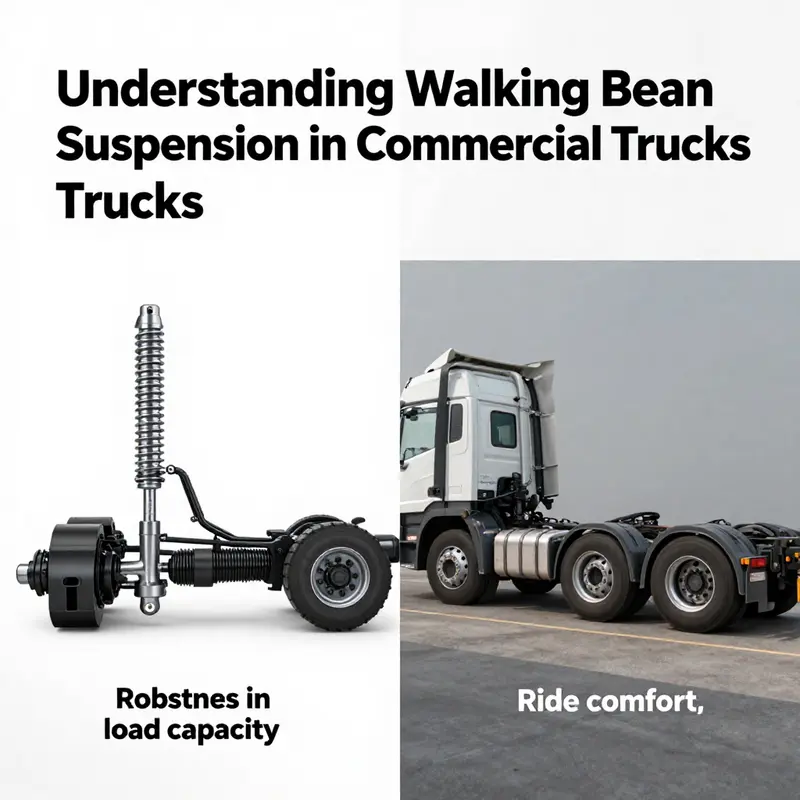
A walking beam suspension is a robust, non independent system used on heavy trucks. A single rotating beam connects the axle to the frame at two ends, allowing vertical movement to be transmitted through pivots. The result is a design that maintains axle alignment and road contact on uneven surfaces while letting the beam articulate with controlled stiffness. The ride tends to be firmer than independent or air suspensions, but it provides predictable load handling and durability for heavy payloads.
The mechanics: the beam sits between two frame pivots; when a wheel hits a bump, the end pivots rotate and transfer motion to the opposite wheel via the beam. This linkage improves ground contact across rough terrain but reduces isolation from road vibrations to the cab.
Advantages: good load distribution across multiple axles, strong construction, simple maintenance, and reliable operation in harsh environments. In parabolic and multi stage variants, the design can tailor stiffness for different load ranges.
Disadvantages: less isolation from road input than independent or air suspensions, ride can be harsher, more big-picture complexity and maintenance in multi stage designs, potential weight penalties and space requirements under the frame.
Practical use: favored for heavy-duty, off-road, or backcountry work where uptime and durability trump ride comfort. In modern fleets some may pair walking beam with supplemental systems to improve stability while retaining simplicity.
Decision context: fleets weigh maintainability, uptime, payload needs, and road quality. Walking beam remains relevant where robustness, serviceability, and predictable behavior under variable loads are paramount.
Maintenance and inspection: monitor pivot wear, lubrication points, and alignment; protect pivots from debris and rust; regular inspection helps prevent unexpected downtime.
null
null
Walking the Beam: How a Classic Suspension Handles Light to Heavy-Duty Freight
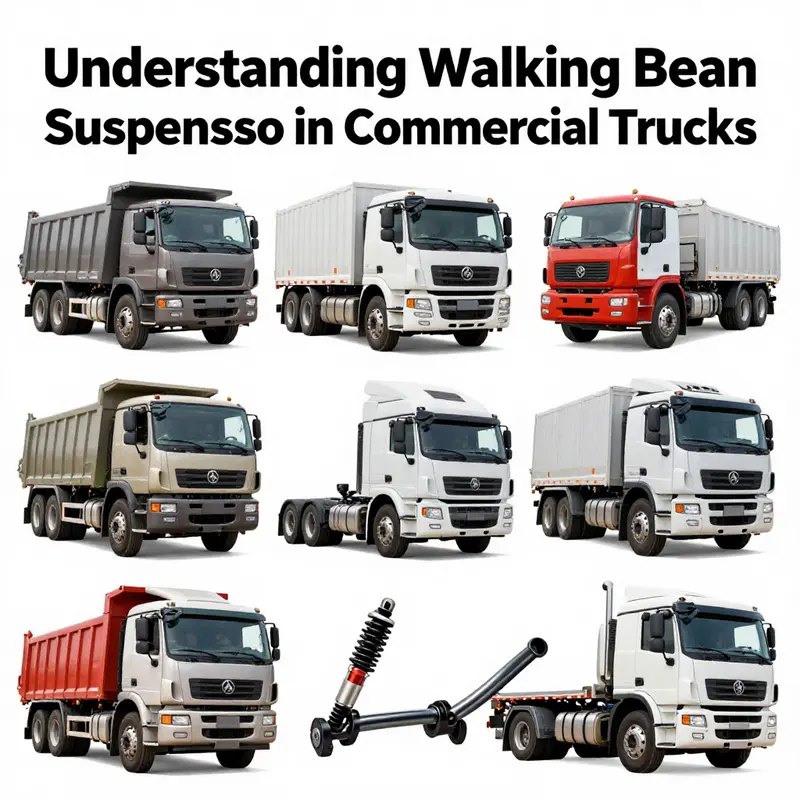
A walking beam suspension is one of those enduring solutions in heavy transport that feels deceptively simple even as it performs a complex balancing act. It is a non-independent system centered on a pivoting beam, sometimes called a walking beam or trunnion beam, that links the axle assembly to the vehicle frame. On the surface, the idea is straightforward: as the wheels encounter bumps, the beam pivots and transfers some vertical motion into the system, allowing the axle to move independently of the frame to absorb shocks. Yet the value of this design becomes clearer when you watch it work across commercial trucks from light urban movers to long haul trailers carrying heavy or irregular loads. The walking beam does not deliver the silken ride of modern air suspensions, but it offers a unique blend of simple mechanical reliability, high load capacity, and predictable behavior under rough conditions.
In the heart of a walking beam layout sits the beam itself, a robust metal member that spans the axle ends and is supported by pivot points near the beam’s ends. The wheel hubs and axles attach to the ends of this beam, so when one wheel climbs over a pothole or a rock, the beam tilts and the other wheel responds in kind. This linkage preserves axle alignment while distributing the motion between the two wheels. The result is an inherently stable platform that resists sudden, unbalanced loads, keeps tire contact more consistently with the road, and reduces the transfer of road shocks into the frame. Importantly, the design is non-independent in the sense that while each wheel can move, the motion of one end is mechanically linked to the other. That linkage is what gives the system its strength and its characteristic ride profile: predictable, rugged, and less prone to abrupt changes when the surface becomes uneven.
In light commercial vehicles, including urban delivery vans and compact trucks, the walking beam brings tangible benefits without demanding the extra mass or cost sometimes associated with more advanced suspensions. These vehicles often operate in stop-and-go environments with frequent chassis loading and unloading, where driver comfort translates directly into less fatigue and better vehicle lifespan. The beam’s ability to dampen road-induced vibrations helps reduce chassis flex and protects sensitive cargo and mounted equipment. Even though the ride can feel stiffer than air-suspension setups, the tradeoff is a system that remains simple, easy to maintain, and economical for fleets that prioritize durability and predictable behavior over the refined isolation offered by more modern technologies. The walking beam, with its durable joints and straightforward geometry, proves its worth in fleets that value uptime and steady performance at a modest cost.
When you move to medium-duty applications, the case for walking beam becomes even clearer. On-road dump trucks and refuse collection vehicles carry daily loads that vary in weight and distribution, and their duties demand a suspension that can absorb a broad spectrum of shocks while preserving stability at speed. In these contexts, the walking beam often runs with rubberized components along the crossbeam and damper elements that cushion vertical movement. These details—often part of a patented crossbeam and rubber damper system—improve shock absorption under variable loads and rough terrain. The outcome is steadier weight distribution, reduced stress on tires, and a longer service life for both the cargo and the chassis. The system’s rigidity in torsion and its ability to maintain axle alignment help municipalities and fleets absorb the jolts of urban debris, potholes, and imperfect road surfaces without inviting premature wear on wheels or suspension mountings. In other words, medium-duty walking beam suspensions strike a pragmatic balance: they accommodate daily payload variation while delivering resilient performance in the face of unpredictable road conditions.
In the realm of heavy-duty and specialized transport, the walking beam suspension is often pitched as a workhorse built to endure extreme loads and demanding routes. Trailers carrying oversized or heavy freight confront road irregularities that would test lighter setups and strain more delicate systems. Here, the walking beam’s pendulum-like articulation becomes a clear advantage. The beam’s pivoted design allows more flexible axle articulation, enabling the wheels to maintain contact on uneven surfaces while the frame remains relatively stable. This translates into safer load transfer and steadier handling, which are critical when negotiating transitions from highway grades to rural lanes or construction sites. Even with the presence of other suspension technologies in modern fleets, the walking beam remains favored in many heavy-haul configurations because of its combination of strength and simplicity. Its ability to distribute heavy loads across the axle while preserving alignment helps to prevent sharp, unpredictable lurches that could threaten cargo stability and driver control during abrupt steering or braking in compromised road conditions.
A central theme across these categories is the trade-off inherent in any suspension choice: ride comfort versus durability, stiffness versus compliance, and simplicity versus the potential for advanced control. The walking beam emphasizes durability and reliability, at times at the expense of the silky isolation seen in air- or fully independent suspensions. For operators who value predictable handling in severe service, that compromise is often worthwhile. The design’s mechanical resilience—its status as a robust, time-tested solution—translates into lower maintenance demands and easier field repairs in remote or high-usage environments. Maintenance considerations matter in fleets with high mileages and heavy payloads. The beam and its pivots are built to withstand repeated cycles, and the system typically tolerates rough road conditions without the frequent, delicate adjustments that some other suspensions require. That ease of maintenance is a practical advantage for operators who must minimize downtime in service and keep a fleet on the road.
Yet the walking beam is not a one-size-fits-all cure. Its non-independent movement means that certain dynamic responses under cornering, braking, or rapid lane changes can differ from those of modern independent suspensions. The ride tone is often described as firmer, and road feedback can be more pronounced in the cabin. That is not a flaw so much as a characteristic—a reminder of the system’s core design goals: maximum load capacity, robust performance, and straightforward reliability. Fleet managers weigh these attributes against the demand for passenger-carlike comfort, noting that for many fleets, the value of consistent load handling and durable service outweighs a smoother ride. In urban fleets with steady routes, the benefits accrue through reduced maintenance costs, higher payload stability, and a long service life. In long-haul and heavy-haul operations, the stability offered by a walking beam becomes a safety feature, helping maintain traction and control across uneven lanes and variable weather or road surfaces.
As fleets evolve, there remains room for adaptation without abandoning the walking beam philosophy. Some operators pair the beam with supplementary damping or hybrid approaches to improve ride quality where conditions permit. The mechanical simplicity of the beam makes it possible to incorporate rubber cross-beams or dampers that tune the system’s response while preserving the core advantages of load handling and durability. In this sense, walking beam suspensions continue to adapt to the changing economics and road realities of modern trucking. They remain a viable option where cost, reliability, and load management drive the decision-making process as much as ride comfort. And they act as a bridge in discussions about fleet composition and maintenance planning that include broader market dynamics—consider how trailer order trends or the relative pressure on margins influence the choice of suspension systems across fleets. For deeper context on those market dynamics, see Trailer Orders Impact Truckload Margins.
In sum, the walking beam suspension occupies a distinctive niche in the landscape of commercial trucking. It is a design born of a need for ruggedness and dependable performance across a broad range of weights and road conditions. Its application from light urban fleets through medium-duty service to heavy-haul operations demonstrates how a single mechanical concept can scale to meet diverse needs while staying true to a philosophy of straightforward engineering. The beam’s ability to keep axles aligned, dampen shocks, and preserve tire contact under loading strain translates into tangible outcomes: improved stability, reliable load distribution, and a lifecycle that emphasizes durability over the latest, fastest ride. For operators and mechanics alike, the walking beam remains a familiar, trustworthy option in a field where the cost of downtime can far exceed the purchase price of a suspension system. It is this blend of rugged resilience and practical performance that keeps walking beam suspensions a respected choice in the annals of commercial trucking, even as new technologies continue to push the envelope in comfort and control. The chapter on its varied applications across truck categories thus offers not just a snapshot of a legacy solution, but a living example of how core mechanical principles continue to inform decisions on the road today and in the years to come. External references provide a broader technical view of the concept, while fleet-focused discussions frame the real-world implications for maintenance, operation, and economics within the industry.
From Rugged Roots to Smarter Roads: The Next Wave of Walking Beam Suspensions in Commercial Trucks
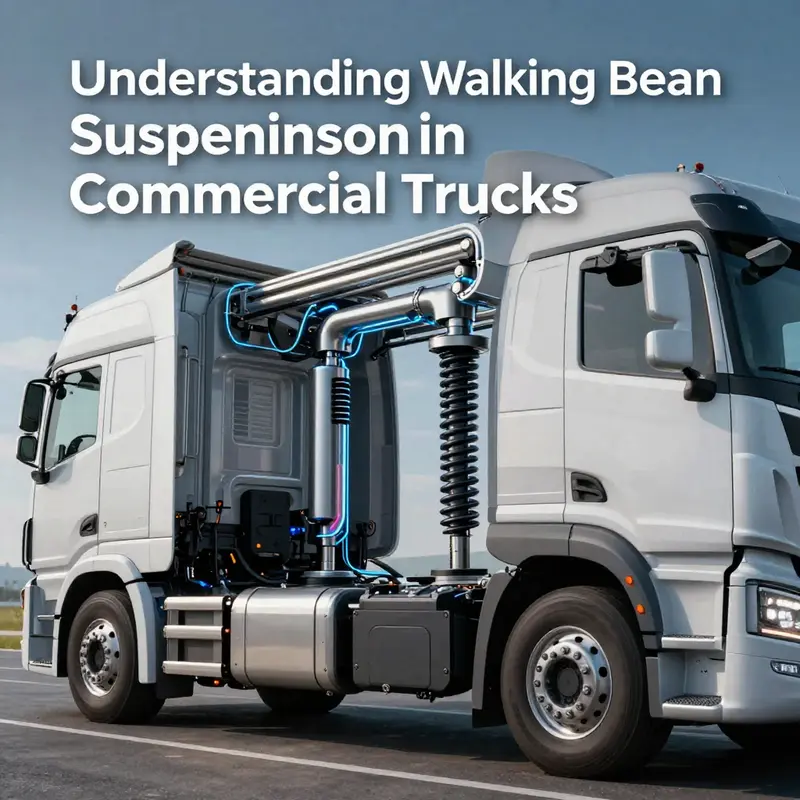
Walking beam suspensions have long stood at the intersection of rugged reliability and mechanical clarity. They are the workhorse systems born from an era when every rivet and joint bore an outsized share of a truck’s daily burden. A walking beam, sometimes called a trunnion beam, links the axle to the frame through a pair of pivot points. In operation, the beam acts as a lever, so the axle can move up and down with the road while the frame remains more or less anchored. The result is a simple, robust arrangement that can carry heavy loads with relatively low maintenance, even when the pavement is far from smooth. Yet, as highways evolve and freight networks demand smarter, more efficient operations, the walking beam design—once synonymous with blunt simplicity—faces a period of reinvention. The future lies not in discarding the old, but in integrating it with new materials, sensors, and control philosophies that preserve strength while enhancing load distribution, ride stability, and fuel economy. The overarching arc of this evolution centers on preserving the core advantages of the walking beam—durability, predictable behavior under heavy loads, and straightforward maintenance—while layering in innovations that reduce unneeded energy losses and wear. In practical terms, the path forward is about better aligning a proven, non-independent suspension with a modern trucking ecosystem that prizes reliability, efficiency, and the capacity to adapt to increasingly varied duty cycles. To understand that path, it helps to look at three interconnected strands: materials and manufacturing, intelligent systems that read and react to road conditions, and advanced load management in multi-axle configurations. Each strand reinforces the others, producing a composite where a walking beam remains not only relevant but more capable than ever in the context of a broader trend toward smarter, more sustainable heavy-vehicle platforms. The investment in these areas is not about replacing the walking beam so much as upgrading it, with the aim of preserving its essential advantages while shrinking the tradeoffs that have historically limited ride comfort and long-term wear on tires and chassis components. This approach is particularly important for long-haul and heavy-duty operations where road quality varies dramatically and the cost of downtime is high. In that setting, the walking beam can still deliver dependable traction and simple reliability when the underlying design and materials are thoughtfully upgraded to meet contemporary demands. The narrative of progress here is not a matter of dramatic redesign, but of careful, incremental improvements that respect the original strengths of the system while expanding its practical envelope. Across the industry, the emphasis on durability is complemented by an emphasis on efficiency. A lighter yet stronger beam, forged from advanced alloys and manufactured with tighter tolerances, reduces unsprung weight without compromising strength. Lighter components translate into less energy required to move the axle up and down with road irregularities, which can contribute to lower fuel consumption on long hauls and improved tire life through steadier loading. The gains from such material upgrades are amplified when paired with precision manufacturing that minimizes play in joints and ensures consistent performance across thousands of miles. In this sense, the walking beam is not merely a relic of simplification; it is a platform capable of higher fidelity in load response when built with modern metallurgy and process control. The next dimension of evolution centers on the sensing and actuation layer—a realm often labeled smart suspension. Real-time data streams from sensors embedded in the suspension, wheels, and chassis can illuminate how a given road segment affects load transfer and resonance. This information makes it possible to predict wear and tailor maintenance schedules before a component reaches the point of failure. It also opens avenues for adaptive ride characteristics, where the system can dampen or react differently depending on road texture, cargo weight, and speed. In a walking beam arrangement, where movement is less independent between wheels than in modern air or hydraulic independent suspensions, the challenge and opportunity are to translate sensor feedback into meaningful adjustments in the beam’s effective stiffness or damping through passive design choices or lightweight actuation. The tooling and calibration work required is non-trivial, but the payoff can be substantial in terms of reduced vibration transmission to the cab and greater stability in fast highway segments and uneven grades. Beyond sensing, predictive maintenance driven by data analytics can shift maintenance from reactive to proactive. A walking beam system equipped with diagnostic algorithms can flag unusual patterns in joint wear, bearing temperatures, or joint play. Fleet managers gain a clearer picture of component health and can schedule service at optimal intervals, reducing unexpected downtime. In practical terms, this means a truck spends more of its life in service and less in the shop, a critical advantage when margins depend on high utilization and predictable service intervals. A natural companion to smart sensing is the concept of dynamic load balancing across multiple axles. As cargo weight shifts and road surfaces vary, multi-axle walking beam configurations can be designed to distribute torque and vertical load more evenly. Advances in geometry, kinematics, and control logic enable these systems to respond to terrain with more nuance. In heavy-duty contexts—such as long-haul freight corridors or mining support routes—such dynamic balancing reduces stress concentrations on the chassis and trailer frames, extending the life of critical components and reducing the likelihood of frame fatigue over time. The practical upshot is clearer: even a traditional, non-independent suspension can accommodate sophisticated load management when it is paired with sound engineering and careful integration with the vehicle’s overall platform. These developments are closely tied to broader sustainability goals. Manufacturers are pursuing lighter suspension concepts that preserve strength, which in turn supports better fuel economy and lower emissions. The electrification wave adds another layer of necessity: heavy vehicles with substantial battery packs demand suspensions that can carry heavier, more rigid payloads without sacrificing vehicle dynamics or safety margins. Walking beam suspensions, with their robust load-bearing capabilities, are well positioned to meet these electrification requirements, provided innovations in materials and structural optimization keep the mass gains under control while safeguarding durability. The interdisciplinary nature of these advances means that the walking beam cannot be considered in isolation. Its performance depends on the surrounding subsystems—the tires, the frame, the braking system, and the powertrain integration—so the evolution of one influences the others. In that sense, the next generation of walking beam suspensions is really a cohort of improvements across a vehicle platform that adapt collectively to a changing energy landscape, new regulatory expectations, and the practical realities of day-to-day freight movement. The journey from heritage to horizon is iterative. Each incremental change, whether in alloy chemistry, manufacturing tolerance, or sensor firmware, compounds to a tangible improvement in how a heavy truck interacts with the road. The rider in this story is resilience: a suspension that can tolerate rough pavement and heavy payloads while delivering better uptime and lower life-cycle costs. For operators, the implications are meaningful. A system that resists corrosion and fatigue, that communicates its health status, and that helps to optimize load balance across multiple axles translates into fewer unscheduled repairs, lower fuel burn, and steadier handling in marginal conditions. The human element—which includes drivers, maintenance teams, and fleet planners—receives a new layer of clarity. With smarter data and clearer maintenance signals, day-to-day decisions become more precise, and long-term planning becomes more concrete. The broader industry panorama is not about abandoning traditional wisdom; it is about blending it with contemporary science to create a walking beam that is as dependable as ever, but much more capable of giving a vehicle its best possible performance, mile after mile. In this light, one can glimpse the practical implications of the ongoing shift. A truck today may well ride with a walking beam that uses high-strength alloys to trim weight, paired with sensors that feed a predictive maintenance system, and with a multi-axle arrangement that actively distributes load in response to terrain. The result is a chassis that remains robust under high loads, yet more efficient and responsive to real-road conditions than its purely mechanical predecessors. It is a future that preserves the essence of walking beam suspensions—their simplicity, strength, and reliability—while inviting a broader, data-driven discipline to guide maintenance, operation, and design choices. As this evolution unfolds, it is worth noting how closely these developments align with the broader trajectory of the trucking industry. The industry is increasingly oriented toward smarter chassis integration, better energy efficiency, and more predictable performance across diverse duty cycles. For readers seeking a concrete example of the way this philosophy is taking shape in practice, consider the concept of the smart chassis being explored in modern trailer design. The idea is to couple robust suspensions with intelligent control systems and modular chassis components, creating a platform that can adapt to different cargos and routes without compromising safety or efficiency. To dive deeper into this trend, you can explore the broader conversation around smart chassis concepts linked in this chapter. smart chassis concept. For a broader technical baseline on the walking beam itself and how standards and materials influence its performance, a detailed external resource provides a rigorous overview of mechanical performance across various grades. This reference contextualizes the performance envelope of walking beam suspensions and can anchor a practitioner’s sense of what innovations will matter most in the years ahead: https://www.suspensionandwalkingbeam.com/overview-of-walking-beam-suspension. Together, these strands sketch a credible picture of how a once-simple, rugged suspension is becoming a more intelligent, adaptable, and efficient component of modern heavy-truck platforms. As the industry continues to stress-test extreme routes, weather conditions, and varied cargo profiles, the walking beam stands to remain a central locus of reliability. Its maturation will hinge on the thoughtful integration of high-strength materials, predictive sensing, and dynamic load balancing across multi-axle configurations, all while staying true to the core advantages that earned it a durable place in commercial trucking. In short, the walking beam is not fading into the background; it is being reimagined as part of a coordinated push toward smarter, more resilient heavy-transport systems that can meet the demands of today and tomorrow. A flexible, well-engineered walking beam suspension will thus continue to deliver the right mix of strength, simplicity, and reliability—while stepping into a future where data, materials science, and control logic extend its life and expand its potential in the global freight network.
Final thoughts
In summary, the walking beam suspension system serves as a robust solution for commercial trucks, especially in demanding applications. Understanding its operation and specifications helps logistics and procurement professionals make strategic choices to enhance their fleet’s performance and productivity. As innovations continue to reshape the trucking industry, the legacy of walking beam suspension systems will likely evolve, offering new opportunities for efficiency and reliability. Emphasizing the practical applications allows businesses to navigate the complexities of modern freight and construction demands effectively.