
Understanding the nuances of commercial truck insurance costs is vital for logistics and freight company owners. With the transport industry facing a multitude of challenges, from fluctuating fuel prices to tightening regulations, gaining insight into commercial truck insurance cost is more crucial than ever. These costs encompass various elements, including truck insurance premiums and fleet insurance expenses, both of which can significantly impact a company’s bottom line. A comprehensive understanding enables fleet managers and owner-operators to make informed decisions that not only safeguard their assets but also enhance profitability. As the industry evolves, being well-versed in these financial aspects will help companies navigate complexities and maintain a competitive edge. Therefore, taking the time to analyze these costs will allow owners to effectively optimize their insurance coverage while mitigating risks associated with their operations. For more insights on how to manage and evaluate your fleet costs, consider reading about insurance options for trucking companies and its impact on your operational efficiency.
The Importance of Proper Insurance Coverage
In the logistics industry, under-insurance is like a ticking time bomb. A single incident can lead to financial devastation. Proper insurance coverage is not just a smart financial strategy-it’s an essential backbone that protects your business from unforeseen risks.
Conclusion
A robust commercial truck insurance policy not only shields your business from potential liabilities but also aligns with industry best practices, ensuring sustainability and peace of mind. Learn more about insurance strategies to protect your logistics operations.
Key Factors Influencing the Cost of Commercial Truck Insurance
Commercial truck insurance is essential for logistics and freight businesses, as it protects against various risks associated with hauling goods. Understanding the factors that influence the cost of this insurance can help owners make informed decisions. Here are some key factors:
-
Type of Goods Transported: The nature of the cargo significantly impacts insurance premiums. Transporting hazardous materials or high-value goods typically results in higher premiums due to increased risk.
-
Driving Records: The experience and history of the drivers operating the vehicles play a crucial role in determining rates. Drivers with clean records may benefit from lower premiums, while those with accidents or traffic violations can expect higher costs.
-
Truck Specifications: The make, model, and age of the truck can influence rates. Newer, safer trucks may earn discounts, while older models may face higher premiums due to increased risk of breakdowns or accidents.
-
Coverage Levels: The type and amount of coverage selected-whether just liability, comprehensive, or specialized coverage-will affect the overall insurance cost. More extensive coverage generally leads to higher premiums.
-
Location of Operations: The geographical area in which the trucks operate can contribute to cost variations. Areas with higher accident rates or theft risks typically incur higher insurance costs.
To learn more about managing your truck fleet and navigating insurance costs, explore our insights on trucking economic trends. Understanding these factors can empower you to find the most suitable insurance plans tailored to your business needs.
Understanding Commercial Truck Insurance Costs
When it comes to running a logistics or freight company, understanding the costs associated with commercial truck insurance is imperative. Obtaining the right coverage can significantly impact your bottom line, especially for small business owners who manage delivery fleets.
Average Costs of Commercial Truck Insurance
The average cost for commercial truck insurance typically ranges from $3,000 to $5,000 annually. However, based on several factors such as the type of truck, operations radius, and drivers’ backgrounds, this cost can fluctuate greatly. Here is a detailed breakdown:
- General Overview:
- Costs can vary significantly based on state and regional regulations, density of traffic, and insurance offerings.
- For example, in high-traffic states like California or Florida, costs hover at the top end of the spectrum.
- Factors Influencing Costs:
- Type of Cargo: The nature of goods being transported can increase or decrease insurance premiums.
- Driving Records: Drivers with clean driving records typically incur lower rates than those with histories of accidents or violations.
- Experience: More experienced drivers often qualify for lower rates.
State-by-State Breakdown
Here’s a summary of average commercial truck insurance costs in selected states for 2023:
| State | Average Truck Insurance Cost |
|---|---|
| California | $7,000 |
| Florida | $6,500 |
| Texas | $5,000 |
| New York | $6,200 |
| Illinois | $5,800 |
| Pennsylvania | $5,400 |
| Vermont | $2,800 |
Note: Rates vary because of the volume of trucks on the road, accident frequency, and local regulations affecting insurance.
Conclusion
For small business owners operating in the trucking and logistics sector, being mindful of commercial truck insurance costs is crucial. Assessing your business’s specific needs, understanding how state regulations can affect your rates, and striving to maintain good driving records can help mitigate costs. Consulting with a specialized insurance provider can also offer customized insights into coverage options that are both effective and affordable, ensuring your business runs smoothly without heavy financial burdens. To delve deeper into insurance strategies, learn more about navigating risks and enhancing your fleet’s operational capacity.
Benefits of Investing in Commercial Truck Insurance
Investing in adequate commercial truck insurance is an essential step for logistics and freight companies, construction enterprises, and small businesses operating delivery fleets. The importance of this type of insurance cannot be understated, as it offers multiple advantages that contribute to the smooth functioning of operations.
Legal Protection
First and foremost, commercial truck insurance provides legal protection. Many jurisdictions mandate certain levels of insurance for commercial vehicles. By obtaining this insurance, companies ensure compliance with the law, avoiding fines and penalties that can arise from non-compliance. This legal safeguard is vital in maintaining operational legitimacy and protecting the company’s assets in the case of an accident or violation.
Peace of Mind
Additionally, commercial truck insurance offers peace of mind. For logistics and freight company owners, knowing that their vehicles and cargo are adequately covered against potential risks-such as accidents, theft, or damage-reduces anxiety and allows for focus on core business operations. In a volatile industry where risks are prevalent, having such insurance is akin to having a safety net that helps business owners make informed decisions without the constant fear of financial losses should an unforeseen event occur.
Trust and Credibility
Furthermore, providing proper commercial truck insurance enhances customer trust. Clients are more likely to engage with a freight company that demonstrates reliability and responsibility through adequate insurance coverage. This trust fosters long-term partnerships and can lead to increased business opportunities. When companies can assure their clients that their goods are protected through comprehensive coverage, they set themselves apart in a competitive marketplace.
Investing in commercial truck insurance is not just a protective measure-it’s a crucial investment in the stability, reputation, and operational efficiency of a business. For those looking to deepen their understanding of the logistics and freight sector, explore more about the impacts of trailer orders on truckload margins. Taking steps towards comprehensive insurance can significantly benefit your organization in the long run.

Comparison of Commercial Truck Insurance Providers
| Insurance Provider | Coverage Options | Average Premiums (2023) | Customer Service Rating (out of 5) |
|---|---|---|---|
| Progressive | Liability, cargo, physical damage, comprehensive | $4,000 – $10,000 | 4.5 |
| Geico | Liability, cargo, physical damage, uninsured/underinsured | $4,500 – $9,500 | 4.6 |
| Nationwide | Liability, cargo, physical damage, medical payments | $5,000 – $10,500 | 4.3 |
| State Farm | Liability, cargo, physical damage | $3,800 – $9,200 | 4.4 |
| Allstate | Liability, cargo, roadside assistance | $5,500 – $11,000 | 4.2 |
Key Insights:
- Coverage Options: Most commercial truck insurance providers offer similar types of coverage, including liability and cargo insurance. Always tailor the coverage to fit your specific business needs.
- Average Premiums: The annual premiums vary significantly, influenced by factors such as the type of truck, business operations, and location. Expect average rates typically between $4,000 and $10,000.
- Customer Service Ratings: Ratings reflect customer experiences. Higher ratings can indicate better service quality, which is crucial for timely assistance during claims.
For a more detailed breakdown and tailored recommendations, consider reaching out to specialized insurance brokers who are current on the latest market trends. They can assist in finding the best rates and coverage tailored to your business needs.
For more insights on related topics, feel free to explore our articles on trucking economic trends affecting trailer orders or trucking HR insights.
Trends in Commercial Truck Insurance Costs Over the Past Five Years
Understanding the changes in commercial truck insurance costs is critical for logistics and freight company owners, construction enterprises, and small business owners with delivery fleets. Here, we present a chart illustrating the trends in insurance costs from 2019 to 2023, showcasing significant increases and shifts in purchasing patterns.
Key Highlights
- Average Increases: Throughout 2023, the average insurance premiums saw moderate increases.
- Significant Increases: In Q4 2023, a notable spike of up to 29% was recorded, reflecting ongoing financial pressures on truck operators.
- Shift to Bundled Packages: By the end of 2023, over 58% of logistics companies transitioned to bundled insurance packages, which include liability, collision, and cargo coverage, creating opportunities for cost reduction.
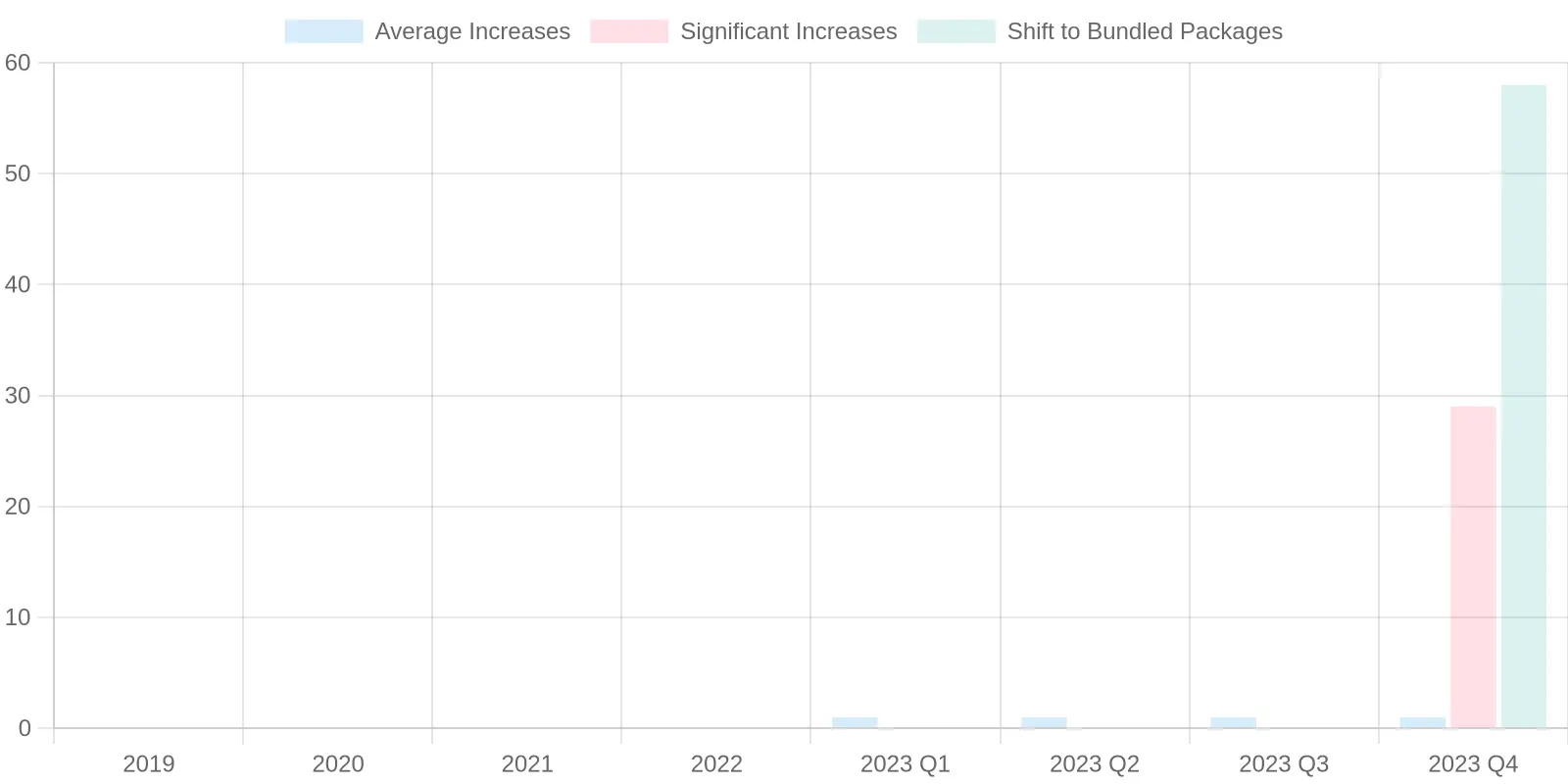
Chart: Trends in Increases and Shifts to Bundled Packages Over Years
| Year | Significant Increases | Average Increases | Shift to Bundled Packages |
|---|---|---|---|
| 2019 | |||
| 2020 | |||
| 2021 | |||
| 2022 | |||
| 2023 Q1 | Moderate | ||
| 2023 Q2 | Moderate | ||
| 2023 Q3 | Moderate | ||
| 2023 Q4 | Up to 29% increase | Moderate | 58% of logistics companies |
The data presented reflects industry trends based on recent reports. For more detailed insights into the logistics market and its financial implications, consider reading more about the impact of trailer orders or exploring trucking economic trends.
In conclusion, understanding the costs associated with commercial truck insurance is essential for logistics and freight companies that rely heavily on transportation for their operations. The costs can vary significantly, typically ranging from $4,000 to $12,000 annually, depending on factors such as the type of vehicle and its usage. Quality coverage is not just a legal requirement; it’s a crucial component in protecting your business against unforeseen risks such as accidents and damages. For logistics providers, having robust insurance coverage can stabilize financial health and ensure continuous operations, thereby enhancing overall business sustainability. Therefore, it is imperative for company owners to invest in comprehensive insurance solutions tailored to their specific operational needs. For additional insights on how to optimize your fleet operations and manage costs effectively, check out our offerings at Summit Fairings and learn more about effective strategies in this industry.
Understanding the costs of commercial truck insurance is crucial for logistics, freight companies, and small delivery fleet owners. Property protection, liability coverage, and regulatory compliance all play significant roles in shaping the overall cost. However, one aspect that often gets overlooked is how tailored modifications, such as customizing motorcycle fairings, can impact your insurance needs.
At Summit Fairings, we believe that a personalized touch can enhance not only the aesthetic appeal of your motorcycle but also its performance and safety. Affordable and customizable options allow you to equip your vehicle in a way that can potentially lead to better insurance terms. Insurers often reward modifications that improve safety and functionality. Therefore, investing in high-quality, customized motorcycle fairings not only enhances your riding experience but may also serve to align with specific insurance requirements, resulting in potential cost savings.
Given the comprehensive needs of your business and vehicles, we encourage you to explore the idea of customization further. Whether you’re looking to make your motorcycle stand out or improve its safety profile, Summit Fairings offers a wide range of options tailored to meet your specific needs in the trucking and motorcycle community.
Take the first step in customizing your motorcycle fairings today. Visit Summit Fairings to explore your options and discover how personalized fairings can enhance not just your vehicle but also your insurance strategy. Your motorcycle deserves to reflect your unique style while keeping you covered on the road ahead.
For more insights on managing operational costs and enhancing your fleet’s efficiency, you might find our article on the impact of trailer orders on truckload margins to be useful.