
U-Haul trucks, while convenient for personal and small business use, often raise questions about their classification and related regulatory requirements. Understanding whether these vehicles adhere to commercial vehicle regulations is crucial for various stakeholders, including logistics and freight company owners, procurement teams in construction and mining enterprises, as well as small business owners operating delivery fleets. Each chapter of this article delves into a facet of this complex issue, discussing the vehicle classification, licensing requirements, age restrictions, potential implications of non-compliance, and navigating state-specific rules. By the end, readers will be equipped with the knowledge they need to ensure compliance while optimizing their operations.
Moving Outside the CDL: How U-Haul’s Non-Commercial Trucks Interact with Commercial Vehicle Rules
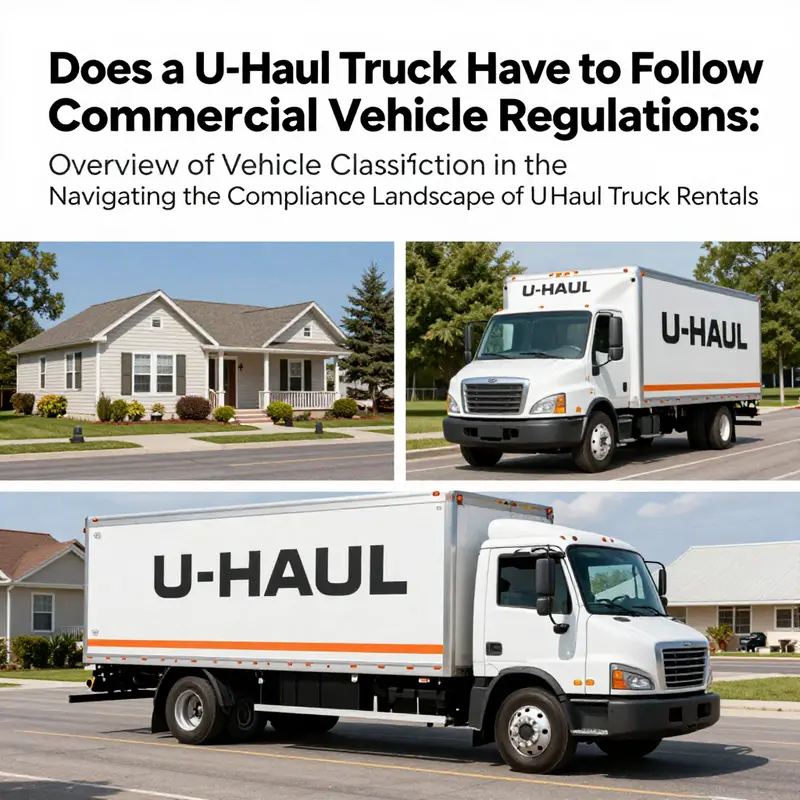
When you rent a moving truck to relocate your belongings, a common assumption is that you’re stepping into the realm of regulated commercial vehicle operation. The reality, however, is more nuanced. In most places, the trucks you rent for a DIY move are classified as non-commercial vehicles for rental purposes. That distinction matters because it determines whether you need a commercial driver’s license (CDL) or any special endorsements to operate the vehicle. The standard, personal driver’s license you already hold is typically all you need to hop behind the wheel of a U-Haul moving truck for the rental duration. Yet the non-commercial label does not imply a free-for-all under the rules of the road. It simply means the vehicle, for the purposes of rental and general public use, is not treated as a commercial fleet asset in the licensing sense. The practical effect is that most renters can proceed without CDL prerequisites, but the broader regulatory landscape still applies to how and where the vehicle operates.
To understand what this means in everyday terms, it helps to distinguish between the classification used by rental companies and the regulatory categories that govern highway safety and motor vehicle operation. U-Haul, like other rental fleets, operates its business on the premise that the vehicle is a consumer or semi-private conveyance, not a vehicle deployed by a commercial fleet for hire with professional drivers. That classification aligns with the majority of U.S. states and Canadian provinces, where the licensing requirement for the operator is tied to the driver’s license held by the individual, not to the vehicle’s commercial status in the fleet sense. In effect, you don’t need a CDL to rent or drive most U-Haul trucks in ordinary circumstances. You do, however, need to respect all the laws that apply to any motor vehicle on public roads, including those related to safety, insurance, and operating standards. The nuance is important because it means the renter enjoys broad access to the vehicle while also inheriting the responsibility that comes with driving a heavy, non-passenger vehicle through crowded streets, narrow lanes, and busy interchanges.
That responsibility becomes more pronounced when you move across state or provincial lines, or into areas with distinctive driving requirements for heavier vehicles. While the non-commercial classification generally covers the rental context, some places impose constraints that can feel at odds with a straightforward CDL requirement. In practice, that means rules around age, driver eligibility, and even certain operating conditions can differ by jurisdiction. The material point for a typical mover is not to assume uniform rules across all locations. Before booking or setting out on a long-distance haul, it is prudent to verify local regulations that could influence rental eligibility or the ability to operate the vehicle in a given class. For example, in Quebec, the legal framework surrounding commercial vehicle operation carries a higher minimum driving age in some circumstances. That nuance could affect whether a U-Haul rental is immediately available or whether additional documentation or restrictions apply at a Quebec location. On the other side of the border, several U.S. states maintain age-related restrictions that can limit access to certain vehicle classes for drivers under 21, even if a national policy appears more permissive. These regional differences illustrate why a blanket assumption about “one rule fits all” does not hold in the real world of moving.
In this context, the recommended approach for any prospective renter is to treat the process as a two-step check. First, confirm that the vehicle class you need hinges on a non-commercial rental model. Second, confirm the local rules that may influence your use of the vehicle. U-Haul’s own policies make this clear: the fleet is non-commercial for licensing purposes, but the exact eligibility for a given move can still be shaped by location-specific restrictions. The simplest practical step is to consult the official U-Haul website or speak directly with a local U-Haul center before making plans. These sources can provide the most current guidance on licensing requirements, age limits, and any regional constraints that might affect your ability to rent or operate the vehicle. In that sense, the conversation begins with the same practical question you’re asking: what are the rules in my place, and how do they apply to a non-commercial moving truck?
As you navigate these details, it’s worth widening the lens beyond licensing to grasp how the broader regulatory framework shapes your moving experience. Even though the vehicle itself is not categorized as commercial for licensing, you still must comply with a spectrum of rules that apply to heavy or non-passenger vehicles on public roads. Speed limits, weight considerations, braking requirements, and safe-vehicle operation norms do not vanish simply because the truck is rental or considered non-commercial. The insurance landscape also comes into play. Rental agreements typically include coverage options that align with standard road-use expectations. You may be offered different levels of protection, and you should understand what each covers in the event of a mishap, such as damage to the vehicle, potential third-party liability, and how deductibles apply. The renter bears the responsibility to ensure that insurance coverage is adequate for the move, especially as heavier rental trucks present greater risk in collisions, rollovers, or tire failures. These realities remind us that even though the CDL is not required, the stakes on the road remain high when maneuvering a large moving truck through urban grids or on multi-lane interstates.
Another layer to consider is the practical day-to-day use of the vehicle. A non-commercial classification does not immunize a renter from the rules that govern safe driving. The operator should be proficient in handling a larger vehicle, anticipate longer stopping distances, and adjust habits to compensate for a higher center of gravity, greater blind spots, and more challenging maneuvering in tight spaces. Load management matters too. The way you load the truck affects stability, braking performance, and tire wear. Distributing weight evenly, securing furniture and boxes, and planning for proper tie-downs can prevent shifting mid-ride, which could otherwise lead to compromised control or damage. The combination of vehicle size and road environment makes prudent driving choices essential, regardless of whether a CDL is required by regulation. In other words, the absence of a CDL requirement does not equate to reduced responsibility; it reframes the obligation in terms of common-sense safety, attention to local rules, and adherence to the rental agreement and insurance terms.
With this understanding, the renter’s decision becomes a careful exercise in due diligence. The regulatory picture is not a single, static chart but a mosaic shaped by where you move and how you use the vehicle. If you are considering a move across provincial or state lines, you may encounter a mix of permissive national norms and stricter local gatekeeping. Quebec’s example illustrates a broader truth: commercial-vehicle rules can be stricter or differently scoped in some regions, even if the same vehicle is allowed for non-commercial use elsewhere. Meanwhile, in some U.S. states, the under-21 rule for certain vehicle classes holds even when national policy might suggest broader eligibility. These realities underscore why, when planning a move with a rental truck, you do not rely on a single, universal rule. Instead, you verify conditions at the point of service and review the related legal considerations for every leg of your journey.
The literature and policy discussions around vehicle classifications often emphasize cross-border regulatory clarity. They remind us that regimes evolve as regulators respond to changing transportation needs and safety priorities. In this space, policy chatter such as Bridging Border Barriers: Meeting Insights highlights how stakeholders grapple with inconsistencies that arise when vehicles cross jurisdictional lines. Those discussions remind readers that even seemingly straightforward rental situations can hinge on nuanced interpretations of law, which in turn can affect what you can rent, where you can drive, and how you must prepare for a move. To bring this back to the everyday experience of moving, the practical takeaway is clear: before you reserve a truck, check the official resources and speak to a local agent. If you want to see a broader regulatory conversation that informs these practical realities, you can explore related perspectives at the linked discussion: Bridging Border Barriers: Meeting Insights.
In sum, a U-Haul truck rented for a residential move is typically treated as a non-commercial vehicle for licensing purposes. A CDL is not required, and most renters move forward with a standard driver’s license. Yet that status does not erase the need to respect jurisdiction-specific age restrictions, cross-border rules, or local vehicle-operation standards. It also does not absolve the renter of responsibilities around loading, insurance, and safe operation. The most reliable path to a smooth move is deliberate planning: confirm the vehicle class aligns with non-commercial expectations, verify eligibility criteria for your location, understand the insurance terms, and study how regional rules might affect your travel plan. By doing so, you ensure that the practical realities of moving—physical labor, logistics, and the rhythms of the road—are met with a compliance-minded and safety-conscious mindset. For definitive rental policies, you can consult the external resource that directly governs the rental experience: https://www.uhaul.com.
Non-Commercial Moving Trucks: Licensing Realities for Personal Moves

For most people moving with a rental moving truck, federal rules treat the vehicle as non-commercial when used for a private move. A standard driver’s license is typically sufficient, and a commercial driver’s license is not normally required. However, local rules vary by state or province and can affect who may rent or drive certain vehicle classes. Age restrictions, proof of eligibility, and insurance terms may differ, so it’s wise to confirm at the rental counter before you commit to a vehicle.
Cross-border or inter-provincial moves add another layer of nuance. In some cases, different jurisdictions classify the vehicle differently or impose additional documentation requirements. Always verify origin and destination requirements and be aware that rental terms and insurance coverage can change based on the location and planned use.
Practical steps: identify the exact vehicle class you will operate, verify the license accepted by the rental provider in your location, and review any location-specific constraints before pickup. Review the rental agreement for coverage during loading/unloading and for any limits related to cargo, payload, or modifications that could alter regulatory status. If you plan to drive across borders, consult both origin and destination regulations to avoid delays or misunderstandings on the day you take possession.
When a U-Haul Isn’t a Commercial Vehicle: Licensing, Age Rules, and Regional Nuances

The question of whether a U-Haul truck must follow commercial vehicle regulations rarely hinges on the vehicle’s engine power or its miles per gallon. Instead, it centers on how the vehicle is classified for licensing and what local laws say about who may drive it. For many renters, the simplest answer is reassuring: a U-Haul truck is not treated as a commercial vehicle for licensing purposes. According to the company’s stated policy, the trucks are non-commercial in classification, which means you do not need a commercial driver’s license (CDL) or any special endorsement to rent or operate one. A standard driver’s license is typically sufficient to pick up and drive a U-Haul, making the process straightforward for individuals planning a move, a DIY transport, or a temporary relocation that doesn’t involve a business fleet. Yet the surface tolerance ends there. The broader regulatory landscape in which a move occurs can add layers of requirements that are easy to overlook.
The core nuance is this: licensing requirements for the vehicle and the legal ability to rent can diverge based on location. While the rental itself may not demand CDL credentials, the same vehicle may be subject to age and usage rules that differ from place to place. The initial guidance is clear and widely applicable: check the official source for the most accurate, location-specific information. The practical implication is simple: whenever you plan a U-Haul rental, you should verify not only what license you hold but also whether your age or the intended use of the vehicle aligns with regional regulations. The national policy sets a baseline, but regional laws can carve out exceptions or add constraints that affect whether you can rent or operate the vehicle at all.
Age restrictions illustrate this point in a stark way. The national minimum set by the rental company is typically 18, which reflects a broad eligibility standard for many personal-use rental vehicles. However, age is not a universal passport to drive every class of vehicle in every jurisdiction. In the United States, several states enforce additional constraints, and some of these limitations apply specifically to certain vehicle classes. In practical terms, even if U-Haul allows an 18-year-old to rent a truck nationally, a local law may prohibit drivers under 21 from renting particular vehicle classes. The idea is not to penalize a would-be mover but to align with safety, insurance considerations, and local governance that governs vehicle use on state roads and highways. This is why the rental experience can feel inconsistent if you rely solely on the national policy without cross-checking your local rules. The effect is that a straightforward rental at 18 could become more complicated if your move involves crossing state lines or moving into a jurisdiction with stricter age restrictions for specific vehicle categories.
Canada adds another layer of regional variance, and the implications can be even more pronounced in certain provinces. For example, the province of Quebec has its own stance on driving age for commercial vehicles, a distinction that matters when a renter intends to operate a U-Haul within or through that province. The heightened age thresholds for commercial operations mean that even if a vehicle is classified as non-commercial for rental purposes, the local interpretation of what constitutes commercial driving, and the attendant age requirements, may influence eligibility. This nuance matters not just in cross-border moves but also for residents who relocate within a province where language, insurance norms, and regulatory expectations shape who can rent and drive, and under what conditions. The takeaway is practical: the rules that govern who may drive a larger rental truck are not immutable; they shift with geography, even when the vehicle’s rental category remains constant.
Insurance and safety frameworks also color the landscape, though the focus of the current materials is on licensing and age. While a CDL is not required, drivers still must comply with the standard operational expectations for any rental vehicle. This encompasses possessing a valid driver’s license, meeting local age requirements, and following the safety and operational guidelines that accompany a large, heavy vehicle on public roads. The vehicle’s size relative to ordinary passenger cars means that renters should consider extra precautions—vehicle handling, braking distances, and the practice of maneuvering a larger, less nimble truck in tight spaces. Even when the vehicle is not regulated as a commercial freight carrier, the duty of care to other road users remains a constant. This is one of those practical considerations that often surfaces in the stretch of a move, when tight parking, urban driving, or long interstate legs test a driver’s readiness.
The real-world implications of these regulatory realities are most visible at the point of sale: the local U-Haul center. The staff there will confirm which laws apply to your specific rental and can help you navigate any regional caveats. Their role is to bridge the gap between the company’s general policy and the jurisdiction’s concrete requirements. In this sense, the national policy functions more as a baseline than a one-size-fits-all decree. For anyone planning a cross-border or cross-state move, the prudent approach is to treat age and licensing as location-specific variables to verify before reserving a truck. A quick call or a glance at the official rental terms page can illuminate whether any local restrictions could affect your plan. The official page routinely updated on the company’s site provides the most authoritative reference on licensing, age, and other conditions that might influence eligibility.
For readers who want to explore broader, related angles while staying anchored to this topic, there are useful touchpoints within the industry landscape. One direction worth exploring is the way regional workforce and regulatory frameworks intersect with driver eligibility, especially in cross-border contexts. A resource that sheds light on Canada’s human resources and placement practices for drivers can offer context on how regional policies influence labor mobility and regulatory interpretation in a broader sense. This broader lens helps explain why a simple rental decision sits inside a mosaic of legal and administrative rules that vary by province or state. To see an example of how such regional insights are framed, you can explore the trucking HR Canada placement program benefits, which illustrate how labor regulations and cross-border considerations can shape driver eligibility and mobility in North America.
As a practical matter, the most reliable course is to verify directly with the source before making plans. The official primary reference remains the U-Haul site, where age requirements for renting a truck are spelled out in their rental terms and conditions. It is a straightforward check, but it carries significant consequences for your planning. If you discover that the local jurisdiction imposes a higher driving age for commercial vehicles or for particular truck classes, you’ll want to adjust your schedule accordingly or consider different vehicle options that fit your eligibility. The same applies to states that prohibit drivers under a certain age from renting larger vehicle classes. These regional rules, though they may seem like minor bureaucratic hurdles, are essential for ensuring a smooth move and a compliant operation on the road.
In the end, the question of whether a U-Haul truck must follow commercial vehicle regulations is best answered with a layered understanding. The vehicle itself does not require a CDL, and the rental classification is non-commercial. Yet regional realities—especially age restrictions—can complicate access and use in surprising ways. A move that begins with a simple rental can, in the blink of an eye, become a question of paperwork, eligibility, and timing, dictated by where the truck will be driven and under what conditions. The pathway to clarity lies in combining the national baseline with a targeted check of local rules, and in turning to official sources to confirm any special cases. This approach ensures that a rental aligns with both the letter of the law and the practical demands of a successful, safe move.
null

null
Crossing Boundaries: How U-Haul Rentals Align with Commercial Vehicle Rules Across States and Provinces

When someone starts planning a move with a U-Haul truck, the instinct is to treat the vehicle as a private car that falls neatly inside a standard licensing box. The rental classification works that way in most places: a regular driver’s license is enough to operate the truck, and no special commercial vehicle endorsement is required for the act of renting or driving it. Yet the simplification ends there. The way these vehicles are treated in practice, by state and provincial authorities, is a mosaic of rules that can feel inconsistent, even when the underlying policy seems straightforward. The driver’s license is one piece of the puzzle, but the broader framework of where, when, and how a large moving truck can operate is shaped by weight, size, location, and purpose. In other words, a U-Haul rental sits at the intersection of private vehicle use and commercial vehicle regulation, and the lines between the two shift depending on jurisdiction, the specific vehicle class, and the context of the trip.
To begin with, the core distinction—non-commercial classification for rental purposes—offers clarity. A standard license is typically sufficient to rent and drive the vehicle for personal moves. This is the practical reason most people choose a U-Haul for a family relocation or a small business shipment that doesn’t involve a trucking fleet or commercial haul arrangements. The clarity is useful, but it should not be mistaken for a blanket exemption from all vehicle rules. The “non-commercial” tag applies to licensing for the driver and the rental process, not to every rule that might touch a large moving truck. When a truck’s size, weight, or the route it travels activates regulatory thresholds, the vehicle can fall under rules that resemble those applied to commercial fleets, even when the user’s intent is strictly personal.
A central thread in the story is that the classification and the applicable regulations are not uniform across borders or even across states. Some jurisdictions treat large rental trucks as potential commercial vehicles for enforcement purposes, which can influence where and how the truck can be parked, driven, or loaded. In dense urban cores, for example, municipalities or state authorities may impose restrictions designed to manage traffic flow, curbside loading, or overnight parking. These rules often revolve around the practical realities of heavy, tall, or wide vehicles moving through city streets, rather than the business use of the vehicle. As a driver, you may not be engaging in commerce, but overshadowing constraints—height clearances under bridges, weight restrictions on bridges, and lane usage in congested corridors—still matter. This is not about CDLs or endorsements so much as it is about applying the right rules to a bulkier vehicle moving through a particular environment.
Regional specifics matter a great deal. In North America, the landscape looks different from one place to another. Quebec, Canada, illustrates this variance clearly. The legal driving age for commercial vehicles there is higher than for passenger vehicles, which affects U-Haul rentals in that province. The result is a practical constraint: even if a renter holds a standard license and the vehicle is classified as non-commercial for rental purposes, the rules governing who may drive a commercial vehicle in Quebec can pull in, effectively raising the minimum age or imposing additional checks depending on the vehicle’s class and type. This means a move into or out of Quebec can trigger special considerations that simply do not apply in many other provinces or states.
Across the United States, personal experience often tells a different story, but the legal tapestry is equally nuanced. In a number of states, renters under the age of 21 are prohibited from renting larger U-Haul trucks, despite a national policy that might appear more permissive on its face. This juxtaposition—national rental policy on one hand, strict state-level age rules on the other—highlights a simple reality: state and local statutes can supersede general company guidelines. It is a reminder that the rules governing a large moving truck are not merely about the vehicle itself, but about the legal-technical ecosystem in which the vehicle operates. Parking, loading zones, and restricted access streets form another layer. Even if you can legally drive the truck, the vehicle’s size and weight can constrain where you can stop for loading or unloading. Many municipalities designate loading zones or prohibit curbside parking for large trucks during peak hours, and rules around unloading and temporary parking can come with fines or tow-away zones if not observed. In practice, the move day becomes as much about navigating these local restrictions as it is about moving belongings from one residence to another.
What does this mean for the average renter who wants to minimize risk and confusion? First, it means recognizing that the standard license is usually sufficient, but you should not assume universal applicability of that simplification across every jurisdiction. The rental policy can align with the general assumption of no CDL requirement, but the actual legal framework in a given state or province may impose age restrictions, vehicle operation limitations, or parking and access constraints that affect the planning of a move. The best approach is to verify the local rules before setting out. The rental policy can align with the general assumption of no CDL requirement, but the actual legal framework in a given state or province may impose age restrictions, vehicle operation limitations, or parking and access constraints that affect the planning of a move. The guidance to check official channels, plan ahead, and remain mindful of local differences is not merely bureaucratic advice; it is a practical toolkit for a smoother, safer move that minimizes the surprises that can arise when geography and policy collide.
In the broader sense, it helps to maintain a mindset that blends the straightforward with the nuanced. The straightforward element is clear: a standard license is commonly sufficient for most U-Haul rentals, and CDL endorsements are not a typical prerequisite for the act of renting or operating a moving truck for personal use. The nuanced side involves learning to anticipate and respect the local regulatory weather. Weight and size can trigger regulatory questions, even outside a strictly commercial framework. In many states, large trucks face additional restrictions on where they can operate or park, particularly in urban environments or near school zones and business districts that prioritize traffic flow. Size and weight considerations influence routing choices and parking logistics. This means planning a move with attention to route details and known bottlenecks, rather than assuming the truck’s size will be a factor only for highways or long hauls. The safety and compliance implications are real: failing to observe local parking rules or to secure proper loading zones can lead to fines, towing, or insurance complications if the move ends up in a place not suited to a vehicle of that scale.
What does this mean for the average renter who wants to minimize risk and confusion? First, it means recognizing that the standard license is usually sufficient, but you should not assume universal applicability of that simplification across every jurisdiction. The rental policy can align with the general assumption of no CDL requirement, but the actual legal framework in a given state or province may impose age restrictions, vehicle operation limitations, or parking and access constraints that affect the planning of a move. The best approach is to verify the local rules before setting out. The rental policy can align with the general assumption of no CDL requirement, but the actual legal framework in a given state or province may impose age restrictions, vehicle operation limitations, or parking and access constraints that affect the planning of a move. The guidance to check official channels, plan ahead, and remain mindful of local differences is not merely bureaucratic advice; it is a practical toolkit for a smoother, safer move that minimizes the surprises that can arise when geography and policy collide.
For those seeking further reading beyond the official site, a deeper look into how cross-border and local regulatory cues shape truck movements can be informative. External resources discuss the broader landscape of regulatory barriers and how fleets, operators, and movers navigate them in practice, offering context for the shifting rules across borders and jurisdictions. This broader perspective helps frame why the question of commercial vehicle regulation is not simply about licenses but about the entire ecosystem in which a moving truck operates. If you want to explore these ideas further, the following external resource provides additional insights: https://truckplusllc.com/bridging-border-barriers-meeting-insights/
Final thoughts
In summary, understanding whether U-Haul trucks must comply with commercial vehicle regulations is paramount for diverse stakeholders in the logistics and freight sectors. From recognizing vehicle classification to navigating licensing requirements and age restrictions, each aspect plays a crucial role in ensuring legal compliance and operational efficiency. By remaining informed about potential implications of non-compliance and understanding state-specific regulations, businesses can optimize their rental practices while safeguarding against legal pitfalls. The goal is to create a smooth and compliant experience when renting and operating U-Haul trucks.