
This exploration deciphers the significance of truck selection in lemonade commercials, examining brand strategies, visual appeal, emerging marketing trends, and consumer perceptions. Each chapter delves deep into these facets, collectively painting a comprehensive picture of how trucks influence the marketing landscape within the beverage industry.
Nostalgia on Wheels: Unraveling the Vintage Truck Behind the Lemonade Commercial
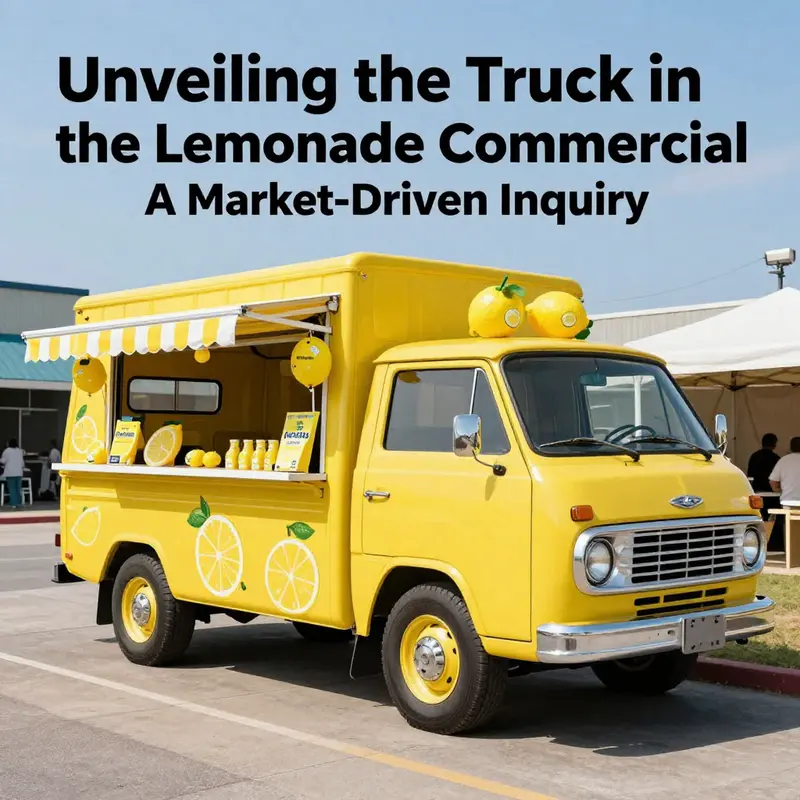
Advertising often leans on familiar symbols to shortcut meaning and emotion, especially in the world of beverages that want to feel wholesome and inviting. In the lemonade commercial that captured the public imagination, the vehicle at the center is more than a backdrop; it acts as a character of its own, signaling memory, trust, and a sense of home. The exact identity of the truck is not endlessly documented in every source, and in some discussions the focus shifts quickly to mood, color, and movement rather than model numbers. Yet a close synthesis of the available material points to a vintage-style pickup rendered in a retro-inspired silhouette. It is not presented as a modern, high-tech delivery machine, but as a nostalgic prop that evokes simpler days when lemonade stood on a sunny curb with a handwritten sign and a friendly neighbor pouring from a chipped glass pitcher. The choice of a retro look, rather than a gleaming new commercial vehicle, is deliberate: it invites viewers to imagine lemonade as something handmade, prepared with care, and shared across generations rather than manufactured en masse. In this sense, the truck functions as a bridge between memory and current delight, a visual cue that the product being shown will be familiar, comforting, and uncomplicated.
What makes this approach work is less about whether the truck could actually sell lemonade on a busy street and more about what it signals. The vehicle’s rounded lines, its weathered patina, and the gentle patina of chrome all whisper a story about a time when DIY refreshments were a neighborly ritual rather than a televised event. The color choices—muted reds, soft creams, and warm earth tones—play with light in a way that makes the scene feel sunlit and approachable. The camera’s gaze treats the truck almost as a shrine to domestic craft: you see the steering wheel, a few well-placed lemonade stands of the past, and a pitcher in the foreground that catches the light just so. The result is not a documentary shot of a real vending operation, but a cinematic invitation to savor a moment of calm, to believe that the lemonade being promoted is the product of patience, pride, and personal touch.
From a production perspective, the vehicle operates as a carefully chosen symbolic prop rather than a functional vending unit. It suggests mobility and simplicity without the complexity of a fully operational food truck. This distinction matters for the viewer, who absorbs the atmosphere and emotional resonance before ever considering practical concerns like menu breadth or on-board equipment. The advertising logic here relies on the immediacy of emotion: nostalgia lowers defenses, and a familiar, carefree setting invites a sense of trust. In a market saturated with fast cuts and glossy finishes, the truck’s understated presence becomes a counterpoint, a pause that allows the lemonade’s story to breathe. The result is a scene where the product is framed as a return to roots—handmade, shared, and enjoyed aloud rather than consumed in silence. Such framing aligns with broader storytelling strategies in beverage marketing, where the vehicle and the setting reinforce a narrative about community, family, and everyday joy.
Despite the strong visual and emotional pull, it is important to note that this particular truck is a stylized representation. It is not described as a fully functional mobile vendor equipped to operate in real-world street conditions. The emphasis rests on branding and mood rather than logistics or specifications. In other words, the truck is a design element, chosen for its ability to spark a memory or create a sense of place, rather than a blueprint for how a lemonade stand would be run on wheels. This distinction helps explain why the ad can feel so authentic without getting bogged down in details that would otherwise pull the viewer away from the central message: lemonade as a comforting, homespun pleasure. The truck becomes a stage set for a larger story—one about sharing, generosity, and the small joys that accumulate into a memorable experience for the audience.
In the evolving landscape of beverage advertising, the use of a vintage vehicle also taps into wider cultural currents. There is a persistent appeal to authenticity in today’s media, a preference for visuals that suggest handcrafted methods and human-scale production. A retro truck signals that the product has roots, not just a glossy promise; it implies grandmother’s porch, a summer afternoon, and a conversation that meanders from recipes to memories. This alignment between product and story is why the vehicle resonates across generations. Even viewers who did not grow up near a lemonade stand can sense the warmth infused in the scene. The truck lets the audience feel the experience in a shared, almost tangible way—crisply lit, softly textured, and warmly paced—so the lemonade appears not merely as a beverage but as an element of an affectionate lifestyle narrative.
The visual economy of the commercial also deserves attention. The truck’s design cues—its size relative to the frame, the clean lines that avoid modern gadgetry, and the way the light drapes over the body—contribute to a sense of timelessness. The mise-en-scène places the vehicle in a setting that suggests a craftsman’s workshop or a neighborly weekend market, rather than a modern food truck lot. Such choices minimize distraction and keep attention squarely on the emotional arc: anticipation, sharing, and a moment of simple pleasure. In this sense, the truck’s value lies not in any functional feature but in its ability to evoke a mood that naturally harmonizes with the product’s branding: homey, uncomplicated, and inviting. The broader effect is that the audience projects its own memories onto the screen, and the lemonade becomes a conduit for those familiar recollections.
For readers who want to situate this example within a wider discourse on how such vehicles operate in the beverage sector more broadly, it is useful to consider how industry narratives often separate aesthetics from mechanism. Real-world beverage trucks—the ones that roll up with on-board chillers, spigots, and the hustle of a ready-to-serve line—are built around efficiency and scalability. While the Lemonade Commercial vehicle foregrounds sentiment, the commercial ecosystem that supports similar ventures includes custom equipment, design considerations for heat management, and the practicalities of serving a crowd on the move. These adjacent realities can illuminate why advertisers opt for a stylized, nostalgic truck in place of a fully functional mobile unit. The story moves from the logistical to the lyrical, from the cockpit’s gauges to the sense that the product is a shared memory made tangible. If one wishes to explore the technical side of actual beverage-truck operations, there are industry overviews that discuss how vehicle design meets the needs of dessert and drink service, including material choices and workflow considerations that keep service efficient while preserving the character of the brand.
It is also relevant to acknowledge how such imagery interacts with broader content on the trade and culture of trucks in marketing. On a related note, some readers and commentators draw connections to broader discussions about how trucks symbolize mobility, resilience, and community outreach in campaigns. For instance, there are resources and blog discussions that showcase how trucks can support charitable initiatives, underscoring the social dimension of vehicle imagery in marketing. These conversations remind us that a vehicle in a commercial is rarely just a prop; it can reflect values and civic aspirations that extend beyond the single advertisement. To explore this facet further, one may encounter articles that examine how trucks contribute to community projects and fundraising efforts, offering a complementary perspective to the purely aesthetic considerations of a lemonade vignette. Trucks for Change supports Habitat for Humanity exemplifies how vehicle branding can align with social impact, even if the particular lemonade spot uses a stylized icon rather than a real-service vehicle.
For curious readers seeking a bridge to more technical, real-world context while keeping the focus on the aesthetic discussion, an external reference provides a broader frame about how classic-appeal vehicles are analyzed in the industry. The external resource outlines design and functionality considerations for food trucks and related mobile concepts, situating vintage-inspired aesthetics within practical, modern use cases. While the lemonade ad prioritizes atmosphere over operation, understanding how such vehicles are engineered for actual beverage and dessert service can enrich the appreciation of the visual choices. External resource: https://www.volkswagen.com/en/vehicles/commercial/van/kombi-food-truck-overview. In the end, the lemonade commercial’s truck is most compelling as a narrative instrument—an instrument that invites audience memory to mingle with brand storytelling and leaves a lingering impression of warmth and shared sweetness.
Rolling Narratives: The Elusive Truck Behind Lemonade Commercials and What It Reveals About Brand Mobility
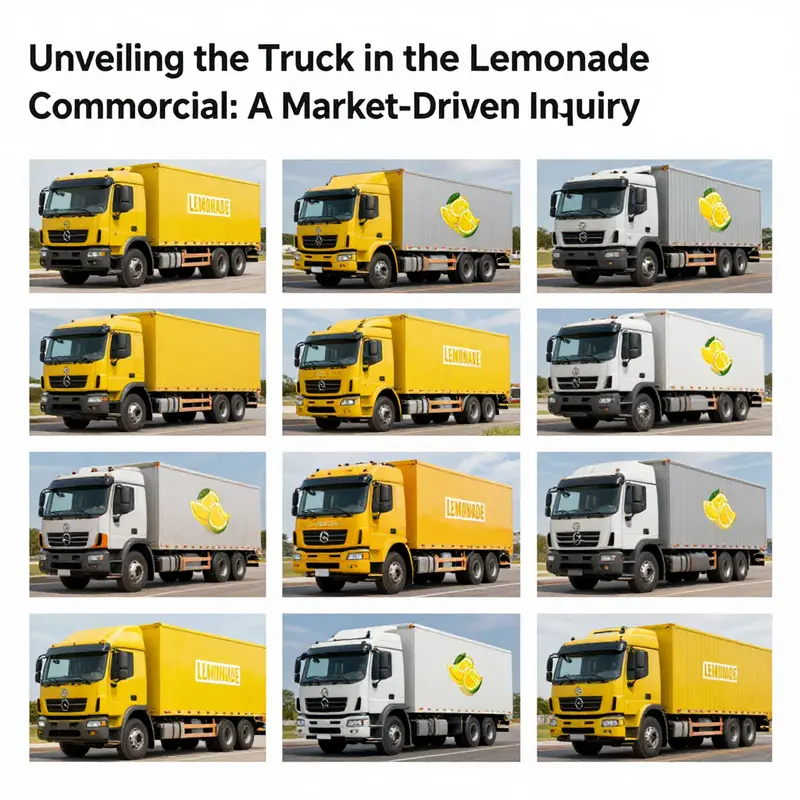
The question of which truck carried a particular lemonade commercial often lingers in discussions as if the vehicle itself could unlock a hidden layer of meaning. Yet, the most honest starting point, given the available material, is that the exact model or spec of the truck remains unconfirmed. What the broader materials do illuminate, however, is a consistent pattern in how brands deploy mobile vending units to fuse practicality with visual storytelling. These vehicles are not mere backdrops; they are active participants in a narrative that travels from storefronts to social feeds, turning a fleeting taste into a lasting brand impression. In this light, the truck becomes a moving stage where design choices—color, typography, signage behavior, and even the cadence of the vendor’s movements—speak to a brand’s identity. The mystery of the specific chassis should not obscure the larger lesson: whenever a lemonade story hits the road, it relies on a carefully choreographed blend of mobility and messaging, where the vehicle itself carries a message as deliberate as the beverage it sells.
At the heart of this approach lies a concept so practical it can easily be overlooked: the mobile vending unit doubles as a dynamic billboard. The same lane that carries pedestrians becomes the avenue for impressionable views. A lemonade truck is a compact, sometimes self-contained retail unit that must perform two tasks at once: serve a refreshing product efficiently and project a clear brand image to anyone who passes by or halts for a momentary interaction. Designers and operators thus prioritize high-visibility branding from the curb, ensuring that the unit reads correctly from a distance while remaining legible up close. The color palette, the typography, the shapes carved into the signage, and even the lighting at dusk all contribute to a sense of consistency. In essence, the truck is a moving brand kit: a portable platform that tests whether a consumer recognizes a brand in a single glance, and whether that recognition translates into curiosity and desire.
This approach sits within a broader industry pattern. When a lemonade brand chooses mobility, it does so with an eye toward operational efficiency and scalability. The layout inside the vehicle is engineered for quick service, with clear separation between preparation, display, and transaction zones. The signage systems, often designed to be updated in real time, allow a brand to adapt its messaging to location, weather, or audience. A digital signage layer can display rotating menus or seasonal themes, while still preserving the integrity of the brand’s core visuals. The end result is striking: a single vehicle can travel across neighborhoods while maintaining a consistent brand voice. The vehicle thus becomes a form of on-the-road brand extension, capable of delivering a cohesive experience whether visiting a busy market, a neighborhood festival, or a curbside event.
The research materials emphasize that the lemonade truck is as much about storytelling as it is about serving a beverage. Successful campaigns weave together a forward-looking narrative with tangible, accessible imagery. Visual storytelling on wheels often centers on shared experiences—summertime refreshment, the aroma of citrus, and the simple joy of a cold drink on a hot day. In social media ecosystems, these elements are amplified by short videos and quick cuts that celebrate mobility, resilience, and community. Platforms like TikTok have helped elevate the concept of the lemonade truck from a novelty into a cultural symbol. Hashtags and trends that highlight “making lemonade in traffic” or themes of summer resilience contribute to a broader narrative where these trucks stand for more than a product; they symbolize mobility, entrepreneurship, and a willingness to meet people where they are. The brand story, then, is not just what is sold but how the vehicle moves through space and how people respond when the truck appears.
Within this framework, the practical aspects of the truck’s construction become part of the narrative arc. A mobile billboard needs robust, eye-catching signage that remains legible in bright daylight and at twilight. It requires reliable power and simple, efficient workflows so that the vendor can handle bursts of demand without sacrificing quality or speed. The digital signage layer, when present, adds a dynamic element that can respond to real-time signals—location data, crowd density, or weather conditions—without compromising the core visual identity. This blend of technology and design is deliberate: it signals to audiences that the brand cares about both experience and innovation. In turn, consumers form associations between the truck’s aesthetic cues and the product experience, which enhances recall and fosters a sense of familiarity that outlasts a single encounter.
Culturally, the phenomenon extends beyond a single highway or city block. The narrative around lemonade trucks often intersects with broader conversations about sustainable branding and portable commerce. Several campaigns have experimented with eco-conscious materials and self-service models, inviting participants to perceive the brand as forward-thinking and responsible. This strategic stance resonates with audiences who increasingly value transparency and environmental consideration. The truck, when designed with sustainability in mind, becomes a symbol of how a brand can scale responsibly while maintaining accessibility. The visual language—friendly colors, crisp fonts, and a clean display—reassures audiences that the journey from straw to sip is as thoughtfully designed as the final product.
Nonetheless, the practical realities of deploying mobile vending units cannot be ignored. Investment in high-visibility vehicles involves careful planning: selecting locations with high foot traffic, coordinating permits, and forecasting maintenance schedules. These considerations shape how a brand approaches expansion and consistency. The decision to pursue a fleet of mobile units, rather than a single vehicle, often hinges on the ability to maintain a coherent brand experience across multiple locations and times. A well-structured deployment plan aligns signage, staffing, and inventory with the broader marketing calendar, ensuring that the narrative remains synchronized regardless of where the truck stops. In this sense, the lemonade truck becomes not just a sales tool but a logistical asset that supports brand coherence and operational resilience.
An important connective thread in the research is the interplay between design choices and broader industry dynamics. The story of a single lemonade truck intersects with the economics of trailer and vehicle orders, the availability of signage technologies, and the ever-shifting constraints of the supply chain. A practical takeaway is that the exact vehicle model matters less than how the unit integrates with the brand’s goals and with real-world movement patterns. The vehicle acts as a platform for content, a stage for interaction, and a canvas for identity. It negotiates the tension between the need for portable, repeatable branding and the demands of location-based marketing where no two sites are the same. In this light, the lemonade truck is a case study in how mobility can elevate storytelling without sacrificing efficiency or scalability.
For readers seeking to connect these ideas to broader industry conversations, consider how the logistics ecosystem informs the creative strategy. The way a brand mobilizes such units is tied to supply decisions, location strategy, and the capability to respond quickly to changing conditions. A recent industry lens highlights that even modest investments in mobile branding can yield outsized returns when coupled with compelling narratives and flexible technology. The truck becomes a catalyst for interaction, not merely a means of distribution. The momentum generated by a moving brand aligns with social channels, where audiences share experiences and amplify the message beyond the initial encounter. In this sense, the lemonade truck transcends its function as a vendor and becomes a storytelling conduit that travels through time and space.
Within this narrative, one finds a natural bridge to related industry discussions. The broader implications of leveraging mobile units—how fleets are managed, how signage updates are coordinated, and how campaigns scale across markets—are explored in analyses that examine trailer orders, capacity, and margins. For readers who want to dive into the logistics side, a focused discussion on those dynamics can be found here: Trailer Orders Impact Truckload Margins. This link serves as a thread connecting creative branding choices to the operational realities that enable them. It is in the intersection of design and distribution that the true power of mobile lemonade branding emerges, revealing how a simple citrus beverage can become a memorable, mobile experience rather than a one-off advertisement.
Finally, for readers who seek a more technical view of the hardware that underpins LED-enabled mobile billboards—a technology frequently used in high-visibility outdoor branding—the external resource provides a snapshot of how these systems work in practice. While the specific configurations vary, the core concept remains consistent: a sturdy chassis, bright digital signage, and a reliable power solution that keeps messages legible in diverse environments. The external overview can be found here: https://www.alibaba.com/product-detail/LED-Mobile-Billboard-Advertising-Truck-Production_1600538087527.html. This reference helps ground the narrative in concrete, real-world capabilities while remaining focused on how the truck functions as a storytelling vehicle rather than on any single model.
In sum, the lemonade truck narrative is less about identifying a particular make and more about recognizing the vehicle’s role as a conduit for brand identity. The exact model may be uncertain, but the pattern is clear: mobility magnifies brand presence, signage and service design amplify perception, and social amplification turns a curbside encounter into a lasting impression. The road, in this sense, is not merely a path to customers; it is the stage on which a brand builds its story, one stop at a time.
Behind the Bright Hues: Decoding the Visual Language of the Lemonade Truck in Advertising
Asked what truck carried the lemonade into living rooms, viewers often expect a definitive answer. Yet the data available for this chapter does not name a single model or brand. What the visuals do reveal, instead, is a carefully choreographed language of color, form, and setting that turns a vehicle on screen into a portable emblem of refreshment and community. By focusing on these design choices, we can understand why the exact make of the truck sometimes matters less than what it communicates to the audience. The absence of a precise identification invites a slower, more deliberate look at production design as a form of storytelling. When a truck appears in a lemonade commercial, it acts as a rolling stage set whose visual grammar helps the viewer feel invited, not overwhelmed. The goal is to watch with intention and to notice how color, texture, and space bind the scene together. In this way, the chapter moves beyond model trivia to a richer appreciation of how a brand’s day-in-the-life moment is crafted on screen.
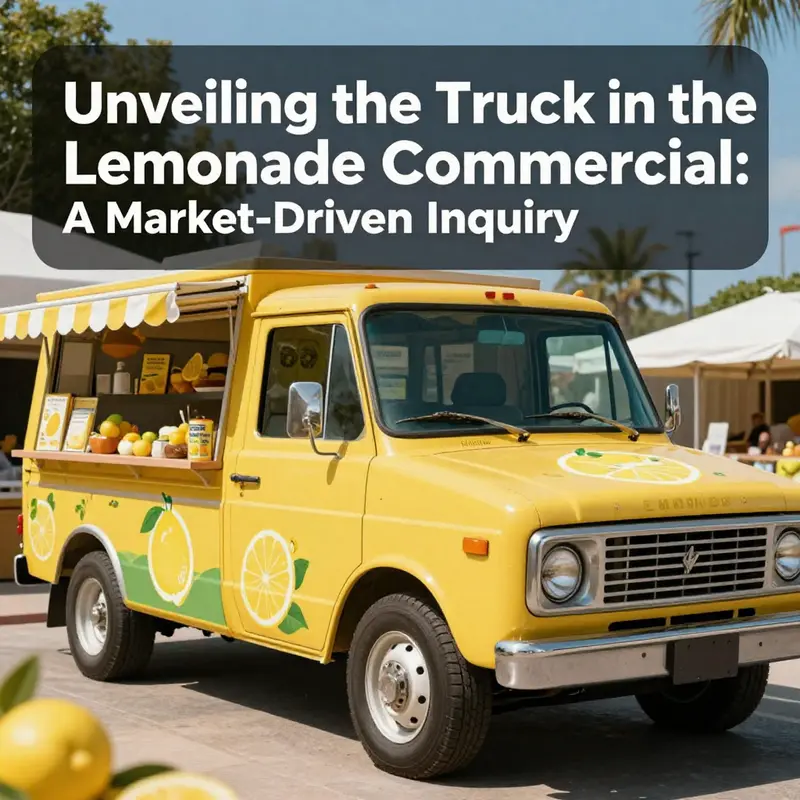
Bright yellow dominates the frame, sometimes tempered by a keen red accent. The yellow evokes lemons not as a garnish but as a mood—sunlit, zesty, and inviting. Red, when used, acts as heat and energy, a counterpoint that keeps the scene from feeling washed out. The combination is not accidental; it mirrors the ingredients of lemonade itself and taps into shared cultural associations with summer markets and street fairs. Designers often push the yellow into varying saturations, allowing the vehicle’s silhouette to glow against a blue sky or a white picket fence. This color strategy works at a glance, so even a quick cut delivers an emotional cue: warmth, simplicity, and a touch of whimsy. The red accents may appear in lettering, signage, or small details on the truck’s bumper and trim, adding a spark that keeps the eye moving along the frame and guiding the viewer toward the moment when a cup is handed over or a child points excitedly at a citrusy logo.
On the sides of the truck you may see hand-drawn lemons, mint sprigs, sunbursts, and banners suggesting a homemade, wholesome product. Fonts are large and friendly, leaning toward retro signage that promises both familiarity and trust. The typography is not an afterthought but a core element of the truck’s on-screen identity. When the word Lemonade or Lemonade Stand appears, it does so with a generous letter height that reads clearly from a distance. The shapes around the lettering—rounded corners, soft shadows, and a gentle embossing—create a tactile sense that the truck has been used and loved, not merely polished for a photo shoot. The graphics often stray into playful, almost childlike illustration, which reinforces a sense of innocence and community. In some scenes, a cartoon lemon with a little grin becomes a recurring motif, turning a simple vehicle into a friendly character that invites interaction rather than shouting a marketing slogan.
The truck’s setting is equally important as its color and graphics. It is not placed in a sterile studio or a closed lot but in sunlit suburban driveways or bustling neighborhood streets. The environment is calibrated to feel reachable and local, as if you could walk out your front door and find this refreshing ritual happening just around the corner. The background is carefully blurred or softly lit to keep the focus on the exchange of a drink, a smile, and a shared moment of refreshment. The costumed extras—neighbors chatting, kids climbing onto a curb, a dog wandering by—are not random additions but essential to the narrative of community. The truck becomes a friendly neighbor, a seasonal pit stop that signals a pause in the day rather than a destination in the market. This staging helps the audience project themselves into the scene, which in turn makes the product feel like a part of everyday life rather than a distant symbol.
Scenes frequently show a handshake between seller and buyer, a ring of laughter around a folding table, kids choosing cups, and adults trading stories. This emphasis on social interaction makes the truck more than a prop. It is a stage for community memory—a place where the flavors of a neighborhood are traded like small rewards at the end of a long day. The practical choreography is deliberate: the camera glides along the truck’s curves, catching the glint of metal and the gloss of a freshly wiped surface, then settles on the moment a child tastes the first sip. The emotional beat hinges on shared ritual—the ritual of choosing, of pouring, of listening to the crackle of ice as it meets a bright liquid. Such moments are carefully sequenced to cultivate nostalgia while maintaining immediacy; the charm lies in the ordinary details—the clink of ice in a cup, the murmur of approval, the soft hum of a neighborhood soundtrack—rather than in any single, spectacular visual cue.
Some campaigns introduce digital or animated features. A glowing neon sign may flicker to life, or lemon slices may appear to shed droplets of bright juice as the camera lingers. These effects modernize the look without breaking the sense of warmth. The animation serves as a bridge between old-fashioned charm and contemporary media, signaling that lemonade remains a relevant, evolving ritual rather than a static image. The use of motion work here matters as much as the color work; it directs the viewer’s gaze, heightens anticipation, and sustains the energy of a quick commercial sequence. When done well, animation feels like a natural extension of the scene’s tactile textures—a lemon slice dripping juice that seems almost real enough to taste, or a sign that glows softly as the sun dips behind rooftops. The blend of tactile realism and digital flourish can make the vehicle feel contemporary without stripping away the timeless, communal feel that surrounds it.
Taken together, the visual cues craft a brand identity built on purity, joy, and the hallmark of summertime. The truck is not merely a delivery vehicle; it is a storyteller. Its colors, shapes, and mannerisms align with a narrative of simple pleasures—the kind you can share with a neighbor on a sunny afternoon. The effect on viewers is more emotional than technical: it invites trust, creates a memory, and invites the audience to imagine themselves in that shared moment. The vehicle’s absence of a precise badge becomes, paradoxically, a strength. It allows the brand to inhabit a universal, nostalgic archetype rather than an expensive, model-specific icon. In this sense, the truck functions as a communal rite—the portable front porch of a warm season, a place where the act of buying lemonade is also an act of belonging.
If one looks beyond the frame, the production choices reveal why the exact model may be less relevant than the craft behind the frame. When a brand cannot or will not disclose the specific vehicle, the design team has room to optimize the scene around viewer memories rather than a particular silhouette. The silhouette becomes a shell around a bigger idea: that lemonade, like community, travels well and travels fast when it is presented with honesty, wit, and a touch of whimsy. Color, typography, setting, and motion combine to sell not just a beverage but a mood—a mood of neighborly trust, of carefree summers, and of a time when a simple drink could spark a shared moment that lingers long after the credits roll. The lack of a stated model invites audiences to invest in their own associations with lemonade and with the idea of communal refreshment, which is, in the end, what keeps the message enduring across different campaigns and generations.
For those who want a sense of how truck availability and scheduling can influence advertising, one piece examines how trailer orders and truckload margins shape the flexibility of campaigns and distribution decisions. It discusses the practical realities behind what might seem like a straightforward choice on set. See the discussion here: trailer orders and truckload margins.
Graphic designers and marketers seeking to capture this same spirit often turn to ready-made assets that reflect the same aesthetic cues. A broad catalog of lemonade truck vector graphics can serve as inspiration or a base for custom work, underscoring the broader point that the iconography of a lemonade vehicle travels well across projects and formats. While specific model names remain outside the scope of this discussion, the essential toolkit—bold color, friendly typography, and a neighborhood backdrop—remains a reliable blueprint for crafting on-screen vehicles that feel both familiar and fresh. For readers who want to explore visual references, online resources offer a spectrum of styles that echo the same cheerful energy captured in the campaigns described here. External resources provide a convenient way to study how different designers translate the same thematic cues into workable graphics, textures, and layouts. As with any narrative device, the most effective vehicle on screen is the one that makes the audience feel at home while inviting them to imagine their own summer waiting just around the corner.
External resource: https://www.vectorstock.com/
Tracing the Wheels Behind a Lemonade Campaign: Truck Choice in Beverage Advertising
The question of which truck carried a lemonade-themed advertising moment often lands in a space where definitive data is scarce. In the current knowledge environment, there isn’t a clear, citable record naming a specific vehicle for a given lemonade campaign. The emphasis in the available material is more about the idea of a Lemonade Tent than about a particular production asset. This chapter treats that gap not as a dead end but as a lens through which to examine how trucks function in beverage advertising. It foregrounds the decision logic behind vehicle selection, the signals such a choice sends to viewers, and how modern campaigns fuse mobile assets with digital storytelling. The aim is not to pin a model to a moment but to illuminate the broader framework that brands, agencies, and production teams rely on when a truck becomes part of a beverage narrative.
In practice, trucks in food and drink marketing serve more than transportation. They act as rolling brand experiences, portable tasting platforms, and canvases for storytelling. A campaign that features a “Lemonade Tent” concept often uses a truck or van not merely to deliver samples but to create a cohesive on-site experience that can be extended through social media. The exterior branding becomes a first impression, while the interior layout can host demonstrations, sampling stations, and interactive displays. The vehicle, in this sense, is a micro-ecosystem on wheels, designed to engage passersby and convert attention into follow-up action. The logistics of such an asset demand meticulous coordination between creative direction, operations, and compliance with street permitting, health regulations, and local signage rules. The result is a carefully choreographed sequence where the truck’s presence aligns with the broader narrative arc of the campaign, from the moment the fleet arrives to the moment viewers encounter the finished ad in digital feeds.
Beyond the现场 experience, the industry has increasingly integrated trucks with digital and content marketing. Short-form videos capture the arrival, the setup, and the first taste moments, turning a static promotional vehicle into a dynamic protagonist. Branded content and influencer collaborations extend the reach, inviting audiences to participate in a world where a portable lemonade station is more than a product vehicle—it is a storytelling device. Generative AI and other creative technologies are shaping how teams design scenes, variations, and cut-down versions of the same truck-centric concept. The idea is not to rely on a single image of a vehicle but to explore a family of scenes in which the truck appears in different lighting, angles, and contexts, all tuned to the same brand voice and campaign objectives. In this sense, the vehicle becomes a flexible author of the narrative, capable of adapting to micro-targets and platform-specific storytelling formats without losing its essential identity.
The current knowledge base explicitly notes a gap when it comes to mobile food trucks, truck-based advertising, or similar concepts. That absence is meaningful: it signals that the literature and case studies available for review tend to dwell on broader digital and content trends while offering fewer documented exemplars of fleet-based beverage promotions. This is not a verdict on the value of trucks in campaigns but a reminder that many practice-driven stories live in industry conversations, production credits, and regional case studies that are not widely archived in generic knowledge sources. For anyone seeking a precise match between a lemonade campaign and a particular vehicle, a practical research path would involve digging into production credits, agency rosters, and local filming records, then cross-referencing with permits, event schedules, and dealership or fleet partners that supported the shoot.
Understanding why a given truck was chosen requires looking at several variables: the campaign’s geographic reach, the sampling goals, and the brand’s sustainability and fairness commitments. A box truck with ample interior space may be favored for multi-station sampling and live demonstrations, while a compact panel or sprinter van might be employed for urban activations where maneuverability and on-street permitting are paramount. The decision also reflects the brand’s identity. A modern, digital-native beverage concept may lean toward a sleek, high-contrast wrap that reads clearly from a distance and photographs well for social frames. A more rustic or craft-oriented presentation could favor a vintage or retro-styled vehicle to evoke nostalgia. In each case, the vehicle acts as a mobile stage, with signage, color palettes, typography, and ambient design tuned to the moment when audiences first encounter the brand in motion.
These choices cascade into budget and measurement considerations. Vehicle selection affects not just the upfront cost of the asset but downstream factors like fuel efficiency during tour routes, maintenance, on-site staffing, and the opportunity cost of alternative activations. The broader market context—trailer market dynamics, supply chain constraints, and fleet availability—also informs planning. Industry discussions about how manufacturers adapt strategies under varying demand pressures—topics such as trailer market crisis and adaptation—offer helpful context for teams weighing rental versus owned assets and the flexibility required to respond to last-minute venue changes. See a related exploration of how trailer-market dynamics influence branding decisions in Trailer Market Crisis: Manufacturers Adapt Strategies. This line of thinking helps explain why a campaign might opt for a particular chassis, even under tight timelines, to maximize impact without compromising safety or compliance.
The shift toward mobile experiences has also pushed brands to reimagine the truck’s interior as a flexible, interactive space. Rather than a static backdrop, the interior can host compact tasting stations, touchscreens for collecting opt-ins, and modular shelving for swag or product samples. Exterior branding often leans into bold, scannable prompts—QR codes, short URLs, or social-handling cues—that guide curious passersby to longer-form content. In many campaigns, the vehicle becomes a moving hub that drives both on-site engagement and digital amplification. The storytelling cadence follows a simple arc: arrive, engage, sample, capture data, share the moment online. When done well, audiences perceive the truck as a thoughtful extension of the brand rather than a mere delivery vehicle, a difference that matters for memorability and shareability.
From a measurement standpoint, the evidence increasingly favors integrated metrics that tie on-site actions to digital outcomes. Foot traffic, dwell time, and sampling rates are tracked alongside video views, engagement rates, and sentiment analysis. Campaigns that weave influencer activations with the truck’s presence gain a multiplier effect, where authentic reception from real users amplifies the narrative in ways that paid placements alone cannot. Yet, such integrated measurement requires meticulous alignment of creative assets, data capture, and privacy practices. It also demands a clear attribution path that links the truck’s moments to eventual conversion goals, whether those are sign-ups, app launches, or product trials.
For researchers and practitioners aiming to determine the exact vehicle behind a lemonade promotion, a practical approach blends archival digging with industry networking. Production credits, agency rosters, and local permits can reveal the chassis type and the fleet partner involved. In many cases, these details surface in behind‑the‑scenes posts, event press materials, or industry trade reports rather than official brand press releases. The absence of a public, singular reference should invite a broader, process-oriented inquiry: what kind of truck best serves the narrative objectives, which partners can deliver the required flexibility, and how the asset harmonizes with both live events and digital distribution plans.
The chapter’s exploration returns to the central insight: while a specific truck for a lemonade campaign may not be publicly identifiable in the sources at hand, the underlying logic of vehicle use in beverage advertising is robust and transferable. The vehicle becomes part of the narrative architecture, a mobile canvas that carries branding, samples, and experiential cues across streets and feeds. The decision to deploy a truck, and which truck to deploy, reflects a calculated balance of storytelling, logistical feasibility, brand identity, and measurable outcomes. The industry’s movement toward combining mobile experiences with short-form video, branded content, influencer collaborations, and generative AI points to a future in which the vehicle’s role is less about a single shot and more about a flexible, repeatable system for storytelling on wheels. For readers who want to connect the physical asset to broader market dynamics, the idea of trailer-market adaptability serves as a useful frame. See Trailer Market Crisis: Manufacturers Adapt Strategies for a practical lens on how fleet considerations influence branding decisions.
External resource: https://www.mckinsey.com/industries/retail/our-insights
Moving Brand Stages: Trucks in Lemonade Advertising
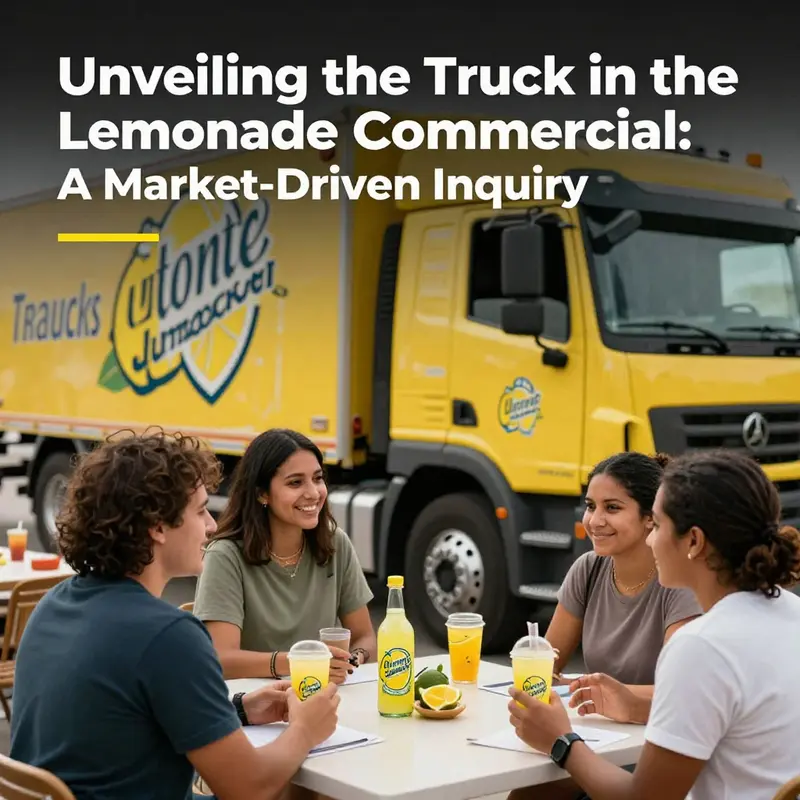
A moving vehicle can act as a storytelling stage in lemonade and beverage advertising. When a truck rolls into frame, it signals mobility, freshness, and a temporary storefront in the public sphere. The vehicle carries the product from its origin to the street, inviting consumers to imagine a moment of tasting on the curb or at a neighborhood pop up. Because the truck is visible, the audience reads it as a promise: this drink is meant to be shared, enjoyed in moments of connection, rather than consumed in isolation.
The design of the truck is the first message. Designers pick colors, textures, and typography that echo the drink’s personality. A sunny palette can convey optimism; a craft-focused interior can suggest care and quality. The exterior branding should be legible from a quick glance, while the interior layout supports sampling, conversation, and a cinematic pour.
Authenticity matters more than flash. Viewers tolerate impressive production only when the scene feels real and human. A truck with warm lighting, natural sounds, and relatable characters often lands better than a high-gloss showcase that lacks warmth. Brands that balance speed with human scale tend to create lasting impressions.
Practical impact: the moving platform anchors the shot, frames the product, and shapes perception. The vehicle can nod to sustainability, community, or local sourcing through materials, textures, and messaging. Mobility allows campaigns to travel through neighborhoods, campuses, parks, and markets, turning a single commercial moment into a sequence of local experiences.
In sum, the moving truck is not just a prop but a behavioral cue. It blends design craft, experiential thinking, and narrative psychology to make lemonade feel both fresh and accessible. The audience may not recall the exact model, but they remember the mood of sharing, the rhythm of a pour, and the sense of everyday life arriving on the street in real time.
Final thoughts
The examination of truck utilization in lemonade commercials reveals significant connections between vehicle selection and brand identity. As seen across various chapters, the vehicles chosen not only boost brand visibility but also shape consumer experiences and perceptions. Moving forward, stakeholders should recognize these marketing elements as integral to successful beverage advertising strategies.