
Understanding the classification of your truck registration as ‘commercial’ is crucial for owners of logistics companies, construction enterprises, and small business delivery fleets. This designation shapes your vehicle’s usage, insurance requirements, and compliance with regulations. By unpacking the reasons behind the commercial classification—including vehicle purpose, ownership history, and associated obligations—business owners can ensure their operations remain compliant and efficient. Each chapter of this article will address different facets of this topic, providing you with a thorough understanding and actionable insights to manage your business effectively.
When Your Truck Registration Says ‘Commercial’: What That Label Means and How to Handle It
If the word commercial appears on your truck registration, it signals more than a label. It identifies how the vehicle is classified under state and federal rules. That classification affects how you must insure, operate, and maintain the truck. It also changes fees, required permits, and sometimes the paperwork you need to keep with the vehicle. Understanding why your registration shows commercial helps you avoid gaps in coverage, unexpected fines, and costly delays.
A registration marked commercial usually reflects the vehicle’s intended, past, or technical use. Many states designate a vehicle as commercial when it is used to earn income, when its size or weight exceeds specific thresholds, or when it carries certain kinds of cargo or passengers for hire. The term covers broad activity, not just trucks that belong to businesses. A pickup used regularly for deliveries, a retired fleet vehicle sold to an individual, or a truck registered by a dealer for initial delivery can all wear the commercial tag. The key idea is this: the label ties the vehicle to rules made for vehicles used in business operations.
Weight and capacity are common, objective triggers. If your truck’s gross vehicle weight rating, or GVWR, exceeds a numerical cutoff, many states treat it as commercial regardless of day-to-day use. A commonly cited threshold is 10,000 pounds, but ranges vary. These rules reflect risk: heavier vehicles can cause more damage in a crash, and they often carry heavier loads that affect braking, handling, and wear. For that reason, heavier trucks face stricter inspection schedules, maintenance expectations, and safety requirements. The classification is meant to protect everyone on the road by ensuring those vehicles meet higher standards.
Beyond weight, the vehicle’s use matters. If you use a truck to transport goods, tools, or equipment in exchange for money, the registration office expects it to meet commercial standards. Likewise, if you regularly haul trailers for clients, or carry passengers for hire, the commercial classification is appropriate. This use-based approach is why the registration can carry a commercial label even if you primarily drive the truck yourself. If the vehicle serves business purposes at any point, the rules often favor classifying it commercially.
History and paperwork also explain surprises. Many buyers discover the commercial designation after purchase. Dealers sometimes register new trucks under a commercial title for logistics or tax reasons during the sale. Fleet vehicles sold to consumers may retain their original classification if the new owner doesn’t re-register the truck. In those situations, the paperwork will still label the vehicle commercial, until you take steps to reclassify it. Checking the title and registration history can reveal whether the tag describes current use or merely reflects a previous owner’s status.
A commercial registration changes the economics of ownership. Fees often run higher. Insurance costs rise because commercial policies cover different risks and typically promise higher liability limits. Commercial vehicles may require endorsements or separate commercial auto policies, replacing personal coverage entirely. Using a vehicle with a commercial label without proper commercial insurance can void claims and leave you liable for losses. That alone is a good reason to verify the tag and address it promptly.
Regulatory demands follow. Commercial vehicles are subject to state and federal oversight that private vehicles usually do not face. This oversight can include mandated inspections, logbooks for drivers who make long trips, and limits on driving hours for commercial drivers. In some cases, drivers must hold a commercial driver’s license, or CDL, to operate the vehicle legally. If your truck meets the weight or passenger thresholds for a CDL requirement, running the vehicle without the right license can trigger serious penalties.
Permits and identifiers are part of the picture when you carry loads across state lines. Vehicles engaged in interstate commerce may need a U S Department of Transportation number, motor carrier permits, or other identifiers. These federal and interjurisdictional rules are about consistent safety oversight, record keeping, and tax practices. They can be daunting if you only rarely use the truck for business, but ignoring them can lead to citations or fines during inspections or border crossings. If your truck may travel commercially between states, familiarize yourself with those requirements early.
Safety concerns drive many of these rules. Large, loaded vehicles present greater hazards on highways when drivers are fatigued or when maintenance slips. Authorities enforce more rigorous safety standards for commercial trucks because of the potential for serious harm in accidents. Regular maintenance, documented inspections, and adherence to load limits help reduce those risks. The commercial classification exists to ensure those safeguards are in place and enforced.
If you believe the commercial designation is incorrect, the path to change is usually straightforward but specific. Start at your state vehicle registration office. Bring the vehicle title, current registration, and documents that show how you intend to use the truck. Examples include a bill of sale showing a private purchase, an affidavit stating personal use, or an updated insurance policy showing personal coverage. Be prepared for the DMV to request proof that the truck is not used to generate income. Each state has different forms and processes, and some require an inspection or an in-person visit to clear the change.
Sometimes, removing the commercial label triggers a re-evaluation of fees or taxes. Sales taxes, registration fees, and annual charges may shift when a vehicle moves from commercial to personal status. Expect a reassessment of plates and, occasionally, a modest fee to change the registration. The cost is usually minor compared with the price of carrying the wrong insurance or defending against fines down the road.
If the commercial designation is accurate because you use the truck for business, you need to align everything else with that reality. Contact your insurer to obtain or adjust commercial coverage. Verify whether your driving role requires a CDL or special endorsements. Keep careful maintenance records and, if required, driver logs. If your work crosses state lines, investigate permits and DOT requirements. Staying proactive reduces the chance of compliance lapses and protects both your business and personal finances.
There are edge cases worth noting. A truck used for both business and personal purposes can present gray areas. Some states allow a mixed-use classification or permit limited personal use under a commercial registration. Insurance companies offer hybrid policies for occasional business use, but only when the insurer knows the facts. Never assume personal coverage will survive a commercial claim. Insurers routinely deny claims when they find undisclosed business activity.
Another frequent scenario involves modified or accessorized trucks. If aftermarket changes increase the truck’s GVWR or change its intended use, the registration may shift to commercial. For example, adding a heavy utility bed, installing a service body, or regularly towing a commercial trailer can push the vehicle into a commercial bracket. If you make structural changes, report them to the DMV and your insurer so the registration and coverage reflect the truck’s true capabilities.
The title itself holds clues. The vehicle title can indicate whether the truck was defined as commercial at the time of sale. Titles may carry codes or notations that mean something specific in your state. If the title retains a commercial code, the registration office can explain what it means and how to change it. Titles also show past owners and any liens, which can help explain why a truck started life as a commercial unit.
Documentation matters when you ask for a reclassification. A simple written statement that the vehicle will be used only for personal travel rarely suffices by itself. Bring supporting documents that paint a fuller picture: a residential address for vehicle garaging, a personal auto insurance policy, repair records showing personal maintenance, and the purchase agreement that reflects a private sale. The more consistent the paper trail, the easier it is to persuade the registration office to change the designation.
If your truck was part of a fleet, expect a bit more friction. Fleet vehicles often have histories tied to corporate accounts, tax treatments, and specialized plates. When a fleet vehicle is sold, the new owner must disentangle that history. The registration office may ask for proof of sale and for clearance from the previous owner’s account. It helps to get documentation from the seller showing the vehicle’s removal from fleet service.
For owners who discover the commercial label only after a stop by law enforcement, immediate steps matter. If stopped, be transparent. Show the registration, explain the truck’s use, and avoid admitting to business use if you intend the truck for personal use but have not yet reclassified it. After the stop, begin the reclassification process. The sooner you correct the record, the less likely a future citation will be costly.
Practical checks you can perform right now include reading the registration and title, confirming the GVWR on the vehicle door jamb, reviewing any past registration notices, and contacting your insurer. If the title lists commercial as the vehicle type, call your DMV and ask what evidence they will accept to change it. If your work uses the truck, speak with your employer about how the vehicle is recorded on company documents, and ensure commercial insurance and permits are in place.
The regulatory landscape is complex and evolving. Rules about emissions, electronic logging devices, and interstate permitting shift occasionally. If your truck may be used for business, stay informed. Industry meetings and regulatory summaries can be useful, particularly when your work crosses borders or involves specialized hauling. For a sense of how regulation and cross-border issues intersect with day-to-day operations, consider industry discussions about cross-border regulatory issues and be aware of how they affect permits and compliance requirements.
Finally, think strategically. If you plan to use a truck primarily for business, accepting the commercial classification and arranging proper coverage makes sense. If you intend purely personal use, a well-documented reclassification protects you. Either way, treat the registration label as a prompt to review insurance, licensing, and maintenance practices. A small administrative step today can prevent major headaches later.
For precise, state-specific guidance, consult your state DMV. They list the relevant GVWR thresholds, required documents, and steps to change vehicle classification. Additional general information on commercial registration procedures can be found at the DMV commercial registration guide. (https://www.dmv.org/vehicle-registration/commercial-vehicle-registration.php)
null
null
Reading the Register: Understanding the Real-World Implications When Your Truck Is Labeled Commercial
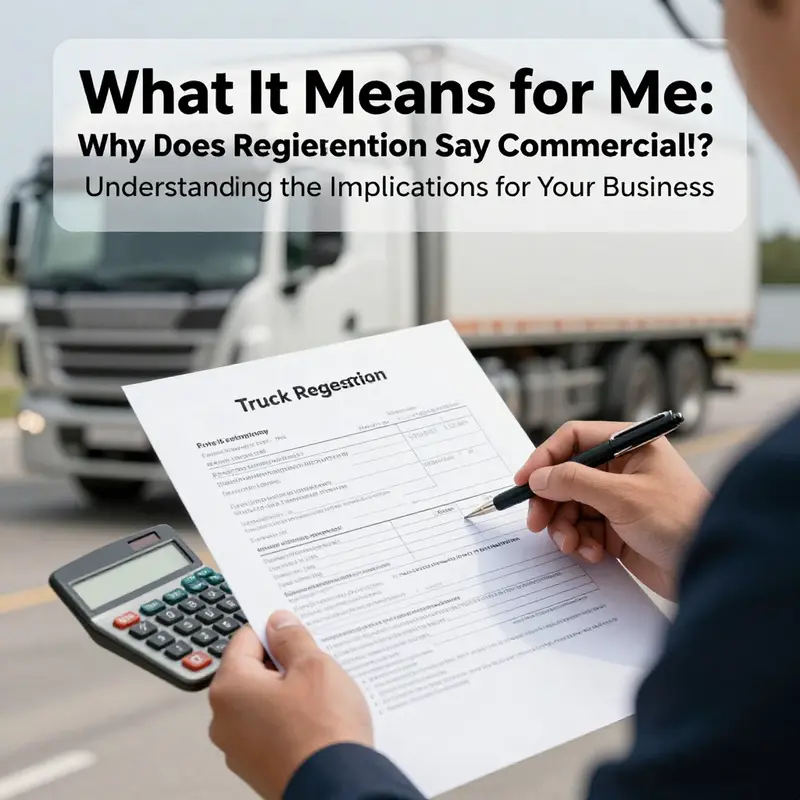
When you first notice the word “commercial” on your truck’s registration, it can feel more like a bureaucratic speed bump than a practical clue. Yet that single descriptor travels far beyond a line on a form. It signals how the vehicle is expected to be used, what rules apply, and what costs you should expect to shoulder as the owner or operator. This chapter invites you to see the label not as a verdict about intent but as a map of responsibilities and opportunities. It is a map that helps you navigate the daily realities of running a vehicle in a business context while also preparing you for the moments when your personal plans might clash with the system that governs road use. The practical consequences ripple through your wallet, your safety practices, and your ability to move goods or passengers efficiently and legally. Understanding them, then, is not about accepting a label as final but about turning that label into a framework for informed decision-making and smoother operations.
First, it helps to unpack what “commercial” really means in the context of vehicle registration. On a basic level, the designation points to primary use: the truck is registered for activities that generate income, not for personal trips to the hardware store or weekend getaways. If your business revolves around delivering goods, hauling materials, providing service work that relies on transporting equipment or passengers, or any operation that is part of a profit-seeking enterprise, the commercial classification aligns with the vehicle’s role. But the nuance runs deeper. A truck that is officially labeled as commercial might be a large semi destined for cross-country freight, a mid-sized box truck used for a moving service, or even a well-equipped pickup serving a contracting business. The common thread is not the size of the vehicle alone but the purpose behind its use and the expectations set by the governing authorities who issued the registration.
With that understanding comes a cascade of practical implications that people often overlook at first glance. The most immediate is cost. Commercial registrations typically carry higher fees and taxes, reflecting the heavier use of public roads and infrastructure by vehicles that operate regularly in a business context. The higher price tag isn’t just about the sticker shock at the counter; it’s an acknowledgment that commercial activity tends to wear a vehicle and the road system more quickly and more intensively than private, limited, non-commercial use. That wear translates into more frequent inspections, stricter maintenance schedules, and a broader duty to keep the vehicle in top operating condition. When you balance the initial registration cost against the lifetime expenditures of maintenance and downtime, the financial footprint of a commercial designation becomes clearer: it’s a long-term economic calculus rather than a one-off fee.
Insurance is the next major chord in this symphony of consequences. A commercial vehicle generally requires a different, more comprehensive insurance policy than a private auto. This coverage is designed to address a wider range of risks associated with business activity, including liability for injuries or property damage arising from commercial operations, cargo coverage for goods in transit, and, in some cases, specialized protections for equipment and tools carried on the job. The premium you pay for commercial auto insurance is influenced by factors such as how the vehicle is used, the places you travel, the cargo you carry, and the nature of your drivers’ work hours. The combination of higher premiums and the possibility of stricter coverage limits is a reality for many small business owners who rely on a truck to generate income. It’s not merely about compliance; it’s about financial planning and ensuring that a policy supports the realities of daily operations rather than leaving gaps in protection when a claim arises.
Another set of implications revolves around regulatory compliance and the broader safety ecosystem that governs commercial transport. Commercial trucks are subject to stricter federal and state requirements than private vehicles. In the United States, for example, the Federal Motor Carrier Safety Administration (FMCSA) sets standards that touch on hours of service, vehicle maintenance, driver qualifications, and safety protocols. If you operate across state lines or intend to do so, you may need to secure a USDOT number or an MC number to legally haul goods or passengers. Even intrastate business use can carry its own compliance expectations depending on the state’s interpretation of what constitutes commercial activity. The bottom line is that the commercial tag is a cue to expect a web of rules aimed at ensuring safety on the road, proper handling of cargo, and accountability for the people behind the wheel.
That accountability is further reinforced by the recordkeeping requirements that often accompany commercial operations. Many commercial arrangements demand meticulous logs of trips, hours worked, maintenance schedules, fuel consumption, and even minor incidents on the road. The discipline of keeping these records isn’t a mere formality; it can be a critical factor in audits, inspections, and even in the event of a dispute with a customer or insurer. In some cases, electronic logging devices (ELDs) or other digital tracking tools become not optional luxuries but legal necessities. For a business owner who might be juggling multiple vehicles, drivers, and customer commitments, the capability to retrieve accurate, auditable data quickly can be a deciding factor in meeting regulatory expectations and sustaining trust with clients and partners.
Maintenance expectations rise correspondingly with the commercial tag. The road and the vehicle are shared with a public that assumes a certain level of safety and reliability from professional operations. Regular inspections, timely repairs, and proactive servicing aren’t merely best practices; they are often the price of admission to keep the fleet working and to avoid penalties that can disrupt a shipment or delay a job. The emphasis on pre-trip and post-trip checks, brake conditions, tire tread, lights, and other safety-critical systems becomes part of the daily rhythm of anyone using a commercial vehicle for business purposes. The goal is not to create a punitive regime but to minimize unexpected downtime and reduce risk to drivers, loads, and bystanders. This is the practical heartbeat behind many regulatory frameworks: safer roads, fewer accidents, and more predictable service delivery.
These threads of cost, insurance, compliance, and maintenance weave together into another consequence: the way you plan, scale, and adapt your business. A commercial registration often signals to clients and partners that the vehicle is a tool of a legitimate operation, which can influence perceptions of reliability and capability. In some cases, customers expect certain certifications, permits, or proof of insurance before they will authorize use of your vehicle for a project. In others, the mere presence of a licensed commercial vehicle can unlock access to specialized contracts that private vehicles cannot qualify for. The flip side is that the commercial label can limit flexibility. If your plans shift toward personal use, or if you want to sell the truck to a buyer who primarily uses it for non-commercial purposes, the label can complicate resale or reclassification processes. The vehicle’s identity as a business asset becomes part of its value proposition and its administrative history.
Given these broad implications, you might wonder how the classification is actually determined and what you can do if your use changes. In many cases, the registration class is tied to the declared intent of the owner at the time of purchase or registration. If a pickup truck was bought for a construction job, for example, the dealer and the state records may lock in a commercial designation, even if the owner’s immediate plans are modest or intermittent. Sometimes, a registration is carried forward from a previous owner who used the vehicle commercially, and the new owner simply inherits the classification without a formal review. Other times, a fleet vehicle used by a company remains tagged as commercial, even after it is sold to a private party. This variability means that it is essential to actively verify the vehicle’s use classification with the local Department of Motor Vehicles or its equivalent. If you intend to use the truck solely for personal purposes, you should be prepared to present documentation that supports private-use intent and to discuss the possibility of reclassifying the vehicle. The process will vary by jurisdiction, but it often involves a combination of documentation, a formal declaration of intent, and, in some circumstances, updated insurance coverage that matches the intended use.
The practical pathway for someone who discovers the commercial tag and wants to transition to private use begins with a candid assessment of intent. If the vehicle is genuinely going to serve non-business purposes, you should gather evidence that supports this. This could include a letter stating that the vehicle will be used for personal trips, family travel, or hobby projects, along with any relevant documentation such as loan or lease terms that align with personal use. You will likely need to contact the DMV to initiate a reclassification. The reclassification process can involve fees, inspections, and possibly a new title or registration certificate that reflects the change. The key is to recognize that misalignment between declared use and actual use can create gaps in insurance, compliance, and liability coverage. If you proceed with personal use under a misclassified commercial designation, you may find yourself underinsured if a claim arises in a non-commercial context, or facing regulatory complications if the vehicle is ever used for a business activity without the proper permits.
In cases where the truck is and will remain a business asset, the commercial label serves as a practical reminder of the rules that govern the operation. It shapes how you hire drivers, how you structure your fleet, and how you plan for contingencies—whether that means expanding with more vehicles, investing in on-site maintenance capabilities, or contracting with third-party logistics providers to optimize route efficiency. The commercial designation can also influence how you communicate with lenders or insurers, since financing terms and policy options are often indexed to the vehicle’s use category. A lender might require a certain level of commercial risk management, while an insurer may impose stricter underwriting criteria given the added exposure of a vehicle regularly transporting goods or passengers. These financial and coverage considerations intersect with day-to-day decisions: the routes you choose, the hours you operate, the type of loads you carry, and even the kind of driver safety program you implement across your organization.
If you are reading this because you suspect your registration is misclassified, you are not alone. Dealers sometimes register vehicles as commercial to streamline tax or fee considerations at the point of sale, and the new owner inherits that designation without realizing the implications. Fleet vehicles can also be misregistered during transitions between companies. The risk here isn’t merely bureaucratic; it is about ensuring that the vehicle’s use, insurance, and regulatory posture align with reality. A mismatch can create gaps in liability coverage, exposure to penalties for noncompliance, and complexities in renewal cycles. On the other hand, embracing the commercial classification when it accurately reflects your operations can provide clarity, predictability, and access to resources designed to support professional transport, including more robust maintenance programs and access to professional drivers with the appropriate qualifications when needed.
Building awareness around these issues is also a window into how the broader economic and regulatory environment affects individual operators. The trucking world is continually evolving, with shifts in demand, fuel costs, and regulatory expectations influencing how business decisions are made. A practical way to stay ahead is to view the registration status as part of a larger risk management framework. If you run a business that depends on reliable, timely deliveries, the penalties and delays that can arise from non-compliance are more than administrative inconveniences; they can disrupt cash flow and erode customer trust. Conversely, a clear, compliant, and well-documented approach to a commercial vehicle can become a competitive advantage. Clients often prefer working with operators who demonstrate that they manage safety, insurance, and regulatory obligations with discipline and transparency. In markets where capacity is tight and competition is fierce, that credibility translates into more consistent workloads and better terms with customers who value reliability as much as price.
This is also where a deeper dive into industry dynamics becomes relevant. The designation affects more than a single vehicle; it influences how you plan for capacity and how you stay resilient when demand shifts. If your business model relies on seasonal peaks or occasional large loads, the commercial label can justify flexible staffing, diversified route planning, and access to more scalable insurance options that cover variable workloads. If, however, your use remains relatively small-scale and opportunistic, the financial and regulatory burdens might prompt a careful reevaluation of whether a commercial registration remains the right choice. The decision is rarely black and white, and the best path often involves dialogue with professionals who understand the intersection of tax, registration, insurance, and regulatory compliance. Talking to a knowledgeable advisor—and, where possible, a regulator or an attorney who understands transportation law—can illuminate the practical steps needed to reclassify, confirm ongoing compliance, and optimize your structure for the reality of your business.
To connect this discussion to the broader industry context, consider how changes in market conditions influence the way you think about use classification. If you are curious about how market dynamics shape decisions around capacity, fleet composition, and regulatory risk, a focused exploration of the current trucking market can add useful perspective. For instance, some operators have found value in understanding how shifts in capacity and demand affect pricing, service levels, and the feasibility of keeping a vehicle in a purely private category when the line between personal and business use is blurred in day-to-day operations. These insights can also inform your insurance strategy, maintenance planning, and even your choice of loads and customers. There is a real logic to aligning use classification with practical operating plans, balancing regulatory compliance with a manageable cost structure, and ensuring that your business remains agile enough to adapt when conditions change. If you are seeking a concise primer on these market pressures, you might explore articles that synthesize capacity trends and regulatory considerations in one place, helping you see how your own classification fits within the larger puzzle. For a related discussion on market dynamics and capacity, you can read about Excess Capacity in the Trucking Market Insights, which examines how supply and demand fluctuations influence decisions across the industry.
As you contemplate your next steps, remember that clarity is the cornerstone. If your truck is truly a business asset used to generate revenue, embracing the commercial designation—and the governance it entails—can provide the structure you need to operate confidently, responsibly, and efficiently. The key is to stay proactive: monitor insurance renewals, keep maintenance logs, verify that your driver qualifications match the work you require, and keep lines of communication open with regulators and lenders. If your use changes, or if you decide to switch to private use, begin the reclassification process early, gather the necessary documentation, and be prepared for a period of transition that may involve new fees or regulatory requirements. In either case, the aim remains the same: ensure that the vehicle serves its purpose within a framework that prioritizes safety, reliability, and financial viability. By treating the commercial tag as a live, actionable component of your business strategy rather than a static label, you can align your fleet with your objectives and navigate the road ahead with greater confidence.
For readers who want a quick anchor to industry-wide trends while keeping the focus on their own vehicle, a relevant exploration of capacity dynamics can offer helpful context. Consider the following resource that examines how capacity and market conditions interact with operational decisions in trucking: Excess Capacity in the Trucking Market Insights. This piece provides a broader lens on how market conditions shape and are shaped by the way fleets manage use, targeting, and regulatory compliance.
Finally, if you want a clear, authoritative path for the specific regulatory questions that arise from commercial use, the Federal Motor Carrier Safety Administration’s official portal is the indispensable resource. It lays out the rules governing commercial driving, vehicle maintenance, hours of service, and credentialing, all in a framework designed to keep roads safer and operations more predictable. The FMCSA site is a critical companion as you translate the implications of a commercial registration into concrete, compliant practice across your business landscape. In engaging with these rules, you’re not just meeting a compliance obligation; you’re investing in the long-term resilience and credibility of your operation.
For authoritative information on commercial vehicle regulations in the U.S., refer to the official FMCSA resource: https://www.fmcsa.dot.gov
Final thoughts
The classification of your truck registration as ‘commercial’ carries significant implications for the operation of your business. It affects not just the initial purchase and registration fee but ongoing operational costs, compliance regulations, and liability coverage. Understanding this classification is crucial for avoiding potential pitfalls and ensuring you can maximize the efficiency of your vehicle use. By navigating these aspects thoughtfully, business owners can position themselves for success in their respective industries.