
Trip insurance for commercial trucks is a significant consideration for logistics and freight companies, construction firms, and small delivery fleets. The costs associated with this insurance can fluctuate based on various factors such as cargo type, driver experience, insurance coverage levels, and specific operational risks. This article delves into these factors across five comprehensive chapters, offering insights that will equip owners and procurement teams to make informed decisions. Understanding the nuances of trip insurance is not merely an administrative task; it plays a vital role in safeguarding assets and upholding smooth operations within the transport arena. Through this exploration, readers will gain clarity on costs involved, enhancing their ability to mitigate risks and manage logistics more effectively.
Estimating Trip Insurance for a Commercial Truck: How Cargo, Routes, and Risk Shape Premiums
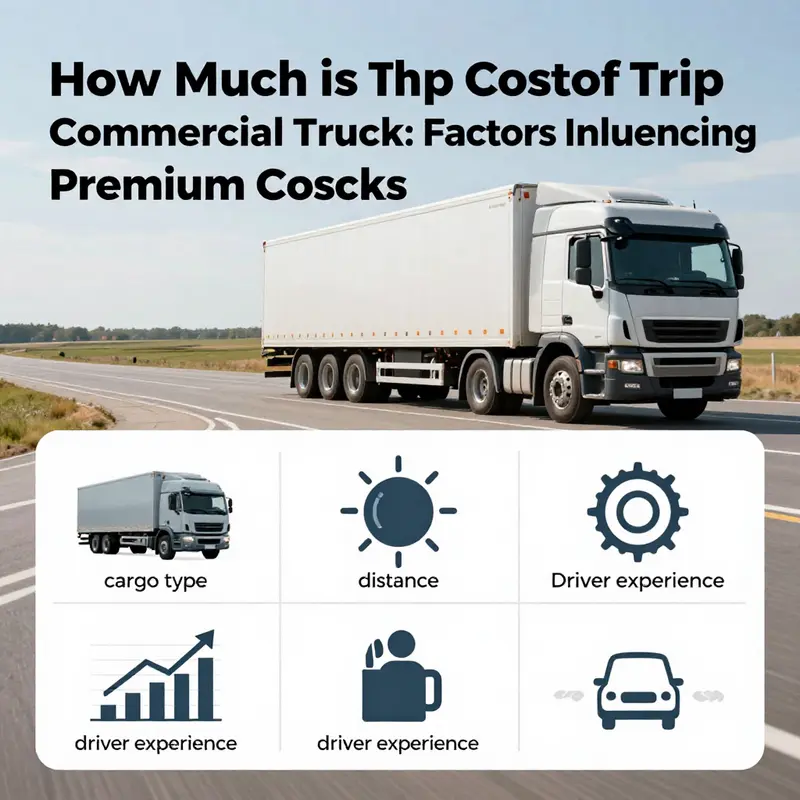
Trip insurance for a commercial truck sits at the intersection of risk management and everyday operating costs. When carriers or owner-operators plan a one-time haul, long-distance run, or a trip through unfamiliar terrain, the premium is rarely a single, flat number. It is a function of multiple moving parts: the value and nature of the cargo, how far the truck will travel, the routes it will take, the driver’s track record, and the level of protection chosen. The result is a premium that can swing widely from one trip to the next, which is why shippers and fleets alike need a practical mindset: think of insurance not as a fixed line item, but as a risk-adjusted component of the trip’s total cost, calibrated to the specific voyage ahead.
First comes the cargo. The kind of goods and their value are obvious drivers of premium, but the nuance is worth emphasizing. High-value freight invites greater scrutiny because the potential financial exposure in the event of loss or damage is larger. Likewise, hazardous materials, or any cargo posing heightened safety or regulatory concerns, typically translates into higher rates. Insurers weigh not just the price tag on the shipment, but the risk profile that those goods create on the road. In the context of a single-trip policy, this means that a one-off haul carrying premium electronics, pharmaceuticals, or specialized equipment will be priced differently from a routine palletized load of consumer goods. In the same breath, the cargo’s vulnerability to theft or handling damage matters. Items that require specialized packaging or sensitivity to environmental conditions can amplify the insurer’s exposure, nudging the premium upward even when the trip length is modest.
Distance and route complexity sit just behind cargo in shaping trip premiums. A longer journey increases the window for incidents—accidents, theft, or fatigue-related events—so longer routes usually command higher prices. The route matters as much as the miles. Hauls that traverse high-risk urban corridors, regions with elevated crime rates, or areas with severe weather footprints are treated as more uncertain bets. Insurers may apply loading factors or per-mile adjustments that reflect the historical safety profile of the corridor, the availability of reliable roadside assistance, and the predictability of resupply and repair options along the way. Fleets with well-mapped routes that consistently avoid precarious zones can negotiate more favorable terms, not because they manipulate risk, but because their risk profile is systematically lower.
Driver experience and safety history are pivotal. An insured trip evaluates the person behind the wheel just as strongly as the platform that carries the cargo. A driver with a clean record, consistent on-time deliveries, and a robust safety training background tends to earn more favorable pricing. Conversely, a driver with prior claims, enrollment gaps in training, or a patchy safety record can raise the perceived risk and, with it, the premium. This evaluation extends beyond individual drivers; if a fleet demonstrates sustained adherence to maintenance schedules, a culture of seatbelt usage, disciplined hours-of-service compliance, and proactive incident reporting, those habits can tilt the odds toward lower rates over time. The insurer is collecting signals on behavior and preventive practices that translate into lower expected losses.
The age and condition of the truck also feed into the premium calculation. Newer trucks in solid mechanical condition are typically associated with fewer mechanical failures and fewer costly breakdowns in transit, which can reduce risk. Older equipment or trucks in poor maintenance condition introduce the possibility of on-road failures that extend trip duration, increase the likelihood of cargo damage, or trigger expensive repairs. While depreciation in value is not a direct premium driver in every policy, the practical implications—maintenance costs, downtime, and the speed at which assistance can be mobilized—are considered by underwriters as they gauge the trip’s risk profile. A well-maintained vehicle with regular service records can be a quiet signal of reliability, and some insurers will reflect that in the quote.
The level of coverage selected dramatically shapes the price, but it also defines the protection you’ll have when the worst happens. A trip policy might be structured with a core liability cover, cargo coverage, theft protection, and physical damage to the truck. Higher deductibles can reduce upfront premiums, but they shift more risk to the carrier in the event of a claim. Conversely, broader coverage with lower deductibles and higher sub-limits yields a higher premium but provides more reserve against costly losses. The mix of coverages and the policy’s specific terms—such as sub-limits on certain cargo types, exclusions, and the availability of endorsements for things like non-owned equipment or connected services—will shape the premium as surely as the trip’s measurable risk factors.
One practical truth about trip insurance is its price variability. Industry data and experience confirm that there is no universal sticker price. Some carriers offer short-term or single-trip policies designed precisely for one-time hauls, and those can sometimes be more affordable on a per-trip basis than repeating annual coverage for fleets that run a mix of miles and loads. For others, trip insurance is priced as a per-mile rate that accumulates with distance, which can be advantageous for short, predictable runs and less favorable for sprawling, variable routes. The right structure depends on planning horizons, cargo risk, and how consistently a fleet runs similar routes. In any case, comparing quotes from multiple insurers remains essential, because the same trip profile can yield different economics across providers. The U.S. Department of Transportation underscores that proper insurance is not just a legal obligation but a core element of risk management for commercial carriers, reinforcing the idea that price is only part of the picture and reliability of service matters just as much.
In practical budgeting terms, the industry often presents a rough spectrum. Average annual premiums for commercial truck insurance broadly span from a few thousand dollars to well into the five-figure range, depending on the factors outlined above. For trip-specific arrangements, the math tends to be more granular: per-trip or per-mile pricing can offer a transparent way to match coverage to the voyage’s risk, even as it requires tight coordination between dispatch, safety teams, and underwriting. The aim is to align premiums with the actual risk profile of the shipment so that the cost of insurance moves in step with the level of protection required for that particular journey. To make sense of this in real terms, you should solicit formal quotes that reflect cargo details, route maps, driver histories, truck condition, and chosen policy terms. In the process, you will likely encounter a few practical savings levers: reinforcing driver training, implementing formal maintenance programs, and adopting procedures that reduce losses and speed up claim resolution can all contribute to lower premiums over time.
An additional layer worth noting concerns how risk is managed in practice. Insurers increasingly recognize proactive risk control measures as a tangible way to trim costs. For example, a carrier that demonstrates disciplined adherence to maintenance schedules, uses telematics to monitor harsh braking or speeding, and maintains a robust incident reporting and corrective action loop can present a compelling case for premium reductions. While the precise impact varies by insurer and policy, the underlying logic is clear: lower exposure equals lower expected losses, which translates into more favorable pricing and, in some cases, more flexible policy terms. This is not merely about saving money on the page; it is about building a sustainable cost structure where insurance aligns with the safety and reliability that customers expect from a modern trucking operation.
For readers seeking a broader view of how market dynamics shape risk and pricing, the discussion around excess capacity in the trucking market offers useful context. It helps explain why connections between fleet utilization, demand for transport capacity, and insurance pricing can be cyclical. When capacity is tight, premiums may rise as insurers price risk more conservatively; when capacity is abundant, competitive pressures can compress premiums. The interplay of cargo demand, driver availability, route volatility, and regulatory change all feed into this dynamic, reminding readers that pricing is not static but a living reflection of the industry’s risk landscape. You can explore these insights further in a dedicated analysis focused on market dynamics in the trucking sector: Excess capacity in the trucking market insights.
In closing, the path to a sensible trip-insurance figure starts with a clear trip profile. Gather the cargo specifics, the planned route, the intended duration, and maintenance and safety records, then invite quotes from multiple underwriters. Review each offer for the coverage structure, deductible levels, and any endorsements or exclusions. Consider how well the policy aligns with your risk tolerance and business model. If a carrier operates across varied routes and cargo types, a modular approach—seasonal or trip-specific coverage with the option to layer on broader protection—can provide both cost efficiency and risk resilience. The goal is not merely to lower the sticker price but to ensure that the protection is fit for purpose, promptly accessible, and financially sustainable across the fleet’s diverse operational reality.
External resource: For authoritative guidance on insurance requirements and risk management in commercial transportation, see the U.S. Department of Transportation: https://www.dot.gov
Pricing the Route: How Cargo Type Shapes Trip Insurance Costs for Commercial Trucks
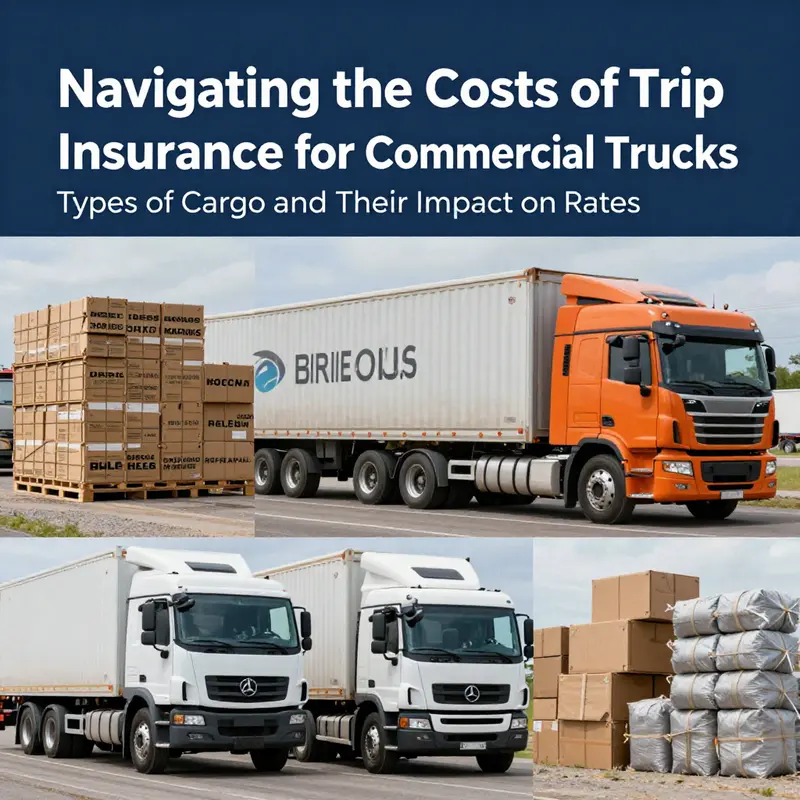
Distances, deadlines, and drivers often steal the spotlight in a fleet’s budgeting conversations. Yet the cargo itself sits at the heart of trip insurance pricing. Insurance is a risk-based product, and underwriters price each shipment by weighing the likelihood of loss or damage against the cost of coverage. Because the goods carried define the potential consequences of a claim, the type of cargo often dictates the level of protection insurers require and, ultimately, the premium a fleet pays. There is no one-size-fits-all price for a single trip; instead, a policy is crafted around the shipment’s unique risk profile. Understanding how cargo type influences cost helps operators plan routes, select appropriate coverage, and negotiate terms that balance protection with affordability.
High-value goods sit at the top of the risk ladder for trip insurance. Pharmaceuticals, electronics, or other items that command substantial replacement costs create a natural incentive for insurers to layer in more robust coverage. Beyond the price tag, high-value cargo typically carries stricter handling and condition requirements. The value at risk is not just the item itself but the potential loss associated with spoilage, obsolescence, or temperature excursions that render the product unusable. Premiums rise accordingly because the exposure is greater, and the insured interest demands more comprehensive safeguards such as specialized secure packaging, temperature monitoring, and chain-of-custody documentation. For fleets, the practical takeaway is clear: moving valuable shipments requires deliberate risk assessment and clear articulation of the protections in place, because underwriters will scrutinize vulnerability points with greater intensity than they would for more ordinary loads.
Perishables add another layer of complexity. Fresh produce, dairy, and other time-sensitive goods require consistent, reliable temperature control and rapid, careful handling from dock to destination. The insurance equation factors in spoilage risk, the potential for product degradation during transit, and the likelihood of claims arising from temperature excursions. Perishables frequently trigger higher premiums, not only because the potential monetary loss is substantial but also because the operational discipline needed to maintain quality is exacting. Insurers look for evidence of robust cold-chain processes, validated thermal data, and contingency plans for equipment failure or delayed milestones. When a carrier can demonstrate strict adherence to temperature requirements, the risk is mitigated to a degree, but the premiums still reflect the sensitive nature of the cargo.
Hazardous materials, or hazmat, sit at the far end of the risk spectrum. The legal, environmental, and public-safety implications of transporting these substances are profound. Hazmat shipments demand specialized driver training, compliance with detailed regulatory frameworks, and often specialized equipment and routing that minimize exposure. The liability footprint is larger because the consequences of an accident can extend beyond the immediate loss to include environmental cleanup, fines, and reputational harm. Unsurprisingly, premiums for hazmat loads are substantially higher. Insurers may require extra layers of coverage, higher deductibles, and more stringent validation of the carrier’s safety record and SOPs. Fleets that regularly haul hazmat should expect to invest more in risk management, not only to protect cargo but to keep premiums in check over time by demonstrating consistent safety performance.
General freight represents a broad category that covers non-perishable goods and typical merchandise. Relative to high-value or hazmat shipments, general freight typically carries a lower baseline risk. However, the premium is never just a function of cargo type alone. Weight, total value, shipment frequency, and route complexity all influence cost. A cargo mix with heavy, bulky loads or shipments that traverse high-crime or high-traffic corridors can push premiums higher even if the goods themselves are not specialized. For many fleets, general freight is the anchor of a pricing strategy, with occasional adjustments when unique risk signals emerge—for example, a particularly long trip through regions with elevated theft statistics or a surge in weather-related hazards along the route.
Beyond cargo type, several other factors interact with the nature of the goods to shape trip insurance costs. Distance traveled is a straightforward variable: longer journeys increase exposure, which can elevate premiums. Route risk matters, too. Areas with higher accident rates, theft incidents, or harsher weather patterns tend to push rates up, while well-traveled corridors with reliable infrastructure can support comparatively lower pricing. The driver’s experience remains a meaningful factor. More seasoned operators are generally perceived as lower risk, potentially translating to modestly reduced premiums because track records show fewer incidents and quicker, safer responses to adverse conditions. Vehicle condition and maintenance history also enter the math. A well-maintained fleet minimizes the likelihood of breakdowns and on-road mishaps, which insurers reward with more favorable quotes.
The interplay of cargo type with distance, route risk, and operator history means premiums can swing widely from one shipment to the next. A single trip carrying hazardous materials across a long, high-risk corridor will look markedly different from a routine, short-haul move of non-perishable goods in a low-risk region. Yet the overarching principle remains consistent: insurers price risk, not just goods. They assess the shipment’s characteristics—the sensitive nature of the cargo, the exposure window, and the controls in place to protect it—and set a premium that reflects the likelihood and magnitude of a potential claim. Businesses that want to manage costs should map their cargo portfolio against the risk profile that underwriters see and invest in processes that demonstrably reduce exposure. Temperature monitoring for perishables, advanced security measures for high-value items, and rigorous compliance programs for hazmat shipments are all levers that can tilt the pricing dynamics in a favorable direction when supported by credible data.
A practical way to approach this landscape is to request quotes that segment pricing by cargo category. When speaking with insurers, operators should provide clear documentation of cargo classification, handling requirements, and proof of controls—such as validated temperature logs for perishables, security audits for high-value loads, and certification records for hazmat handling. Documentation that demonstrates your capability to maintain conditions or to prevent or mitigate loss can translate into more favorable terms, such as lower deductibles or higher coverage limits at a given price point. In some cases, insurers offer short-term or single-trip policies tailored to certain lines of cargo or routes. These options can be more affordable for one-off hauls or seasonal surges, allowing fleets to optimize protection without committing to long-term coverage when risk is transient. Fleet operators should compare the total cost of protection across policy structures to determine the most economical approach for their current shipment mix.
The nuanced reality is that cargo type is a central, but not solitary, determinant of price. For a comprehensive understanding, practitioners often combine cargo-focused risk assessments with insights into broader market dynamics. The insurance market reacts to shifts in the trucking environment—changes in freight volumes, driver labor markets, and regulatory developments can all reshape pricing structures. A fleet with a diversified cargo mix may experience fluctuating premiums as the insurer recalibrates risk across the portfolio. Conversely, a fleet that concentrates on a narrow range of loads may see more stable pricing but could face higher premiums if that niche carries entrenched risk signals. In either case, ongoing risk management and transparent communication with underwriters are essential to maintain balance between protection and cost.
For operators seeking additional context on how cargo classification influences insurance rates and to see related discussions about industry risk and regulation, a broader resource from the insurance research community offers valuable perspectives. In the broader literature, you will find structured analyses of how cargo risk profiles, regulatory environments, and new technology trends shape underwriting practices. External resources can illuminate how emerging topics—such as broader shifts toward autonomous trucking, telematics, and enhanced cargo monitoring—are expected to influence future pricing and coverage structures. External resource: https://www2.deloitte.com/insights/topics/technology/autonomous-vehicles-insurance.html
Internal cross-references can help connect this topic to practical budgeting concerns. As fleets weigh the cost implications of different cargo types and routes, it is useful to consider how other cost drivers interact with insurance premiums. For instance, if a fleet’s cargo mix begins to skew toward loads that require longer transit times or more expensive handling, it may be prudent to re-evaluate the overall risk exposure and to discuss targeted risk-mitigation measures with insurers. A broader view of market conditions and operational margins can be explored in discussions around trailer orders and their impact on truckload economics, which highlights how capital investment decisions influence the risk landscape and, by extension, insurance costs. See Trailer orders impact truckload margins for a concrete example of how equipment decisions ripple through costs and risk allocation.
In sum, cargo type is a pivotal driver of trip insurance costs for commercial trucks, but the final premium emerges from the interplay of cargo characteristics with distance, route risk, and operator safety performance. By aligning cargo-specific controls with broader risk-management practices, fleet operators can obtain coverage that protects margin without overpaying for risk that has been credibly mitigated. This integrated approach helps ensure that insurance remains a transparent, manageable expense rather than a blunt penalty levied on every shipment. For readers exploring how these dynamics fit into broader industry trends and regulatory expectations, ongoing engagement with insurers and independent advisors remains essential as the market evolves.
Pricing the Road Ahead: How Driver Experience Shapes Trip Insurance for Commercial Trucks
Insurance costs for a commercial truck on a single trip are never a fixed number. They are a dynamic assessment that weighs numerous moving parts, and among those parts, the driver behind the wheel stands out as one of the most influential. The way an insurer views driver experience can tilt a quote by a noticeable margin, sometimes making the difference between a policy that fits a tight budget and one that stretches it. This is not a matter of a magic years-on-the-job metric alone. It is the culmination of a driver’s track record, steady performance, and the reliability demonstrated across the miles. When a fleet operates on a route that includes high-traffic corridors or harsh weather windows, experience becomes an early warning signal that the operator is managing risk with a practiced hand. Conversely, a newer driver, or one with a bumpy safety history, activates a different calculus for underwriters, one that often translates into higher premiums to cover the greater perceived likelihood of a claim. In practice, insurers tailor policies to the specific risk profile of the trip, the driver, and the fleet, so there is no uniform price for trip coverage. Yet the research makes one thread clear: experience matters, and it can compound with other risk elements to steer the cost of coverage up or down in meaningful ways.
The mechanics of how experience is translated into a price lie in the underwriting process. Years behind the wheel serve as a proxy for proficiency, risk management discipline, and the confidence to handle unexpected events on the road. In underwriting terms, this means fewer potential claims per mile and a lower probability of the driver becoming involved in costly events. Most insurers look beyond micro- incidents and speed through the lens of long-term patterns: how consistently a driver adheres to hours-of-service regulations, how well past accidents were resolved, and whether there is a developing pattern of risky behavior or avoidance. A driver with multiple, clean years on the road typically signals a lower baseline risk. The threshold figures—such as drivers with more than five years of experience—often emerge in policy discussions as practical markers for loading or discounting. While not a universal standard, such thresholds reflect a consensus in the industry: experience correlates with steadier performance and fewer disruptions that trigger claims.
This does not mean that experience runs alone. A driver’s safety record, including violations and compliance with critical regulations, weighs just as heavily. The hours-of-service compliance history tells a story about discipline, fatigue management, and trip planning. Even a long tenure can be offset by a string of violations or accidents, which can erode the presumed benefit of experience. The underwriting narrative thus tends to reward a clean, consistent record more than raw years alone. The data behind this approach aligns with broader industry findings: experienced drivers tend to produce fewer incidents per mile, a point echoed by the American Trucking Associations. The implication for operators is clear—investing in ongoing training and maintaining spotless records can translate into tangible savings on trip insurance, not just on a quarterly premium but across the entire life of a fleet’s operation.
For fleet managers aiming to quantify the potential upside of driver experience, the math becomes a practical planning exercise. A driver who has logged a decade of safe driving, and who carries a clean record across the last ten years, often qualifies for more favorable pricing bands. In real terms, that can translate to substantial discounts on trip-specific policies, especially when the rest of the risk profile—cargo type, route complexity, vehicle value, and safety program maturity—aligns with the lower end of risk. The narrative of discounting is not just about the age of the driver but about the maturity of their risk management toolkit: disciplined driving habits, consistent on-time performance, and proactive attention to maintenance schedules. The better these traits are demonstrated, the more likely an insurer is to reward the carrier with a lower premium. A ten-year safe driving record, for instance, is frequently cited as a benchmark that can unlock meaningful reductions, particularly when combined with a clean safety history and robust fleet safety programs.
As a practical matter, the chapter’s findings point to two strategic implications for fleets. First, driver development programs matter as cost-control levers. When fleets invest in structured training, coaching, and continuous learning—covering topics from hazard perception to advanced defensive driving—they do more than raise the skill level. They create a culture of safety that translates directly into lower risk. Insurance providers often respond to this culture with tiered pricing or more favorable terms, recognizing that incremental improvements in behavior and compliance reduce the likelihood of claims. The second implication is the value of retention. High turnover disrupts the risk profile by replacing experienced operators with newer drivers who carry higher baseline risk. Programs that reward tenure and performance, or that retrofit mentoring for new hires, can shift the risk curve in a fleet’s favor over time. To operationalize these ideas, fleets should align driver qualifications with pricing strategies and build a clear path from recruitment to retention that explicitly targets safety metrics, hours-of-service compliance, and incident-free performance.
Two additional realities shape how driver experience interacts with trip insurance costs. The first is cargo and route risk. Even a veteran driver can face increased premiums if the cargo is hazardous or if the trip traverses high-risk geographies. The rules of underwriters are straightforward: risk is risk, but experienced drivers can mitigate some of that risk by demonstrating their capacity to navigate complex conditions with fewer disruptions. The second reality is the option of short-term or single-trip policies. For certain hauls—rare or one-off shipments—carriers may opt for shorter coverage windows. These policies are often more affordable and can be tailored to match the trip’s precise risk footprint, offering a practical bridge for fleets that are either adjusting to seasonal demand or testing a new route without committing to a longer-term policy. In this sense, experience remains a central factor, but it sits within a broader toolkit that fleets can deploy to manage cost, risk, and coverage alignment.
The human element in insurance pricing ties back to the broader ecosystem of the industry. If a carrier can demonstrate a deep bench of experienced, safety-minded drivers, it gains not just a price advantage but a reputational one as well. The industry trend toward tiered pricing based on driver qualifications underscores the strategic importance of experience. Carriers that invest in reliable staffing, predictable rosters, and consistent training create a risk profile that is easier for insurers to model and predict. In the long run, this translates into greater stability for budgeting trip coverage and better forecasting of total transportation costs. For operators looking to anchor their approach in practical steps, the path is clear: build a pipeline of capable drivers, maintain clean records, and leverage training to embed safety into daily operations. This is not merely about reducing the hit on the bottom line; it is about establishing a sustainable framework in which risk, cost, and service quality reinforce one another.
A concrete way to anchor these ideas in daily practice is to connect driver experience with retention and recruitment strategies. For instance, fleets can explore partnerships with programs aimed at developing and placing qualified drivers. Such initiatives help ensure a steady supply of capable operators, which in turn can stabilize premiums by reducing turnover and enabling better risk management across trips. See, for example, Trucking HR Canada placement program benefits as a reference point for how structured staffing programs can support risk reduction in the trucking sector. While the specifics of pricing will differ from one insurer to another, the underlying logic remains consistent: experienced, well-managed drivers reduce the chance of claims, and that reduced risk is reflected in the price of trip insurance.
In the broader context of the evolving insurance landscape, driver experience sits amid a constellation of factors, including the advent of new technologies and regulatory shifts. As autonomous and semi-autonomous systems begin to intersect with trucking operations, insurers are reevaluating their exposure, pricing models, and coverage terms. The Deloitte Insights perspective on autonomous vehicles and the insurance industry offers a useful lens for understanding how these dynamics may unfold for commercial trucking in the future. It highlights that the insurance ecosystem is adapting to a wider set of risk signals, which could alter how experience is weighted alongside technology-driven safety enhancements. While that shift is not immediate for most fleets, it underscores why a steady investment in driver experience remains a prudent, near-term defense against rising trip insurance costs and a longer-term strategy for resilience on the road.
Taken together, the evidence suggests a clear path forward for fleets: treat driver experience as a core lever in negotiating trip insurance. Prioritize training, safety discipline, and retention, and use data-driven approaches to monitor driver performance and risk. Recognize that a veteran driver with a clean record is not merely a better performer on the road; they are a lower-risk asset whose value is reflected in more favorable premium pricing. When combined with careful route planning, cargo risk assessment, and flexible coverage options like single-trip policies for special hauls, fleets can craft a cost structure that is both predictable and resilient. The road to more affordable trip insurance is not a shortcut; it is a disciplined portfolio of practices that elevate driver capability while simultaneously sharpening the accuracy of risk assessment for insurers. As the industry continues to evolve, coupling experience with technology, training, and staffing strategies will likely remain a reliable engine for controlling costs while maintaining the service standards customers expect.
External resource: https://www2.deloitte.com/insights/topics/technology/autonomous-vehicles-insurance.html
Pricing the Road Ahead: Navigating Trip Insurance Costs for Commercial Trucking and the Coverage That Protects Your Load
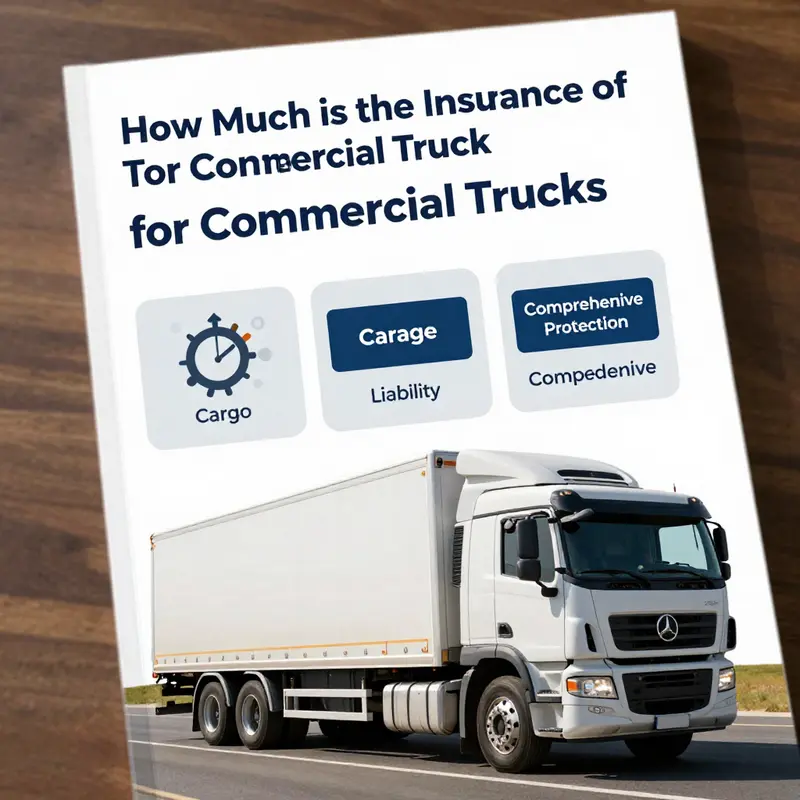
Trip insurance for a commercial truck functions as a specialized form of risk management rather than a plain, one size fits all expense. It is priced to reflect the exact risk of the load, the journey, and the protection chosen, and that simple truth helps explain why there is no universal price tag you can memorize. The cost of a single trip can feel modest at first glance, but the numbers add up quickly across a fleet and a season. Insurers look at a blend of factors when they calculate a quote. The type of cargo plays a major role, with hazardous materials commanding steeper premiums because of the heightened liability exposure. The distance and route matter as well; longer trips or routes through high crime areas, rough weather corridors, or jurisdictions with heavier regulatory scrutiny are treated as riskier bets. The driver’s experience and the truck’s age and condition contribute too. A veteran driver behind a late model truck in good condition typically signals lower risk than a newer vehicle with limited maintenance history on a challenging lane. The level of coverage you select is another decisive variable. It is common to see a tiered structure that translates into different combinations of liability, cargo loss, and physical damage protection, with add-ons that can shift the price noticeably. In short, the premium is the price tag for the specific risk profile you present to the insurer, and the same load can be priced very differently depending on how you stack up against those risk facets. There is no standard price because the policy is crafted to match your operational reality, not a generic template. When a shipment involves high value goods, the premium rises to reflect the larger potential exposure. When the route is exposed to more weather volatility or security concerns, premiums adjust upward to maintain the insurer’s expected return for that risk class. And when a fleet has a clean safety record, proactive maintenance, and robust driver training, that favorable history can translate into lower rates. These dynamics are why many providers offer flexible options designed to fit one trip, rather than locking you into a long term commitment you might not need for occasional hauls. Short term or single trip policies can be an attractive entry point for carriers testing a new lane or handling a one off cross border move, while ongoing operations may benefit from fleet or annual coverage with a pricing structure that rewards consistency and risk reduction over time. The practical effect of this pricing reality is that you should expect a range rather than a fixed price. For a single trip, premiums typically land somewhere in the neighborhood of one hundred to five hundred dollars or more, with the upper end reserved for shipments that carry significant risk or demand high liability limits. In other words, the sticker price is a function of risk appetite and operational profile as much as it is a function of distance or cargo type. These factors intersect in meaningful ways when you compare policies. A basic policy may cover third party liability only, which keeps the upfront cost lower but leaves you exposed for cargo loss or physical damage to your truck in a crash. A standard policy adds cargo protection and some physical damage coverage, giving you more peace of mind while still keeping the price manageable for many fleets. A premium plan piles on extra protections such as roadside assistance, emergency medical coverage for drivers, and coverage for delays or rerouting costs that arise when a trip is disrupted by weather, traffic incidents, or other unforeseen events. The more comprehensive the coverage, the more comprehensive the price, but the better your ability to recover quickly from a setback. In addition to coverage levels, obtaining accurate pricing hinges on honest, thorough disclosures about the trip. You should be ready to specify origin and destination, the type and value of the cargo, whether any hazardous materials are involved, the route geography, the expected duration, and the planned level of liability limits. The insurer will also want to know about the truck and its equipment, the driver’s experience, the safety record of the carrier, and any risk management measures you have in place, such as telematics, driver training programs, and maintenance schedules. All these inputs help the underwriter attach a fair price to the risk and determine the most cost effective way to cover a particular load. When it comes to actually shopping for coverage, most providers offer digital tools that let you submit trip details and receive instant estimates. This online interaction speeds the process but demands careful input. A small misstatement about cargo type or route can shift price or even invalidate a claim should a loss occur. Because of that, it pays to work with specialized commercial truck insurers who understand the nuances of trucking operations and can translate your operational realities into accurate quotes. If you operate a fleet, you should consider obtaining multiple quotes to compare not only price but also the scope of coverage, claims handling practices, and any available discounts. Safe driving records, fleet management systems, and bundling with other commercial policies often bring meaningful savings. A disciplined approach to risk can yield a lower premium while still preserving the protections your operation needs. Within the pricing landscape, a few practical truths emerge. First, there is no standard price, and premiums reflect risk in a tailored way. Second, coverage levels drive the bulk of the cost difference, with basic, standard, and premium tiers offering progressively broader protection. Third, the decision is ultimately about balancing cost with the risk you are prepared to absorb. If your operation involves high exposure, a higher level of coverage can be cost effective in the long run by reducing potential out of pocket losses and downtime. A good rule of thumb is to model the consequences of a loss in terms of cargo value, vehicle downtime, and the potential impact on customer commitments. If a loss would jeopardize a customer relationship or create a cascade of missed deliveries, that is a strong signal to lean toward stronger coverage. The pricing conversation also benefits from a broader industry perspective. Market dynamics, including capacity and competition among insurers, influence the flexibility of quotes and the availability of rider options. For readers seeking a window into how market forces shape insurance pricing, the discussion in excess capacity in the trucking market insights provides a broader lens on how rates move in response to fleet growth, demand fluctuations, and risk management practices across the sector. Excess capacity in the trucking market insights. While the link sits in a companion resource, the core message remains that insurance pricing is not just about one trip; it is about the ecosystem in which that trip lives, including safety culture, equipment reliability, and the persistence of good data that helps underwriters quantify risk with greater precision. As you plan, you should also consider the longer view. If you anticipate more trips on the same lanes, negotiating an annual or fleet level policy can yield economies of scale and more predictable budgeting. If the business has seasonal peaks or intermittent surges, a mix of short term and longer term protections can offer resilience while preserving cash flow. In every case, the goal is to align the protection you select with the operational realities you face, so the price you pay for insurance reflects not just the cargo and the miles, but the way your operation manages risk day to day. For broader context on how technology and regulatory developments intersect with insurance in the transportation sector, reputable industry analyses point to evolving trends like autonomous vehicle adoption and the corresponding implications for risk transfer and pricing. You can explore that broader discussion at Deloitte Insights, which examines how autonomous trucks are changing the insurance landscape and what that means for premiums, coverage options, and claims handling. https://www2.deloitte.com/insights/topics/technology/autonomous-vehicles-insurance.html
Estimating Trip Insurance for Commercial Trucks: Navigating Quotes, Risk, and Real-World Costs
Trip insurance for commercial trucks does not come with a single price tag. Instead, insurers tailor quotes to the specific risk profile of each shipment. This means the cost you see for one haul can be dramatically different from the cost for another, even if the trips seem similar at first glance. A practical way to understand pricing is to view it as a mosaic formed by several moving parts that interact in real time. The first and most obvious piece is the cargo. Hauling high-value goods or materials classified as hazardous immediately signals higher risk to underwriters. The more valuable the cargo, the greater the potential loss in the event of theft, damage, or exposure to environmental hazards. Likewise, shipments that carry hazardous materials often require specialized handling, containment, or transport conditions. Those added requirements translate into higher premiums, because they raise exposure and potential liabilities for the insurer. At the same time, the kind of cargo can also invite limitations on coverage or specialized endorsements, which in turn shape the final price. The balance between protection and cost is a constant negotiation that reflects risk tolerance and operational realities.
Another critical factor is distance and route risk. Longer trips naturally increase the window of exposure to accidents, theft, or delays. But distance alone does not tell the full story. The route matters as a companion to the distance. A route that traverses high-crime corridors, rough road conditions, or areas with sparse emergency services can push premiums higher. Insurers increasingly weigh route-specific risk by layering in population density, weather patterns, and historical incident rates for the exact corridor. The dynamic nature of the road network means that two trips of equal length can carry very different price tags if one route is deemed safer or less volatile than the other.
Driver experience is another variable that underwriters watch closely. More seasoned operators are typically associated with fewer claims and safer driving patterns. That track record can translate into lower premiums, as the insurer’s exposure to potential losses diminishes. Conversely, a fleet with a younger or less experienced driver pool can face higher rates, especially if the drivers are new to the routes, the cargo type, or the regional conditions. Vehicle value also factors into pricing. A newer, more expensive truck carries greater potential replacement costs, which can lift the premium. Insurers factor depreciation, the cost to repair, and the availability of parts into their models. Higher-valued assets mean larger exposure in the event of a claim, and that reality shows up in the price of coverage. Safety features, maintenance history, and defect-free records can help mitigate some of that risk, but the base math remains anchored in the potential loss the policy would cover.
The level of coverage itself is a decisive determinant of cost. Higher liability limits, broader coverage to protect cargo in transit, and lower deductibles all push premiums upward. On the flip side, some trucks may operate under more conservative coverage with lower limits, which can reduce the per-trip cost. Fleet owners often negotiate bundle arrangements that pair trip insurance with other risk-management services. While these bundles can offer value, they require careful assessment to ensure they align with actual cargo risk and operational needs. For one-off hauls or short-term operations, many insurers also offer single-trip or short-duration policies. These options can be notably more affordable than long-term coverage because the risk horizon is narrower, and the insurer can tailor terms to a single set of conditions. This flexibility is particularly appealing for businesses that run irregular routes, seasonal spikes in volume, or non-standard shipments.
With all these variables at play, the range of premiums you might encounter tends to be broad. In many cases, trip insurance for a commercial truck can fall roughly between a base figure and several times that, often spanning from around one hundred dollars on very small or low-risk trips to five hundred dollars or more for higher-risk or longer journeys. The actual price you pay, of course, depends on the precise mix of cargo type, distance, route risk, driver experience, vehicle value, and coverage level. The lack of a universal price underscores the necessity of obtaining a formal quote that reflects your unique operation.
Getting an accurate quote requires presenting a clear, comprehensive portrait of the shipment and the operating context. Insurers typically ask for details such as the truck’s make and model, its current value, and the nature of the cargo—whether it is perishable, electronic, chemical, or consumer goods. Origin and destination points matter, as does the expected duration of the trip. Marking the route with the planned stops, rest periods, and any interchanges or border crossings helps underwriters gauge exposure. Modern carriers often rely on online quote tools that guide users through structured data fields. Yet for complex or high-risk shipments—such as those involving hazardous materials, international border crossings, or routes through volatile regions—a personal consultation with an underwriter remains the best path to comprehensive, correctly scoped coverage. The accuracy of the quote hinges on the precision and completeness of the information supplied.
Risk assessment in trip insurance blends historical data with live signals. Insurers scrutinize route safety ratings and the driver’s record to identify patterns that could increase the likelihood of a claim. Telematics and GPS data have become valuable tools in this space, offering real-time monitoring of driving behavior, speed, braking, and idling. When real-time risk is detected, the insurer may adjust terms or pricing to reflect the moment-to-moment safety profile of the operation. They also review past claims data from similar trips to identify vulnerable points in the shipment profile. The result is a risk picture that is much more granular than a simple calculation based on cargo value and distance. For businesses, this means that the path to an appropriate level of protection is not just about purchasing coverage but about actively managing risk. When telematics reveal safer driving patterns or when a route is reimagined to reduce exposure, premium estimates can shift in meaningful ways.
Practical cost-control strategies often emerge from this risk-focused view. Fleet managers who invest in driver training, continuous coaching, and robust safety programs typically see more favorable underwriting outcomes over time. The data generated by telematics can demonstrate safe driving habits, smoother trip profiles, and adherence to optimal speed and braking practices. Even small reductions in risk can translate into noticeable premium savings, especially for fleets that run a high volume of trips or operate on high-risk corridors. Route planning also plays a pivotal role. By selecting paths with lower historical incident rates, fewer border delays, and more reliable service infrastructures, shippers can reduce exposure without compromising delivery timelines. In some cases, carriers layer in risk-management services that monitor route changes, alert on deviations, and provide proactive guidance to drivers. These services can be a meaningful differentiator when negotiating terms with underwriters.
For many operators, the decision to pursue insurance is intertwined with broader market dynamics. Capacity fluctuations, seasonal demand, and the shifting calculus around risk all influence pricing. When capacity tightens or certain routes become more volatile, insurers may reprice policies to reflect the elevated risk. Conversely, a fleet that demonstrates disciplined risk management and a track record of on-time deliveries can secure more favorable terms even in tight markets. This broader context matters because pricing is not only a function of the shipment itself but also of how the operator manages risk day to day. In this sense, trip insurance becomes less a checklist item and more a living component of strategic freight planning.
Within this framework, it is worth anchoring the discussion to the broader market realities that shape pricing over time. The same market forces that influence truckload margins, capacity, and equipment utilization also color insurance pricing. When capacity is abundant and fleets are expanding, underwriting competition can moderate premiums. When capacity tightens and risk exposure rises, rates may climb as insurers recalibrate to maintain balance between exposure and profitability. This interplay helps explain why two seemingly similar trips can carry different insurance footprints, and why ongoing risk management is essential to controlling total transportation costs. For a deeper dive into how industry dynamics can affect pricing and risk, industry research and benchmarks published by trade associations provide a valuable compass. For broader context on how transportation capacity and risk intersect with pricing, read about the broader market dynamics discussed in industry analyses such as the article on trailer orders and truckload margins, which offers a lens on how capacity and demand shape the economics of shipping. Trailer Orders and Truckload Margins.
This perspective also aligns with the evolving conversation around new technologies and the insurance landscape. As autonomous and semi-autonomous systems begin to alter risk profiles, underwriters are closely watching how automation, sensor data, and advanced driver-assistance features influence claim frequency and severity. The insurance industry is actively exploring how to price these innovations, how to interpret telematics from autonomous systems, and how to adjust risk models accordingly. In practical terms, this means that the cost to insure a trip could shift not only with cargo and route but also with the level of automation, the maturity of safety protocols, and the integration of real-time data feeds into risk assessment. For readers seeking a broader, forward-looking view on how mobility technology intersects with insurance, a reliable external resource outlines these trends and their implications for pricing and coverage strategies. https://www2.deloitte.com/insights/topics/technology/autonomous-vehicles-insurance.html
Final thoughts
In conclusion, understanding the costs associated with trip insurance for commercial trucks is paramount for logistics and procurement professionals. The interplay of various factors such as cargo types, driver experience, and the desired policy coverage can significantly influence overall premiums. By staying informed and seeking accurate quotes tailored to specific business needs, companies can effectively manage their insurance expenditures while protecting their assets. Remaining proactive in assessing potential risks and revisiting insurance policies periodically allows for cost-effective solutions that align with operational goals, ultimately ensuring a resilient transportation strategy.