
Introduction
In the intricate world of trailer manufacturing, the weight of uncertainty looms large as a weakened freight market casts shadows over purchasing decisions. Each decision carries the weight of anxiety and potential loss, with manufacturers and fleet operators alike caught in a cycle of hesitance while they navigate these turbulent waters. The chilling forecast of a market recovery not expected until late 2026 or 2027 only adds to the anxiety, compelling stakeholders to reassess their existing assets while bracing for the storm ahead.
As they stand at a crossroads, the cautious approach to trailer purchases resonates deeply, showcasing the necessity to adapt, evolve, and ultimately survive. In this unfolding tale of resilience and uncertainty, the path forward remains unclear, yet it carries the promise of brighter days ahead for those prepared to face them.

The U.S. Trailer Market Challenges
The U.S. trailer market is currently experiencing significant challenges, marked by declining production orders, increased cancellations, and rising prices influenced by tariffs.
Decline in Production Orders and Increased Cancellations
In May 2025, U.S. trailer net orders fell 34% month-over-month to 6,738 units, exceeding typical seasonal declines. Order cancellations surged to 37.6% of gross orders, the highest rate in 12 months. Year-to-date net trailer orders for 2025 reached 83,218 units, a 24% increase year-over-year, averaging 16,644 units per month. Source
By July 2025, net trailer orders declined 39% month-over-month to 7,794 units, with order cancellations accounting for 17% of gross orders. Cumulative net orders for the 2025 season (September 2024–July 2025) stood at 181,430 units, down 5% year-over-year, averaging 16,494 per month. Source
Impact of Tariffs on Prices
The escalation of tariffs, particularly the increase to 50% on steel and aluminum as of June 4, 2025, has significantly raised production costs for original equipment manufacturers (OEMs) and suppliers. This has led to higher trailer prices, with some fleets delaying new purchases or opting for refurbished alternatives. Source
Production Statistics and Market Outlook
Total U.S. trailer build in May 2025 fell 4% month-over-month and 24% year-over-year to 16,958 units. Year-to-date trailer build was down 29% year-over-year to 80,729 units, averaging 16,146 per month. Source
Analysts project a decline in North American trailer production from 230,000 units in 2024 to 187,000 units in 2025. A gradual recovery is expected, with production reaching 204,000 units in 2026 and nearly 295,000 units by 2028. Source
Industry Challenges
The combination of tariff-induced cost increases, economic uncertainty, and a weak freight market has led to cautious capital spending among fleets. Many are extending replacement cycles and deferring expansion plans, contributing to the decline in new trailer demand. Source
In summary, the U.S. trailer market is facing a downturn characterized by reduced production orders, increased cancellations, and rising prices due to tariffs. While a recovery is anticipated in the coming years, current conditions reflect significant challenges for manufacturers and fleet operators alike.
| Category | 2024 | 2025 | Change |
|---|---|---|---|
| Expected Production Orders | 230,000 | 187,000 | -18.7% |
| Trailer Prices Increase | 16-28% | TBD | – |
| Order Activity Decline | – | 5% | – |
| Cancellations Rate | – | 39% | – |
| Total Net Orders YTD | 103,000 | 83,218 | -19.2% |
Trailer Manufacturers’ Strategic Adaptations in 2025
In response to the challenging market conditions of 2025, trailer manufacturers like Manac and Fontaine Trailer Company have made key strategic adaptations:
-
Production Adjustments:
Manac saw a significant 28% decrease in trailer production in 2024 compared to 2023. They remain cautious because of the evolving tariff landscape in the United States.
-
Supply Chain Diversification:
Fontaine Trailer Company is exploring ways to diversify its supply chain. This move aims to reduce the negative impacts of tariffs and rising component costs.
-
Enhanced Supplier Communication:
Fontaine emphasizes the importance of maintaining clear communication with suppliers. This helps manufacturers better prepare for future demand and adjust production accordingly.
-
Operational Efficiency and Product Diversification:
Companies such as EnTrans are prioritizing operational efficiency and ensuring high product quality. They are also diversifying their product lineup to include lightweight designs and advanced technology. This effort aims to cater to customers in specialized transport segments.
These strategies are designed to help manufacturers navigate the current downturn and prepare for a potential recovery in freight demand anticipated for late 2026 and 2027.
Additionally, trailer manufacturers are focusing on technological innovations and operational strategies in 2025. Experts highlight the importance of anticipating shifts in demand.
The industry is facing a significant downturn in trailer demand. Production is expected to decline further in early 2026 before possibly recovering in the latter half of that year. Dan Moyer, a Senior Analyst at FTR Transportation Intelligence, noted a rebound is expected in the second half of 2026, which may continue into the following year.
Rising tariffs on steel and aluminum have increased material costs, leading to higher trailer prices. Manufacturers now face the challenge of either absorbing these costs or passing them onto customers. Alan Briley, President of Fontaine Trailer Company, mentioned the difficulties of managing these cost increases during this uncertain period.
To address these challenges, manufacturers are emphasizing operational efficiency and diversifying their supply chains. Charles Dutil, CEO of Manac, stressed the need to manage production rates to avoid oversupply and maintain communication with suppliers to prepare for demand changes.
The industry is also exploring automation to improve efficiency. The National Association of Trailer Manufacturers (NATM) has emphasized automation’s role in enhancing production processes and responding to labor challenges.
Analysts predict a gradual recovery in the trailer market. They expect production to rise from 187,000 units in 2025 to 204,000 units in 2026, with further growth anticipated in subsequent years. This suggests cautious optimism about the industry’s future.
Overall, trailer manufacturers are adapting to the challenges of 2025 through strategic planning, operational adjustments, and a clear focus on future recovery.
Key Perspectives from Industry Experts
The insights of industry leaders provide valuable context to the current challenges faced by the trailer market and the implications for fleet management. Here are impactful quotes from notable figures:
-
John Foss, Vice-President of National Accounts at Trailcon Leasing:
“For over 20 years, we’ve seen sizeable ups and downs in our market and to be quite honest, I’ve never seen one like this before.”
“I think this could be the new reality on what trailers cost right now.” [source]
-
Jason Hirsch, Vice-President of Sales at Penguin Trailers:
“Inspection programs like Ontario’s DriveOn regulate maintenance standards for trailers to some degree, and he feels the program has improved the general level of trailer safety in the province.” [source]
-
Charles Dutil, President of Manac:
“What we don’t have in our industry is a maximum service life requirement for equipment. If we were making school buses or fire trucks, after a certain number of years they must be retired from active operation. We don’t have that for commercial trucks or semi-trailers. After 18 to 20 years for a semi-trailer, you start seeing wear, structural fatigue, and higher risks of breakdowns.” [source]
These perspectives not only underline the difficulties within the trailer market but also emphasize the importance of strategic fleet management in navigating these trying times.
In conclusion, the trailer market is currently navigating significant challenges due to a weakened freight landscape and stalled purchases. As observed, production orders are set to decline, cancellations have risen sharply, and tariffs continue to put upward pressure on prices. This period of uncertainty requires fleet operators to strategically evaluate their trailer management and purchasing strategies.
With experts predicting a recovery in freight demand by late 2026 or 2027, now is the time for fleets to assess their existing assets and consider a consistent replacement cycle for trailers. By maintaining a proactive stance and adaptation to market conditions, fleets can position themselves favorably for the anticipated recovery.
We encourage fleet managers to conduct a thorough review of their trailer inventory and maintenance programs, as well as to stay informed about market trends. This approach will not only ensure operational efficiency but will also be crucial in optimizing future investments in trailers. The industry is facing a transformative phase, and those who are prepared for the coming changes will have a competitive edge.
- freight market
- trailer production
- demand
- prices
- tariffs
- inventory management
- maintenance standards
- fleet management
- production orders
- trailer purchases
- market recovery
- supply chain
- operational efficiency
Introduction
The landscape for trailer manufacturers is currently shaped by a weakened freight market and stalled trailer purchases. In response to these challenges, many manufacturers are recalibrating their strategies, anticipating that fleets will hold off on acquisitions until a recovery in freight demand offers clearer signals.
Forecasts suggest that a turnaround may not materialize until late 2026 or 2027, creating a period of uncertainty for both producers and buyers alike. As the market navigates these rough waters, the cautious approach to trailer purchases underscores the need for fleets to evaluate their existing assets and plan for future investments judiciously. The wait for a more favorable market could significantly impact production levels and pricing strategies within the industry.
Current Market Challenges
The U.S. trailer market is currently experiencing significant challenges marked by various factors:
- Decline in Production Orders and Increased Cancellations:
In May 2025, U.S. trailer net orders fell by 34% month-over-month to 6,738 units, exceeding typical seasonal declines. Order cancellations surged to 37.6% of gross orders, the highest rate in 12 months. Year-to-date net trailer orders for 2025 reached 83,218 units. - Impact of Tariffs on Prices:
The escalation of tariffs on steel and aluminum has significantly raised production costs for original equipment manufacturers (OEMs) and suppliers. This has led to higher trailer prices, prompting some fleets to delay new purchases or opt for refurbished alternatives. - Production Statistics and Market Outlook:
Analysts project a decline in North American trailer production from 230,000 units in 2024 to 187,000 in 2025. A gradual recovery is anticipated, with production expected to reach 204,000 units by 2026 and nearly 295,000 units by 2028.
Overall, the U.S. trailer market is facing a downturn characterized by reduced production orders, increased cancellations, and rising prices.
Key Challenges and Statistics
| Category | 2024 | 2025 | Change |
|---|---|---|---|
| Expected Production Orders | 230,000 | 187,000 | -18.7% |
| Trailer Prices Increase | 16-28% | TBD | – |
| Order Activity Decline | – | 5% | – |
| Cancellations Rate | – | 39% | – |
| Total Net Orders YTD | 103,000 | 83,218 | -19.2% |
Manufacturer Strategies
In response to the challenging market conditions of 2025, trailer manufacturers like Manac and Fontaine Trailer Company have implemented several strategic adaptations:
- Production Adjustments:
Manac experienced a 28% decrease in trailer production in 2024 compared to 2023. The company remains cautious due to the evolving tariff landscape. - Supply Chain Diversification:
Fontaine Trailer Company is exploring diversification to mitigate the impact of tariffs and component cost increases. - Enhanced Supplier Communication:
Clear communication with suppliers helps manufacturers prepare for future demand. - Operational Efficiency:
Companies like EnTrans focus on operational efficiency and product quality, while diversifying their offerings to meet customer needs.
Key Quotes from Industry Experts
The insights of industry leaders provide valuable context to the current challenges:
- John Foss, Vice-President of National Accounts at Trailcon Leasing:
“For over 20 years, we’ve seen sizeable ups and downs in our market.” - Jason Hirsch, Vice-President of Sales at Penguin Trailers:
“Inspection programs like Ontario’s DriveOn regulate maintenance standards for trailers.” - Charles Dutil, President of Manac:
“In our industry, we do not have a maximum service life requirement for equipment.”
Conclusion
In conclusion, the trailer market is currently navigating significant challenges due to a weakened freight landscape and stalled purchases. Production orders are set to decline, cancellations have risen sharply, and tariffs continue to put upward pressure on prices. This uncertainty requires fleet operators to strategically evaluate their management and purchasing strategies.
With experts predicting a recovery by late 2026 or 2027, fleets should assess existing assets and consider consistent replacement cycles for trailers.
Manufacturer Strategies Expansion
In response to the challenging market conditions of 2025, trailer manufacturers like Manac and Fontaine Trailer Company are adapting through a variety of strategic approaches to enhance their competitiveness and operational readiness:
-
Adoption of Smart Trailer Technologies
Manufacturers are integrating advanced telematics and IoT devices into trailers, which allows for real-time monitoring of key parameters such as tire pressure, brake system status, and cargo conditions. This proactive approach facilitates predictive maintenance, reducing downtime. Furthermore, features such as door sensors enhance cargo security.
-
Emphasis on Sustainability
In alignment with global sustainability initiatives, manufacturers are designing trailers with improved aerodynamics and utilizing lightweight, recycled materials, which can reduce fuel consumption by up to 15%.
-
Implementation of Advanced Manufacturing Processes
Many manufacturers are adopting automation and sensor technologies to streamline production, ensuring greater accuracy and efficiency in operations.
-
Modular and Customizable Designs
Offering trailers with modular components allows for easy customization, catering to the diverse needs of customers, thus enhancing their value proposition.
-
Strategic Partnerships and Service Models
Collaborations with technology providers to deliver comprehensive solutions demonstrate a pivot towards business models like “Trailers as a Service,” enabling increased flexibility for customers.
-
Integration of Digital Tools
The incorporation of mobile devices and data analytics into production processes aids in improving product quality, reducing errors, and enhancing overall operational efficiency.
These strategies reveal the resilience of trailer manufacturers as they aim to navigate 2025’s tumultuous market environment while positioning themselves effectively for anticipated recovery and growth.
Current Market Challenges Expansion
As we assess the landscape for trailer manufacturers in 2025, several key challenges continue to shape the industry landscape:
Economic Factors
-
Tariff Impacts
The ongoing tariffs on steel and aluminum have raised production costs significantly, compelling companies to explore alternatives like sourcing components from lower-cost facilities in Mexico. This strategy aligns with benefits under the USMCA and helps mitigate tariff impacts.
-
Supply Chain Disruptions
Continual challenges from semiconductor shortages have disrupted the production circuits for many manufacturers. In 2025, this has led to extended lead times and necessitated a reevaluation of sourcing strategies.
Industry Challenges
-
Declining Demand
The trailer market continues to face declining orders due to sluggish freight volumes, with an expectation for recovery only in late 2026 or 2027, which influences cumulative orders and cancellations.
-
Rising Raw Material Costs
Production costs have surged by 15-25% in several key raw materials, prompting manufacturers to make pricing adjustments and seek efficiencies to preserve profit margins.
Forecast Insights
-
Production Outlook
The expected production levels for North America forecast a decrease from 230,000 units in 2024 to 187,000 in 2025, while a gradual recovery is suggested to take place starting mid-2026.
-
Technological Advancements
The increasing trend towards electric transport is pushing innovations in the industry, with manufacturers developing integrated trailer systems suited for hybrid and electric vehicles.
In sum, trailer manufacturers are currently grappling with complex economic pressures, with rising costs and diminished demand, yet they are poised for renewed growth as market conditions are anticipated to stabilize and improve within the next few years.
Related Sources
To gain a deeper understanding of supply chain management and the trailer demand outlook, consider exploring the following resources:
Supply Chain Management
- Maverick Business Academy London – Valuable insights into future trends in supply chain management, including AI, blockchain, IoT, and robotics.
- TU Wien Hauptgebäude – Comprehensive analysis of supply chain management trends with a focus on AI, IoT, and sustainability.
- Emeritus India – Professional Courses & Certifications – Explore supply chain trends emphasizing sustainability, advancements in AI, and IoT integration.
Trailer Demand Outlook
- Trailer Demand Declines Amid Tariff Uncertainty with Recovery Expected in 2026 – Analysis on the decline in trailer demand due to tariffs, with projections for recovery.
- Trailer Market Trends: FTR Reports Order Softness – Overview of recent trends and order statistics impacting the trailer market.
- Trailer Industry Faces Challenges Amid Weak Freight Demand and Tariff Pressures – Insights into the challenges faced by the trailer industry in the current market.
- Trailer Orders Jump in June, but Market Headwinds Persist – Review of trailer orders and market conditions as of July 2025.
- Trailer Market Outlook Report 2025-2034 – This report provides forecasts and analyzes growth in the global trailer market, focusing on technology and sustainability.
Visual Content Depicting Market Trends
To enhance the understanding of current trends in the trailer manufacturing sector, the following images provide valuable insights:
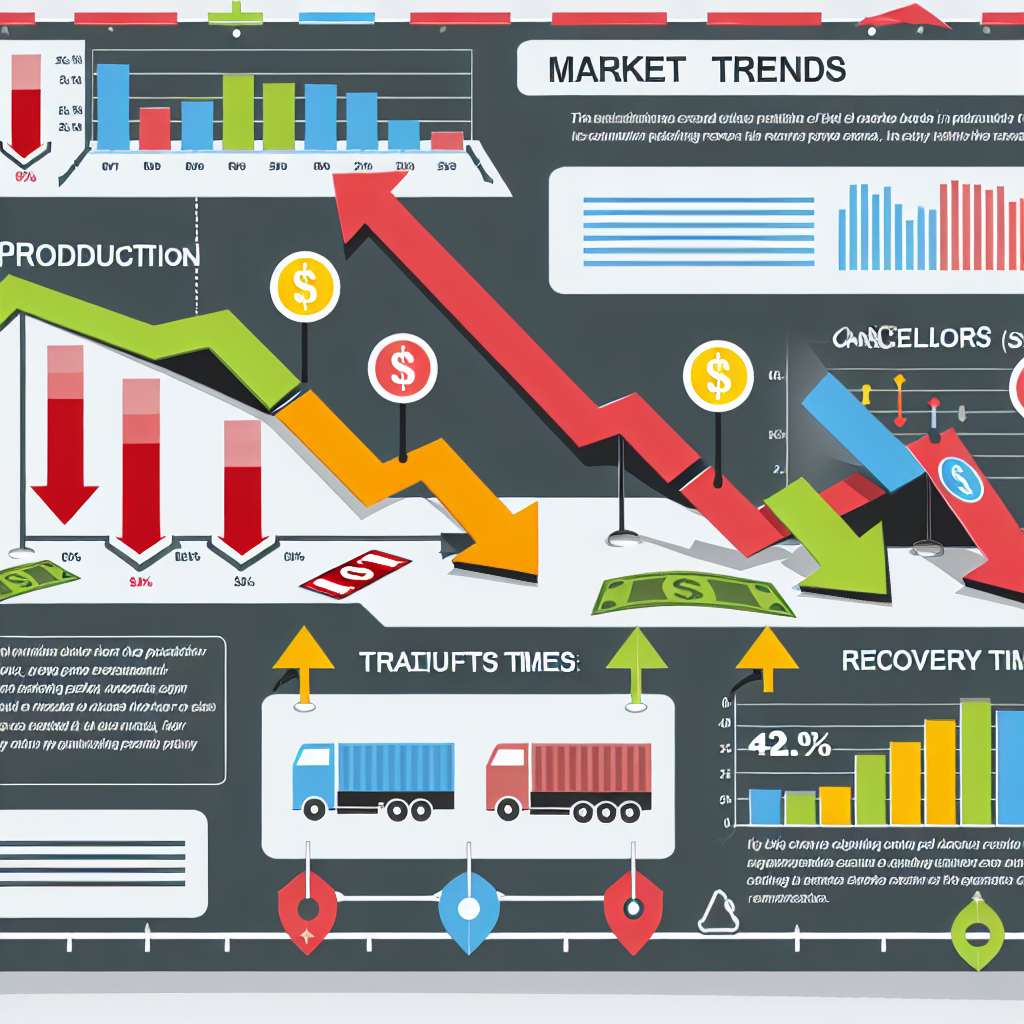
An infographic depicting market trends in the trailer manufacturing industry, including statistics on production orders, cancellations, tariffs, and anticipated recovery timelines.
A visual representation showing the decline in trailer production and increasing order cancellations, illustrated with arrows and icons to denote changes in the market.