
Understanding how to track commercial trucks through GPS maps is crucial for logistics and freight companies, construction procurement teams, and small business owners with delivery fleets. As operational efficiency and delivery transparency become increasingly essential in competitive markets, utilizing the right technology for tracking can significantly enhance service quality while streamlining processes. This article delves into three core methods: employing dedicated fleet management platforms, leveraging mobile apps, and utilizing government official applications to ensure that every professional in the industry can optimize their tracking capabilities.
From Vehicle to Visibility: Harnessing Fleet Management Platforms for Real-Time GPS Tracking of Commercial Trucks
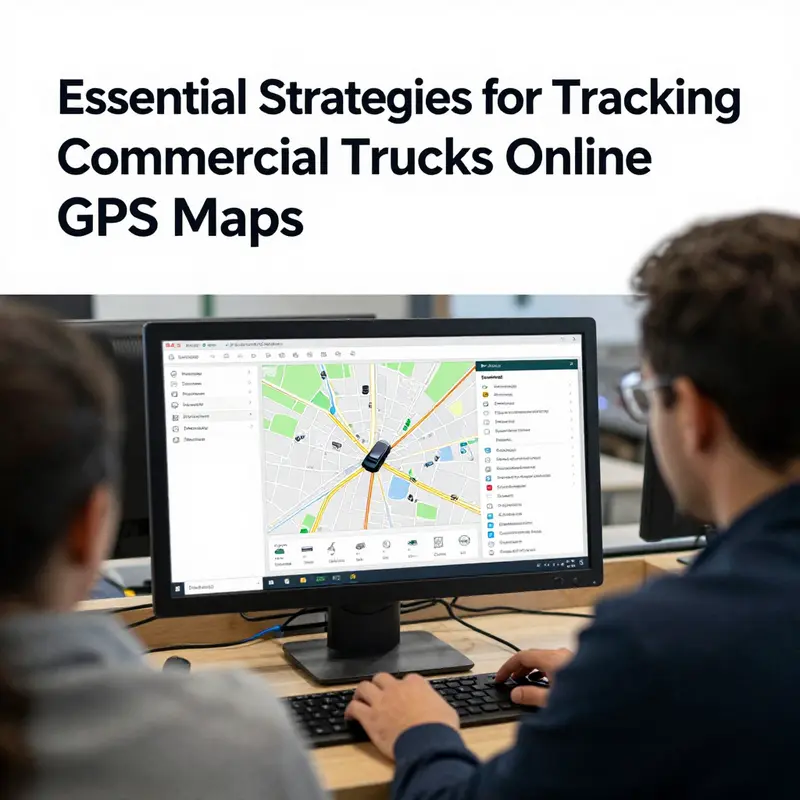
Tracking commercial trucks online through GPS maps has evolved from a basic location trickle to a sophisticated orchestration of real‑time visibility, predictive routing, and data‑driven oversight. At the heart of this evolution lies the fleet management platform, a centralized ecosystem that knits together telematics hardware, cloud processing, and user interfaces into a single console. For managers who juggle multiple vehicles, customers, and delivery windows, these platforms translate raw position coordinates into meaningful signals: where a truck is now, how far it has traveled, whether it is adhering to the planned route, and what might happen next on the road ahead. The result is not merely a map that moves with each tick of the clock; it is a living dashboard that reveals patterns, flags anomalies, and guides decisions that ripple through order schedules and customer communications. In practice, a professional fleet management platform begins with a hardware installation—GPS trackers embedded in each truck, connected to the vehicle’s power system and wired to the engine’s diagnostic interface. The device then communicates via cellular networks, typically the latest generations of mobile networks, to the platform’s cloud environment. A secure tunnel carries location updates, speed, engine data, and sometimes payload conditions to the software that fleet operators rely on every hour of every workday. The cloud platform aggregates streams from dozens or hundreds of vehicles, normalizes the data, and feeds it into a map-based interface that anyone with permission can access from a computer, tablet, or phone. The real power emerges once these streams are fused with rules and capabilities that transform data into actionable insight. Geofences can be drawn around warehouses, corridors, or hazardous zones, and the system will trigger alerts when a vehicle enters or exits those boundaries at unusual times or with unexpected dwell times. In a well-implemented setup, alerts extend beyond simple “out-of-bounds” notices to nuanced signals: a truck arriving late due to traffic congestion, a driver deviating from the planned route for a lawful safety reason, or a vehicle idling longer than an acceptable threshold. These capabilities turn GPS maps from a passive layer of tracking into an active tool for operational control. The dashboards themselves are designed to be navigable and actionable. Real-time location is presented on an interactive map with each vehicle represented by a marker that can be clicked to reveal a quick summary: current speed, last update timestamp, current route, and a short history of recent movements. Beyond the live view lies a rich historical layer—trajectory replay—that lets operators scrub back through minutes, hours, or days to understand how a truck arrived at a destination, how it navigated around delays, and where it encountered slowdowns. This historical perspective is essential for validating delivery timelines, investigating exceptions, and benchmarking performance over time. The architecture that supports these features is deliberately modular. A robust platform will support seamless integration with the truck’s telematics hardware while remaining agnostic about the specific devices used across a fleet. Data normalization ensures that regardless of the device manufacturer, location coordinates, speed readings, and diagnostic codes align within the same schema. The cloud layer offers scalable storage for long‑term history, while the client interfaces—web dashboards and mobile apps—expose a clean, responsive experience. The separation of hardware, data processing, and presentation layers also helps IT teams navigate updates, security patches, and new capabilities without forcing a forklift upgrade across the fleet immediately. One of the most transformative aspects of fleet management platforms is intelligent dispatching and dynamic route optimization. Advanced platforms use algorithms that consider a broad set of constraints to determine the most efficient path from pickup to delivery while balancing fuel consumption, time windows, and driver availability. They can incorporate vehicle parameters such as weight, height, and axle configurations to avoid routes and roads that would create dangerous or costly bottlenecks. For example, a truck with a heavy payload and a tall profile might be steered away from low clearance bridges or restricted toll roads, while a light, agile vehicle might take shorter, more congested corridors if the overall delivery window allows. This level of sophistication reduces the risk of fines, vehicle damage, and delays while enabling more predictable service levels for customers. Behind the scenes, the platform relies on a constant feed of traffic data, weather updates, and road restriction databases. Real-time traffic overlays can re‑time the recommended route as conditions shift, offering a live decision loop for dispatchers and drivers alike. In this sense, GPS maps become not merely a mirror of the road but a proactive advisor for every leg of the journey. A notable dimension of these platforms is the integrated ecosystem around visibility, security, and compliance. Large fleets often demand a centralized monitoring capability that aggregates data across many locations. The best platforms present a unified view of all assets, enabling fleet managers to see which vehicles are allocated to which customers, which drivers are on the clock, and whether service commitments are on track. In addition to location data, many platforms capture driver behavior indicators such as speeding, harsh braking, idle time, and acceleration patterns. These metrics inform coaching, safety programs, and maintenance planning, since aggressive driving habits can correlate with wear and tear, fuel burn, and risk of accidents. The data can also be used to generate compliance reports, vehicle maintenance reminders, and alerts for upcoming inspections or service milestones. The interplay between real-time tracking and documentable history is what makes these platforms so valuable for customer transparency. Shippers and logistics coordinators can request live status updates and verify that a shipment is en route within a defined window. For example, when a dock appointment is scheduled, the platform can provide a precise ETA based on the truck’s current trajectory and the latest traffic forecast. If an unscheduled delay occurs, the system can automatically reallocate resources, propose alternative routes, or notify the customer of a revised delivery time. In practice, this level of visibility often translates into improved service levels, reduced dwell time at customer sites, and more predictable cash flow for both carriers and clients. It also supports risk management. The same data that powers route optimization can reveal patterns leading to recurrent delays, whether due to weekend congestion, seasonal demand spikes, or recurring bottlenecks near a particular facility. By correlating GPS trajectories with external factors like weather or incidents, operators gain a clearer understanding of where to allocate buffers and how to adjust schedules proactively rather than reactively. The governance layer is equally essential. Access control ensures that only authorized personnel can view sensitive fleet data. Audit trails record who accessed what information and when, which is critical for regulatory compliance and for protecting intellectual property around route strategies and cargo details. In a mature deployment, the platform also supports secure data sharing with stakeholders outside the organization, such as customers, insurers, or suppliers, through time‑bound access and controlled visibility. The value proposition of dedicated fleet management platforms, then, goes beyond live tracking. They are integrated ecosystems that merge location intelligence with operational analytics, enabling better decisions at speed. They empower dispatchers to balance loads, drivers, and time constraints with a precision that simply isn’t possible with manual tracking alone. They help fleet operators manage risk by codifying best practices into automated rules, while preserving the flexibility to adapt when real-world conditions change. They improve planning accuracy by revealing how different routing choices translate into measurable outcomes—fuel consumption, hours of service, wait times, and maintenance needs. And they cement trust with customers through reliable, transparent delivery updates anchored on a sturdy data backbone. For fleets small and large, the transition to these platforms is a strategic move that aligns technology with core business goals: on-time delivery, efficient utilization of assets, and a defensible posture in a competitive logistics market. Even as the fleet scales, the same core principle applies—visibility is not a passive byproduct of GPS hardware; it is a deliberate capability that requires thoughtful configuration, disciplined data governance, and a culture that treats data as an operational asset. Within this framework, trainees and managers alike learn to interpret the map not as a static image but as a constantly updating narrative of how goods move through the network. This narrative includes a steady stream of quantitative signals—distance traveled, dwell times, and average speeds—paired with qualitative signs like driver feedback, route changes, and incident logs. Together, they form a holistic view of operations that informs decisions as granular as rerouting a single vehicle mid-shift or as strategic as investing in more capable telematics hardware for a specific lane or region. Even without naming brands, it’s clear that the most effective implementations share certain hallmarks: velocity in data ingestion, reliability in data delivery, and clarity in how information is presented to users who may not be data scientists but must act on insights. They also embrace openness, allowing integration with other enterprise systems such as warehouse management, invoicing, and customer portals so that GPS visibility flows into every corner of the supply chain rather than living in a silo. The practical implication is straightforward: a fleet that leverages a robust management platform can reduce idle time, optimize fuel usage, and improve scheduling accuracy. It gains the ability to verify and defend delivery promises, which elevates customer satisfaction and strengthens business relationships. It also gains a clearer view of risk exposures and maintenance needs, enabling more proactive maintenance planning and better asset utilization. The broader industry context supports this shift. As logistics networks grow more complex, with cross-border movements, multi-modal transfers, and just-in-time requirements, a unified visibility layer becomes not just desirable but essential. Operators who deploy these platforms report improved coordination, faster exception resolution, and a more predictable cadence of operations overall. In light of these benefits, many fleets begin with a straightforward setup: install the basic GPS trackers, connect them to the chosen platform, define a few critical geofences around facilities, and enable a standard set of alerts for delays, unauthorized stops, or maintenance reminders. Over time, they layer in additional features—driver scoring, route optimization that considers vehicle parameters, and a cargo marketplace function that matches loads with capable carriers. The result is not a one-size-fits-all tool but a flexible system that grows with the fleet’s needs. Companies that reach this level often adopt a modular approach, adding modules as required by scale, compliance demands, or evolving customer expectations. For instance, a platform might begin with location tracking and basic route playback, then add advanced analytics, predictive maintenance, and automated dispatching. Later, they may incorporate a cargo marketplace to streamline freight matching, enhance utilization, and reduce empty miles. Regardless of arrival point, the consistency of data across the platform is what makes all these capabilities meaningful. A reliable GPS feed, synchronized with time stamps and vehicle context, provides the backbone for every feature—from simple live maps to complex, automated decision engines. When data quality is high, routes become more predictable, and the confidence with which dispatch decisions are made increases. When data quality declines, the entire system risks producing misleading recommendations, which can erode trust and waste resources. Thus, the ongoing attention to data governance, calibration, and validation is not a cosmetic concern but a driver of sustained performance gains. To ground this discussion in the lived experience of fleet operators, imagine a large logistics operation that serves multiple manufacturing sites and customer hubs. On any given day, dozens of trucks crisscross the network. The fleet management platform aggregates their positions, flags any deviations from scheduled pickup times, and presents a live heatmap of congestion patterns across the network. Dispatchers see which vehicle is best positioned to handle an imminent urgent shipment and reassign tasks accordingly. A heavy load with a tight deadline might trigger a pre-set optimization that reroutes the truck away from known congestion bottlenecks, even if that means a slight detour, as traffic conditions change in real time. A separate layer tracks vehicle health indicators, which can forecast maintenance needs before a failure occurs, reducing the risk of on-road breakdowns and the associated dispatch disruptions. In such a scenario, the platform becomes a hub of actionable intelligence. It ties together the physical movement of vehicles with the operational tempo of the organization. It creates a transparent, traceable history of every mile driven and every decision made along the way. And it does so in a way that scales—from small fleets serving a single region to multinational networks that span continents. For readers who are exploring this topic, a practical note is to look for platforms that offer both depth and usability. Depth means strong real-time capabilities, robust historical data, and a rich set of analytics and alerts. Usability means intuitive maps, clear visualization of each asset, and straightforward workflows for dispatchers, fleet managers, and drivers. It also means ensuring that the system can be integrated with the fleet’s existing hardware and software landscape, avoiding vendor lock-in while preserving data ownership and privacy. A thoughtful deployment balances speed with governance, enabling immediate gains in visibility while laying the groundwork for longer-term optimization. As a final point, the journey toward full online tracking on GPS maps is not a destination but a pathway shaped by continuous learning. Operators refine their geofences, tune alert thresholds, and expand data capture to capture a broader range of operational signals. They test scenarios—such as sudden lane closures, weather disruptions, or regulatory changes—to understand how the platform performs under pressure and how quickly the dispatch process can adapt. In the end, the choice to adopt a dedicated fleet management platform is a strategic assertion: that online visibility on GPS maps is not a luxury but a foundational capability for modern trucking operations. It is the mechanism by which a fleet can harmonize speed, reliability, and safety into a coherent, measurable performance profile. It is the instrument through which customers obtain clarity about delivery timelines, while operators gain the confidence to optimize assets, manage risk, and sustain growth in a competitive market. For those who want a starting point in the daily practice of tracking, a practical step is to begin with a core live-tracking feed, then layer in route playback and geofence alerts as a second phase. This incremental approach minimizes disruption while delivering immediate value. As you broaden the deployment, you will discover that the data you collect has applications beyond tracking alone. It informs maintenance schedules, insurance considerations, driver training programs, and even vendor negotiations by providing an empirical basis for performance and reliability. If you’re scanning for further reading that intersects with this domain, a good starting point is to consider industry‑level analyses that link trucking capacity, fleet utilization, and regulatory shifts to operational outcomes in a broader economic context. You can explore related discussions here: trucking economic trends affecting trailer orders. trucking economic trends affecting trailer orders. This kind of context helps frame the practical value of fleet management platforms as part of a larger logistics strategy rather than as an isolated technology. As you progress, remember that the legitimacy of GPS‑based tracking rests on a robust combination of hardware reliability, software maturity, and disciplined data governance. Ensure that every vehicle in the fleet carries a correctly configured tracker, that data is transmitted securely, and that users have clearly defined roles and permissions. The payoff is a coherent, trustworthy map of operations that turns the movement of goods into a manageable, optimizable, and transparent process. External reference: GPS-based tracking and how it works in a modern telematics ecosystem, including how cloud platforms transform raw coordinates into meaningful insights. https://www.pcauto.com.cn/tech/track/20250624/2789012.html
From Pocket Screens to Fleet Clarity: Mastering Mobile Apps for Real-Time Truck Tracking on GPS Maps
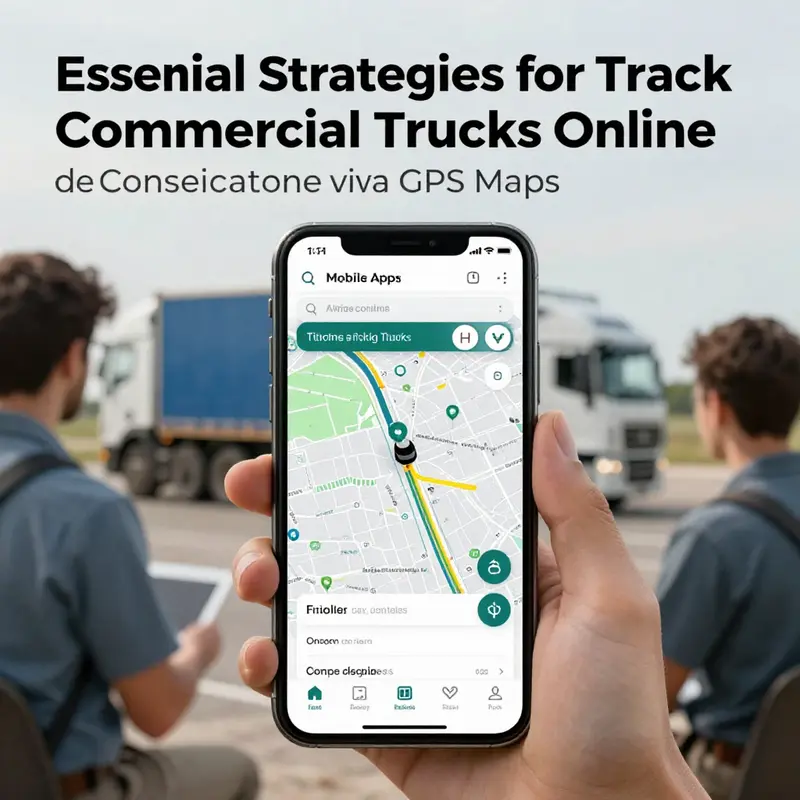
Mobile apps have redefined how a dispatcher, a shipper, or even a single truck owner keeps eyes on the road. The moment you pull out a smartphone and open a truck-tracking app, you touch a map that can translate complex logistics into a single, readable picture: where a vehicle is now, where it has been, and where it is headed next. This convenience is not just about convenience. It is about aligning every moving part of a supply chain—drivers, loads, routes, and timelines—around real-time visibility. Real-time GPS maps do more than show a dot on a screen. They enable proactive decisions, reduce communication frictions, and increase trust with customers who expect precise delivery windows. For fleets of all sizes, the implications of mobile tracking are tangible in improved on-time performance, smarter route planning, and clearer accountability across the chain. The power of this technology lies in its accessibility. A capable app on a pocket device democratizes visibility, turning a handheld instrument into a central command center that previously required dedicated hardware and network infrastructure. Yet, while the promise is straightforward, the practical path to achieving reliable, secure, and cost-effective mobile tracking requires thoughtful consideration of how data flows from the vehicle to the map and how stakeholders interact with it on a day-to-day basis. The approach discussed here centers on the way mobile apps function in a modern fleet ecosystem and how that function translates into actionable, map-based insights.
At the heart of most mobile-tracking solutions is a simple, durable data pipeline. A vehicle carries a GPS-enabled device—either a dedicated on-board unit or a smartphone paired with an in-vehicle dongle—that can receive signals from satellites and convert them into precise coordinates. Those coordinates are then transmitted over cellular networks to a cloud server. The app on a dispatcher’s or manager’s device connects to that cloud service, requests the position of a selected asset, and renders it on an interactive map. This setup makes it possible to view live positions, replay historical routes, and set up alerts for specific events such as geofence breaches or prolonged idling. The same pipeline can support multiple data sources within a single view: if a truck’s on-board unit shares location and the driver’s phone app also reports position, the system can cross-verify or blend data to improve accuracy. The result is a map that is not just a cosmetic interface but a reliable repository of the vehicle’s behavior, trends, and deviations.
One of the most powerful aspects of mobile-tracking apps is the ease with which an operation can scale from one to many assets while preserving clarity. When a manager taps into the map, they see a fleet view that can be filtered by region, route, or priority. Individual vehicles are represented by markers that reflect the current status—moving, stopped, or idling—and can be tapped to reveal a quick history: recent locations, speed, traffic conditions, and time stamps. The historical playback is more than nostalgia; it is a diagnostic tool. If a delivery misses a window, a manager can replay the exact sequence of turns, stops, and delays to identify whether the hitch arose from traffic, a loading issue, or an unplanned detour. In this sense, the map becomes a living audit trail rather than a static snapshot.
A practical advantage of these apps is the ability to automate routine coordination. Geofencing, for example, lets a fleet operator define virtual boundaries around yards, depots, or customer sites. If a vehicle crosses into or out of a geofence, the system can trigger alerts that arrive on a manager’s dashboard or as a push notification on a mobile device. This capability supports exception management without constant manual checking. Similarly, driver-check-in features embedded in many truck-tracking apps allow a driver to share a quick status update, a photo, or a note that confirms arrival, loading, or unloading. While some features are aimed at ensuring compliance with customer or carrier requirements, others serve as real-world quality checks that improve overall reliability.
The design philosophy behind these mobile tools emphasizes accessibility without sacrificing rigor. The maps are built on the same satellite-based positioning that powers global navigation, but they adapt that data to the logistics context. Users can switch between base maps that prioritize road networks, satellite imagery, or traffic overlays to gain the most relevant perspective for the task at hand. In busy corridors, a traffic-aware view can reveal why a truck is lingering at an interchange or why a route is slower than planned. In smaller lanes or industrial parks, a drone’s-eye view may not be available, so the app emphasizes precise lane-level accuracy and time-stamped events to maintain accountability. Because the data travels over mobile networks, the design also accommodates intermittent connectivity. When a vehicle moves out of cellular range, the app caches recent positions and then updates when the signal returns, preserving the continuity of the narrative on the map.
With these capabilities comes a spectrum of practical considerations about data integrity and security. Real-time visibility is only as trustworthy as the data that fuels it. If multiple sources feed a single map, reconciliation logic is essential to avoid conflicts in reported positions. Most mature mobile-tracking apps implement a cloud-side validation layer that can weigh differing reports, apply smoothing when signals are noisy, and present a single, coherent timeline for each asset. Access control is another pillar. A dispatch team, a customer service representative, a third-party broker, or a regulatory auditor may require access to the same map, but not all should have the same level of detail or the same deletion rights. Role-based permissions and audit trails provide the governance structure that keeps data exposure within policy while still delivering the transparency required by customers and regulators. Encrypting data in transit and at rest helps protect sensitive operational details, especially when the same apps are used across devices that may be connected to public networks in unfamiliar environments.
From a operations perspective, the value of mobile-tracking apps extends beyond visibility. Route awareness is a natural outcome of continuous position reporting. Managers can observe where a truck is in real time and compare that with the planned route, identifying divergence points that may indicate an opportunity to optimize the remaining leg of the journey. The ability to visualize detours and delays on the same map that shows customer locations enables more precise ETA communications. This clarity helps reduce phone calls between drivers and dispatchers, which in turn lowers the risk of miscommunication and distracted driving. In addition, historical data supports post-mortem analysis after delays, loading problems, or damage claims. The same data used to respond to a single late delivery builds a longer-term dataset that informs network design, lane profitability, and even fuel-usage strategies by highlighting where efficiency gains are possible.
The decision to rely on mobile-app-based tracking also prompts a practical dialogue about driver experience and buy-in. Drivers are more likely to engage with the system if the app is unobtrusive and reliable. Too many alerts or complicated interfaces can erode adoption and create fatigue, undermining the very visibility the fleet needs. A well-designed app presents a clean, intuitive interface that emphasizes essential tasks: locate the vehicle, view its current status, review a short history, and share an update if needed. When drivers understand that the tool helps protect their schedules and confirms their safety on the road, acceptance rises. The design challenge is to balance real-time awareness with respect for personal privacy. Even though the truck is part of a business process, drivers have reasonable expectations about when, how, and why their location is being tracked. Transparent communication about data use, a clear retention policy, and straightforward opt-in controls can foster trust while preserving the operational benefits of visibility.
In the context of cross-border freight, mobile-tracking apps play a particularly strategic role. They can support compliance with region-specific regulations and customer requirements by providing timestamped location data and route histories that customers or authorities may request for shipments crossing borders. That is where a broader regulatory context comes into view. For fleets operating across borders, compliance matters, and understanding regulatory constraints is essential. See TCAS cross-border regulatory issues for a concise overview of how cross-border considerations can shape data-sharing practices, documentation, and accessibility for authorized parties. This link serves as a reminder that while the map is a tool for efficiency, it also functions as a governance interface that must align with policy and law.
Choosing a mobile-tracking app for a given operation involves weighing several practical factors. Connectivity is primary. A robust app will work well with limited bandwidth, providing smooth map rendering without exhausting data plans. Offline map capabilities can be valuable on routes with poor coverage, ensuring drivers and managers remain aligned even when signals blur. Battery efficiency is another practical concern; map-heavy apps can drain devices quickly, so designers often offer configurable update intervals and energy-saving modes. The cost model matters too. Some solutions are subscription-based, with tiered access to features like advanced route analysis, multi-user accounts, or driver-behavior analytics. Others may offer a freemium entry point with paid upgrades for enterprise features. In any case, the goal is to align the app’s capabilities with the operation’s scale and complexity while avoiding feature bloat that complicates daily use.
Beyond the technology and the user experience, a successful deployment relies on disciplined data governance and clear operational routines. The best mobile-tracking practices include documenting who can view which data, how long data will be retained, and what triggers data sharing with customers or partners. A predictable cadence for reviewing routes, updating geofences, and acknowledging critical events keeps the system useful rather than overwhelming. Regular audits of the data pipeline help catch inaccuracies early, such as mismatched vehicle identifiers or duplicated records. Training remains a core ingredient: drivers should know how to start and stop reporting, how to share a live location when needed, and how to confirm arrivals with check-ins or photos. Dispatchers should learn to interpret map cues, distinguish between normal delays and anomalous behavior, and respond swiftly to alerts without delaying critical decisions. When these elements come together, a mobile-tracking solution becomes a seamless extension of day-to-day operations, not a separate, disruptive layer.
The broader impact on customer service is meaningful. Customers who experience precise ETAs, transparent progress updates, and proactive notification of exceptions consistently report higher satisfaction. This is not merely a matter of convenience; it is a competitive differentiator that can influence contract renewals and freight-rate positioning. The map-based visibility also supports the growing emphasis on supply-chain resilience. In a world where disruptions—from weather to road closures or regulatory checks—can ripple through an operation, having a clear, auditable picture of where each truck is and how it is responding to those events becomes a strategic asset. The mobile app thus acts as a translator and a shield: translating the reality on the road into actionable data and providing a shield of confidence to customers who rely on timely deliveries.
In closing, the move to mobile apps for real-time truck tracking on GPS maps represents a natural evolution in fleet management. It is a shift from manual, fragmented updates to continuous, map-based visibility that informs decisions, improves reliability, and strengthens trust across the entire supply chain. The technology is accessible, the data is actionable, and the operational gains can be substantial when the system is implemented with attention to data integrity, security, and user experience. For fleets that strive to optimize routes, communicate with precision, and demonstrate accountability, mobile-tracking apps offer a practical, scalable path to clearer, faster, and more reliable logistics.
External reference: For a practical demonstration of live-tracking on the web, see Track Trucks Online. https://www.g7.com.cn/tracking
Official Gateways for Truck Tracking: Navigating Government Apps for GPS-Based Fleet Visibility
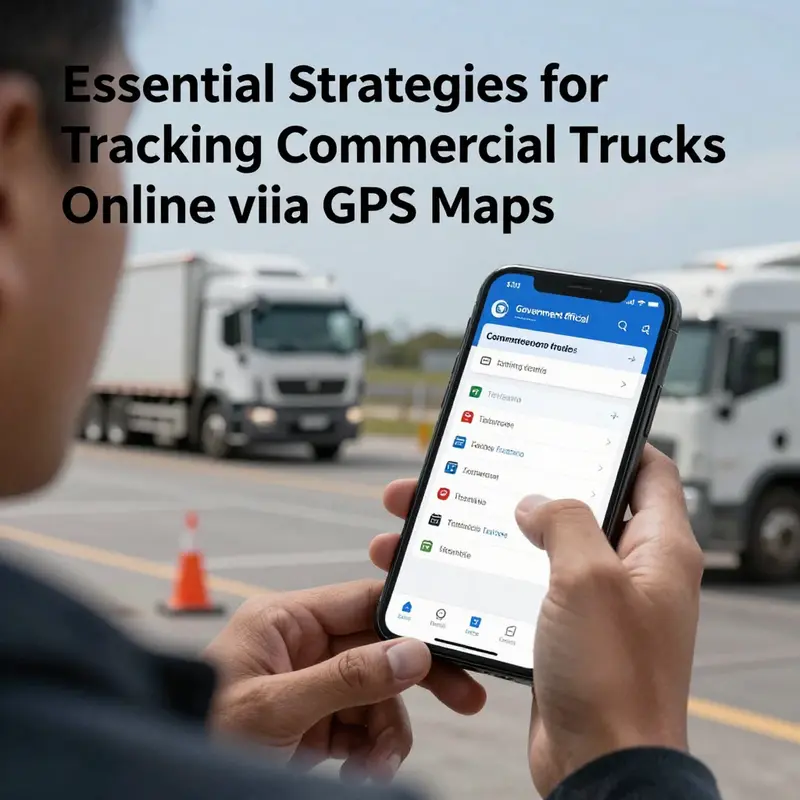
Tracking commercial trucks online on GPS maps does not rely solely on private or commercial-grade platforms. Government-issued or officially sanctioned apps play a distinct, often overlooked, role in fleet visibility. They are designed to serve authorized users—fleet operators, licensed carriers, and public safety or regulatory personnel—by providing access to vehicle data that supports safety, compliance, and efficiency. The purpose of these tools is not to replace private tracking solutions but to complement them with a layer of legitimacy, standardized data, and governance that private systems may not fully replicate. When navigated correctly, government apps can offer accurate vehicle lookups by license plate, limited real-time location data where linked to national or regional tracking networks, and access to historical movement records. This is especially important in contexts where regulatory compliance, safety audits, or transparent freight movements are required by law or policy. Rather than approaching these tools as mere checkpoints, fleet operators can integrate them into a broader strategy for end-to-end visibility across national and cross-border corridors while maintaining respect for privacy and data stewardship.
The mechanics behind government-based tracking begin with clear authorization. Access is typically restricted to users who hold legitimate roles within a fleet, licensing body, or public administration. This means credentials, secure login, and sometimes two-factor authentication are prerequisites. The user experience centers on a controlled interface that prioritizes safety and accountability. Instead of exposing every data point of every vehicle, the system emphasizes verifiable identifiers—such as a license plate or vehicle registration number—and then presents only the information that the authorized user is permitted to see. This design reduces the risk of data exposure while preserving the ability to verify fleet movements for regulatory compliance, incident investigations, or sanctioned inspections. By structuring access in this way, official apps help prevent misuse and create a reliable audit trail that private participants can leverage when they are operating under applicable laws and industry standards.
Once logged in, the user can navigate a landscape of data that is markedly different from consumer-grade location services. The primary interface typically supports a vehicle lookup function that accepts a license plate or a vehicle identification number. In response, the system returns a concise data packet: the vehicle’s latest recorded position, its status, and a link to historical travel data where allowed. The real-time location, where available, is not a blanket feed but a data point refreshed at intervals defined by policy, network coverage, and the particular authorization level of the user. In many cases, real-time visibility is operationally constrained to fleets that are registered and compliant with the national or regional tracking mandates. This approach reflects a practical balance between the demand for timely information and the obligation to safeguard sensitive mobility data from unauthorized access.
Beyond point-and-click lookups, these government platforms often provide a structured view of a vehicle’s journey that can be essential for customers who need assurance about delivery timelines or for operators coordinating complex intermodal movements. Historical trajectories, when accessible, enable trend analysis over defined windows—from days to months—depending on the regulatory framework and the data retention policies in place. The ability to playback a route offers a powerful tool for verifying driver adherence to permitted routes, identifying deviations, or reconstructing events in the wake of a disruption. Although the breadth of accessible history may pale in comparison to commercial fleet management platforms, the historical record remains invaluable for audits, service-level verification, and dispute resolution, all within an environment designed to protect privacy and enforce controlled access rights.
An important facet of the official tracking ecosystem is the integration with national navigation and positioning infrastructure. In countries with robust satellite navigation ecosystems, trucks are often equipped with devices that communicate through a secure, government-recognized network. These dual-mode devices—capable of leveraging multiple satellite systems—are designed to provide resilient positioning data that improves accuracy and coverage. When a fleet authorizes a vehicle for access through the government app, the system can present location data that reflects these high-precision sources, while still adhering to privacy guardrails. The result is a map experience that feels trustworthy and authoritative. For managers who rely on precise timing and routing information for compliance reporting or safety investigations, this alignment between national standards and fleet data provides a dependable backbone for decision-making.
The practical benefits of government-backed tracking extend into safety and compliance. The governance framework behind these apps often incorporates checks for mandatory safety protocols, such as speed monitoring, route restrictions, or geofenced zones for sensitive areas. When a vehicle enters or leaves defined geofences, the system can trigger alerts to authorized users. These alerts are designed to support proactive management—allowing dispatchers to intervene before a potential violation or to verify an unusual stop that could indicate a safety issue. The geofencing capabilities are typically calibrated to reflect official road networks and regulatory boundaries, offering a clear, auditable signal that aligns with enforcement objectives. In this sense, the government app acts as both a guardian and a verifier: it helps ensure operators comply with rules while giving regulators a transparent, accountable view of fleet movements.
To understand how government apps fit within a broader tracking strategy, it helps to consider the complementary role of third-party tracking solutions. Private platforms often deliver more granular real-time positioning, richer historical data, and advanced analytics. They excel at delivering route optimization, driver behavior insights, and seamless integration with enterprise workflows. In some contexts, fleets may use government tools for official checks, audit trails, and regulatory reporting while leaning on private systems for day-to-day operations and customer-facing transparency. This layered approach acknowledges the strengths and limitations of each class of tool. It also respects the regulatory environment where certain data—especially precise, real-time movements—must be accessed only by properly authorized personnel. When used judiciously, the combination yields a compliant, efficient, and transparent tracking regime that supports safety, service reliability, and customer confidence.
A practical realization of this layered approach can be seen in how a fleet operator coordinates cross-border shipments. In such scenarios, the official app provides a vetted channel to verify vehicle identity and basic movements against statutory requirements, while a private platform can supply the operational detail needed to manage handoffs, schedule adherence, and exception handling across border checkpoints. The official tool acts as a trusted verifier within the regulatory framework, whereas the private system supplies the day-to-day orchestration that keeps shipments moving. For operators, this means designing processes that start with compliant checks in the government environment and then layer in operational planning, exception management, and customer communication in the private domain. The end result is a robust, compliant, and transparent tracking workflow that respects both governance requirements and the realities of modern logistics.
In selecting how to leverage these tools, one must consider access rights and the practical realities of implementation. Access typically hinges on credentials tied to a licensed carrier or a government-approved operator. There is also a discipline around data usage: data should be accessed only for legitimate purposes, stored in accordance with retention policies, and shared with parties who have a verifiable need to know. This discipline is not merely bureaucratic; it is essential to prevent data fatigue and ensure that the insights drawn from the system remain accurate and actionable. For fleets that operate across multiple jurisdictions, the governance framework may involve inter-agency coordination to harmonize access rights, which in turn can facilitate smoother cross-border visibility when authorized users require a consolidated view of movements.
With these considerations in mind, readers may find it helpful to explore how official government apps intersect with ongoing conversations about regulatory compliance and industry best practices. For example, there are discussions and case studies addressing cross-border regulatory issues in freight operations, which can offer deeper insight into how authorities balance data access, safety, and commerce. You can find more on this topic at TCAS-related regulatory dialogues, which examine how different jurisdictions coordinate to manage truck movements across borders and how technology supports or constrains these efforts. This contextual backdrop can illuminate how government-sponsored tools fit into a broader ecosystem of policy and technology. TCAS cross-border regulatory issues event
For fleets seeking a practical pathway to implementation, consider the following approach. Start with the authorized access channel and ensure your organization’s credentials are in good standing with the issuing authority. Prepare a clear justification for access that aligns with compliance, safety, and customer transparency objectives. Once access is granted, test lookup workflows using representative vehicles and standard query scenarios. Validate the accuracy of license-plate-based lookups, confirm that historical data, where available, aligns with other records such as dispatch logs or maintenance histories, and verify that alert configurations perform as intended without generating excessive noise. This disciplined testing is essential because government data can carry significant implications for liability, compliance, and operational integrity. When you’re confident in the official data layer, you can design procedures that weave in private-system data to deliver a comprehensive picture of fleet movements without compromising regulatory boundaries.
The learning here is that government apps are not one-size-fits-all end-user tools. They are carefully governed information channels that serve essential oversight and safety functions, while also enabling legitimate business use cases for authorized operators. A realistic tracking strategy recognizes the value of these tools as canonical sources of verified data, then augments them with private platforms that provide richer, more granular, or more timely operational intelligence. The result is a resilient, compliant visibility fabric that can support everything from on-time delivery and driver safety programs to regulatory reporting and public accountability. It is this synthesis—government-backed legitimacy married to private-sector agility—that offers robust, responsible, and scalable GPS-based tracking for modern freight operations.
External resource: https://www.12123.gov.cn
Internal reference for further reading: TCAS cross-border regulatory issues event
Final thoughts
As the logistics and freight industry evolves, tracking commercial trucks online through GPS maps becomes integral for enhancing operational efficiency and ensuring compliance. Utilizing dedicated fleet management platforms, mobile apps, and government official applications can empower businesses to gain real-time insights, optimize routes, and improve delivery transparency. Adopting these technologies is not just a step towards modernizing operations; it’s a strategic move that can enhance customer satisfaction and loyalty in a highly competitive market.