
As industries increasingly focus on optimizing resources and maximizing efficiency, understanding the classification of vehicles, particularly retired fire trucks, has become essential for stakeholders in logistics, construction, and small business delivery fleets. Many may not realize that retirement from active duty does not remove the status of these vehicles as commercial entities under applicable laws. This article systematically elucidates the legal classification of old retired fire trucks, explores their various commercial uses, and analyzes the regulatory framework surrounding their ongoing classification as commercial vehicles. By the end, you will gain invaluable insights into navigating these vehicles’ operational potential, benefits, and obligations.
How Chinese Law Treats Retired Fire Trucks: Why They Aren’t Automatically ‘Commercial Vehicles’
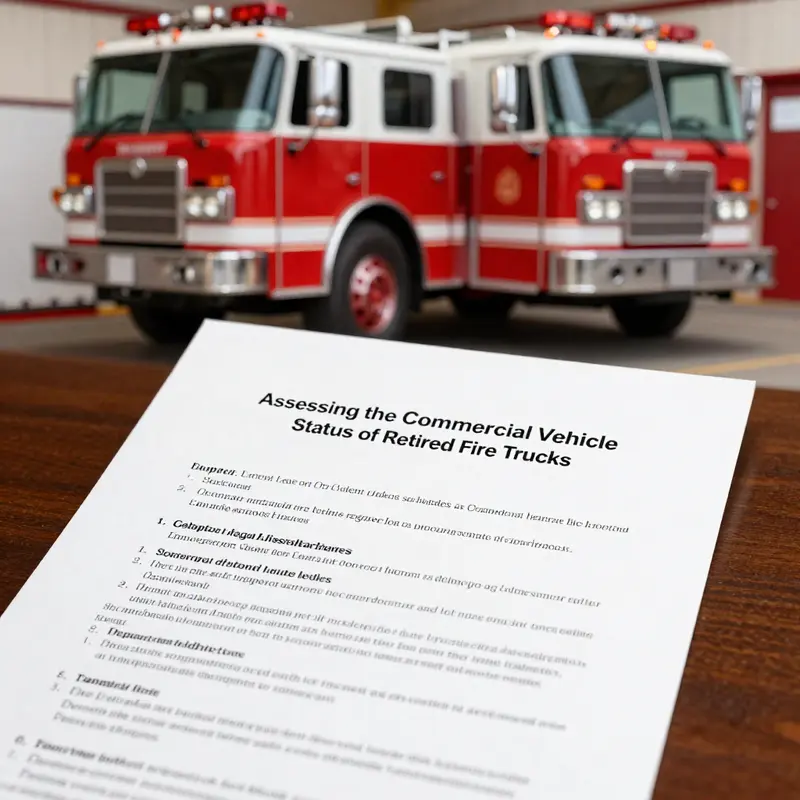
How Chinese Law Treats Retired Fire Trucks: Why They Aren’t Automatically ‘Commercial Vehicles’
The simple question—whether an old retired fire truck counts as a commercial vehicle—does not have a single universal answer. The classification depends on law, purpose, and administrative steps. In China, the default regulatory stance treats retired fire apparatus differently from ordinary transport vehicles. A retired fire truck does not automatically become a commercial vehicle when it leaves service. Instead, its status is shaped by retirement rules, public-safety obligations, and specific registration and disposal processes. This chapter explains the legal logic behind that approach, the criteria used to retire fire trucks, and the practical consequences for reuse, resale, and liability.
Fire trucks are unique assets. They are large, heavy, and designed for emergency response. Their features include specialized pumps, tanks, ladders, hoses, and electronic systems. Those design elements make them highly useful in life-saving roles. They also make them unsuitable for ordinary commercial transport without modification. Chinese regulators treat these differences seriously. Retirement rules emphasize safety and integrity. The law defines retirement criteria based on service life, repair history, and structural soundness. Those criteria are not framed around whether a vehicle will be used to carry passengers or pay freight.
Under the national framework, a fire truck may be considered for retirement when it meets objective conditions. Typical triggers include reaching a service life threshold, undergoing repeated major repairs, incurring repair costs that exceed a percentage of new-vehicle replacement cost, or suffering structural damage from a major accident. For example, a fire truck that has been in service for 13 to 15 years may become eligible for retirement. If it has undergone two or more major overhauls, or if repair expenses surpass a set threshold—commonly cited as 30% of the cost of a new vehicle—authorities will consider removal from active duty. These standards prioritize operational reliability and public safety. They focus on ensuring that vehicles sent into emergency scenes remain dependable.
Retirement is an administrative act. It is supervised by national authorities and governed by dedicated rules. The process typically involves the fire department, the National Fire Rescue Bureau, and agencies responsible for market supervision and vehicle disposal. Once a decision is made, a formal decommissioning process follows. That process may include dismantling key systems, recording the vehicle’s status in official registries, and determining permissible post-retirement uses. Official disposal channels include reuse for training, transfer to museums or educational displays, sale for parts under strict conditions, or scrapping. Each pathway carries specific compliance obligations.
A crucial legal point: the term “commercial vehicle” in Chinese law is focused on vehicles used in profit-making transport or freight services. If a retired fire truck is repurposed for non-commercial display, training, or museum use, it remains outside the commercial-vehicle classification. The nature of the use matters more than the mere fact of retirement. A fire truck parked at a museum or used for fire department drills does not suddenly become a freight carrier. Chinese statutes, such as the Fire Law and related administrative rules, reflect this use-based approach. These laws restrict using firefighting equipment for non-emergency purposes unless approved. Article 48 of the Fire Law, for example, prohibits arbitrary conversion of firefighting equipment to non-emergency uses. That rule protects public safety and prevents the misuse of specialized gear.
The administration enforces these rules with control over transfers and disposals. Transferring a retired fire truck to a private party is not a simple sale like a used sedan transaction. Authorities often require an official decommissioning certificate and may strip or disable specific emergency systems before any transfer. Repainting and removing distinctive markings are common prerequisites. Licensing and registration must reflect the vehicle’s new role. If the vehicle is intended for road use as a commercial transporter, it must meet the safety and emissions standards for that category, undergo inspections, and be re-registered accordingly. Until those steps are completed, the vehicle cannot legally operate as a commercial vehicle.
This regulated pathway reduces the chance a retired fire truck will be misused. It also clarifies liability. If a retired apparatus remains under the fire bureau’s jurisdiction and is used strictly for training or display, the public authority retains responsibility for maintenance, safety checks, and insurance. If a vehicle is transferred and re-registered as a commercial vehicle, the new owner assumes regulatory duties. That transition requires technical modifications to meet commercial standards. For example, emergency lighting and sirens must be removed or deactivated. Fire-specific plumbing and tanks must be inspected and, if needed, altered to meet transport safety standards. Engines, brakes, and chassis must comply with road-safety certifications for their new weight and class.
The rules also recognize environmental, safety, and heritage considerations. Some retired fire trucks have historical value. Local governments and museums may accept them as exhibits. That route preserves heritage and keeps the vehicles out of commercial circulation. In other cases, parts can be salvaged. Engines, pumps, and other components might be useful in maintenance or training. But parts recycling is also regulated. Authorities require proper documentation and disposal of hazardous materials. Fuel systems, foam tanks, and pressure vessels must be emptied and rendered safe. These safeguards prevent environmental harm and protect public safety.
Contrast this with jurisdictions that prioritize functional classification. In some countries, the federal definition of a commercial motor vehicle centers on vehicle size, weight, and whether it carries goods or passengers for compensation. Under that approach, many emergency vehicles are treated as commercial motor vehicles for regulatory purposes, such as driver licensing, maintenance records, and roadworthiness inspections. When retired in those systems, a fire truck’s classification can change only if registration and use change. The United States, for example, uses size and function thresholds under federal statutes to determine commercial status for certain regulatory regimes. A retired fire truck moved into non-emergency use may require re-registration to avoid being treated as a commercial motor vehicle in specific contexts.
In China, the distinction is clearer: retirement does not equal commercialization. The vehicle’s post-retirement purpose governs its legal identity. If it remains in a public-service context—training, display, or controlled transfer—the commercial label does not apply. But if an entity intends to use the vehicle in business, the process requires full conformity with commercial regulations. That means reclassification, inspection, and appropriate registration.
This legal landscape has consequences for many stakeholders. Fire departments must follow rigorous procedures when retiring equipment. They cannot simply auction off a vehicle without ensuring compliance. Private buyers should be cautious. Purchasing a retired fire truck without verifying its decommissioning status and required modifications can create legal and insurance complications. Operators planning to convert a retired truck into a tour vehicle, mobile retail unit, or freight carrier must budget for technical changes and administrative steps. They must also expect inspections and possible denial if the vehicle cannot meet the standards for a different class.
Insurance and liability issues also hinge on classification. A fire truck used in educational displays may stay under public liability cover if it remains government property. Once transferred for commercial use, commercial insurance is required. Coverage terms will depend on the vehicle’s weight, use, and any remaining firefighting systems. Failing to secure proper insurance and registration can expose new owners to fines, forced decommissioning, or criminal liability if the vehicle causes harm while improperly registered.
Enforcement mechanisms are practical. National bureaus publish guidance that ties retirement policies to safety standards and disposal rules. Local authorities execute those policies. They maintain registries and issue disposal approvals. They also publish technical standards that retired vehicles must meet for conversion. These standards often reference GB technical specifications for fire-fighting vehicles. They provide concrete thresholds for structural integrity, braking performance, and emissions. A retired truck that cannot be modified to meet these standards may be limited to non-road uses or partial dismantling.
Understanding the difference between administrative retirement and commercial registration is key. Retirement is a status reached when a vehicle ceases to meet operational criteria. Commercial registration is a legal classification tied to intended use and compliance with transport laws. A retired fire truck may therefore fall into three practical categories: retained by public authorities for non-commercial use; disposed to heritage or educational institutions; or transferred and re-registered for commercial operations after meeting conversion and inspection requirements. Each path carries a different legal label and different obligations.
For anyone involved with a retired fire truck, practical steps matter. First, verify the vehicle’s official retirement certificate. Second, obtain the disposal approval from the relevant fire rescue bureau or market supervision agency. Third, ensure that all firefighting systems are either maintained under public control or properly removed and documented. Fourth, secure any required emissions and safety inspections if you plan commercial re-registration. Fifth, consult insurance providers and confirm coverage terms for the intended use. These steps reduce legal risk and align the vehicle’s status with regulatory expectations.
One more consideration: cross-jurisdictional transfers. Moving a retired fire truck from one country or province to another can trigger additional rules. Transport authorities will check registration, decommissioning documents, and compliance with local safety standards. For businesses that operate across borders, those differences can complicate reuse plans. Resources that discuss regulatory barriers and meeting outcomes can clarify how different jurisdictions interpret vehicle status. For example, insights from regulatory meetings emphasize the need to understand both national disposal rules and local transport classifications. See bridging-border-barriers-meeting-insights for perspectives on how international regulatory differences affect vehicle reuse and transfer.
In sum, the Chinese approach separates retirement from commercialization. Retired fire trucks are not automatically classified as commercial vehicles. Their legal identity depends on post-retirement purpose, administrative approvals, and whether they meet conversion standards for commercial use. This approach protects public safety, preserves heritage options, and ensures environmental safeguards. It also creates a clear compliance pathway for anyone seeking to convert a retired apparatus into a commercial asset. Knowing the rules, following the decommissioning process, and documenting each step are essential. That disciplined route keeps retired fire trucks out of informal commercial circulation and aligns their reuse with public-policy goals.
For authoritative guidance and the official national framework on fire truck retirement, consult the National Guidance on Fire Truck Retirement published by the National Fire Rescue Bureau and associated agencies: https://www.gov.cn/zhengce/content/2026-01/27/content_5965782.htm
When a Fire Truck Becomes a Business Asset: Repurposing, Regulation, and Classification
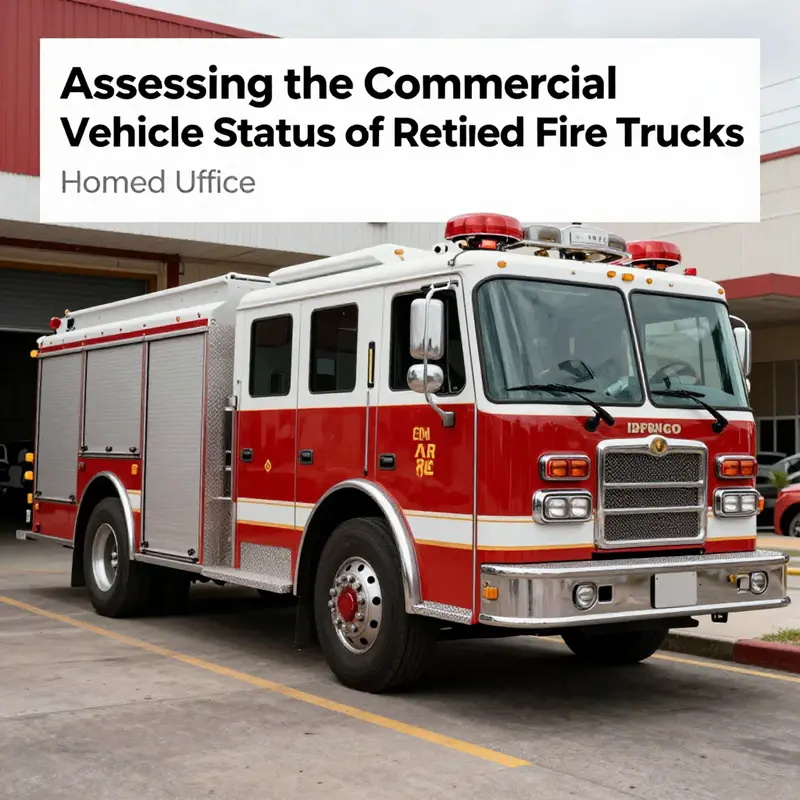
Commercial conversions of retired fire trucks reshape how regulators and owners view these vehicles. What started as specialized apparatus for emergency response often becomes a small business, community resource, or novel living space. That shift in use is more than cosmetic. It alters registration, insurance, safety expectations, and legal standing. This chapter traces how common conversions change a retired fire truck from a specialized public vehicle into a commercial asset, and explains the classification consequences owners must navigate.
A retired fire truck’s appeal for commercial reuse is obvious. Its heavy-duty chassis, reinforced frame, and roomy interior provide a flexible starting point. Those physical attributes make conversion practical and cost effective for applications such as mobile kitchens, pop-up retail shops, mobile command centers for events, or unique short-term rentals and offices. Beyond novelty, many organizations find these vehicles well suited for outreach work like mobile health screenings and food distribution. Repurposing extends useful service life, supports sustainability, and creates economic opportunities. Yet these same physical and design traits are why regulators often treat a retired fire truck as a commercial vehicle.
Regulatory classification hinges on several intersecting factors: the vehicle’s design and construction, its intended use, and objective measures such as gross vehicle weight rating (GVWR). Agencies responsible for motor carrier safety, state departments of motor vehicles, and local health or fire departments each look at slightly different criteria to determine whether a vehicle shifts into a commercial category. The federal definition used by transportation regulators ties classification to thresholds like GVWR and the vehicle’s role in commerce. If a retired fire truck is altered for use in business—selling food, offering services to paying customers, or transporting goods—it generally meets the practical definition of a commercial vehicle.
That practical definition has immediate consequences. Licensing and registration follow use. In many states, a vehicle used principally for business or commercial purposes must be registered on a commercial title and display commercial plates. This change can trigger rules on periodic inspections, commercial emissions testing, and different fee structures. Commercial titles may affect taxes and deductibility options for owners who run businesses from the vehicle. Insurance requirements shift as well: personal auto policies rarely cover commercial exposures such as food truck operations, on-site service liabilities, or passenger transport for compensation. Owners converting a truck should talk to carriers about a commercial auto policy that reflects the vehicle’s new use, payload, and any installed cooking or electrical systems.
Conversions also attract sector-specific regulation. Turning a fire truck into a mobile kitchen brings health department oversight. Food safety standards require licensed preparation areas, temperature control for perishables, sanitation measures, and often specific waste handling like grease trap systems. Conversions for mobile medical or community services may require secure storage for supplies, privacy accommodations, and adherence to patient safety protocols. When appliances powered by propane, diesel, or electrical systems are installed, local building codes and fire safety rules will govern installation standards. Retrofitted structural elements must meet occupant safety expectations, including secure anchoring of heavy equipment, appropriate ventilation, and safe routing of fuel and electrical lines.
Equipment changes made during conversion are also scrutinized. Emergency vehicles often carry sirens, lights, and specialized hardware that must be handled consistently with law. Removing or decommissioning emergency signaling equipment is often a required step when a truck is converted to civilian commercial use. Keeping those devices installed, or using them inappropriately, can lead to violations. In some jurisdictions, residual markings or paint schemes that imply an official status need removal or covering to avoid public confusion. These are not just cosmetic concerns: misrepresentation as an emergency vehicle can carry fines and other penalties.
The vehicle’s weight and VIN history remain central to classification. Older fire trucks are typically built to heavy-duty standards, and many exceed commercial thresholds for GVWR. Those thresholds matter because they determine which safety and licensing rules apply. A vehicle over a defined weight limit used for commerce may be subject to commercial motor vehicle regulations that touch everything from driver qualifications to maintenance records. Depending on how a truck is used across state lines, federal oversight may apply and require compliance with hours-of-service rules, driver qualification files, and inspection regimes. Owners planning interstate operations must check federal requirements as well as state rules.
Driver qualification is another ripple effect. A business operating a heavy converted vehicle must ensure its operators hold any required licenses or endorsements. Even if the original crew were trained firefighters, the new operator may need a different credential if the truck now transports passengers for hire, pulls a heavy trailer, or operates above particular weight classes. That reality affects staffing, training, and payroll considerations for businesses using repurposed fire trucks.
Insurance and liability change with purpose. A fire truck used as a food truck brings risks such as grease fires, burns, and foodborne illness claims. Commercial insurance policies for mobile food operations often bundle auto coverage with general liability, product liability, and coverage for specialized equipment. Liability exposure can be higher if the vehicle hosts events, sells from crowded locations, or carries patrons. For community-service setups operating as charitable outreach, different policies or endorsements may be more appropriate. Regardless, owners should obtain written confirmation from insurers about permitted uses before they invite the public aboard.
Tax and accounting treatment also differs for commercial use. A privately owned converted fire truck used in a business can qualify for ordinary business expense deductions, depreciation, and other tax treatments available to business assets. Conversely, if the vehicle retains a public or government title with restricted use, those tax opportunities may not be available. When a municipality sells a decommissioned vehicle to a private party, the title transfer steps often involve removing government fleet designations and documenting the vehicle’s new status for tax and registration purposes.
Operational limitations and local rules can restrict where and how repurposed trucks operate. Zoning and permitting for vending, parking, and idling are common constraints. Urban centers may limit where food trucks can stop, how long they can remain, and require vendors to obtain permits for public right-of-way use. Events and venues may impose additional insurance and safety standards. For mobile retail, transient merchant permits or temporary use permits may be required. Owners must map the interplay between local ordinances, event operator rules, and broader state regulations.
Safety compliance is continuous. Regular maintenance, inspections, and safety checks are often stricter for commercially registered vehicles. Brake systems, tires, lighting, and emissions controls face heightened scrutiny when a vehicle moves into a commercial role. For conversions involving gas lines, propane, or heavy electrical loads, authorities may require certified inspections and permits. Installations that affect stability, such as heavy kitchen equipment or bunk conversions, should be engineered and inspected to prevent tipping, overloading, or fire risks.
There are also community and nonprofit pathways that shape how retired fire trucks are classified. Many organizations repurpose these vehicles for charitable outreach, disaster preparedness training, and volunteer coordination. Those uses can remain community-focused and even retain some public-service appearance, but they can still be treated as commercial depending on state rules and the vehicle’s weight. Partnerships with nonprofit groups may change insurance structures and introduce grant or donation opportunities, but they rarely exempt owners from vehicle classification standards.
The business advantages of converting a retired fire truck are clear: a distinctive brand presence, robust chassis for long-term use, and the ability to serve neighborhoods with mobile services. However, the administrative reality is less glamorous. Owners must budget for conversion costs, retrofitting to code, recurring inspection fees, and potentially higher insurance premiums. They must also plan for resale complexity; a purpose-built mobile kitchen may be harder to sell than a more generic work truck. The market for converted emergency vehicles is specialized, which can depress resale values or slow turnover.
A practical checklist helps bridge the gap between enthusiasm and compliance. Start by confirming the vehicle’s GVWR and title history. Consult the state DMV about retitling steps and whether the vehicle needs to be registered as commercial. Remove or properly decommission emergency lighting and sirens if required. Engage a licensed contractor for any fuel, gas, or electrical installations and secure the necessary permits. Contact health authorities early if the conversion involves food service. Secure quotes from insurers for commercial vehicle and general liability coverage. Verify driver licensing requirements if the vehicle will be operated in a manner that triggers higher-class licenses. Finally, create a maintenance and inspection schedule aligned with commercial vehicle expectations.
Owners should also consider the broader policy environment. Emissions and environmental regulations increasingly affect medium- and heavy-duty vehicles. Some jurisdictions offer retrofit incentives or low-emission zones that restrict older diesel vehicles. Converters may need to invest in emissions control equipment or limit operation to permitted areas. Staying informed about regulatory trends helps owners avoid unexpectedly costly compliance updates.
Repurposing retired fire trucks can yield meaningful social benefits. Mobile community services reach underserved areas. Creative businesses generate distinctive customer experiences. And reusing heavy vehicles avoids the waste of scrapping well-built machinery. Several organizations highlight the positive impact of using trucks for community projects and charitable work, showing how these assets can support housing, disaster recovery, and outreach programs. For readers interested in the nonprofit angle and corporate social responsibility tied to vehicle repurposing, see community truck repurposing efforts.[https://truckplusllc.com/trucks-for-change-supports-habitat-for-humanity/]
The final practical point is this: classification is not decided by appearance alone. The vehicle’s legal status depends on measurable criteria and declared use. Whether a retired fire truck remains a specialty vehicle, becomes a business asset, or sits in a private collection, its legal footprint will change when it crosses into commerce. Convert with curiosity, but plan with rigor. Check GVWR thresholds, retitle the vehicle appropriately, secure permits, and align insurance to the new risk profile. Consulting state DMV guidance and federal motor-carrier rules will reduce surprises and keep operations lawful and sustainable.
For official guidance and to confirm federal definitions and thresholds relevant to commercial motor vehicle status, consult the U.S. Department of Transportation: https://www.transportation.gov
When Retirement Doesn’t Remove Regulation: How Retired Fire Trucks Remain Commercial Vehicles
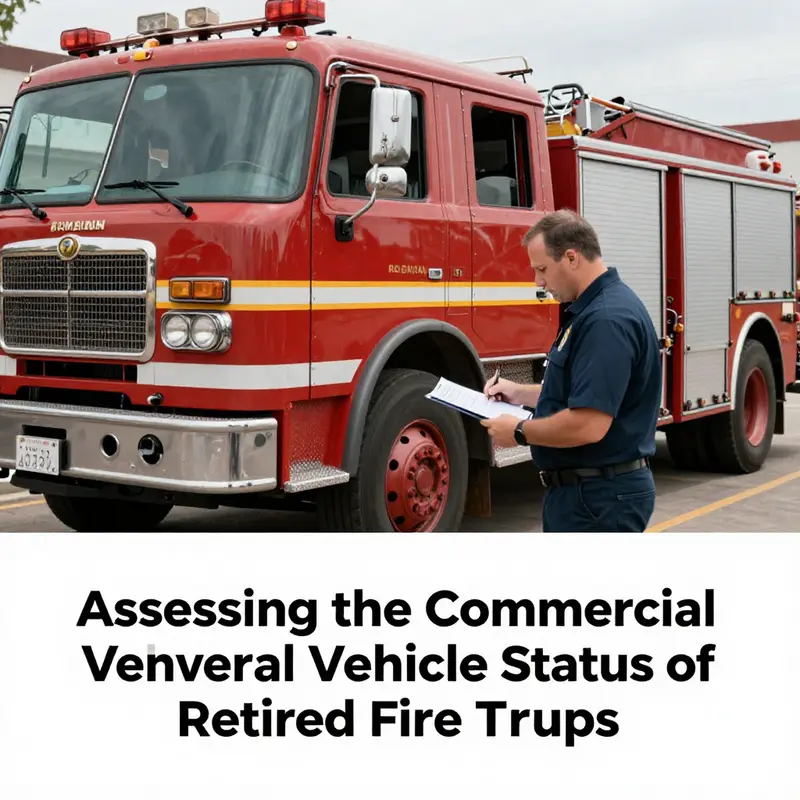
When retirement looks like a new beginning, the law sometimes does not change. An old fire truck that has left active duty does not automatically become a private passenger vehicle. Its design, weight, original purpose, and how it will be used next determine whether it remains a commercial vehicle. Federal and state frameworks focus on safety, emissions, and the vehicle’s function. Those frameworks rarely hinge on whether a vehicle is labeled “retired.” They hinge on how the vehicle was built, what it will carry, and whether it will travel on public roads.
Labeling a retired fire truck a commercial vehicle follows from definitions used by federal agencies. The Federal Motor Carrier Safety Administration and the Department of Transportation classify commercial motor vehicles by gross weight, passenger capacity, and cargo type. A vehicle with a gross vehicle weight rating above threshold limits, or one designed to carry many passengers, or one transporting hazardous materials, often fits the commercial definition. Fire apparatus typically exceed these weight thresholds. They often have chassis, braking systems, and assemblies sized for heavy, mission-critical work. Because of that, a retired fire truck usually retains the statutory traits that make it a commercial motor vehicle.
Beyond classification, safety compliance drives regulatory scrutiny. The National Highway Traffic Safety Administration sets Federal Motor Vehicle Safety Standards that apply when a vehicle operates on public roads. A retired fire truck converted for a new commercial purpose must meet those standards. That includes core systems such as brakes, lighting and reflectors, tires, steering, and occupant protection. Even when an apparatus is repurposed into a mobile business, a static display, or a training rig, any movement on public roads triggers safety requirements. The vehicle must be evaluated to ensure its original build or any subsequent modifications do not conflict with current safety rules.
Conversion work brings its own legal checkpoints. Changing a fire truck into a different commercial vehicle is not merely cosmetic. Substantial conversions can alter its classification and registration. Under federal and state rules, modifications that affect systems tied to safety or certification often require documented inspection and re-certification. Converters must follow applicable manufacturing and alteration standards. For vehicles used for freight or passenger service, the Federal Motor Carrier Safety Regulations—particularly the rules that govern vehicle equipment and maintenance—apply. Those rules set minimum requirements for devices such as brakes and lights, and for the ongoing maintenance protocols expected of commercial fleets.
Where retirees sometimes see relief is in limited exemptions for historic or antique vehicles. Federal and state programs may offer eased requirements for vehicles older than a certain age. Some policies allow vehicles over twenty-five years old to be exempt from certain modern standards. These exemptions usually cover emission testing or modern crashworthiness features. They rarely erase the commercial status when the vehicle continues to serve a commercial purpose. A fire truck used commercially, even as a novelty, often escapes those exemptions. State motor vehicle departments decide whether a particular antique exemption applies. They review the vehicle’s history, current use, and any conversion details before granting leniency.
The title and registration process reflects practical consequences. A retired apparatus often enters the state’s system with a salvage, retired, or decommissioned status. If the vehicle will return to public roads as a commercial unit, it must be re-titled and registered to reflect its new role. That means the owner may need to provide detailed conversion documentation. Illustrations, parts lists, and compliance certificates may all be necessary. States differ on their paperwork demands. Some require an engineering inspection and an itemized record of the changes. Others accept a simpler declaration and a safety inspection. In every case, the work is governed by the same objectives: make sure the vehicle will be safe and clearly classified.
Insurance and liability follow the registration. Commercial insurance underwrites different risks than typical personal auto policies. An insurer will evaluate the vehicle’s GVWR, its intended use, and whether the conversion introduced unusual hazards. A retired fire truck used as a mobile storefront faces different exposure than one used for parades or static display. Insurers may require specific safety upgrades as conditions for coverage. They may also insist that emergency equipment be rendered inoperable if the vehicle no longer functions in an official capacity. That prevents confusion on the road and reduces the risk of impersonating emergency services.
Removal or deactivation of original firefighting equipment matters legally and practically. Lights, sirens, and official markings may be restricted by state law. Many states impose rules that prohibit the public use of active emergency lighting. Owners must either remove such equipment or rewire and lock it to prevent misuse. In addition, public perception and enforcement play roles. A retired fire truck still wearing official insignia may draw enforcement attention. It may also trigger mistaken assumptions by other drivers. Clearing official markings and ensuring visible compliance aids both legal standing and public safety.
Technical inspection is central to any conversion. Fire trucks were built for specific operational stresses. Tanks, pumps, and heavy-water loads influence weight distribution and braking performance. Removing these components changes the vehicle’s dynamics. Installing kitchens, storage racks, or service counters shifts weight and center of gravity. Recalibrating suspension, upgrading brakes, or rechecking tire ratings becomes essential. A thorough mechanical assessment documents whether the altered vehicle meets existing safety and handling standards. Certified inspectors may test braking distances, steering response, and load-bearing capability. Those results form the basis for certification and registration decisions.
Emissions and engine standards can be a separate hurdle. Some classic or older apparatus may not meet modern emissions standards. That can affect where the vehicle can operate alone. For vehicles used in commerce, emissions regulations are often stricter. States with rigorous air quality rules may require retrofit or replacement of powertrain components. In some cases, antique exemptions might mitigate those requirements, but only under limited conditions. The owner must check state environmental codes and, if needed, secure relevant waivers.
Operational scope determines additional federal obligations. If the converted vehicle will cross state lines for commercial activity, it may require a DOT number. Interstate commerce triggers Federal Motor Carrier Safety Administration oversight when the vehicle meets size or weight thresholds. That oversight includes driver qualifications, hours-of-service rules, vehicle maintenance records, and vehicle inspection schedules. A retired fire truck used by a business that transports goods across state lines may thus become part of a regulated commercial fleet. Even for local use, a vehicle that carries passengers for compensation or certain types of cargo may still trigger FMCSA involvement.
Local ordinances and municipal rules often layer on top of federal and state law. Parking rules, street vending licenses, and health department requirements affect many common conversions. A mobile food operation must comply with health codes and possibly obtain mobile vendor permits. A unit used for private tours may face passenger safety and accessibility standards. Local zoning and event permits may also restrict where and when a repurposed apparatus can operate. Owners should contact municipal offices early. That reduces surprises and identifies any special local hurdles.
Practical examples illustrate how the framework works. A nonprofit converts a retired pumper into a static exhibit for educational outreach. The unit does not move on public roads. The organization may avoid some vehicle registration requirements by towing the vehicle on a trailer. However, if the truck will be driven to events, it must meet road safety rules. Another example involves a small business converting a ladder truck into a mobile retail unit. It must address structural changes, weight distribution, insurance classification, and local vending permits. Some businesses succeed by engaging with state DMV officials and documenting every conversion step. Those cases often require an engineering sign-off and a formal re-titling.
Because the rules can be complex, many owners seek professional help. Certified mechanics, specialty conversion shops, and regulatory consultants can guide the process. They help plan changes in a way that aligns with regulations. They prepare required documents for the DMV and coordinate inspections. Their involvement is especially valuable when a vehicle’s past service life includes unusual wear. Fire apparatus can have non-standard wiring, reinforced frames, or domestically modified components. Professionals can ensure the conversion plan addresses these anomalies and meets safety expectations.
Record keeping is not optional. When a retired fire truck is converted, the owner should maintain detailed records. These include maintenance logs, parts invoices, inspection certificates, and photos of the conversion. Records help with future re-sales, insurance claims, and regulatory audits. They also simplify reclassification requests when a vehicle might qualify for specialty registration.
State DMVs remain the ultimate arbiter for registration and class decisions. Even when federal definitions apply, state authorities implement the rules. DMVs review titles, examine conversion paperwork, and execute final registrations. Their decisions may vary across states. For owners considering moving a converted apparatus across jurisdictions, this variance matters. What passes in one state might require additional steps in another. Early contact with both the originating state DMV and the destination jurisdiction reduces friction.
The policy balance reflects public safety and practical use. Regulators aim to prevent unsafe vehicles from operating on highways. They also seek to avoid unnecessary burdens on owners of historic vehicles. That means each retired fire truck often receives individualized scrutiny. The process is pragmatic rather than punitive. Regulators enforce standards that align vehicle capability with safe operation. Owners who show responsibility, thorough documentation, and a willingness to follow inspection protocols usually find a path forward.
Finally, think of the retired fire truck as a machine that carries a legacy and obligations. If it will remain stationary in a park, legal demands differ from those for a vehicle entering commerce. If it will carry goods, people, or cross state lines, federal rules almost always apply. Conversions that keep the vehicle off-public roads or limit its function can reduce regulatory load. But any plan involving commercial activity must acknowledge the safety, registration, and insurance frameworks that govern motor carriers and heavy vehicles.
Where owners have questions, they should seek guidance from the state DMV and from federal resources. Practical events and industry gatherings often discuss regulatory issues. For insights on cross-jurisdictional regulatory trends, see the coverage of a recent regulatory event that brought agencies and industry together: TCAS cross-border regulatory issues event.
For federal safety standards and guidance on vehicle compliance, refer to the National Highway Traffic Safety Administration’s vehicle safety portal: https://www.nhtsa.gov/vehicle-safety
Final thoughts
In conclusion, old retired fire trucks remain classified as commercial vehicles due to their original design and functional intent, even after they have ceased active service. Understanding this classification aids logistics, construction, and small business owners in recognizing potential commercial uses and compliance requirements. By repurposing these vehicles effectively, stakeholders can derive significant operational benefits while remaining compliant with applicable regulations. Engaging with this knowledge not only opens avenues for innovation but ensures that once vital community resources continue to serve valuable purposes in new contexts.