
The classification of vehicles serves as a critical foundation in the logistical and construction sectors, influencing operations, compliance, and economic strategies. Among them, RASOS trucks have carved a niche that warrants close examination. This analysis not only clarifies the legal status of RASOS trucks as commercial vehicles but also delves into their economic implications, roles in logistics, and societal impacts. By understanding these aspects, logistics and freight company owners, construction and mining enterprise procurement teams, and small business owners with delivery fleets can make informed decisions that drive operational efficiency and compliance. Each chapter peels back the layers of RASOS trucks and their significance in modern commerce, ensuring that stakeholders are equipped with essential insights.
From Road to Revenue: Why the RASOS Truck Qualifies as a Commercial Vehicle
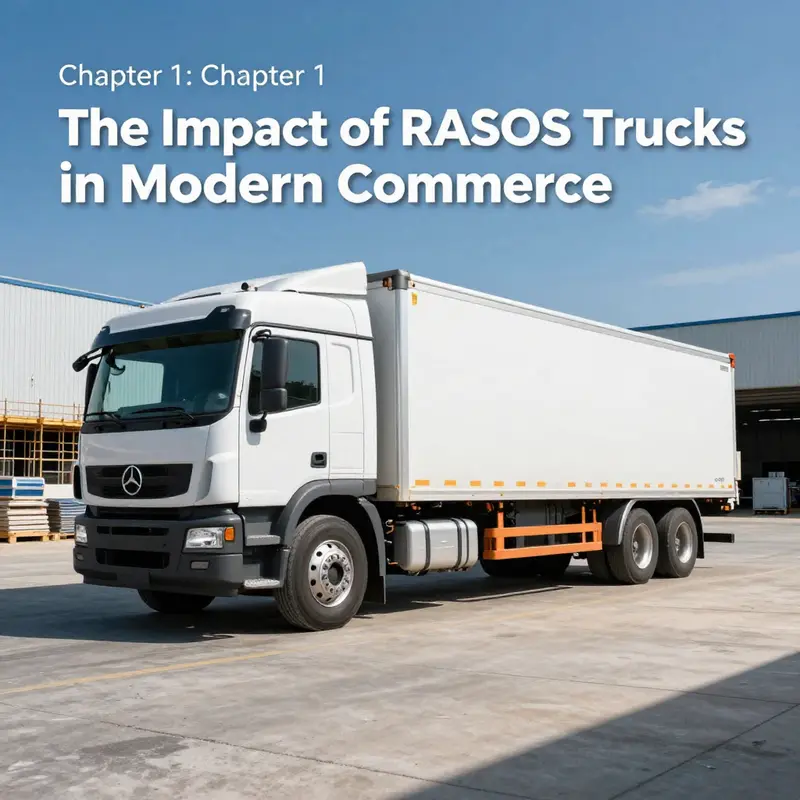
Understanding commercial vehicle status and why the RASOS truck clearly fits the category
A commercial vehicle is defined by purpose more than by paint or trim. If a vehicle moves goods, equipment, or people in the course of earning revenue, it is commercial. This plain principle shapes registration, licensing, insurance, and operational rules across jurisdictions. The RASOS truck, as a purpose-built cargo mover used in logistics, construction, and industrial fleets, therefore sits squarely in the same regulatory and practical realm as other commercial trucks.
Commercial classification carries consequences that touch every aspect of operation. Registration categories and license classes depend on gross vehicle weight ratings and intended use. Insurance premiums are set with commercial exposure in mind. Maintenance schedules, inspection regimes, and safety programs reflect higher duty cycles and heavier loads. Where the RASOS truck is used to haul materials, service sites, or deliver freight, those higher standards and obligations follow it.
Weight and payload thresholds are often the first determinant used by authorities. Many regulatory systems treat vehicles above a certain gross vehicle weight rating (GVWR) as commercial. That threshold triggers special registration, mandatory inspections, and specific signage or placarding for hazardous loads. The RASOS truck platform typically aligns with the weight classifications assigned to medium- and heavy-duty trucks. Those classifications obligate operators to carry commercial registrations and meet enforced safety standards.
Driver qualifications are another defining feature. Operating commercial trucks usually requires a commercial driver license (CDL) or equivalent. Training, periodic testing, and endorsement requirements reflect the risks of moving large vehicles over public roads. Employers who place RASOS trucks on the road must therefore ensure driver certification and ongoing qualification. Beyond initial licensing, companies must manage hours-of-service, fatigue mitigation, and driver health monitoring to comply with safety laws and protect public welfare.
Regulation extends into operational controls. Hours-of-service rules, vehicle inspection records, and maintenance logs are standard obligations for commercial fleets. The RASOS truck’s role in a scheduled logistics operation subjects it to cadence-driven inspections, preventative maintenance plans, and telematics-enabled compliance monitoring. These systems create audit trails that regulators, insurers, and customers may require during routine checks or incident investigations.
Insurance and financial treatment differ for commercial assets. Commercial fleets purchase policies with higher liability limits and tailored coverages for cargo, equipment, and business interruption. Tax codes often permit accelerated depreciation or business expense deductions for vehicles used primarily for revenue generation. When a RASOS truck is deployed by a company, it is treated as a business asset for accounting and tax purposes. The commercial designation impacts the vehicle’s lifecycle cost and how operators budget for replacement and maintenance.
Safety risk is central to why regulators treat commercial trucks differently. Large vehicles present different crash dynamics and blind-spot profiles than passenger cars. When commercial trucks operate with fatigued or undertrained drivers, the consequences multiply—for public safety and for freight integrity. Modern RASOS trucks incorporate advanced safety systems to mitigate those risks. But technology does not remove the obligation to manage drivers, perform maintenance, and comply with statutory safety regimes.
Technology blurs lines but does not change the commercial nature of the vehicle. Telematics, autonomous functions, and fuel-efficiency systems improve safety and reduce operating costs. They also provide richer operational data for compliance. The RASOS truck’s telematics can record driver hours, vehicle speed, and maintenance indicators. Autonomous or assisted-driving features may reduce driver workload, yet the vehicle remains commercial because its primary use is revenue generation. Regulators focus on use and risk profile rather than whether a vehicle has automated controls.
Integration into smart supply chains changes operational expectations. Real-time monitoring enables predictive maintenance and dynamic routing. That reduces downtime and improves fuel efficiency. It also raises new compliance questions about data ownership, record retention, and cross-border data flows. Fleets that deploy advanced RASOS trucks will find that digital transformation creates value, but it also requires governance to align telematics records with regulatory audits and contractual obligations with customers.
Maintenance and lifecycle planning deserve special attention. Commercial trucks operate under heavier duty cycles than private vehicles. Wear patterns differ, and the cost of unplanned downtime can be high. Fleets using RASOS trucks must adopt regimented inspection and maintenance regimes. Predictive maintenance, informed by telematics, can reduce disruptions. At the same time, operators must maintain paper or electronic records that satisfy inspection regimes and insurer requirements.
Operational strategy must reflect the commercial classification. Fleet managers decide between ownership, lease, and service-contract models. Each choice affects tax treatment, downtime exposure, and regulatory responsibility. When a RASOS truck is leased to a contractor, contracts must define who is responsible for registration, inspections, insurance, and regulatory compliance. The commercial label creates duties that cannot be shifted informally.
Cross-border and regulatory complexity increases with scale. Commercial vehicles engaged in interstate or international freight movements must meet a web of rules. Permits, emissions standards, and cabotage restrictions vary by jurisdiction. Fleets that plan to deploy RASOS trucks across borders should anticipate differences in weight limits, licensing, and reporting. For pragmatic insights into chassis and platform trends that affect cross-border operability, consider developments in smart chassis technologies such as those discussed in a recent overview of smart chassis advancements.
Finally, stakeholder expectations matter. Shippers, customers, and regulators expect commercial trucks to meet predictable standards. That includes punctual deliveries, secure cargo handling, and demonstrated safety performance. The RASOS truck’s advanced sensors and connectivity can help operators meet those expectations. But technology must be paired with strong governance. Training, policies, and audit-ready records convert capabilities into compliance.
The RASOS truck is therefore a commercial vehicle by design and by use. Its place in the business ecosystem triggers specific registration, licensing, insurance, and operational obligations. Advanced features make compliance easier and operations more efficient, but they do not alter the vehicle’s commercial character. For a practical, industry-level perspective on standards, technical specifications, and advocacy related to commercial trucking, refer to the American Trucking Associations resource: https://www.trucking.org
Legal Classifications and the RASOS Question: When a Truck Counts as Commercial
Legal Classifications and the RASOS Question: When a Truck Counts as Commercial
At the heart of the RASOS question lies a simple principle: classification depends on definition and use. The phrase “RASOS truck” does not appear in regulatory texts or standardized industry glossaries. That absence matters, but it does not end the inquiry. Regulators do not classify vehicles by marketing names alone. They apply measurable criteria: design, weight, passenger capacity, and the vehicle’s business use. When a vehicle meets those criteria, it is treated as a commercial vehicle, whatever its label.
A clear starting point is the legal definition of a commercial vehicle. Across major jurisdictions, the concept centers on two linked ideas. First, a commercial vehicle is designed or used to move goods or people for business. Second, a vehicle may be deemed commercial because of its physical characteristics. Weight thresholds and passenger capacities are the most common triggers. For example, many regulations designate any vehicle with a gross vehicle weight rating above a specified tonnage as commercial. Likewise, vehicles built to carry a larger number of passengers fall into that regulatory bucket.
Because “RASOS” is not a recognized regulatory term, practical classification requires translation into those measurable attributes. The first practical question is weight. The gross vehicle weight rating, or GVWR, appears on the manufacturer’s label. It sets the maximum loaded weight the vehicle can legally carry. When the GVWR exceeds the regulatory threshold, the vehicle typically becomes a commercial motor vehicle. The second question is capacity. If the vehicle is designed to carry more passengers than a jurisdiction’s limit for private use, it is treated as commercial when used to transport fare-paying passengers or operate in public transit contexts.
The third, and perhaps most decisive, factor is use. A truck used by a business to move goods, haul equipment, or perform deliveries functions as a commercial vehicle in everyday law enforcement and licensing practice. This rule is especially important for vehicles that sit on the cusp of weight or capacity thresholds. A light-duty truck with modest GVWR may still be regulated as commercial if it carries billable freight regularly, displays business signage, or is registered similarly. Conversely, a heavy vehicle used exclusively for personal recreation still carries equipment and licensing obligations tied to its weight and construction.
Classifying a vehicle has practical consequences. Commercial registration often requires different plates, higher insurance coverage, and separate inspection regimes. Driver qualification rules can change too. When a vehicle’s weight, capacity, or role crosses regulated thresholds, the operator may need a commercial driver license, medical certification, and compliance with safety rules. These rules cover maintenance standards, hours of service, and cargo securement. Businesses that ignore classification can face fines, insurance gaps, and liability exposure after accidents.
For a vehicle labeled “RASOS,” the correct approach is procedural. First, locate the GVWR on the vehicle’s certification plate. Second, inspect the seating capacity and construction. Third, review registration and insurance documents to see how the owner declared the vehicle. Fourth, determine how the vehicle is used day-to-day. If it hauls freight, moves equipment, transports paying passengers, or otherwise serves a business function, regulators and insurers will treat it like a commercial vehicle. If it meets weight or capacity thresholds, that treatment will be mandatory.
Documentation matters in disputes. If an inspector questions classification, the owner should present the manufacturer’s build sheet, the GVWR plate, and the registration papers. Insurance policies are a vital piece of evidence. They show whether the owner reported commercial use. Misreporting or omission can void coverage. Clear documentation also helps when operating across borders, where classification rules may differ.
Cross-border movement deserves special attention. Definitions align in many markets, but enforcement and administrative details can vary. A vehicle that qualifies as commercial in one country may trigger different requirements in another. That reality is why industry groups and regulators hold discussions and workshops on harmonizing cross-border rules. For practitioners, staying current on regional interpretations reduces surprises and administrative friction. For a deeper look at how cross-border regulatory conversations unfold, see the organization’s coverage of a recent meeting on those issues. TCAS cross-border regulatory issues event
When a term lacks formal recognition, don’t assume the vehicle is unregulated. Regulators latch onto technical specifications and use patterns. In many cases, a vehicle carrying the same load as a conventional commercial truck will attract the same rules. Conversely, a vehicle with commercial styling but personal use can remain subject to lighter oversight, though inspections and insurance checks may expose its actual usage.
Practical steps for owners and fleet managers help avoid misclassification risks. Confirm the GVWR and confirm seating capacity against local thresholds. Register the vehicle accurately, declaring whether it will see business use. Select insurance coverage that matches anticipated operations. If drivers may cross regulatory thresholds, ensure they hold appropriate licenses. Finally, maintain maintenance and cargo securement records that satisfy inspectors.
If the label “RASOS” is internal or an informal name, consider aligning it with recognized categories when registering and insuring. Many manufacturers and upfitters use internal codes for configurations. Those codes usually map to a formal model or to a vehicle type. Matching the internal code to regulatory definitions simplifies compliance and reduces administrative friction.
For those seeking authoritative classification criteria, review the relevant regulatory guidance. In the United States, federal rulebooks specify GVWR thresholds, passenger counts, and the uses that define a commercial motor vehicle. They also explain when state-level rules add additional requirements. Consulting that guidance helps owners translate a commercial-sounding label into binding obligations. For official U.S. regulatory language on commercial vehicle rules, see the federal agency guidance on commercial-vehicle regulations.
Ultimately, a RASOS truck becomes a commercial vehicle if it meets standard legal criteria. The absence of the RASOS label in regulations forces a functional assessment. Regulators will rely on GVWR, passenger capacity, and documented use to make the determination. Owners who document specifications and align registration and insurance with actual use avoid most enforcement headaches. Practical clarity protects operations and limits exposure when inspectors, carriers, or cross-border authorities examine the vehicle.
External reference: https://www.fmcsa.dot.gov/regulations/commercial-vehicle-regulations
Chapter 3: Economic Ripple Effects When RASOS Trucks Become Commercial Vehicles
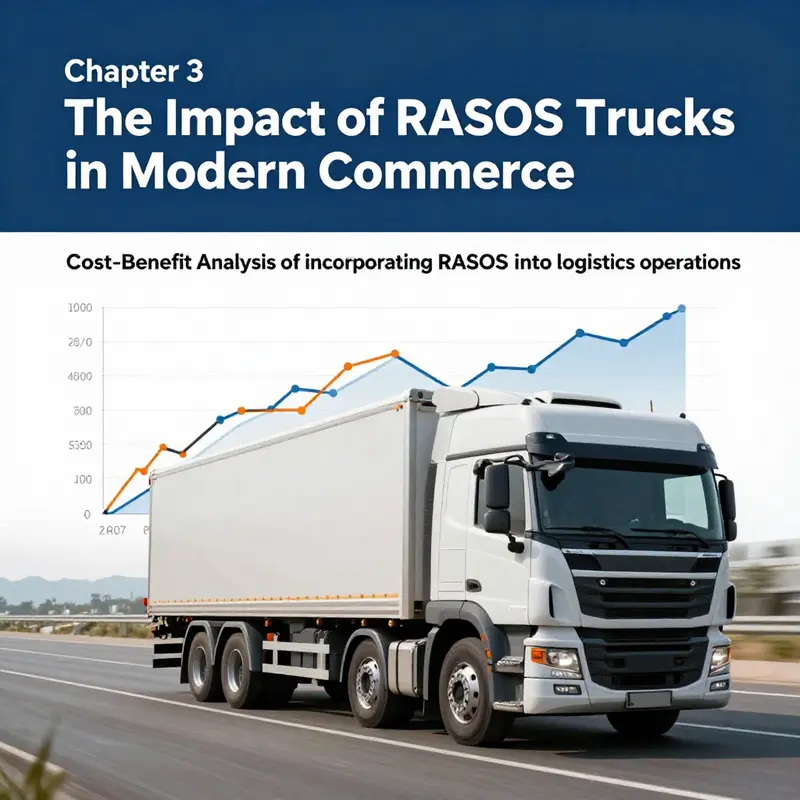
RASOS trucks are not a marginal innovation; they alter commercial economics across fleets, supply chains, and local communities. Treating these autonomous haul vehicles as commercial assets changes how companies value trucks, plan networks, and allocate capital. That shift is not only about replacing a driver with software. It redefines utilization, cost structure, and the flows of data that create new revenue opportunities.
At the core of the economic case is utilization. Traditional long-haul trucks sit idle many hours daily due to driver rest rules, scheduling, and loading delays. RASOS trucks extend productive hours by operating on fixed corridors with minimal human intervention. Fleets can schedule continuous runs between major hubs and avoid downtime that once required driver swaps. The result is a marked increase in throughput per vehicle. When utilization rises, the required fleet size to serve a given volume falls. That lowers capital tied up in rolling stock and reduces depreciation and maintenance overhead per ton-mile.
Labor cost dynamics amplify this effect. Driver wages, benefits, and turnover are large and volatile line items. Autonomous trucks shift that equation toward remote operators, technicians, and software teams. While those roles command competitive compensation, the total labor cost per mile can fall. This is especially true on standardized routes where automation delivers predictable efficiencies. The savings free balance sheet capacity for investments in service expansion or in technologies that further reduce operating costs.
Fuel and energy management are another economic lever. Autonomous systems maintain steadier speeds, avoid abrupt braking, and optimize routes using real-time inputs. Over time, these behaviors compound into meaningful fuel reductions. When fleets combine such practices with platooning, they gain aerodynamic advantages that trim consumption further. Reduced fuel use directly improves margins and makes freight pricing less exposed to energy price swings. For routes where electric or hybrid powertrains are viable, autonomous control also improves battery management and charging strategies, which extends vehicle range and lowers lifecycle energy cost.
Upfront capital remains a real constraint. The sensors, compute hardware, redundant systems, and cybersecurity measures necessary for safe operations add significant cost to each vehicle. Smaller operators often cannot absorb these investments alone. New financing approaches, such as leasing models or subscription-based access to autonomous capabilities, can spread costs across more stakeholders. Similarly, public incentives and shared infrastructure can lower barriers for mid-size companies. Without these mechanisms, adoption will concentrate in firms with deep capital reserves, potentially reshaping market concentration in freight sectors.
Regulatory fragmentation complicates financial planning. Different jurisdictions vary on permitted autonomy levels and on liability frameworks. That uncertainty raises the cost of deployment and increases the time to market for new services. When rules differ across borders or states, companies must design adaptable systems and maintain compliance teams that increase overhead. Long-term, harmonized regulations would reduce compliance costs and accelerate scale economies. Until then, regulatory risk remains a line item in any ROI model for autonomous fleets.
The transition also redistributes economic value across adjacent industries. Predictive maintenance platforms, cloud data services, and logistics analytics become monetizable assets. RASOS trucks produce vast telemetry streams that reveal operational patterns and cargo conditions. Companies can package this intelligence as services, charging shippers for higher visibility or dynamic routing that reduces dwell time. These new revenue streams shift some of the value captured from labor savings into digital subscriptions and platform fees.
Social impacts must factor into any comprehensive economic assessment. Professional drivers—numbering in the millions in some regions—face displacement. While new roles in oversight and technical support will emerge, the skill profiles change. Local economies centered on driving and related services will feel the impact unevenly. A policy approach that supports retraining and targeted regional investments will reduce friction. Without supportive measures, the social cost can negate some of the net economic gains of automation.
Market structure is likely to change too. Service models such as truck-as-a-service allow customers to access autonomous hauling without owning fleets. That converts capital expenses into operating expenses for many shippers. It also enables seasonal scaling and reduces the need for long-term equipment financing. These models can democratize access to autonomy for shippers of varying sizes, provided providers offer transparent pricing and standardized service levels.
Operational partners also matter. Terminal operators, maintenance providers, and regional carriers must adapt to different throughput patterns. For instance, higher asset utilization increases maintenance frequency in absolute terms, even as per-mile costs fall. Maintenance ecosystems must build capacity for rapid diagnostics and modular repairs. Logistics nodes will see different peak demands, requiring investment in automated loading systems and yard management technologies.
Capacity balance in the trailer and equipment market will react to these shifts. If autonomy reduces the number of trucks needed, demand for trailers and chassis could fall or change composition. Conversely, increased utilization could push certain types of trailers into shorter replacement cycles. Observing these trends helps manufacturers and suppliers adjust production and inventory planning. For specific industry analyses on how order patterns affect margins and equipment allocations, see research on trucking economic trends affecting trailer orders: trucking economic trends affecting trailer orders.
Finally, the pace of adoption hinges on collaborative infrastructure investment. Roadside connectivity, standardized mapping, and shared safety protocols reduce per-vehicle costs. Public-private coordination unlocks network effects. When multiple operators use interoperable systems, platooning, route optimization, and shared data become more effective. Those gains compound, improving returns for early and later adopters alike.
Treating RASOS trucks as commercial vehicles means assessing them as complex assets, not merely as machines. Their value derives from utilization, energy efficiency, data monetization, and network effects. Upfront capital and regulatory uncertainty slow adoption, while digital revenue streams and new service models expand opportunity. Ensuring the benefits reach communities and workers requires intentional policy and investment. The net economic picture will be determined by how industry players, regulators, and local economies align incentives and share the transition costs.
For further reading on broader industry projections and strategic implications, consult comprehensive analyses available from leading transportation research sources: https://www.mckinsey.com/industries/operations/our-insights/the-future-of-trucking-autonomous-vehicles-and-the-new-transportation-economy
How RASOS Trucks Drive Modern Logistics: Commercial Vehicles at the Core of Freight Networks
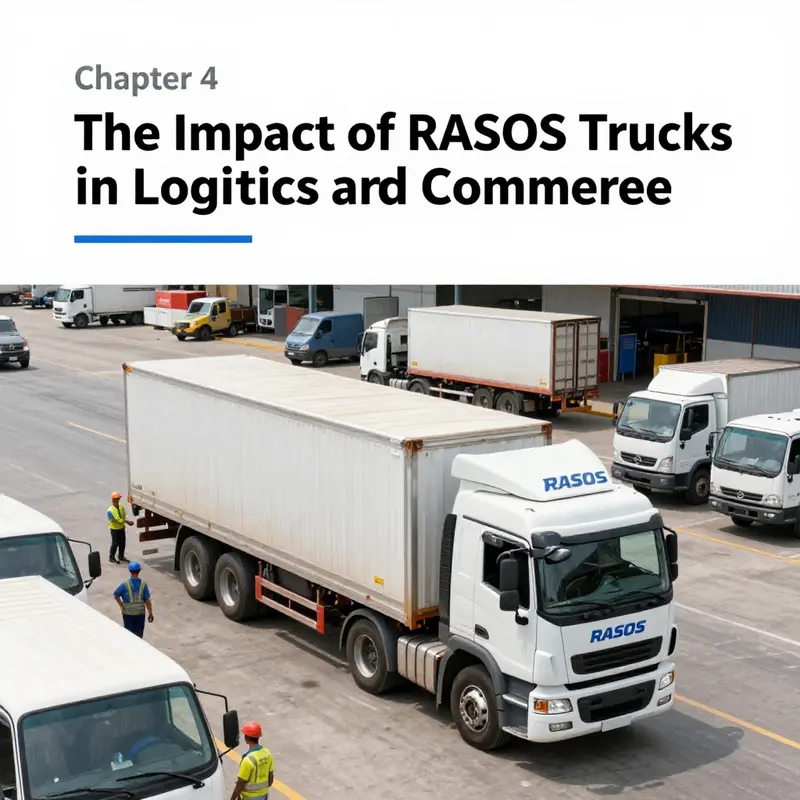
How RASOS Trucks Drive Modern Logistics: Commercial Vehicles at the Core of Freight Networks
RASOS trucks function as fundamental tools in freight movement, and they are unmistakably commercial vehicles when used for business purposes. Their design, capabilities, and deployment patterns align with established definitions of commercial vehicles. These trucks are optimized for hauling goods, moving equipment, and supporting industrial operations. Because they operate within commercial workflows, their classification carries practical consequences for regulation, insurance, and operational planning.
Viewed through the lens of logistics, RASOS trucks do more than transport cargo. They connect production points to distribution centers. They link warehouses to retailer networks. They serve as the flexible capacity that keeps just-in-time systems moving. Their value lies in both physical capability and systems-level integration. Operators choose RASOS trucks for their payload configurations, chassis options, and ease of reconfiguration. Those capabilities let carriers adapt to seasonal demand, handle specialized loads, and consolidate shipments to reduce empty miles.
Operational efficiency is a dominant theme where RASOS trucks deliver measurable benefits. Telematics systems provide real-time location and performance data. Route optimization software reduces travel time and fuel use. Predictive maintenance based on sensor data extends vehicle life and minimizes downtime. When these technologies work together, RASOS fleets run with higher utilization and fewer unexpected delays. Fleet planners can monitor driver hours, track cargo temperature, and adjust assignments dynamically. Those controls remove friction from the supply chain and improve on-time performance.
Adaptability explains why RASOS trucks find roles across sectors. In agriculture, they transport produce from fields to processing facilities. In manufacturing, they shuttle components between plants. In retail, they support fulfillment centers and last-mile delivery networks. Their modular designs allow for refrigerated units, flatbeds, and secure enclosed bodies. This flexibility supports shifting market needs without large capital outlays for new vehicle classes. Carriers can reconfigure a RASOS vehicle to meet short-term contract requirements. That makes them cost-effective for mixed freight lanes and contract logistics.
Sustainability is no longer optional for modern fleets, and RASOS trucks are part of that transition. Many models emphasize fuel efficiency and emissions reduction. Engine options now include cleaner combustion technologies and alternative fuels. Some frames accommodate battery-electric or compressed natural gas powertrains. When carriers deploy low-emission RASOS trucks across regional routes, they reduce greenhouse gas output per ton-mile. That contributes to corporate sustainability goals and helps meet tightening regulatory requirements. Companies also gain reputational benefits by lowering their carbon footprints.
From a regulatory standpoint, the commercial classification of RASOS trucks triggers specific obligations. These include licensing, weight restrictions, and safety inspections. Insurance policies for commercial vehicles differ from personal lines, addressing cargo liability and third-party risk. Compliance with hours-of-service rules and vehicle maintenance records becomes mandatory for larger operations. Understanding these obligations is crucial for operators who scale from a few trucks to a full fleet. Proper classification avoids penalties and ensures continuous operation across jurisdictions.
Cost considerations shape how carriers use RASOS trucks. Total cost of ownership includes acquisition, fuel, maintenance, insurance, and depreciation. Higher initial investment in telematics and cleaner engines often yields lower lifecycle costs. Route planning and load optimization cut unnecessary miles. Better utilization means each truck generates more revenue per operating hour. For fleet managers, balancing capital expense against operational savings is a daily decision. Strategies such as cross-docking, backhaul pairing, and load consolidation maximize the economic value of each RASOS unit.
Network effects magnify the influence of RASOS fleets. When carriers coordinate routes and share capacity information, they reduce empty trips. Cross-lease agreements between regional carriers smooth seasonal spikes. Integration with freight marketplaces and load boards helps match capacity with demand. That reduces volatility in spot markets and minimizes excess fleet idling. For broader market context on capacity trends and the effects on margins, see the analysis on excess capacity in the trucking market insights.
Safety and security are essential elements in operational design for RASOS trucks. Advanced driver-assistance systems lower collision risk on highways. Electronic logging and automated reporting improve regulatory transparency. Cargo security measures—seal verification, tamper-evident closures, and GPS geofencing—reduce theft and diversion risk. Together, these measures protect the physical asset and the supply chain’s integrity. For shippers, knowing a RASOS truck meets those standards often influences carrier selection.
The human element remains central. Drivers, dispatchers, and maintenance crews make technology effective. Training in telematics platforms and in-vehicle systems increases on-road compliance. Proactive maintenance programs require skilled technicians. Retaining qualified drivers depends on predictable scheduling and fair compensation. In turn, stable teams produce consistent delivery performance, which benefits shippers and end customers alike.
Looking ahead, RASOS trucks will continue to evolve with logistics demands. Electrification of regional routes will expand, and powertrain diversity will increase. Fleet management systems will use richer datasets to predict demand and plan capacity. As regulations tighten, fleets that invest early in clean technologies will gain first-mover advantages. Meanwhile, the commercial vehicle classification will remain a practical reality, shaping how fleets are insured, regulated, and financed.
Bringing these threads together shows why RASOS trucks are integral to contemporary logistics. Their commercial status matters because it connects vehicle design to legal frameworks, operational choices, and financial planning. Fleets that master the interaction between technology, sustainability, and compliance gain clearer control over cost, capacity, and risk. That control is necessary in a market where timing and reliability define competitiveness.
For an industry resource that outlines fleet integration capabilities and digital tools, consult the platform information at https://www.rxo.com
RASOS Trucks as Commercial Vehicles: Societal Ripples, Risks, and Routes to Acceptance
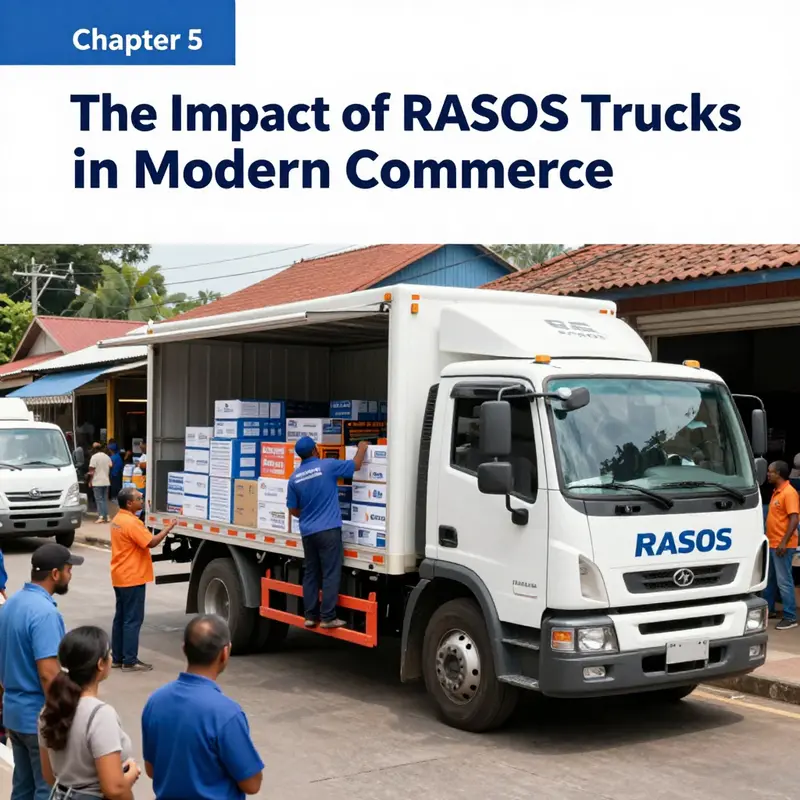
RASOS trucks entering commercial fleets represent more than a technological upgrade. They alter how people move, how goods flow, how cities breathe, and how work is organized. Treated as commercial vehicles, these machines carry the responsibilities and regulations of any business-use vehicle. They also introduce new social dynamics because they shift risk, labor, and environmental calculations in real time.
Viewed through a safety lens, RASOS systems promise measurable gains. Human error causes a large share of severe highway incidents involving heavy vehicles. Automated sensing and control can reduce lane-departure events, late braking, and driver fatigue-related mistakes. When combined with electrification and optimized operation, reductions in particulate and nitrogen dioxide emissions are commonly observed. Studies of zero-emission freight show notable drops in black carbon and NO2, and lower greenhouse gas outputs. RASOS trucks can enhance those improvements by smoothing acceleration patterns and trimming idling time. Put simply, the same automation that prevents a jackknife or a missed merge can also make air cleaner around distribution hubs and along major corridors. For readers who want a deeper dive into the zero-emission literature, see this overview of zero-emissions vehicles from a technical publisher: https://www.sciencedirect.com/topics/engineering/zero-emission-vehicles
Economic and labor effects move in parallel. The commercial vehicle sector has long struggled with driver shortages, retention issues, and demanding schedules. RASOS trucks change what a job looks like. Long-haul work could shift from continuous driving to remote supervision, relief management, and exception handling. This transition may improve work-life balance for those who remain in the system, and it can create new technical roles in fleet oversight, data analysis, and maintenance of autonomous systems. At the same time, some driving positions will contract. That contraction requires intentional workforce strategies, such as retraining programs, portable benefits, and clear career ladders into higher-skilled roles. Industry signals on job recovery and stabilization provide useful models for how transition programs can be phased and evaluated; one recent industry update highlights signs of recovery and how workforce dynamics are evolving 2024 trucking job recovery and stabilization signals.
Social equity must be part of the operational calculus. If RASOS adoption concentrates in wealthy urban corridors or on profitable long-haul routes, disadvantaged communities could receive fewer benefits. Conversely, if networks are designed to prioritize environmental improvement in pollution hotspots, communities near freight terminals could see disproportionate health gains. Policymakers and fleets can steer outcomes by pairing deployment incentives with equity criteria. Grants, low-emission zone credits, and procurement rules can prioritize vehicles that cut local pollution where it matters most.
Public acceptance is not automatic. Fear of job loss, worries about privacy, and skepticism about system reliability will shape public response. Transparent pilot programs help. Short, visible demonstrations that share performance data and safety records lower perceived risk. Local engagement that explains emergency procedures and citizen recourse builds trust faster than abstract promises. In cities that host pilots, community advisory boards and clear reporting metrics help turn curiosity into informed acceptance.
Regulatory frameworks currently lag technological capability. Existing rules treat commercial vehicles and their operators in traditional terms. Liability statutes, inspections, and hours-of-service rules assume a human driver occupies primary responsibility. RASOS trucks blur those lines. Who bears liability in a system failure? How are data from sensors used in accident investigations? What inspections must be adapted for software and remote diagnostics? Until regulations explicitly account for autonomous operation, fleets face legal uncertainty. That uncertainty slows investment and constrains scaling. Policy pilots that test liability models, data governance frameworks, and inspection regimes can accelerate clarity. They provide scaffolding for harmonized standards across jurisdictions.
Cybersecurity and data governance are intrinsic social concerns. Commercial vehicles already generate operational data for dispatch and compliance. RASOS trucks increase data volume and sensitivity. Location trails, fleet patterns, and sensor records are useful for operations. They are also potentially exploitable. Robust encryption, clear retention policies, and third-party audits will be necessary to protect privacy and preserve public confidence. Beyond technical measures, transparent policies about what data are collected, who can access them, and how long they are retained will ease civic anxiety.
Infrastructure readiness deserves attention. Some benefits of RASOS deployment rely on road-side assets, high-precision maps, and consistent connectivity. Where pavement quality is poor or broadband is sparse, autonomous systems must either degrade gracefully or receive targeted upgrades. Public-private cost-sharing models can align incentives: governments improve corridors that serve many users, while fleets prioritize digital mapping and localized maintenance. That approach reduces deployment friction and spreads benefits across users.
The environmental co-benefits are real but conditional. Electrified RASOS trucks operating on optimized profiles can cut emissions significantly. The full climate benefit depends on the electricity mix, battery lifecycle impacts, and overall logistics efficiency. Policies that pair vehicle adoption with clean electricity and circular battery strategies will maximize long-term gains. Similarly, fleet-level strategies, like consolidated routing and cross-docking, make automation more impactful by reducing empty miles.
If RASOS trucks are to be integrated as commercial vehicles responsibly, stakeholders must coordinate. Industry should share safety data and best practices. Regulators must create pathways for certification, liability allocation, and inspection. Labor representatives should be at the table to shape retraining and redeployment strategies. Community groups need meaningful participation in siting and pilot design. When these parties work together, adoption is more likely to produce equitable outcomes: cleaner air in vulnerable neighborhoods, safer highways for all road users, and economic transitions that create new, higher-skill opportunities.
Across these domains, realistic timelines matter. Benefits will not arrive overnight, and risks will not disappear. Early deployments will teach hard lessons. Pilots that are transparent, measured, and inclusive will teach lessons faster and reduce social friction. If RASOS trucks are treated as commercial vehicles in regulation and practice, they offer a strategic lever to reduce harm, improve efficiency, and reconfigure work. The balance between promise and risk rests on how industry, government, workers, and communities choose to shape implementation and governance.
Final thoughts
Understanding the classification of RASOS trucks emphasizes their significance not only in legal terms but also in the broader economic and social contexts of logistics and construction. The insights provided throughout this analysis highlight their indispensable role in optimizing supply chains and contributing to local businesses. By recognizing RASOS trucks as pivotal commercial vehicles, stakeholders can leverage their advantages to enhance operational efficiencies and comply with industry regulations. Ultimately, the future of logistics and construction will continue to be shaped by the vehicles we classify as commercial, such as RASOS trucks, paving the way for innovation and efficiency in business operations.