
The Ram Truck Super Bowl commercial featuring actor Glen Powell captivated audiences with its nostalgic charm and humor. Set against the backdrop of Super Bowl LVIII on February 11, 2024, Powell embodies a charismatic storyteller, reminiscent of the iconic Fabio, engaging with his real-life niece and nephew. This article dives deep into the significance of Powell’s performance and the commercial’s themes by dissecting its nostalgic elements, audience reception, and the marketing strategies employed. Each chapter examines how Powell’s role strengthens Ram’s brand position and resonates with core demographics such as Logistics & Freight Company Owners, Construction & Mining Enterprises, and Small Business Owners with Delivery Fleets.
Glen Powell as Goldilocks: The Face and Performance Behind the Ram Truck Super Bowl Spot
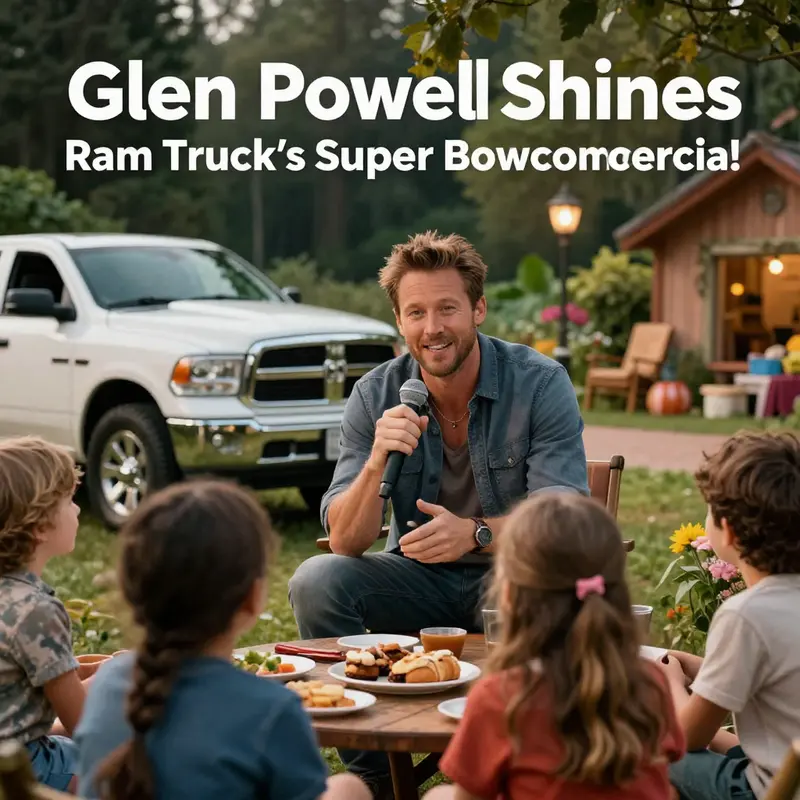
Glen Powell as Goldilocks: The Face and Performance Behind the Ram Truck Super Bowl Spot
When viewers tuned into the big game and the Ram Truck commercial rolled across their screens, many recognized the face before they caught the joke. Glen Powell, already known for his charismatic screen presence, stepped into a deliberately theatrical role that reframed a familiar fairy tale for automotive testing—and did so with a wink. His performance as a tongue-in-cheek “Goldilocks” figure is the reason people still talk about the ad: it combined physical comedy, storybook nostalgia, and an unexpectedly warm family touch in a single, memorable spot.
Powell’s portrayal leans into exaggeration without losing relatability. He arrives as an exaggerated, romanticized narrator—part classic storybook reader, part mock-romantic model—whose evaluations are more performative than objective. That tension fuels the humor. The character treats the vehicle as if it were a piece of couture or a delicately balanced recipe, insisting on that elusive “just right” quality. Each test is staged with the kind of dramatic flair that turns routine product demonstrations into tiny episodes of comedy. The performance works because Powell can shift gears quickly: a raised eyebrow here, an overly sincere line there, and a physical gag that undercuts everything the audience expects from a traditional endorsement.
Beyond punchlines, the ad gains emotional weight from its choice to include Powell’s real-life niece and nephew. The children interact with him as if this theatrical adult were a beloved uncle—part storyteller, part prankster. That domestic framing softens the satire and gives the commercial a human center. Instead of feeling like a cynical sales pitch, the piece reads like a family memory being staged for cameras. Watching Powell patiently read, perform, and play off the kids reveals another layer of his talent: he’s not merely delivering a scripted bit; he’s improvising warmth. The children’s presence anchors the spot, giving humor an honest source and making Powell’s over-the-top choices feel rooted in real affection.
A crucial element of the work is its narrative structure. Rather than a sequence of disconnected vignettes, the commercial builds on a simple through-line: a series of “tests” that mimic the picky criteria of the Goldilocks tale. Each test escalates in absurdity but always returns to the central idea of finding balance—comfort, power, off-road capability—expressed through the metaphor of something being “too this,” “too that,” or “just right.” This through-line keeps attention focused and allows Powell to modulate his performance across beats, layering comedy with clarity. He never plays the same note twice; the rhythm changes, and so does the viewer’s sense of what the spot might become.
Powell’s background helps explain why the ad landed. He has a skill set that blends physicality with timing—useful in action work—and a knack for comedic subtext. That combination allows him to commit to outlandish behavior while keeping a tether to believability. The character’s absurd standards are only funny if the actor treats them seriously. Powell takes that dare and runs with it, letting the stakes of each test feel real within the universe of the commercial. This balance keeps the audience invested and makes the punchlines pay off.
Stylistically, the advertisement borrows from classic romantic imagery: slow close-ups, dramatic lighting, and a tongue-in-cheek reverence for the vehicle. Powell plays into those visual cues as if he understands the trope and intends to lampoon it. The result is a layered performance that allows viewers to laugh at both the parody and the affectionate homage. That tone is tricky: lean too hard into satire, and the spot becomes mean-spirited; lean too soft, and the jokes dissolve. Powell negotiates that tension by making the character likable even at his most ridiculous.
Audiences also responded to the craftsmanship of the set pieces—each test felt devised to show off a different strength while giving Powell a new comic challenge. One moment places him in a domestic tableau, testing interior comfort; another thrusts him into a rugged scene meant to stress durability. Powell moves between these environments like a vaudevillian, treating each set as a stage for a short routine. His physicality—timing, posture, and facial micro-expressions—becomes the connective tissue that makes the commercial feel cohesive rather than disjointed.
Critics and viewers alike noted how the spot showcased a different facet of Powell’s range. Previously seen in roles that emphasized either charm or action, here he revealed a refined sense of comedic timing and a willingness to be absurd. The ad didn’t ask for subtlety; it required full commitment, and Powell delivered. The performance reinforced his image as a versatile performer who can move fluidly between genres. For industry watchers, the spot suggested an actor sharpening his comedic instincts even as he maintains dramatic credibility.
The use of Powell’s real kin in the ad also amplified authenticity. The playful banter and natural rapport between him and the children read as unforced. That organic chemistry matters: it turns a commercial into a mini-narrative about family and memory. Audiences are increasingly attuned to authenticity in advertising; manufactured warmth rings false. By featuring genuine relatives, the creative team gave the spot emotional texture that would have been harder to achieve with hired child actors. The result is a commercial that feels lived-in and personal while still delivering the spectacle expected of a high-profile game-day ad.
Equally important is how the ad situates Powell within the brand’s broader messaging. Rather than present a straightforward salesperson, the spot frames him as a curious critic and storyteller. That approach allows the brand to remain in the background while Powell’s character drives engagement. Consumers are more receptive when they feel entertained rather than marketed to, and this commercial capitalized on that principle. The narrative device—using a fairy tale motif to evaluate a utility vehicle—was a clever inkling: it linked imagination with utility, romance with practicality, and humor with technical demonstration.
The commercial’s reception demonstrates the potency of casting choices in high-stakes advertising. A memorable actor can lift a concept from amusing to iconic simply by committing to the role. Powell’s casting did more than lend star power; it shaped the ad’s tone and ensured its jokes landed. The spot became a talking point not because of its production values alone but because the central performer made the story feel credible and enjoyable.
For those tracing the intersection of celebrity and brand storytelling, this commercial offers a compact case study. It shows how an actor’s persona can be refracted through a character to build narrative momentum, how familial authenticity can deepen audience connection, and how comedic risk—when well-executed—can broaden appeal. Powell’s role illustrates a principle often overlooked in advertising: the performer must carry both the joke and the emotional tether that keeps viewers invested.
If you’re exploring how cultural moments and celebrity turns shape public perception of automotive branding, this spot is instructive. It blends theatricality with sincerity, and it relies on an actor who can balance both. That combination made Glen Powell’s performance as a modern Goldilocks memorable, and it ensured the commercial stayed in conversation long after the game ended.
For those wanting to read more about how brands connect to community and support causes alongside memorable campaigns, see Trucks for Change’s local initiatives.
Source: https://www.youtube.com/watch?v=J5tP8mL1Q6I
Goldilocks on the Open Road: A Bedtime Tale for the Modern Family
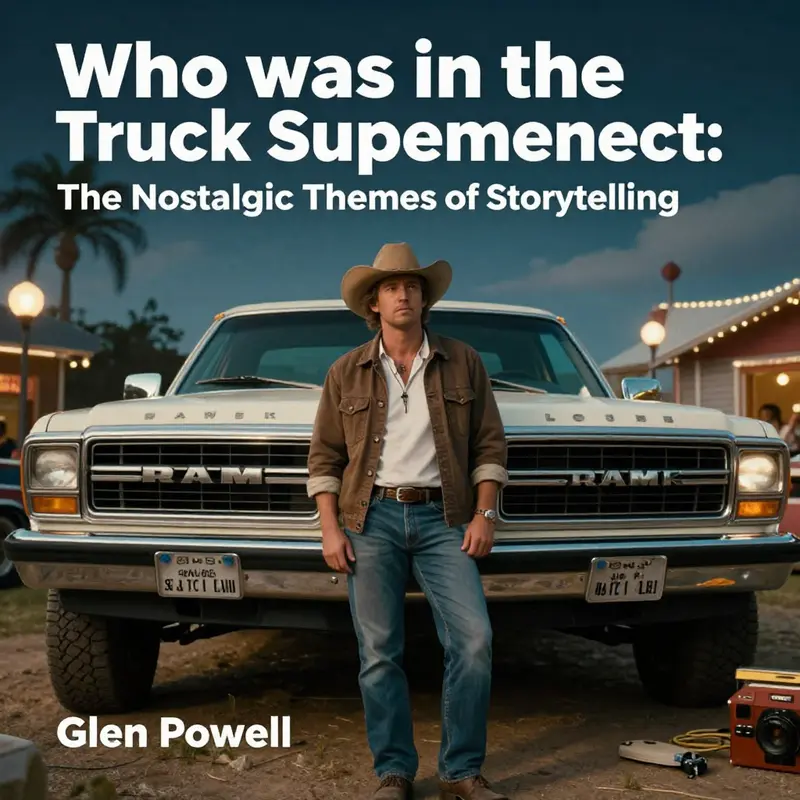
An evening glow spills over a quiet highway as a contemporary bedtime tale unfolds in a Super Bowl spot that treats travel like a ritual rather than a race. The storyteller is a familiar actor who guides us with warmth, inviting us to lean in and listen as a modern Goldilocks figure negotiates balance between comfort and adventure. The emphasis is not on conquest but on choosing the right moments to pause, to wonder, and to travel together. The pacing feels lullaby-like at first, then gathers momentum as humor and tenderness crest in measured beats that let families imagine themselves in the scene. The blend of homey texture and road worthy promise creates a mood that feels both nostalgic and newly relevant for today’s families.
A notable feature is the inclusion of the storyteller’s real life kin—niece and nephew—who appear as part of the storytelling world, lending a sense of authentic family life that transcends polished performance. Their presence anchors the fantasy in everyday relationships, reminding viewers that the strongest journeys start from a shared bedtime routine, a favorite chair, a kitchen table, and the quiet trust that comes from years of being looked after and looking out for one another. The production favors tactile materials, soft lighting, and a color palette tuned to memory, with the camera lingering on small gestures—the curl of a smile, a hand resting on a shoulder, a lamp casting a warm halo—so the audience feels invited into the family circle rather than spoken to from a distance.
Narratively, the Goldilocks figure embodies the central question: what is the right amount of comfort to cultivate and the right amount of curiosity to pursue? The road becomes a canvas for balance, where safety and exploration are not opposing forces but complementary choices. The setting—a cozy interior that opens to the world beyond a doorway—suggests that home can travel with you and that a well-planned journey is a lived practice, not a one-off decision. The storytelling cadence allows space for memory to surface—stories that map the road ahead while reminding us why we chose to travel together in the first place. The result is a mood of steadiness and wonder, a reassurance that family life can be both rooted and expansive when guided by dependable partners and shared rituals.
From a craft perspective, the production leans into warmth over spectacle: a careful soundscape that threads a lullaby motif with the confident rhythm of a voiceover about reliability, a wardrobe that feels lived in, and performances that register as genuine family dynamics rather than glossy theatre. The collaboration between child co-stars and adult leads reads as a moment of real connection, elevating the ad beyond a simple promotion to a memory in the making. In this light, the spot sits at the intersection of brand storytelling and cultural sentiment, offering viewers a comforting logic for why a particular vehicle and a particular way of traveling can become part of a family’s wayfinding on the road.
For industry observers, the approach signals a shift toward meaning-rich content that foregrounds heritage, trust, and shared purpose over overt selling. The scene of a bedtime ritual served as the gateway to travel reframes the ad as a narrative about life on the road rather than a single product feature, inviting longer engagement and broader resonance. External context notes that audiences increasingly respond to campaigns that feel intimate and human, and this Goldilocks narrative suits that appetite by honoring memory while presenting practical, road-ready benefits.
For those who want to dig deeper, the brand provides behind the scenes insights and extended discussions that discuss directing choices, casting decisions, and pacing, underscoring how craft choices can amplify emotional truth. The result is a campaign that lingers not as a flashy moment but as a quiet, confident invitation to reimagine everyday journeys as stories worth telling together. External resources offer additional context, including analyses and behind the scenes commentary that place the spot within a broader conversation about nostalgia, storytelling, and brand trust in a crowded media landscape. You can find related material on the brand’s official channels and partner outlets.
Glen Powell in the Ram Truck Super Bowl Commercial: Fairy-Tale Charisma, Audience Pulse, and a Brand That Reads the Room

The Ram Truck Super Bowl spot that lit up screens and social feeds centered on a figure most viewers could recognize not for a signature truck feature but for a storytelling cadence that sounded like a bedtime whisper and a wink all at once. Glen Powell stood at the heart of the campaign, cast as a charming, lightly roguish narrator who turns the grand, rugged world of Ram into a stage for a family moment. Across the short narrative arc, Powell’s voice and timing did something a little disarming: he invited the audience into a scene that felt intimate and familiar, even as the commercial flashed with the larger-than-life energy of a Super Bowl ad. The material surrounding his performance—whether described in some circles as a modern fairy-tale riff or a playful nod to traditional romantic archetypes—was crafted to blend humor with a sense of home, a balance that the brand has long sought to strike between grit and warmth. In practice, Powell’s presence sliced through the din of a broadcast saturated with spectacle, offering a personal touch that felt almost like a story told aloud by a beloved uncle or a favorite uncle-figure in a family living room.
The campaign’s core image—Powell as a storyteller in a world that usually promotes horsepower and performance—translated into a twofold appeal. First, there was the humor. Viewers reported noticing a clever twist on familiar storytelling tropes, with Powell delivering lines that landed with timing reminiscent of a stand-up comic who knows when to pause for the audience’s reaction and when to lean into a punchline. The humor did not rely on slapstick; it married warmth with a dash of mischief, a combination that makes a fleeting moment linger just long enough for social chatter to take root. Second, there was the fairy-tale overlay worth noting. Some observers interpreted parts of the spot as a light, contemporary riff on classic romantic imagery—an idiosyncratic nod to the tradition of noble characters who speak in verse of longing and destiny. In online conversations, the ad became a talking point about how a modern brand can harness fairy-tale charm without surrendering its core identity of rugged capability. Powell’s performance became a touchstone, a way to measure a performer’s range when filtered through a commercial lens that demands both broad appeal and a sense of novelty.
From a performance perspective, Powell emerged as more than a familiar screen presence. His catalog—ranging from action-adventure features to romance-dramas—had already shown his versatility, but the Super Bowl spot underscored something else: his capacity to carry a campaign through a single, concise character arc with charisma and nuance. He could be both the storyteller and a participant in the story, guiding the audience with a gentle gravity while letting the humor breathe in the pauses between lines. In that sense, the advertisement did not rely solely on the visual power of the truck or the loud percussion of a game-day slot. It relied on Powell’s ability to humanize a brand that is, at its core, about reliability and a certain everyday heroism. The result was a spectacle that did not eclipse the product itself but rather wrapped the product in a narrative that felt accessible and emotionally resonant. This alignment of actor, tone, and message—humor rooted in warmth, storytelling rooted in everyday life, and performance rooted in truth—gave the commercial a staying power beyond the final buzzer.
Yet the public conversation around the spot did not settle on a single reading. In some circles, Powell’s portrayal evoked a nod to fairy-tale archetypes, a sense that the storytelling moment was a modern reimagining of a classic romantic or quest-driven figure. In others, commentators highlighted a bedtime-story intimacy: Powell reading to his real-life niece and nephew, the family tableau softened by a truck brand’s rugged silhouette in the background. The convergence of these readings created a multi-layered experience. For some viewers, the spot offered a gentle reminder that strength can coexist with tenderness; for others, it presented a playful romance between land, family, and the open road. This ambiguity—intentionally cultivated by creative teams who recognize that audiences bring their own narratives to a watching experience—proved instrumental in driving engagement. The ad did not demand a single, uniform takeaway; it invited a spectrum of interpretations, each reinforcing a different facet of the Ram identity: dependable, protective, and unexpectedly warm.
The reception in the social sphere was swift and robust. Within hours, clips and references circulated across platforms, with fans praising Powell’s delivery and the crispness of the visual storytelling. The short form of the commercial lent itself to meme-able moments and quotable lines, but what elevated the response beyond a few viral frames was the sense of craft behind the scene. Viewers who cared about performance—those who watch a major ad in the same way they might review a scene in a theatrical release—could point to precise beats where Powell landed a look or a line with the exact timing a good joke requires. Others commented on the production values—the warm palette, the way the lighting softened into sunset hues during key moments, and the manner in which the vehicle’s silhouette grounded the entire scene without stealing focus from the storytelling. Across social media, there was a shared sense of appreciation for a campaign that felt deliberately paced, not hurried, and for a performer who seemed to be stretching his wings in a way that rewarded both fans and brand-skeptics who appreciate a credible performance in a commercial context.
From a brand perspective, the impact extended beyond the game broadcast. Early analytics highlighted a spike in brand visibility and viewer recall metrics, suggesting that the creative strategy paid off. The execution leveraged Powell’s rising star power and his proven comedic timing to generate conversation and curiosity about the brand, even among viewers who might not have previously connected with the product category. In marketing terms, the spot managed to translate the thrill of a Super Bowl moment into a longer tail of engagement. Clips and discussions persisted in the days after the game, and the discussion around Powell’s performance helped position the actor as a versatile ambassador who could anchor a campaign with both credibility and charm. The combination of star power and a storytelling-driven concept proved effective at crossing demographic lines, resonating with families and younger viewers who value humor, storytelling, and warmth as much as they value performance credentials.
The narrative approach in this Ram spot — pairing a recognizable star with a fairytale-like storytelling frame — also speaks to broader industry shifts. In a media landscape crowded with quick-cut, high-intensity ads that chase the fastest possible punchlines, this campaign paused for a moment of calm, a pause that invited reflection on the value of human connection. The choice to present a storyteller figure who reads a bedtime scene to family members introduces a sense of domestic intimacy into a space traditionally dominated by spectacle. It’s a reminder that brands are not merely selling a product; they are offering a position in consumers’ stories. That position can be a source of reassurance, a prompt to pause and consider the role a vehicle might play in everyday life, or a nudge toward a sentimental memory that many viewers carry with them. Powell’s performance catalyzed this effect, giving the audience a lens through which to view the brand as a companion for both practical needs and personal moments.
As the dust settled from the broadcast, analysts and industry observers began mapping the campaign’s resonance onto a wider set of questions about how celebrity-led storytelling can evolve in the automotive space. The ad’s blend of humor, nostalgia, and family warmth suggested a template that could work across diverse markets, provided the execution remains grounded in authenticity. Powell’s ability to traverse genres—action, romance, comedy—made him a fitting conduit for a message that needed to travel quickly but land softly, a rare combination in a marketplace where every second counts and every image competes for attention. The result was a campaign that did more than celebrate a product; it celebrated storytelling as a connector, a way to frame the vehicle not just as a machine but as a character in the lives we live and the stories we tell.
This synthesis of star, story, and symbol did not emerge in isolation. It reflected a contemporary understanding that audiences engage with brands through narrative ecosystems. Powell’s portrayal fed a larger narrative about reliability and character that aligns with the brand’s historical emphasis on sturdy, dependable performance, while the fairy-tale undertone offered a cultural bridge to audiences who crave a sense of wonder and humor in their media. The ad’s reception—positive, layered, and widely discussed—underscored a critical lesson for marketers: a single, well-executed storytelling choice can elevate a campaign from a simple product showcase to a moment that resonates in memory. In that sense, Powell’s role was not merely a performance; it was a strategic instrument that amplified the brand’s voice in a crowded landscape.
For readers seeking a broader sense of how this moment sits within industry realities, the broader context of market dynamics—such as cross-border regulatory considerations, production scheduling, and the evolving demand for trailers and related equipment—offer a useful frame. In discussions about the trailer market and manufacturing adaptation, analysts emphasize the need for clever messaging that can withstand the volatility of demand while still delivering on the promise of reliability. See how industry conversations are evolving in resources like trailer-market-crisis-manufacturers-adapt-strategies, which offers a window into how manufacturers are recalibrating their strategies in response to shifting conditions. This awareness helps explain why a brand would lean on a storyteller who can speak to both the practical and the aspirational in a single breath. It’s not just about selling a vehicle; it’s about inviting audiences to imagine the role such a vehicle could play in daily life, adventures, and the shared rituals of home.
The official, full-length execution—comprising the carefully choreographed performance, the intimate storytelling frame, and the brand’s confident, grounded visual language—serves as a case study in how to thread humor, heart, and high production value into a Super Bowl moment. The takeaway isn’t solely about Glen Powell’s star appeal or the clever twist on a fairy-tale gesture. It’s about understanding how a well-crafted narrative can invite audiences into a brand world with a sense of belonging, rather than only presenting a sale proposition. Powell’s performance anchored that world, and the resulting buzz amplified the brand’s visibility in a way that felt earned rather than manufactured. In the end, the campaign offered a model for how to balance mythic storytelling with practical reassurance—an alchemy that can be particularly persuasive when the audience is tuning in not just for a game, but for a memory they might share long after the stadium lights go dark.
External resource: https://www.ramtrucks.com/ram-super-bowl-2025-commercial
Internal reference: For industry context on how market dynamics influence creative decisions in the trucking sector, see the discussion of trailer-market-crisis-manufacturers-adapt-strategies in industry analyses. trailer-market-crisis-manufacturers-adapt-strategies
Who Was in the Super Bowl Pickup Ad? Cast Ambiguity, a Father–Son Tale, and the Strategic Power of Emotion in a Brand’s Big Moment

The chatter surrounding a high profile Super Bowl spot often gravitates toward one question first: who starred in the commercial? In this case the conversation wandered through a thicket of competing claims and half-remembered clips. Some discussions named an actor known for a certain lineage in contemporary film, while others pointed to a different pair of performers associated with a narrative about family, memory, and a final road trip. The result is a telling reminder of how quickly details can diverge in the wildfire of social coverage that follows a national television premiere. Yet, beyond the chatter about who held the camera’s gaze, the more enduring thread is what the ad was trying to achieve and how it did so by leaning into a timeless human script. The resulting chapter in any study of the campaign comes into focus not merely as a cast list but as a study in how a brand under the pressure of a single, spectacular moment can convert attention into lasting resonance through a carefully crafted fictional journey.
The most widely reported arc of the commercial, regardless of the precise on screen roster, centers on a father and a son who share a road trip that becomes a reckoning of sorts. In the version of the narrative that has circulated in detailed write ups, the father confronts an illness while choosing to give his son one final outing in the brand’s pickup. The road becomes a vehicle, not just for the family’s bonding but for the way memory and dignity ride side by side with concrete utility. This is not a sales pitch in the sense of a brochure page; it is a story designed to feel like a memory you almost remember having lived. The car is not advertised with a flashy spec sheet, but with the quiet weight of a long drive, the soundtrack of a late afternoon, and the moment when a child learns that love, like a trusted vehicle, can carry you through both ordinary errands and the extraordinary times you wish you could pause.
There is a competing thread in the coverage that asks who exactly played the characters. In one take, a single famous face is identified as the father figure, and in another, two younger performers are named together as the family unit. The discrepancy is more than an anecdote; it is a window into how production teams assemble memory for a broad audience. Casting for a Super Bowl ad is a blend of star wattage, storytelling chemistry, and the practicalities of timing and availability. A big game audience demands familiarity and immediacy, but the ad also needs to feel intimate enough to be remembered long after the final whistle. The tension between star power and narrative authenticity can spark debate about which element carries a campaign—whether the name attached to the central character or the emotional arc that makes the audience feel seen in their own family dynamics.
The deeper takeaway, however, lies in the purpose behind the choice of cast. The campaign was built around the idea that a brand can inhabit ordinary moments and transform them into something remarkable by focusing on relationships that matter most. In this case, the spotlight is on the generational tie between father and son, a relationship that resonates across demographics and geographies. The production design supports that aim through careful, restrained visuals. Rather than a showroom of product features, the spot leans on the quiet confidence of the road, the space inside a pickup that becomes a safe harbor for conversation, and the symbolism of a final journey that honors both memory and hope. In short, the storytelling strategy is not about selling a feature but about selling a feeling—the sense that a pickup is more than a tool; it is a companion in life’s most significant moments.
This approach aligns with a broader trend in high profile advertising that has increasingly treated the Super Bowl as a theater for character-driven narratives rather than rapid-fire demonstrations. The move away from overt product specification toward character-led storytelling is not merely a stylistic preference; it is a strategic calculation about recall, resonance, and long tail brand equity. When viewers are asked to empathize with a family story, they are invited to see themselves in the narrative, to project their own memories onto the road trip unfolding onscreen, and to associate those memories with the brand in a durable way. The research into emotionally engaging Super Bowl spots has repeatedly shown higher recall and greater shareability compared with campaigns that foreground features alone. That insight underpins the confidence with which the ad’s producers pursued a narrative path that favored emotional alignment over technical spectacle.
In the context of the competition for attention during the game, the choice to prioritize emotion also serves a practical purpose: it creates a platform for the brand to be remembered long after the broadcast. Audiences frequently report that they remember an ad for the feeling it provoked rather than for the precise numbers or specs it highlighted. That memory anchor is valuable for a brand that seeks to translate a moment of cultural visibility into ongoing consumer consideration. It is also a way to differentiate in a crowded media environment where many advertisers are noisily shouting about features, price points, and calls to action. The emphasis on legacy and family in the narrative does more than tug at heartstrings; it gives the brand a narrative foothold in conversations about reliability, steadiness, and generational passing of values—qualities that naturally align with the image of a pickup as a steadfast companion in life’s most consequential trips.
For industry observers, the production choices behind this approach matter almost as much as the cast. By avoiding a flashy cascade of visuals and concentrating instead on an emotionally legible arc, the spot achieves a form of in medias res storytelling. The audience is drawn into the personal stakes—the father’s resilience, the son’s dawning understanding, the quiet dignity of letting go—before the camera reveals any overt product cues. The decision not to foreground technical details is not equivalent to ignoring the vehicle’s role; rather, it reframes the vehicle as a stage on which human connection and family legacy are enacted. In this framing, the pickup becomes a conduit for emotion rather than merely a container for cargo. The narrative busyness that plagues many advertisements—text overlays, rapid edits, and a dizzying sequence of feature shots—drops away, leaving space for a shared pause: the moment when viewers consider their own bonds and the materials through which those bonds are reinforced.
The cast speculation might be interesting to trivia buffs, but the broader significance lies in what the ad signals about the brand’s self-conception. The campaign is trying to communicate that the brand understands its customers as people who value resilience, continuity, and the possibility of passing down knowledge and affection from one generation to the next. In that sense, the story is less a demonstration of horsepower than a narrative about stewardship: a vehicle that endures through time, a family that endures through memory, and a relationship that endures through shared travels. This is a subtle but powerful reframing of what a pickup represents in the marketplace. It is not just a tool for work or adventure; it is a vessel for meaning. The space inside the cabin becomes a sanctuary for conversation, a place where a parent’s guidance and a child’s curiosity can coexist in a way that feels earned and sincere. The campaign thereby positions the brand as a steady hand that accompanies families on their most consequential routes rather than as a brand that simply competes on performance metrics.
From a strategic standpoint, there is a method to the apparent restraint. In a world where ads often compete on spectacle, the decision to let the human story carry the emotional weight is a deliberate risk. It requires trust in the audience to stay with a slow burn and to fill in the gaps with their own memories and associations. It also hinges on the credibility of the on screen relationships. If the actors successfully convey a believable dynamic—one that merges tenderness with a hint of gravity—the viewer will internalize the brand as an enabler of meaningful moments rather than an interrupter of daily life. The risk, of course, is that the story might feel more like a melodrama than a marketing message. The best executions, however, balance emotional authenticity with a clear, consistent through-line about the brand’s role in daily life, without slipping into sentimentality that feels manufactured. In this ad, the balance appears to tilt toward the former, with a quiet confidence that the audience will recognize the truth in the scenes and carry that recognition with them beyond the last frame.
The marketing community often returns to the question of whether a campaign’s strength lies in the cast, the script, or the production design. In this instance the most persuasive answer is that it is the interplay among all three. A credible father–son dynamic is essential; so is the choice of a setting that invites long, reflective shots rather than rapid cuts. The presence of a vehicle that is both familiar and aspirational further grounds the narrative in the lived reality of many households. Similarly, the storytelling cadence—the way dialogue and silences are orchestrated to mimic the rhythms of real conversations on a road trip—helps the audience inhabit the moment rather than simply observe it. The result is a memory of a brand experience that can outlast the thrill of a single meme-worthy line or a flashy montage. It is a form of advertising that seeks to be revisited in the mind when a consumer contemplates domestic responsibility, family cohesion, or the idea of legacy.
The tension between factual cast lists and the emotional arc is also a reminder of the era in which the spot lives: audiences consume cinematic micro-moments in the wake of the game, on streaming devices, and across social feeds where every second counts. The ability to spark conversation, to become part of the cultural postgame discussion, depends less on who is standing in the frame than on whether the story remains with the viewer after the screen goes dark. In this light, the ad’s reception and its subsequent interpretation hinge on a simple truth: people connect more deeply with stories that feel true to their own lives than with claims about features that may or may not be relevant to them at the moment of viewing. The campaign’s longer-term impact will be measured not merely by the number of impressions but by the way it shapes how customers think about what a pickup can be in the fabric of a family’s life.
For readers who want to explore the broader ecosystem in which such a campaign travels, a related discussion point concerns shifts in the trucking and trailer markets that frame consumer expectations about reliability and durability. A deeper dive into those industry dynamics is available in analyses that treat the current market as a tense balance of capacity, margins, and demand. See the discussion around Trailer Market Crisis: Manufacturers’ Adaptation Strategies for context on how suppliers and manufacturers navigate a period of change while brands pursue emotional storytelling as a counterbalance to price sensitivity and feature fatigue. This cross-pollination of brand storytelling and industry realities helps explain why a single Super Bowl moment can ripple into how stakeholders think about product development, channel strategy, and long-term loyalty. The link here provides a lens into those macro considerations while keeping the focus on how a memorable narrative can support the broader enterprise of staying relevant in a shifting market.
External resources offer additional perspectives on the cognitive advantages of emotionally driven advertising. For those curious about why such storytelling tends to yield higher recall and shareability, Adweek’s analysis of the Ram spot provides a concise, industry-facing interpretation of the strategy and its reception. You can consult that coverage for an external point of view on how emotional storytelling translates into consumer behavior during one of the most scrutinized advertising events of the year: https://www.adweek.com/advertising-creativity/ram-super-bowl-ad-last-ride-emotional-storytelling/ .
In sum, the Super Bowl moment examined here is less a simple casting reveal and more a study in how a brand chooses to inhabit a cultural ritual. Whether the actors in the frame are the same as those widely reported in the initial buzz or a different lineup altogether, the core intention remains steady: to transform a vehicle into a vessel for memory and meaning. The debate over who precisely appears beside the road underscores a larger point about modern advertising. In an era when audiences can pause and replay at will, the power of a story to feel true and human becomes the decisive factor in whether a campaign will endure in public memory. And that endurance, more than any single frame or star, is what the brand seeks to achieve as it navigates the complex lane changes of contemporary media, consumer sentiment, and industry evolution.
Final thoughts
The Ram Truck Super Bowl LVIII commercial, with Glen Powell at the forefront, showcases the power of nostalgia and storytelling in marketing. By connecting emotions with memorable performances, the advertisement effectively resonated with a wide audience, ensuring brand recognition and loyalty among key demographics such as Logistics and Freight Company Owners, Construction Enterprises, and small business owners managing delivery fleets. The sincerity and warmth Powell brought to his role not only enhanced viewer engagement but also solidified Ram Truck’s position in a competitive market. As businesses continue to navigate their branding and marketing strategies, the success of this commercial offers valuable insights into effective audience connection.