
The Ram Truck commercial, celebrated for its stark visuals and rugged terrain, sets the stage in the breathtaking landscapes of Arizona and New Mexico. Through precise filming, the campaign captures the spirit of the Ram Truck, appealing to fleet owners, construction and mining procurement teams, and small business owners with delivery fleets. Each chapter delves into the meticulous choices of filming locations, the profound influence of natural landscapes on the commercial’s appeal, and intriguing behind-the-scenes narratives that collectively underscore the campaign’s resonance in today’s competitive market.
Dust, Dunes, and Drive: Tracing the Southwestern Footprint of the Born to Be a Ram Campaign
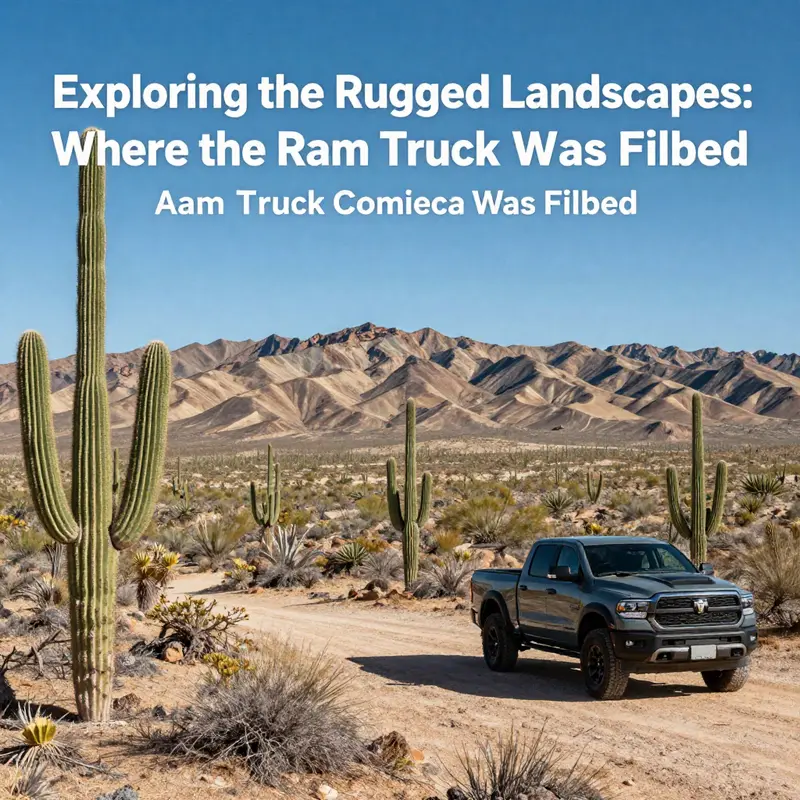
The landscape is a character in the Ram Trucks campaign, a backdrop that does more than set a scene; it acts as a co-creator, shaping the rhythm, mood, and emotional gravity of the story being told on screen. When the Born to Be a Ram campaign rolled into life, the filmmakers did not simply pick a place to shoot. They sought a geography that could speak in a language of openness, endurance, and independence—qualities that the brand has long aimed to embody. The American Southwest, with its vast skies, scarred buttes, and sunlit horizons, offered a canvas large enough to accommodate a two-minute road-trip narrative while remaining intimate enough to allow viewers to feel the pulse of the journey. The decision to stage the campaign across Arizona and New Mexico was not merely logistical; it was a creative pact with the land itself, a recognition that the most convincing portrayal of a rugged vehicle happens when the terrain is doing much of the talking.
The choice of geography began with a sense of scale. The Southwest is a place where distances expand and dissolve at the same time, where a road can carry a traveler toward both a distant horizon and a moment of personal discovery. In practical terms, this meant scouting landscapes that could accommodate long, uninterrupted road sequences and, at the same time, offer pockets of dramatic geology to punctuate the journey. The director, Alma Garcia, approached the project with an eye for contrasts—quiet, sun-baked flats that stretch toward the edge of the map, punctuated by canyons carved by wind and water, and mesas that rise like sentinels at the edge of the road. This is not a region that asks for subtlety; it asks for presence. In that sense, the Southwest became more than a location list. It was a narrative device, a way to dramatize the idea of a vehicle not as mere transportation but as a partner in traversing terrain that tests both machine and person.
Northern Arizona rose to the top of the initial shortlist not by accident. Its rugged canyons and rolling plateaus offer a spectrum of textures that align with the campaign’s tactile sensibility. When the crew settled on certain stretches within this landscape, they found a choreography of road, rock, and light that could be tailored to the shot list without feeling contrived. The canyons, with their layered rock faces, lent the pauses in the road trip a cinematic cadence. The sense of weathering—of eons of wind sculpting stone—translated into a visual grammar that underscored the truck’s capacity to meet the pace of a demanding journey. In northern Arizona, the road is not just a path but a line that traces the edge of possibility; the truck moves along that line with a steady, almost metronomic rhythm, and the landscape responds with a quiet, weathered confidence.
Southern Utah entered the project as a complementary counterpoint. Here the red-hued rock formations—arches, fins, and plateaus—introduced a color vocabulary that deepened the campaign’s emotional resonance. The desert’s palette—terra cotta, sienna, and a blue that can feel almost electric under the sun—served as a powerful counterpoint to the metallic sheen and robust silhouette of the truck on the move. Practically, this meant shoot days timed around the sun’s arc, ensuring that the red cliffs didn’t overwhelm the vehicle but instead framed it, letting the light caress the vehicle’s lines as if drawing a silhouette in air. It was a reminder that in film, the camera’s eye benefits when the landscape does not merely backdrop but converses with the subject. The result was a visual balance—landscape as a partner, vehicle as the protagonist, and a road that binds them together across the frame.
The narrative in the Southwest was not built on myth alone. There was a documentary truth to the location choices that resonated with the campaign’s wish to project authenticity: the idea that this is not a commercial shot in a studio, but a journey through real places that carry their own histories. The team did not rely on a single locale to tell the entire story. Instead, they stitched together a sequence that uses the diverse geographies of the region to convey movement, resilience, and the sense that the road ahead remains open and unbounded. In this sense, the road trip becomes a miniature epic, where landscapes are not merely scenery but characters that shape the arc of a man, or more accurately, a driver and his companion on a quest framed by the horizon.
As work progressed, the team expanded beyond Arizona to include lands associated with the broader Southwest narrative—areas within southern Utah and lands associated with the Navajo Nation. The inclusion of Navajo Nation lands brought with it a layer of cultural nuance that mattered both technically and symbolically. The decision to film in regions recognized for their dramatic desert canyons and expansive vistas reflected a reverence for the land and a recognition that the landscape has a memory of its own. The production schedule required careful navigation of permits, local guidelines, and community engagement. Yet these considerations were not mere bureaucratic hurdles; they were part of a respectful collaboration that allowed the campaign to speak with integrity about a Western aesthetic that is as much about people as it is about place. The resulting sequences carry the weight of that collaboration, offering viewers a sense that the road story is grounded in places with a living history rather than in fabricated backdrops.
The exploration did not stop with the publicized regions. The production team scanned landscapes in and around the Sonoran Desert as well as pockets of the Chihuahuan Desert that extend into parts of New Mexico. The Sonoran stretches across southern Arizona and into northern Mexico, carrying a distinctive mix of saguaro-studded horizons and silt-laden washes. Its presence in the campaign contributed a solar glow and a sense of heat that can only be earned by the desert’s most faithful light. The Chihuahuan Desert, meanwhile, brought a different texture—the high, dry air and clay-rich soils that produce a particular kind of wind-carved drama. These regional flavors helped to weave a more nuanced texture into the two-minute road trip, allowing moments of stillness between the truck’s bursts of momentum to register with the audience as earned and grounded rather than staged and shiny.
The New Mexico leg of the journey added its own layer of Western cinematic DNA. Historic neighborhoods in Las Cruces and the more iconic streets of Las Vegas, along with the region’s red-rock outcrops near Chama and Gallup, supplied locales where the campaign could graft a sense of place onto its broader myth of driving forward into the unknown. New Mexico’s towns offered a sense of scale and a human scale at once: streets lined with adobe and brick, storefronts weathered by sun and time, and the occasional grain of desert sand caught in a beam of light that slips into a shot with the ease of a lucky moment. The result was a campaign that reads as a Western road saga, with a clear sense of tradition and endurance threaded through every kilometer traveled on screen.
The practicalities of filming in multiple states are always a balancing act between logistics and artistry. The crew had to coordinate with local authorities, navigate permitting processes, and plan around variable weather patterns that can alter a shot’s mood in minutes. Yet the Southwest’s logistical challenges were not deterrents but part of the creative problem-solving that defined the production. The team learned to read the desert’s moods as they read a script: the sky’s color at dawn, the wind’s push on a hillside, and the moment when the light hits a rock face just so, turning it from red into a living emblem of energy and momentum. This attentiveness is evident in how the road sequences unfold—the truck appears to move with a confidence earned from long hours of site evaluation and a patient sensitivity to the landscape’s temperament.
The layering of locations—northern Arizona, southern Utah, Navajo Nation lands, Las Cruces, Las Vegas in New Mexico, and the red cliffs around Chama and Gallup—creates a mosaic of the American Southwest that feels both expansive and intimate. It is expansive in the way the frame captures endless sky and distant mountains, and intimate in how it captures the weathering of roads and the expression of a driver who seems to know that every mile counts. In the audience’s memory, the campaign’s road scenes are not just about a vehicle traversing space; they become a journey that invites viewers to project themselves into the driver’s experience—the quiet calculations of choosing a path, the resolve to press on when the road grows rough, and the simple but powerful joy of arriving somewhere that changes you, even if only in the moment. The landscapes supply this change by providing a sense of scale that makes human efforts feel meaningful. In a way, the land itself becomes a co-narrator, a partner that speaks in the cadence of wind and rock and light.
Behind the camera, the crew’s approach balanced documentary authenticity with cinematic polish. The decision to shoot in these terrains demanded robust planning for safety, equipment protection, and access. The desert is generous with vistas, but it is also unforgiving in heat, dust, and occasional storms. The team cultivated a workflow that prioritized the comfort of the crew and the safety of the vehicles while never compromising the shot’s integrity. Drones were employed to capture expansive top-down perspectives that reveal the road as a thread weaving through a carved landscape. Ground-level cameras, mounted on stabilizers, allowed for the kind of intimate, shoulder-to-shoulder movement that conveys the driver’s sense of unilateral purpose without feeling claustrophobic. The combination of aerial and ground-level footage enabled a rhythm that oscillates between broad, almost mythic vistas and the micro-beats of the road-life moment—the glint of chrome in sunlight, the reflection of a distant mesa on a windshield, the way the road’s edge discloses a path forward where the horizon remains stubbornly wide.
The cast and crew were mindful of the stories these landscapes carry. The Navajo Nation, with its deep-rooted cultural significance and living traditions, required a respectful approach to filming that acknowledged sovereignty, history, and contemporary life. The production’s planning included consultations with community representatives and compliance with guidelines that protect cultural resources and respect sacred sites. This kind of diligence mattered not only as a matter of policy but as an ethical imperative that aligns with the campaign’s broader message of rugged honesty and reverence for the land that supports the journey. The result is a set of sequences that feel earned, not merely produced, and a narrative voice that invites viewers to consider the land as a partner rather than a prop.
In New Mexico, the environment offered a different tempo—one that could accommodate the campaign’s Western ethos without feeling repetitive. Las Cruces, with its historic neighborhoods, provided walkable, human-scale textures that allowed the crew to stage moments that feel both grounded and cinematic. Las Vegas, with its own historic textures and surrounding red-rock vistas, provided a complementary palette that could be folded into the road trip’s arc without redundancy. The region’s distinctive red cliffs near Chama and Gallup supplied a dramatic punctuation mark to the sequence, a visual cue that crystallizes the sense of ascent and challenge that the campaign’s hero faces as the road unfolds. Each of these micro-locations contributed a thread to the larger tapestry, ensuring that the road trip did not become a straight line but a braided journey through a land that is at once ancient and alive, a place where the present and the past are always in conversation.
For all the technical and logistical layers, the campaign’s location choices ultimately meant something more fundamental: they reinforced the core idea of a vehicle as a companion on an enduring quest. The Southwest’s landscapes are not just scenery; they are catalysts for the emotional statemachine that drives the narrative forward. Each mile traveled through the varied terrain becomes a meditation on resilience, the capacity to persevere when the road narrows or rises sharply, and the confidence that the destination, while uncertain, is worth the effort. The desert’s stark, honest exposure of terrain and weather mirrors the campaign’s insistence on authenticity and grit. In this sense, filming in Arizona, Utah, and New Mexico was as much about a philosophical alignment as a creative one: a decision to place the camera within a world that tests and confirms the protagonist’s commitment to the road and to the idea that true strength shows up where the ground is hardest to traverse.
The ecological and environmental stewardship embedded in the production process also mattered. The Southwest’s fragile ecosystems demand careful planning to minimize disruption to local habitats and water resources, a responsibility that the production team embraced with the same rigor they applied to shot composition and lighting. This awareness contributed to decisions about routes, timing, and the use of certain equipment that would reduce emissions and noise, all while maintaining the cinematic impact required for the campaign. The result is a body of footage that feels true to the land’s character—unadorned, honest, and generous in its capacity to reveal the human dimensions of movement and purpose. When audiences see the final edit, they are likely to sense the land’s patient witness—the way a road trip, guided by a capable vehicle, moves through space while the environment quietly testifies to endurance and the promise of discovery ahead.
In total, the filming locations across northern Arizona, southern Utah, and Navajo Nation lands, with supplemental scouting and sequences in New Mexico’s Las Cruces and Las Vegas neighborhoods and the red-rock corridors of Chama and Gallup, created a Southwestern stage that resonates with the campaign’s themes. The landscape’s scale and textures, the cultural considerations, and the logistical choreography all contributed to a cohesive storytelling environment. The desert did not merely host the action; it participated in it, shaping how scenes were conceived, shot, and edited. The end result is a two-minute journey that feels both expansive and intimate—an emblem of a brand that seeks to define itself through the endurance and spirit of the land it travels. Viewers may not always name the exact places that appear on screen, but they will sense the authenticity of the American Southwest as a living, breathing partner in the narrative—an alliance between road, rock, weather, and wheel that makes the Born to Be a Ram campaign feel earned, elemental, and unscripted at heart.
External resource: https://www.bonanzacreekranch.com
Desert Horizon, Steel and Dust: The Southwest as Stage for the Four-Wheel-Drive Campaign Filming
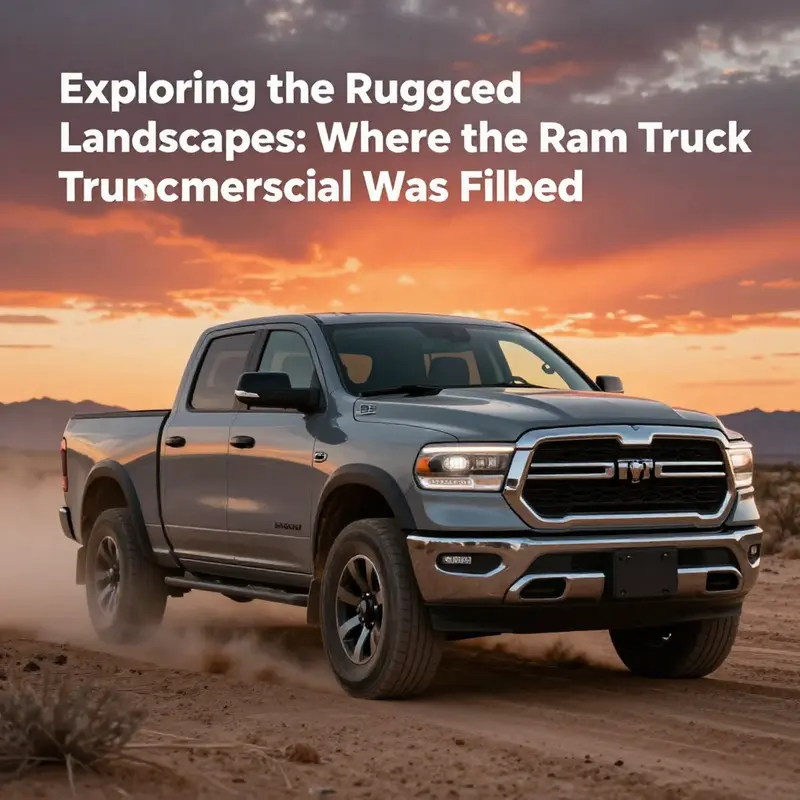
On the edge of the American Southwest, where vast plains bleed into red rock mesas and the horizon keeps a patient vigil over the road, the filming of the four-wheel-drive campaign unfolded as a study in how landscape can instruct a vehicle’s character. The primary stage was not a studio or a stage-set, but a real country of weathered stone, sun-bleached paths, and a wind that seems to carry the memory of old pioneers who once drove across these same routes. In this sense, the campaign did not merely show a truck conquering terrain; it invited viewers to witness a relationship forged in the land itself. The Southwest—most notably the deserts of Arizona and New Mexico—provided the unspoken script, the kind of backdrop that grants texture to movement, weight to tires, and a choreography of light that can only be achieved when the sun dips low and the landscape accepts a moment of stillness before the next surge of action. While the exact locations are sometimes left under wraps, the strategic choice to film in these regions is widely understood within the industry as a deliberate effort to harness a landscape that embodies both the ruggedness the vehicle is meant to withstand and the unpretentious, practical beauty that resonates with audiences who value resilience and self-reliance. The Sonoran and the Chihuahuan deserts, with their spiny ocotillos and sweeping washes, are not just scenery; they are a narrative instrument that shapes tempo, tone, and the emotional cadence of every shot.
As the camera begins to breathe with the land, the footage achieves a rare clarity: a kind of cinematic honesty where dust becomes a character, wind becomes a tempo, and the vehicle becomes a tool for exploration rather than a prop for spectacle. The desert is not merely a setting; it is a testing ground that casts a lens on the core attributes the campaign seeks to project—durability, reliability, and a certain stoic adventurousness. In the frame, the vehicle appears both indifferent to and in command of the terrain around it. Its lines catch the light in ways that accentuate its geometry while the surrounding landscape teaches humility—an important counterbalance that makes the truck’s capabilities feel earned rather than proclaimed. Viewers sense that every climb, every rutted trail, every dust swirl is earned within the story being told, and that the land has had a hand in shaping the dialogue between driver and machine.
The Southwest’s climate offers a natural laboratory for testing the narrative’s emotional range. Dawn air is crisp and pale, turning to a gold that seems to rest on the lip of every rock face. Midday glare compresses color into a harsher truth, when shadows shrink and the terrain reads with the blunt honesty of earth and stone. Dusk returns a softer palette—the amber glow on sandstone, the indifferent blue of a desert sky at twilight, and the long, dusky silhouettes that transmute the landscape into a stage set for reflection as much as action. This cyclical lighting, captured with careful timing, allows the photography to narrate a story of endurance without shouting. The camera rides a patient arc across the land, tracing the truck’s deliberate path as if the vehicle is a living companion making steady, measured progress through an environment that asks for nothing less than resolve. The resulting imagery is not merely a showcase of capability; it is a quiet hymn to responsibility and trust between machine and landscape.
Cinematographers relish the chance to play with the tension between form and space, and nowhere is that tension more palpable than in desert settings where form is defined by lines and angles and space is defined by the absence of it. The truck’s silhouette against a vast sky becomes a study in proportion, a reminder that power can exist in harmony with distance. Long shots reveal how a machine intersects with the land’s grand geometry—an axis of travel that points toward possibility rather than conquest. Medium and tight shots, by contrast, condense the drama into the micro-environment of a dusty trail, a shallow wash, or a rocky ledge where the vehicle’s suspension and traction are tested. In these moments, the crew’s choice of lenses, frame rates, and stabilization work together to translate seemingly ordinary terrain into a language of capability. The desert does not simply magnify a product’s attributes; it invites a dialogue about how those attributes align with a broader cultural image—one of independence, practical wisdom, and a willingness to venture where others may hesitate.
Beyond the aesthetic appeal, the desert’s realism performs an essential storytelling function. Audiences respond to authenticity—the sense that what they are seeing could plausibly occur in the real world, under real conditions. The geography becomes a mentor, showing not just what the vehicle can do, but when and why it might be relied upon. When tracks branch into a sandy incline or when a truck maintains forward momentum through a wash of pebbles and dust, the footage argues for the vehicle’s steadiness under pressure. It also signals that the brand’s values align with a way of doing—calculating risks, reading terrain, and moving forward with a plan grounded in practical knowledge. The landscapes thus act as a language set that communicates without slogans or overt demonstrations. They push the audience toward an interpretation: that the vehicle is designed to partner with the land, not merely to conquer it. This nuance matters because, in campaigns that seek lasting resonance, viewers are drawn not only to what a machine can do but to what a relationship with that machine enables in everyday life—work, travel, family, and the small, unglamorous journeys that constitute most lives.
The production crew’s approach to filming in the Southwest reflects a deliberate respect for the land. There is a careful balance between the artistry of the shot and the practicalities of a live locale. Permits, weather windows, and safety protocols shape the schedule as surely as the glare of noon sun shapes lighting plans. The team often favors dawn and dusk, the hours when geology, weather, and wind conspire to offer a kinder, more forgiving canvas for movement. In those windows, the desert’s textures are revealed with exceptional clarity: the scrubby brush, the geometry of eroded sandstone, the way dust lifts in the wake of a passing tire, and the way distant mesas hold a magnetism that makes the foreground feel immediate and urgent. The camera’s eye is taught to see in both scale and nuance, to hold long takes that allow the environment to breathe while the vehicle remains the constant through line—the tether that keeps the narrative anchored in human purpose.
These choices are not merely aesthetic. They encode a philosophy about the relationship between people and their tools. In the open spaces of Arizona and New Mexico, the campaign implies that the road is an invitation rather than a barrier. It is an invitation to test one’s limits, to measure risk against reward, and to trust in a machine that seems to know how to keep pace with the terrain’s stubborn pace. The desert’s quiet force also invites a form of storytelling that avoids melodrama. The landscape does not demand applause; it requires attention. The result is a campaign that feels earned—its drama sourced from credible, observable conditions rather than from cinematic manipulation. The narrative’s gravity comes from the way the land shapes the journey and, in doing so, shapes the viewer’s perception of the vehicle as a partner in an enduring, real-world pursuit of progress and purpose.
Not every detail about the exact filming sites is disclosed publicly, a practice that keeps some allure in the brand’s behind-the-scenes storytelling. Yet the outward signs point to a deliberate curation of spaces known for their openness and their capacity to convey vastness without losing specificity. The Sonoran Desert’s expansive horizons and the Chihuahuan Desert’s sculpted ridges provide a spectrum of moods—from sweeping, sunlit plains to intimate, wind-sculpted canyons. The choice of these landscapes is a recognition that the audience’s imagination often travels with the vehicle long after the screen fades. The visuals do more than showcase performance; they anchor the vehicle in a cultural landscape that values hard-won competence, independence, and a sense of belonging to a land that asks more than it gives, and rewards those who answer with resolve.
In the end, the Southwest’s landscapes do more than establish a setting. They become a source of meaning. They offer a natural metaphor for the campaign’s core message: reliability in the face of uncertainty, the quiet confidence that comes with experience, and a readiness to move forward when the terrain, or life, presents its most challenging questions. The desert’s drama—its light, its textures, its enormity—elevates the vehicle from a mere machine to a companion on life’s rough itineraries. It creates a shared memory for viewers: a moment when they felt the pull of the open road, the lure of distant horizons, and the certainty that in the right hands, a sturdy, well-built machine can turn even a difficult route into a story worth telling.
For readers who want to explore the broader context of such on-location decisions and production dynamics, there is a useful perspective to consider. Internal industry analyses often highlight how location choices reflect not just artistic vision but budgetary and logistical realities as well. For a closer look at how capacity and market dynamics influence production choices—such as where crews park their gear and how budgets allocate shoot days across geographic regions—you can consult industry insights like Excess Capacity in the Trucking Market Insights. This broader lens helps connect the dots between the on-screen narrative and the real-world constraints and opportunities that shape where a campaign can be filmed and how it ultimately lands with audiences.
The chapter doesn’t pretend to exhaust every possibility or disclose every secret of a location shoot. What remains clear is that the desert’s vastness is more than a backdrop; it is a collaborator in storytelling, a silent editor who shapes tempo, mood, and the unspoken ethics of a campaign about resilience and purpose. In this sense, the filming locations in the American Southwest function as a primary character—one whose presence lends scale to human effort and who, with every passing mile, helps to articulate a truth that audiences instinctively grasp: that power, when paired with responsibility, can be a trusted partner in the most demanding journeys. The landscapes, then, become a shared memory of travelers and makers alike, a reference point for anyone who has ever faced a long road and chosen to move forward with clarity and courage.
External reference: For a broader sense of how the landscape and production realities intersect with industry-wide branding and storytelling practices, see the official resource on the project’s accompanying site, which offers behind-the-scenes insights and historical context about the campaign’s development and visibility across media channels: https://www.ramtrucks.com/en/ram-trucks.html
Where the Desert Became the Stage: Filming a Major Truck Campaign in the Southwest
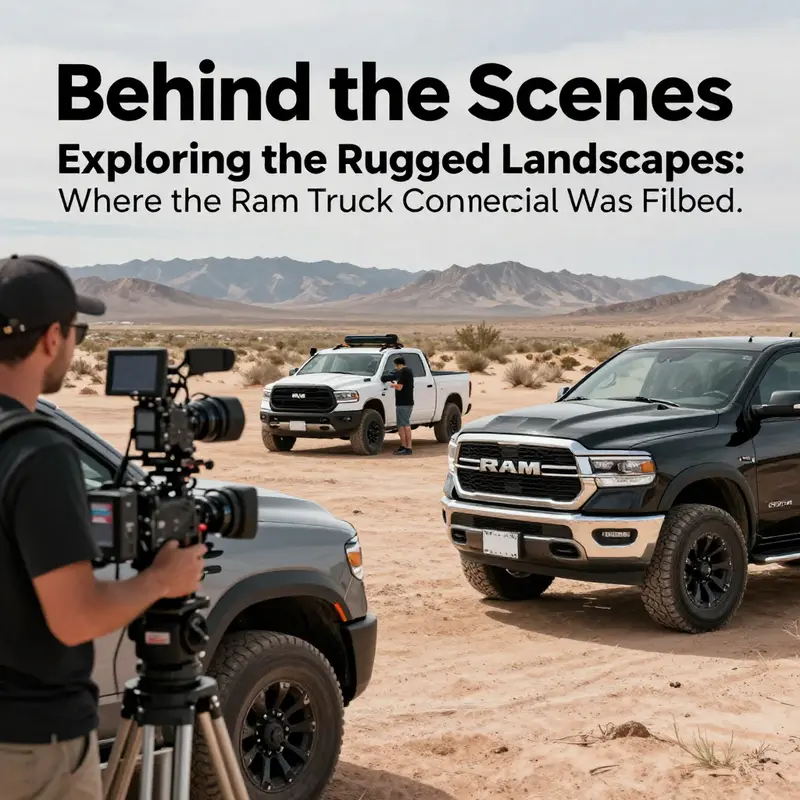
The Southwest has a way of bending light and terrain into theater, turning bare rock and wind into a living backdrop for large-scale storytelling. When a major truck-focused campaign needed a stage that could testify to grit, endurance, and traveler’s resolve, producers turned to that vast, sun-scorched expanse where every ridge line reads as a challenge and every gust of dust seems to etch a line in the air. The decision to shoot in the American Southwest was less about finding a scenic postcard than about discovering a weathered, sensory environment that could converse with a vehicle built for rough terrain and long miles. The resulting footage has a texture that feels earned rather than manufactured—an authenticity born from landscape rather than from a studio floor. In this chapter, we explore how those landscapes were selected, how the shoot unfolded, and how the union of desert, canyon, and desert hilltop culminated in a narrative that speaks to strength, reliability, and a distinctly American spirit without ever losing sight of the human hands that coax the scenes into motion.
The search for the right terrain began with a careful consideration of what the campaign was trying to communicate. The core message emphasized durability and capability—the ability to navigate rough, uneven ground with calm, a sense of purpose under a wide, expansive sky. It wasn’t enough to find a pretty vista; the location needed to offer a testbed for the vehicle’s traction, balance, and power. In practice, this meant scouring miles of desert plains for entry points into canyons that could be traversed by wide rigs, spots where the road narrowed to test the vehicle’s turning radius, and elevations that could reveal how the engine crowd and the drivetrain responded under load. The Sonoran Desert and the Chihuahuan Desert—regions known for their dramatic silhouettes and long horizons—were among the landscapes under consideration. They offered more than aesthetic appeal; they offered a geometry of grit that would be legible on camera. The desert’s quiet is not empty silence but a field of subtle noises: the scrape of a rock against a tire, the soft whine of a winch, the distant rattle of a carrier as it bounded over a washboard section. These are the sounds that give the imagery weight, grounding it in a tangible, lived-in world.
The reality of filmmaking in such environments is that precise sites are often guarded secrets, shared only with those who need to know for safety, permit, and logistical reasons. Production teams routinely work with local authorities to secure access, maintain environmental compliance, and minimize disruption to the ecosystems that make these places unique. The Southwest locations selected for this campaign were chosen not only for their dramatic topography but also for the practicalities of production. Remote, expansive spaces reduce clutter on camera and support longer shooting days without compromising safety. They also provide a consistency of light and color that helps the team maintain a cohesive look as scenes shift from dawn to dusk. Yet even with careful planning, the desert remains unpredictable: sudden wind shifts, temperature swings, and shifting sands can alter a shot’s composition on the fly. The crew’s ability to adapt—repositioning a camera, recalibrating a drone, or shifting the sequence to a more stable surface—became as essential as any pre-planned storyboard.
From the earliest conversations, the production’s approach to the Southwest’s landscapes embraced a collaborative approach. Local environmental teams were integral to the planning process, ensuring that every footprint left behind would be offset by careful restoration and responsible stewardship. Permitting processes demanded patience and transparency, with a clear schedule that respected both the land and the people who call it home. The team’s respect for the environment mirrored the campaign’s broader ethos: products may be engineered for performance, but performance must exist within a framework of responsibility. The desert’s delicate balance—where fragile plant life and fragile air quality coexist with the need to tell a powerful story—demanded a discipline that is easy to overlook in the thrill of a stunt sequence. The result was a production rhythm that moved with the land itself: it could be brisk when the light demanded it, patient when performance required iteration, and careful when safety and stewardship called for it.
On set, the human element mattered just as much as the machine. Directors, stunt coordinators, and technicians worked with a precision born of experience in real-world terrains. Real drivers performed the maneuvers that would be featured in the final spots, bringing a level of control and authenticity that would have been difficult to fabricate with mere CGI. In the wilds, a staged moment becomes a living test: you can see the vehicle’s tires bite into sun-baked earth, feel the weight shift as the wheel climbs over a jagged rock, and sense the drama of descent as momentum is carefully managed with a careful balance of brakes, steering, and throttle. The team’s discipline was visible in every take: each setup was reduced to its essential elements, then layered with the experience needed to extract the most honest performance from both vehicle and operator.
The physics of desert travel—where the road doubles as a narrative device—was integral to how the scenes read on screen. The camera teams leaned into the desert’s natural lighting, exploiting the remnant heat haze and the long, dramatic shadows that arise as the sun climbs and falls. The golden hour—the brief period when the sun’s angle bathes the landscape in a warm, almost tangible glow—provided a cinematic clarity that highlighted the truck’s silhouette against the rugged terrain. It wasn’t simply a matter of aesthetics; the light shape helped the audience read the vehicle’s proportions, its stance, and its relationship to the land in ways that a more clinical daylight could not. The desert’s color palette—reddish ochres, tawny browns, sun-warmed grays—provided a natural canvas on which the vehicle’s lines could breathe. The result is a series of frames where the truck seems to emerge from the land rather than stand apart from it, a visual metaphor for reliability arising from a terrain that itself demands endurance.
A crucial element of the shoot’s success lay in marrying practical effects with the moment’s cinematic needs. The team prioritized real-world driving over heavy post-production augmentation. When the sequence called for rock-crawling through a narrow gorge or a heavy-tow challenge up a pine-streaked grade, the performers delivered in real time. The rock faces were not sanitized; they bore the marks of erosion and time, offering texture that cameras could record with a sense of honesty. The crews calculated weights, tested pull points, and rehearsed the ascent and descent of steep sections until the lines between risk and control were carefully balanced. Every hitched rope, every winch line, every set of heavy-duty straps worked in tandem with the vehicle’s mechanical advantage to create a cadence that the editors could later sculpt into a rhythm that felt both urgent and assured. In this sense, the desert provided not just backdrop but a stage for the choreography of power and precision—where every motion is earned and every result meaningful.
The interplay of stunts and safety protocols formed a steady heartbeat through the production. Safety wasn’t an afterthought; it was a core parameter around which shot lists, camera placement, and even transport logistics were designed. The team employed a mix of on-site coordinators, safety engineers, and stunt technicians who specialized in working under harsh conditions. They mapped out contingency routes for evacuation, established communication channels that could endure the muffling effects of long-range desert travel, and maintained medical readiness for the bracing heat and the physically demanding tasks that the sequence demanded. This meticulous preparation paid dividends in the form of longer, more productive shooting windows. When the light favored a particular canyon approach, the crew could run a sequence with confidence, knowing that the risk was managed and the timing synchronized with the day’s weather and the camera’s needs.
The desert’s weather patterns brought another layer of complexity and beauty to the production. The days could begin with cool, almost crisp air that felt like a promise of performance, only to give way to a furnace-like heat by midday. A consistent challenge was the wind, which could whip up a storm of dust that would alter visibility and complicate camera work. The crews learned to read the sky’s mood and to anticipate changes in wind direction, adjusting camera positions and cover shots to preserve the scene’s clarity. Yet the wind also infused the footage with a texture that felt alive, a reminder that the landscape is a partner in storytelling rather than a passive setting. The dust, when tamed by the right technique, could become an element of atmosphere—an almost cinematic haze that adds a grayscale filter to the sun’s glare, heightening the sense of scale and distance. In the right frame, the dust doesn’t obscure; it reveals, shaping the viewer’s perception of space, speed, and the vehicle’s interaction with the ground.
In such a production, lighting and color were tightly choreographed to ensure continuity across scenes shot at different hours or from different vantage points. The natural light often dictated the rhythm of the day, with early sessions capturing the pale whisper of dawn and late sessions bathing the land in the honeyed glow of sunset. The cinematographers worked with polarizers, diffusion, and careful lens choice to tame glare while preserving the harsh, sculptural edges that define desert form. The camera’s eye could render the truck’s body as a study in line and contour, or as a silhouette that carved itself into the rock’s rough texture. The editors later stitched these disparate moments into a cohesive arc, trusting the desert’s own logic to carry the story forward: a vehicle capable of conquering the terrain becomes a conduit for the people who rely on it, moving through a world where endurance and practicality translate into freedom and exploration.
The production’s approach to realism also extended to how the cast and crew interact with the landscape’s cultural memory. The Southwest is a region of layered histories—ancient trails, modern highways, and the wind-carved marks left by those who have navigated these lands before. There was a conscious effort to honor this sense of place without turning the shoot into a cliché of rugged frontier imagery. The stunt work, the camera angles, and the vehicle’s positioning were all designed to respect the land’s character, to evoke a sense of honest, grounded adventure rather than a flashy, performative bravado. The resulting narrative isn’t simply about a vehicle conquering terrain; it’s about a collaboration where landscape, craft, and purpose converge to invite viewers to imagine themselves in a world where capability and responsibility are inseparable.
The desert’s role as a character in the story was reinforced by the film’s soundscape. Sound designers captured the quiet that accompanies wide, open spaces, but they also layered in the low creak of metal, the soft whump of suspension over rough ground, and the almost percussive drum of a heavy load being settled into place. The interplay of silence and sound became a tool for storytelling, signaling moments of caution, clearance, or exhilaration. In the most striking sequences, the interplay between the vehicle’s motion and the terrain’s stubborn weight created a rhythm that felt almost musical: a steady cadence that matched the pulse of the desert itself. The narrative thus felt less staged and more earned, a story in which the landscape lends its own moral weight to the journey depicted on screen.
If the production’s outward appearance suggests spectacle, the behind-the-scenes work reveals a meticulous, almost surgical level of planning. The crew spent days testing different camera angles to maximize the impression of scale, then refined the sequences through multiple takes to ensure the choreography read as both confident and human. The directors and editors sought a balance between awe and approachability: a viewer should feel the truck’s strength while also sensing the human hands steering it, the crew’s shared professional pride, and the land’s quiet invitation to push just a little further. This balance is what keeps the final edit honest. The audience sees a vehicle moving through the desert with assurance, but the confidence is earned through countless hours of preparation, a respect for the earth’s implacable pace, and a willingness to adapt when sweep of light or wind steers the moment away from a planned shot.
As the campaign’s narrative unfolds, the Southwest’s landscapes offers a memory of where the story began and a beacon for where it could go. The visuals speak of endurance—how the land challenges and the vehicle answers with reliability. They remind us that the road is a conversation, not a conquest, and that the most memorable camera moments arise when the land becomes a collaborator rather than a prop. The shoot’s longer arc—its commitment to authenticity, its careful management of risk, its embrace of natural lighting and real stunts—transforms a campaign into a quiet proclamation: a tool designed for work and a landscape built to withstand the test of time can together tell a narrative that resonates with viewers on a personal level. In this way, the desert does more than provide a backdrop; it shapes the very idea of what it means to travel with purpose.
For those who study the intersection of place and product in modern advertising, the Southwest shoot demonstrates how location scouting can function as a form of storytelling in its own right. The landscapes become not just scenes but catalysts—forcing decisions about pacing, about what is shown and what remains in the frame, about how to balance speed with the weight of the ground beneath. They compel the crew to think like navigators as much as like filmmakers: to map routes, anticipate weather, and understand how light behaves over stone and sand. The result is a campaign that hinges on a sense of possibility—not fantasy, but a grounded belief that when people and machines work together in the right place, the terrain itself becomes a teacher, a giver of scale, and a witness to the journey’s truth.
In closing, the Southwest was more than a location. It was a character that asked questions of the crew and answered with power, with texture, and with a narrative clarity that could travel beyond the screen. The desert taught patience, the canyons offered drama, and the sun-baked plains delivered the honest light that revealed the vehicle’s true capability. The final product stands as a testament to what it means to film in a place where the land and the machine share the same stubborn, workmanlike dignity. It’s a chapter in which place and purpose converge, yielding not just striking visuals but a story about reliability earned through effort, planning, and a respect for the land that hosts the journey. The Southwest didn’t simply host a shoot; it invited a conversation about endurance, authenticity, and the human capacity to understand and respect the landscapes that keep us honest while allowing us to dream bigger than our next miles.
External resource: Behind the Scenes. For more insight into how a major vehicle campaign comes together on a desert stage, see the official behind-the-scenes materials on the brand’s site. Behind the Scenes
Final thoughts
In conclusion, the filming locations in Arizona and New Mexico not only define the visual allure of the Ram Truck commercial but also resonate deeply with the values of strength and durability that the brand embodies. Understanding the impact of these rugged landscapes provides valuable insights for logistics, construction, and delivery businesses seeking reliability and performance in their fleet choices. The behind-the-scenes efforts illustrate the dedication and artistry that go into creating a captivating brand narrative and effectively communicating product reliability in today’s market.