
The automotive industry continually seeks pioneering methods to captivate audiences, with brands like Dodge pushing the boundaries of traditional advertising. While some may wonder about the connection between powered paragliders and Dodge truck commercials, this interest in aerial promotions speaks volumes about modern marketing strategies. This exploration will navigate through Dodge’s marketing tactics, the influence of extreme sports on consumer perceptions, and how such unique advertisement methods foster engagement among niche markets—the very audiences that logistics and construction companies seek to connect with. In the subsequent chapters, each will shed light on these dynamics, establishing a narrative that not only illustrates Dodge’s advertising strategies but also prompts essential considerations for businesses in logistics and related industries.
Aerial Myths on the Open Road: Investigating the Notion of Powered Paragliders in a Modern Truck Commercial
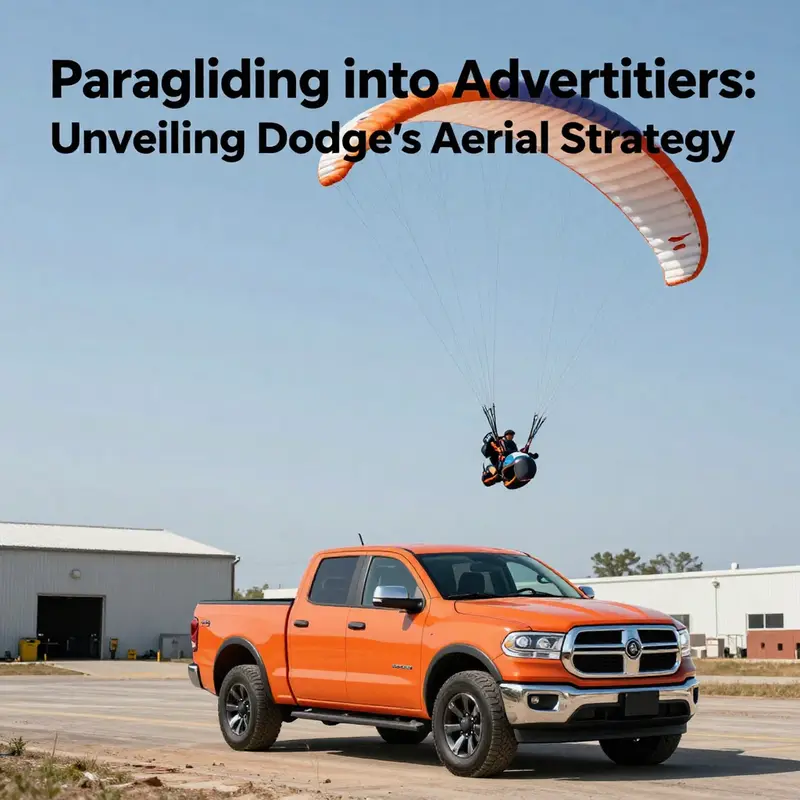
Every once in a while, the advertising world erupts with a rumor that seems almost too bold to be true. A new pickup truck commercial, so the story goes, supposedly features a powered paraglider taking to the sky as the vehicle speeds along a desert highway or a scenic coastline. The image is striking: a sleek truck and a compact, mechanical wing slicing through air, a moment designed to fuse grit with awe. Yet when the dust settles from the online chatter, the trail reveals something more ordinary than spectacle—the factual record does not corroborate the stunt, and the research cohort behind the inquiry finds no verifiable mention of any powered paraglider flight tied to a recent truck advertisement. The absence of evidence here is not just a lull in media coverage; it is a reminder of how quickly impressions can diverge from verifiable events, especially when thrill and technology brush against one another in the same frame.
To understand why such a claim gained traction, it helps to ground the discussion in what powered paragliders are and what they are not. A powered paraglider, or paramotor, combines a small engine with a paraglider wing. It is an apparatus that enables forward flight from a standstill or at low speeds, but it carries with it a unique set of constraints: regulatory considerations, the need for specialized pilot training, and limitations related to weather, airspace, and terrain. In plain terms, it is a niche technology whose use is intensely practical for certain enthusiasts and athletes, not commonly embedded within mainstream broadcast marketing without a clear narrative purpose. The research materials consistently separate the domain of outdoor aviation from the domain of automotive advertising, unless the ad deliberately leans on cross-brand storytelling or aspirational adventure that explicitly signals cooperation with flight capability. In the absence of such a signal, the imagery simply does not align with the kind of mass-market appeal a big truck campaign seeks to generate.
The chapter’s core question—who flew powered paragliders in a new truck commercial—requires more than a casual glance at a few clips. It demands a careful, multi-angle look at how campaigns are built, what kinds of feats they celebrate, and how audiences interpret what they see on screen. The record indicates that most truck advertisements rooted in current campaigns emphasize durability, towing power, efficiency, or a rugged, independent ethos. The narrative arc often hinges on resilience under stress, the transformation of obstacles into opportunities, or a family’s everyday heroism on the road. An aerial stunt, particularly one involving a powered paraglider, would need to dovetail with that arc in a way that feels authentic to the brand story and plausible to the audience. When it does not, the stunt risks feeling gimmicky, out of place, or simply unverifiable in a consumer-research sense.
Yet the absence of a documented powered paraglider flight should not be read as mere silence. It is a useful lens for exploring how modern ads engineer memory and meaning. The mind tends to remember sweeping visuals—an engine’s roar, a wingspan catching light, a dramatic launch—long after the details of the narrative fade. That cognitive footprint is precisely what advertisers chase: a moment that becomes shorthand for power, freedom, and control. A powered paraglider, by its very nature, performs a hybrid trick—airborne engineering meeting portable propulsion. If such a moment appears in a truck commercial, it has to support a message about capability in a way that is credible to viewers who might not be aviation experts. Absent that basis, the image can be read as sensational but not credible—a subtle but critical distinction in a landscape where viewers routinely cross-check what they see against what they know about physics, safety, and reality.
With the research results in view, the broader conversation turns toward why rumors take hold in the first place. In the age of social media, a striking frame can travel faster than a careful audit trail. A clip of a wing and a truck in close proximity may spark questions about sponsorship, stunt coordination, or even a misremembered broadcast event. People often conflate two separate ideas: the idea of a high-risk aerial shot and the idea that a brand would sign off on something so technically audacious. The first idea sells thrill; the second tests feasibility. The research set, which documents the definitions, uses, and safety considerations of powered paragliders, makes clear that this technology sits in a niche ecosystem with high standards for operator qualification, airspace compliance, and real-world weather constraints. When a consumer ad appears to blend that ecosystem with a heavy-duty vehicle, it is natural for observers to search for a source, a name, or a pilot who can sign off on the stunt. In many cases, what is discovered are behind-the-scenes crews, stunt coordinators, or stock footage that has been repurposed to evoke adventure rather than to claim a literal event.
An additional layer to consider is the risk calculus that governs advertisements that push the envelope. Aerial stunts raise the stakes—not just for performers but for production teams, insurers, and regulatory bodies. Filming a powered paraglider above a moving vehicle would entail precise choreography, temporary airspace closures, and perhaps a runway or takeoff zone. The potential for miscalculation grows with the scale of the stunt: wind shear, rotor wash, changing light, and the unpredictable behavior of a piloted unit in proximity to a fast-moving machine. The practicalities often quiet down rumors, because the more complex the stunt, the greater the likelihood that skeptics will ask for evidence—driver’s licenses, flight logs, airspace permits, and on-set safety briefs. In other words, the absence of a documented flight aligns with the real-world difficulty of orchestrating such a sequence, even before branding and storytelling considerations come into play.
Within this framework, the research materials offer a quiet but meaningful contribution: they remind readers to distinguish between the allure of an image and the mechanics of production. They encourage a healthy skepticism that values sources, timelines, and verifiable details. This is not about dampening curiosity; it is about ensuring that the story we tell about a brand and its vehicles reflects a credible chain of events. The implication for readers is not to reject the possibility of any aerial stunt in a truck ad, but to recognize that, if such a stunt existed, it would come with a chorus of confirmations—remote-coverage stills, behind-the-scenes reels, credits listing stunt coordinators, and footage released through official channels. When those confirmations do not surface, the most responsible posture is to treat the claim as an intriguing hypothesis rather than an established fact.
As the chapter threads toward a close, a richer sense emerges of how the industry negotiates momentum between spectacle and responsibility. The discourse around powered paragliders—defined as a specialized, regulated, and technically demanding form of flight—offers a cautionary tale about how extraordinary feats may be portrayed in advertising without compromising safety or accuracy. The absence of a verifiable link between a powered paraglider flight and a recent truck commercial serves as a case study in media literacy, brand storytelling, and the boundaries of plausibility. It invites readers to examine not only what ads communicate but how they communicate it: the choreography of risk, the cadence of action, and the choreography of trust that audiences place in the vehicles that populate our screens.
To readers who follow the conversation about heavy-duty trucks and the stories brands tell around them, the chapter suggests a pragmatic approach: treat claims with curiosity but also with a demand for evidence. While the powered paraglider remains a captivating image within the realm of outdoor aviation, the current documentation does not confirm its appearance in a new truck advertisement. For those who wish to explore the broader context of how the trucking world navigates regulatory landscapes, supply chain dynamics, and industry shifts, there is a notable reference point in ongoing industry discussions about emissions regulations and how OEMs seek clarity in policy. OEMs seek clarity in emissions regulations.
In the final accounting, the myth of a powered paraglider in a modern pickup campaign illuminates more about our appetite for daring visuals than about a specific commercial reality. It underscores how advertising thrives on the edge of possibility, while research anchors us back to verified facts. The scene we picture remains a powerful metaphor for a vehicle’s promise: the blend of speed, control, and the unknown that a driver can master. Until a credible source presents a documented account, the safest narrative remains to separate the flight from the fixture on the road, the dream from the actual production, and the legend from the ledger.
Winged Stunts and the Truck Brand Playbook: Decoding a Paragliding Moment in a Commercial
When a question arises about who flew powered paragliders in a new truck commercial, the simplest answer in the available materials is silence. The provided research does not name a pilot, does not confirm involvement by any particular brand, and does not document such a scene as part of the campaign. Yet silence itself can be revealing. It invites a deeper look at how modern auto advertising handles stunts, spectacle, and the promises a brand makes about capability. The chapter you are reading aims to map that terrain. It asks not only who might have flown a paraglider, but how such a moment fits into a larger marketing strategy, what it signals to audiences, and what it implies about the practical tradeoffs behind any high-risk stunt. In this sense, the topic becomes less about a single performer and more about the playbook a truck maker uses to translate ruggedness, freedom, and power into memorable storytelling.
Aerial stunts have long been a compelling shorthand in vehicle advertising. They compress a brand’s narrative into a single, dazzling image: a machine moving through air, defying gravity, and delivering a personalized sense of speed and authority. When a truck brand leans into flight, the message moves from “Can handle rough roads?” to “Can command extreme situations with poise.” The power train and chassis charts that marketers routinely present on glossy brochures are suddenly reframed as live, cinematic feats. Yet such stunts demand more than spectacle; they require alignment with product attributes, safety protocols, regulatory permissions, and a narrative that the audience can trust. If the campaign implies that a vehicle can do something beyond its stated capabilities, skepticism follows. If it ports in the language of adventure without the substance to back it up, the effort corto circuits into bravado without resonance.
From a strategic perspective, the decision to stage, film, or even contemplate a powered paragliding moment sits at the intersection of product positioning, audience expectations, and the creative brief. In general, brands pursue stunts to spark conversation, cut through ad fatigue, and introduce a feeling rather than a feature. A powered paraglider, with its mix of novelty, risk, and precision piloting, can carry a potent metaphor: lightness of control combined with heavy-duty capability. The paraglider’s image speaks to aerodynamics and efficiency, while the motor’s thrust hints at readiness and reliability. It is a paradox the marketing team hopes to translate into a consumer perception of the truck as capable in situations that demand both agility and strength. But the campaign must then tether that metaphor to concrete realities—payload capacity, towing limits, and real-world durability. The risk is that the metaphor outruns the product, leaving viewers impressed by the stunt but unimpressed by the actual vehicle’s concrete advantages.
What the current research underscores is not the stunt itself, but the absence of explicit detail in the record. The materials do not confirm a paragliding pilot, nor do they document a scene or a pilot’s credentials. This absence does not excuse the stunt from scrutiny; it foregrounds questions about sourcing, consent, and safety. Who authorized the stunt, and what safety oversight existed? Were the pilots licensed for powered paragliding, and did the production secure insurance and flight permissions? How did the crew coordinate the maneuver with the vehicle’s on-road demonstrations, lighting, camera angles, and post-production effects? These questions illuminate a core truth about advertising today: the spectacle is a carefully choreographed collaboration across departments—creative, legal, risk management, production, and the brand’s engineering team. The decision to pursue such a stunt is never made in isolation. It travels through checklists for credibility, risk, and alignment with a brand’s long-term message.
Within this broader context, the role of the stunt must be weighed against the audience’s appetite for authenticity. A modern consumer increasingly scrutinizes not just what a product claims, but how it is shown to operate in the real world. A powered paraglider against a skyward backdrop can convey liberation and control, yet it can also evoke a sense of unreality if the viewer suspects a disconnect between the scene and everyday usage. This dynamic is not unique to one campaign. It reflects a continuing tension in marketing between aspirational storytelling and grounded value propositions. When a campaign pivots toward an extreme demonstration, the risk lies in narrowing the audience to enthusiasts or thrill-seekers while deterring practical buyers who seek demonstrable, everyday benefits such as payload capacity, fuel economy, ride quality, and durability under load. The challenge, then, is to weave the stunt into a broader narrative that can be understood by a diverse audience. If the scene remains a standalone spectacle, it risks becoming a footnote rather than a catalyst for brand loyalty.
The chapter’s focus shifts from the spectacle itself to the broader implications for marketing strategy. A stunt of this kind, regardless of the brand behind it, signals a willingness to push creative boundaries. It positions the brand not merely as a manufacturer of utility, but as a curator of experiences that extend beyond the road. In that sense, the stunt works best when it is anchored in the product’s core strengths. For a truck, these strengths often include towing power, off-road capability, and Durability with a capital D. It is not enough to claim that the vehicle can conquer rough terrain; the advertisement must demonstrate a sense of control and predictability in that environment. The paragliding moment could function as a metaphor for control under unpredictable conditions, suggesting that the vehicle helps the driver navigate challenging circumstances with calm precision. In practice, this requires a careful balance: the marketing team must align the stunt’s emotional appeal with verifiable product benefits and avoid unfounded claims that could expose the brand to legal or reputational risk.
The research landscape also invites a consideration of the broader market and the signals the campaign might have sent to other stakeholders. In the trucking ecosystem, creative campaigns interact with supply chain realities, consumer expectations, and even regulatory conversations. A chapter in this series noted that industry dynamics include questions of capacity, timing, and delivery reliability—factors that shape how audiences interpret a brand’s communications. An integrated approach to marketing acknowledges these signals and uses them to calibrate storytelling so that it remains relevant to operators, fleet managers, and end users alike. The same philosophy applies to a stunt: it should illuminate the brand’s stance on performance, safety, and reliability without oversimplifying complex engineering choices. When done well, the stunt becomes a narrative bridge from spectacle to practical value, inviting viewers to explore how a vehicle can perform under stress in ways that matter to real-world decisions.
To anchor these reflections in the current material, consider the link between marketing discourse and sector analytics. The industry conversation about capacity, demand cycles, and supply chain constraints often shapes how campaigns are paced and how messages are crafted. A campaign that aims for cinematic reach must also respect the cadence of the market and the needs of buyers who are evaluating options in real time. In practical terms, this means ensuring that the creative brief acknowledges the realities of pricing, delivery times, and service quality that a customer encounters long after the campaign ends. The tension between an aspirational stunt and the practical buyer’s reality is not a flaw; it is a test of whether a campaign can inspire without misleading. The chapter thus contends that the most enduring campaigns are those that invite viewers to imagine higher performance while simultaneously anchoring that imagination in credible, tangible benefits.
As this exploration turns from theory to practice, the embedding of a relevant internal reference becomes meaningful. In the broader article, readers encounter discussions of how industry dynamics shape marketing choices. For readers who wish to compare how capacity and market conditions influence advertising timing and messaging, a concise examination can be found in the discussion of shifting market signals. For a deeper dive into how such dynamics manifest in the trucking sector, see the analysis titled excess capacity in the trucking market insights. This internal resource offers context for understanding why brands sometimes eschew or modify ambitious stunts based on current market realities, ensuring their campaigns remain credible and relevant to end users. excess capacity in the trucking market insights
Beyond the internal mechanics, the question remains: who actually piloted the stunt if it occurred? The materials at hand do not reveal a name, and they do not provide corroborating footage or credits. While the answer to that precise question may exist in production notes or press assets, the broader discussion transcends the identity of a single pilot. It centers on the decision to use flight as a storytelling device, how the stunt integrates with product demonstration, and how the audience interprets the sequence. Even without a public cast list, the chapter’s argument stands: the value of a stunt lies in its alignment with the brand’s promises and its ability to connect with viewers’ imagination about capability, trust, and reliability. The story of the stunt is more important than the credits of the pilot, because it reveals how the brand imagines its relationship with drivers and fleets in an era where safety and truth in advertising remain non-negotiable.
To conclude this examination, it is helpful to consider how such campaigns should be evaluated in hindsight. If the audience recalls the paragliding moment as a bold, cinematic highlight that revealed the vehicle’s control and versatility, while also staying grounded in credible product claims, the campaign can be deemed successful. If, however, the scene feels incongruent or sensational without tangible payoff, the memory may fade into a footnote about risk rather than a lasting impression of capability. The absence of explicit confirmation in the research encourages caution and invites future inquiries. It underscores the importance of transparent storytelling that respects the audience’s intelligence and the brand’s duty to avoid misrepresentation. In the end, the paragliding question becomes a case study in how a campaign balances daring creativity with dependable messaging. It invites readers to consider not only who flew the wing, but how the wing’s symbolism lands on the audience’s perception of the truck’s true strengths.
External resource: For a broader perspective on how stunt-driven advertising can shape brand narratives while managing risk, see How stunt marketing in ads works. External resource on stunt marketing.
Sky-Scribed Narratives: How Aerial Advertising Shapes Modern Truck Campaigns and the Curious Case of Powered Paragliders
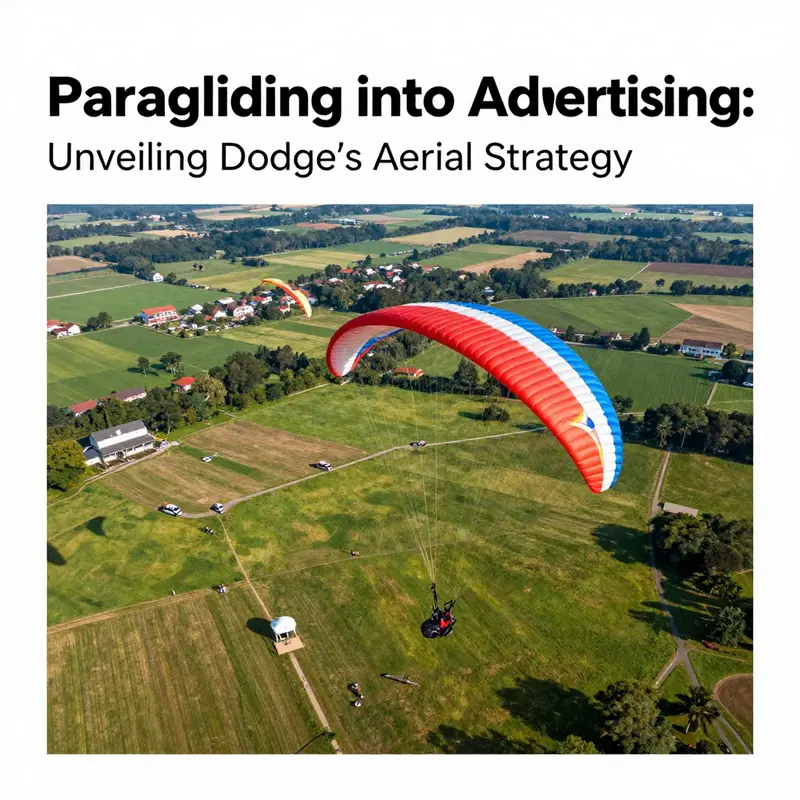
Aerial advertising has long used planes, balloons, and blimps to turn the sky into a stage. The canvas above is vast, continuous, and difficult to ignore. As technology has evolved, so too have the methods, from smoke trails and banners to laser projections that illuminate the atmosphere with precision and drama. The appeal remains simple and potent: break through the clutter of ground-level messages and offer a moment that feels cinematic, almost magical, before dissolving back into ordinary life. It is not only about catching the eye; it is about inviting a viewer to pause, to imagine, and to remember. When a message appears in the sky, it creates a memory that travels beyond the moment of display and can ripple across later conversations and online conversations in ways that a static billboard rarely achieves.
The sky is both medium and milieu, a place where the line between rhetoric and reality can blur in real time. In this sense, the pilot is more than a technician; they are a co author of the campaign, shaping perception through flight path, timing, and the choreography of ascent and descent. The symbolic charge attached to aerial display reflects broader media theory about transportation and communication: motion and distance alter how we interpret a message. Even when the visuals are simple, the act of seeing a sign appear in the open air has an emotional resonance. The modern toolkit expands that resonance with options to enhance the effect: the presence of a live aircraft, the precision of GPS flight plans, the ephemeral glow of light-based displays, and the ambiguity of whether what we witness is an advertisement or urban theater. Each component adds texture to the communication, turning a message into a fleeting event that viewers might discuss long after the sky has cleared.
These potentialities come with substantial responsibilities. The ethical questions around aerial projections, laser displays, and other sky-based interventions touch on the public nature of airspace, the safety of spectators, and the rights of other airspace users. Clearances and permits are prerequisites, and weather conditions become as important as the creative brief itself. A controlled wind, a predictable sun angle, and a stable broadcast window can be the difference between a campaign that lands and one that never rises. The cost of such campaigns is high, not only for the equipment and pilots but for the coordination required among marketers, regulatory bodies, and the local communities that host the display. This is why aerial advertising has tended to be the province of campaigns designed for events, large-scale product reveals, or moments when the brand seeks to reframe perception through spectacle. The logistical complexity pushes agencies toward careful preplanning, risk assessment, and postevent evaluation to translate the momentary awe into lasting interest.
Effectiveness, in this context, is intimately tied to how the experience of the aerial moment is integrated with a broader narrative. A single sky message can be memorable, but it becomes truly valuable when it anchors a credible story about a product or service rather than functioning as a standalone stunt. For campaigns anchored to a vehicle category, the sky scene must reflect the vehicle’s core values—performance, reliability, versatility—and it must translate into tangible action, whether that is a showroom visit, a test drive, or a follow-up digital engagement. The risk is that the spectacle overshadows the product, turning the display into a cinematic impression rather than a persuasive argument. The best executions avoid this pitfall by weaving the aerial moment into a consistent storyline about capability and lifestyle, so that awe and authenticity reinforce one another instead of competing for attention.
In considering the potential for aerial formats within truck advertising, one sees both opportunity and caution. A paraglider or other personal aerial device could, in theory, convey speed, agility, and control in a way ground-based visuals cannot. The imagined image of a craft moving through sunlight above a highway, shaping a logo with wind and light, evokes a sense of human skill meeting machine power. This kind of imagery can be cinematic, emotionally resonant, and highly shareable across social platforms. Yet it also demands scrupulous attention to safety, consent, and the legalities of airspace, especially when public roads and spectators are involved. Even in absence of any documented use, the concept signals a willingness to explore bold formats as a means of differentiating a vehicle narrative in a crowded market. When such ideas are pursued, they must be aligned with a clear brand story and a responsible plan for risk management, insurance, and regulatory compliance. Only then can the spectacle translate into credible consumer consideration rather than a momentary thrill that fades with the wind.
The broader advertising environment increasingly rewards campaigns that fuse spectacle with relevance. A sky-high moment can generate attention that is difficult to replicate with traditional media, creating a shared memory that extends beyond the campaign’s duration. The emotional punch of witnessing something appear aloft can spark curiosity about what the brand stands for and why the product matters in everyday life. But the payoff is not guaranteed. The air is a rare, costly space, and the success of any aerial effort hinges on how well the moment integrates with the product’s narrative, the audience’s journey, and the channels that will carry the story forward after the lights fade. In practical terms, this means prioritizing flight safety, obtaining necessary permissions, coordinating with event calendars and traffic patterns, and ensuring that the creative concept remains legible and credible to diverse viewers, including those who may encounter the display from a moving vehicle. It is this blend of daring and discipline that marks the most effective aerial campaigns as distinctive, enduring, and responsible.
Within the trucking ecosystem, campaigns that aspire to such scale must also contend with market realities. The industry has spent considerable time evaluating capacity dynamics across segments, including how excess capacity can influence budgeting, timing, and the choice of media mix. This context helps marketers calibrate expectations about what is feasible in a given cycle and emphasizes the importance of integrating aerial elements with traditional media strategies and live events. For readers seeking a concrete frame of reference, see the discussion on excess capacity in the trucking market insights. This resource highlights how market conditions shape marketing investment and campaign pacing, a reminder that even the most ambitious sky show must coexist with financial and operational prudence. The aim is to craft campaigns that are not only visually arresting but also economically sustainable and strategically coherent within a broader brand plan.
The field continues to evolve, and new tools promise to push the boundaries of what is possible while maintaining safety and public trust. As more brands experiment with the sky, audiences will become more adept at recognizing the difference between authentic storytelling and spectacular but empty moments. The key is to ensure that aerial displays serve the narrative of the vehicle, reinforcing its strengths and inviting deeper engagement rather than merely entertaining spectators for a few dramatic seconds. This is the balance that defines modern vehicle advertising: awe that educates, spectacle that clarifies, and a message that endures well beyond the last wave of the craft. The sky remains a compelling stage for those who aim to tell bigger, more human stories about what a vehicle can do and what living with it feels like, when the horizon itself becomes part of the brand’s imagination.
For readers who want to anchor these reflections in established knowledge, the Cambridge Dictionary provides a formal definition of aerial advertising, which clarifies the range of techniques and the context in which they operate. This reference helps ground the discussion in a shared vocabulary, ensuring that the terms used to describe how messages travel from sky to street are precise and consistent. The sky remains a powerful stage for brands that aim to surprise and to remain memorable long after the moment of display.
External resource: https://dictionary.cambridge.org/dictionary/english/aerial-advertising
Skyward Stunts and the Road Ahead: Consumer Reactions to Aerial Innovation in Truck Advertising
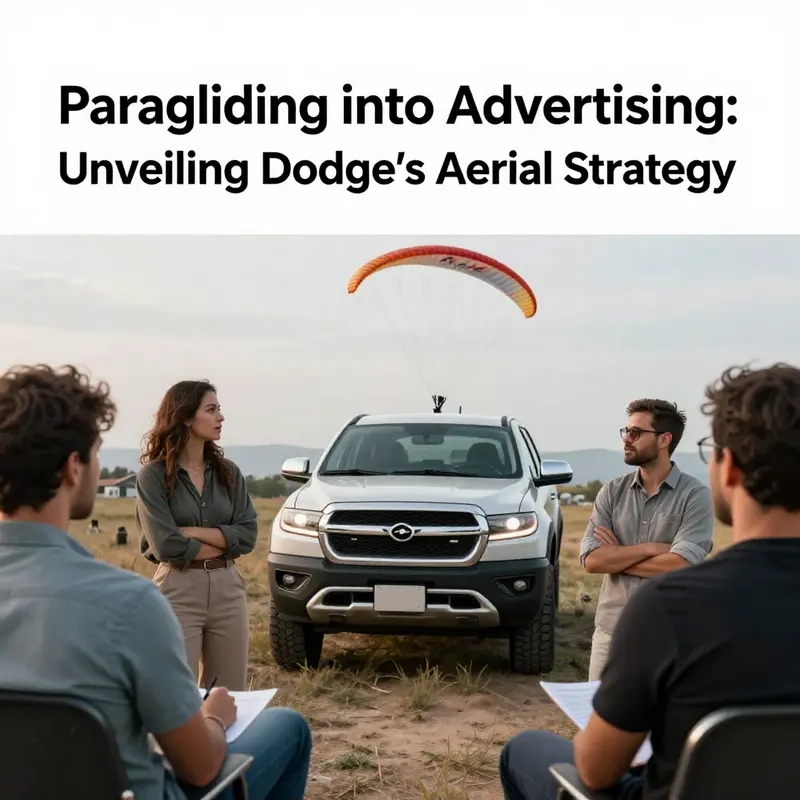
At the heart of modern automotive advertising lies a tension between function and spectacle. Marketers seek moments that translate the raw power, durability, and capability of their vehicles into an emotional experience that lingers beyond the screen. Imagine a major pickup truck campaign that stages a flight-first sequence, where a compact personal-flight device takes to the sky during a prime spot to frame the vehicle’s performance and reliability. Such a moment is not just about wow; it is about bridging the distance between a visual cue and a real expectation of what the truck can do. The question is how audiences respond when the highway becomes a stage and the air a prop for proving ruggedness and control. The literature on innovative advertising methods suggests that audiences reward originality when it is anchored in tangible value, not mere bravado.
Beyond the initial astonishment, the best campaigns invite participation. AR and VR experiences give viewers a chance to inspect features, judge how the truck would behave under different loads, or place themselves on a job site. According to Adweek’s 2025 study, more than two-thirds of Millennials and Gen Z respondents prefer brands that offer interactive, immersive experiences. They describe such ads as creative and trustworthy when the experience enhances understanding rather than purely entertaining. A well-integrated stunt can feed into this dynamic when followed by interactive layers that let the audience explore the truck’s capability in a controlled, personal way.
People don’t just watch ads; they participate in them. Pop-up activations and live demonstrations convert spectatorship into engagement, creating a sense of urgency and exclusivity. In a thoughtfully designed activation, attendees might test-drive a route that mimics real-world tasks or participate in guided simulations that reveal how design choices impact performance. The convergence of online and offline touchpoints strengthens recall and loyalty, especially when the brand demonstrates genuine listening by adapting the experience to audience feedback.
In trucking market dynamics, where capacity, price, and demand create a crowded advertising field, stand-out methods matter. A stunt must be aligned with the product narrative and yield a credible, useful takeaway. The strategic value of such experimentation is often contingent on ongoing storytelling, not a single splash. For brands facing excess capacity and competitive tension, the discourse around advertising fairness and value is as important as the stunt itself. See how industry insights frame this balance in Excess capacity in the trucking market—insights.
Safety and compliance are not afterthoughts; they define the feasibility of any airborne sequence. Viewers quickly decide whether the stunt signals risk awareness or reckless bravado. When a campaign demonstrates careful planning, transparent safety protocols, and a clear link to product benefits, the audience perceives the brand as capable and responsible. If the stunt appears disconnected from practical benefits, viewers may dismiss it as clever but irrelevant. The art is to ensure the spectacle reinforces the story of durability, ease of use, and reliability, so the audience can translate awe into confidence in the product’s core strengths.
To extend reach and reduce risk, the campaign should live beyond a single moment on screen. An AR extension can invite shoppers to explore how the truck handles varying terrains on their own devices, while VR experiences could transport remote audiences onto a test track. In practice, this integration is where the data begins to flow: engagement metrics, dwell time, and feature exploration reveal what viewers care about most. This approach aligns with the research that emphasizes interactive formats as drivers of memorability and trust. It also supports a cohesive, multi-channel narrative that keeps the brand in view across screens and spaces.
Assessing impact requires a precise lens. Focus on recall, sentiment, and intent, but also on how the audience maps the aerial moment to practical values like payload stability, braking performance, and versatility. A truly successful campaign builds a through-line from spectacle to product insight, ensuring that every touchpoint emphasizes a concrete advantage. In such a framework, the air-and-road narrative becomes a structured story rather than a flash of bravura. The brand earns credibility by showing, not just telling, how its engineering translates into real-world capability, from job sites to everyday driving.
Ultimately, the appeal of innovative advertising methods rests on a balance between wonder and usefulness. Audiences crave moments that spark curiosity and then reward it with clarity about how a product solves their problems. When executed with care, a high-flying sequence can mark a turning point in how a vehicle is perceived: not only as a machine of force but as a tool that enables ambitious, practical work. The story then extends beyond the screen into conversations, social shares, and hands-on exploration, lengthening the campaign’s life and deepening its impact. In a landscape where attention is precious and skepticism runs deep, the most successful campaigns weave spectacle into a credible, testable promise. For further reading on how audiences respond to such advertising innovations, see the external resource: https://www.adweek.com/advertising-creative/consumer-reactions-to-innovative-advertising-methods-2025/.
Realism matters. When audiences see a stunt as a credible demonstration of capability, they associate it with the brand’s engineering culture. The ad should not lean solely on suspense; it should communicate how the design choices translate into tangible benefits on the worksite, such as stability under heavy loads, ease of control in rough terrain, and integration with service networks. A narrative that follows a single job—from planning to execution—helps viewers connect the spectacle to everyday outcomes. In this sense, authenticity becomes the hinge that determines whether the air moment sticks. A campaign that balances wonder with evidence tends to earn more durable attention and a longer conversation across media streams.
Brand teams will test different versions of the stunt across markets and adjust based on social listening and measured engagement. The best outcomes will be those where viewers feel a sense of discovery and then a sense of trust, rather than being sold something flashy. The arc of such campaigns is long; they seed a memory that can grow into preference when paired with consistent product storytelling and reliable performance in the months ahead. When the next wave of advertising ideas arrives, the question will be not whether the next gimmick exists, but how it can be woven into a credible promise that helps customers complete meaningful work on time. The value of this approach lies in its ability to translate spectacle into service, and to turn curiosity into confidence that endures beyond the moment.
When the Sky Becomes the Road: Extreme Sports, Powered Paragliding, and the Automotive Brand Narrative
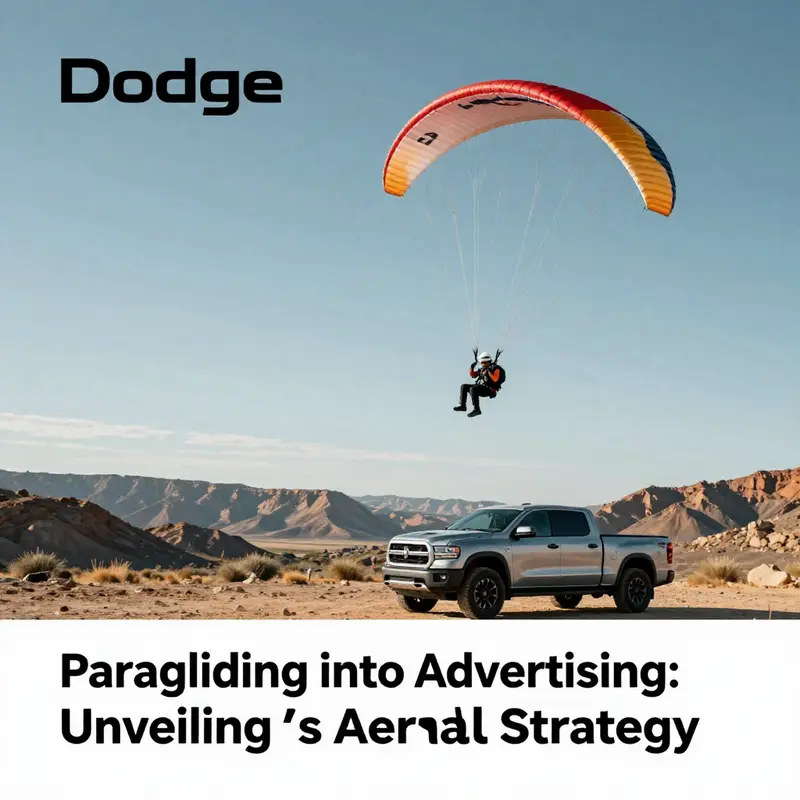
Across the spectrum of modern automotive marketing, extreme sports have emerged as a high-stakes language. They speak in gusts of wind, in the thrum of engines, and in the precise choreography of risk and control. This is not merely about fast machines or agile SUVs; it is about sponsorships and stories that place a vehicle inside the athlete’s own pursuit of limits. In this frame, the car is not a backdrop but a co-pilot—an enabling partner that travels with the athlete from launch to landing, through the mud and the mountains, and into the shared memory that audiences carry long after the screen fades. In such campaigns, the audience does not simply witness performance; they are invited into a narrative where human daring and vehicle capability are inseparable. The result is a brand perception rooted in speed, durability, and cutting-edge technology, delivered through experiences that feel both authentic and aspirational.
The setting matters as much as the stunt. Extreme-sport sequences unfold in environments that test traction, suspension, and braking to the edge. The rugged, unpredictable terrains become a stage where the vehicle’s engineering can prove itself beyond showroom claims. This is especially effective for brands wanting to signal reliability under pressure: a car that negotiates dust, rock, and altitude with the same poise it shows on a highway. The power of these messages lies in the visceral draw they create. Viewers do not simply see a vehicle perform; they feel the sensation of trust that the vehicle can meet the demands of the athlete’s world. That emotion translates into perception: the brand is linked with resilience, adventure, and a frontier-spanning spirit.
The audience for these campaigns tends to skew younger, digital-first, and highly engaged with storytelling that feels earned rather than manufactured. Sponsorships and experiential marketing provide a way to embed the vehicle into a larger lifestyle arc. The brand steps into the life of an athlete, offering not just equipment but a narrative scaffold for exploration and achievement. This approach can turn casual viewers into enthusiasts who associate the vehicle with a personal sense of freedom and capability. It is about more than product features; it is about a lifestyle that promises that the road will always respond to the rider’s ambition. The modern consumer wants authenticity, and extreme-sports collaborations can deliver it by tying the machinery to real, demanding disciplines.
A well-cited model in this space is the pairing of a renowned automaker with mountain-based expeditions that rely on vehicles as mobile bases. The concept is simple: the athlete needs a trustworthy support system—a place to carry gear, provide shelter, and serve as a launchpad for remote exploration. The vehicle, in this vision, becomes a transportation-and-technology hub that keeps pace with the athlete’s ascent. Not only does this demonstrate traction and handling in difficult terrain, but it also highlights the vehicle’s adaptability: storage capacity, all-terrain capability, safety features, and the quiet confidence of a machine designed for rough landscapes. This dual focus—technology and terrain—allows brands to articulate a more complete promise than peak horsepower alone.
Within the broader canon of extreme-sports marketing, there are familiar touchstones. Brands have aligned with endurance sports like rally racing and endurance expeditions, and they have collaborated with snow sports to frame the car as a lifeline and a base camp in remote mountains. In one notable arc, a major automaker partnered with professional freeride athletes to stage expeditions into distant ranges, using the vehicle as a conveyance, workshop, and shelter. The imagery blends the thrill of the pursuit with the reassurance that the vehicle can endure the journey, no matter how harsh the weather or how challenging the terrain. This fusion—the athlete’s daring, the environment’s brutality, and the vehicle’s reliability—creates a narrative texture that feels irreducible to a list of specs. It becomes a story about capability, collaboration, and the pursuit of the extraordinary.
From a marketing perspective, the patient calculus behind these campaigns centers on credibility. Extreme-sports sponsorships are not free-floating spectacles; they are rooted in long-term partnerships, event staging, and experiential activations that reach audiences where they consume content: online, on social platforms, and in the field at events. The digital ecosystem amplifies what happens on screen, turning a single stunt into a series of micro-narratives—behind-the-scenes footage, athlete diaries, gear tech breakdowns, and live-streamed moments. The consumer who engages with these stories is inviting a relationship with the brand that extends beyond a single advertisement. In this context, the vehicle becomes a partner in a shared pursuit—a promise that the brand understands the athlete’s need for speed, control, and safety when it matters most.
Within this framework, a hypothetical but increasingly plausible scenario raises questions about powered paragliding as a dramatic device in a truck-ad narrative. Powered paragliding—a sport that uses a motorized paraglider to lift a pilot into the air—offers a dramatic visual of flight integrated with a land vehicle. It is a compelling image: the pilot launches from a rugged trail, glides over canyons, and relies on the land vehicle as both support and base. Such a sequence could foreground the vehicle’s payload capacity, electrical systems, and adaptability in real-world, unpredictable environments. Yet, as with any high-adventure storytelling, execution demands rigor. The wind patterns, safety protocols, and insurance considerations are not mere plot devices; they are the scaffolding that preserves credibility. A campaign that seeks to portray powered paragliding must convincingly communicate that the vehicle and the pilot operate within a tested, professional ecosystem where risk is managed, not sensationalized.
Even if a particular campaign about a widely recognized pickup truck brand has not featured powered paragliding, the narrative logic remains instructive. A brand can lean into the sport’s ethos of precision, courage, and mastery of the elements, translating that language into automotive terms. The sponsorship can reflect the brand’s commitment to performance under diverse conditions—on asphalt, on gravel, and in the air above mountain passes. The story can emphasize how advanced safety features, stable aerodynamics at speed, and resilient powertrains enable the athlete to push further than before, with the vehicle acting as a trusted partner in the ascent. In short, powered paragliding can be a powerful metaphor for the vehicle’s capabilities, provided the depiction remains authentic and technically informed.
The practicalities of bringing such a narrative to life also include considerations about cross-border filming, regulatory compliance, and the logistics of staging aerial sequences. The industry has increasingly recognized the value of collaborative, cross-border productions that navigate local permitting, airspace authorization, and safety protocols. For marketing teams and production partners wrestling with these realities, resources that catalog cross-border regulatory issues become essential. See tcas-cross-border-regulatory-issues-event for a representative primer on how these threads converge in a live shoot.
As the medium evolves, brands are also learning to balance spectacle with substance. Audiences crave authenticity; they want to feel the athlete’s commitment and to trust that the vehicle can genuinely sustain the mission. This means more than wind-tunnel testing or on-record horsepower; it requires transparent conversations about risk, preparation, and the realities of extreme environments. When a campaign succeeds, it does so not by bending reality to fit a script, but by reflecting a disciplined, replicable capability—the vehicle is portrayed as dependable in the hardest moments, ready to accompany the explorer into the unknown. The result is a durable brand narrative that stays with viewers long after the memory of the stunt fades.
For readers seeking a broader perspective on how automotive brands leverage extreme sports sponsorships to craft these stories, there is a thoughtful analysis published in industry trade coverage. It charts trends in sponsorship, experiential marketing, and the resonance of authentic risk taken in controlled, safe contexts. The piece provides empirical layers to the intuition described here and helps explain why audiences connect with stories where technology and daring are inseparable. For further exploration, see the external resource linked at the end of this chapter.
In sum, extreme sports marketing is not just about the thrill of the stunt. It is about pairing a brand’s engineering narrative with human endurance in a way that feels earned and enduring. Whether a campaign centers on mountain expeditions, rally routes, or aerial ventures powered by paraglider technology, the objective remains consistent: to position the vehicle as a capable, trusted ally in the pursuit of extraordinary achievement. The chapter’s focus on powered paragliding, even when not yet realized in a public Dodge-branded spot, illustrates the ongoing dialogue between risk, resilience, and road. It signals how marketers continually test new ways to translate performance into relevance, and how audiences respond when the sky is invited to meet the road in a single, coherent story. For those who track the progression of automotive storytelling, this is a reminder that the most compelling campaigns often hinge on the simplest truth: a machine is most compelling when it is seen as a partner in the dream of what lies beyond the next horizon.
External resource for further reading: https://www.autonews.com/marketing/automotive-brands-extreme-sports-sponsorship-trends
Final thoughts
Dodge’s daring approach to advertising through powered paragliders exemplifies how creative marketing can resonate with targeted audiences. For logistics and construction stakeholders, understanding these techniques not only provides insights into consumer engagement but also aligns with practical marketing opportunities. With the rise of such innovative tactics, businesses can learn to captivate specific demographics, ultimately driving growth and efficiency in their operations. The integration of extreme sports into automotive branding signifies a shift in promotional methods that can inspire a fresh narrative within corresponding industries.