
In California, the classification of pickup trucks can have significant implications for businesses involved in logistics, construction, and delivery services. Understanding whether a pickup truck is deemed a commercial vehicle depends on various factors including its intended use and weight ratings. This article aims to provide an in-depth exploration of this topic, structuring our insights into four essential chapters. Chapter one will clarify the definitions and regulations around commercial vehicles as per California’s DMV. Chapter two will present different usage scenarios to differentiate between personal and commercial applications of pickup trucks. Chapter three will tackle the relevance of Gross Vehicle Weight Ratings (GVWR) and how it influences the commercial designation. Finally, chapter four will delve into the legal implications and compliance factors relevant to logistics and procurement teams. By the end, stakeholders will gain comprehensive insights necessary for informed decision-making.
Usage Over Make: How California Determines When a Pickup Becomes a Commercial Vehicle
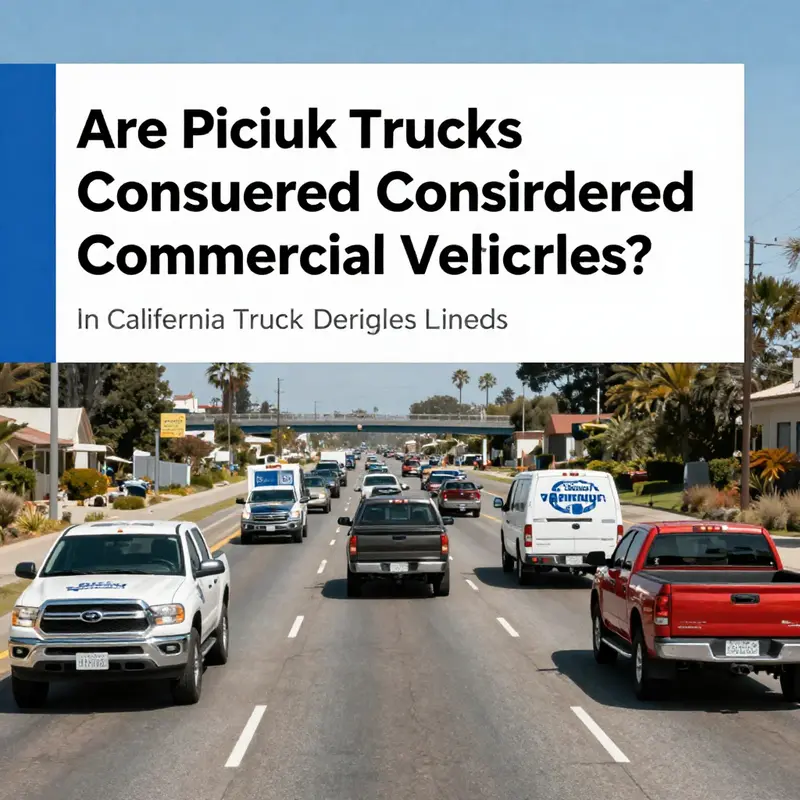
In California, the everyday visibility of a pickup truck as a tool of business or a leisure vehicle hinges less on its branding or body style and far more on how it is used. The state’s approach aligns with a practical principle common across many jurisdictions: a vehicle earns the label commercial not because of its look, but because of its purpose. The California DMV defines a commercial vehicle as any vehicle used for business purposes, including transporting goods or providing services for hire. This means that a standard, consumer-oriented pickup can become a commercial vehicle the moment its primary role shifts from private use to work related activity. A contractor who uses a pickup to haul tools and materials from the shop to job sites is operating a commercial vehicle in the eyes of the law, even though the truck is also used for personal chores on weekends. A family pickup used exclusively to haul groceries, move a couch, or carry camping gear for private enjoyment remains non commercial by use alone. California expresses this distinction with precision: use, not appearance, governs classification.
The practical implications of this usage based framework ripple across licensing, regulations, and day to day operation. For businesses, the classification triggers considerations that extend beyond parking permits or insurance costs. It can affect the requirements for driver licensing, vehicle inspections, and safety standards. When a pickup is used to transport materials for a construction project, for instance, the operation can fall under commercial rules that require the vehicle to be in a condition suitable for business use, with appropriate documentation, and potentially different insurance terms. The same logic applies to vehicles used to deliver goods or to provide certain services for hire. This is not only about the letter of the law; it is about ensuring safety and accountability in activities that resemble commercial operations. The DMV guidance and the broader regulatory environment thus emphasize a continuum rather than a binary label. A pickup is not simply a pickup; it becomes a tool for business when it serves the needs of a trade, a service, or a commercial transaction.
An important nuance sits alongside the use based rule: the gross vehicle weight rating, or GVWR, can also influence how a pickup is treated, even when the use remains predominantly private. In many regulatory frameworks a GVWR over a threshold, commonly around ten thousand pounds, shifts certain regulatory burdens onto the vehicle and the operator. The idea is straightforward. Heavier vehicles, by virtue of their potential for carrying substantial loads or operating in more demanding contexts, are subject to additional oversight to maintain road safety. In practice, most standard pickups carry GVWR well below this threshold, which keeps their regulatory demands lighter so long as they remain used for private purposes. Yet the line becomes meaningful when a once light pickup is used to haul heavy materials for a business or when a heavier variant is employed in a way that mirrors commercial activity. In those cases, the combination of use and weight can place the vehicle within a more stringent set of rules, regardless of the vehicle’s aesthetic identity.
From a regulatory perspective, the interplay between use and weight means owners must stay vigilant about classification. The California DMV and related national guidance emphasize that the essential question is not what the truck looks like, but what it does. If a pickup truck is used to transport building supplies for a contractor, the operation is inherently commercial. The driver who operates that truck as part of a business must be mindful that more than a simple weekend chore could trigger the need for additional licensing and inspections. In scenarios where the GVWR nears or exceeds the ten thousand pound mark, the risk of crossing into more complex regulatory territory increases. It is not always about the truck alone but about how a business leverages that vehicle within its workflow. The DMV underlines this by pointing to usage as the decisive factor in classification while acknowledging that weight can amplify regulatory obligations. In such cases, a business must consider not only registration or insurance but also the potential need for a commercial driver’s license, vehicle inspections, and heightened safety standards for the vehicle and its operation.
The practical reality for drivers and small fleets is that the same pickup serves dual potential futures. On a Tuesday morning, it might haul lumber to a job site for a remodeling project. On a Saturday afternoon, it could be loaded with personal gear for a family excursion. The distinction between those two uses is what determines whether the vehicle remains in a private category or steps into the commercial realm. This is why clarity in the intent of use is essential. When a vehicle is definitively employed for business, even if only intermittently, the operator should be prepared to engage with regulatory requirements appropriate to commercial activity. Conversely, if the vehicle is consistently used for private purposes, the owner can rely on non commercial classifications, provided the weight remains within a typical consumer pickup range. The boundary is nuanced but not arbitrary, grounded in real world activities and the potential risks those activities pose to road safety and commerce.
The practical consequences of this framework extend to licensing and safety regimes as well. In a business setting, drivers may encounter licensing requirements that go beyond standard operator credentials. A commercial operation, depending on weight and use, can entail a commercial driver’s license or at least additional endorsements, along with mandated vehicle inspections and maintenance regimes. These rules are designed not as punitive measures but as safeguards tied to the higher accountability and potential scale of commercial activity. The inspections ensure that brakes, tires, lighting, load securement, and other safety features can perform reliably under the stresses of work use. For a small contractor, this may translate into simple maintenance schedules and checklists that align with the vehicle’s role in the business, while still allowing private use outside of work duties. The crucial takeaway is the shift from a purely private vehicle mindset toward a hybrid posture that recognizes business use and its implications for compliance and safety.
Within this framework, the line between personal and commercial use is not a rigid barrier but a zone of ongoing assessment. A pickup used to haul materials to a job site could sit on the cusp of commercial classification depending on the frequency, volume, and purpose of the trips. If the owner consistently makes trips that are part of a business operation, it becomes prudent to treat the truck as a commercial asset. Insurance, registration, and inspections may all follow suit, aligning with the level of commercial use. Conversely, if the trips remain occasional and clearly tied to private life, the vehicle can maintain a non commercial status. The key is honesty of use and a willingness to verify that use with the appropriate regulatory posture. Documentation can play a vital role here. Keeping receipts, work orders, and logs that demonstrate business activity can be useful if questions about classification arise. It is not about creating bureaucratic hurdles but about preserving clarity and ensuring that safety standards match the intended function of the vehicle.
This landscape also invites readers to consider the broader ecosystem in which pickup trucks operate. The trucking sector, including documentation like the trends affecting trailer orders, provides context for how regulation responds to real world business activity. The way businesses deploy pickups for material transport, service delivery, or crew mobility shapes regulatory expectations and practical compliance steps. The interplay between use and weight, along with the realities of business needs, helps explain why a vehicle that looks like a consumer product can legally function as a commercial vehicle in practice. For operators, acknowledging this nuance can guide decisions about licensing, maintenance, and risk management. It can also influence fundamental planning decisions, such as whether to pursue a pause for regulatory review before embarking on a new work use with a pickup, how to structure insurance coverage, and when to lean on professional advice to confirm the correct classification under California law. The goal is not to trap vehicle owners in labels but to align their practices with a framework that prioritizes safety, reliability, and accountability across both private and business contexts.
To connect this discussion to the broader economic and regulatory picture, readers can refer to ongoing analyses of the truck and trailer segment. The trucking sector continues to evolve in response to demand shifts, supply chain dynamics, and evolving emissions and safety standards. In this regard, the use based definition of commercial vehicles in California serves as a practical bridge between the needs of small businesses and the overarching aim of highway safety. A pickup used in a contracting workflow is a microcosm of how commerce moves on the road: a blend of capability, responsibility, and compliance. When used properly, a pickup can be a reliable business tool that integrates with insurance, licensing, and safety expectations in a way that protects both the operator and the public. When used privately, it remains a familiar personal vehicle with no extra regulatory burden beyond standard vehicle operation. The continuum is not a loophole but a thoughtful framework designed to reflect both the realities of modern work and the imperative of road safety.
For readers seeking official guidance on commercial vehicle definitions and related requirements, the California DMV provides comprehensive resources and current details about commercial vehicle regulations. These materials help interpret how the use of a vehicle, the GVWR, and the intended operations interact to determine the applicable regulatory framework. In practice, drivers and business owners can navigate these rules by clarifying the vehicle’s primary use, confirming the weight rating, and consulting the official sources when uncertainty arises. The DMV guidance is designed to adapt to the evolving needs of commerce while maintaining clarity and safety on the road. As with any regulatory question, when in doubt, it is prudent to consult the official California DMV materials to ensure compliance and to confirm whether a given pickup should be treated as a commercial vehicle under current rules. The distinction matters for licensing, inspections, and safety obligations, and it reflects California’s balanced approach to regulating work related vehicle use without redefining private vehicles unnecessarily.
In sum, California treats pickup trucks as commercial vehicles based on how they are used and, to a meaningful extent, on weight. The same truck can be a private vehicle one day and a commercial asset the next, depending on whether it performs business tasks such as hauling goods, delivering services for hire, or supporting construction or landscaping workflows. This approach helps ensure that vehicles involved in public commerce meet appropriate safety and regulatory standards, while ordinary private use remains straightforward and accessible. The key for owners and operators is to align the vehicle’s role with the applicable regulatory expectations, maintain clear records that support the intended use, and consult official resources when questions arise. For a deeper dive into related industry trends and their bearing on vehicle utilization, see the discussion of trucking economics and trailer order dynamics in industry updates. trucking economic trends affecting trailer orders. For those seeking formal regulatory guidance, the California DMV weblinks provide authoritative information on commercial vehicle definitions and requirements. External reference: https://www.dmv.ca.gov/portal/dmv-topics/vehicles-and-motorists/commercial-vehicles/.
Use as the Key: How California Judges Pickup Trucks by Purpose, Not Badge
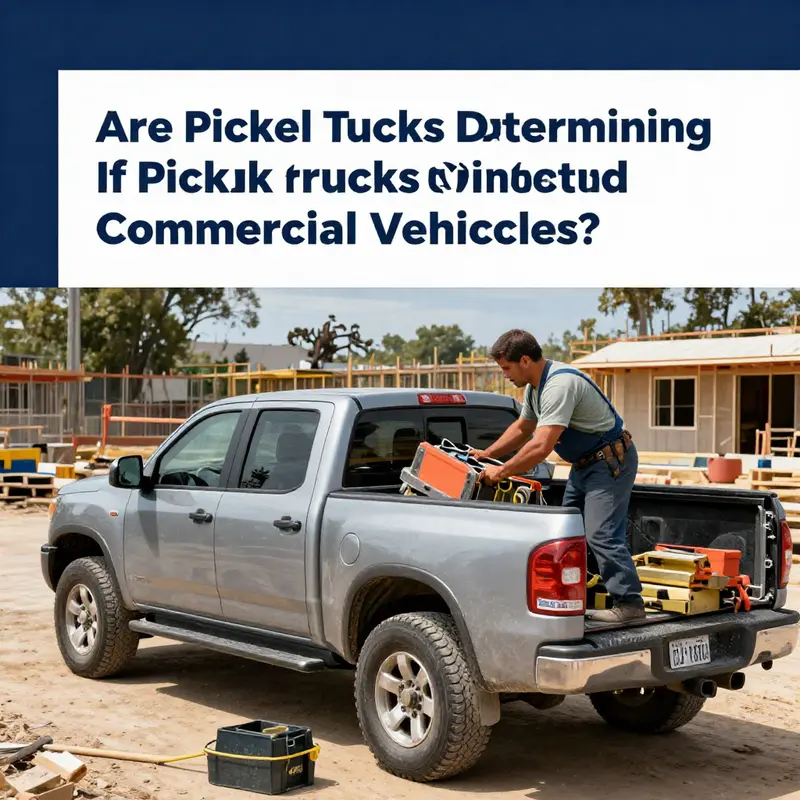
Use defines the category, not the badge on the tailgate. In California, a pickup truck’s status as a commercial vehicle isn’t stamped into its title or reflected by its bed length or GVWR alone. The state relies on how the vehicle is used. If a pickup serves a business purpose—whether it’s hauling materials to a job site, delivering goods for a company, or moving equipment for hire—the vehicle can fall under commercial vehicle regulations. If, instead, the pickup is used strictly for private, nonbusiness activities—like occasional trips to the store, weekend camping, or family moves—California treats it as a standard passenger vehicle. This distinction, rooted in the California DMV’s definitions, is practical: it aligns regulatory burdens with the real-world function of the vehicle rather than the aesthetics of its design. The DMV describes a commercial vehicle as any vehicle used for business purposes, including transporting goods or providing services for hire. The result is that a pickup used in trades or service industries becomes subject to a different regulatory posture than one kept solely for personal use. The difference may seem subtle, but it translates into licensing, safety standards, and registration practices that can shape ownership costs and compliance obligations over the life of the truck. The core principle is straightforward: if the activity qualifies as business use, the vehicle tends to ride in the commercial lane, regardless of how ordinary its appearance might be on a Saturday afternoon run to the dump or the hardware store. The broader landscape of rules follows this logic and then adds layers—weight thresholds, passenger capacity, inspection cadence, and emissions standards—that can catch owners by surprise if they assume a pickup’s classification is fixed by its build rather than its job. To assess where a specific truck stands, the starting point is the use case, not the presence of a toolbox or a bed liner. The DMV’s guidance is clear that commercial status triggers when a pickup is used to transport goods for work-related reasons, deliver products, or perform services for compensation. If a contractor uses a pickup to haul construction materials from a supplier to a job site, that vehicle is performing a commercial function. A local electrician might rely on a cargo bed to carry cables and clamps, a landscaper might shuttle soil and mulch, and a contractor’s crew could move tools and rental equipment between sites. In each case, the key factor is not the vehicle’s look but the business activity behind the wheel. Conversely, a personal-use pickup—whether it is a versatile family vehicle or a weekend mover for domestic projects—falls outside the core commercial-use calculus. When the same pickup is used to run a few personal errands or transport household items on an occasional basis, it remains within the realm of passenger-vehicle regulations. The line, while intuitive in many instances, grows sharper once weight and capacity enter the picture. The DMV notes that if a pickup’s gross vehicle weight rating (GVWR) exceeds a certain threshold—historically described in public guidance as crossing into heavier-duty classifications—the regulatory reach expands. In particular, a GVWR over 10,000 pounds can push a vehicle toward commercial-vehicle rules regardless of use in some contexts. The interplay between use, weight, and function is why a given truck can flip between passenger and commercial status depending on how it is deployed. This fluidity reflects California’s effort to regulate safety, emissions, insurance, and driver requirements in line with the risks and responsibilities a vehicle undertakes in everyday commerce. The practical consequence is that a pickup used in a lightly regulated service industry might need to comply with commercial-vehicle licensing, safety inspections, and registration processes that a private owner would not typically confront. The rules are designed to ensure that a vehicle performing business tasks—where occupants, cargo, or equipment can reveal higher hazard exposure—meets stricter standards than a family vehicle that rarely leaves the garage. The separation is not merely theoretical. For example, if a vehicle is used to haul heavy building materials or to manage a cargo-delivery schedule, it may trigger more rigorous maintenance checks, more stringent emissions considerations, and license requirements that reflect its commercial role. It is essential to acknowledge that even a truck that appears ordinary can operate in a commercial context. A pickup used by a tradesperson to transport tools and materials to a job site, or by a delivery service to move products for hire, is a textbook case of commercial use, and its regulatory obligations can be substantial. The reverse is equally true: a pickup that remains strictly within private lanes and is not used to generate revenue or to support a business operation avoids many of the special requirements that apply to commercial fleets. The distinction matters for ownership costs, insurance eligibility, and the paperwork that follows a business decision to deploy a pickup in service. The DMV’s framework thus operates like a curve rather than a line: as use shifts toward business activity, the regulatory horizon expands, shaping licensing, inspections, and compliance expectations. This dynamic is particularly relevant for owners who may rotate a pickup through different roles—one week a weekend warrior, the next a subcontractor’s tool hauler. In those cases, the vehicle’s regulatory status can shift accordingly, which underscores the importance of documenting use and understanding the rules that accompany it. The question of use is not merely about paperwork; it also maps onto the practical realities of ownership. For example, if a business relies on a pickup to deliver goods or transport passengers for hire, it could trigger regulations connected to commercial operations, including licensing and safety standards designed for higher-risk scenarios. The more the operation resembles a business service, the more likely it is to fall under the commercial umbrella. Meanwhile, vehicles that stay within the boundaries of personal transport—driven to a store, to a hobby project, or to a family gathering—tend to remain outside the stricter spectrum. The DMV’s approach remains grounded in everyday practice: the way the vehicle is used is the most reliable indicator of its regulatory path. This perspective helps avoid the misperception that a pickup’s status is fixed by its specifications alone. It also helps explain why two identical pickups can be subject to different rules if one is contracted for business and the other is not. The implications spread across multiple domains. Licensing and eligibility for a commercial driver’s license (CDL) are notdecisions based solely on vehicle type. They hinge on weight and, in some cases, passenger capacity, as defined by thresholds that reflect the potential hazards associated with operating heavier or more capable equipment. If a vehicle crosses the line into commercial-use territory, the driver may be required to obtain a CDL, and the vehicle itself may be subjected to regular safety inspections and emissions compliance mandates that extend beyond the typical passenger-vehicle regime. These requirements aim to safeguard road safety by ensuring that drivers operating heavier or more complex configurations have the training and oversight necessary for such tasks. The broader effect on the owner is tangible: more frequent inspections, heightened maintenance expectations, and, potentially, higher insurance premiums aligned with the perceived risk of commercial activity. The DMV’s guidelines, while straightforward in intent, require careful interpretation in practice. A single pickup can be a workhorse for a small plumbing operation one week and a private vehicle for family use the next. The determining factor remains the business purpose that drives its use. This nuance has real consequences for how the vehicle is registered, how plates are issued in certain circumstances, and what emissions standards apply. The emissions angle, in particular, becomes more nuanced when the vehicle is used commercially. Commercial operations may bring additional scrutiny regarding exhaust controls, fuel economy standards, and related regulatory expectations. The practical takeaway for owners and operators is to document the business use that a pickup fulfills, especially if the operation is on the margin between private and commercial use. A straightforward way to approach this is to log usage patterns, keep receipts for business-related trips, and be prepared to demonstrate that the vehicle’s primary function is connected to a service, delivery, or trade activity. The distinction also matters for fleet planning and insurance. A small business that relies on a pickup to complete service calls across multiple job sites may treat the vehicle as a commercial asset for budgeting, risk management, and regulatory compliance. Even if the same truck is occasionally used for personal tasks, its typical role in supporting a business may dictate a different insurance profile or require a certificate of compliance with local regulations. The broader narrative of California’s approach to pickup trucks thus centers on accountability and clarity rather than classification by form. The use of the vehicle, especially when tied to revenue or service provision, becomes the hinge on which regulatory doors swing open or stay closed. In a state where transportation policy seeks to balance road safety, environmental goals, and economic activity, the line between personal and commercial use is a practical one. It acknowledges that many modern pickups are flexible tools, capable of serving both home and work needs. Yet when a pickup becomes an instrument of a business operation, the policy framework seeks to align oversight with the risk and responsibility that accompanies work on the road. That alignment is not a judgment about the vehicle’s construction but a reflection of its real-world function within the economy. For readers who want to explore the official contours of these rules, the California DMV maintains a dedicated resource on commercial vehicle regulations. It is a reliable reference point for understanding how use, weight, and employment context intersect with licensing, inspections, and emissions requirements. As the regulatory conversation continues and as industry practices evolve, the core principle endures: the path a pickup takes through California’s regulatory landscape is charted by what it does, not by what it looks like when it sits in the driveway. When a truck is used to support a business—whether it transports cargo, carries tools and equipment, or provides services for hire—it steps into a regulatory space that demands careful attention to licensing, safety, maintenance, and environmental standards. Conversely, when the same vehicle remains a personal conveyance, it enjoys the lighter touch of passenger-vehicle rules. The nuance, complexity, and practical consequences of this distinction are precisely why vehicle owners in California need to ask the right question at the outset: what is this pickup doing for my business, and how will that activity shape the regulatory requirements and costs I will face? The chapter that follows builds on this foundation, expanding the discussion to related regulatory dimensions, cross-border considerations, and the economic implications for fleets and independents alike. For those seeking broader context beyond California’s borders, a related thread in the industry discourse highlights how emissions regulations and cross-state compliance influence vehicle use decisions and fleet composition. This is where the crosswalk between use, policy, and market dynamics becomes most visible, and it is a reminder that a pickup’s status is not just a legal label but a lived operational reality for drivers and businesses across the state. For deeper exploration of emissions and regulatory clarity, see the industry discussion on OEMs seek clarity in emissions regulations. As you continue, the article will connect these regulatory strands with practical considerations for owners, insurers, and fleet managers who must navigate the shifting ground of California’s commercial-vehicle landscape. For definitive guidance on current rules and thresholds, consult the state’s official resources: https://www.dmv.ca.gov/portal/dmv/detail/vr/commercial/.
Beyond the Badge: GVWR, Use, and the California Rulebook for Pickup Trucks in a Commercial World
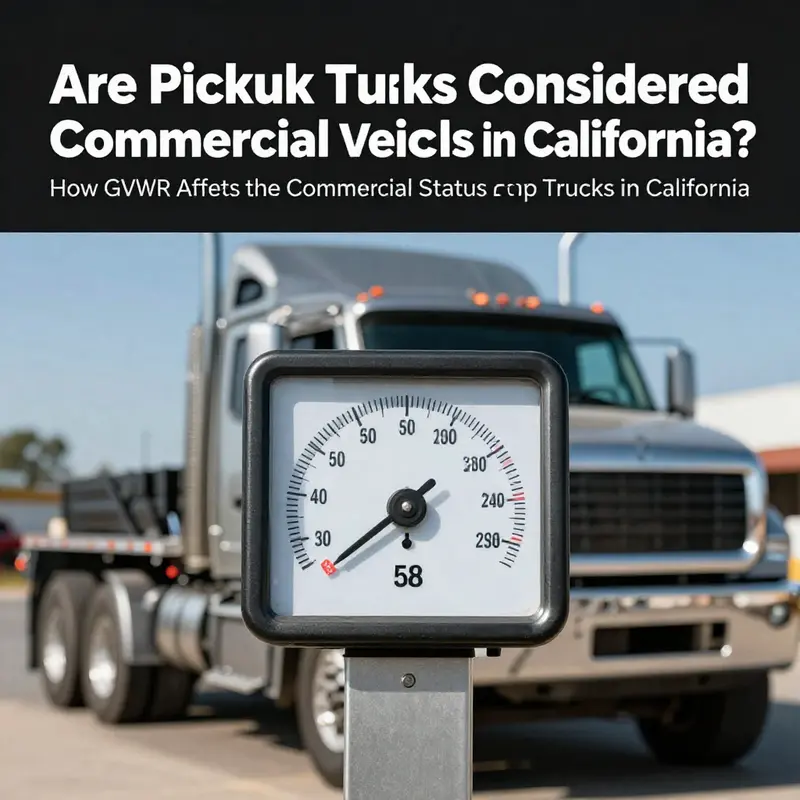
In California, the question of whether a pickup truck counts as a commercial vehicle cannot be answered by the name on the tailgate alone. The law looks at two intertwined factors: the vehicle’s weight as defined by its GVWR, and the way the vehicle is actually used in daily operations. This is not a binary label you can attach at the dealership or a simple category you assign when you register the truck. Instead, the state builds a framework where a heavy pickup truck can step into a different regulatory lane simply because it carries cargo for a business, or because its weight pushes it into a heavier class. The result is a landscape where the same type of vehicle can be treated as private-use gear in one scenario and as a commercial asset in another, depending on the numbers you can read on the door jamb label and the reality of tasks it performs on the job site or in service calls.
The central hinge of California’s approach is the GVWR, the gross vehicle weight rating that the manufacturer assigns to a vehicle. In practical terms, GVWR is the ceiling of how much weight the vehicle is designed to carry, including passengers, cargo, and any additional equipment. California uses a specific threshold in its code to distinguish commercial motor vehicles. If a pickup’s GVWR is 10,001 pounds or more, it is legally classified as a commercial motor vehicle (CMV) under the California Vehicle Code. This threshold matters not only for classification but for the cascade of regulatory obligations that can follow. The implication is straightforward: weight matters, and when that weight crosses a defined line, the regulatory spotlight shifts, bringing with it a set of duties that can affect licensing, training, and compliance in ways a buyer or business might not anticipate at the point of purchase.
Yet GVWR is not a sole determinant. California’s practical reality is that a truck can be involved in business activities even if its GVWR sits below the 10,001-pound mark. The state recognizes commercial use as a driver of regulatory need. A pickup used to transport tools, materials, or goods for a business—plumbing, landscaping, construction, or mobile services, for example—can be treated as a commercial vehicle for the purposes of operations, licensing, or compliance obligations. This means a smaller pickup, while not meeting the heavy CMV threshold on paper, can still be subject to certain commercial rules when used in commerce. The DMV frames this as a function of use as well as weight, so the line between personal and commercial can shift with how the vehicle is employed. For anyone trying to map out obligations, the practical takeaway is clear: know both the weight and the day-to-day tasks the truck performs, because both dimensions feed into the classification and the responsibilities that follow.
This two-pronged approach—GVWR-based classification combined with use-based considerations—shapes the regulatory horizon in several concrete ways. When a pickup is designated as a CMV due to GVWR, the driver and the vehicle enter a regime designed for higher-occupancy, higher-risk operation. The regulatory implications extend beyond the vehicle itself to the people behind the wheel. Commercial drivers, when operating CMVs or vehicles used for business purposes, face qualification standards that can require a Commercial Driver’s License (CDL). The CDL is not just a credential; it reflects a recognition that handling a larger, heavier vehicle alongside the typical traffic environment requires a different set of training and a different baseline of knowledge about vehicle handling, load management, and safety procedures. In addition to licensing, hours-of-service rules—enforced by the federal FMCSA (Federal Motor Carrier Safety Administration)—guide how many hours a driver may operate before taking mandated breaks. The logic behind these rules is not punitive; it is built on the premise that fatigue reduces reaction time and awareness, which in turn raises the risk of accidents on busy California roads and highways.
The practical manifestations of CMV status extend further into the daily administration of trucking and service operations. Vehicles classified as CMVs commonly trigger mandatory logkeeping to document hours of operation and compliance with HOS rules. Logbooks, whether paper-based or electronic, serve as a continuous record of driving time, rest periods, and total duty cycles. This is not merely paperwork; it is a safety and compliance framework intended to provide regulators with a transparent trail of activity. Regular inspections also become a familiar rhythm for CMVs, ensuring that critical safety systems—brakes, tires, lighting, and the structural integrity of the vehicle—remain within prescribed standards. While these requirements may appear burdensome, they exist to maintain predictable safety standards across a dynamic and congested state road network.
From a financial perspective, the CMV designation does not come without cost. Vehicles that fall into this category frequently bear higher insurance premiums, a consequence of the elevated risk profile associated with heavier, more specialized vehicles and the potential for increased maintenance needs. Registration fees can be steeper as well, reflecting the more extensive regulatory framework that applies to CMVs. For business owners, these costs are a real part of the total cost of ownership and should be weighed alongside the operational advantages of using a heavier, more capable pickup for daily work. A heavier vehicle can carry more gear and materials, potentially reducing the number of trips needed to complete a job; however, that efficiency must be balanced against the higher regulatory and financial overhead.
Beyond the licensing and financial dimensions, GVWR and CMV status also intersect with environmental and emissions regulations. Heavier vehicles often trigger stricter emissions testing and compliance requirements in certain jurisdictional zones focused on air quality. In regions with stringent air-quality oversight, such as districts that monitor heavy-duty vehicle emissions, the heavier end of the pickup spectrum can require additional scrutiny and tighter compliance measures. The heavier the vehicle, the greater the likelihood that the vehicle will be treated as a high-emission or heavy-duty appliance within environmental program frameworks. This layer of regulation complements the safety and licensing considerations, shaping how fleets are composed and operated in California’s competitive regulatory environment. The interplay between GVWR and emissions rules reminds operators that vehicle choice carries environmental as well as regulatory consequences, and it reinforces the value of careful planning when expanding a small business fleet or retooling a service operation.
For business owners and operators trying to navigate this landscape, the most reliable starting point is to verify two essential numbers: the GVWR published by the manufacturer and the intended use of the vehicle in daily operations. The GVWR label, often found on the door jamb or within the owner’s manual, provides the weight threshold that helps determine whether a pickup qualifies as a CMV. The second dimension—the actual use—defines whether a vehicle is treated as a commercial asset in the eyes of the state. If a truck with a GVWR over 10,000 pounds is used to haul tools and materials to job sites, deliver goods for a service business, or operate as part of a professional crew, it is very likely to trigger CMV-related obligations, even if the vehicle is not in constant commercial service. Conversely, a lighter pickup, used exclusively for private, non-business purposes, remains outside that classification unless the use crosses the line into commerce. These distinctions are not just academic; they shape licensing needs, insurance costs, and compliance burdens in a way that can dramatically alter the economics of a project or enterprise.
The nuance becomes even more pronounced when a business contemplates cross-border activity or regionally dispersed operations. In California, the CMV framework interacts with other regulatory layers that can influence how a vehicle is certified, taxed, and permitted to operate. While the core threshold remains GVWR-based, the practical enforcement and interpretation can vary with context and with the specific activities in which the vehicle is engaged. In this light, the decision to acquire a heavier pickup for a fleet, or to reclassify an existing vehicle as a CMV for a particular line of work, hinges on a careful assessment of both weight and use. It requires a clear view of the job sites, the cargo being transported, and the distance and duration of the typical trips. Businesses that regularly move heavy loads, or that provide on-site services requiring frequent transportation of tools and materials, will likely find the CMV framework a genuine consideration in budgeting, scheduling, and risk management.
The broader policy conversation from the regulatory side often returns to clarity and predictability. Operators benefit from explicit guidance about how to apply the GVWR-based rule to real-world trucking scenarios. In this regard, the conversation occasionally surfaces questions about emissions standards and how heavy-duty classifications interact with environmental requirements. For readers following the path of regulatory clarity, an ongoing dialogue—captured in industry-focused discussions—highlights how manufacturers and policymakers seek to align technical specifications with practical compliance needs. One practical reference that captures this ongoing search for clarity is the discussion around emissions regulations, which is tied to how heavy-duty classifications are interpreted in practice. For readers wanting to explore that policy thread, the discussion linked here provides additional context and nuance: OEMs seek clarity in emissions regulations.
In the end, the California framework for pickup trucks operates on a principle of dual accountability: what the vehicle is capable of carrying (through GVWR) and what it is actually used to do (its business function). The combination of weight-based classification and use-based applicability means that a single model can navigate different regulatory routes depending on the concrete duties assigned to it. This reality urges buyers, fleet managers, and service professionals to perform deliberate early-stage analysis before expanding a fleet. It invites a sober assessment of payload requirements, route planning, and the expected cadence of jobs. It also suggests a prudent approach to compliance—one that aligns vehicle selection with responsibilities, training needs, and the long horizon of regulatory expectations. For a given pickup, a business owner should ask not only what the truck can haul, but whether the haul will place the vehicle into a CMV category and thus trigger a different set of rules for drivers, maintenance, and documentation.
To ensure that the trajectory from purchase to operation remains compliant and cost-efficient, consult official guidance when in doubt. The California DMV’s resource on commercial vehicle classifications remains the definitive starting point for most inquiries. It lays out the precise language of the regulations and helps transform weight and use into concrete compliance steps you can implement in a fleet plan. As you map out whether your pickup will sit on the private-use side or enter the commercial lane, remember that weight and use are the twin pillars that determine not just whether a vehicle is a CMV, but how it will be treated by licensing authorities, insurers, and environmental programs. The most reliable path forward is to confirm the GVWR label, articulate the business use with specificity, and seek authoritative guidance when the line between personal and commercial tasks feels blurred. That discipline protects both the operator and the broader public who share California’s roads, ensuring that safety, accountability, and sustainability stay in step with a truck that may be bigger, heavier, and more capable than the average private-use vehicle.
External resource: https://www.dmv.ca.gov/portal/vehicle-information/commercial-vehicle-classifications/
Work as the Measure: How California Defines a Pickup as a Commercial Vehicle
California’s roads often disguise a subtle but consequential truth: a pickup’s status as a commercial vehicle is not etched in its chassis, bumper, or bed size, but in the purpose it serves. For many drivers, a pickup is simply a dependable work tool; for others, it is the backbone of a business. The California Department of Motor Vehicles (DMV) makes this distinction explicit. A vehicle becomes commercial when it is used for business purposes, such as transporting goods or providing services for hire. This is a use-based assessment, which means the same pickup truck can sit in two different legal lanes depending on how it is deployed. A contractor who hauls lumber and tools to job sites, a landscaper who moves equipment between properties, or a courier who delivers products to customers can all be operating a commercial vehicle, even if the vehicle itself remains a pickup in form. In contrast, a personal pickup used exclusively for family moves, camping trips, or hobbies remains outside the commercial category, because the activity driving the vehicle is non-business in nature. The lines blur, however, when use crosses into a business function or when the vehicle’s weight or design reclassifies it under stricter regimes. The DMV emphasizes that the assignment of “commercial” status centers on usage patterns rather than a blanket label tied to a vehicle type.
Within this framework, the practical implications of the commercial designation unfold in several regulatory layers. For one, the threshold for certain licenses hinges on weight and capacity. A pickup that has a gross vehicle weight rating (GVWR) of 10,001 pounds or more may trigger the need for a commercial driver’s license (CDL) under federal and state rules, even if the vehicle’s use is predominantly local. Alternatively, if a pickup is designed to transport 16 or more passengers, including the driver, a CDL is also typically required. These criteria underscore a core point: the same truck that serves a construction crew every day can demand a different license level if its physical capacity crosses a regulatory line. The practical consequence is not just paperwork; it is the potential for additional training, stricter commercial vehicle standards, and heightened oversight on the road.
Beyond licensing, the commercial designation reshapes registration, insurance, and safety protocols. Commercial vehicles in California generally face higher registration fees and may require different license plates that reflect their business use. The emphasis on accurate use helps authorities ensure that the vehicle’s safety, maintenance, and inspection regimes align with the risks associated with commercial activity. For trucks operating in interstate commerce or carrying hazardous materials, safety and inspection requirements intensify further, reflecting the heightened responsibility that comes with serving customers, transporting goods, or supporting a work crew. Insurance is a central piece of this puzzle as well. A commercial-use pickup typically warrants a commercial auto insurance policy, designed to cover higher-mileage exposure, fleet-style operations, and potential cargo-related liabilities. A personal policy, while simpler, may leave gaps in coverage when a vehicle consistently performs work duties or carries business-related loads.
The practical upshot for most California drivers is straightforward but demanding: as soon as a pickup truck begins to function as a tool of business—delivering materials to a job site, transporting equipment between worksites, or moving merchandize to customers—the driver should be vigilant about insurance, licensing, and registration that reflect that use. The risk of neglect is not merely a bureaucratic snag; it can translate into fines, penalties, or the suspension of driving privileges if the vehicle is misused or misclassified. The DMV’s guidance is clear that misalignment between use and regulatory status invites consequences. To remain compliant, a driver or business owner must continuously assess how the truck is employed and be prepared to adjust licensing, registration, and insurance as use evolves.
The state’s framework recognizes that a pickup is a versatile instrument in the modern economy. It can carry tools and materials to a plumbing job, haul mulch to a landscape project, or serve as a mobile unit for a small service business. Each of these tasks may push the vehicle toward the commercial category, depending on the frequency, purpose, and scale of use. This reality explains why some fleets rely on the same model of pickup for diverse tasks across a workday, shifting from personal errands to job-site logistics and back again. The governance of such behavior relies on ongoing self-audit by the vehicle operator and, when necessary, a consultative step with the DMV or a qualified compliance professional.
A key nuance in California relates to weight thresholds versus use. The GVWR is a critical signal, but it is not the sole determinant of commercial status. If a pickup’s GVWR exceeds 10,000 pounds, the bar for CDL presence is raised, regardless of how the truck is used. This implies a practical reality: a heavy-duty pickup with a GVWR just above the threshold may be treated as a commercial vehicle for licensing purposes even if it is used only for occasional business tasks. Conversely, a lighter pickup with a GVWR under the threshold can still be deemed commercial if its use is predominantly business-related. This layered approach helps align the regulatory regime with the actual risk and responsibility associated with the truck’s daily activities.
The DMV itself points to usage as the defining factor. When a vehicle is used to transport goods, deliver products, or provide services for compensation, its commercial status becomes more likely. Consider the contractor who uses a pickup to haul sensitive tools and high-value materials, or the small landscaping operation that relies on a single truck to move soil, mulch, and equipment between sites. In such cases, the vehicle functions as a mobile business asset, and the rules that apply to commercial operations—license, registration, insurance, and safety—become the standard expectations. This is not about stigma attached to the vehicle but about ensuring that the vehicle’s operation reflects the level of responsibility and risk involved in commercial activity.
The regulatory landscape is not static. It evolves with changing business practices and broader regulatory aims, including emissions standards, operator qualifications, and highway safety. In this sense, the status of a pickup as a commercial vehicle becomes a moving target, not a fixed label. Stakeholders ranging from small-business owners to large fleets watch these shifts closely, because the implications touch every aspect of operations—from budgeting for higher insurance premiums to planning for periodic safety checks and training for drivers. The conversation about this topic also intersects with broader regulatory trends that affect the trucking industry as a whole. For readers who want to explore how regulators and manufacturers navigate these pressures, there is a wider dialogue about emissions and compliance that underscores why clarity from the industry side matters. OEMs Seek Clarity in Emissions Regulations offers a perspective on how manufacturers respond to evolving standards, a useful companion to the state-level classifications described here.
To bring these considerations home, the California DMV’s own resources emphasize a practical workflow for individuals and businesses. Start with a careful inventory of how the pickup is used. If the vehicle regularly moves materials between job sites, carries tools, or serves customers directly, document the nature of those trips, the loads involved, and the frequency of commercial tasks. If the GVWR is at or above 10,001 pounds, plan for CDL-related requirements and training if driving duties align with CDL criteria. Even if the GVWR is lower, regular commercial use may warrant a conversation with the DMV or a qualified insurance broker to confirm that the current registration, license plates, and insurance adequately cover the business activities. It is also wise to review whether any interstate transport or hazardous materials handling is part of the vehicle’s duties, since those activities carry additional safety and regulatory burdens that California and federal authorities may require.
This is not merely about ticking boxes. It is about aligning operational realities with legal obligations so that a business can function smoothly without the threat of compliance gaps showing up on a roadside inspection or in an insurance claim. It also means recognizing that a change in use—say, a side business expanding into a regular delivery service, or a contractor transitioning from a sole proprietor to a small fleet—may necessitate an update to licensing, registration, and insurance. The practical discipline of documenting use, and keeping that documentation current, becomes a form of risk management as well as a compliance strategy. In this sense, truth-in-use becomes a normative principle that underpins quiet efficiency on the road and predictable costs in the back office.
The broader takeaway for readers navigating California’s stance on pickup trucks as commercial vehicles is to treat use as the primary lens. A pickup’s commercial status is not a static categorization but a function of how the vehicle serves a business. Regularly hauling goods, delivering products, or facilitating a service for compensation leans a vehicle toward the commercial category, even if its external appearance remains that of a familiar pickup. Conversely, a vehicle used solely for personal reasons stays aligned with non-commercial purposes unless a shift in usage occurs. The balancing act between weight, use, licensing, registration, and insurance is the practical core of compliance. The DMV’s guidance and the regulatory framework recognize that business needs are diverse and that enforcement should reflect the realities of work rather than the aesthetics of vehicle design.
For readers who want to explore the regulatory landscape further, consider connecting the dots between state guidance and industry-wide discussions. The ongoing dialogue about emissions, compliance, and industry standards illustrates why precise definitions matter. A sense of how these conversations unfold can help individuals and small businesses anticipate changes and prepare accordingly, rather than reactively scrambling when a new regulation arrives. In the end, the question of whether a pickup is a commercial vehicle in California is less about the truck’s identity and more about the daily work it performs, the liabilities it assumes, and the protections it affords to drivers, business owners, and the public on the road. Official guidance can be found on the California DMV site, and informed interpretations can be sought through licensed professionals when the use of a vehicle approaches regulatory boundaries.
External resource for authoritative guidance: https://www.dmv.ca.gov/portal/dmv/detail/vin/whatisacommercialvehicle.htm
Final thoughts
In conclusion, the classification of pickup trucks as commercial vehicles in California largely hinges on their intended use and specific weight ratings. Companies in logistics and construction must thoroughly assess their pickup truck operations to remain compliant with state regulations or risk legal repercussions. By understanding the nuances of commercial vehicle definitions, usage scenarios, and GVWR regulations, stakeholders can optimize their fleet management practices and ensure compliance with all applicable laws, safeguarding their business interests.