
Pickup trucks have become ubiquitous not only in personal use but as critical components in commercial ventures. Their design and function serve a dual purpose, but it is their inherent capabilities and intended uses that truly designate them as commercial vehicles. This article delves into what fundamentally makes a pickup truck a commercial vehicle. From their cargo-carrying capabilities to the regulatory frameworks defining their commercial status, each chapter builds a comprehensive understanding for logistics and freight company owners, construction and mining enterprise procurement teams, and small business owners with delivery fleets. By the end of this exploration, readers will grasp the essential characteristics of pickup trucks that make them indispensable in the realm of business operations.
Beyond the Bed: How Cargo Capacity and Durable Design Make Pickups Core to Commercial Transport
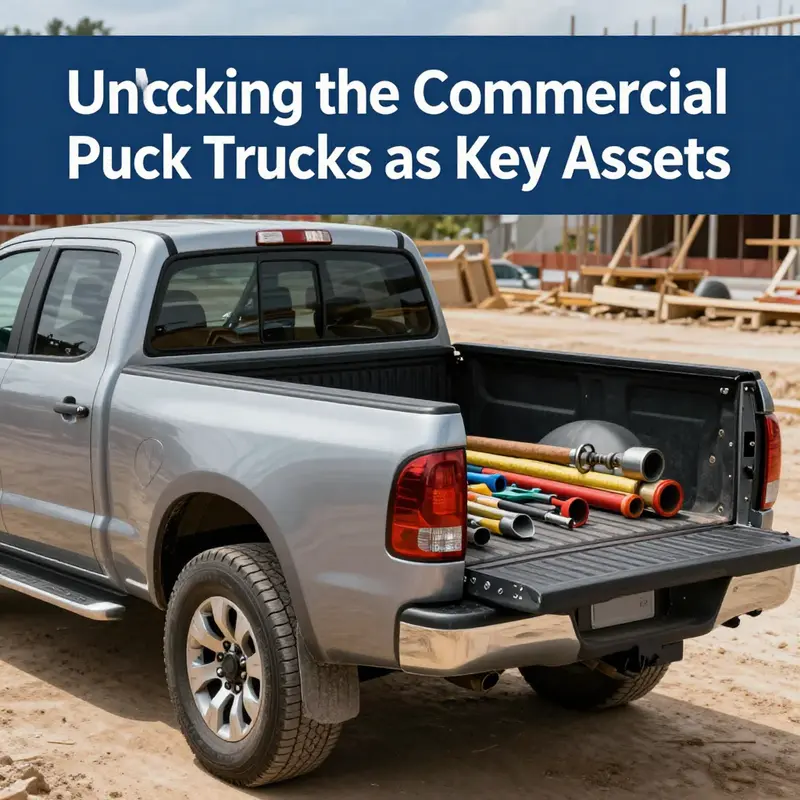
Pickup trucks occupy a curious space in the commercial landscape. They ride between tradecraft and everyday utility. Their defining attribute is not merely their seating or their badge, but the open or enclosed cargo area behind the cab, a stage for goods, tools, and equipment. When this bed becomes the primary instrument of business transport, the pickup crosses from being a personal vehicle with a work-oriented tint to a bona fide commercial asset. The bed’s size, depth, and configuration determine how much weight can be loaded, how awkward items get strapped, and how many trips a business can postpone to avoid downtime. This is why the cargo-carrying capability matters more than any stylistic flourish. It is the yardstick by which a pickup earns its place in fleets of all sizes, from sole proprietors with a single tool bag to contractors running compact operations with multiple crews.
Payload and towing capabilities translate the bed into real productivity. Payload is the maximum weight that can be carried, including passengers and cargo. In practical terms, that means a contractor can load carpentry materials, ladders, and hardware in one trip. A landscaper can haul mowers, soil, bags of mulch, and irrigation equipment without spreading work across several vehicles. Towing capacity extends that reach, allowing trailers with generators, compressors, or additional storage to be pulled along to job sites. These capacities interact with engine torque, transmission design, and suspension tuning. The result is a vehicle that can sustain job-site momentum without the downtime and overhead of larger, specialized commercial trucks. Because the bed embraces the work at hand, maneuverability remains a practical advantage; urban job sites often demand tight turns, confident parking, and swift loading and unloading. The modern pickup meets those demands with a balance of payload headroom and on-road versatility that larger box trucks cannot provide in congested streets.
Durability and load-bearing design are built into the chassis from the ground up. A reinforced frame, heavy-duty suspension, and robust engine options are not eccentric choices but core requirements for sustained work. The architecture is meant to absorb shock, resist corrosion, and stand up to off-road abuse that often comes with rural deliveries or construction sites. This durability translates into lower life-cycle costs in real terms; while depreciation for a pickup used in commerce is higher than a private-use version, the payoff appears in reduced replacement frequency and reliable performance in demanding environments. The same characteristics that help a pickup survive rough terrain also help it survive back-to-back service days, weather exposure, and continuous loading cycles. For business users, this translates to a predictable asset that can be counted on to reach a site with equipment intact, which in turn reduces schedule risk and insurance exposure because a proven chassis design is less prone to unexpected failure during critical tasks.
Intended use is the invisible boundary that defines whether a pickup functions as a commercial vehicle. When a vehicle is used to transport goods for hire, deliver services, or support business operations, the bed becomes the primary tool of production. A plumber’s tool inventory fits into the bed; a landscaper’s mowers and soil bags are staged there; builders carry fasteners and lumber that would overwhelm passenger-sized trunks. This functional alignment with business work is the characteristic that moves a pickup from a generalist family vehicle into a commercial asset. Regulatory frameworks in many jurisdictions recognize this utility by classifying these trucks as light-duty or light commercial vehicles for registration, insurance, and tax purposes. That classification reflects the vehicle’s potential impact on road safety, maintenance planning, and road-use costs, validating the view that what matters most is how the vehicle is used in the business context rather than the badge on its grille.
With business use comes a different calculus of operating costs. Commercial-use pickups often incur higher maintenance, fuel, insurance, and depreciation costs due to demanding service cycles and heavier payloads. The conclusion is not that pickups are somehow inferior; rather, they represent a deliberate trade-off: more rugged, more capable, and more versatile, at the cost of higher wear and expense over time. Yet the same traits that raise the bill also multiply the return. A single pickup can replace multiple personal-use vehicles or rental assets, especially for small firms that cannot justify a larger fleet. Fleet managers often view a well-equipped pickup as a modular platform, adaptable with bed inserts, ballast, and towing configurations that tailor the asset to a changing mix of jobs. The analysis of total cost of ownership, then, has to account for utilization rate, geographic spread of work, and the frequency of trips required to complete tasks. In many settings, the payload-to-cost ratio justifies the investment when the vehicle is consistently used for business, because the bed converts into a mobile workspace and a portable warehouse, compressing a day’s operations into a series of efficient stops rather than sprawling trips across town.
Cargo-carrying capacity is more than a headline figure; it is the practical backbone of everyday operations. Payload capacity translates to how much weight the bed can bear without endangering the vehicle or violating safety margins. It governs how many tools and materials can ride along to a site, how much mulch or soil can be delivered in a single stop, and how many pallets of bricks or cement bags can be staged at once on a construction run. Towing capacity broadens that horizon further, enabling the movement of heavy gear trailers, portable generators, or compressor units that complete the toolkit for a given project. Modern pickups balance these high-load demands with refined engineering: high-strength frames, adaptive suspension, and electronic stability systems that maintain control under load. The benefit extends beyond raw numbers; with improved payload and steadier towing performance, smaller fleets can service a wider radius while maintaining reliability. Moreover, the nimble footprint and lower turning radius of pickups support route optimization in dense urban corridors and tight job sites, where larger commercial vehicles may struggle to negotiate space or parking. In essence, a pickup’s cargo-focused heart underpins its value proposition: it is a scalable, flexible platform that can adapt to shifting workloads without demanding a wholesale asset replacement when business needs change.
An emerging thread in logistics thinking connects cargo capacity with environmental and economic efficiency. High-capacity trucks, including enhanced pickup models, are studied for their potential to move more with fewer trips, reducing fuel use and emissions per unit of cargo. The logic is straightforward: if a vehicle can haul more per trip, the fleet can operate with fewer vehicle-kilometers. In this sense, pickups configured for sustained commercial use can contribute to more sustainable logistics, especially when paired with route optimization and proper maintenance. This aligns with broader research that frames freight efficiency as a balance between payload, fuel economy, and trip frequency. As the sector grapples with environmental regulations and the push toward decarbonization, the appeal of high-load, versatile platforms becomes more pronounced. The idea is not to replace larger trucks but to complement them with adaptable assets that fill gaps in last-mile delivery, mid-mile distribution, and on-site service. The broader implication is that cargo capacity, when coupled with durable design and smart utilization, can yield meaningful gains in efficiency and emissions across a mixed fleet.
From a business strategy perspective, the conversation about pickup trucks as commercial vehicles circles back to a simple but powerful point: utility drives value. The bed is not a cosmetic feature but a workhorse platform. When managed with thoughtful maintenance, compliant loading practices, and clear use-case definitions, a pickup can form the backbone of a lean, responsive service operation. Industry data suggest that a well-structured pickup-based fleet can absorb variability in demand and still maintain reliable service levels, a capability especially valuable to small- to mid-sized enterprises navigating fluctuating workloads. In this frame, the industry conversation about asset allocation touches on market dynamics such as excess capacity in the trucking market, which informs decisions about fleet composition, utilization rates, and scheduling. Excess capacity in the trucking market insights. Ultimately, the cargo-carrying capability, durability, and adaptability of pickup trucks position them as a practical, strategic choice for many commercial operations, a choice reinforced by ongoing research into freight efficiency and asset utilization. External reference: https://doi.org/10.1016/j.tranpol.2024.103857
Endurance by Design: How Durability and Load-Bearing Architecture Shape Commercial Pickup Capability
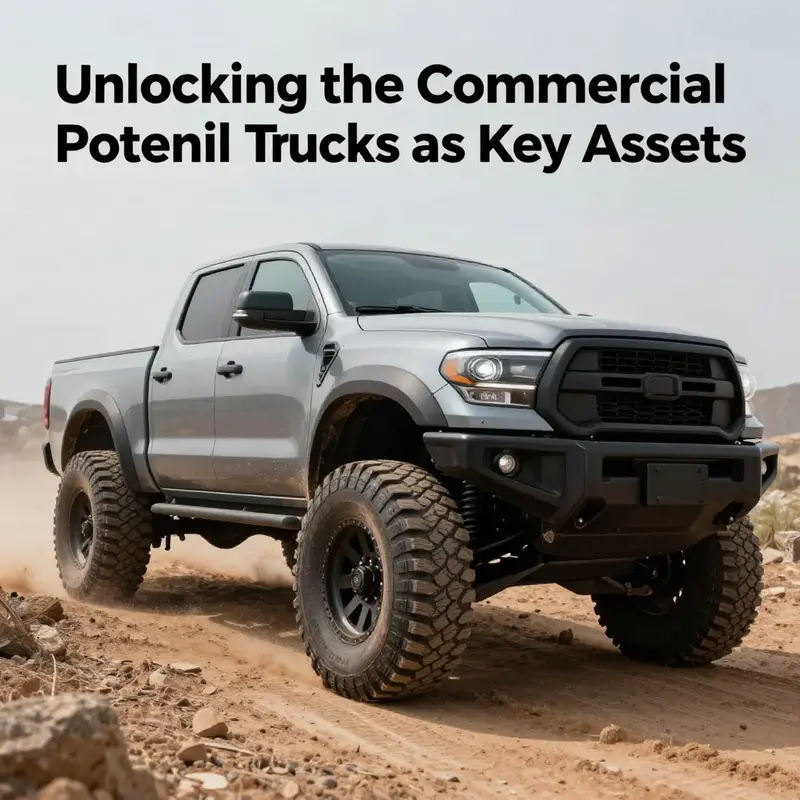
Durability is not an afterthought in a pickup truck that ever leaves the job site with a trailer in tow or a toolbox stacked to the bed. It is the central axis around which every other feature or decision revolves. In commercial use, a pickup’s ability to carry heavy loads, withstand constant start-and-stop cycles, and perform reliably across rough terrain underpins its value to a business. The essential measure of this capacity begins with the Gross Vehicle Weight Rating, or GVWR, which defines the total allowable weight of the vehicle, including payload, passengers, fluids, and ballast. Selecting a truck in the correct GVWR class is not a cosmetic choice; it is a safety and productivity decision. A chassis that is undersized for the intended workload risks excessive strain, leading to more frequent maintenance, reduced uptime, and a higher likelihood of fatigue-induced failures. In practical terms, the correct GVWR ensures that the structural bones of the vehicle—its frame, suspension, and drivetrain—operate within margins that preserve performance and predictability across long workweeks and demanding jobs.
Beyond overall weight capacity, the cab configuration itself influences how a business uses a pickup. A regular, extended, or crew cab can determine whether the truck primarily serves as a gear hauler or a people-masser, and how efficiently crews can load, unload, and move between sites. When workers need to balance tool storage with crew transport, the interior layout becomes a functional extension of the payload strategy. The ability to maximize payload without compromising passenger comfort or safety is a delicate engineering balance, one that dictates how a vehicle will be deployed every day. This balance matters because commercial work rarely proceeds in a straight line. A vehicle that compromises on cab practicality to gain a few extra pounds of payload can hamper on-site efficiency just as surely as one that overemphasizes passenger space at the expense of hauling capacity.
The heart of any durable pickup is its drivetrain and powertrain design, built for long-term reliability under heavy use. Commercial operators demand engines, transmissions, and auxiliary systems that can resist the wear and heat generated by continuous loading, repeated stops, and frequent off-road or poor-surface conditions. A robust drivetrain reduces the incidence of unscheduled downtime, which translates directly into predictable schedules and steadier cash flow for a business. This reliability rests not merely in raw horsepower or torque, but in an integrated approach: engine cooling tailored to tough duty cycles, transmission hardware and control logic optimized for durability, and a drivetrain architecture that tolerates higher torque during startup and heavy acceleration when a truck is carrying a full bed and perhaps a trailer.
Upfit compatibility sits at the practical crossroads of durability and daily utility. In the commercial world, a pickup is rarely a finished product; it is a platform that a team customizes with toolboxes, lift gates, hydraulic reels, refrigeration units, or specialized racks. This reality places a premium on a chassis and frame that can accept upgrades without sacrificing integrity. A well-engineered base must provide sufficient ground clearance, mounting points, and reinforcement in critical areas so that after-market add-ons do not become weak points in the structural system. The upfit process must preserve safe load distribution, maintain predictable handling, and keep the vehicle within its rated GVWR even with the added equipment. That is why manufacturers emphasize not just raw strength, but modularity and resilience in the crossmembers, bed rails, and suspension mounts where upgrades typically attach.
Even the conversation about durability benefits from a clear look at the environment in which these trucks operate. Some commercial users work on relatively stable surfaces, while others must traverse mud, snow, or uneven job sites. In the latter cases, compact two-wheel-drive models often present a pragmatic solution: a simpler, lighter frame that still prioritizes faultless load-carrying capability and dependable traction on firm surfaces. The design philosophy here is to balance robustness with efficiency, recognizing that not every operation demands four-wheel drive for every season. The goal is to provide a dependable workhorse that can endure daily cycles of load, unload, and travel with a lower total cost of ownership, while not compromising on essential durability features when conditions demand it.
The chapter on durability would be incomplete without acknowledging the everyday reality of maintaining and upgrading these vehicles for continuous operation. Load-carrying capacity is not a fixed ceiling; it can be expanded through careful, targeted enhancements. For example, upgrading tires to heavier-duty variants can improve traction, stability, and edge-to-edge load tolerance, especially on rough or uneven ground. The improvement in handling translates into fewer incidents of tire failure or structural stress under load, which in turn reduces downtime and extends the truck’s useful life. Yet such upgrades must be considered within the context of overall vehicle design. The frame and suspension need to be capable of distributing higher loads across multiple rails and anchors without introducing new points of fatigue. This is where the craft of chassis and frame design becomes most visible. A high-performance commercial pickup relies on frame rails that are engineered to bear not only the static weight of cargo but also the dynamic loads created by acceleration, braking, turning, and the occasional off-camber maneuver. Crossmembers must provide stiffness while still absorbing and distributing torsional forces that arise when a bed is loaded unevenly or when a crane, lift-gate, or other add-ons are in use.
Material and manufacturing choices reinforce these mechanical principles. Industry best practices favor high-strength steel alloys and sophisticated manufacturing techniques that reinforce critical areas—front and rear suspension mounts, bed rails, and frame crossmembers—while keeping the mass of the vehicle within sensible limits. The objective is not merely to add thickness for the sake of strength; it is to place high-strength materials where they will yield the most benefit under load, fatigue, and vibration. In high-demand commercial contexts, the payoff is measured in uptime: less downtime, fewer repairs, and steadier performance. This is the practical essence of durability—an integrated continuum from material selection and structural geometry to the way the vehicle behaves after thousands of cycles with heavy payloads.
The story of durability also carries a business implication. A vehicle designed with a clear understanding of its duty cycle—what it will haul, where it will operate, and how long it will be on the road—will naturally exhibit lower total cost of ownership. The maintenance cadence becomes more predictable, parts replacement schedules align with actual usage, and the risk of catastrophic failures declines. In this light, load-bearing capability is not simply a metric of how much weight a pickup can carry; it is a reliable contributor to uptime, safety, and cost efficiency across the fleet. The chassis, the frame, the bed rails, and the surrounding systems form a coherent system that translates raw capability into dependable business value. A well-engineered commercial pickup is thus a quiet engine of productivity, capable of absorbing the variable demands of a workday with the same composure it shows on a quiet drive back to base between jobs.
For readers seeking broader context on how macro shifts shape the demand for work-ready trucks, see Trucking Economic Trends Affecting Trailer Orders. This linked resource helps connect the mechanical and operational specifics discussed here to the wider market forces that influence fleet planning and equipment investments. Trucking Economic Trends Affecting Trailer Orders.
External resource note: For a detailed look at how modern commercial pickups are engineered for real-world durability, including testing data, upfit options, and heavy-duty component availability, consult the official durability-focused resource from a leading truck manufacturer at https://www.ford.com/trucks/.
null

null
Wired for Work: How Regulatory Classifications Define Pickup Trucks as Commercial Vehicles

Regulatory classification is more than a label; it determines tax treatment, registration, insurance, and road use. When people talk about pickup trucks as commercial assets, they point to a regulatory logic that binds utility to accountability. The cargo bed behind the cab is the defining feature that signals business use and influences how authorities classify the vehicle. In many jurisdictions, a bed designed to haul tools and equipment frames a vehicle’s business function and its regulatory status as a light commercial or work vehicle.
In practice, classification affects how the vehicle is taxed, registered, and insured, and how depreciation schedules are calculated. Recognizing pickup beds as a signal of commercial use helps align ownership costs with business activity and informs fleet planning. Regulations often treat open cargo areas as indicators of work-ready capability, influencing entries in tariff headings or vehicle-category systems.
Across regions, the same principle recurs: a pronounced cargo area plus demonstrable business use leads to a commercial classification. For operators, this influences registration categories, toll and road-use charges, and insurance requirements, with corresponding implications for total cost of ownership. The bed behind the cab thus functions not merely as cargo space but as a regulatory signal of work readiness.
Policy discussions emphasize neutrality and clarity to avoid misclassification. Emissions rules, safety standards, and cross-border rules all interact with how cargo-carrying capability translates into regulatory status. In this sense, classification is a strategic concern for manufacturers, fleets, and policymakers alike, shaping sourcing, financing, and fleet deployment decisions.
In sum, the regulatory status of pickups as commercial vehicles rests on the bed’s design and the vehicle’s actual use in commerce. This is why a single-cab pickup with a robust bed is widely recognized as commercial in many markets, and why classification remains central to road safety, taxation, and business operations.
The Economic Engine Behind Commercial Pickups: How Utility Shapes Market, Costs, and Growth
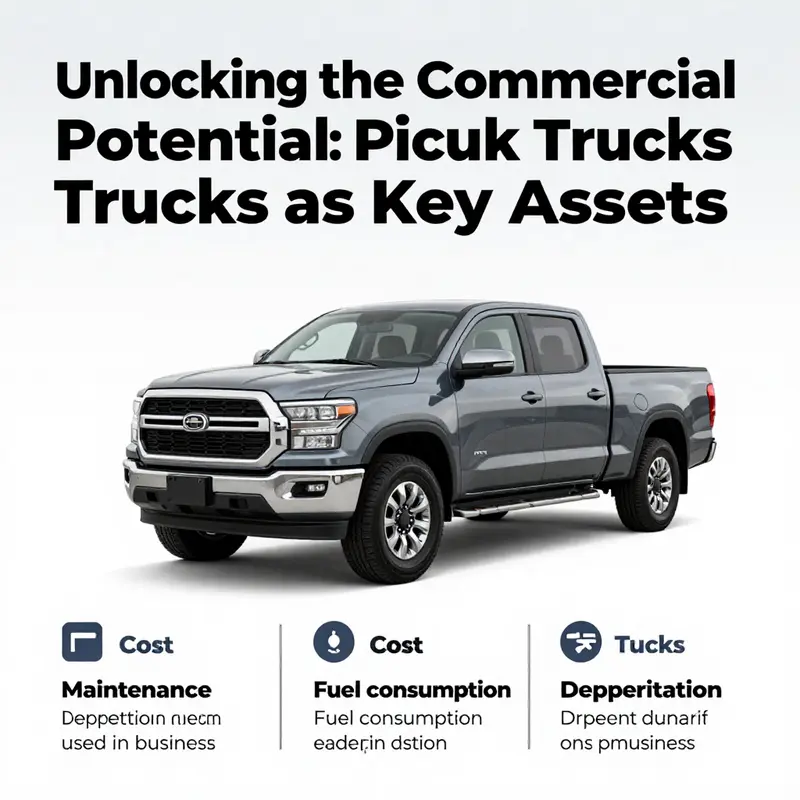
A pickup truck stands in the economy as more than a vehicle. Its open cargo bed and rugged chassis encode a functional purpose: to move tools, equipment, and people in support of business activity. When a truck fills that role consistently—hauling ladders between job sites, delivering building materials to a small contractor, or transporting irrigation gear for a landscape business—it becomes a commercial asset with tangible value. This is not only about capacity or a bed size. It is about the way that capacity translates into a service model, a work process, and ultimately, a stream of revenue. The commercial status emerges from the use case, but the economic ripples extend far beyond the individual operator. The same bed that carries a toolbox can also carry the inputs of a regional economy, linking manufacturing, financing, maintenance, and infrastructure to the daily needs of tradespeople and fleets large and small. In this light, the pickup becomes a floating asset class inside the broader commercial vehicle ecosystem, one that reflects both the practical demands of work and the financial realities that underpin business decision making.
The economic significance of commercial pickups is inseparable from their supply chain dynamics. They stimulate demand for manufacturing capacity, component parts, and service ecosystems that keep fleets operational. The lifecycle of a business-oriented pickup—from raw materials to assembly, distribution, maintenance, and end-of-life recycling—maps onto the standard industrial flow that anchors regional employment and GDP. Small businesses, independent contractors, and tradespeople rely on predictable lead times, affordable financing, and accessible repair networks to maintain productivity. When these elements cohere, a pickup’s utility becomes a stable contributor to cash flow, rather than a one-off asset purchase. This reliability helps small enterprises forecast expenses and revenue, solidifying their role in local economies and, by extension, national markets.
The financing impulse behind commercial pickups deserves careful attention. Unlike private vehicles, business use often justifies different funding structures—line-of-credit arrangements, fleet leasing, and depreciation accounting—that align with revenue generation and tax schedules. Financing costs, while a key line item, connect to broader macroeconomic conditions—from interest rates to credit availability and risk perception in the small business sector. In this sense, the pickup bed is more than a storage space; it is a lever in a company’s balance sheet, influencing decisions about expansion, diversification, or simply maintaining a steady workflow. When lenders observe fleets that demonstrate consistent utilization, uptime, and load factors, the capital cost of adding or replacing trucks tends to be more favorable. Conversely, spikes in operating costs or uncertain demand can tighten access to credit and slow growth. The net effect is that the economics of a single truck reverberate through payroll, supplier procurement, and service capacity across communities that depend on trades and logistics.
The productive capacity of pickups also pushes the market toward innovation in fuel efficiency, durability, and payload management. As businesses seek to minimize operating expenses over the life of a vehicle, manufacturers and suppliers respond with engineering that stretches payload, improves engine efficiency, and reduces maintenance frequency. The innovation cycle is not only technical; it reshapes business models around service intervals, remote diagnostics, and predictive maintenance. These advances lower the total cost of ownership, which in turn broadens the effective addressable market for commercial pickups. Yet the larger picture remains complex: fuel price volatility and regulatory costs can counterbalance efficiency gains. When energy costs rise or compliance burdens intensify, the appeal of a work-focused vehicle shifts toward models that deliver longer-term savings, even if upfront purchase prices and financing remain higher. This tension—between immediate acquisition costs and long-run operating expenses—drives fleet optimization decisions and, ultimately, how many small firms can sustain growth through reliable transportation.
Historical tides illuminate the sensitivity of commercial pickup demand to energy and policy environments. During periods when fuel prices spiked, big trucks often faced softer sales, while smaller, more efficient configurations gradually gained traction. Those macroeconomic shifts did not merely alter consumer taste; they adjusted the calculus a business must perform to stay profitable. The lesson that emerges is clear: the commercial pickup market behaves like an instrument calibrated to macroeconomic energy costs and regulatory expectations. The more transparent the energy and regulatory framework, the more firms can plan capacity and invest in durable assets that support steady service delivery. In that sense, policy clarity becomes a form of market stability with explicit economic value.
Against this backdrop, the push toward electrification and hybrid propulsion presents both an opportunity and a challenge. Electrified or hybrid options promise meaningful reductions in fuel and maintenance costs over the long horizon, which can improve margins for routine operations that haul the same routes day after day. Yet the transition requires upfront capital, charging infrastructure, and a credible service and warranty ecosystem to minimize downtime. The economics of this shift depend on the interplay between purchase price, residual value, and the cost of capital for small businesses that rely on these vehicles to complete their daily work. Government incentives, infrastructure investment, and streamlined regulatory pathways can tilt the balance in favor of electrification by reducing the perceived risk of adoption. In conversations about this evolution, many stakeholders emphasize how policy design should align with real-world fleet needs, encouraging a gradual but durable transition that preserves cash flow while lowering environmental impact. For industry readers, see OEMs seek clarity in emissions regulations, a signal that policy predictability is a critical ingredient in cost planning and investment decisions. OEMs seek clarity in emissions regulations
The broader economic implications extend to labor markets and regional resilience. Commercial pickups enable specialized services that sustain infrastructure development, utilities work, and maintenance regimes in rural and urban contexts alike. When fleets grow, so does demand for skilled technicians, parts suppliers, and service centers. This cascade creates a measurable contribution to jobs and training opportunities, reinforcing a cycle in which better vehicles support more capable workers, who in turn drive higher-quality services and more robust local procurement. The gush of activity touches financial services, insurance markets, and even education systems that prepare the next generation of technicians and fleet managers. In short, the pickup’s role in the economy is not purely mechanical; it is an enabler of practical workflows that underpin the efficiency of construction projects, utility upgrades, and the daily logistical rhythm of small and mid-sized enterprises.
From a policy perspective, this economic portrait argues for a balanced approach. Encouraging efficient and low-emission options is essential, yet it must be paired with accessible financing avenues, reliable charging networks, and predictable regulatory guidance. Tax incentives, where designed with fleet realities in mind, can lower barriers to upgrading or expanding a commercial fleet. At the same time, the industry benefits from a regulatory environment that recognizes the importance of reliability, safety, and uptime. The result is a healthier ecosystem in which small businesses can invest with confidence, suppliers can scale, and jobs can expand. When policymakers and industry players align on a long-term view, the economic vitality of the commercial pickup sector contributes to broader transportation resilience, diversification of energy demand, and steadier economic growth in the face of global energy and supply chain fluctuations.
The economic story of pickup trucks as commercial vehicles is thus a narrative of utility translating into value. It is about the bed that carries work, the chassis that endures wear, and the financing that makes asset ownership feasible for small enterprises. It is about the resilience to navigate fuel price cycles, regulatory shifts, and the evolving demands of a service-driven economy. And it is about the space where innovation, policy, and market forces converge to shape a vehicle class that remains essential to how work gets done across industries and regions. As this chapter threads through the economic texture of commercial pickups, it becomes evident that their significance lies not only in their payload or horsepower but in their capacity to underpin productivity, sustain livelihoods, and stimulate a network of services that keeps trades moving and communities thriving. External resource: https://www.brookings.edu/research/the-economic-impact-of-the-american-pickup-truck-industry/
Final thoughts
The classification of pickup trucks as commercial vehicles is not merely a regulatory label; it embodies essential aspects that influence logistics, construction, and other business domains. Their cargo-carrying capabilities, durability, intended business use, regulatory recognition, and economic implications distinctly position them as vital tools in modern commerce. By understanding and leveraging these characteristics, businesses can enhance operational efficiency, reduce costs, and better meet client demands. Pickup trucks are not just vehicles; they are integral assets that support and drive commercial success.