
Navigating the highways alongside large commercial trucks presents unique challenges and risks, particularly when it comes to passing. With the sheer size of these vehicles, the intricacies of blind spots, and the dynamics of road traffic, understanding the best practices for safe passing is paramount for logistics and fleet management professionals. This article delves into essential strategies, including the significance of blind spots, the advantages of passing on the left, effective signaling techniques, and the importance of maintaining an appropriate speed and distance. Each chapter aims to equip you with actionable insights to enhance safety and efficiency on the road, thereby minimizing risks and fostering safer interactions between commercial and passenger vehicles.
Seeing the Gaps: Mastering Blind Spots to Safely Pass Large Trucks
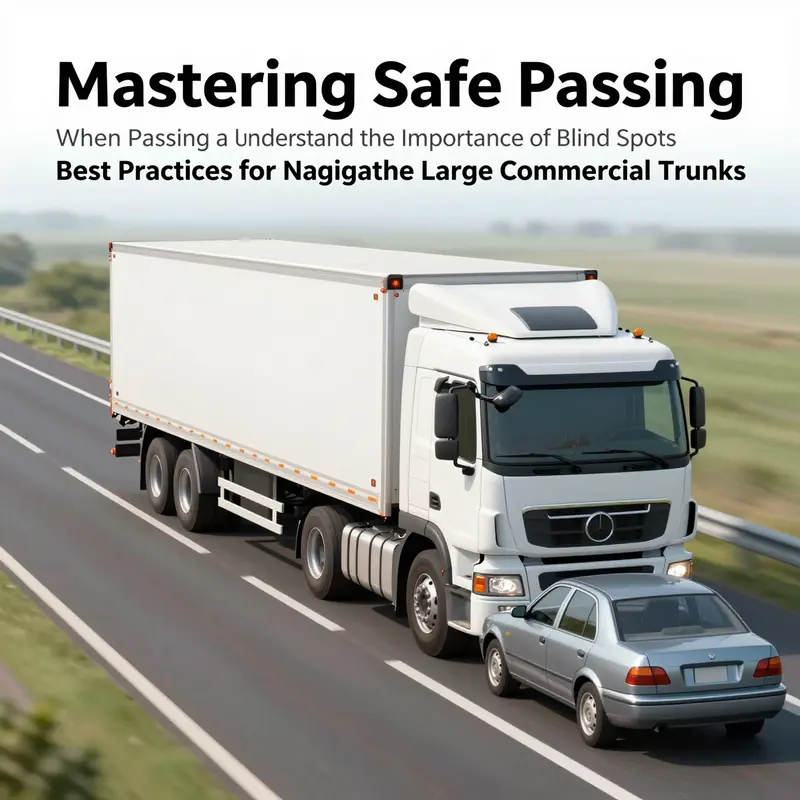
Seeing the gaps around a large commercial truck is not a luxury but a safety essential. When you approach a truck on a two lane or multi lane road, the choice to pass is more than a maneuver. It is a decision that hinges on understanding the truck’s field of vision, the way a vehicle moves in relation to the truck, and the way your presence will be perceived in a landscape that is built for power, momentum, and momentum’s consequences. The most critical idea to hold in your mind is that blind spots exist in all directions, but they are not equal in size or danger. The front zone is long and stubborn, the rear zone hides behind the trailer, and the right side, especially during turns, can create a pocket of invisibility that can swallow a vehicle in a heartbeat. The left side is not without risk, but it is usually more visible to the driver if the truck is properly equipped with mirrors and if you pass with deliberate speed. These are not abstract concepts. They are the practical truths that govern how you interact with trucks on roads that are shared by cars, motorcycles, buses, and bicycles alike. And they are not static; they move with the truck as it climbs a slope, negotiates a curve, or rockets forward in pursuit of an opening in traffic. The moment you begin to pass, you step into a dynamic equation where visibility, timing, and distance all snap into a single line of action.
The front blind spot is simplest to imagine when you look ahead. Because of the truck’s height and the position of the driver, there is a zone directly in front of the cab that remains invisible to the operator. This area can extend roughly twenty to thirty feet in clear conditions, and it is especially pronounced near the wheels. If you linger directly in front, the distance you need to react to a sudden stop becomes longer, and your risk of collision rises. The rule here is straightforward: do not sit in front of a truck for any longer than necessary, and never rely on the truck to see you if you can see the road ahead clearly and safely before making your move. As you pass, you should be scanning the roadway ahead to ensure there is no obstruction that would require you to brake abruptly once you have completed the pass. The goal is to complete the pass in a fluid motion so that you regain full visibility in your rearview mirror and can gauge the truck’s speed relative to yours.
Turn dynamics introduce the most perilous aspect of right side visibility. The right side blind spot, often referred to as the inner wheel cut zone, becomes a risk during right turns when the front and rear wheels follow different arcs. The resulting space along the truck’s right flank can hide a vehicle that is too close for comfort. This is why passing on the right is universally discouraged. The driver’s line of sight to the right is blocked by the cab and the trailer, and as the truck completes a turn, the rear wheels may track closer to your lane than you expected. The consequence is not theoretical. A car tucked inside that right-hand pocket may emerge into the path of the trailer at a moment when the truck driver cannot respond in time. The safety takeaway is simple and emphatic: never attempt a pass on the right side. If you need to pass a truck, position yourself in the left lane where the truck driver’s visibility is greater and where there is a longer line of sight ahead.
The left side, toward the cab and the trailer, also carries blind spots, though they are usually somewhat less dominant than those on the right. The cab area and the intersection between the tractor and the trailer can obscure a vehicle traveling parallel to the truck. However, as you move into the left lane to pass, you gain the advantage of the truck’s mirrors and the driver’s enhanced view toward the near side. Good practice is to ensure your vehicle is fully visible to the truck driver before you enter the blind zone. That means signaling early, accelerating to a steady pace, and making sure your position is stable in the lane long enough for the driver to register your presence in their mirrors. Do not ride alongside the truck for extended periods, and avoid any lingering parallel with the trailer that would place you at risk if the truck makes a sudden adjustment.
Behind the truck lies a full blind spot. The area directly to the rear can conceal vehicles or pedestrians trailing too closely. Tailgating a truck is never a safe choice, and it becomes a trap when you attempt to slip into a lane directly behind a long vehicle that cannot easily see your car. The moment you finish the pass, you should be certain you have enough space to return to the lane in front of the truck, and you should verify that you can see the truck’s rear bumper or taillights in your rearview mirror before you close the gap. This practice is not merely polite; it is a life-saving habit born from years of collision data that show how quickly a vehicle can vanish from a driver’s field of view when you are directly behind a large truck.
These blind spots are not only a truck issue; they are a shared risk to everyone who uses the road. A motorcyclist or bicyclist in the vicinity of a truck during a pass can be unexpectedly hidden from the truck’s drivers by the same geometry that hides cars. Street layout, weather, and road surface can further distort visibility. A hill, a bend, or a gust of wind can alter the truck’s line enough to create a moment of uncertainty where a nearby vehicle might be pushed into the blind zone or forced into a sudden stop. The practical consequence is that passing a large truck is not a routine lane change; it is a calculated maneuver that requires discipline, timing, and an awareness of the truck’s possible actions at every stage of the process.
The step-by-step discipline of a safe pass is not an optional courtesy but a nonnegotiable safety protocol. It begins with awareness: you identify the truck in front of you, assess the road ahead, and estimate whether there is a safe window to pass. If a truck is traveling at a slower pace, you calculate the distance you can cover in your lane to avoid entering the truck’s rear blind spot. You check your mirrors to confirm there is clear space behind you and in the lane you intend to enter. You signal early to communicate your intention to pass and to give the truck driver time to notice you in their mirrors. You then accelerate smoothly to motor ahead, ensuring your speed increases enough to pass decisively but not so quickly that you create a surge that could startle other drivers or destabilize your own vehicle.
As you move alongside the truck, you maintain a steady lateral distance. You avoid riding in the blind spot by keeping your vehicle clearly visible in the truck’s field of view. You monitor the front and rear of the truck to gauge the closing gap and the truck’s relative speed. If you notice the truck nearing an intersection, a curve, or a merge, you reassess your pass and consider delaying a moment to ensure your actions will not cause a hazardous squeeze. The goal is not to shave seconds off the trip but to complete the pass with enough margin that you can reenter the lane with ample room for both vehicles to maintain safe clearance.
The return to the lane behind the truck is a delicate operation. You should only merge back when you can see the truck in your rearview mirror or when you have regained a clear view of the road ahead in your forward sightline. If you cannot confirm that the truck still has visible space behind you, you should not move back until it is safe. The nearly universal rule is to pass swiftly but safely, so that you minimize time spent in close proximity to the truck. In practice, this means keeping the pass brief, avoiding any sudden changes in speed that could surprise the truck driver, and ensuring the lane change is complete before you shift your attention to the next segment of the drive. The moment you rejoin the flow of traffic, you should immediately return to a safe following distance behind the truck, avoiding tailgating or any pressure to close the gap quickly. These steps are not arbitrary; they reflect a deep body of safety guidance that rails against the habit of lingering in blind spots and reminds drivers to treat large trucks as moving heavy machinery with limited ability to respond at the moment of need.
In the broader context of highway safety and the shared use of the road, it helps to understand the relationship between vehicle design and driver awareness. This awareness includes knowing how a truck’s design can affect visibility and how the oncoming or following traffic can best respond. It is useful to consider how certain design features in trailers and tractors may influence a truck operator’s visibility field. For instance, larger mirrors, proper mirror placement, and reflective surfaces can improve the driver’s ability to detect vehicles in adjacent lanes. This reality underscores the point that safety is a two-way street: drivers must behave predictably and deliberately, while truck operators rely on the visible cues of other road users to make timely decisions. For readers looking to connect these principles to a broader discussion of vehicle design and road safety, a related exploration of trailer technology and chassis design can be found in resources like the Stoughton Trailers Smart Chassis discussion. It provides a practical window into how certain design choices influence how trucks maneuver and how other road users perceive their presence on the road. Stoughton Trailers Smart Chassis
The decision to pass and the manner in which you pass should also be framed by a simple rule of thumb: do not pass unless you can be certain you will not need to re-enter the same lane before the truck has completed its changes in speed or direction. This means avoiding passes in heavy traffic, near merges, or on inclines where the truck might lose momentum and drift into the lane you intend to reenter. It also means recognizing that conditions change. A light rain, a slippery shoulder, or a gust of wind can alter the truck’s control in ways that a driver cannot anticipate in the moment. If you sense any of these complications, it is prudent to delay the pass and allow safer conditions to emerge. The same principle applies to urban streets where pedestrians, bicycles, and buses share the space with trucks. In these environments the margins are thinner and the consequences of a miscalculation are greater. The key is to maintain a clear head, a steady pace, and a readiness to abort the pass if conditions become uncertain.
Ultimately, the question of how to pass a large commercial truck is not about winning the race to the next exit but about preserving life and reducing risk for everyone who shares the road. It is a discipline learned from consistent practice and reinforced by official safety guidelines that emphasize avoiding the truck’s blind spots and maintaining predictable behavior. The guidance you follow in moving through traffic will ripple outward, affecting other drivers who may confront the same trucks from different angles and at different speeds. In this light, every passing maneuver becomes part of a larger culture of road safety that values patience, awareness, and careful action. For readers seeking formal frameworks that mirror these everyday practices, the Federal Motor Carrier Safety Administration provides extensive safety resources on how to protect yourself around trucks. These guidelines reinforce the same principles described here and remind drivers that safety is built on understanding the truck’s blind spots and learning to interact with them in a way that reduces risk to all road users. https://www.fmcsa.dot.gov/safety
The Left-Side Overture: A Seamless, Safer Pass Past the Big Truck on Busy Highways
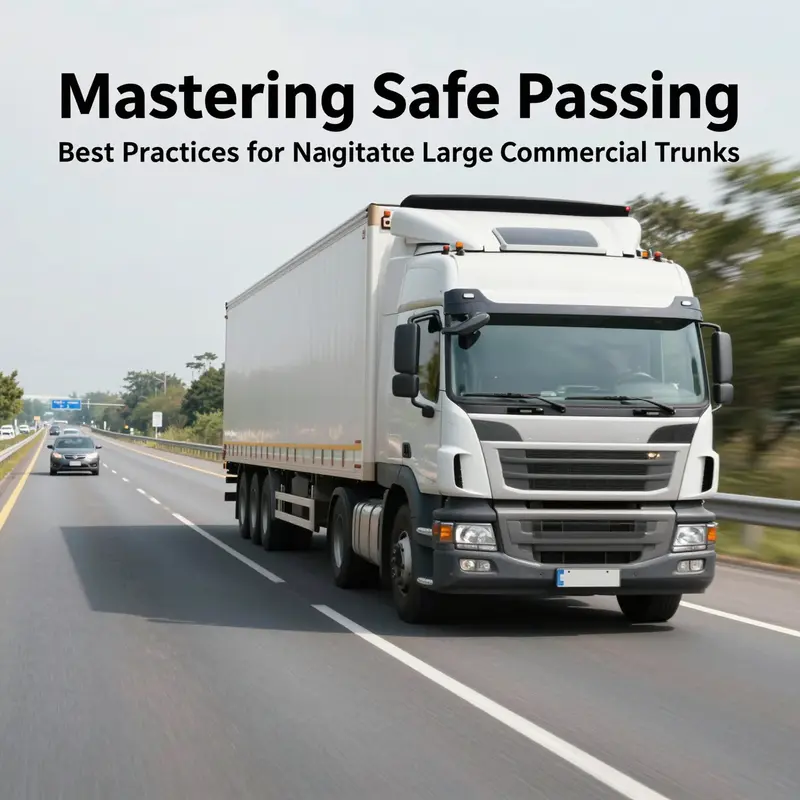
On highways where large commercial trucks share the road, a well-timed overtake is less about bravado and more about a precise, practiced rhythm. The decision to pass on the left is not a rule carved in stone from nowhere; it arises from the realities of vehicle design, sightlines, and the way traffic flows at speed. A driver who understands these dynamics buys safety time, keeps momentum smooth, and reduces the chances of a misjudgment that could end with a terrible collision. The left side of the truck becomes the safer passageway because the truck’s blind spots, the geometry of its mirrors, and the driver’s line of sight collectively favor a cleaner, more predictable overtaking maneuver when approached from that near side. In left-hand drive countries, the operator sits on the left, and that seating position translates into better visibility of what lies ahead and alongside in the left lane. The same physical reality that helps a car driver observe a nearby vehicle also works to help the overtaking vehicle judge distance, speed, and gaps more accurately when it slides into the space ahead of a truck and begins to merge back into traffic. The right side, with its larger blind zone, becomes a much less forgiving corridor. The truck’s mass and its blind spots can conceal a vehicle that appears briefly in the blind region, only to be suddenly revealed as the truck signal turns or as the vehicle moves into the path of a turning radius. This is not hyperbole; it is the practical geometry of road safety, and it explains why the left-side pass rests at the core of safe overtaking practice.
The steps to a safe left-side pass unfold like a well-practiced routine. First comes awareness—an intentional scan of the oncoming lane and the space ahead to the left. A quick, methodical glance at the sides and rear mirrors confirms there is a clear path and that the truck driver has not misjudged the distance to an approaching section of road or a merging vehicle. Then comes signaling. The turn signal is not a ceremonial gesture; it informs the truck driver, the vehicle ahead, and any vehicles that might soon attempt to lane-change that a change is about to happen. The signaling should precede the maneuver by a moment that gives others time to react—usually enough to cover the calculation of distance for a safe pass without forcing the truck to brake or dart into a tighter arc. The driver’s own speed must be adjusted with precision: not so fast that the overtaking vehicle closes distance too rapidly, but fast enough that it creates a quick, smooth passage. This is not a race; it is a controlled acceleration that maintains steady momentum while keeping a comfortable watch on the blind zones of the truck’s right side and the space into which the vehicle will merge.
The distance and timing of the pass are inseparable from the larger design of highway sequencing. Industry practice and safety guidelines converge on a principle: minimize the time spent alongside the truck. The goal is to move from being directly behind the truck to the space ahead of it with the smallest possible duration in its proximity. The reason is straightforward. A truck’s length and height create a body shadow that extends well beyond the physical vehicle. A driver who waits too long risks the rear-end collision zone, a region where the truck’s width and the vehicle’s own profile can produce a close-call if a sudden braking event occurs or if the truck shifts lanes for a right turn. By accelerating decisively and cleanly, the overtaking vehicle completes the pass before the truck’s driver has to adjust to a new position on the highway. In practice, many seasoned drivers estimate that a safe pass can be accomplished with a robust but controlled surge of speed, followed by a precise merge back into the lane once the vehicle clears the truck’s rear bumper and a safe clearance is regained.
Visibility remains a central theme. The left side is not just a preferred lane; it is the lane in which the driver’s forward field of view is best aligned with the truck’s silhouette. The truck’s mirrors, designed to compensate for the vehicle’s own blind spots, operate most effectively in a corridor that runs along the near side where the overtaking vehicle travels. If the overtaking vehicle lingers in the right-side corridor, the driver of the truck is confronted with a widening blind zone that grows as the truck negotiates curves or merges into traffic. Even though trucks rely on convex and additional mirrors to reduce blind spots, the near-side space offers the greatest chance for a clean, observable pass where the truck driver can see the vehicle in enough time to respond if needed. This is not merely a theoretical statement; it is reinforced by the practical experiences of drivers who routinely navigate high-volume corridors during all hours of the day and night.
The legal and regulatory frame around passing reinforces the instinct to use the left side. In many jurisdictions, overtaking from the right is either prohibited or strongly discouraged because of the associated risk profile. The logic is reinforced by lane usage patterns that reserve the left lanes for faster-moving traffic while heavy, slower-moving trucks tend to be in the right lanes. This arrangement helps to maintain a steady traffic flow and reduces the risk that a truck will be surprised by an oncoming vehicle or a vehicle attempting to pass from the wrong side. The consequences of violations here can range from fines to points on a driver’s record, and in some cases, more serious penalties where the maneuver contributes to a collision in which pedestrians or cyclists nearby are endangered. The practical driver, then, internalizes these rules not as punitive measures but as an embedded part of the art of safe highway operation: the road system has evolved to reward predictable behavior, and predictability is born from the choice to pass on the left when it is safe to do so.
To translate these principles into everyday driving, the lesson is to treat the pass as a series of connected calculations rather than a single leap of speed. Ahead of the maneuver, the driver assesses the space to the left—distance to the oncoming lane, the presence of any oncoming vehicles, and the truck’s current speed and position. Behind the overtaking vehicle, the rearview maintains a perspective on the truck’s tail, and side mirrors remind the driver that the truck is not a stationary object; it is a dynamic participant with its own limited visibility. The 100 meters guideline—often cited by veteran drivers—provides a practical buffer. It is not a rigid measure, but a reminder to avoid the instinct to edge into the oncoming lane until there is a clear window for the pass. A safe operator waits for that window, relies on signals, accelerates in a controlled manner, and checks again in the mirrors before re-entering the original lane. After the pass, the driver decelerates or steadies the speed to match the flow of traffic in the left lane, ensuring there is adequate clearance from the truck’s rear bumper. The goal is a seamless transition that minimizes any jolt to traffic behind. The emphasis is on space, timing, and a disciplined rhythm that respects the larger traffic ecosystem rather than seeking to dominate it.
Beyond the mechanics, the overtaking decision sits within a broader awareness of road conditions and the environment. Weather, road surface, lighting, and traffic density all influence how aggressively a driver should approach a pass. In rain or fog, the diminished visibility magnifies risk, particularly to the right side of the truck where a sudden lane move might occur. In these conditions, some drivers choose to delay the pass, allowing extra space and time for the truck driver to maintain a safe course. In urban approaches to highways, where merging traffic, pedestrians near the shoulder, or bicycles, can complicate a pass, the decision to pass on the left may require even greater caution. In such environments, a driver might extend the distance behind the truck and adjust the plan to pass only when the space ahead is clearly safe and the truck is not likely to turn or swing into the lane unexpectedly. These are not mere preferences; they are essential guardrails that keep the pass predictable and minimize the chance of a miscommunication that can escalate into danger.
The narrative of passing a large commercial truck admits a broader context—the dynamic relationship between policy, infrastructure, and everyday driving. Even though the mechanical and regulatory logic is clear, real-world driving demands humility and patience. A truck is a heavy, long vehicle with a wide footprint on the roadway. The cars behind it must respect how long it stays in a given lane and how slowly it accelerates after a load has been adjusted or a hill is climbed. The safe overtaking of a truck is thus not a one-lane problem but a highway-wide choreography. It involves the overtaking vehicle, the truck driver, and other road users interacting in a shared space. The driver’s role is to maintain situational awareness and to avoid the temptation of shortcuts that promise immediate gains but risk longer-term consequences. This approach aligns with the broader wisdom echoed in industry discussions about safety, regulation, and effective highway operation. In some industry briefings and policy roundtables, the emphasis on predictable, cooperative driving is highlighted as a keystone of road safety; the idea is to create a culture where overtaking is a refined action rather than a reckless sprint.
Policy and practice converge in practical terms through small, consistent behaviors. The overtaker keeps headlights on in dim or inclement conditions to improve visibility and signal intention to the truck and other drivers. The overtaker avoids tailgating, not just to keep a safe distance, but to preserve the window needed to respond if the truck suddenly slows or turns. The overtaker confirms there is sufficient space to re-enter traffic, rather than crossing back into the lane when only a fraction of a second remains. The truck driver, likewise, has a responsibility to use mirrors and signals in a timely fashion, to anticipate how the vehicle behind may react, and to maintain steady control of lane position. This mutual attentiveness—shared responsibility and clear signaling—creates a safer roadway for everyone. The practice is not about signaling one’s competence; it is about reducing ambiguity in a context where speed, size, and momentum can quickly amplify risk.
The practical takeaways are straightforward, though their execution demands calm and discipline. Always pass on the left when it is safe and legal to do so, never linger in the truck’s blind spots, and use the vehicle’s indicators to communicate every step of the maneuver. Before repositioning in the lane ahead of the truck, verify that the space behind the truck is now free and that no other vehicle is attempting the same pass from the right side. If you cannot confirm a clear path, wait for a more opportune moment rather than forcing a pass. In other words, the safest pass is one that unfolds with predictable movements, clear signals, and a comfortable margin of space in all directions. The road rewards the driver who treats overtaking as a deliberate, well-judged action rather than a dash of speed. Finely tuned, this approach contributes to smoother traffic flow, reduces the likelihood of sudden braking or swerves, and ultimately preserves lives on the highway. As with many safety practices, the outcome is not measured by how quickly you can overtake but by how reliably you can do so while keeping every other road user secure. For those seeking a broader context on how policy discussions and practical road safety intersect, a concise briefing can be found in Bridging Border Barriers: Meeting Insights, which reflects on how regulatory clarity supports safe driving practices on shared roadways.https://truckplusllc.com/bridging-border-barriers-meeting-insights/
The bottom line is clear: in the vast majority of scenarios, the left-side overtaking maneuver is the safer course. It aligns with how left-drive vehicles are configured, it respects the typical lane usage structure of highways, and it reduces the risk associated with blind spots during complex turns or lane changes. It is a discipline that requires attention, patience, and a commitment to predictable behavior. When the road is crowded, when weather conditions are challenging, or when visibility is limited, the safest option may be to delay the pass until the space ahead is unambiguously clear. In the end, safety is not a slogan but a practice that begins with the simplest of acts—checking mirrors, signaling clearly, and moving smoothly into the left lane with a clear plan for re-entry. The same holds true for all operators who share the road: a driver who respects the near-side visibility, adheres to the lane-use conventions, and maintains ample space behind and ahead achieves safer, more reliable outcomes for themselves and for everyone else on the road. External resource: https://www.nhtsa.gov/vehicle-safety/traffic-safety-education
Overtaking a Heavyweight: Signaling, Space, and Speed When Passing a Large Commercial Truck
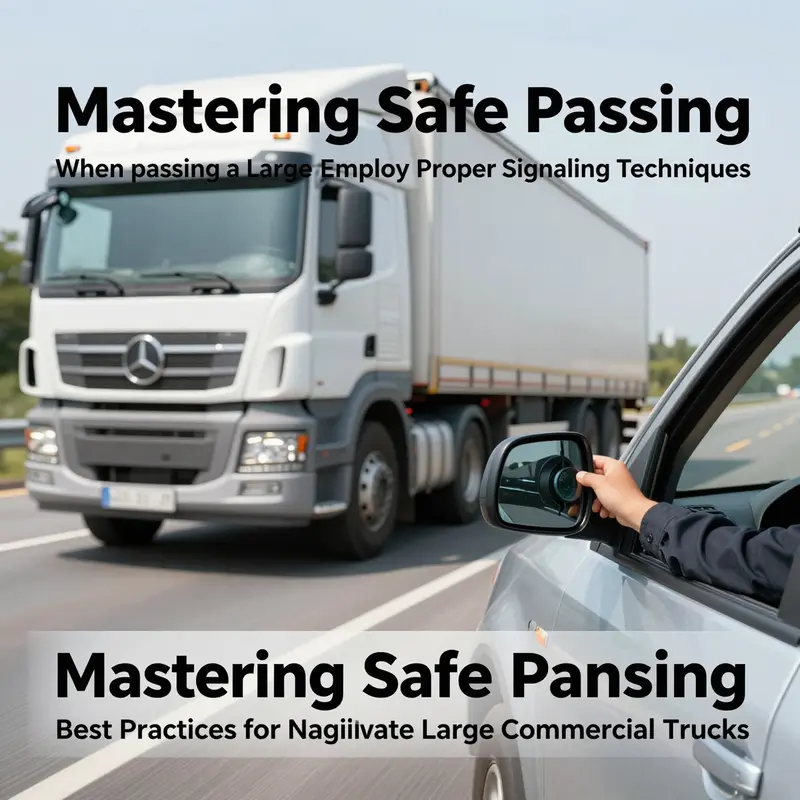
The highway compresses space and time into a shared, high-stakes stage where the slightest miscalculation can turn a routine mile into a tense moment. A large commercial truck dominates that stage with height and momentum, its bulk casting a long shadow over the smaller vehicles around it. When you decide to pass, you are not merely moving from one lane to another; you are coordinating with a much larger machine that has its own rhythms, blind spots, and blind trust in the skill of the drivers who share the road. The decision to pass should be deliberate, and the technique should be precise. The safety you protect is not only your own; it is the safety of everyone who shares the lane ahead, the shoulder, and the space you temporarily occupy. In this space, signaling is not a courtesy but a critical communication tool, a way to translate your intention into predictable action for the truck driver who cannot read your mind as you approach. You begin with a plan, a recognition of the truck’s limits, and a discipline that keeps the maneuver clean from start to finish. The left side, near-side to the truck’s operator, becomes your staging ground, not because the right side is harmless, but because it is the side with the most challenging blind spots for the heavy vehicle. The right side of a big rig is renowned for a broad, often dangerous blind zone that runs from the truck’s door to a position several lanes back. Drivers who attempt to pass on that flank are wagering against uncertain visibility and a vehicle that can drift into your lane with surprisingly little notice. By contrast, the near-side of the truck—when the truck is properly equipped with mirrors and when traffic in that lane is clear—offers a more manageable line of sight. You should aim to occupy that space briefly, decisively, and with your exit plan firmly in mind. The goal is to complete the maneuver quickly and to withdraw into a lane that is safely open, leaving the truck and the traffic behind you to resume their normal trajectories. The pace of the pass matters as much as the direction you choose. Prolonged side-by-side proximity invites a host of hazards: tire debris kicked up by the truck’s wheels can strike your windshield or gloss over your vision in a spray of water or dirt; a sudden swerve from the truck or a reaction from another vehicle can compress the space you have just created. The safer path minimizes the time you spend even briefly adjacent to the truck. In practice, this means planning a clean, swift pass that respects the 100-meter rule used by many drivers and safety programs. Picture the road ahead as you approach, noting the speed of the truck, the density of traffic, and any signs that visibility might degrade. If you are traveling behind the truck, your ability to gauge its speed becomes essential. You should not attempt a pass if you cannot see the space you need to complete the maneuver without lingering near the truck. The discipline begins with signaling. You should activate your left turn signal early enough that the truck driver can anticipate your intent well before you move. The signal is your first handshake with the driver, a cue that you intend to switch lanes and to overtake. In addition to the turn signal, a quick flash of your headlights serves as a second, supplementary signal. This uses the human tendency to notice high-intensity light within the periphery, especially in low-light conditions or when visibility is compromised by weather or road spray. The combined signaling approach reduces the likelihood of surprise or misinterpretation, which is especially important when you are dealing with a vehicle as large as a semi-truck. You also need to ensure there is sufficient space before you commit to the pass. The 100-meter distance is a practical guideline that gives you a buffer to observe oncoming traffic, to check your own mirrors, and to ensure you can accelerate smoothly without forcing the truck into abrupt braking or swerving. The distance is a safeguard for both you and the truck driver, providing you with the ability to complete the maneuver in a controlled manner. As you begin to overtake, accelerate steadily and smoothly, maintaining a consistent rate so you do not require abrupt changes in speed that could startle the truck operator or cause a gust of wind to push you toward the truck’s trailer. The idea is to pass quickly yet safely, so you do not remain in the space in front of the truck for longer than necessary. Once you have moved into the left lane and you are clear of the truck’s rear, you should re-establish your original lane only when you can confirm the entire front of the truck appears in your rearview mirror. This is the visual cue that you are fully ahead and out of the truck’s blind spots. It is not a moment to relax entirely, but it is the moment when you can safely merge back and continue your journey without lingering in the danger zone. The truck itself may communicate in its own way, and recognizing those signals can be part of safe driving wisdom. For instance, if a truck blade glints in the side mirror and the left-turn indicator flickers while the truck does not change lanes, it may be a sign that the vehicle ahead is encountering an obstacle—do not attempt to pass at that moment. If you observe that the truck has turned on its left signal and then engages a right signal after you change lanes, it may indicate that the obstacle has cleared and passing is safe. These driver-to-driver cues, though subtle, are part of the larger language of highway safety, and they reinforce the need to avoid assumptions when the big machine is maneuvering nearby. When conditions worsen, the entire calculus shifts. In heavy rain, fog, or darkness, passing becomes a much more fragile proposition. The spray from the truck’s tires can reduce your visibility abruptly, and the truck’s lights may be degraded or obscured by rain, spray, or dirt. In those moments, the best choice is often not to attempt the pass at all, or to delay until the conditions improve enough to offer clear sightlines and predictable behavior from the truck operator and other road users. The social dimension of passing also matters. A disciplined driver recognizes that passing is not a personal test of bravado but a mutual act of courtesy among road users. Keeping a respectful distance before and after a pass communicates to others that you are mindful of the space you share with larger vehicles. It also communicates to the truck driver that you are an experienced operator who understands the role of time and space on busy highways. The complexity of overtaking becomes more pronounced when you consider the broader traffic ecosystem. Heavy trucks are essential to commerce, and their movements are not isolated; they intersect with the behavior of passenger vehicles, motorcycles, heavy machinery on ramps, and even pedestrians crossing near on-ramps and exits. A single misjudgment can cascade through the traffic stream, affecting many others. In the context of the trucking industry, this kind of situational awareness is part of professional driving culture. It is also a reminder that the road is a shared resource, and the rules guiding this sharing are designed with the safety of all in mind. For readers who want to place this practice within a larger industry perspective, the interplay between driver behavior and market dynamics matters. There is a broader conversation about how capacity and demand influence highway usage, driver training, and safety standards. To explore how these dynamics unfold in the trucking sector, consider examining insights such as Excess capacity in the trucking market insights. This link points toward a broader discussion about how industry conditions shape everyday decisions like when and how to pass a large truck. The practical takeaways for safe passing remain anchored in solid technique. Use signals early, maintain a safe distance, and act decisively yet smoothly. Do not linger beside the truck; minimize your exposure to hazards such as tire blowouts, falling cargo, or sudden swerves. After the pass, verify that you can see the entire front of the truck in your rearview mirror before returning to your lane. This simple check is a reliable safeguard against second-guessing or a last-minute lane change that could create conflict with following traffic. The overall rule of thumb is straightforward: pass on the left, signal clearly, accelerate promptly but smoothly, and rejoin once you can see the truck’s front in your mirror. In addition to the procedural steps, cultivate a mindset that treats every lane change as a small, high-stakes operation. The more you practice this approach, the more natural it becomes, reducing the likelihood of risky improvisation. The highway rewards predictability and discipline; it punishes hesitation and abrupt moves. And while the immediate goal is to overtake a specific vehicle, the broader objective is to keep all travelers moving safely along a shared corridor. These principles do not rely on clever tricks or shortcuts. They rely on clear communication, respect for the capabilities and limitations of heavy trucks, and a readiness to adjust when conditions demand it. The safer answer is often the simplest: plan ahead, signal early, maintain space, and ensure you are clear after the pass. In the end, the act of passing a large commercial truck becomes less about a single maneuver and more about a practiced form of highway courtesy that protects lives and preserves momentum for everyone on the road. For those who want to deepen their understanding of how industry dynamics intersect with day-to-day safety practices, the internal resource linked above offers a broader lens on market conditions and driver training that shape real-world decisions on the highway. And for ongoing safety guidance that is specific to driving practices and regulatory expectations, the Federal Motor Carrier Safety Administration provides authoritative resources on safe passing procedures and related highway safety standards. See the FMCSA resources for official guidelines and recommendations. https://www.fmcsa.dot.gov/
Mastering the Pass: Safe Speed, Distance, and Positioning Around Large Trucks
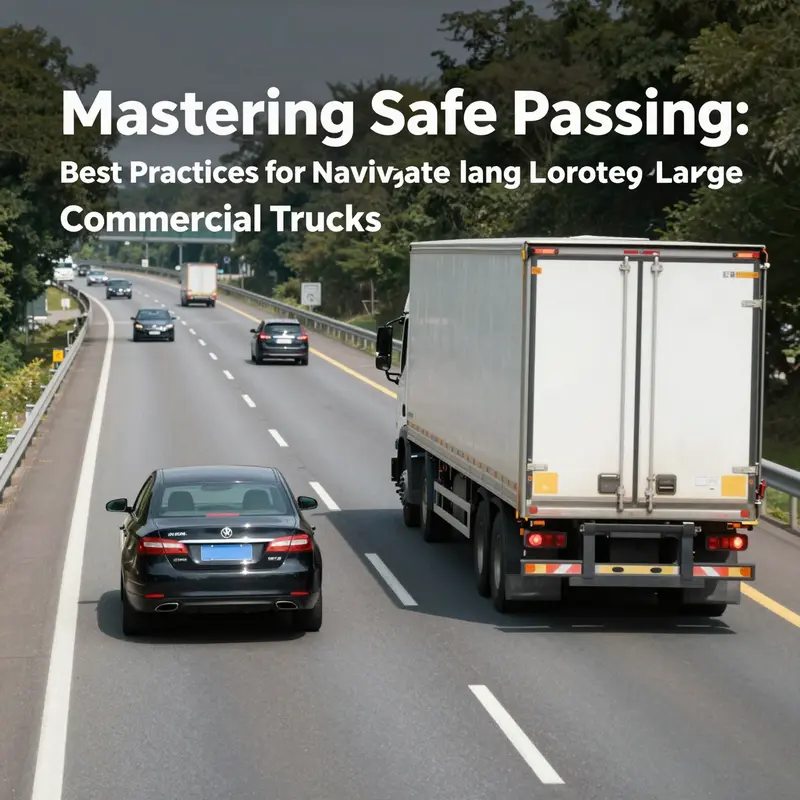
Passing a large commercial truck is more than a simple lane change. It is a moment of heightened responsibility, a test of judgment, observation, and timing that can influence the safety of everyone on the highway. When you decide to pass, you are choosing to enter the truck’s vicinity briefly, to share space with a vehicle that weighs many tons and requires far more distance to stop than a passenger car. The core guidance remains consistent: pass on the left, pass quickly and decisively, and re-enter the right lane with ample clearance. Yet behind this straightforward directive lies a web of details that can mean the difference between a smooth pass and a dangerous misjudgment. The practical rhythm of passing begins long before you flip on a turn signal and taps into deeper habits of safe driving—habits that apply to all drivers, from the casual commuter to the professional who spends long hours sharing the road with heavy vehicles. The left side, near the truck’s cab, is your pathway to safety in most scenarios. The right side is a far more treacherous place, where no-zones can extend far enough to swallow a smaller vehicle in a moment of hesitation or miscalculation. The decision to pass, the way you execute the pass, and how you manage your speed and distance after you’ve cleared the truck all operate within a framework of predictable responses and disciplined restraint. This consistency is what separates a routine lane maneuver from a collision in the no-zone environment that surrounds the truck on all sides.
The no-zones around large trucks are not abstract concepts; they describe real blind spots that drivers frequently underestimate. The area directly in front of a truck can be deceptively large because the truck’s own length and height restrict the driver’s forward view, especially when the truck is climbing a grade or negotiating a bend. Directly behind the truck, the space is often reduced because the trailer’s wake tends to push air in a way that makes tailing vehicles less visible. Alongside the truck, the no-zones are widest on the right side. The truck’s mirrors provide a window into the space immediately adjacent, but those mirrors do not guarantee perfect visibility for every second of the pass. That is why the left lane, when clear, becomes the preferred passing lane. If you can see and be seen in the truck’s side mirror before you begin the pass, you establish a line of sight that reduces the risk of a surprise move by the truck driver. It is not a guarantee, but it is a prudent, observable signal that you are not hidden in the driver’s blind spot.
A well-timed pass is a blend of momentum and restraint. On a multi-lane highway, the left lane offers a safer corridor to overtake because it creates space behind the truck as you accelerate and pull ahead. The acceleration should be smooth and proportional to the road’s grade and traffic conditions. It is not a sprint; it is a calculated surge that reduces the time you spend in the truck’s no-zone. You should be able to clearly see the truck’s near-side mirror before you start the pass. That single moment—seeing the mirror—transforms the pass from a guess into a coordinated act. It indicates that the truck driver has visibility of at least one part of your vehicle, which reduces the likelihood of a sudden, unanticipated lane change by the truck. This visibility is part of a mutual safety contract between drivers: you act with intention, you acknowledge the truck’s limited field of view, and you respect the pace at which the truck travels.
The pacing of the pass is guided by the rule of leaving little time in the truck’s side no-zone. You should not linger in the area where the truck cannot react to your presence. The pass should be swift enough to clear the truck’s side, yet controlled enough to avoid a sharp throttle or abrupt correction that could destabilize your vehicle. Once you have established a safe margin in front of the truck, you merge back into the right lane. The critical cue for re-entry is the moment when you can see the entire front of the truck in your rearview mirror. This is a practical, observable test: if the front of the truck is still obscured, you are not yet out of its potential danger zone. If you can make out the whole nose, then re-enter with a smooth, deliberate motion. Do not cut in sharply; give the truck and your own vehicle time to adjust to the new lateral clearance. The idea is to avoid creating a squeeze-down scenario where either vehicle swerves to accommodate the other.
Beyond the mechanics of the pass itself lies the discipline of what happens before and after the maneuver. Before you initiate the pass, perform a quick but thorough assessment of the traffic around you. Check your mirrors, scan the oncoming lane for any approaching vehicles, and assess the space you need to accelerate without forcing others to brake suddenly. Turn signals are essential signals of intent. They are not optional accessories; they are fundamental tools that communicate your planned action to other drivers. Even in heavy traffic, signaling early and clearly reduces the chance that a driver will misinterpret your intentions and react in a way that could provoke a loss of control. After passing, you must ensure a clear path back into your lane well before returning to your former following distance. Re-entering the right lane should not be attempted until you have regained a safe gap in front of the truck that is enough to accommodate any unforeseen deceleration by the truck or by traffic in front of you.
Maintenance of a safe following distance when you are behind a large truck is as important as the pass itself. The guidance that has become a common standard—four car lengths behind the truck—serves as a practical, intuitive rule of thumb that translates into real-time decision making on the highway. When you approach a truck, you should create a buffer that allows you to react to sudden braking or to unexpected maneuvers by the truck driver or by the traffic ahead. The four-car-length rule is not a rigid measurement but a conservative baseline that adapts to road conditions, weather, and speed. On wet roads or during poor visibility, that distance should be increased. If you are following a truck in construction zones or in heavy traffic with frequent stops, the pad you maintain should be greater still. The point is to avoid the impulse to close within a small margin, which can quickly reduce your ability to stop or maneuver if the truck brakes abruptly or if another vehicle cuts in front of you. In practice, that means staying well back, using the truck’s taillights as a visual cue, and avoiding the trap of tailgating. Tailgating is not only dangerous; it is an invitation for miscommunication in moments when quick decisions are required.
The road environment adds layers of complexity to the basic rule book. On open highways with clear sightlines, the pass can proceed with fewer constraints, provided the space ahead and behind is sufficient and the weather is cooperative. In urban corridors or on two-lane highways where passing opportunities arrive and vanish with each bend or crest, the decision becomes more nuanced. You must weigh the risk of pulling alongside a truck into a blind curve or a crest against the benefit of completing the pass before an oncoming vehicle appears. If the oncoming lane is occupied by a vehicle moving at a similar speed, or if visibility is compromised by rain, fog, or glare, the safer choice may be to wait for a more favorable moment rather than forcing a pass that could end in a close call. The same logic applies when you’re trailing a truck in a heavy vehicle zone where there are many large vehicles and little margin for error. In those settings, maintaining the four-car-length cushion becomes even more critical, and the pass should be executed only when you have a clearly visible escape route to return to the right lane without encroaching on the truck’s space.
A broader awareness of safety culture helps connect the practice of passing to the larger safety ecosystem on the road. This is not merely a private responsibility; it is a shared duty that connects with official safety recommendations and ongoing industry discussions about how best to coexist with heavy vehicles. The guidelines surrounding large trucks emphasize not only the mechanics of a pass but also the ethics of road behavior—respect for the truck driver’s limited perspective and the need to minimize time spent close to a vehicle that requires significantly more reaction time and stopping distance. In this sense, the act of passing becomes a moment for applying professional standards in everyday driving. It is the application of caution, visibility, signaling, and restraint that builds a more predictable driving environment for everyone, not just for those who operate heavy trucks.
From a learning and behavioral perspective, internalizing these practices requires more than memorizing steps. It requires the cultivation of a proactive mindset that sees the road as a shared space with a responsibility to anticipate, not just to respond. When you approach a truck, you should think about what the truck driver can and cannot see in that moment. A quick glance at the side mirror before the pass becomes a habit that reduces ambiguity. A deliberate check of the rearview mirror after you complete the pass confirms that you are not lingering in the truck’s rear blind zone. These micro-decisions, repeated every time you encounter a truck on the highway, add up to a pattern of safe driving that pays dividends in lower risk and greater predictability for all road users.
This practical frame of reference aligns with the broader dialogue about road safety and regulatory guidance. It echoes the emphasis on clear visibility, predictable behavior, and timely communication that underpins official safety resources. While this chapter focuses on the mechanics of passing, the underlying principle is to minimize exposure in the truck’s blind spots and to maximize visibility and control for yourself. In that sense, the act of passing becomes a disciplined routine rather than a rushed maneuver. The smoother and more confident you are in your pass, the less time you spend in precarious proximity to the truck, and the more space you preserve for the unpredictable dynamics of highway driving. The result is a roadway environment in which both car and truck operators can maintain awareness of each other’s needs and limitations, reducing the chance of collisions and creating safer journeys for everyone on the road. This perspective invites a broader conversation about the conditions and constraints of modern trucking, including the ongoing discussions among stakeholders about how best to balance safety with the efficiencies required by a high-demand transportation system. For readers who want to explore related industry conversations, there is ongoing discourse that touches on topics such as regulatory clarity and emissions considerations, including OEMs seek clarity in emissions regulations. These conversations influence driver training, vehicle design, and the practical realities of how drivers navigate busy corridors while keeping safety at the forefront. OEMs seek clarity in emissions regulations.
In closing, the skillful pass around a large truck rests on a few enduring principles: maintain a safe, observable pass from the left; confirm visibility before and after the maneuver; synchronize your speed and your lane re-entry with the truck’s position and your own clearance; and uphold a conservative, adaptable following distance in all scenarios. These practices are not one-size-fits-all prescriptions but a framework that adapts to vehicle performance, weather, traffic density, and road geometry. When you internalize this framework, you transform a potentially risky moment into a controlled, intentional action. You gain confidence not by forcing the truck to accommodate you, but by shaping your own behavior so that the truck driver’s limited field of view and the surrounding traffic’s unpredictability become a familiar part of your driving experience. The result is a safer highway for everyone, a smoother flow of traffic, and a clearer sense that, in the end, passing is not merely about overtaking a vehicle but about contributing to a shared commitment to road safety. For readers seeking formal guidance and official safety resources to complement these practices, reference the FMCSA safety framework and guidelines for interactions with large trucks: https://www.fmcsa.dot.gov
Final thoughts
Safe navigation around large commercial trucks is a crucial skill for drivers, particularly those in logistics and fleet management. By understanding blind spots, opting for left-side passing, employing accurate signaling, and maintaining safe speeds and distances, drivers can significantly reduce collision risks. These best practices not only enhance personal safety but also contribute to the overall efficiency and effectiveness of road transportation. Prioritizing these strategies in daily operations and training can lead to safer roads for everyone involved.