
In New Mexico, non-commercial trucks represent a significant asset for many logistics, construction, and small business operations. As such, understanding the associated costs and fees is essential for effective budget management and operational planning. This article will delve into the registration fees, tax obligations, and comparative analysis of non-commercial versus commercial truck fees, providing crucial insights for logistics and procurement teams dedicated to optimizing their expenditures and compliance. Each chapter unpacks core aspects to present a holistic view of the financial responsibilities tied to non-commercial trucks in New Mexico.
Beyond the Badge: Navigating Non-Commercial Truck Fees and Registration in New Mexico
When you own a non-commercial pickup or utility truck in New Mexico, you enter a regulatory landscape that is mostly about the ordinary duties of owning a vehicle rather than about a special trucking regime. The state does not levy a separate “truck tax” that applies only to non-commercial, private-use trucks. Instead, the costs emerge from standard vehicle registration and the general sales tax framework that applies to all motor vehicles. The practical takeaway is simple in one regard: if you own a personal-use truck in New Mexico, your expense is driven by weight, age, and type, and by the same tax philosophy that governs passenger cars and SUVs. What changes as you delve into the details is how those costs are calculated, how they are paid, and how you can foresee the total bill when you register or renew your vehicle each year or, in some cases, for two years at a time. This chapter weaves together the essential elements that shape the price tag for non-commercial trucks in the Land of Enchantment, tying them back to the broader question of whether non-commercial trucks face any special fees beyond the ordinary registration and tax structure.
First, the core premise: there is no separate, truck-specific levy for non-commercial vehicles in New Mexico. The state’s fee architecture treats all trucks as vehicles subject to registration and weight-based charges, just like cars and SUVs. The critical distinction for non-commercial trucks is not in the existence of a charge but in how that charge is calculated. The New Mexico Motor Vehicle Division (MVD) sets a tiered system that aligns the registration cost with the vehicle’s weight category and other characteristics. The logic mirrors regulatory practices in many states, where heavier vehicles pay more because of the wear they cause on roads and the greater administrative costs to maintain and track them. In practice, this means lighter non-commercial trucks bear smaller registration fees, while heavier trucks pay higher fees within the weight schedule. The practical effect is predictable: if you own a lighter pickup, your annual or biennial registration will likely be modest; if your truck sits toward the higher end of the weight spectrum, you’ll see a higher figure when you register or renew.
To ground this, the minimum registration fee for non-commercial trucks is $38. That baseline is designed to ensure even the lightest trucks contribute to the shared costs of road maintenance and regulatory administration. On the other end of the spectrum, the maximum in the current framework can rise to $207 for heavier trucks. These numbers are not arbitrary; they are the result of weight classifications that the MVD uses to structure the fee schedule. Between the extremes, fees are determined progressively. That means each weight class corresponds to a specific fee, and a truck’s position within that progression depends on its actual curb weight. In other words, there is a sliding scale rather than a single flat charge, which helps balance equity with administrative feasibility. For owners with mid-weight trucks, the fee will fall somewhere between $38 and $207, reflecting the vehicle’s particular weight and how the MVD’s classification maps that weight to a fee tier.
Registration in New Mexico is not a one-step payment that ends at the moment you sign the forms. Registrations can be issued for one year or two years. This choice is more than a convenience; it matters for budgeting and planning. A two-year registration costs $124, which is the sum total in the example provided by the state’s fee framework for the longer term. The exact amount for two-year registrations can vary somewhat depending on the vehicle’s weight class, its age, and its type within the broad category of non-commercial trucks. The ability to lock in two years of registration at a fixed price can be attractive for households that want to simplify annual renewal reminders or for individuals who prefer to minimize administrative friction. The key takeaway here is that the cost calculation is a function of weight and purchase timing, and the two-year option provides predictable budgeting, while the one-year option offers flexibility if your circumstances change.
Beyond the registration fee itself, a critical element in New Mexico is the state sales tax, applied at the time of purchase or registration. The standard state sales tax rate is 5.125 percent. In many cases, this is the portion of the cost that customers feel most acutely, especially if they’re buying a used or new truck and the purchase involves a transfer of title and registration. In addition to the state rate, local taxes may apply depending on the county in which the vehicle is registered. Local tax rates vary, and they can push the total tax burden beyond the state’s base rate. It is here that the practicalities of location come into play: register in a county with a higher local tax, and your tax bill will be correspondingly higher, all else being equal. The multiplier effect of local taxes reminds buyers and owners that the price tag of non-commercial trucks is not only a matter of the weight-determined registration but also of the jurisdictional tax environment.
In this framework, a crucial distinction remains between commercial and non-commercial trucks. Commercial trucks—those used for business purposes, for hire, or for the movement of goods as part of a business operation—face additional fees and regulatory considerations. These can include higher commercial vehicle registration fees, potential interstate or intrastate operating permits, and weight-based charges applied to a fleet’s operations that reflect the broader regulatory and safety oversight requirements that commercial fleets must meet. In contrast, non-commercial trucks, used for personal pursuits, family needs, or other non-profit-like purposes, are not subjected to these extra commercial charges. This distinction matters for individual owners who are weighing the costs of ownership and the regulatory obligations that accompany different modes of use. For the private owner, the path is simpler in the sense that the extra layers of commercial compliance do not automatically attach to a personal-use vehicle.
From a practical planning perspective, the absence of a separate truck tax for non-commercial vehicles can be a relief, but it should not obscure the fact that the total cost of ownership mounts through the combination of weight-based registration, annual or biennial renewal, and tax obligations at the point of purchase or registration. For many owners, the price tag is driven less by a single peak charge and more by a chorus of small, weight-based increments that accumulate to a substantial bill over time. The progressive fee structure rewards careful attention to weight management and vehicle selection. If you’re contemplating a new or used non-commercial truck, you’re wise to consider how the weight class you choose will influence your annual or biennial costs. Heavier trucks come with heavier fees, and the same is true for the tax base that is applied when you finalize the registration and sale. This is not a trap for the unwary; it is a clear and transparent framework that, when understood, allows vehicle owners to estimate costs and plan accordingly.
One of the practical tools that NM residents can leverage to improve accuracy and compliance is the online registration calculator offered by the MVD. This calculator is designed to input the vehicle’s weight and other relevant specifications to generate the precise registration fee for the weight class into which the truck falls. The calculator serves as a guardrail against underpayment or overpayment, allowing owners to verify the expected charge before submitting payment. In effect, it acts as a bridge between the abstract logic of the weight-based schedule and the concrete, real-world cost you will incur when you go to register or renew. By plugging in the truck’s exact weight, you can see the fee in the context of the ongoing tax environment, including the state and any local taxes that may apply. The point is not to replace the MVD’s official calculation but to enable a rough planning exercise that reduces the likelihood of surprises at the counter or during online checkout.
For readers who prefer a broader regulatory lens, the cost of owning and registering a non-commercial truck also sits within the wider framework of cross-border and interjurisdictional issues that shape how trucking and vehicle ownership operate in practice. A useful resource in this space is the ongoing discussion of cross-border regulatory issues and how they influence compliance expectations for operators who may move between states or even countries. While those discussions frequently focus on commercial operations, the underlying principle—clear, predictable, and accessible regulatory guidance—resonates with private vehicle owners who want to understand the rules governing weight classifications, registration periods, and tax responsibilities. This broader context helps explain why the NM registration system emphasizes transparency and user-friendly tools like the weight-based calculator. It also highlights how local policy decisions about tax bases and registration fees align with transportation needs and the public interest in road safety and infrastructure funding. For readers who want to situate the NM system within this larger regulatory narrative, a relevant discussion can be found in the piece on Bridging Border Barriers and Meeting Insights, which provides a broader look at regulatory clarity and cross-border considerations that shape how states communicate and enforce vehicle-related rules. Bridging Border Barriers Meeting Insights.
In practice, the process of aligning your expectations with the state’s fee structure begins with understanding the weighing of a truck’s weight class. If your non-commercial truck sits in a lighter category, you’re already benefiting from a lower baseline, and your annual renewal will be closer to the low end of the spectrum. For heavier trucks, the weight-based category is the engine of the fee schedule, pushing the registration amount toward the higher end of the scale. Age and type—such as whether the vehicle is a single-vehicle owner or part of a broader family fleet that operates on a non-commercial basis—can influence the calculation, but the weight class remains the primary determinant. The registration term—one year versus two years—gives you control over how you pay and how you time your renewals in relation to maintenance and ownership cycles. The broader tax landscape, including the state rate of 5.125 percent and any local taxes, compounds the total cost. The result is a dynamic but predictable framework that guides how much a private owner should expect to pay when they register a non-commercial truck with the MVD.
To illustrate, consider a hypothetical scenario where an individual purchases a light-duty non-commercial truck with a curb weight under 8,000 pounds. The minimum fee applies, at $38, with the potential to rise depending on exact weight and the presence of any weight-related modifiers within that range. If the owner opts for a two-year registration for budgeting purposes, the price would be around $124, again subject to weight class adjustments. In this scenario, the state’s base revenue from registration remains modest, but the total outlay including the sales tax (5.125 percent) and any applicable local taxes will reflect the vehicle’s purchase price or assessed value at registration. If the owner’s county imposes higher local taxes, the tax burden expands accordingly. As the weight approaches the upper end of the scale, the corresponding registration fee climbs toward the $207 ceiling, which would naturally be reflected in the overall cost alongside the 5.125 percent state tax and any local levies.
The practical guidance for owners, then, is to use the online calculator when planning a purchase or an upcoming renewal, and to be mindful of the weight-based structure as you choose a vehicle. If you anticipate more frequent heavy-haul tasks or you simply prefer a more robust vehicle, you should account for the higher registration and tax charges that come with the heavier weight class. Conversely, if your primary use is everyday commuting, errands, and occasional light-duty tasks, a lighter truck can yield lower costs, not just in registration but across the spectrum of ownership. The calculator’s output can help you make an informed decision, balancing the utility needs of the vehicle against the total cost of ownership in New Mexico’s regulatory environment.
In the broader context of state regulation, the distinction between non-commercial and commercial operations remains meaningful. Commercial fleets face a set of obligations that reflect their scale and the impact of their activities on infrastructure and safety. The extra costs, including higher registration fees, weight-based charges tied to commercial use, and operating permits, are designed to address those realities. Non-commercial owners, in turn, benefit from a more streamlined framework that emphasizes standard vehicle registration and tax compliance rather than the added layers that accompany business use. This alignment with the everyday needs of residents who rely on personal vehicles is an implicit recognition of the role private trucks play in households, rural communities, and local economies. It also reinforces the idea that accurate planning and awareness of weight-based fees can empower owners to anticipate costs and avoid unexpected bills at renewal time.
For readers who want to verify the exact figures and the most current schedule, the NM MVD’s resources, including the weight-based fee schedule and the online calculator, are the definitive reference points. While external summaries and toolkits can provide helpful guidance, the official sources are the ones that precisely reflect any updates to the weight classes, the minimum and maximum fees, and the annual versus biennial registration options. The point remains straightforward: non-commercial trucks in New Mexico do not pay a special non-commercial truck tax, but they do pay weight-based registration fees plus standard state and local sales taxes, with the exact costs shaped by weight, age, and registration term. By understanding these levers and using the calculator to model costs, owners can plan with confidence and avoid surprises when they go to register their vehicle.
The interplay between weight, term length, and tax is the heart of the financial picture for non-commercial trucks. It is a picture that becomes clearer the moment you measure your truck’s weight and consider how you intend to use it. For a family vehicle or a personal-use pickup that sits in a light weight class, the entry point fee is modest, and even the two-year option tends to be reasonable within the overall budgeting equation. For heavier trucks that may be used for more demanding tasks, the weight class will push the charges higher, but this remains a transparent and predictable component of ownership. The system rewards clarity and planning over complexity. The tools exist to support that planning, and the local and state tax framework adds a necessary layer of public finance that sustains roads, safety programs, and regulatory oversight.
As you prepare to navigate New Mexico’s registration process for a non-commercial truck, there are a few practical steps to keep in mind. Gather the essential documents: title, proof of insurance, proof of identity, and any proof of residency required by the MVD. Confirm the exact weight of the vehicle, ideally from the manufacturer’s specifications or a reliable scale measurement, to ensure you land in the correct weight class when calculating the fee. Check whether you want a one-year or two-year registration, weighing the budgetary impact and the convenience of fewer renewal events against any potential changes in the vehicle’s status or usage. Plan for the sales tax, recognizing that the 5.125 percent rate is subject to local variation, which means your final bill will include the state tax plus any county or city add-ons where applicable. When in doubt, run the online registration calculator to obtain an early estimate, and consult the official MVD resources for the most current fee schedules and procedures. The aim is to approach registration with a clear expectation of the costs, a practical plan for payment, and a sense of how New Mexico’s fee structure aligns with the everyday realities of private truck ownership.
In sum, non-commercial trucks do not face a separate truck-only levy in New Mexico. They do, however, encounter a structured, weight-driven registration system, supported by state and local taxes, that determines the final cost of ownership each time you register or renew. The presence of a minimum and maximum fee, the weight-based progression, and the option of a two-year registration all feed into a predictable, if occasionally variable, cost picture. The online calculator serves as a practical compass, helping owners translate a truck’s weight into a concrete fee and to anticipate the tax implications of a given purchase or renewal. The resulting understanding empowers individuals to make informed decisions about vehicle choices, budgeting, and the timing of registrations, all while staying compliant with New Mexico’s regulatory framework. For readers who wish to explore related regulatory conversations and broader perspectives on cross-border and interjurisdictional issues that shape how states design and communicate vehicle rules, the linked piece on Bridging Border Barriers Meeting Insights offers a complementary lens. It situates the NM approach within a larger dialogue about regulatory clarity and cross-border considerations that influence how owners, dealers, and fleets interpret and comply with vehicle-related requirements. Bridging Border Barriers Meeting Insights.
For those who want a concrete external resource to verify fee structures and the registration calculator, see the official and widely used calculator and plate fee references provided in external literature and tools, which offer a practical, user-friendly way to model the exact costs for your vehicle under current state rules. Such resources reinforce the message that accuracy matters and that upfront planning reduces friction at the county clerk’s office or the MVD kiosk. If you’re planning a purchase, you can also align the expected registration cost with the purchase price by applying the applicable tax rate and considering any local tax variations. In the end, the cost to register a non-commercial truck in New Mexico is a function of weight, time, and location—an equation that rewards transparency, preparation, and purposeful vehicle choices.
External reference for deeper exploration of calculation tools and plate fee charts: https://www.fanditools.com/new-mexico-registration-calculator
The Hidden Toll: Navigating Non-Commercial Truck Taxes in New Mexico
In New Mexico, the line between taxation and stewardship of the road can feel subtle, especially for non-commercial truck owners who use their vehicles for personal reasons rather than for profit or business. The short answer to whether non-commercial trucks must pay a special, truck-specific fee is no. There isn’t a separate “truck tax” levied specifically on private, non-commercial pickups or large private-use trucks. What does apply, however, are the standard requirements that govern vehicle ownership across the state: registration, titling, and the sales taxes that accompany the purchase or transfer of a vehicle. Those elements form the backbone of the financial obligations tied to operating a non-commercial truck on New Mexico roads, and they are shaped by weight, age, and local jurisdiction rather than the vehicle’s commercial status alone. This layered framework means private truck owners should anticipate a predictable set of costs, even as the exact numbers depend on the truck’s specifications and where in the state the vehicle is registered.
To understand how these costs accrue, it helps to start with the registration and title system. When you acquire a truck in New Mexico—whether you buy new from a dealer or a used vehicle from another private party—the process of titling and registering is the same in principle. A title confirms ownership, and a registration records your stake in the vehicle with the state. Both steps carry fees that are tied to the vehicle’s physical characteristics and age, rather than to whether the truck is used for business purposes. The title fee is typically a one-time obligation paid to the New Mexico Motor Vehicle Division (MVD) when title is issued or reassigned. The annual registration fee, by contrast, recurs each year and varies based on weight, age, and type of vehicle. A lighter, private-use truck will usually incur a smaller annual registration than a heavy-duty truck, simply because weight-based categories are a primary driver of the cost, along with age and other class designations.
A common point of confusion concerns how the state taxes a vehicle at the time of purchase or registration. New Mexico’s state sales tax applies to the sale or transfer of motor vehicles, including non-commercial trucks. The state rate is currently 5.125%, but the total tax you end up paying may be higher once local taxes are factored in. Local jurisdictions can and do impose additional sales taxes, and in some areas combined rates can approach roughly 9.75% when you add local levies to the state base. This means that the exact tax you pay on a new purchase or a used vehicle transfer can vary notably by location, even if the vehicle’s weight and type remain constant. Importantly, these sales tax charges are not separate “truck taxes” targeted at commercial use. Rather, they are the standard sales taxes that apply to vehicle purchases and registrations for all types of private ownership.
The practical upshot is straightforward: if you own a non-commercial truck in New Mexico, you will encounter two main cost categories—registration/weight-based fees and sales taxes—plus any local taxes that apply in your county or city. The weight of the vehicle remains the most significant determinant of the registration fee. Light-duty trucks—typically those under 8,000 pounds—tend to fall into lower registration brackets. Heavier trucks, which push into higher weight classes, move into higher registration tiers. The vehicle’s age can also influence the fee, as some jurisdictions adjust rates to reflect depreciation and aging infrastructure considerations. Because weights and classifications are codified by the MVD, the precise numbers are not arbitrary; they are anchored in a publicly available framework that handles everything from small pickup trucks to larger, more capable personal-use vehicles.
Beyond the mechanics of registration and sales tax, the state’s approach to “use” matters for owners who might contemplate a shift in how they use their truck. If a non-commercial truck is used exclusively for private, non-profit, or personal activities, there is no separate business or use tax layered on top of the standard registration and sales tax. The moment a private vehicle begins to support commercial activities—say, occasional deliveries as a side enterprise, or any use that resembles a business service—the ownership and regulatory picture can change. In such scenarios, the vehicle owner may need to reclassify the truck as a commercial vehicle and comply with additional licensing, including commercial vehicle registration and potentially other permits or fuel-use considerations that commercial operators typically face. The rule is not that private ownership inevitably incurs a commercial levy, but rather that a shift in use can trigger the need for updated registrations and fees aligned with commercial operation.
For many owners, the most practical approach is to plan around the ongoing, predictable costs: the annual registration, the one-time title fee, and the sales tax when purchasing or transferring the vehicle. This triad forms the financial baseline for owning a non-commercial truck in the state. The registration and title system is designed to be consistent across private ownership, ensuring that owners contribute to the upkeep of roads and transportation infrastructure in a manner proportional to the vehicle’s characteristics. It’s not a matter of being singled out by a unique truck tax but of participating in a broader, weight-aware, vehicle-based funding mechanism that applies to all private trucks under the weight thresholds established by law.
Because local variation remains a factor, drivers should be aware that counties and municipalities may impose additional charges related to vehicle registration or local tax schemes. In practice, those local overlays can influence the total cost of ownership, particularly for residents near county borders or in regions with higher local tax rates. The best path to precise budgeting is to consult the official vehicle registration rate schedules published by the MVD and to verify any local levies with the county tax office where the vehicle will be registered. This due diligence helps prevent surprises at renewal time and ensures that the owner understands the components that feed into the annual registration bill.
In thinking about the broader regulatory and policy context, it is helpful to consider how New Mexico’s framework interacts with the evolving pace of trucking regulation more generally. While a private, non-commercial truck does not incur a special “truck tax” beyond the usual registration and sale tax, the rules governing commercial trucking—such as commercial vehicle registration, operating permits for interstate or intrastate movement, weight-based fees, and fuel taxes—exist on a parallel track that remains distinct from private ownership. The existence of this dual structure underscores a broader principle in state transport policy: the system aims to align fiscal obligations with actual usage and impact on infrastructure. A private owner who stays within personal use boundaries can expect to navigate a comparatively streamlined cost structure, while commercial operators face a more complex suite of requirements that reflect the higher wear and regulatory oversight associated with commercial activity. This distinction matters for anyone who owns more than one vehicle, or who contemplates expanding a hobbyist project into a small business venture in the future.
For readers seeking a broader sense of how these regulatory themes play out in practice, the cross-border and regulatory conversations surrounding trucking offer useful context. The interplay between state rules, federal guidelines, and inter-state considerations often shapes how private truck owners think about compliance, insurance, and vehicle operation when crossing borders or moving goods for occasional, non-profit purposes. If you want to explore that wider regulatory landscape, you can consider resources that discuss cross-border regulatory issues in trucking. Cross-Border Regulatory Issues Event.
Putting all these pieces together, the practical implications for a New Mexico resident with a non-commercial truck are clear. The owner should anticipate the standard title and annual registration fees that scale with weight and other vehicle factors, plus state and possibly local sales taxes on any purchase or transfer. There is no separate, private-vehicle truck tax in the sense of a surcharge unique to trucks used for private purposes. The cost picture becomes more concrete once the vehicle’s weight class is known, the registration year is approaching, and the exact locale of registration is identified. The process itself—titles, registrations, and taxes—follows a predictable cadence, anchored in regulations designed to ensure that even privately owned trucks contribute their fair share toward road maintenance and safety programs.
To translate that framework into a practical plan, any owner should begin by identifying the vehicle’s weight class and confirming the current fee schedule published by the New Mexico MVD. Then, when purchasing a truck, set aside the 5.125% state sales tax and be prepared for local taxes that can push the total tax burden higher in some counties. When registering, remember that the title fee is a one-time cost, while the annual registration is an ongoing obligation that aligns with the vehicle’s weight class and age. If you anticipate shifting the vehicle from private to commercial use at any point, document that transition carefully and consult the MVD or a local tax office promptly to understand how the registration status and fee structure would change. In this way, owners can avoid inadvertent lapses in registration, misclassification that could trigger penalties, or missed opportunities to take advantage of any available exemptions or credits that might apply to specific vehicle categories or ownership circumstances.
Of course, the most reliable way to secure up-to-date guidance is to consult the official sources directly. The New Mexico MVD provides the authoritative schedule of registration and title fees, along with the precise state sales tax details and any applicable local tax overlays. When in doubt, a quick check with the county tax office can clarify whether you owe additional local charges based on where you reside or where you register the vehicle. The dynamic nature of tax policy means that even seasoned owners benefit from periodic reviews of the official pages and the community resources that interpret those pages for private vehicle owners. For those who want a structured point of reference, the official MVD site and the local tax offices stay as the most accurate sources of information, especially as weight-based fee tables or local tax rates experience updates.
In sum, while a non-commercial truck owner in New Mexico does not pay a separate, business-oriented truck tax, that does not mean the financial obligations are small or negligible. The cost of ownership comes from a well-defined mix of title fees, annual registration tied to weight and vehicle type, and the state’s sales tax plus any local tax overlays. The cumulative effect is a predictable, but location- and weight-sensitive, price of operation. By approaching ownership with an awareness of weight classifications, the timing of registration renewals, and the local context, private owners can budget more accurately, avoid surprises, and maintain compliance with a system designed to fairly distribute the costs of maintaining the road network that makes private trucking possible in the first place.
For readers who want a direct route to the official regulatory framework, a thorough, up-to-date resource is the New Mexico Vehicle Department’s website, which contains the fee tables and procedures necessary to plan, purchase, and register a non-commercial truck. External readers may find it helpful to consult this resource for the most current numbers and any policy changes that could affect future charges. External resource: https://www.nmved.com/
Beyond Registration: How New Mexico Weighs Fees for Non-Commercial Trucks and What It Means for Private Haulers
When people ask whether non-commercial trucks must pay in New Mexico, the instinct is to search for a simple yes or no. The real answer is more nuanced and rests on how the state frames vehicle costs: not a special “truck tax” for private owners, but a system of registration fees and taxes that scales with weight, age, and vehicle type. For private owners who use a pickup, SUV, or light-duty truck for personal needs, the financial obligation is largely defined by standard registration and the accompanying taxes, not by a separate commercial levies. The distinction matters because it shapes annual budgets, resale considerations, and even the mindset with which private owners approach maintenance and usage patterns. The state’s approach aims to address the wear and tear on roads, the potential safety implications of heavier vehicles, and the administrative workload that comes with keeping a diverse fleet compliant. In short, non-commercial trucks do pay, but they do so within a structure designed for the ordinary consumer vehicle, rather than a framework built around commercial operations that haul goods or passengers for hire.
To understand how this actually plays out, it helps to start with classification. In New Mexico, a vehicle’s registration is not issued in a vacuum; it reflects who uses the vehicle and for what purpose. A non-commercial truck is typically defined by private use, not-for-profit status, and absence of for-hire or fleet operations. That designation is important because it determines which set of fees applies at renewal time. The vehicle still must be registered with the state’s Motor Vehicle Division (MVD), and the registration must be kept current. The process is straightforward in theory: you bring proof of ownership, your vehicle’s weight, and its classification, and you pay the applicable registration fee plus any taxes due. Yet the fee schedule itself is a function of objective vehicle characteristics, not a subjective label of “non-commercial.” Weight is a central determinant, followed by age and vehicle type. The policy behind this design is pragmatic: heavier vehicles inflict more wear on roadways and require more oversight for safety and maintenance, so the cost structure aligns with the resource and risk profile of the vehicle.
In practical terms, the annual registration fee for non-commercial trucks is not a fixed flat rate; it scales with weight. For vehicles under 10,000 pounds gross vehicle weight (GVW), the typical range can be modest. Available data indicate a base registration fee for light-duty trucks that falls roughly between $27 and $62. This range captures variations in factors such as the vehicle’s exact weight class, its age, and whether it’s classified as a passenger vehicle or a truck under the MVD’s weight-based structure. For friends and neighbors who own a mid-sized pickup used for weekend projects or family needs, the annual tag cost remains within this approachable band. The structure becomes more pronounced as the GVW climbs. Heavier private-use trucks face higher fees, reflecting the greater impact on roads and the longer service life of the vehicle. This tiered approach rewards or penalizes based on a vehicle’s use profile and physical demands, nudging owner decisions about usage, maintenance, and even when to replace an aging vehicle.
Yet the story does not end with the base registration. New Mexico imposes a state sales tax on the purchase or registration of a vehicle, currently 5.125%. This tax is the baseline that applies at the point of sale or when the vehicle is being registered in the state. Localities can add their own taxes, so the total tax bill can vary by county or municipality. The critical point here is that there is no separate, standalone “truck tax” levied exclusively on non-commercial vehicles. The taxes you encounter as a private owner are integrated into the broader framework of sales taxes and standard registration fees. In this sense, the financial obligation of a non-commercial truck is a composite of purchase or transfer taxes and annual registration costs that are proportionate to the vehicle’s physical and regulatory footprint, not an additional commercial surcharge.
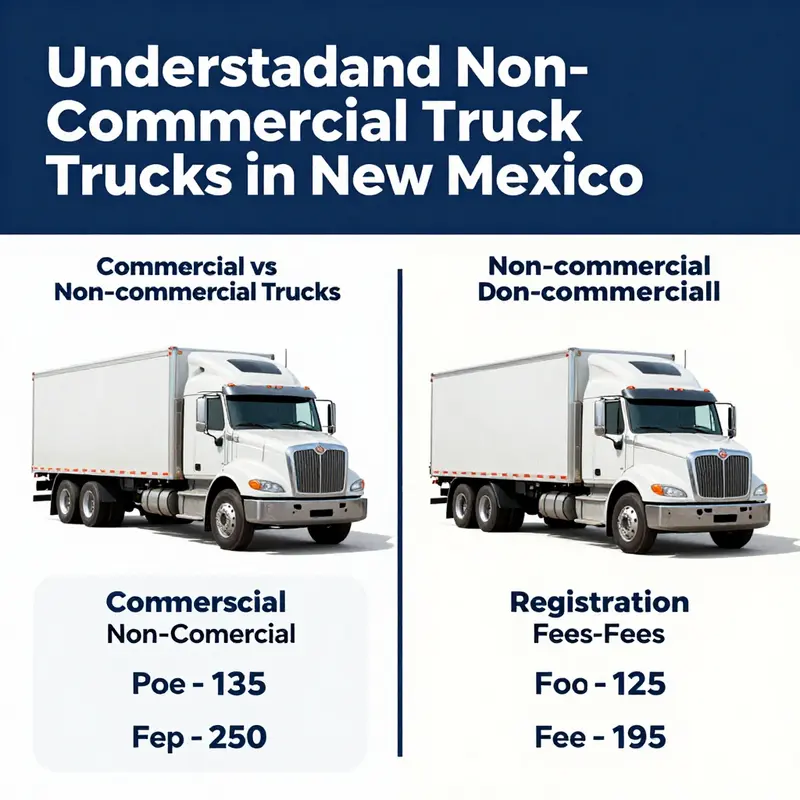
The contrast with commercial trucks is where the distinction becomes more pronounced and more financially meaningful. Commercial vehicles—those used for business, hauling goods for hire, or passenger transport—face a more complex and heavier set of charges. A commercial vehicle registration is typically higher than private one, reflecting the increased risk, traffic exposure, and compliance requirements associated with commercial activities. Beyond registration, commercial fleets often require interstate or intrastate operating permits, which can carry their own fees and oversight obligations. Weight-based fees and fuel taxes may also scale more aggressively for commercial fleets, particularly for heavier models and for those operating over longer distances or across state lines. In effect, the same weight-based logic that applies to non-commercial trucks also applies to commercial vehicles, but the scale is larger and the administrative framework more robust. It’s not that non-commercial trucks are exempt from weight considerations; rather, they avoid some of the additional commercial-specific layers that apply to for-hire operations.
To translate this into a practical lens for private owners, consider the weight classes that govern pricing. For non-commercial trucks under 10,000 pounds GVW, the fee sits in that $27–$62 range, as noted earlier. This is a notable veteran line in the sand because it means light-duty private-use trucks benefit from a relatively fixed, predictable cost structure: minimal administrative complexity and a modest annual fee that aligns with how these vehicles are typically used. However, as a vehicle’s GVW climbs beyond that threshold, the weight class shifts suggestively, and the registration costs rise accordingly. The most fundamental principle remains: the registration cost is anchored in weight, but the exact figure is nuanced by the vehicle’s age and its type, which is to say whether it is categorized as a light-duty truck, a pickup, or a heavier work vehicle with a more substantial GVW. This nuance helps ensure that a five-year-old pickup and a two-year-newer pickup do not carry identical price tags merely because both are private-use trucks; their depreciated value and physical burden on infrastructure are considered in the calculus.
For owners who are mindful of these costs, the right way to anticipate the final number is to consult the official tool designed for this purpose: the NM MVD Registration Fee Calculator. This calculator asks for the vehicle’s weight, model year, and other relevant details, then outputs the estimated registration cost based on current rules. It is a practical anchor in a world where a few dollars here or there can accumulate over time, especially if you are keeping two or more vehicles in a household or if you are maintaining a vehicle that sits in the higher end of the weight scale for private-use trucks. The calculator is an essential companion for planning ahead, helping owners avoid sticker shock at renewal and enabling a more disciplined approach to budgeting for replacement cycles and maintenance.
Despite the straightforward logic of weight-based fees, the overall cost picture remains shaped by the local context. Local taxes vary, and some counties apply additional assessments at the time of registration. In a state where geography matters—from desert stretches to mountain passes—the social contract that underwrites road funding is distributed through these tax and fee channels. For a private owner, the implications are practical: a heavier private-use truck may incur a higher annual registration outlay, potentially nudging decisions about when to replace a vehicle, how much to invest in accessories or enhancements, and how to schedule maintenance before a winter season to avoid any penalties that might accompany late renewals.
The economics of owning a non-commercial truck in New Mexico are also shaped by the broader market dynamics of trucking and transportation. While a private owner may view a non-commercial truck as a utility for personal tasks, the same vehicle sits within a larger ecosystem where costs and margins are constantly scrutinized. In industry analyses that examine how fleets respond to regulatory costs and shifting incentives, the cost of ownership for a truck—whether commercial or private—feeds into broader calculations about mobility, opportunity costs, and disposable income. A useful connection can be made to the tradeoffs discussed in discussions about trailer orders and marginal costs. For instance, considerations about how registration and tax costs influence operating margins in larger fleets appear in analyses of trailer orders and their impact on truckload margins. This is a reminder that even private-use vehicles contribute to the overall cost structure vehicles impose on households and communities, and that improvements or changes in fee structures can ripple through the market in ways that affect used-truck values, maintenance intervals, and resale timing. For readers who want to see how these costs tangentially affect the industry, a deeper look at related coverage can be found in discussions of trailer orders and margins: Trailer orders impact truckload margins.
At the end of the day, the New Mexico framework for non-commercial trucks is designed to balance simplicity for private owners with accountability to road funding and safety oversight. The base premise is that non-commercial private-use vehicles do not bear the extra commercial levies that accompany for-hire operations, but they still participate in a system that requires registration and taxes based on weight and value. This systemic approach prevents a confusing labyrinth where each vehicle type carries a different, opaque charge. Instead, a family with a couple of private-use trucks can reasonably forecast costs by weight class and vehicle type, while a small business with a private-use truck for occasional employee use can also anticipate the likely range of fees and taxes without subscribing to a separate “truck tax” exclusive to commercial activity.
For residents who are evaluating a prospective purchase or a switch from a smaller vehicle to a heavier one, the practical takeaway remains clear. Check the weight rating, understand what the MVD will classify the vehicle as, and compute the annual registration figure in tandem with any applicable sales or local taxes. If you are purchasing, remember that sales tax applies at the point of sale or registration, and that local taxes can adjust the burden by a few percentage points depending on your county. If you are renewing, the weight and the vehicle’s age keep feeding the calculation, and a heavier private-use truck will see the renewal cost rise with the weight class. If your goal is to minimize ongoing costs, prioritizing lighter, more fuel-efficient, or more recently manufactured private-use trucks can yield meaningful savings over the life of the vehicle, especially when paired with prudent maintenance and responsible operation.
The story of non-commercial truck fees in New Mexico is, in other words, a careful balancing act. It seeks to reward responsible ownership and prudent use while ensuring that road maintenance and safety oversight are financed in a way that reflects the vehicle’s footprint. It is not a liberating framework that exempts ordinary private owners from costs, nor is it a punitive regime that burdens those who rely on a pickup for everyday life. Instead, it provides a predictable, weight-informed structure that aligns with how these vehicles are built to perform on public roads. For readers who manage fleets or who are evaluating the broader economic landscape of trucking, the well-worn boundaries between commercial and non-commercial costs are a reminder that policy decisions around vehicle fees ripple through budgets, decisions, and the rhythms of daily life on the road.
External resource: For precise numbers and the latest rules, use the official NM MVD Registration Fee Calculator at https://www.nm.mvdc.gov/vehicle-services/registration-fee-calculator/.
Final thoughts
Understanding the registration fees and tax obligations for non-commercial trucks is vital for owners looking to optimize their operations and meet legal requirements in New Mexico. By being aware of the financial commitments involved, particularly the lack of additional truck-specific fees that commercial trucks incur, business owners can make informed decisions while managing their fleets effectively. This knowledge not only aids in budget planning but also ensures compliance with state regulations, allowing logistics and construction companies to focus on growth and efficiency.