
Understanding whether a moving truck qualifies as a commercial vehicle is crucial for logistics and freight company owners, procurement teams in construction and mining, along with small business owners managing delivery fleets. This classification has significant implications for regulatory compliance, operational efficiency, and economic strategy. The chapters in this analysis will provide an overview of essential definitions and regulations, explore the function of moving trucks in commercial transportation, examine the legal ramifications tied to their classification, and discuss economic factors influencing this designation. By delving into these aspects, readers will gain a comprehensive view that assists in informed decision-making regarding operational frameworks and compliance strategies.
Moving Toward Clarity: Defining the Commercial Status of Moving Trucks in a Regulation-Focused Landscape
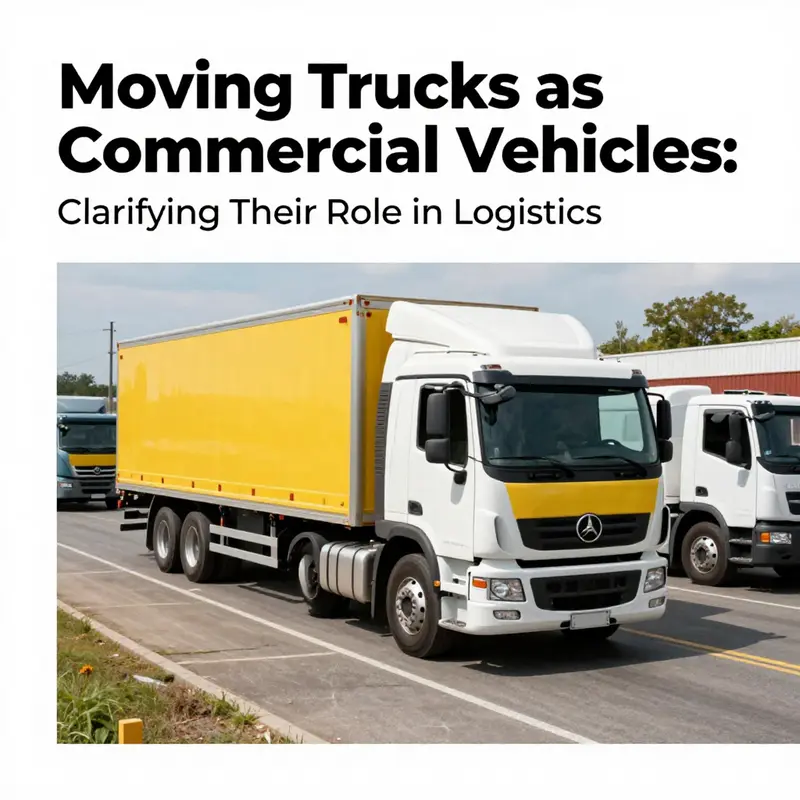
A moving truck is more than a vehicle with a big box and a loud engine; it sits at a regulatory crossroads where commerce, safety, and daily life intersect. The question of whether a moving truck is a commercial vehicle may seem straightforward at first glance, yet its answer unfolds in layers of definitions, usage patterns, and legal obligations that influence everything from who can drive it to what insurance covers it. In the realm of policy and practice, the moving truck becomes a case study in how societies categorize utility on the road. When a truck moves belongings for a fee, it performs a commercial service. When the same machine ferries a family’s own furniture during a personal relocation, the operation often sits in a different regulatory lane. Understanding where the line lies—and why it matters—requires stitching together dictionary definitions, regulatory texts, and real-world practice into a coherent narrative that respects both safety and economic complexity.
At the core of the conversation is a functional definition of a commercial vehicle. The Cambridge Business English Dictionary describes a commercial vehicle as one used for carrying goods rather than passengers. This practical aid aligns with a broader regulatory framework found in many jurisdictions, including the United States, where the vehicle’s use for business purposes, particularly transport for hire, triggers a distinct set of rules. Put differently: the same chassis can be a personal tool one day and a commercial asset the next, depending on how it is deployed. It is not merely the intention of the operator that matters but the actual use. A moving truck deployed to move a client’s belongings for compensation generally fits the commercial mold because it participates in a business service that monetizes transportation of goods. Conversely, when a person rents a truck to relocate their own home without offering a service to others for money, the activity tends to stay outside the commercial category, at least in the sense of licensing and insurance requirements that apply to for-hire operations.
The regulatory map in the United States makes this distinction tangible through licensing, insurance, and vehicle classifications that are designed to protect the public and ensure reliability in commercial service. A central hinge is the Commercial Driver’s License, or CDL, which applies to operators who drive vehicles above certain weight thresholds or those configured to haul cargo that qualifies as business property. While thresholds can vary by jurisdiction and vehicle configuration, the benchmark remains anchored in the vehicle’s potential for commerce rather than its appearance or branding alone. When a moving operation moves goods for payment, the vehicle and the driver are typically situated within the commercial framework. In a private relocation, the same class of vehicle might be used under a different regulatory umbrella, with insurance and registration tailored to private use rather than commercial exposure. This dichotomy is essential for anyone navigating the moving process, whether as a consumer, a driver, or an owner of a fleet.
The broader narrative extends beyond a single statute or a single state. It touches the economics of fleet operations, the ethics of service, and the everyday realities of households needing to move. A 2025 article highlighted in industry and media discourse notes that businesses routinely allocate budgets for new commercial vehicles to support ongoing operations. This observation illuminates why the classification of a moving truck matters not only for compliance but for asset planning, depreciation schedules, and the ability to access financing and maintenance programs designed for commercial fleets. The implication is clear: when a truck is used in a for-hire service, it becomes an economic unit whose value is tied to its reliability, safety, and regulatory standing. That status, in turn, informs decisions about when to replace, how to insure, and how to schedule service in ways that minimize downtime and maximize customer satisfaction. The moving truck thus becomes a living component of a business model rather than a simple, private tool for personal relocation.
Defining the boundaries in practice. This is where the rubber meets the road in both policy and everyday operations. In a fleet-focused ecosystem, a vehicle assigned to a for-hire relocation service is treated as a commercial asset. Its weight class, loading and securing capabilities, and overall duty cycle influence insurance ratings, maintenance cycles, and inspection frequencies. A vehicle repeatedly used to transfer others’ property for compensation is typically registered and insured as a commercial vehicle, with coverage that accounts for commercial liability, cargo risk, and potential environmental exposure. By contrast, a one-off private move performed with a rental truck may rely on consumer auto coverage, which often lacks broad protection for business activities. The distinction is not merely academic; it affects whether a driver can rely on certain exemptions, what licensing is required, and how enforcement agencies view the operation if something goes wrong on the road.
For operators who blend uses—perhaps a truck that is sometimes rented to individuals for private moves and at other times employed for commercial relocations—the regulatory picture grows more intricate. This mixed-use scenario is where responsible risk management becomes essential. Operators may seek to structure their activities so that commercial use is clearly delineated—through separate insurance lines, licensing for commercial operation, and formal booking processes that distinguish between private relocations and for-hire services. The aim is not to complicate the customer experience but to align operational practice with the expectations of regulators, insurers, and customers who anticipate a predictable level of safety and accountability. The reality is that the same vehicle, moving down the same street, can carry a different regulatory weight based on how it is employed on any given day. Such nuance requires a disciplined approach to documentation, driver training, and fleet maintenance so that the vehicle remains compliant across its varied roles.
Language matters here, too. The regulatory lexicon often mirrors everyday usage. When the word “truck” is paired with “goods” and “for hire,” the conversation shifts toward commercial transport. When it is paired with “personal belongings” and “private move,” the service becomes more aligned with personal use. Yet the border is not immutable. A private move could involve a small fee for labor or a tip, and a commercial move may be conducted by a non-professional owner who has a contract with a client. The practical takeaway is that regulatory clarity improves safety and service, and it reinforces consumer trust. If customers know the operator follows established standards for licensing, insurance, and vehicle maintenance, they can trust that the service will reach its destination not only on time but also with predictable risk management in place.
This tension between use and regulation also intersects with environmental and emissions considerations, a focal point for ongoing industry discussions. As governments and industry observers seek cleaner and safer transport options, the conversation expands to how emissions standards apply to fleets that include moving trucks. The regulatory dialogue is evolving, with manufacturers and policymakers alike seeking clarity on how emissions rules apply to mixed-use fleets where some moves are personal and others are commercial. The topic is not purely about engines and exhaust; it touches vehicle ownership structures, fleet renewal strategies, and the incentives that steer investment in safer, more efficient equipment. For readers who want to explore this facet further, there is a body of industry discussion around OEMs seeking clarity in emissions regulations. You can read more about that topic in industry-focused analyses that consider how standards influence design choices, maintenance planning, and the cost of compliance across fleets of varying sizes. OEMs seek clarity in emissions regulations.
The practical implications for drivers, customers, and insurers flow from these definitions. A driver with a CDL operating a heavy box truck to move a family’s furnishings for a fee is working within a framework designed for professional transportation. The driver’s hours-of-service compliance, weight-based licensing, and adherence to cargo-security standards are part of a broader safety system intended to minimize risk on busy urban streets and sprawling interstates alike. The customer benefits from this structure through predictable scheduling, clear pricing that accounts for regulatory costs, and a service that prioritizes secure loading, protective packaging, and careful unloading. Insurance policies tailored to commercial use reflect a higher risk exposure; premiums typically incorporate cargo coverage, fleet maintenance records, and driver qualification files, which help reduce the financial impact of accidents or cargo loss.
When the use is primarily personal, the calculus shifts. Private auto policies and personal rental insurance cover different scenarios and may exclude commercial activities. In such circumstances, individuals should still consider the risk of cross-use: a single large move may involve not only household goods but also the liability of moving someone else’s belongings for compensation, which could morph the operation into commercial territory in the eyes of regulators. For many, this realization becomes a practical prompt to obtain appropriate coverage, register the vehicle as a commercial asset if needed, and ensure that the operation aligns with the expectations of state and federal authorities. The goal is straightforward: minimize exposure, ensure accountability, and maintain a dependable service for people who rely on a moving truck to relocate their lives.
The regulatory conversation, though anchored in technical definitions, remains deeply connected to human outcomes. A moving truck that operates with clear commercial status tends to bring more consistent safety practices, better incident response capabilities, and enhanced transparency for customers. Inspections and audits become less a punitive exercise and more a collaborative effort to ensure reliability. At the same time, the individual who chooses to move their own items should not face unnecessary bureaucratic burdens, which is why many jurisdictions preserve spaces for personal relocation to occur without imposing the same licensing and insurance expectations as for-hire services. The balance between accessibility and safety is delicate and ever-changing, yet the trajectory is toward greater clarity that serves both consumers and the companies that provide moving services.
For readers looking for broader regulatory context beyond these definitions, the U.S. Department of Transportation offers guidelines that frame the discussion about commercial vehicle definitions and safety obligations. The actual rules are nuanced and often depend on jurisdiction, but the overarching aim remains clear: to ensure that vehicles used in commerce carry appropriate protection and accountability. This coherence matters when a truck is hired to move a household or when a fleet undertakes a routine relocation schedule that supports a small business’s operations. The more clearly these boundaries are drawn, the easier it becomes to coordinate between customers, crews, insurers, and inspectors. It is not merely about compliance for compliance’s sake; it is about creating a dependable ecosystem where moving services are safe, fair, and predictable for all parties involved. For those who want to dig deeper, the official guidance from the DOT provides a structured overview of how commercial vehicle definitions influence licensing, registration, and safety obligations for today’s road-moving operations.
In this evolving landscape, one constant remains: the moving truck serves as a conduit for both life events and commerce. Whether it is a private family relocation or a professional service transporting households for payment, the vehicle travels within a framework designed to balance freedom of movement with safety, accountability, and reasonable costs. The key for customers is to recognize when a move crosses into the commercial realm and to seek appropriate coverage and service standards accordingly. For operators, the challenge is to maintain compliance across the spectrum of use, ensuring that every trip—private or commercial—meets the appropriate regulatory expectations while delivering reliable, respectful, and safe service. The outcome is a road system that accommodates the essential needs of people who are moving and the businesses that help them move, anchored in clear definitions and enforceable standards that protect everyone who shares the journey.
External reference: For a broader regulatory context and official guidance, see the U.S. Department of Transportation guidelines at https://www.transportation.gov.
Carrying the Load of Commerce: The Quiet Backbone of Modern Commercial Transportation
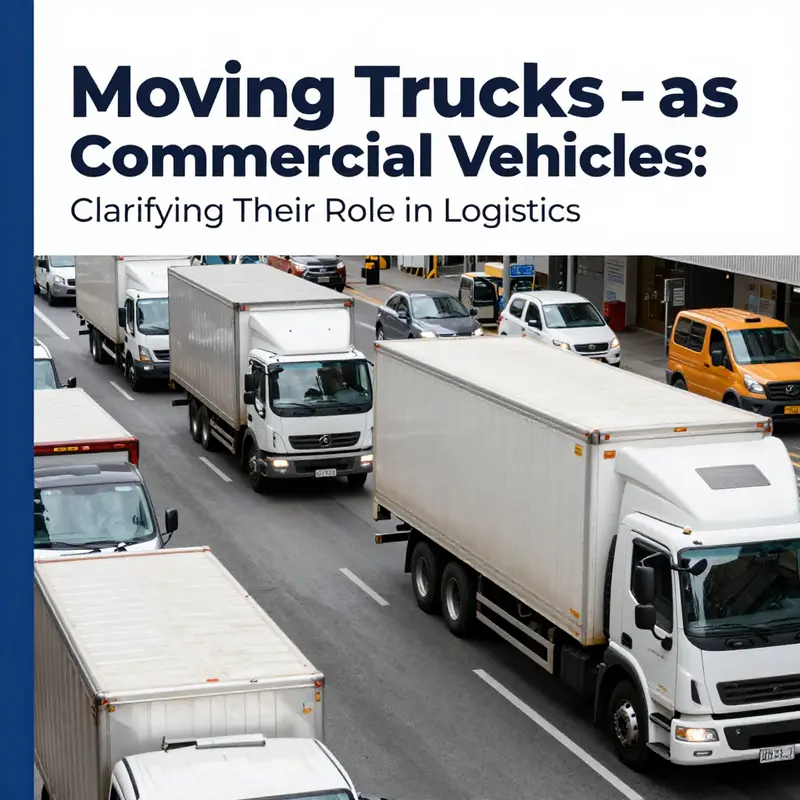
A moving truck is often the most visible embodiment of a practical, goal-driven aspect of commerce: it is the vehicle that translates plans, orders, and promises into material movement. At first glance, a moving truck may look like a purely domestic tool for relocating a household, yet in the broader logistics ecosystem it operates as a commercial asset designed to move goods for profit. The distinction may seem subtle, but it matters. A commercial vehicle is defined not only by its construction but by its purpose: it exists to transport goods or provide services for compensation. When a moving truck is deployed to shuttle furniture, appliances, or other resident goods from a seller to a buyer, or to move inventory between a warehouse, a store, and a customer, the activity falls under the same overarching logic that governs trucking fleets used for hire. In many regulatory contexts, the same safety, licensing, and insurance requirements that apply to larger line-haul operations are extended to moving trucks leveraged for commercial work, because the risk and responsibility associated with moving others’ belongings are not qualitatively different from similar freight operations. This framing matters because it shapes how businesses plan capacity, manage risk, and sustain predictable service levels, particularly as markets tighten and consumer demand shifts with the seasons. The distinction also guides how managers assess fleet needs, allocate resources, and measure performance against clear standards for safety and reliability. In environments where cross-border movement, local regulation, and urban access intersect with private property rights and public rights of way, the commercial status of a moving truck becomes a touchpoint for policy, compliance, and practical execution that ripples through every level of operations. To understand the practical implications of this classification, it helps to look at the vehicle itself—the design choices, the operating model, and the economic logic that makes moving trucks a durable, flexible tool in the hands of professional movers and logistics planners alike. A well‑designed moving truck is intentionally constructed to meet the needs of business workflows: it is a container on wheels whose geometry and features align with the realities of today’s distribution networks. The boxy form optimizes interior space for bulky, fragile, or irregular loads; the high, weatherproof walls protect cargo from the elements; and the rear access points are calibrated for efficient loading and unloading. In this setting, capability is not decorative—it is the core proposition that allows a business to fulfill commitments to customers, retailers, and subcontractors with a degree of certainty that smaller, noncommercial vehicles cannot guarantee. In short, the moving truck functions as a mobile warehouse and a mobile service point, integrating with the rest of the supply chain to keep goods moving through time and space with minimal friction. And because time is money in logistics, even small gains in loading speed, protection of items, or route flexibility can translate into meaningful competitive advantage over a season or across a market cycle. The regulatory overlay does not merely constrain behavior; it provides a common baseline for accountability. This includes requirements related to the vehicle’s mechanical condition, braking performance, lighting, and the integrity of the cargo area. It also encompasses driver qualifications, hours of service rules, and insurance obligations that reflect the added risk of carrying someone else’s possessions. For enterprises, this regulatory framework offers a predictable canvas on which to build service level agreements, pricing, and risk management practices. It also helps establish consumer confidence: when customers know their goods will be handled by professionals who operate within a recognized safety framework, trust in the service increases, which in turn supports repeat business and referrals. While the regulatory dimension matters, the practical realities of daily operations drive the core value proposition of moving trucks in commercial settings. They are designed to move a high volume of goods with a balance of speed, protection, and control. The box shape is more than a storage container; it is a controlled environment optimized for handling a range of goods from household furniture to fragile appliances. Floors with reinforced bearings support heavy payloads and reduce the risk of damage during loading and transit. The doors, weather sealing, and interior organization options (for example, tie-down anchors, cargo rails, and adjustable shelves in some configurations) allow consistent handling of diverse cargo mixes. The vehicle’s suspension and braking systems are tuned to manage heavy loads on a variety of road conditions, from urban streets pocked with potholes to intercity highways with varying traffic densities. In this sense, the moving truck is not a luxury item but a practical solution engineered for a business purpose: moving goods reliably from point A to point B while limiting the potential for loss or damage and providing predictable service outcomes for customers. This combination of design intent and regulatory alignment produces a vehicle that serves as a scalable asset in the hands of a wide range of enterprises. The universality of the moving truck emerges from its adaptability. It can be deployed for a broad spectrum of operations: a regional retailer restocking shelves after a busy weekend, a manufacturing supplier delivering components to a factory floor, or a relocation contractor moving office equipment for a corporate client during a renovation. The common denominator is that each use case involves moving goods for compensation, with margins that hinge on reliable throughput and controlled costs. The vehicle’s versatility extends beyond the mere act of transportation. It supports workflows that reduce handling steps, protect cargo, and expedite turnover. In practical terms, this means fewer manual lifts, fewer transfers between vehicles, and fewer rejections by customers because of damaged goods. The lift gate, when present, is a critical feature in this equation. It liberates the operation from a dock’s physical constraints and makes it possible to load and unload heavy or bulky items from street level or from storefronts that lack a full loading bay. The lift gate thus expands the geographic reach of a business, enabling it to operate in locations with limited infrastructure and to serve customers who are not located near a traditional distribution network. This capability is especially valuable in urban settings where real estate is scarce and loading facilities must be improvised. It is also significant for service models that require on‑site installation or assembly, where technicians must move large items directly from the truck into a customer’s space. The economic logic behind moving trucks reflects a careful balance between asset utilization and risk management. For many small to midsize enterprises, purchasing a fleet of specialized vehicles is an expensive commitment that could lock up capital and limit strategic flexibility. Leasing or renting moving trucks allows companies to access the needed capacity during peak seasons, product launches, or promotional campaigns without absorbing long‑term depreciation. The approach aligns with a broader trend in which teams view transportation as a variable cost rather than a fixed, capital‑intensive burden. When demand returns to more stable levels, the same vehicles can be redeployed to other tasks, or potentially returned, freeing capital for investments in other core capabilities. The financial calculus is not solely about upfront cost. It also entails evaluating operating costs per mile, maintenance cycles, downtime due to service needs, insurance premiums, and the potential savings from improved route efficiency or reduced damage claims. The interplay of these factors can tilt the economics in favor of a flexible truck solution, particularly for entities that operate across multiple geographies or deal with seasonal volatility. The benefits extend beyond pure cost metrics. The moving truck contributes to service reliability by providing a predictable packaging and delivery modality. It helps a business maintain consistent schedules, honoring promised delivery windows and installation timelines. The predictability grows when fleets are integrated with robust scheduling and dispatch practices, real-time tracking, and standardized loading procedures. Under such regimes, a moving truck becomes a reliable node in a customer‑facing operation, enabling precise coordination with customers, warehouses, and installation teams. And yet the advantages come with practical caveats. While the box has the capacity to protect and transport bulky goods, its side access can be constrained, limiting the speed at which certain configurations can be handled. In some urban environments, the street geometry, parking restrictions, or curbside loading rules can complicate access to a cargo door, requiring careful route planning, staging logistics, and sometimes additional equipment. Fuel efficiency is another important consideration. Historically, larger vehicles with bigger engines have consumed more fuel per mile than smaller delivery vans, and while modern drivetrains have narrowed the gap, the overall energy cost of moving a full payload remains a real supply‑chain expense. This is especially consequential in regions with high fuel costs or where fleets operate across long intercity routes. The calculus becomes more nuanced when one weighs the environmental footprint against the operational flexibility offered by a moving truck. Many operators are responding to market expectations by pursuing more efficient powertrains, better aerodynamics, weight reductions, and, in some cases, electrified or hybrid options. Although the adoption of electric or alternative‑fuel options for moving trucks is not uniform worldwide, the trend toward lower emissions and quieter operation is reshaping considerations around scheduling, charging infrastructure, and maintenance planning. For readers seeking deeper context on regulatory safety standards that govern commercial transportation, see the external resource at the end of this chapter: https://www.dot.gov/operations/vehicle-safety/commercial-vehicle-safety. The broader regulatory conversation also benefits from specialized industry insights about cross‑border operations and how fleets adapt to differing regulatory regimes. For a focused discussion on cross‑border regulatory issues, explore the following resource: Cross-Border Regulatory Issues Event. Taken together, these threads illustrate how a seemingly simple vehicle—a moving truck—interacts with a spectrum of business strategies, regulatory requirements, and market realities. The vehicle is not a static tool but a dynamic enabler whose value grows with disciplined management, thoughtful fleet composition, and a clear understanding of where it fits within a company’s broader logistics architecture. When managers align vehicle choice with demand patterns, regulatory obligations, and customer expectations, moving trucks become not just transporters of goods but strategic levers that support growth, resilience, and competitive differentiation in a complex and evolving economy. In this sense, the moving truck embodies a pragmatic, scalable solution that helps businesses navigate the uncertainties of supply and demand while keeping costs predictable and service levels consistent. For readers seeking a concise orientation on safety standards that govern commercial transportation, the following external resource provides a thorough overview: DOT Safety Overview.
Driven by Regulation: When a Moving Truck Enters Commercial Vehicle Territory
The question of whether a moving truck is a commercial vehicle often seems straightforward on the surface. After all, moving trucks are built to haul goods, and many moves are handled as business services. Yet the answers lie deeper than the vehicle’s design or its typical tasks. In legal terms, classification hinges less on what the truck is and more on how it is used, under whose direction, and for what purpose the operation earns revenue. This distinction — use and intent — governs whether a moving truck triggers the same regulatory obligations as other commercial carriers. For those who manage fleets or rely on rental equipment for professional moves, the line between personal transport and commercial operation can have real consequences, from licensing and insurance to hours of service and safety compliance. The broader point is that any determination of commercial status begins with the activity surrounding the move, not merely the chassis size or the cargo carried. A vehicle that might resemble a personal-use rental can become a commercial instrument the moment a business model centers around moving household goods for compensation. Conversely, a truck used by a private individual to relocate a home, with no charges involved, sits outside that regulatory framework even if the vehicle itself would otherwise qualify as a heavy-duty vehicle. This nuanced boundary is what law, regulators, and the industry wrestle with as moves become increasingly professionalized and regulated.
Defining the Thresholds: Use, Not Just the Vehicle
At the core of the regulatory conversation is the definition of a commercial motor vehicle (CMV). In the United States, the Federal Motor Carrier Safety Administration (FMCSA) frames a CMV as a vehicle used in commerce to transport goods or passengers for compensation. This language emphasizes two factors: the business context and the flow of payment. If a moving operation charges a fee for its services, the truck is typically operating as a CMV, even if the same vehicle might occasionally serve a non-commercial purpose. The practical upshot is that the classification does not rest solely on the truck’s make, model, or purposes at a given moment. A mover’s driver, a team, and a managed service model create the regulatory footprint that accompanies CMV operations. In such cases, several concrete requirements follow. The driver may need a Commercial Driver’s License (CDL) if the vehicle or the combination of vehicle and trailer falls under the CMV criteria. The vehicle itself must comply with federal safety standards, including periodic inspections, proper maintenance, and adherence to equipment standards designed to reduce the risk of loss or injury on the road. The operation is also subject to hours-of-service limits, which govern how long a driver can operate within a given shift and how rest periods must be scheduled. These rules are designed not as punitive measures but as safety safeguards for drivers and the general public, ensuring that fatigue does not undermine the ability to respond to road conditions, weather, or unexpected events.
The weight-based threshold that often comes up in these discussions adds another layer of clarity. The FMCSA and related state agencies frequently use a gross vehicle weight rating (GVWR) of over 10,000 pounds as a practical threshold for commercial designation in many contexts. When a moving truck exceeds that weight, the likelihood increases that the vehicle is considered CMV, particularly if it is used to transport goods for compensation. However, weight alone does not automatically convert a private relocation into a commercial operation. A private move conducted with a heavy vehicle, without charging a fee for the service, may still escape CMV status in many jurisdictions. This nuance underscores the overarching principle: use and compensation matter as much as the vehicle’s physical heft.
Another facet of the threshold concerns who is operating the vehicle and under what arrangement. If a professional moving service employs drivers to operate the truck, the business relationship reinforces commercial status. The fleet’s organizational structure, the existence of customers, and the financial model all feed into the regulatory decision. In contrast, an individual who rents a large moving truck for a one-time personal relocation often operates outside the CMV framework, even if the rental truck is capable of heavy-duty transport. Some states, however, impose registration or licensing requirements for large trucks used in any form of commercial or quasi-commercial activity, particularly when the vehicle’s size or weight approaches or surpasses specified thresholds. Those rules illustrate how state-level variation can complicate a straightforward “is this a CMV?” question, especially for moves that cross state lines or involve multiple jurisdictions.
The consequences of classification extend beyond licensing to the broader safety regime. When a truck is deemed a CMV, the operator must conform to a suite of federal standards governing driver qualifications, medical certification, vehicle maintenance, cargo securement, and insurance requirements. The vehicle may be subject to more frequent inspections, and the operator’s compliance history can influence roadside checks, permitted hours on the road, and even the ability to operate across state borders. In practical terms, this means that a company’s moving operations must be designed around predictable schedules, documented procedures, and reliable maintenance practices. It also means that drivers must maintain current credentials and training appropriate to CMV operation, which can differ from the requirements for a non-commercial, private-use vehicle.
The distinction is not merely academic; it shapes daily business decisions. A company evaluating a fleet expansion must weigh the costs of CDL-based driver staffing, heightened insurance premiums, and the potential for more stringent inspections against the benefits of scale and reliability. An individual homeowner renting a large truck to move across town will face different concerns, such as the cost of the rental, the suitability of the vehicle for the load, and the local rules governing heavy vehicles in residential areas. In both cases, however, awareness of the regulatory framework reduces the risk of penalties, fines, or liability in the event of an accident. In the larger picture, the question of whether a moving truck is a CMV ties back to the fundamental principle that regulation is forward-looking and risk-based: it aims to align responsibility with the activity and the potential consequences of operating a heavy vehicle in traffic, regardless of the vehicle’s day-to-day assignment.
As with many technical regulatory questions, the exact rules can feel opaque to those not working in the field. For readers seeking a formal reference, the U.S. Department of Transportation’s official site provides detailed information about commercial vehicle definitions and related regulations. While the materials here summarize the core concepts, consulting the regulator’s guidance can help operators verify how a moving operation fits within the CMV framework in specific contexts. This is particularly relevant for fleets that operate in multiple states or across borders, where regulatory interpretations can diverge and enforcement priorities may shift with changing policy.
For a broader look at how cross-border and regulatory dynamics influence the trucking sector, readers may explore ongoing discussions and resources tied to industry events focused on cross-border regulatory issues. TCAS Cross-Border Regulatory Issues Event.
The practical implication for professionals in the moving sector is clear: treat the classification question as a gateway to compliance rather than a mere label. When a move is packaged as a business service with a fee-for-service model, the default assumption should be that the operation falls under CMV regulations. When it is entirely personal, and no compensation changes hands, the burden of CMV compliance recedes, though not always completely. Some states retain licensing or registration requirements for large freight vehicles over certain weight thresholds, and those rules may apply regardless of the job’s commercial status. The safest approach is to understand both the federal framework and the relevant state requirements, and to document your use case clearly. This reduces the risk of misclassification and the potential penalties that can accompany regulatory noncompliance, such as fines, license actions, or liability exposure in the event of an accident. The policy landscape continues to evolve as regulators respond to shifts in how households move, how fleets are managed, and how the industry seeks efficiency while maintaining safety.
From a strategic standpoint, the distinction between CMV and non-CMV use also informs decisions about insurance coverage. Commercial operations typically require insurance policies tailored to the risks of transporting goods for hire, including coverage for cargo damage, liability for third-party injuries, and damages to the vehicle itself. Personal moves may rely on rental insurance or homeowner policies that may not provide the same breadth of protection for moving operations conducted for profit. The regulatory framework thus dovetails with practical risk management: knowing when a move triggers CMV status helps firms secure appropriate coverage, manage claims, and implement safety programs that align with regulatory expectations.
In the daily routine of moving operations, ensuring compliance starts with what happens in the planning room and on the road. It requires clear contracts that set expectations around service scope, fees, scheduling, and insurance. It requires driver credentials appropriate to the vehicle and the operation, and it requires a maintenance discipline that keeps every truck in a roadworthy condition. It means maintaining documentation that proves the vehicle’s weight class, the freight’s nature, and the business purpose of the move if applicable. It also means staying informed about both federal standards and state variations that might affect licensing, registration, or permitting for large trucks operating in particular jurisdictions. The practical takeaway is simple: when in doubt, treat the move as a potential CMV operation and prepare accordingly. The cost of caution frequently pays for itself in reduced liability, smoother operations, and better regulatory alignment.
For readers seeking a broader regulatory perspective that extends beyond a single chapter and touches on cross-border and multi-jurisdictional considerations, the ongoing discourse around regulatory issues in trucking is a critical resource. The focus on cross-border issues, in particular, underscores how the same vehicle and the same service can fall under different regulatory umbrellas depending on where the move takes place. This is not just an abstract debate; it affects how fleets are staffed, how routes are planned, and how compliance programs are designed. It also highlights the importance of staying connected to industry discussions and regulatory updates that influence how moving services are delivered in today’s complex traffic and regulatory environment. For readers who want to explore related themes in more depth, the cross-border regulatory conversation provides a meaningful lens into how the broader framework shapes everyday practice in moving operations.
External resource for broader context: For authoritative guidance on commercial vehicle definitions and related regulations, visit the U.S. Department of Transportation at https://www.transportation.gov/.
Counting the Cost: Economic Forces That Decide If a Moving Truck Is a Commercial Vehicle
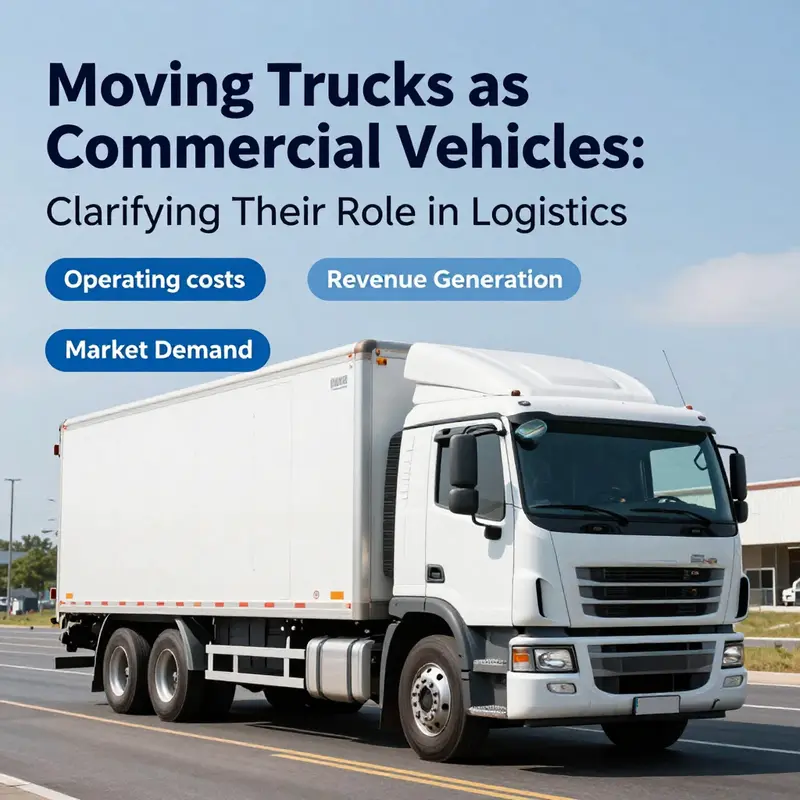
The question of whether a moving truck is a commercial vehicle is rarely answered by a black-and-white rule alone. In practice, the line is drawn where business purpose and economic calculus intersect. A moving truck may be owned personally but used for a small business’s transport needs, or it might be part of a larger fleet dedicated to a service that moves households and offices for profit. In other words, the classification rests not only on legal definitions or regulatory jargon, but on the economic realities that govern how fleets are financed, operated, and scaled. The economics of ownership and operation, the revenue logic of the service, the incentives embedded in tax and subsidy programs, and the pressures of market competition all converge to shape whether a moving truck sits inside the perimeter of commercial vehicle regulations. When you step back from the specifics of licensing and safety inspections, you see a story of capital, risk, and the distribution of fixed and variable costs across an industry that prizes efficiency and reliability as much as it prizes speed and customer satisfaction.
The most immediate lens through which economics influences classification is the cost of ownership and operation. A moving truck, like any asset in a commercial fleet, carries a price tag that includes the upfront purchase or lease cost, ongoing fuel or energy expenses, routine maintenance, insurance premiums, and the inevitable depreciation that accompanies wear. For operators expanding fleets, these costs are magnified. The introduction of alternative-fuel or electric propulsion, for example, often brings a higher upfront price tag and the need for specialized charging or fueling infrastructure. The payoff, if it arrives, is typically framed in what economists call total cost of ownership over the vehicle’s useful life: lower fuel costs, reduced maintenance for simpler drivetrains, and potential gains in resale value in markets that prize modern, low-emission fleets. But the break-even calculation matters more than the headline price tag. If a company cannot reliably justify the extra capital expenditure with predictable reductions in operating costs, it becomes less willing to shoulder the compliance and licensing costs that can accompany commercial status. In the end, the decision to pursue or resist a particular vehicle class becomes a balancing act: how much regulatory burden can the business absorb without eroding margins, and how big a future cost savings must be to justify the initial outlay?
Fuel and energy economics offer a particularly clear example of how the numbers tilt the classification decision. Traditional diesel trucks, with familiar maintenance profiles and established resale markets, may look economically neutral in the short term. Newer propulsion systems promise long-term savings, but they demand patience and capital. In urban and high-demand routes where fuel efficiency and urban emissions can translate into tangible margins, the case for newer, cleaner movers strengthens. Conversely, in hyper-competitive, low-margin segments, the added cost of compliance—emissions requirements, inspections, and the administrative overhead of regulatory reporting—can tip the scales away from classifying a vehicle as part of a commercially regulated fleet. It is not merely about owning a truck; it is about owning a truck that can be counted among the assets that support a regulated, scale-driven business model. The sunk cost of compliance—licensing, insurance, and the periodic safety checks that accompany commercial operation—will often decide whether a company leans into or away from the commercial vehicle framework. Economic rationale thus filters regulatory thresholds, influencing not only day-to-day decisions but the broader composition of fleets over time.
Revenue potential is the other side of the cost coin. A moving service is, at heart, a labor- and equipment-intensive enterprise. Revenue potential rises in markets and seasons where households and businesses seek to move, and it falls when demand slackens or competition intensifies. In high-demand urban centers or peak moving seasons, a moving fleet may command premium rates that compensate for higher regulatory costs. The prospect of stronger per-move margins can justify investing in compliance infrastructure and the more stringent insurance coverage required for commercial vehicles. When demand is robust, the incremental cost of additional licensing and safety standards may be absorbed within the expected cash flow from each job. In low-margin environments, however, even modest regulatory costs can erode profitability and make the classification seem like a luxury rather than a necessity. This dynamic helps explain why some operators pursue commercial status aggressively in certain markets while maintaining more flexible, non-commercial configurations elsewhere.
The tax landscape and government incentives further complicate the economics of classification. Governments around the world deploy tax incentives, subsidies, and depreciation allowances to accelerate the uptake of cleaner technologies and safer, more efficient fleets. These measures can tilt the cost-benefit analysis in favor of commercial status by offsetting expensive compliance investments. If subsidies cover a significant portion of the incremental cost of an alternative-fuel moving truck, for example, the annualized cost of ownership may shrink enough to justify the higher upfront expenditure. Tax incentives can also influence decisions about insurance structures, residual values, and financing terms. When subsidies are uncertain or are withdrawn, the economics can quickly flip, leaving operators reconsidering whether the regulatory burden attached to commercial vehicles remains sustainable. The result is a volatile interplay between policy signals and corporate budgeting—an interplay that can create a staggered adoption of cleaner fleets and a staggered tightening of compliance protocols across the industry.
Market competition and economies of scale complete the economic picture. Larger moving companies with integrated logistics networks can spread fixed costs far more efficiently across a broad fleet. They can amortize the costs of compliance, insurance, and maintenance across dozens or hundreds of units, lowering the per-truck burden and making commercial classification financially viable. For these operators, the incremental cost of meeting emissions standards or undergoing regular safety inspections is less of a hurdle when offset by higher utilization rates, better routing efficiency, and more predictable revenue streams. Scale, in this sense, acts as a stabilizer. It renders the regulatory landscape more navigable by diluting the impact of fixed costs that would otherwise discourage compliance. Smaller operators, by contrast, often face a tougher arithmetic. They may lack the volumes necessary to justify the investment in compliance programs and the administrative infrastructure that accompanies commercial classification. The result can be a bifurcated industry: a core group of scaled operators fully integrated into the commercial framework, and a broader cohort of independents who operate leaner, with looser adherence to formal classifications. That divergence creates not only competitive tensions but regulatory challenges. When the market features uneven parsing of costs and benefits across players, the government’s job of maintaining consistent standards becomes more complex. The economics of fleet size and utilization thus become a practical force shaping how classification rules are interpreted and applied on the ground.
A useful synthesis emerges from research that highlights how economic feasibility shapes fleet decisions, including the shift toward alternative-fuel trucks. The finance and operations calculus is not only about the present profitability; it’s about how the future risk profile interacts with the present budget. If fuel price volatility continues and maintenance costs for legacy vehicles rise, operators may accelerate the transition to cleaner technologies, accepting higher upfront costs to lock in long-term stability. Yet the transition hinges on whether the regulatory framework supports, or at least does not aggressively hinder, such moves. The core point is that financial pressures do not simply push a decision to classify; they push a broader strategic logic about how a moving truck fits into a regulated, profitable enterprise. The research narrative consistently returns to this insight: regulatory classification is entwined with the economics of fleet optimization, capital budgeting, and competitive strategy, not as an isolated legal marker but as a practical lever shaping how moving services are delivered and priced.
These economic threads do not exist in a vacuum. They interact with the broader dynamics of the trucking and moving industry, including fleet maintenance cycles, utilization rates, and the seasonal tempo of demand. In peak seasons, the ability to deploy well-maintained, compliant equipment can translate directly into higher completion rates, better customer satisfaction, and improved reliability metrics. In off-peak periods, the same assets may sit idle for longer stretches, making the ongoing costs of compliance more burdensome in a cash-flow sense. The intertemporal nature of these decisions matters: operators weigh not just the cost of meeting today’s regulatory requirements, but the expected value of those requirements over the asset’s remaining life. When the market rewards reliability and speed, and when customers value consistency and safety as part of a moving service, the economics align more closely with commercial classification. When margins are tight and utilization is uncertain, the incentive to minimize regulatory overhead becomes stronger, often leading to a more cautious approach to classification and fleet composition.
The chapter of economics thus reads as a continuous negotiation between assets, incentives, and regulations. The moving truck acts as a staging ground where capital costs, insurance, maintenance, fuel, and depreciation meet with the potential for premium revenue, subsidies, and scale-based efficiency. The decision to treat a moving truck as a commercial vehicle is not made in isolation; it is a strategic financial choice that reflects a company’s risk tolerance, growth ambitions, and expected market conditions. And because the economics of this choice are dynamic, policies that influence the cost structure—whether through tax incentives, subsidies for cleaner technology, or tightened safety and emissions standards—inevitably steer the industry toward certain configurations of fleets and service models. The interplay is delicate. If policy shifts too aggressively, or if subsidies abruptly recede, the business case for commercial status can become brittle, causing operators to reevaluate fleets in ways that ripple through pricing, service levels, and even the geographic footprints of moving services.
This ongoing negotiation is not merely about paperwork. It affects day-to-day decisions that customers experience: the reliability of a moving crew, the timeliness of pickups and deliveries, and the predictability of final costs. It also influences the long-term industrial structure of the moving and trucking sector. When the economics favor large-scale, regulated fleets, communities may see greater standardization in service levels and potentially improved safety outcomes, as compliance becomes a routine, shared discipline rather than a sporadic burden. In places where independent operators remain prevalent, the market can preserve diversity in service models, but regulatory gaps and inconsistent compliance can lead to gaps in safety and insurance coverage that ultimately affect customers, regulators, and lenders alike. The chapter therefore points to a broader truth: the classification of a moving truck as a commercial vehicle cannot be understood apart from the financial architecture of the company that operates it. Regulators and policymakers, too, can benefit from recognizing that economic dynamics—costs, revenues, subsidies, and competition—shape how fleets respond to rules designed to promote safety, efficiency, and environmental responsibility.
For readers looking to connect these concepts with practical industry patterns, consider how scale affects the interplay between economics and policy. The sector-wide patterns show that large operators, with higher utilization and more sophisticated risk management, can endure higher compliance costs and still maintain profitability. Smaller operators, facing tighter margins, may need policy support to stay competitive while protecting the public interest. This reality underscores why informed policy design matters: incentives and regulations should align with the economic realities of the moving industry, supporting safer, cleaner, and more efficient service without unintentionally squeezing the small operators who provide essential local mobility. In this sense, the chapter links economics not only to the technical definitions of vehicle classes but to the everyday experiences of customers who depend on moving services for stable, predictable outcomes.
The economic lens also invites a practical curiosity about how fleet managers communicate these decisions within their organizations. When executives debate whether to pursue commercial classification for a subset of their assets, they often test scenarios against cash-flow projections, loan terms, and insurance quotes. The discussion naturally extends to questions of asset lifecycle management: when to replace an aging truck, how to reallocate units across markets with different demand patterns, and how to structure joint ventures or partnerships that spread regulatory burdens more evenly. The answers depend on the balance of predictable demand, capital access, and the political economy of incentives. The upshot is that the classification decision emerges from a fabric of financial judgments, market signals, and policy environments that together determine how reliably households and businesses can move their belongings from one place to another.
As the chapter closes on this thread of thought, the reader can glimpse why the topic remains unsettled in many regulatory debates. The economics of moving fleets are not static, and neither is the regulatory framework in which they operate. Across different regions and market segments, the same moving truck can be treated as a commercial asset in one context and regulated differently in another. The practical takeaway is pragmatic: if you are assessing whether a moving truck is a commercial vehicle, you must look beyond the letter of the law and examine the real-world financial architecture that supports its use. The decision is a composite of cost, revenue potential, policy incentives, and competitive dynamics, all of which shape the future of the moving‑truck landscape.
To ground these considerations in industry analytics, consider the broader lessons from fleet and trailer economics. See the discussion on how trailer orders influence truckload margins to appreciate how scale, procurement cycles, and capacity constraints feed into the financial calculus behind vehicle classifications. Trailer Orders Impact Truckload Margins. The chapter also nods to the ongoing scholarship that links economic feasibility to fleet decisions, underscoring why a moving truck’s commercial status is as much about market dynamics as it is about regulatory terminology. For readers who want a deeper empirical framing that probes the economics of fleet transitions and energy pathways, a foundational resource is the ScienceDirect article cited in the research notes. It illuminates how the economics of ownership, energy costs, and policy levers interact to shape how fleets evolve under regulatory pressure and market competition: https://www.sciencedirect.com/science/article/pii/S096585642100377X.
Final thoughts
The classification of moving trucks as commercial vehicles carries weighty implications for owners across logistics, procurement, and small delivery enterprises. It is essential to understand the definitions, regulatory environment, legal implications, and economic factors that influence this classification. By comprehending these elements, businesses can align their operational strategies with legal and economic requirements, ensuring compliance while optimizing logistics operations. Ultimately, informed decisions regarding the use of moving trucks can significantly affect cost management and operational efficacy, thus advocating for a reevaluation of fleet operations to enhance performance.