
The relationship between a man and his truck transcends mere utility; it embodies reliability, emotional ties, and cultural significance in the American landscape. Through Ford Motor Company’s compelling campaign, ‘The Man, the Truck, the Moment,’ we witness how trucks, particularly the celebrated Ford F-150, become essential partners in both personal and professional realms. This article delves into the emotional storytelling that underpins these commercials, showcasing how they effectively communicate reliability and practicality. Furthermore, it explores the cultural significance of trucks in American life, especially within industries such as logistics, construction, and small business operations. By examining the campaign’s commercial success, we can understand the potent impact of emotional marketing strategies and their applications in creating lasting connections between brands and their audiences.
When the Road Becomes a Confidant: Emotional Storytelling in a Man-and-His-Truck Campaign
Stories about workhorse vehicles reach us differently when they shift from listing capabilities to revealing a relationship. In the most resonant campaigns, the truck becomes less a tool and more a social actor in a man’s life. The technique rests on something simple and universal: trust. A narrative can turn a routine drive into a rite of passage, a partner on a journey that tests patience, grit, and quiet pride. This is where emotional storytelling in a man-and-his-truck campaign finds its deepest traction. Rather than communicating torque and towing capacity in a hurry, the branding moment slows down. It foregrounds people, their rhythms, and the unspoken rituals that govern their days. The pickup-brand campaign that most readers will recognize for its emotional quotient offers a compact blueprint: invite the audience into a private moment, show how a vehicle steps into that moment, and let the outcome hinge on fidelity and steadiness rather than flash and speed. In doing so, the ad transcends product demonstration and becomes a narrative about responsibility, memory, and the quiet bonds that hold a life together.
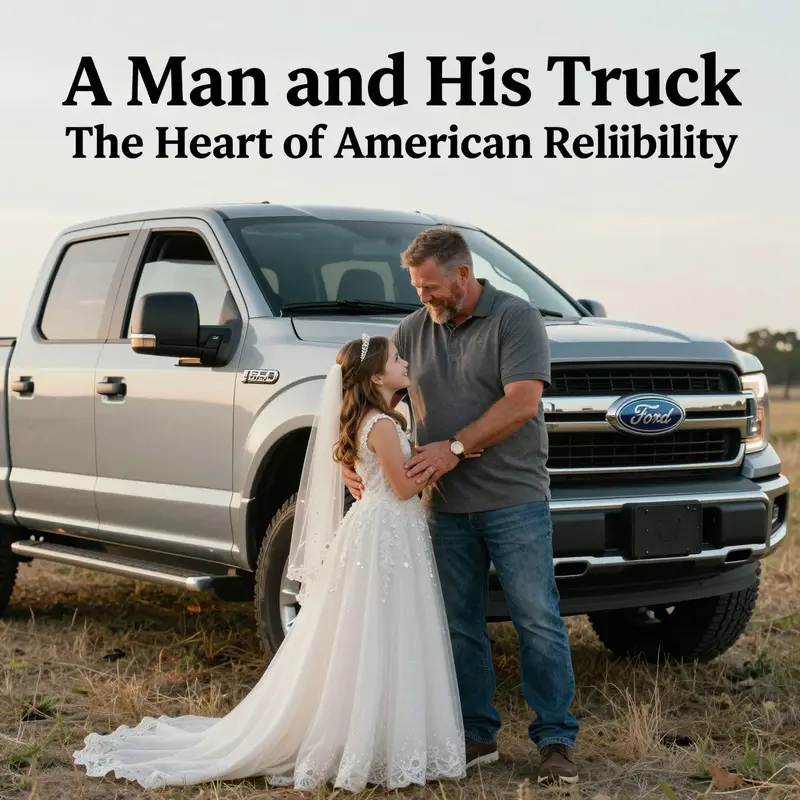
A quintessential example in this vein unfolds on the day a daughter walks toward an aisle of family ritual, and a father faces a practical crisis that could derail the ceremony. On this carefully choreographed day, a man relies on his pickup-truck to move a crucial load or to rally a last-minute arrangement that keeps the wedding moving forward. The plot does not hinge on a dramatic stunt but on a humane choice: to put the needs of others—an anxious friend, a neighbor, a family friend—above the improvisational friction of a chaotic schedule. The camera does not chase glamour or speed. It lingers on the old tires, the familiar metallic cough of a door latch, the way the driver’s hands map the years of work that have brought him here. The moment feels earned, because the audience has seen the man’s routine: a life of steady dependability, of showing up when it matters most.
The emotional engine of such a narrative, however, is not the spectacle of the vehicle alone. It rests on the subtle choreography of pace, proximity, and the physical intimacy between human and machine. A slow, reflective tempo invites viewers to notice the fine details: the rough skin on a calloused palm, the weathered edges of a dashboard, the creak of a seat that has traveled hundreds of thousands of miles. Intimate close-ups—fingers tracing a worn steering wheel, the line of determination across the driver’s face, the glint of sunlight on a chrome edge—work in concert with a minimalist yet swelling score. The melody swells not just to underscore action, but to acknowledge the emotional weight carried by ordinary labor. This is the essence of the approach: a truck is shown not merely as a means of movement but as a vessel for care, loyalty, and the fulfillment of duty.
Academic observers of neuromarketing often point to the same phenomenon: stories that touch on loyalty, resilience, and everyday heroism can trigger tears, and tears, in turn, deepen attention and recall. In the case studies cited by researchers, the act of crying can be read as a sign of engagement, a signal that the viewer has formed a meaningful connection with the characters on screen. The sadness is not a manipulation; it is a bridge—an emotional shortcut that makes the decision to trust and consider the brand feel personal. The research also emphasizes the power of restraint. The most powerful campaigns avoid melodrama; they trust the viewer to complete the narrative in their own minds. A slow reveal, a forked moment of choice, a quiet relief when the problem is solved—these are the beats that allow a viewer to project themselves into the driver’s life and, by extension, into the vehicle itself. In the ad world, this is not mere style. It is strategic signaling: the brand is not hawking gadgetry; it is presenting itself as a partner in the most meaningful rituals of life.
The emotional resonance of these campaigns rests on a delicate set of storytelling techniques. The choice to adopt a restrained pace invites contemplation. The focus narrows to the driver’s hands and the vehicle’s tactile details, so viewers feel as if they are sharing a ride inside a private, almost sacred moment. The music’s minimalist score swells at precisely the right moment, echoing a turning point in the narrative without drowning the scene in sound. The camera’s gaze settles on lines of wear that tell a backstory about years of work, sacrifice, and reliability. This is not an ad that shouts; it confesses. It speaks to a culture that values endurance and the reliability of a trusted companion, the kind of companionship that makes a rough trail feel navigable and difficult decisions feel manageable.
The effect, in broad terms, is a redefinition of what a truck is in the public imagination. If the industry is known for performance metrics and payload figures, emotionally resonant campaigns push the vehicle from a machine into a symbol. The truck becomes a confidant, a witness to the driver’s personal arc, a partner in times of joy and times of need. And in that reframing, the audience begins to see the truck as more than a tool for getting from A to B. It becomes a character in a life story—steadfast, capable, and ready to carry the weight when the moment demands it. Such character-building matters because it creates an anchor in memory. When the audience later encounters the product category in a showroom or on a dealership lot, the emotional resonance from the ad can tip the balance toward trust and preference. Emotions, when delivered with authenticity, transform a routine purchase into a personal alignment with values like reliability, loyalty, and responsibility.
From a strategic perspective, the lesson is not to chase tears for their own sake. Rather, it is to design narratives that align with real experiences. The most authentic stories come from real people and real moments, where the vehicle serves as a reliable frame for a human story rather than a prop for a spectacle. The father on his daughter’s wedding day is a universal thread. The moment of crisis and the act of lending a hand become a microcosm of a broader social contract: the vehicle is a partner in communal rituals, the driver is a steward of the group’s well-being, and the audience is invited to witness a shared sense of duty and pride. This is not soft marketing; it is relational marketing, built around the premise that the road is a shared space where trust grows through consistent, unsung acts of dependability.
To connect these points with the industry’s broader dynamics, consider how a campaign’s emotional tone intersects with market realities. The narratives are not isolated fantasies; they operate within a wider ecosystem of supply chains, capacity, and margins. The way audiences absorb these stories, and the extent to which they translate into brand affinity, has implications for how companies talk about the practical side of trucking. The economics behind the scenes—such as trailer orders and their impact on truckload margins—shape not only production and distribution but also the plausibility of certain campaign ideas. Marketers and executives who understand this linkage can craft stories that feel authentic without pretending that a single commercial can resolve the pressures of the market. For a deeper look at how these dynamics play out in the industry, see Trailer orders impact truckload margins. (Internal link)
In this sense, the emotional storytelling strategy is a bridge between two universes: the intimate life of a driver and the macro realities of the trucking economy. The former delights the audience with tenderness and depth; the latter grounds the narrative in the reader’s lived concerns about reliability, uptime, and value. When done well, the ad makes the audience feel that the truck is not merely a means of transport but a reliable partner in the fabric of daily life. The viewer’s memory stores the image of a quiet, steady hand guiding a vehicle through a challenging moment, and the feeling that comes with that memory—the sense of reassurance—lives on long after the commercial ends. The result is a brand that is remembered not for its latest feature but for its character: steadfast, human, and worthy of trust when it matters most.
For those who want to explore the science behind why such emotional responses pay off, industry commentary points to neuromarketing findings about tears and attention. The literature suggests that tears do not indicate manipulation; they signal a meaningful cognitive and emotional engagement that enhances recall and influences future consideration. This is a reminder that the most enduring ads do not merely inform; they invite the audience into a shared emotional experience. The stories become a lens through which viewers view the brand as a partner in life’s important moments, not just a supplier of goods. As audiences become more selective and advertising spaces grow noisier, the capacity to evoke authentic emotion while preserving credibility becomes a key differentiator. The emotional storytelling in a man-and-his-truck campaign, carefully calibrated and ethically executed, offers a path to deeper brand loyalty without compromising integrity.
External resource for further reading: Why Do People Cry During Commercials? Emotional Manipulation Tactics. https://www.forbes.com/sites/forbestechcouncil/2026/02/28/why-do-people-cry-during-commercials-emotional-manipulation-tactics/
External and internal links referenced in this chapter:
- Internal (contextual): Trailer orders impact truckload margins. https://truckplusllc.com/trailer-orders-impact-truckload-margins/
- External: Why Do People Cry During Commercials? Emotional Manipulation Tactics. https://www.forbes.com/sites/forbestechcouncil/2026/02/28/why-do-people-cry-during-commercials-emotional-manipulation-tactics/
Reliability in Motion: The Man, His Truck, and the Moment That Keeps a Wedding on Track
A man and his truck can be more than a pair of symbols in a one-minute spot. When a wedding day hangs in the balance, the vehicle becomes a steady, unspoken ally. The commercial that puts a father behind the wheel on a day of high emotion demonstrates something larger than horsepower or payload capacity. It reveals how reliability and practicality are woven into everyday life, and how a well-chosen machine can transform stress into action, worry into quiet confidence, and ordinary errands into decisive moments that hold a family’s most important plans together. The narrative approach is simple in surface texture—a man, a road, a friend in need—but it unfolds with a quiet deliberateness that mirrors real life. In this storytelling, the truck is not merely a tool. It is a partner with which the male lead negotiates a day saturated with weather, distance, and timing. The drive itself becomes a form of communication: a way to say, without words, that some tasks matter enough to require reliable, consistent support, and that a vehicle engineered for rugged conditions can fulfill that expectation with grace under pressure.
The setting is deliberately ordinary yet charged. The wedding is a milestone moment, an event that tests plans and nerves alike. The father’s decision to use the truck to help a friend completes a loop of practical necessity and emotional resonance. The friend’s critical transportation task—a missing ride, a delayed arrival, or a last-minute relocation of equipment—could disrupt the ceremony or cast a shadow over the family’s joy. In the hands of a capable machine, what might become a scramble is transformed into a measured sequence of actions. The truck moves through the day’s physical obstacles—dusty lanes, rain-slick pavement, perhaps a slope or a rough access point—yet it delivers predictable performance. The sound of the engine, the control over acceleration, and the quiet confidence of the driver all contribute to a narrative rhythm where reliability acts as a form of trust between human and machine.
What makes this approach powerful is its fidelity to real-world expectations. Viewers walk away recognizing that a successful wedding day hinges not on grandiose feats but on dependable, repeatable capabilities. The ad invites us to picture the life that happens around a pickup or a similar vehicle: the chores that accumulate, the tasks that must be completed on deadline, and the way a trusted vehicle helps manage time, distance, and logistics when every moment counts. This is not a flashy showcase of speed or torque alone; it is a portrait of practicality fused with emotional stakes. The vehicle’s role expands from transport to enabler. It becomes a hinge upon which the day’s outcomes swing, swinging toward celebration rather than calamity.
From a craft perspective, the commercial achieves its effect through restraint. The camera’s gaze lingers on the street, the driveway, the gear shift, and the weather rather than on flamboyant performance statistics. The audience is invited to notice how the vehicle interacts with the environment: how it negotiates uneven surfaces, how it negotiates time against the clock, how it accommodates the on-the-ground realities of friends and family members who rely on it. This emphasis on environmental engagement and user experience is what gives the spot its authenticity. It is the embodiment of reliability as a human-centered quality: the sense that the truck is designed to keep promises, to deliver when needed, and to do so without spectacle. The emotional payoff arrives not with a loud punchline but with a quiet, shared relief—the moment when a friend’s task is completed, a plan comes together, and the ceremony proceeds as intended.
The cultural resonance of such a message cannot be overstated. Trucks have long occupied a central space in American life as tools for work, mobility, and family logistics. They are associated with independence, preparedness, and the ability to respond to emergencies with practical, immediate action. In this commercial, those associations crystallize into a narrative about trust. The audience sees a man who embodies steadiness, a family ritual that depends on someone else’s readiness, and a machine that embodies the same steadiness. The result is a portrait of reliability that extends beyond mechanical performance. It is a manifesto about partnership—between person and vehicle, between effort and outcome, between intention and the quiet confidence that, when the moment arrives, the right tool will be there to carry it through. In this sense, the ad does more than advertise a truck; it reaffirms a social truth about how people meet life’s hard moments with cooperation between human judgment and mechanical reliability.
That balance between emotion and practicality lies at the heart of why such a campaign endures as a benchmark in automotive advertising. It demonstrates how storytelling can be anchored in a tangible, verifiable capability—the vehicle’s reliability—while still delivering an intimate, human experience. The father’s choice to put trust in the truck, to make space in his own day for a friend’s urgent need, conveys a moral as old as roads themselves: dependability is a form of generosity. By showing the truck actively supporting a friend’s critical task, the advertisement communicates a broader social value—an optimism about shared responsibilities and the belief that dependable tools empower people to show up for one another when it matters most. The result is not just a memory of a compelling commercial but a reinforced expectation in the audience: a vehicle can be a partner, not a backdrop, to life’s most meaningful moments.
Technical and narrative clarity also play into the ad’s effectiveness. The sequence of the day—rising tension, a problem unveiled, a practical solution, and a resolution that preserves the wedding’s emotional arc—maps closely to how real-life problem-solving unfolds. The car’s performance becomes legible, not abstract. Viewers feel the weight of the task and sense the engine’s capacity to bear it. The vehicle’s interior layout is presented as a space designed for human needs: accessible seating, cargo flexibility, and a control arrangement that keeps the driver focused and calm. The portrayal aligns with consumer expectations about reliability: a vehicle that remains steady under pressure, that performs consistently across weather and terrain, and that helps ordinary people complete demanding tasks without drama. The emotional payoff—personal trust reinforced, the wedding’s continuity assured—anchors the ad in a lasting memory, one that has the power to shape attitudes about the vehicle category as a whole.
For readers attuned to the mechanics of reliability, the campaign offers more than a persuasive narrative. It provides a case study in how product engineering and storytelling can intersect to move perception. The ad doesn’t attempt to persuade with statistics alone; it demonstrates reliability through lived scenario and credible consequences. A truck that negotiates rough ground and sudden weather while enabling critical logistics becomes a symbol of resilience. The romance of the moment—the daughter’s wedding—gives the tool human stakes. This pairing—emotional significance and practical competence—turns the vehicle from mere equipment into a trusted ally that people imagine having at their side in future moments of need. The broader implication is clear: in a market saturated with features and trims, the most enduring messages are those that connect reliability to everyday meaning and the everyday person who relies on it.
In the continuum of advertising craft, this approach stands out for grounding its emotional appeal in observable capability. The ad’s strength lies in showing, not telling, how a vehicle can serve as a lifeline in a delicate, emotionally charged moment. It rejects the sensational in favor of the believable and the reproducible. It invites audiences to project themselves into the scene and imagine what it would feel like to depend on a trusted machine in a moment when everything could hinge on timely action. The result is a narrative that travels beyond the screen into people’s perceptions of what a vehicle is for: to carry not just cargo but intention, to support not only journeys but rituals, to stand as a steady partner in life’s most meaningful occasions.
In this light, the commercial can be read as a parable about reliability as a social virtue. It reframes the truck from a basic utility to a partner that shares responsibility for safeguarding a day’s outcomes. The father’s decision to mobilize the vehicle in service of a friend’s urgent need is not simply a plot device; it is an ethical moment that reflects communal values—mutual aid, preparedness, and the quiet confidence that a dependable tool can eliminate avoidable friction on a day that deserves celebration. This is the core of the ad’s appeal: wherever the road leads, there is a partner ready to help you reach the moment you’ve planned for. And when that moment finally arrives, the scene closes not with triumph alone but with a sense of continuity—the wedding proceeds, and a family’s story continues, fortified by the steady presence of a trusted machine.
To readers looking for a thread that ties the narrative to market realities, the piece can also be seen as a bridge between cultural symbolism and practical demand. Reliability and practicality are not merely abstract descriptors; they translate into real-world expectations about vehicle performance under duress. The campaign’s emotional resonance gives audiences something more than a brand image: it offers a narrative proof point that a well-made vehicle can function as a dependable extension of the driver’s intent. It tells a story that families, friends, and communities recognize. It explains why people invest in capable, durable machinery and why trust in such a product endures across generations. In this way, the Man–Truck–Moment becomes not only a lesson in advertising craft but a compact cultural essay on the American relationship with mobility, duty, and the everyday heroism of simply getting through a challenging day together. It is a reminder that the strongest messaging in this category does not merely promise performance; it demonstrates it in the language of ordinary life, where a smile, a sigh of relief, and a wedding that proceeds on time are the most persuasive outcomes a viewer can witness.
For those curious to explore industry patterns that intersect with these ideas, a related insight discusses how capacity dynamics shape perceptions of reliability in trucking markets today. insights on excess capacity in the trucking market
External reference for further technical context on reliability and performance can be found here: https://www.ford.com/trucks/f-150/
The Quiet Power of the Pickup: How a Man, His Truck, and a Moment Shape Modern American Identity
For further reading on the cultural significance of pickup trucks and how advertisers leverage these associations, a broader scholarly and media analysis is available through this external resource: The Cultural Significance of Pickup Trucks (PDF). Meanwhile, industry context and market insights related to trucking capacity and market trends can be explored here: Excess capacity in the trucking market insights.
Power, Purpose, and the Open Road: The Emotional Blueprint of a Man and His Truck Campaign
Power, purpose, and the open road unfold differently when a truck is not just a machine but a stage for everyday courage. In truck advertising, the most enduring narratives turn a robust vehicle into a partner in life, a quiet guarantor that promises to show up when it matters. The Man and His Truck campaign does not chase spectacle with roaring engines or gadgetry. Instead it builds a long arc around ordinary moments that reveal character, responsibility, and care. The campaign, rooted in a famous American truck maker, signals a shift in how brands speak to masculine identity. It treats strength not as dominance but as steady reliability and as a readiness to serve others. The result feels intimate, almost earned, as if the road itself is a witness to a vow kept under the hood and over the horizon.
One centerpiece narrative from this lineage centers on a father on his daughter’s wedding day. The task is deceptively simple: a trusted truck is used to solve a transport challenge so the wedding can proceed. A friend needs to move a critical asset from point A to point B, and the vehicle becomes the quiet engine behind a family ceremony. There is no grand rescue scene; there is a calm, urgent rhythm. The driver checks the route, weighs the risk, and chooses to act not for glory but for the people waiting at the altar. The audience sees the truck not as a tool alone but as an extension of the caretaker role this man embodies in his family and his community. The moment lingers because it ties practical certainty to emotional certainty. When the task is accomplished, the wedding can unfold as planned, and the image of the vehicle becomes inseparable from the image of family care at its most ordinary and most essential.
This approach redefines the masculine code the audience carries into the showroom. Rather than celebrating brute force or the noise of mechanical power, the campaign foregrounds the man who provides and protects through fidelity to his commitments. The core idea is simple yet potent: strength has a humane face. The power of the truck appears in the quiet act of showing up, in the decision to help a neighbor, in the patience to listen to a story of need and then act. In that frame, the vehicle stops being a status symbol and becomes a lifeline the family and the community rely on when a moment demands it most. The emotional resonance grows not from dramatic crashes of metal and chrome but from a calm rhythm of miles, timing, and shared purpose.
Historically, trucks have stood for independence, resilience, and the American experiment of building a life with your own hands. The campaign leans into that cultural memory but reframes it around care rather than conquest. Audiences respond to the authenticity of a man whose care for others defines the value of the vehicle more than its horsepower. This reframing matters because in a crowded market, words about capability alone often fade. The best stories recount how a product fits into a life, how a tool creates a reliable daily possibility, how it makes space for what people treasure most: family, friendships, and the work that underpins them. When the narrative ties the truck to a wedding, to travel across a city, to help a friend in a pinch, the brand becomes not a showroom of features but a partner in life choices. And that partnership, once established in the heart, translates into a durable trust that numbers and specs cannot easily replicate.
The commercial success of this storytelling pivot is not merely measured in quarterly sales or ad recall. It is felt in loyalty, in the willingness of customers to bring the brand into conversations about home, work, and community. The campaign demonstrates that emotionally driven storytelling can outdistance a catalog of specifications when it speaks to values that people defend in their daily lives. It shifts the conversation from the machine to the person who sits behind the wheel, and from the gyre of torque curves to the quiet confidence of being prepared. In practice, what customers see is a promise kept: a truck that will be there at a moment when a person needs a hand, a moment when a plan could unravel and then be restored. That promise, once perceived as reliable, extends beyond the screen into showrooms and service bays, where the truck is imagined as a steady partner for work, family life, and the unpredictable rhythm of community events.
Industry observers note that a campaign of this kind can ripple outward. It invites brands to think of advertising not as a parade of features but as a dialogue about responsibility and care. It also nudges corporate narratives toward social resonance, where commercial messages align with everyday acts of support, and where the brand lends a hand to neighbors and friends in need. For readers who want to see a concrete example of such alignment, one relevant avenue is the Trucks for Change initiative that partners with communities and charitable projects. The link to the initiative offers a window into how a brand can translate emotional storytelling into tangible action on the ground. Trucks for Change supports Habitat for Humanity.
Despite its success, the approach carries a measure of risk. When sentiment eclipses practicality, the audience may sense a stunt rather than a genuine commitment. The most enduring campaigns, therefore, walk a fine line, anchoring affection in verifiable reliability. The best examples keep the human story specific and credible: the father in a wedding moment acts within the narrow orbit of real life, not in a cinema of fantasy. The vehicle, in turn, remains faithful to its function, a tool that makes possible what people actually do every day. The result is a brand memory that feels earned rather than manufactured, a memory that can outlast fleeting hype and become the backdrop for families who tell and retell the ad in their own kitchens and gatherings. The authenticity of such a campaign lies in the way it choreographs ordinary semantics—driving, loading, waiting, delivering—into a narrative that mirrors the choices families must make.
Scholars and marketers alike have argued for years that the best advertising works by aligning product identity with cultural values. The Man and His Truck framework is a case study in the soft power of emotional resonance. It shows that what people seek in a vehicle is not merely transport but a sense of belonging, a sense that the road will hold them up when the road grows uncertain. This is where the narrative becomes political in a subtle way: it posits trust as a form of social capital, earned through consistency, presence, and generosity of spirit. It suggests that a brand can be an ally in life’s most important moments, not just a utility, and that is why campaigns of this kind often endure longer in memory than any single feature highlight. For those who want a broader perspective on how such campaigns recalibrate consumer perception, a longer read questions how the archetype of the strong man in truck advertising has evolved and why this evolution matters.
Ultimately, the road between narrative and sale is shorter when the story speaks to daily life with clarity and restraint. The Man and His Truck approach invites viewers to project themselves into the space between character and utility, to feel that the vehicle is a witness to a life in progress rather than an instrument of conquest. The arc extends beyond a single commercial into the culture that surrounds the road itself—the rituals of maintenance, the routines of family schedules, the shared sense that a neighbor is someone to be helped. In that sense, the campaign achieves a form of cultural return: it enlarges the meaning of the truck from mere machine to companion, from instrument to emblem of steadiness and care. The road is not merely a path; it is a stage where ordinary people become custodians of each other’s plans, where a single vehicle holds the possibility of making a day come together.
External perspective is offered in a Bloomberg analysis on how the archetype in truck advertising shifted over time: https://www.bloomberg.com/news/articles/2013-12-26/how-did-the-rock-solid-manly-men-in-truck-commercials-get-so
Final thoughts
The ‘Man, the Truck, the Moment’ advertising campaign by Ford Motor Company exemplifies how emotional storytelling, reliability, and cultural significance can shape perceptions and create deep connections between vehicles and their owners. These commercials have not only propelled sales but have also established Ford trucks as an integral component of personal and professional life in America. For logistics companies, construction enterprises, and small business owners, aligning with such powerful narratives can enhance stakeholder engagement, drive marketing success, and foster brand loyalty. Ultimately, the enduring tale of a man and his truck reflects a profound relationship that continues to resonate across various sectors, affirming trucks as key players in the American economy and lifestyle.