
The maintenance costs associated with commercial trucks are a critical factor for logistics and freight company owners, procurement teams within construction and mining enterprises, and small business owners operating delivery fleets. The significant variation in these costs primarily stems from the brand of the truck. Different brands exhibit distinct characteristics that affect their durability, reliability, parts availability, and overall maintenance expenses. This article explores the multifaceted relationship between truck brands and maintenance costs, providing actionable insights for informed procurement decisions. Each chapter delves into essential aspects: the impact of brand on maintenance costs, a comparative analysis of various brands, the role of technological advancements, and how parts availability and dealer networks influence overall expenses. Together, these elements create a comprehensive understanding of the implications of brand choice in commercial trucking.
null

null
How Brand Choices Shape Commercial Truck Maintenance Costs
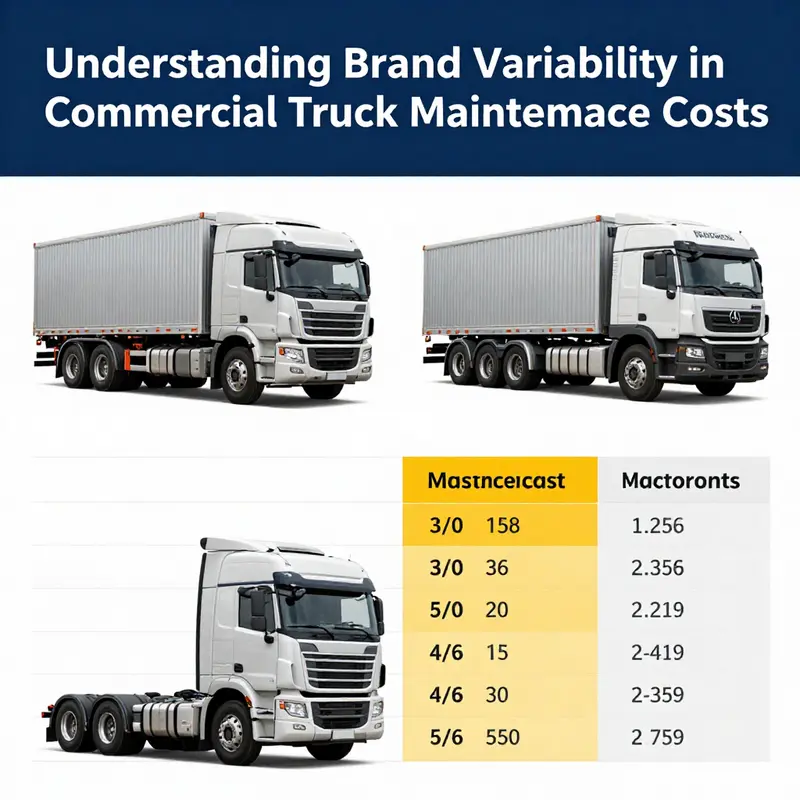
How Brand Choices Shape Commercial Truck Maintenance Costs
Maintenance cost differences between commercial truck brands rarely stem from a single cause. Instead, they emerge from a complex mix of engineering choices, parts ecosystems, dealer and service networks, and the maintenance culture of fleets that operate them. When a fleet manager evaluates total cost of ownership, brand-level patterns stand out. Some manufacturers show lower long-term repair expenses because they emphasize durability and parts availability. Others can appear cheaper up front but produce higher lifecycle maintenance bills because of early failures or fragmented service support. Understanding these dynamics allows buyers to align brand selection with operational strategy.
At the core of brand-driven maintenance variance is design philosophy. Brands that design trucks with serviceability in mind reduce labor time for common repairs. That lowers shop hours and downtime. Brands that prioritize rugged, overbuilt components often accept a higher initial weight or cost. They repay that by stretching intervals between major overhauls. Conversely, brands that push the envelope with compact packaging or less conservative parts choices may require more frequent interventions, especially in harsh duty cycles. These engineering choices ripple through parts economics and labor, shaping maintenance budgets year over year.
Parts availability and pricing form the next decisive layer. A dense dealer network and broad parts distribution cut lead times and shrink downtime. Fleets that operate trucks from manufacturers with strong aftermarket channels can often source OEM and remanufactured parts quickly. That reduces the incentive to substitute non-OEM parts, which can undermine reliability. In contrast, brands with limited regional support or expensive proprietary components force fleets to plan around longer repair windows. Those delays translate to truck days lost and higher per-mile maintenance expenses.
Preventive maintenance practices amplify or blunt brand differences. Studies show fleets with rigorous preventive schedules achieve lower repair frequency and longer asset life. The correlation is straightforward: when filters, fluids, and wear items are replaced on predictable intervals, cascading failures drop. But the effectiveness of preventive maintenance depends on how a brand tolerates service intervals. Some trucks are engineered for extended oil-change and service spans. Others require closer attention. Choosing a brand that matches a fleet’s maintenance discipline and operational tempo matters more than chasing a lower sticker price.
Empirical research offers useful context. Comparative analyses from transport studies and conference papers examine repair frequency, parts replacement rates, and labor hours across brands. Those studies repeatedly find that brands with longstanding heavy-duty pedigrees often report lower repair frequency per million miles. They also show more predictable parts life cycles. Newer entrants or cost-focused models can show higher variability in repair rates during the first years of service. For fleets managing mixed-brand rosters, those differences complicate parts inventory planning and technician training. A uniform brand mix simplifies logistics and reduces spare parts carrying costs.
Lifecycle cost metrics provide a practical lens. Instead of focusing solely on purchase price, lifecycle analysis captures fuel, downtime, maintenance, and resale. Several manufacturers offer tools to model these variables and reveal how maintenance costs accumulate. The models consistently underline a crucial point: a higher purchase price can be offset by lower maintenance and downtime. For example, a brand with slightly higher initial cost but lower unscheduled repair rates will often cost less per mile over a typical ownership horizon. Fleet-level decisions grounded in lifecycle thinking favor brands that combine reliability with accessible service networks.
Market dynamics also change the picture. Global supply chain shifts and rising raw material costs affect parts pricing and availability. Some suppliers from low-cost regions have become highly competitive while improving quality controls. Reports tracking export suppliers indicate that certain manufacturers have closed the gap with traditional leaders. These competitive entrants often offer attractive pricing, and sometimes good reliability for specific applications. Yet variability between regional support and long-term parts consistency can still make them a riskier bet for large fleets operating across many geographies.
Operational context alters brand performance too. Trucks running steady long-haul routes experience different wear patterns than local delivery rigs. Brands that perform well in long-haul settings may falter under stop-and-go duty, and vice versa. Heat, road salt, and local service density influence maintenance frequency regardless of brand. Field tests in extreme climates reveal how thermal stress, cooling system design, and engine calibration affect component life. Fleets operating in such environments should consider manufacturer testing programs and real-world performance data when comparing maintenance expectations.
Service network strength deserves special emphasis. Dealer service hours, technician training, and mobile repair capabilities all reduce downtime. Brands that invest in certified technician networks and digital service diagnostics tend to reduce mean time to repair. That lowers labor costs and prevents small problems from becoming major failures. Conversely, gaps in dealer coverage force longer tow times and higher out-of-service days. For multiregional fleets, national or global dealer footprints provide stability that directly reduces maintenance spend.
Data-driven maintenance is changing the equation. Telemetry and predictive diagnostics help detect faults before they lead to breakdowns. Some manufacturers integrate advanced telematics and remote diagnostics into their trucks. Fleets that leverage these tools can shift resources from reactive repairs to targeted preventive action. Predictive analytics reduces unexpected repairs and can be particularly effective for brands whose onboard systems provide granular component health data. When combined with consistent preventive practices, telematics can equalize maintenance costs across brands by enabling earlier interventions.
Labor and training costs matter, too. Technician familiarity with a brand shortens diagnostic time. Fleets that standardize around one manufacturer lower the training burden. Training investments can be amortized across a larger number of trucks. That reduces labor hours per repair. On the other hand, a patchwork fleet requires technicians to master multiple platforms. That increases labor time, and therefore maintenance bills. Investing in cross-brand training or centralized maintenance hubs can mitigate these increments, but at a cost that must be weighed against brand consolidation.
Resale and remarketing must be part of maintenance calculations. Brands with strong reputations for reliability tend to hold higher resale values. Higher resale helps offset maintenance investments because it recoups a larger share of total expenses at disposal. Conversely, a brand’s reputation for unpredictable maintenance reduces bid interest and yields lower remarketing prices. When fleet managers model TCO, projected resale values affect acceptable maintenance spending thresholds and replacement cycles.
Finally, organizing for longevity changes brand math. Fleets that adopt robust maintenance cultures and invest in predictive tools often narrow the maintenance-cost gap between brands. A disciplined maintenance program, effective parts logistics, and informed brand selection aligned with duty cycles can yield predictable, optimized maintenance budgets. In contrast, ignoring brand-specific needs, tolerating deferred maintenance, or underinvesting in diagnostics amplifies differences and inflates costs.
Choosing a brand should therefore be a strategic decision. Evaluate total lifecycle costs, examine regional service capacity, and benchmark empirical repair data. Balance upfront price against expected downtime and parts economics. Factor in fleet size, route profiles, and the maintenance discipline you can sustain. Where possible, use long-term field data and third-party analyses to validate vendor claims. That empirical perspective helps ensure brand selection aligns with cost control goals and operational realities.
For fleet managers aiming to tighten maintenance budgets, the path is clear. Match brand strengths to mission needs. Invest in preventive programs and remote diagnostics. Rationalize the fleet where it reduces parts and training complexity. And rely on evidence from comparative studies to confirm expected repair patterns and costs. Armed with a realistic lifecycle view, teams can turn brand choice from a speculative expense into a predictable cost-management lever.
For additional in-depth comparative data on maintenance costs across manufacturers, consult the comprehensive study available through a detailed industry analysis: https://www.sciencedirect.com/science/article/pii/S2352986423001234. For practical reporting and event insights related to durability and testing in demanding conditions, see a field testing account here: Volvo VNL testing in extreme heat.
How Connected Technology Changes Brand-Level Maintenance Costs for Commercial Trucks

Brands now sell more than steel and powertrains; they sell connected systems that reshape maintenance spending over a vehicle’s life. Technological advances have created a new axis along which commercial truck maintenance costs vary by brand. Where once reliability assessments focused mainly on engine design and parts quality, fleets now weigh software ecosystems, telematics fidelity, sensor density, data analytics, and the depth of manufacturer-backed service networks. These elements interact in complex ways to raise some line items and reduce others, producing distinct maintenance cost profiles by brand.
At the most visible level, telematics and real-time diagnostics convert reactive repair strategies into proactive maintenance programs. Trucks that stream engine and chassis data continuously permit fleets to spot trends in coolant temperatures, turbocharger behavior, fuel system anomalies, and brake usage before failures occur. When a brand pairs robust telematics with clear fault codes and prioritized alerts, maintenance teams can plan interventions to avoid roadside breakdowns. Industry analysis shows fleets using advanced connected systems can reduce maintenance-related expenses by meaningful margins. That drop comes from fewer emergency repairs, shorter diagnostic times, and less collateral damage caused by secondary failures.
However, the same digital capabilities that lower emergency expenses can raise other costs. Sophisticated electronic control units require special diagnostic tools. When a vehicle’s fault tree points to an ECU or a networked module, diagnosing and repairing the issue often needs calibrated software, manufacturer-level access, and skilled technicians. Brands that protect their diagnostic ecosystems, or that require proprietary tools for certain repairs, can generate higher labor rates and longer turnaround times at independent shops. Conversely, manufacturers that prioritize open diagnostics and standardized interfaces make it easier for third-party shops to perform timely repairs, which can reduce overall labor costs for fleets that operate beyond dealer territory.
Parts pricing and availability remain fundamental determinants of maintenance cost, but technology alters their importance. Sensors, actuators, and network modules are increasingly common field-replaceable items. Some brands standardize these components across models and years, which helps parts pooling and used-parts markets. Others customize modules for specific platforms, improving performance but limiting interchangeability. Where parts are common and widely stocked, preventative replacements and repairs happen quickly and affordably. Where parts are proprietary and scarce, downtime and expensive expedited shipping inflate maintenance bills. Brand choices therefore influence not only the average cost per repair, but also the volatility of those costs when rare failures occur.
Predictive analytics sits at the junction of data and decision-making. Brands that invest in analytics platforms let fleets move beyond time-based maintenance intervals. Data patterns can signal when a component is likely to fail, allowing replacement at a point that minimizes both wasted life and unplanned downtime. The financial impact is clearer when comparing two otherwise similar trucks from different manufacturers. One brand may offer mature analytics that reduces component replacements by extending useful life without increasing risk. Another brand may provide only rudimentary fault alerts, leaving fleets dependent on conservative preventive schedules that replace parts earlier than necessary. Over thousands of truck-hours, those differences compound into notable maintenance cost gaps.
Total cost of ownership calculators and lifecycle modeling are now standard tools offered by many manufacturers. These tools attempt to capture the interplay of purchase price, fuel efficiency, uptime, and maintenance over a vehicle’s life. When accurate, they help fleets choose a brand that minimizes lifecycle maintenance outlays for a given duty cycle. But the quality of a manufacturer’s modeling matters. Brands that base projections on rich field data make more reliable maintenance forecasts. Those that rely on conservative or limited datasets can mislead buyers into choices that under- or overestimate real-world maintenance needs.
Software also introduces new maintenance categories. Over-the-air updates can fix bugs, refine calibrations, and improve efficiency without a garage visit. That capability reduces some maintenance costs, especially those tied to engine control logic or telematics behavior. Yet software patches occasionally interact with legacy modules in unexpected ways. When a software update requires hardware recalibration or replacement, the brand’s update strategy directly affects maintenance planning. Manufacturers that rigorously test updates across climate and duty cycles minimize such risks. Brands less disciplined in update validation may cause intermittent faults that inflate diagnostic hours and repeated repairs.
Environmental testing and durability validation are another lens on technological influence. Brands that subject designs to extreme conditions tend to exhibit fewer weather-related electronics failures and fewer heat-induced component degradations. Field testing under high thermal stress, for example, reveals weaknesses in cooling strategies and electrical connectors long before trucks face service use. Fleets operating in harsh climates benefit when a brand has conducted rigorous real-world validation, because such testing correlates with lower climate-driven maintenance. Practical examples of this testing discipline are available in manufacturer trial reports and field evaluations, which often highlight the value of components designed for thermal endurance. For an example of extreme-condition validation, see an account of extreme heat testing for heavy trucks at this internal report: https://truckplusllc.com/volvo-vnl-testing-in-extreme-heat/.
Dealer networks and service partnerships remain decisive. A brand can deliver cutting-edge diagnostics, yet if dealer density is thin, fleets will still face long transports to repair centers. Brands with broad, well-trained dealer networks convert advanced diagnostics into real uptime. They also tend to stock common modules, reducing lead times for critical components. Where dealer coverage is sparse, third-party maintenance providers and mobile techs fill gaps. The ease with which those providers can access diagnostic data shapes local maintenance economics. Brands that enable secure remote access and third-party interfaces foster competitive service markets and, often, lower labor rates.
Training and workforce readiness are frequently overlooked cost drivers. Modern trucks demand technicians skilled in electronics, software, and network diagnostics. Brands that invest in training programs, certification pathways, and technician support reduce the time to repair for complex faults. Fleets aligned with such brands can often reduce outside labor spend. Conversely, operators of brands that assume legacy mechanical skills will need to invest more in upskilling or pay premiums to specialized shops. The resulting labor cost delta can be substantial over a fleet’s lifetime.
Data ownership and interoperability influence maintenance strategy and vendor choice. When manufacturers retain exclusive access to telematics data, fleets may face lock-in. Locked fleets find it harder to switch brands or to use independent analytics vendors, limiting competition and keeping service costs high. Brands that promote data portability enable fleet managers to aggregate information across mixed fleets, apply unified analytics, and optimize maintenance schedules comprehensively. That flexibility usually lowers maintenance costs by enabling better benchmarking and cross-brand parts pooling.
Security and compliance add further nuance. Connected vehicles expand the attack surface for cyber threats. Brands that integrate robust cybersecurity measures and provide rapid incident support reduce the risk of costly firmware recalls and service campaigns. Additionally, regulatory compliance for emissions, telematics reporting, and safety systems affects maintenance. Brands that design for easier regulatory updates and modular compliance changes lower the administrative and physical costs of retrofits and recalibrations.
Finally, the economic calculus differs by fleet type. Short-haul fleets value uptime and low service turnaround above marginal fuel economy gains. Long-haul operations prioritize reliability and fuel performance over initial purchase price. A brand that excels at telematics-based predictive maintenance and broad service networks suits regional fleets that need quick, affordable repairs. Brands that focus on engineering longevity and parts commonality provide benefits to long-haul owners who minimize long-term maintenance beyond dealer access. The right brand choice depends on duty cycle, geography, and maintenance philosophy.
Technology both compresses and expands maintenance spending. It compresses by preventing emergencies, optimizing replacement intervals, and enabling remote fixes. It expands by adding electronic components, requiring specialized diagnostics, and creating software lifecycle costs. Across brands, those that harmonize hardware robustness, open diagnostic practices, thoughtful analytics, and strong service networks usually deliver lower lifecycle maintenance costs. Fleets should therefore evaluate brands not only by upfront price or advertised reliability, but by the transparency and accessibility of their diagnostic ecosystems, the maturity of their analytics, and the density of their service support.
Taken together, these dynamics mean technology choices are now central to brand-level maintenance differences. For fleet managers making purchase decisions, the comparison is less about a single metric and more about how a brand’s technology strategy aligns with operational needs. The most suitable brand will be the one whose technical architecture, dealer ecosystem, and data policies minimize total maintenance expense for the fleet’s unique profile.
null

null
Final thoughts
In conclusion, selecting a commercial truck brand is a significant decision that impacts not only initial purchase prices but also long-term maintenance costs. Each brand brings unique strengths and weaknesses that affect reliability, parts availability, and overall service support. Fleet operators, procurement teams, and small business delivery owners must consider these factors as part of their total cost of ownership calculations. By understanding the variances in maintenance costs driven by brand, stakeholders can make strategic decisions that enhance operational efficiency and reduce unexpected expenditures over their trucks’ lifespans.