
The connection between celebrity endorsements and consumer perceptions can shape brand narratives significantly. This article investigates the notable absence of RuPaul in GMC truck commercials in 2022, aiming to dispel the misunderstandings surrounding this topic. The analysis begins with a thorough examination of evidence regarding RuPaul’s supposed involvement and clarifies the linkage, if any, with GMC Denali advertisements. Following this, we will explore associated contents that include references to ‘RuPaul’s Drag Race,’ highlighting responses and misconceptions prevalent in modern promotional culture. Finally, the implications of such misconceptions are discussed, shedding light on how misattributed celebrity endorsements can impact procurement decisions for logistics, freight, and delivery fleet operations. By the end, readers will gain a holistic understanding of the relevance and specificities of celebrity endorsements in the context of commercial advertising.
null
null
Denali Double Take: When GMC’s Luxury Trim Meets Drag Race Icon
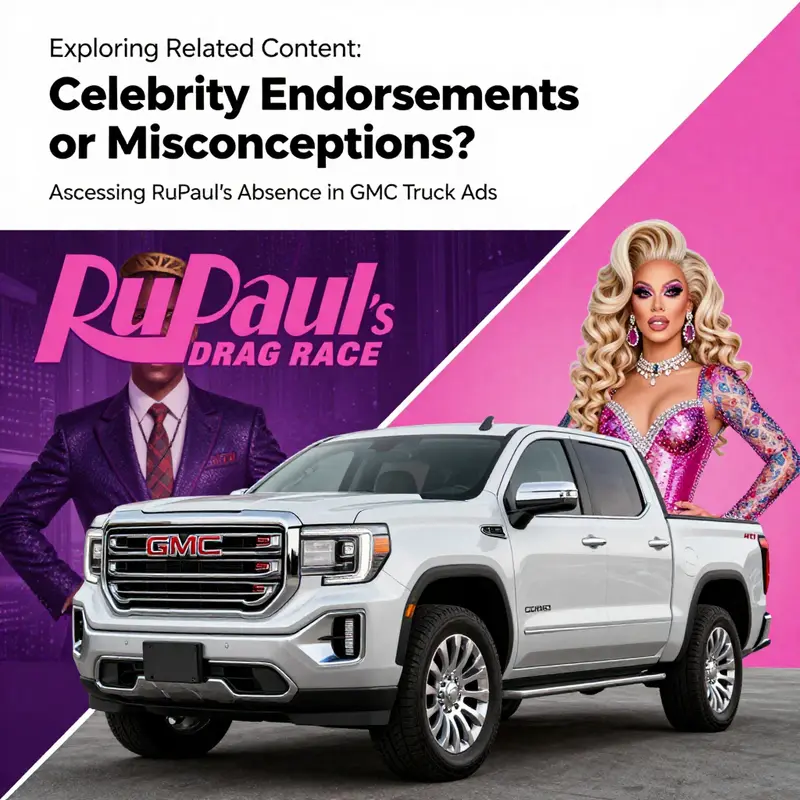
One of the more curious twists in the search for RuPaul’s presence in a 2022 GMC truck commercial is the unexpected appearance of the name Denali—a label both synonymous with automotive luxury and the bold persona of a standout drag performer. As fans scrolled through TikTok and YouTube clips, the convergence of those two worlds created a moment of playful confusion. It wasn’t the legendary television host and queen herself behind the wheel, but rather a shared name that bridged a premium vehicle line and a vibrant drag personality.
In automotive circles, GMC Denali stands for an elevated experience. Adopted by General Motors as a luxury trim for models such as the Yukon and Sierra, Denali represents top-tier craftsmanship. Owners expect premium leather seats, advanced driver-assistance features, and an interior designed with meticulous attention to detail. This nameplate evokes images of rugged mountain peaks and high-end refinement. It’s a badge that tells buyers they’re not just choosing utility—they’re embracing a statement of style and status on the road.
Meanwhile, across a very different stage, Denali Foxx has made her own mark under the bright lights of RuPaul’s Drag Race All Stars 10. Known for her fearless attitude and electrifying lip-sync performances, she captured the hearts of viewers around the globe. Clips of her epic routines circulated widely, accumulating millions of views on social media platforms. Fans praised her stage presence and cheered every extravagant costume reveal. In one viral TikTok, Denali Foxx and fellow queen Kahmora Hall delivered a synchronized rendition of “100% Pure Love,” showcasing choreography that felt tailor-made for the grandeur of a high-end production—much like the polished image GMC projects with its Denali lineup.
Though the two Denalis share only a name, the internet quickly wove them into a single narrative. Comments beneath truck reviews joked about drag-inspired chrome accents, while memes portrayed Denali Foxx strutting across a leather-wrapped dashboard. Enthusiasts speculated whether GMC had secretly tapped the drag star for a cameo, given the tongue-in-cheek parallels between glamorous fashion and premium vehicle trim. Yet official spokespeople from GM never hinted at a crossover. The truckmaker’s marketing for the 2022 season stayed firmly grounded in adventure and performance, spotlighting features like magnetic ride control, multi-terrain modes, and an available diesel engine for towing confidence.
What this playful overlap does reveal is how modern branding and pop culture intersect in unexpected ways. A name can become a vessel for multiple identities, bridging industries and inviting fresh interpretations. Denali Foxx’s rise to prominence on a reality TV series underscores the power of personal branding and social media amplification. She leveraged every challenge and runway critique to build a persona that resonates with authenticity and flair. In parallel, GMC’s Denali line has grown by consistently delivering tangible upgrades—premium speakers, advanced infotainment, and contrasting chrome detailing—that align with consumer expectations of luxury trucks.
Some industry observers see parallels in how both the drag performer and the luxury trim cultivate aspirational experiences. In the world of automotive design, brand storytelling comes to life through sculpted grilles, stitched-leather patterns, and the feel of a refined ride. In the realm of drag, storytelling unfolds via makeup artistry, costume transformations, and the charisma that shines through every performance. Both require a keen understanding of audience desires and a willingness to embrace spectacle while maintaining substance.
The Denali namesake also speaks to a broader cultural appetite for personalization. A truck buyer selecting Denali is seeking distinction on the highway. A viewer supporting Denali Foxx is celebrating the courage to stand out, to break conventions and claim space for individual expression. Each, in its own domain, invites people to engage with a narrative larger than mere functionality.
For those still hoping for RuPaul behind the wheel, the Denali convergence serves as a fun detour rather than confirmation. No credible evidence links RuPaul herself to a 2022 GMC truck spot. Instead, what emerges is a testament to how brand identities can echo across different creative arenas. The volley of social-media chatter and fan-made mashups reminds us that in today’s digital landscape, a single name can spark multiple stories.
As you navigate the world of luxury trucks or the vibrant stages of drag performance, it’s worth pausing to appreciate these unexpected intersections. They highlight the ingenuity of marketers, the passion of fans, and the endless possibilities when two distinct cultures collide in the public’s imagination.
For a firsthand look at Denali Foxx’s memorable journey on RuPaul’s Drag Race All Stars 10, check out her full interview:
👉 Denali Foxx’s Full Interview on RuPaul’s Drag Race All-Stars 10
Beyond the Spotlight: Debunking 2022’s Celebrity Endorsement Myths and the Shift Toward Accountability
The whispers around a rumored appearance by a globally recognizable figure in a vehicle advertisement during 2022 illuminate a broader truth about endorsements. In the public imagination, celebrity partnerships feel simple: a moment of star power, a splashy launch, and a boost in visibility. Yet the reality behind these partnerships is far more complex and much more consequential. Misconceptions about endorsements can propagate quickly, especially when the rumor touches a recognizable name and a high-stakes product category. The rumor itself reveals something essential: audiences equate fame with credibility, and brands assume that reach alone translates into trust. The year 2022, however, did more than reshape marketing calendars. It reframed the expectations attached to endorsements, reminding marketers and consumers alike that recognition does not automatically equate to responsibility-free promotion. And as the rumor swirled, it became a case study in how easily misperception can become a liability, not just for a celebrity, but for the brand and the broader ecosystem of advertising that depends on clear signals of trust and accountability.
In that sense, the 2022 moment reveals a paradox embedded in modern marketing. Fame can magnify a message, but it can also magnify risk. The public’s appetite for authenticity has grown alongside the reach of digital platforms, and this has tightened the leash on what can be said, by whom, and in what context. If a brand seeks the halo of celebrity endorsement to signal aspirational values, it must also accept scrutiny of the values themselves. The mismatch between enthusiasm for a star’s following and the reality of a product’s use, safety profile, or business ethics can create a breach that voters, regulators, and consumers alike notice. In the wake of such dynamics, misinformation can become a real business risk. The public’s longing for quick, compelling narratives about stars in ads collides with the slower, more deliberate demands of truth, due diligence, and accountability. The result is a landscape where rumors are not merely entertainment; they test the resilience of trust that brands rely on when endorsers step onto the public stage.
The regulatory developments in 2022, particularly in the Chinese market, amplified that pressure. Headlines about endorsements once focused on reach and memorability. By late 2022, regulatory authorities underscored a different equation: endorsements must be grounded in responsibility as well as appeal. In November 2022, seven major government agencies—working in concert with the State Administration for Market Regulation and the China Securities Regulatory Commission—unveiled guidelines that reframed the terms of endorsement. These rules stated clearly that brands should not partner with celebrities who had engaged in illegal behavior, including drug use, gambling, drunk driving, tax evasion, fraud, or sexual misconduct. They further mandated that both celebrities and companies come to the negotiation with a thorough understanding of the products and businesses involved. The liability around the endorsements shifted, too. Brands could no longer point to a glamorous face and a clever line as a shield against misrepresentations. Instead, companies bore responsibility for the authenticity and legality of ad content, taking accountability away from uncertain consumer interpretation and placing it squarely on the endorsers and the brands themselves.
This shift should be read not as a punitive crackdown alone, but as a recalibration of marketing ethics. The guiding principle is now transparency and due diligence. The rules insist that endorsements are not abstract endorsements of popularity but concrete statements about products and their implications. They demand a degree of scrutiny that many campaigns had previously considered optional or optional for certain high-profile partnerships. The idea is to reduce the social harm caused by misleading advertising and to protect consumer rights in an environment where information travels at lightning speed. The emphasis on “fully knowing” the products and brands signals a move from a simple numbers game to a more principled approach to brand stewardship. In this sense, the 2022 reforms mark a turning point where the public’s trust is inseparable from the credibility of the people and companies that promote a product. When a celebrity signs off on a campaign, the endorsement becomes a public statement about a product’s value and safety. The 2022 guidelines insist that such statements be grounded, accurate, and within legal and ethical bounds.
The ripple effects of these developments extended well beyond the policy texts. Brands could no longer rely solely on the size of a celebrity’s following to secure endorsement deals; they had to weigh character, past conduct, and the alignment between the product’s realities and the persona being presented. This is not merely a domestic trend. The global advertising landscape has long struggled with the tension between reach and responsibility, between the aspirational image a star can project and the everyday realities a consumer will encounter when using a product. When a rumor touches on a beloved public figure and a vehicle brand—an industry especially sensitive to perceptions of safety, reliability, and value—the stakes rise even higher. The 2022 reforms provide a framework for more cautious, transparent partnerships, but they also raise the bar for all players in the endorsement economy. Brands must build contracts and compliance processes that anticipate not just the marketing appeal of a star but the practical consequences of their image in the real world.
The case examples that circulated during 2022—such as the high-profile disputes between a cosmetic producer and a celebrity who had become entangled in legal controversy, or the revelation that a brand’s marketing claims could be tested in court when endorsements were deemed misleading—serve as cautionary tales. They illustrate how misalignment between a celebrity’s public behavior and a brand’s stated promises can translate into real financial and reputational harm. A misstep can erode trust, trigger regulatory scrutiny, and disrupt a campaign midstream. The stakes are high because endorsements are, in effect, commitments. When a celebrity lends their image to a product, they are signing onto a narrative about quality, safety, and value. The brand, in turn, commits to delivering on that narrative. If either side fails to align with the other, the audience experiences a break in trust. In such an environment, rumors can take on a life of their own, fueled by social media, amplified by media outlets, and reinforced by the fear that the market has become too complex for straightforward judgments. The result is a consumer landscape in which skepticism about endorsement claims grows, even as the demand for authentic, transparent marketing remains high.
Amid these shifts, a practical paradox emerges for marketers and researchers alike. The same year that regulatory bodies bolstered accountability also saw a surge in content, including behind-the-scenes storytelling, influencer collaborations, and user-generated narratives that can complicate the discernment of genuine endorsements from orchestrated campaigns. When a rumor surfaces about a well-known figure participating in a vehicle advertisement, it triggers a cascade of questions about sourcing, intent, and veracity. The public often assumes that celebrity status guarantees reliability. The 2022 reforms remind us that credibility is a shared responsibility: the celebrity, the brand, and the platform that disseminates information must all act with integrity. This realization—stressing joint accountability—offers a lens through which to evaluate not only endorsements but the broader ecosystem of modern advertising. It invites readers to consider how information travels, how claims are validated, and how consent and knowledge are demonstrated in a world that prizes speed and reach as much as it does truth.
Within that larger frame, the rumor about a particular star and a vehicle campaign becomes a focal point for thinking about the boundaries of endorsement. The specifics matter, but so do the patterns. When a high-profile figure is linked to a product in speculative reporting, or when audiences encounter conflicting narratives about who endorses what, the public’s confidence in promotional claims can waver. The 2022 regulatory push is not merely a cautionary tale; it is a strategic reminder to both creators and consumers that truth matters. For brands, this means investing in due diligence processes that examine past conduct, ongoing associations, and the alignment between a celebrity’s personal brand and the product’s reality. For researchers and observers, it means acknowledging the complexity of modern endorsement ecosystems and resisting the impulse to sensationalize uncertain associations. The emphasis on transparency, compliance, and accountability helps reframe endorsements as responsible acts of communication rather than opportunistic gambits tied to a star’s name.
For practitioners across industries, the implications are clear. Endorsements should be treated as contractual commitments backed by regulatory and ethical expectations. Contracts must reflect the responsibility to ensure product truthfulness, safety, and accuracy in representation. Marketing teams must build evidence-based narratives, backed by product data and regulatory clearance where appropriate. Public relations functions must prepare for the possibility of negative revelations and have plans to address concerns promptly and credibly. In a world where rumors can be weaponized to challenge a brand’s integrity, the best defense is a robust system of checks and balances that begins long before creative concepts reach the production stage. This is where the concept of “fully knowing” the product becomes not just a legal requirement but a cultural practice within organizations. It is a standard that protects consumers, sustains market integrity, and preserves the mutual trust on which successful campaigns depend.
The practical takeaway for readers who track the intersection of pop culture, advertising, and policy is straightforward. Myths about endorsements—whether they concern a specific star or a particular ad category—tend to flourish when information is incomplete or sensational. The 2022 reforms counteract that trend by binding both endorsers and advertisers to a higher standard of conduct. They push brands toward more cautious alignment choices and encourage celebrities to demonstrate a thorough understanding of the products they promote. And they empower regulators to enforce those norms with clearer expectations about accountability and transparency. The broader lesson is that in a media landscape where influence travels through multiple channels at lightning speed, truth-tuned practices are no longer optional. They are essential to sustaining consumer trust, market fairness, and the long-term health of the endorsement economy.
For readers seeking a concrete reminder of how these dynamics play out in industry practice, consider how cross-border regulatory considerations shape campaign design. The trucking and logistics sectors, for instance, often operate under different regulatory regimes across markets. Understanding these complexities—such as how campaigns must satisfy both domestic rules and international compliance standards—requires attention to the practicalities of crossover marketing. When campaigns move beyond one market, the need for rigorous due diligence becomes even more pronounced. This is not merely an abstract idea. It translates into procedures, audits, and governance structures that ensure a campaign’s messaging remains accurate and lawful in every jurisdiction. For a deeper dive into how organizations navigate cross-border regulatory issues in this space, readers may refer to TCAS cross-border regulatory issues event. TCAS cross-border regulatory issues event
The dialogue around celebrity endorsements in 2022 thus serves as a reminder that the glamour of fame does not absolve entities of accountability. It underscores that the credibility of an endorsement depends on the alignment of every moving part: the celebrity’s public persona, the product’s actual attributes, the truthfulness of the promotional claims, and the legal safeguards that govern the agreement. In that regard, the rumor about any particular star in a vehicle campaign becomes less about the star itself and more about the ecosystem that allowed such a narrative to form and persist without verification. The 2022 guidelines act as a corrective lens, inviting brands to audit their creative processes, their selection criteria, and their post-launch monitoring practices. They encourage a culture where authenticity, compliance, and ethics are integral to the strategy rather than afterthoughts tacked onto campaigns after they have aired. In this light, the episode of speculation becomes a powerful teaching moment about how to build trust in a marketplace that prizes spectacle but must also safeguard integrity.
As the conversation moves forward, it is useful to anchor the discussion in the broader public communications environment. The emphasis on verifying endorsements, the insistence on knowing the products, and the shared liability model all point toward a future in which campaigns are designed not only for reach but for resilience. The industry’s highest-performing campaigns will be those that can demonstrate, with clear data and transparent processes, that their endorsements are accurate, lawful, and aligned with consumer expectations. This is the practical, ethical heart of 2022’s legacy. It is not a rejection of celebrity partnerships but a refinement of how such partnerships should be conceived, governed, and executed. The result is a more stable environment for brands, a safer space for consumers, and a healthier, more transparent discourse around endorsements overall.
External resource for further context on these regulatory shifts can be found here: https://www.scmp.com/news/china/society/article/3187549/china-introduces-stricter-rules-celebrity-endorsements
Final thoughts
In reviewing the absence of RuPaul in GMC truck commercials for 2022, the analysis reveals crucial insights into brand messaging and consumer perception. Misconceptions linked to celebrity endorsements can lead to misguided assumptions that affect procurement strategies in logistics and advertising. Understanding the factual basis—a lack of association between RuPaul and GMC—can empower procurement teams and business owners to make informed decisions, steering clear of erroneous beliefs that might influence their operational effectiveness and market positioning. Marketers should strive for accuracy in endorsements to uphold brand integrity and foster transparent relationships with their audience, ultimately aligning authenticity with business success.