
Understanding whether your truck falls under commercial or passenger classification in Kentucky is vital for both compliance and operational efficiency. This classification hinges on two main criteria: the Gross Vehicle Weight Rating (GVWR) of the truck and its intended use. For logistics and freight company owners, construction and mining enterprise procurement teams, and small business owners with delivery fleets, knowing these differences helps you navigate essential regulations, avoid potential penalties, and maintain an efficient operation. Each chapter of this article delves into key aspects, from GVWR considerations to regulations impacting business use and registration processes, providing a comprehensive understanding that aligns with your business needs.
Weights That Define a Ride: Navigating Kentucky’s Commercial vs. Passenger Truck Classification
On Kentucky roads, a truck’s fate as a commercial workhorse or a personal ride hinges on more than what sits in the bed or how far you drive. It comes down to a precise combination of what the vehicle is built to handle—the gross vehicle weight rating, or GVWR—and what you actually do with it day to day. In plain terms, the state uses a weight threshold, clarified by regulatory guidance, to separate business use from everyday travel. The distinction matters not only for registration and licensing but also for insurance, taxes, and the level of scrutiny your vehicle must endure through inspections or specialized plates. For many truck owners, the question is not merely about what the scale says, but how that scale interacts with purpose, planning, and the practical realities of operating a small fleet or a one-truck business in Kentucky’s busy corridors and rural byways alike.
The central criterion is GVWR. If a truck’s GVWR is 10,000 pounds or less, it is generally treated as a passenger vehicle for registration and licensing purposes. If the GVWR exceeds 10,000 pounds, the vehicle is classified as commercial. The regulatory language used in Kentucky has coalesced around a threshold often described as GVWR over 10,000 pounds or, more technically, 10,001 pounds and above. This distinction is straightforward on paper, but the moment you add the element of usage—the way the truck is employed on a regular basis—the line can blur. A business owner might own a modestly heavy pickup or a light-duty van whose GVWR sits just above the limit, and yet the vehicle might primarily function as a personal family hauler. Conversely, a smaller truck with a GVWR under the ceiling can become a work tool if it is routinely used to haul tools, deliver items, or transport employees for work.
Intended use is the second pillar in Kentucky’s classification framework. In practice, this means that even with a GVWR under or just above the threshold, a vehicle used regularly for business activities may be treated as commercial for certain regulatory purposes. Think of a van used daily to deliver packages, or a pickup used by a landscaping crew to haul equipment and materials. These routines align with business purposes and can trigger commercial vehicle regulations, even if the weight alone would suggest passenger status at first glance. The reverse is also true: a vehicle with a higher GVWR used only for personal needs—occasional trips, family travel, or weekend projects—may still be subjected to standard passenger-vehicle requirements, albeit the weight creates potential friction points with insurance or safety inspections that a typical car would not experience.
The licensing landscape follows the same logic and scales with risk. In Kentucky, operating a commercial vehicle often requires a Commercial Driver’s License (CDL) if the vehicle meets certain criteria. Common thresholds include transporting hazardous materials, carrying 16 or more passengers (including the driver), or having a GVWR that surpasses 26,000 pounds. Achieving a CDL is not simply a matter of possessing a state driver’s license; it requires passing specific knowledge and skills tests designed to ensure that heavy, potentially hazardous, or passenger-carrying configurations are handled with appropriate training. These licensing distinctions echo the broader purpose of classification: to align driver qualifications with the complexity and risk inherent in operating larger, heavier, or more specialized vehicles.
Registration and inspections follow suit in the fiscal and regulatory ecosystem that supports road safety and accountability. A commercial vehicle is typically subject to different registration plates, higher or distinct registration fees, more frequent inspections, and additional compliance checks. The administrative footprint if your truck is classified as commercial grows, and with it the responsibilities to maintain logs, adhere to weight limits on certain routes, and ensure that the vehicle remains compliant with both state and federal rules relevant to commercial operations. This is not merely about paperwork; it translates into operational discipline. A misstep on documentation or misinterpretation of a vehicle’s classification can ripple into increased insurance costs, penalties, and liability exposure if an accident occurs that implicates a misclassified asset.
For anyone seeking definitive answers, the most reliable method is to consult the vehicle title or registration documents issued by Kentucky’s DMV apparatus. These documents explicitly list the GVWR and the classification assigned to the vehicle. The official guidance is anchored in state-level regulatory bodies and is repeatedly reinforced by the Kentucky Transportation Cabinet and the state DMV’s publications. In practical terms, you don’t have to guess your status. You pull the title, read the GVWR, and compare it to the 10,001-pound line. If there is any ambiguity—if your vehicle is being used for business in a way that suggests a commercial classification but you’re hovering around the weight threshold—then it is wise to document usage patterns, consult your insurer, and verify with the DMV. A quick check of official guidance on state portals provides clarity and reduces the risk of misclassification.
As you navigate these rules, it helps to anchor the discussion in real-world scenarios. A light-duty pickup with a GVWR of 9,500 pounds that you use exclusively for commuting and personal errands fits the passenger profile. But if that same pickup is repurposed to haul construction materials or to shuttle crew members to job sites on a regular schedule, many insurers and regulators would view it through the lens of commercial activity. A delivery van with a GVWR just over the threshold, say 10,500 pounds, is a clear candidate for commercial status even if it is confined to a narrow service area and its daily mileage remains modest. The same logic applies to trailers, where GVWR and usage together determine classification and the applicable regulatory regime.
Whether you are a small business owner trying to decide how to tag a newly purchased vehicle or a private individual reviewing the paperwork for a vehicle suddenly being used for occasional work, the decision often hinges on the practical tally of use. The state’s approach is designed to prevent under- or over-regulation of vehicles simply because their weight happens to straddle a line. The risk of misclassification is not theoretical. It can affect insurance premiums, cost of registration, inspection frequency, and even the price of fuel taxes or toll considerations on certain routes. The tension between weight-based classification and use-based regulation reflects the broader policy aim: ensuring that vehicles with greater potential for risk, whether due to weight, speed, or duty cycle, receive appropriate oversight while avoiding unnecessary constraints on personal use vehicles.
For those who want to anchor their decision with an authoritative reference, the Kentucky Transportation Cabinet’s Vehicle Classification guidance serves as a foundational resource. It offers a clear taxonomy of how GVWR interacts with intended use to shape classification. While the precise phrasing may evolve, the core logic remains stable: over 10,000 pounds in GVWR generally signals a commercial classification; under that threshold, the door remains open to passenger treatment, subject to business use patterns. This nuanced balance helps fleet operators and individual vehicle owners plan with confidence, avoiding the pitfalls of both over-regulation and under-preparedness. If you’re approaching a new vehicle purchase or reclassification, a careful review of your title, a discussion with your insurer, and a quick check with the state’s guidance are prudent steps.
To illuminate how market realities intersect with these rules, consider how fleet managers weigh the cost of compliance against the flexibility of ownership. In a market where excess capacity in trucking can influence both pricing and asset utilization, the decision to classify and equip a vehicle as commercial carries implications beyond regulatory compliance. For a broader view of how market dynamics influence fleet decisions and capital allocation, see Excess capacity in the trucking market insights. This resource helps connect classification questions to the larger economics of running a truck in today’s environment, where regulatory clarity and operational efficiency must coexist with insurance pricing and maintenance cycles. Excess capacity in the trucking market insights
In practical terms, what should a Kentucky truck owner do with this knowledge? Start by locating the GVWR label on the vehicle—often found on the door frame jambs, inside the glove box, or on the certification label near the windshield. Then pull the official title and registration to confirm how the GVWR is recorded. If the GVWR is 10,000 pounds or less and the vehicle is used strictly for personal transport, you’re typically in the passenger category. If the GVWR exceeds 10,001 pounds, or if the vehicle is used regularly for business, you should prepare for the commercial pathway: potential CDL considerations for drivers, commercial registration plates, and the possibility of different insurance requirements and inspection regimes. If you’re still unsure after checking the paperwork, speak with a licensed insurance agent who understands Kentucky’s nuances, and consider a call or email to the DMV for a formal classification confirmation tied to your specific vehicle and its usage profile. Written records of that confirmation will be valuable should your business grow or your vehicle use change.
All of this underscores a broader truth: classification is not a static label you set once and forget. It is a living agreement between weight, use, and the regulatory expectations that accompany each of those dimensions. For a business, this means tracking how the truck is used week by week, month by month, and year by year. If your hauling duties expand from occasional deliveries to consistent use for transporting goods or teams, your insurance, tax planning, and maintenance schedule all respond to that shift. If, on the other hand, your vehicle remains a personal errand runner with a heavier GVWR, you may still enjoy the benefits of reduced wear-and-tear costs and better payload options, but you should keep an eye on how insurers view the risk and whether your usage could trigger a need for commercial considerations.
In short, Kentucky’s approach to classifying trucks as commercial or passenger is built on a simple, practical framework that blends the hard fact of GVWR with the softer, daily reality of how the vehicle is used. It’s a reminder that regulatory categories exist to reflect real-world risk and responsibility. As you contemplate ownership, purchase, or reclassification in Kentucky, envisage not just the scale on the door but the daily rhythm of your work that drives how that vehicle is counted and cared for on the road.
External reference for further reading: For authoritative guidance on vehicle classification, consult the Kentucky Transportation Cabinet’s overview on Vehicle Classification. https://www.kentuckycabinet.com/transportation/vehicle-classification/
Weight at the Door: Decoding GVWR and the Commercial–Passenger Divide in Kentucky
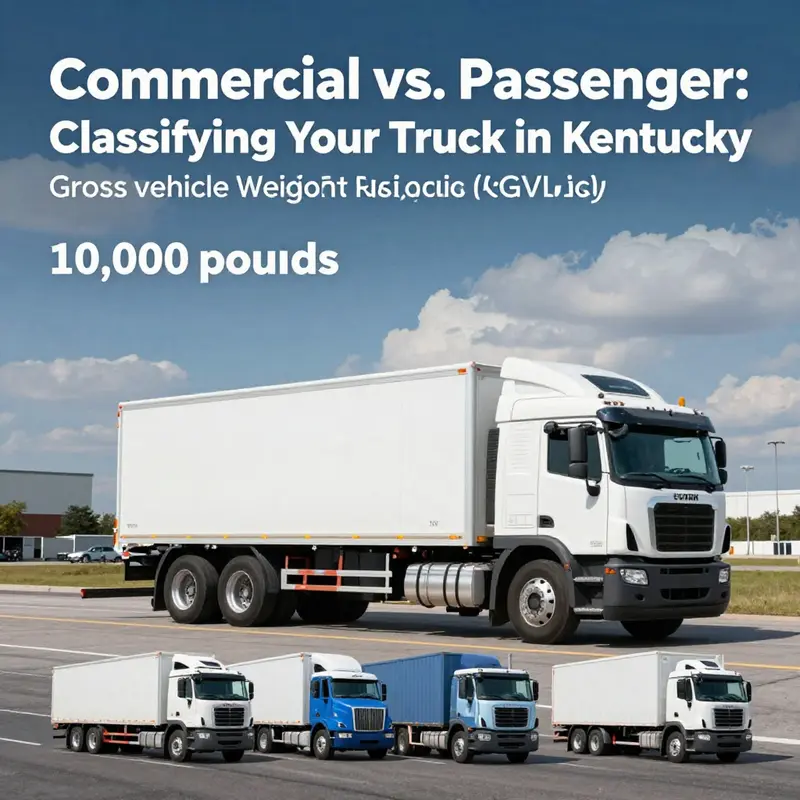
Is my truck a commercial vehicle or a passenger vehicle in Kentucky? The answer hinges less on the color of the vehicle or the way you bench-seat your passengers, and more on a single figure that sits on the door jamb and in the title paperwork: the GVWR, the gross vehicle weight rating. In Kentucky, as in many states, GVWR is the primary yardstick used to decide how a truck is categorized for registration, licensing, and the wider set of safety and road-use rules that follow. This weight-based logic is not merely bureaucratic trivia. It governs the fees you pay, the inspections you endure, the kind of insurance that applies, and even the routes your truck may be allowed to traverse. The classification a truck falls into—passenger or commercial—therefore shapes the day-to-day realities of operating on Kentucky’s highways and bridges, and it can carry a cascade of consequences if it’s misapplied or mismatched with the truck’s actual use. To grasp this, it helps to start with the GVWR itself and then trace how that single rating ripples through registration, licensing, and the broader regulatory landscape that governs transport in the Bluegrass State.
GVWR is, by design, a manufacturer-specified ceiling for the vehicle’s total weight when it is fully fueled, loaded with cargo, and ready for service. In Kentucky, this weight boundary is used to draw a line between light-duty, passenger-oriented operation and heavier-duty, commercial trucking. The rule of thumb that becomes quickly practical is straightforward: a GVWR of 10,000 pounds or less usually places a truck in the passenger category for registration and licensing. When the GVWR climbs above 10,000 pounds, the vehicle commonly enters the commercial realm. But the boundary is not a simple box you check and forget. The line is also about how the truck is used, because the same weight class can be relevant in more than one way. If a truck sits below the 10,000-pound threshold but is used for business purposes—hauling goods for work, transporting employees for business activities, delivering items—it may fall under commercial regulations for insurance, tax considerations, and certain compliance requirements. That is why Kentucky’s approach emphasizes both the static fact of GVWR and the dynamic fact of use.
The practical consequence of this dual test—GVWR and intended use—appears most clearly in registration and licensing. A vehicle with a GVWR over 26,000 pounds triggers a different regime from lighter vehicles. In the most direct sense, heavy-duty status carries the obligation to secure a commercial driver’s license (CDL) when the operation meets additional criteria such as carrying hazardous materials, transporting more than 15 passengers in a vehicle, or exceeding a GVWR threshold that places the vehicle into heavier weight brackets. The result is not only a separate license but also distinct registration plates, higher operating fees, and a battery of inspections designed to ensure safety on the road. The state aligns its rules with federal weight classifications, but the enforcement happens at the state level, with Kentucky’s weigh stations and inspection programs actively monitoring for overloading and improper use. The practical upshot is that misclassifying a vehicle—either by title or by use—can expose an operator to penalties, fines, or the administrative burden of correcting the registration to reflect the actual GVWR and intended use.
Understanding the classification system itself helps make the rulebook less opaque. Kentucky, following the federal system, divides trucks into weight-based classes that determine who may operate them and under what conditions. In the framework described by Kentucky’s regulatory structure, Class 1–3 trucks are light-duty vehicles with a GVWR up to about 14,000 pounds. These might include typical pickups and small delivery vans used for light-duty tasks. Medium- and heavy-duty trucks fall into Classes 4–8, with Class 8 encompassing vehicles exceeding 26,001 pounds in GVWR—think larger freight haulers and tractor-trailers. This framework is not merely about labels; it maps directly to the safety standards, the licensing demands, and the access restrictions that shape a trucker’s business. The heavier the vehicle, the more stringent the safety protocols, the more rigorous the inspection regime, and often the more complex the insurance and tax considerations.
But the weight-based classification is not a static passport you stamp once and forget. The real life of a truck in Kentucky revolves around how the GVWR interacts with use. A vehicle that is technically heavy enough to be commercial can still be treated as a passenger vehicle in some registration contexts if the listed GVWR sits at or below the threshold and the vehicle is used purely for personal transportation, with no business activity. Conversely, a lighter vehicle may still be treated as commercial if it is routinely used for business tasks like delivering goods, carrying tools or equipment for a business, or transporting employees to job sites. The boundary, then, is not simply a number but a combination of weight and function. Because of this, the most reliable method to confirm a truck’s classification is to examine the vehicle title or the registration documents issued by the Kentucky Department of Motor Vehicles (DMV). These documents explicitly list the GVWR and the corresponding classification. If there is any doubt, the DMV’s official guidance is the best source of truth, and it should be consulted for the most current rules and thresholds that govern how a truck is titled, registered, and operated in the Commonwealth.
For operators who want a broader contextual view—how these rules fit into ongoing regulatory conversations and cross-border considerations—one can explore related discussions about how regulatory frameworks extend beyond state lines. In particular, readers curious about how weight classifications intersect with broader regulatory regimes across borders can consider resources that address cross-border regulatory issues. Such discussions remind us that a truck’s classification can sometimes be more than a local matter; it can influence eligibility for certain routes, compliance with different inspection regimes, and even how a fleet plans cycles of maintenance and renewal when crossing state or national boundaries. See more on cross-border regulatory issues in the context of truck operations at the following resource: cross-border regulatory issues event.
The practical day-to-day implications of GVWR extend beyond licensing categories and into the life cycle of vehicle operation. A GVWR that lands a truck in the commercial camp often means exposure to a different set of safety standards and inspection routines. Commercial vehicles are subject to more frequent or rigorous inspections, and they may be required to meet higher maintenance standards to keep the vehicle in a serviceable state that can safely carry heavier loads. The weight threshold also interacts with route restrictions and infrastructure access. Some bridges and tunnels have weight limits that can constrain where a heavy truck may travel or require pre-approval for certain routes. Operators of heavy trucks will recognize the importance of load management and axle configurations because overloading not only invites penalties at weigh stations but also accelerates wear and reduces safety margins—two outcomes that can ripple into higher maintenance costs and downtime, impacting overall fleet reliability.
To determine where a vehicle fits within Kentucky’s framework, one should not rely on memory or assumption. The most accurate method is to verify the GVWR on the vehicle’s title or the registration documents issued by the Kentucky DMV. Those official documents provide the authoritative classification used for licensing and taxation and form the basis for selecting insurance groups, scheduling inspections, and determining eligibility for certain commercial programs or exemptions. The DMV’s website is the official channel for guidance, updates, and tools that help clarify how a given GVWR maps onto the state’s categorization scheme. In practice, many operators keep a small dossier of key documents on hand—title, registration, insurance policy details, and a current standard of use description for the vehicle. That preparation helps when a question arises from a weigh station, a fleet auditor, or a regulatory official who asks for the justification of a vehicle’s classification and its compliance with the state’s requirements. In this sense, GVWR is a technical specification, but it becomes a practical instrument for managing cost, compliance, and safety in daily trucking operations.
The interplay between GVWR, use, and regulation also shapes a fleet’s insurance considerations. Even if a vehicle’s GVWR sits just below the 10,000-pound line, the vehicle’s business use can trigger commercial insurance requirements—because the risk profile changes when a vehicle is used to haul goods for a business, transport employees for business purposes, or deliver items as part of a company’s operations. Insurance policies, like registration and licensing, are built around risk profiles and exposure. A truck classified as commercial typically commands coverage designed for higher liability, broader cargo protection, and often higher premiums than a passenger vehicle. The same logic applies to how fleets schedule maintenance, conduct safety training, and organize drivers’ logs and hours-of-service compliance. In Kentucky, as in other states, the GVWR threshold is not merely a sheet of numbers; it is a signal that triggers a constellation of regulatory and administrative processes that shape a truck’s operational realities.
For operators seeking clarity, the approach is methodical and straightforward. Confirm the GVWR printed on the vehicle’s door tag and cross-check it against the title and registration documents. If the GVWR is above 10,000 pounds, anticipate a commercial classification for licensing and registration, and verify whether a CDL is required for the intended operation based on the weight and other criteria such as passenger transport or hazardous materials. If the GVWR falls at or below 10,000 pounds, consider whether business use alone might push the vehicle into commercial regulations for insurance or tax purposes, then consult the DMV for the most current interpretation. In all cases, rely on the official Kentucky DMV guidance to ensure that the classification reflects the vehicle’s actual use and meets the state’s current regulatory expectations. The DMV’s guidance acts as the anchor point for decisions about which door to open in the registration process, which plates to display, and which inspections will be part of the quarterly or annual cycles that keep a fleet compliant.
In the end, the weight a vehicle carries is not merely a matter of how much it can haul. It is a framework that defines the vehicle’s identity in the eyes of the law, a framework that affects licensing, registration, insurance, taxation, and even the routes and operations a truck may undertake. Kentucky’s approach, aligned with federal weight classifications, seeks to balance the practical realities of moving goods and people with the imperatives of road safety, infrastructure preservation, and fair regulation. It is a reminder that in trucking, a single number—the GVWR—often carries a wider responsibility than a simple weight limit. For operators navigating this terrain, the best practice remains clear: verify, document, and remain aligned with the official guidance, ensuring that every vehicle on the road is categorized and operated in harmony with Kentucky’s rules and the broader safety expectations that govern commerce and transportation.
For official information and real-time updates, refer to the Kentucky DMV guidance at https://www.ky.gov/dmv/.
null
null
Is My Truck Commercial or Passenger in Kentucky? A Clear Guide to Registration, Licensing, and GVWR
When you pull into a Kentucky weigh station or a county clerk’s office, the question isn’t just about the truck’s age or color. It centers on its identity in the eyes of state and federal regulators: is it a commercial vehicle or a passenger vehicle? In Kentucky, the line is drawn primarily by the vehicle’s gross vehicle weight rating, or GVWR, and by how the vehicle is used. The distinction matters far beyond pride of ownership. It shapes which registration tab you need, what kind of license, if any, is required to drive it, what kinds of insurance and inspections apply, and even how the vehicle is taxed and inspected over time. The practical upshot is simple on the surface but can feel nuanced in the details: a heavier truck used for business tends to ride on a different regulatory lane than a lighter one you use mainly to haul personal gear to the lake. Yet the reality is more complex, because Kentucky, like many states, recognizes that a vehicle might be light in weight but heavy in purpose, and vice versa. Understanding where your truck sits in that landscape helps avoid penalties, delays, and headaches that come from misclassification, particularly when business use touches multiple regulatory realms.
The GVWR threshold is the starting point. If a truck has a GVWR of 10,000 pounds or less, it is generally treated as a passenger vehicle for registration and licensing purposes. If the GVWR exceeds 10,000 pounds, the vehicle is typically classified as a commercial vehicle. This threshold is a practical shorthand that keeps paperwork and inspections from spiraling into an endless maze. However, the story does not end there. The vehicle’s intended use—whether the truck will haul goods for work, transport employees for business purposes, or deliver items in the course of business—can push a vehicle into the commercial register even when its GVWR sits near the boundary. In other words, the classification often hinges not only on weight but on how the truck is employed day to day. When a vehicle is used for business activities, insurers and tax authorities may treat it as commercial even if the GVWR is modest. In contrast, a personal-use truck with a high GVWR can still ride in the passenger lane if the business is not involved and the weight threshold is not crossed, though this is a less common scenario and one that often invites careful documentation to avoid mismatches across agencies.
To navigate this landscape with confidence, the most reliable source of truth is the title or registration documents issued by Kentucky’s Department of Motor Vehicles. Those documents list the GVWR and the actual classification as registered for state purposes. If there is any doubt, the DMV’s official guidance provides the baseline to determine whether you should expect passenger or commercial plates, whether your vehicle needs a CDL, and whether special registration or inspection regimes apply. The DMV’s guidance is not just bureaucratic formality; it’s a map that helps align ownership, operation, financing, and compliance with the rules that keep roads safer and commerce predictable. For those who want to dig into the official framework, the Kentucky DMV offers a gateway to the specifics, and it is worth reading when you are weighing a purchase, a repurposing, or a change in how a truck is used. A good practice is to review the vehicle title, the GVWR listed there, and the current registration category. If your situation sits near the boundary, or if your business model has begun to rely on a truck in a way that feels more professional than personal, a quick check with the DMV can save a lot of uncertainty later on.
The distinction also leads to important differences in how registration and licensing work in Kentucky. For passenger vehicles, including personal-use pickups, the process is designed to be straightforward. Registration is managed through the state’s vehicle regulation framework, with the typical requirements being proof of ownership—such as the vehicle title—proof of liability insurance, and, in some cases, a safety inspection. The term for passenger-vehicle registration is generally two years, and the fee structure is based on the vehicle’s weight, age, and type. In practical terms, that means lighter personal-use trucks typically fall under a simpler, more predictable schedule that aligns with standard consumer vehicle registration. The emphasis is on ensuring the vehicle is insured and that the person operating it has legitimate ownership and liability coverage when navigating the roadways.
Commercial trucks, by contrast, bring a broader set of regulatory obligations. When a vehicle is used for business purposes—hauling goods for a company, transporting materials for a service, or otherwise functioning as part of a commercial operation—the state requires more stringent oversight. The threshold for a commercial driver’s license, or CDL, in the wider regulatory framework is driven by weight and potential hazards. A CDL is required if the vehicle meets specific weight and cargo criteria, or if it carries hazardous materials, or if it transports more than 15 passengers. Federal standards, channeled through the state’s administering authority, align with the federal rules established by the FMCSA. In Kentucky, the practice is to ensure that heavy or specialized commercial vehicles are subject to appropriate testing, licensing, and oversight. CMVs—commercial motor vehicles—must be registered in a manner that reflects their commercial status, and in certain circumstances, a USDOT number becomes a requirement when operations cross state lines. The spectrum of inspections and regulations for CMVs is wider, reflecting the potential risks associated with heavy and lengthy operations, the crossing of borders, and the need to monitor hours of service and safety compliance.
What does this mean for the person who owns or operates a truck in Kentucky? It means a practical, stepwise approach to determine classification and compliance. The first step is to verify the GVWR on the vehicle’s label, usually found on the door jamb or in the owner’s manual area. Then check the official title and any registration documents to confirm how the vehicle is registered. If the GVWR is over 10,000 pounds, the vehicle will typically be treated as a commercial vehicle for registration purposes. If the GVWR is at or below 10,000 pounds, the vehicle is generally a passenger vehicle, provided there is no business use that changes the regulatory requirements. But here is the subtlety: even a GVWR under 10,000 pounds can become subject to commercial regulations if used for business purposes that trigger regulatory treatment for insurance, tax, or other compliance. The important takeaway is to keep the use-case in clear, documented terms. When business activity expands—whether the truck is used to haul tools, transport employees to job sites, or deliver items for a business—the line between personal and commercial can become blurred. In such cases, a conservative approach is often wise: treat the vehicle as commercial for licensing and insurance purposes if the business use is ongoing, even if the GVWR would suggest passenger classification under a strict weight-based rule.
In assessing your path forward, it is crucial to lean on official guidance. The Kentucky DMV’s resources provide the authoritative baseline for whether your vehicle requires passenger or commercial registration, what documentation is needed, and how the fee structure is calculated. The DMV recognizes the practical reality that a vehicle’s classification—the label on the registration—has real consequences for the cost of license plates, the type of insurance coverage that is expected, and the inspections the vehicle must undergo. If you are unsure, consult the title and registration records first, then reach out to the DMV with any questions about your specific situation. The goal is to align your registration with your actual use to avoid penalties or misclassification that could complicate operations or trigger unexpected fees.
For readers who want a broader industry context beyond state lines, there is value in looking at how regulatory discussions weave into the bigger regulatory picture. A useful resource that broadens understanding of cross-border regulatory realities is the Cross-Border Regulatory Issues Event, which brings together industry perspectives on how different jurisdictions regulate trucking operations and compliance. This contextual backdrop helps explain why the main rules—GVWR thresholds, CDL requirements, USDOT considerations—matter not only in Kentucky but wherever a truck operates in commerce. It also underscores why keeping accurate records about GVWR, vehicle use, and registration status is essential for any fleet or sole proprietor who navigates both personal errands and business deliveries on Kentucky roads. For those curious about how this broader regulatory dialogue translates into practical decisions, the linked resource offers a window into the evolving landscape of trucking compliance beyond the state line.
In addition to understanding the GVWR and use-based distinctions, owners should take advantage of the practical steps available to confirm classification and align with the law. The most reliable method remains checking the vehicle title and the registration documentation issued by the Kentucky DMV. These documents will list the GVWR and the classification used for state purposes. If the information on the title seems at odds with the vehicle’s day-to-day use, a direct inquiry to the DMV can resolve the discrepancy. The DMV’s official site also provides guidance on what to do if a vehicle’s use changes, such as expanding a personal pickup into a mobile service vehicle or converting a fleet vehicle for heavier daily tasks. In those moments, the registration category may require updating, and there may be a different fee structure or additional licensing pathways to pursue. The practical ethos is straightforward: keep documentation up to date, and adjust classification only after confirming the regulatory implications with the DMV. Remember that the consequences of misclassification can include fines, vehicle impoundment, or legal action, which is why prudence—paired with accurate recordkeeping—is the best policy.
When all the pieces come together, Kentucky’s framework aims for clarity: a GVWR-based starting point, a recognition that business use can shift classification, and a licensing and inspection regime that scales with risk and potential impact on road safety. The path from driveway to registration is not a maze if you begin with the GVWR, verify the title, and stay aligned with how the vehicle is actually used. If you find yourself at a boundary—GVWR just over or under the threshold, or a change in business operations—treat the situation as a live regulatory decision and consult the official guidance to determine whether a switch in classification is warranted. This approach protects you and others on the road and keeps your paperwork aligned with reality on the ground. For official procedures and the latest requirements, the Kentucky DMV remains the authoritative reference. The chapter URL below points to the DMV’s truck registration information, which is the best single source for precise steps, fee calculations, and forms you may need to file. As you step through the process, you may also find it helpful to connect with broader industry resources that address the regulatory environment across borders and sectors; these conversations can provide a wider lens for how Kentucky’s rules fit into the larger ecosystem of commercial transportation.
For those who want to read more on the broader regulatory context while you tune your own registration, you can explore a related discussion on cross-border regulatory issues here: Cross-Border Regulatory Issues Event. This resource offers a constructive perspective on how various jurisdictions approach the commercial-versus-passenger classification and the interplay between state and federal rules that often shapes decisions on the ground. And when you are ready to verify specifics, the official Kentucky DMV truck registration page is the primary source for step-by-step instructions, eligibility criteria, and fee schedules tailored to your situation. The page provides the most current requirements for proof of ownership, insurance, safety inspections, and the precise language that governs when a vehicle is registered as a passenger vehicle or as a commercial vehicle in the state. By anchoring your process in the GVWR and the actual use of your truck, you can navigate Kentucky’s registration and licensing landscape with greater confidence and fewer surprises on the road ahead.
External resource: https://dvr.ky.gov/vehicle-services/registration-and-licensing/Pages/Truck-Registration.aspx
Final thoughts
In summary, accurately classifying your truck in Kentucky, whether as commercial or passenger, is essential for adherence to regulations, licensing, and operational effectiveness. Awareness of the Gross Vehicle Weight Rating (GVWR) and the implications of business use is crucial for logistics and small business operators alike. Ensuring compliance with the Kentucky DMV requirements can prevent potential penalties and facilitate smoother operations for your enterprise. Make informed decisions today to enhance your fleet’s performance and compliance standards.