
Determining whether your pickup truck is classified as a commercial vehicle is critical for compliance, insurance costs, and operational strategy. This classification hinges largely on how the vehicle is utilized, leading to distinct legal and financial implications for various business owners. In the following chapters, we will delve deeper into understanding vehicle classification, the legal definitions based on usage, insurance requirements for business-related operations, and the importance of consulting local authorities regarding vehicle status. By examining these factors, logistics managers, procurement teams, and small delivery business owners can make informed decisions about their pickup trucks.
When a Pickup Goes to Work: Deciding If Your Truck Is a Commercial Vehicle
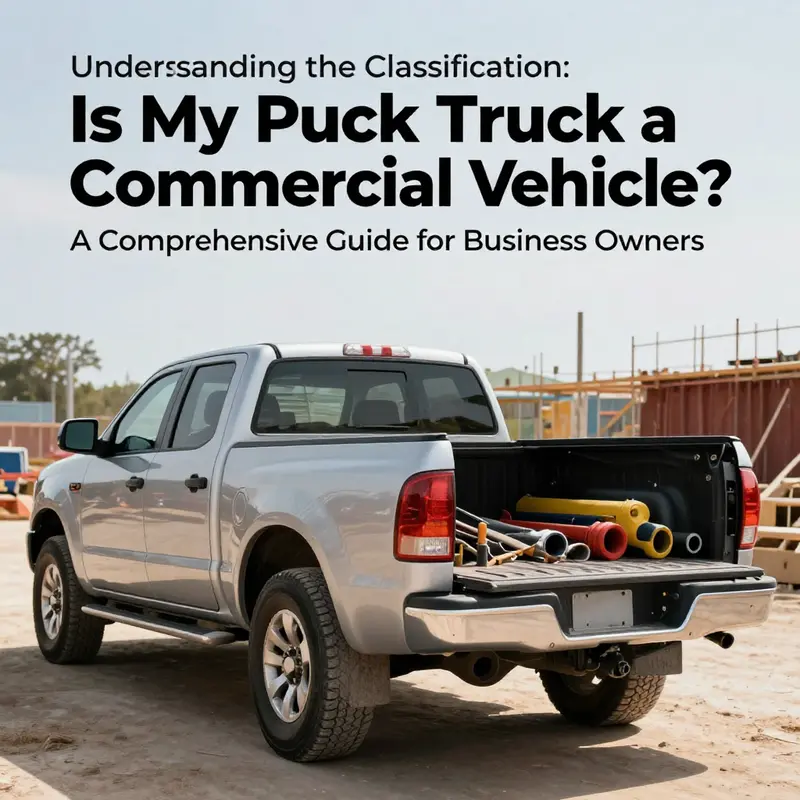
A pickup truck is not automatically a commercial vehicle simply because it wears a tonneau cover or bears the name of a contractor on its door. The essential question is not about what the truck is, but how it is used. In the language of transportation regulation, a vehicle earns its commercial status from its function—whether it is used in commerce to move goods or people, or to support a business activity. This distinction, sometimes subtle in everyday life, has practical consequences that touch insurance, registration, licensing, and safety requirements. The line between a personal workhorse and a business asset can blur, especially for small business owners, freelancers, or independent operators who rely on their pickup for daily tasks that generate revenue. Understanding where your own truck sits on that line begins with a clear-eyed look at usage. If your truck is routinely plied with tools, materials, or products, or if it serves as a vehicle for delivering services, the odds are high that many regulators will view it as a commercial vehicle, regardless of its make, model, or age.
That simple idea—usage drives classification—frames the rest of the landscape. The federal perspective, anchored in broad definitions from the U.S. Department of Transportation, emphasizes function: a vehicle qualifies as commercial if it is used in commerce to transport people or goods. The Department stresses that the same pickup can be personal on one day and commercial on another, depending on how it is employed. This is a practical reality for many owners who cobble together gigs, side jobs, or weekend contracts that rely on the same truck. The point is not to overthink ownership but to examine how the vehicle is used in the course of daily work. For someone who occasionally hauls a trailer for a hobby or personal project, the vehicle may remain a private passenger vehicle. But if the same truck is routinely used to move tools to job sites, deliver merchandise, or ferry crew members, that repeated, business-oriented activity shifts the classification toward commercial use.
To anchor this distinction in regulatory language, consider the definition that underpins the framework: a commercial vehicle is a vehicle utilized in commerce for transporting people or goods. It is not merely a matter of label or appearance; it is about purpose and pattern of use. A few guiding patterns help map your situation. Think about whether the vehicle is employed primarily for business activities, such as hauling equipment to a job site, delivering items for a business, or transporting employees as part of a work schedule. If the answer is yes to one or more of these, you are operating in the commercial space, and this triggers considerations that extend beyond personal use. Conversely, if the truck is used only for personal trips, weekend shopping, or ad hoc hauling of nonbusiness items, it remains a private passenger vehicle in most jurisdictions. The repeated use for business purposes, even if the vehicle itself remains modest in size, is the hinge that opens or closes the door to commercial status.
From a regulatory standpoint, the implications of that designation ripple outward. Licensing requirements may change, with some jurisdictions requiring different classes of operator licenses when a vehicle is used for business purposes, particularly if the vehicle exceeds a certain weight or configuration. Insurance often follows suit: commercial auto insurance policies cover business use, including liability and physical damage that arise from work-related tasks. If a pickup routinely carries tools, equipment, or merchandise for a business operation, insurers may require a commercial policy, which can differ in limits, deductibles, and premium structure from a personal policy. Maintenance and safety inspections may also take on a more formal cadence when a vehicle is classified as commercial. Regulators sometimes impose more frequent inspection cycles on commercial fleets or on vehicles used for hire or transport of workers. Even if you own just one pickup, the classification can influence whether you need certain safety checks or compliance documentation when you move people or goods for compensation.
One of the most important distinctions to keep in mind is that commercial status is not a permanent label attached at the dealership or when you register the vehicle. It is an ongoing assessment based on how the truck is deployed. If you begin a new line of work that relies on transporting goods or showing up at multiple job sites, you may transition from private to commercial use in the eyes of regulators and insurers. Likewise, a shift away from business activities—such as ceasing deliveries or stopping contract work—can revert a vehicle toward private status, though some regulatory changes may persist for a period. This fluidity makes ongoing diligence essential. A responsible owner periodically audits how the vehicle is used, especially when personal and business tasks share the same truck.
To help anchor this assessment, many readers will benefit from a practical, scenario-based view. Imagine a small contractor who uses a pickup to haul tools, carry ladders, and deliver small equipment to client sites. On any given workday, the truck may also serve as transport for crew members or as a mobile workshop—an obvious alignment with commercial use. If this contractor then takes the truck to a weekend market to sell handcrafted items, the same vehicle toggles between commercial and personal use, and the owner may face a more nuanced regulatory posture. In this space, jurisdictions often weigh mileage devoted to business tasks, the frequency of business-related trips, and the proportion of time the vehicle is used for work versus personal errands. A reasonable rule of thumb is that clear, repeatable business tasks signal commercial use, while sporadic non-business trips support personal classification.
This nuanced boundary—driven by usage rather than appearance—makes it essential to consult the formal authorities that govern vehicle classification. The local Department of Motor Vehicles or its equivalent can provide the exact rules for your state or country, and they are the first stop for determining how your pickup should be titled, registered, and insured. While the USDOT provides guidance on a national scale, enforcement and interpretation vary by jurisdiction. The FMCSA, or Federal Motor Carrier Safety Administration, offers comprehensive definitions and guidelines that help illuminate the broader landscape of commercial vehicle regulations. For individuals who operate on both sides of the border or across state lines, a broader perspective on cross-border regulatory requirements becomes particularly relevant. In such cases, staying aligned with the most current rules is not just prudent—it is essential to avoid penalties and ensure that your business activities proceed without interruption. A good starting point for broader, cross-border considerations is to review the TCAS Cross-Border Regulatory Issues Event, which brings together industry and regulator perspectives on how cross-border rules shape everyday trucking decisions. TCAS Cross-Border Regulatory Issues Event
There is also value in stepping back to look at the practical consequences of misalignment between classification and use. Insurance policies are a frequent area of friction. A vehicle owned by a private individual but used for occasional business tasks may still be treated as personal use by some insurers, but many providers require a commercial policy once the business use is regular or substantial. The difference between a personal auto policy and a commercial auto policy is not solely about premium costs; it also affects coverage scope, claims handling, and what happens if a loss occurs during a work-related activity. The same holds true for registration and licensing: in some jurisdictions, commercial use may necessitate commercial plates or a distinct registration category, while in others, the same plate can serve both purposes if used within defined parameters. The consequences of misclassification can range from administrative hassles to out-of-pocket costs in the event of a claim or inspection, so it is prudent to align your policy and registration with actual use as soon as you can accurately determine it.
The fiscal and administrative footprints extend beyond insurance and licensing. Maintenance and safety requirements may intensify for commercial use, especially when the vehicle is employed in a service-oriented capacity or to transport personnel. Regular inspections and a higher bar for upkeep can be part of a broader safety culture designed to minimize risk on the road and on work sites. In some cases, the vehicle’s weight, axle configuration, or towing capacity elevates its regulatory standing beyond ordinary passenger vehicle norms. A mere pickup with a light payload capacity can become part of a controlled fleet simply by the way it is used to support business operations. This is not about labeling a truck as “heavy” or “special”; it is about meeting the obligations that ensure road safety and predictable performance for business tasks.
For readers seeking a grounded, actionable method to determine where their pickup fits, consider a simple, repeatable process. Start with a usage audit: tally the miles driven for business tasks in a typical month, note the number and type of business deliveries, and record how often the vehicle carries tools, equipment, or personnel for work. If business use accounts for a meaningful portion of vehicle activity, you are likely operating under a commercial framework. If business use is negligible or purely incidental, the vehicle may remain in private classification. Next, cross-reference those findings with your local DMV guidance and the USDOT/FMSCA guidelines. In many areas, the threshold for commercial status is tied to how the vehicle is used rather than its build or branding. The answer, then, becomes a practical assessment rather than a labeling exercise.
As you move toward clarity on your status, you may encounter questions about how to manage day-to-day tasks within this framework. It can be helpful to establish a simple policy on how the truck is used for business. For example, create a weekly routine that separates business trips from personal errands when possible and documents the nature of each trip. This habit not only supports accurate classification but also smooths insurance renewals and potential regulatory audits. For a one-person shop or a small family business, this approach preserves flexibility while reducing the risk that a sudden regulatory change will disrupt operations. It also makes it easier to communicate with insurers and regulators should your use pattern evolve.
In the broader context of the article, this chapter connects with the ongoing conversation about how small fleets and solo operators navigate regulatory complexity while trying to stay efficient and cost-effective. The core message remains consistent: do not anchor your classification to the vehicle’s appearance or its nameplate. Anchor it to the routine, revenue-generating activities that the truck actually performs. If you regularly haul tools for a contracting job, deliver goods for a company, or shuttle workers to project sites, your pickup’s role is “commercial by use.” If your trips are mainly personal, even with the occasional business haul, you may still ride the line of personal classification—but be mindful that frequent business use can push you toward commercial status, with corresponding obligations. In a regulatory landscape that rewards clarity and consistency, staying proactive about classification will save time, reduce risk, and ensure you are properly aligned with the rules that govern your operations. For readers who want to explore related regulatory perspectives beyond the national scope, the FMCSA provides a detailed framework and definitions that can help you map your status more precisely to your specific situation. External reference: https://www.fmcsa.dot.gov/regulations/commercial-vehicle
Driven by Purpose: How Use, Not Appearance, Determines if Your Pickup Is a Commercial Vehicle
A pickup sits in a driveway, tailgate closed, a coffee mug cooling on the bumper. It looks like a personal vehicle, a common sight in neighborhoods across the country. Yet the same truck might also be a commercial workhorse, carrying ladders, tools, and freight for a small business. The distinction is not about the truck’s color, its bed, or its horsepower alone. It hinges on what you do with it. In the realm of road regulations and insurance, use—how the vehicle is employed in the course of business—often determines whether that pickup is treated as a commercial vehicle. This is a practical truth that can surprise owners who assume the vehicle’s classification follows its physical attributes. The conversation about whether a pickup is a commercial vehicle begins with intent and ends with accountability, because the consequences touch licensing, insurance, maintenance, and even liability in an accident. The idea is deceptively simple: a vehicle becomes commercial when it is used for business purposes. Yet translating that idea into real-world requirements and protections demands close attention to how rules apply in your jurisdiction and how agencies interpret use on the road.
In the United States, the Federal Motor Carrier Safety Administration lays out a structured framework, but the core message runs deeper than the numbers on a spec sheet. A commercial motor vehicle, or CMV, is defined by its use as a vehicle that transports passengers or property for a business purpose and that meets certain criteria. The key weight-based threshold comes first: a GVWR, or gross vehicle weight rating, of 10,001 pounds or more is a clear indicator of CMV status, and this threshold is a common bellwether in regulatory practice. Yet weight is only part of the story. Vehicles designed to transport 16 or more passengers, including the driver, automatically fall under CMV considerations, as do those used to transport hazardous materials requiring placarding. The emphasis, however, is on activity. The same truck can swing from private to commercial status depending on what the driver is doing in a given moment. A pickup used by a sole proprietor to haul cabinetry for a paying client may cross from personal ownership into commercial use the moment that business purpose takes the wheel. The opposite can also happen: a large pickup used purely for personal travel and family outings stays outside CMV classifications even if it has high payload capacity because ownership and use aren’t aligned with business activity in this context.
This usage-based approach helps regulators align rules with real-world practice. If a vehicle is used to move goods for hire, or to carry tools and equipment for a service job, that use signals a business purpose. The line is not always obvious, and the law recognizes that nuance. A small business owner who uses a mid-size pickup to deliver furniture to clients is engaging in commerce while operating that same pickup on a weekend camping trip would likely not. The same vehicle can become a CMV mid-day when it switches from personal transport to delivering items sold through a storefront. The U.S. Department of Transportation emphasizes this distinction: the decisive factor is not the vehicle’s size or make, but how it is operated in the service of business. When the vehicle is used in commerce, the classification becomes a matter of compliance and risk management rather than identity and aesthetics.
To ground this in concrete terms, consider the three central criteria that commonly shape CMV determinations. First, the GVWR threshold of 10,001 pounds is a straightforward gauge. If a pickup wears a GVWR above that line, it falls squarely into CMV territory, assuming it is used for commerce. Second, design capacity matters: if the vehicle is designed to transport 16 or more passengers, the classification follows. Third, hazardous materials plumb the deepest regulatory depths. If a vehicle is used to transport hazardous materials requiring placarding, it triggers CMV rules no matter its other characteristics. These criteria function as the backbone of classification rules, but they do not close the door on the nuanced cases that fill everyday roads. A pickup with a lower GVWR can still be considered commercial if it is used for business purposes such as delivering goods for hire or transporting equipment for contract work. This recognition of use over form is essential for owners who want to avoid gaps in coverage, unnecessary fines, or unlawful claims disputes after an incident.
The practical upshot is that ownership does not grant immunity from commercial-use rules. If you use a pickup for business activities, you may be operating under a different set of requirements than your neighbor who uses the same model purely for personal errands. This has tangible implications across the board. Insurance is one of the most immediate and consequential areas where use matters. Personal auto policies typically offer limited coverage for business use. If you regularly deliver products, haul tools for hire, or transport equipment as part of a service, a commercial auto policy often becomes the appropriate choice. The commercial policy reflects the higher risk profile associated with business operations on the road, including greater exposure for liability and property damage. In some cases, a mixed-use arrangement can complicate coverage, particularly if you switch between personal and business use without notifying your insurer. A failure to disclose business miles or commercial activity can lead to denied claims or canceled coverage when you need it most.
Beyond insurance, there are regulatory and licensing considerations. Commercial use can accompany stricter driver qualification standards and hours-of-service rules for those operating CMVs in commerce. These are designed to ensure safety and fatigue management in higher-risk transportation scenarios. While a typical pickup driver who uses the vehicle for local errands or occasional client visits may not be bound by stringent hours-of-service rules, a business that uses the same vehicle to shuttle goods across counties or state lines could encounter regulatory oversight. This is not merely a bureaucratic concern; it is a safety framework built around the realities of professional driving. The maintenance obligations for CMVs can also be more rigorous. Regular inspections, preventive maintenance, and timely repairs become more than best practices—they become regulatory obligations in many jurisdictions. The logic is straightforward: when a vehicle operates as part of a business that moves goods or people for hire, the potential consequences of a malfunction are greater, and the system seeks to reduce those risks.
Sizing up a pickup in this frame invites practical questions. If the truck’s GVWR sits under the 10,001-pound line, does it still count as a CMV? The answer, as many professionals note, lies in how you use it day to day. A tradesperson who borrows a family pickup for a weekend job may be fine under private-use norms, but the moment the vehicle is used to haul tools and materials to a client’s site, the business activity can thrust the vehicle into the commercial category. Conversely, a heavy pickup used exclusively for personal travel—even if it carries large loads on occasion—often stays outside CMV rules because there is no business purpose driving those loads in the eyes of the regulator. This nuanced distinction explains why the same model can be treated differently across different operators and responsibilities. The line between private and commercial use is not about the truck; it’s about the business activity that the truck facilitates.
For those trying to navigate this landscape, there is a practical map that can guide decision-making without requiring a law degree. Start with an honest assessment of how your pickup is used in practice. Do you regularly transport goods for pay, or use the vehicle to perform services for clients that require you to travel to job sites? Are you hauling tools, equipment, or materials in a way that resembles a business operation rather than a casual, personal errand? If the answer is yes to even one of these questions, you may be approaching the boundary where commercial-use rules apply. Next, check local rules and consult the DMV or equivalent authority. Regulations vary by state or country, and the same vehicle can face different requirements depending on where you operate. In the United States, the FMCSA guidance provides a federal framework, but state and local interpretations further shape practice on the ground. Reading the DOT’s vehicle classification guidelines can clarify the core test: is the vehicle being operated for business purposes at the time, and does its use involve transporting property or people for compensation? The key phrase often referenced is simply this: the use of the vehicle—specifically whether it is being operated for business purposes—is the primary factor in classification.
As you weigh these questions, a practical tip stands out: document your usage. Keep a log of trips that involve business-related transport, record client deliveries, and retain receipts for fuel, maintenance, and vehicle-related expenses tied to work. This documentation is not just administrative overhead; it becomes a risk-management tool that supports your status should questions arise from insurers, regulators, or litigants. If you operate in an environment with cross-border work, the issue becomes even more intricate. Cross-border regulations often require additional documentation, compliance measures, and sometimes different licensing or vehicle classifications for international transport. In such cases, a careful read of cross-border regulatory guidance and coordination with your insurance provider can prevent mismatches in coverage and legal exposure. For a practical path forward in these scenarios, you can explore the detailed resources and case discussions that illuminate cross-border considerations, such as those found in industry-focused events and analyses.
To keep the narrative grounded in real-world practice, consider the following scenario. A solo carpenter drives a pickup to job sites, carrying tools and small materials for agreed-upon projects. The GVWR sits around 8,000 pounds, below the federal threshold. If the carpenter uses the truck only on weekends for personal use and occasionally on weekdays for one delivery job, this may remain a private passenger vehicle in the eyes of the regulator. If, however, the carpenter begins transporting multiple clients’ orders, lumber or hardware for hire, or uses the vehicle to shuttle customers as part of a service, the classification can shift toward commercial use. The truck’s real purpose, the business activity it facilitates, becomes the lever that determines regulatory treatment. The car’s beauty is in its utility, but the law judges its utility in the context of a business operation. When a vehicle is used as part of a service or as a means to earn money, it steps into a realm governed by more stringent rules and protections.
This is why the department-level guidance emphasizes not merely what the vehicle is, but how it runs on the road. The motorist who keeps meticulous records, maintains the vehicle to the required standards, and ensures appropriate insurance coverage has a practical shield against mishaps and misinterpretations. Misclassification can bring penalties, liability issues, and potential denial of insurance claims in the event of an accident. The costs of misalignment are not theoretical. They manifest in fines, disputes during repairs, and gaps in coverage when accidents occur on a jobsite. For a small business owner, these outcomes translate into real financial risk that can affect operations, workers, customers, and the bottom line. The safeguards are not complicated, but they do require thoughtful attention to day-to-day usage, regular maintenance, and clear communication with insurers and regulators.
In practice, the path to compliance starts with clarity about your vehicle’s use. If your pickup serves primarily private needs, you likely remain in the private vehicle category. If it begins to function as a tool for business—delivery of goods, transport of equipment to job sites, or carrying materials for hire—the status can shift toward commercial use. The decision is not a one-time label; it is an ongoing assessment that reflects how the vehicle is utilized over time. When in doubt, consult the federal framework and then verify with state or local authorities. The DOT’s guidelines provide a foundation for understanding the general test, while your local DMV or transportation agency interprets that guidance within the context of state law. For owners who want a concise starting point, the critical question to ask is: Is the vehicle currently used for business purposes in a way that moves goods or passengers for compensation? If the answer is yes, prepare for the compliance steps that accompany CMV status. If not, continue to emphasize personal use and household duties, while remaining mindful of any future shift in use that could trigger commercial requirements.
From a longer-view perspective, the distinction matters not only for compliance but for financial planning and risk management. Insurance costs generally reflect risk exposure. A vehicle used for business may require a commercial policy with higher liability limits, broader coverage for cargo, and specific endorsements for business operations. Tax considerations can also differ, with potential deductions for business-related vehicle expenses, maintenance, and depreciation. While the precise treatment varies by jurisdiction, prudent owners anticipate these factors and align their budgeting, insurance shopping, and recordkeeping accordingly. In essence, the question of whether a pickup is a commercial vehicle is a question about responsibility and foresight as much as it is about law. It is about recognizing when a vehicle ceases to be a private property tool and becomes a business asset that carries regulatory obligations and liability implications.
If you want a more detailed gateway into cross-border and intercultural regulatory issues that may arise in multi-state or international work, you can explore a practical resource that discusses these topics in a real-world context. This reference offers a bridge between general guidelines and the on-the-ground realities of cross-border operations, helping readers connect the dots between use, compliance, and protection across jurisdictions. For a deeper dive into cross-border regulatory considerations, you can explore the TCAs cross-border regulatory issues event. TCAs cross-border regulatory issues event.
In summary, the status of your pickup as a commercial vehicle is not locked by its chassis, bed, or emblem. It is earned by the purpose it serves when you drive. The law asks you to look closely at how you use your vehicle—and the answers shape insurance requirements, licensing expectations, maintenance standards, and your exposure to liability. The guidance is consistent: use the vehicle for business purposes, and you should coordinate with the appropriate authorities and insurance providers to ensure you are covered. Use it exclusively for private travel and personal hauling, and you can likely maintain private-use status with careful recordkeeping. The nuance is not always easy, but it is navigable with clarity, documentation, and a willingness to align practices with the rules designed to keep roads safe and commerce fair. The payoff is straightforward: fewer surprises in the event of an audit or claim, and a clearer path to protecting your livelihood when your pickup is an essential tool of your business. For readers who operate in complex environments or contemplate expanding business activity, the chapter behind this discussion provides a practical framework for thinking about vehicle use, status, and the responsibilities that come with owning a pickup that supports a business.
External resource: https://www.transportation.gov/vehicle-classification-guidelines
When Your Pickup Delivers More Than It Drives: Navigating Insurance and the Commercial-Vehicle Question
A pickup truck is not automatically a commercial vehicle just because it wears a bed liner or carries a toolbox. The question of status hinges on how you use the truck, not what you call it. In many places, the same model can be treated as a private passenger vehicle in one scenario and a commercial vehicle in another, depending on whether you use the truck primarily for business purposes. This distinction matters because it influences how you insure, register, and operate the truck under local rules. The practical takeaway is simple: usage, not ownership, determines the pathway you follow when it comes to insurance and compliance.
To understand where you stand, start with your day-to-day reality. Suppose you run a one-man repair service and you use the pickup to haul tools, spare parts, or even a portable generator from job to job. That pattern of activity—routine, business-related transportation of goods and equipment—counts as business use. Contrast that with a weekend trip to the lake or a trip to the grocery store where the cargo is personal and the miles are leisure miles. The latter is more aligned with private use. The lines blur, of course, when the truck wears many hats: sometimes it’s a personal vehicle, other times it’s a mobile toolbox. Yet the insurance implications don’t blur as easily.
The insurance implication begins with a widely acknowledged baseline: personal auto policies are designed for personal use. They often provide limited, if any, coverage for activities that are clearly business-oriented. If you drive for pay, deliver goods, or perform paid services with the truck, you risk a coverage gap if you rely solely on a personal policy. That gap can show up in several ways. First, there may be exclusions for business use, meaning an accident on a delivery route might leave you personally liable beyond what your policy would normally cover. Second, there can be gaps around cargo and tools—items you transport for work that aren’t considered standard personal belongings. And third, some insurers may cancel or non-renew a policy if they discover you are using the vehicle for business purposes without adjusting the coverage.
What changes when you shift toward commercial auto insurance becomes clearer as you look at the risk landscape. A commercial policy is built for the kinds of exposures you encounter on the job: liability for injuries or property damage caused to others during business operations, collision and comprehensive coverage for damage to your own vehicle in typical work scenarios, and cargo coverage if you’re transporting tools or supplies that have value or are essential to the job. In the event of a crash, a commercial policy is more likely to provide protection aligned with the real-world consequences of business use. You’re not just protecting the vehicle; you’re protecting your ability to complete jobs, service clients, and maintain cash flow.
There is, however, another layer to the story. Many work platforms and gig-style delivery services offer supplemental coverage during the window when you are actively performing a delivery or service. This coverage can help fill the gaps left by a standard personal auto policy, but it comes with prerequisites and limitations. The platform’s coverage is typically contingent on you carrying a qualifying personal auto policy and adhering to the platform’s driving guidelines. In practice, this means you can’t rely on that extra layer of protection if your base policy is silent on business use or if you operate in a way the platform prohibits. The implication for drivers is clear: the moment you earn income from the vehicle, the insurance landscape shifts, and you should align your policy accordingly to maintain continuous protection.
So how do you know which lane you’re in on any given day? Start with a careful review of the nature of your vehicle use. If your pickup is primarily a personal vehicle and you occasionally haul materials for a home project, your standard policy might suffice. If, on the other hand, you regularly deliver goods, transport client tools, or provide a service that uses the truck as a critical work asset, you’re moving toward commercial use. Consistency matters. An irregular pattern—sometimes personal, sometimes business—often requires a formal evaluation with your insurer to determine the correct classification and the appropriate coverage.
The classification itself is not a mere label; it triggers regulatory and practical consequences. In many jurisdictions, commercial use affects registration requirements, insurance underwriting, and even the taxes you pay on vehicle ownership and operation. The local DMV or equivalent authority can provide guidance, and so can the regulatory bodies that oversee commercial vehicle operations. Rules vary widely from state to state and country to country, so the prudent approach is to verify your status through the right channels. In the United States, for example, there are guidelines from the Department of Transportation that outline how vehicle use intersects with classification and safety requirements. Consulting these guidelines helps you understand the larger framework governing what constitutes a commercial vehicle and how that status interacts with licensing, inspection, and road-use obligations.
The practical steps to clarity are straightforward, even if the final determination involves a bit of paperwork. Start by documenting how the truck is used on a typical week. Track the number of trips you make for business, the amount of cargo you transport, and whether you routinely act as a service provider that uses the truck to support clients or customers. Then, speak with an insurance professional who understands both personal and commercial auto policies. Bring the usage data, a rough mileage estimate, and any relevant details about the cargo you transport. The insurer can then advise you whether to modify your current policy, upgrade to a commercial auto policy, or perhaps retain a personal policy with a rider or endorsement that covers incidental business use. The goal is seamless coverage that travels with your work, not a perilous gap that leaves you exposed after an accident or a claim.
Beyond the policy itself, there is the matter of platform requirements when your work involves a delivery or service that is facilitated by a digital platform. In practice, many drivers rely on the platform’s built-in protections, but those protections are designed to supplement, not replace, a solid base policy. If your use falls squarely under business activity, a commercial policy often remains the most reliable shield against out-of-pocket losses. It covers not just liability in the event of a crash, but also physical damage to your own vehicle, and potentially cargo or equipment that vanish in a loss event. The important nuance is that the platform’s protection is not automatic universal coverage; it depends on meeting criteria, maintaining required insurance, and complying with driving guidelines. That nuance underscores a simple truth: the responsible choice is to align insurance with actual use and to maintain ongoing conversations with your insurer as your work evolves.
In the end, the core decision rests on a straightforward question: does the pickup serve a business purpose on a regular basis? If the answer is yes, you are likely in the realm where commercial auto insurance is appropriate, if not essential. If the work use is incidental, limited in scope, or tied to occasional gigs, a carefully structured personal policy, possibly with endorsements, may be adequate—but only after a thorough review with your insurer. The risk of assuming a one-size-fits-all approach is not theoretical. It can turn into real costs when a claim arises and is denied or reduced because the policy does not reflect the actual use of the vehicle.
For readers seeking practical peace of mind, consider how easy it is to keep records that explain the vehicle’s use. A simple log noting job-related trips, types of cargo, and the time spent on business tasks can be invaluable during a policy review. If your use changes—perhaps you start delivering more goods or you expand into a service that makes frequent on-site visits—revisit your policy sooner rather than later. Insurance needs evolve with business size, cargo value, and the risk profile of your routes. By staying proactive, you can reduce the chance of coverage gaps and keep your operation moving forward with fewer interruptions.
As you weigh these considerations, remember that the broader context matters as well. Vehicle classification can influence not just insurance, but also registration, inspections, and compliance with safety and driver-hour rules that apply to commercial operations. Local regulations are not uniform, and the same truck can carry different obligations depending on where you drive and how you use it. That reality reinforces the value of consulting authoritative guidance from motor-vehicle authorities and, when appropriate, from the federal regulatory framework that shapes how vehicles are categorized and treated in commerce.
If you want a concise takeaway, it’s this: the question of “is my pickup truck a commercial vehicle?” is answered by how you use it, not by the label you attach to it. Your insurance, your registration, and your responsibilities on the road follow that usage pattern. The prudent path is to align your policy with your actual operations, confirm the alignment with your local rules, and maintain documentation that supports the business purposes your truck serves. When in doubt, documenting use and consulting with an insurer and the relevant authorities can save you time, money, and trouble down the road.
External resource: https://www.transportation.gov
null
null
Final thoughts
In conclusion, understanding whether your pickup truck qualifies as a commercial vehicle is multifaceted, involving aspects of usage, legal definitions, and insurance requirements. This determination affects compliance and financial planning, especially for businesses relying on such vehicles for operations. By consulting pertinent local authorities, truck owners can navigate the complexities surrounding this classification more confidently and align their vehicles with business goals.