
In California, pickup trucks serve a variety of purposes and are not uniformly registered as commercial vehicles. Understanding this classification is essential for logistics and freight company owners, construction and mining procurement teams, and small business owners with delivery fleets. Each chapter will explore critical aspects of pickup truck registrations, including their classifications, differences between personal and commercial registrations, and the regulatory framework guiding these definitions. By the end of this discussion, you will have a clearer understanding of how to navigate the complexities of vehicle registration in the Golden State.
Between Private Roads and Fleet Miles: Unraveling California’s Pickup Truck Classification
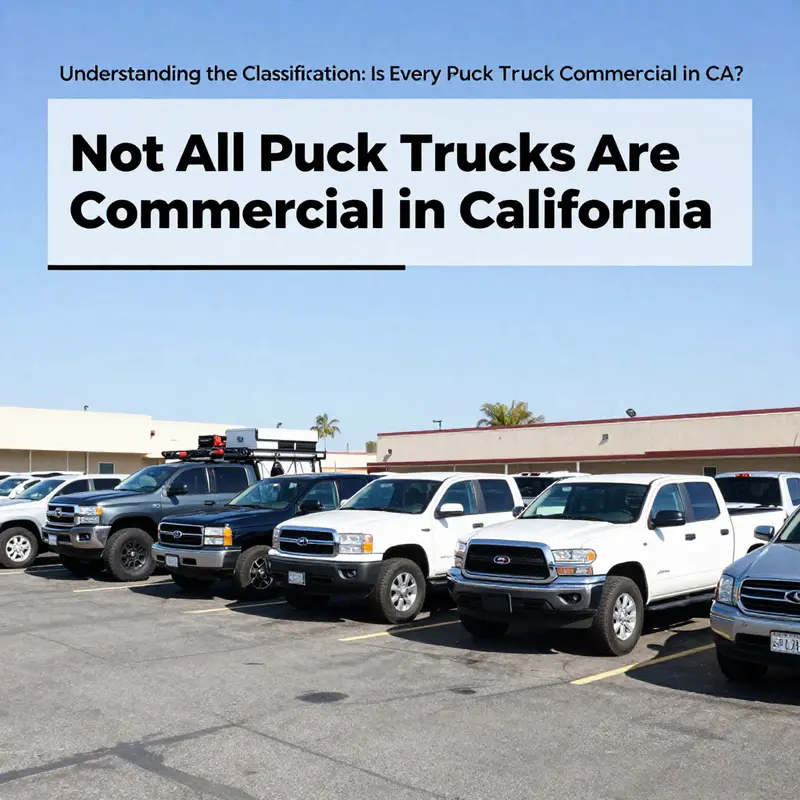
When people in California hear the term pickup truck, they often picture weekend projects, family road trips, and the ability to haul gear with ease. The stereotype leans toward versatility rather than commerce. Yet the system that governs how a pickup is registered and taxed operates on a more precise logic than popular perception. In California, a pickup truck can be registered as a passenger vehicle or as a commercial vehicle, and the choice is not dictated solely by the shape of the bed or the presence of a hitch. It hinges on how the vehicle is used in practice, what kind of work supports its daily operations, and how the law interprets those uses. This distinction matters because it affects fees, emissions requirements, regulatory permits, and even certain insurance considerations. The question Is every pickup truck registered commercial in CA? does not have a simple yes or no answer. It unfolds into a layered explanation about utilization, thresholds, and the governing rules that the state’s Department of Motor Vehicles treats as the basis for classification.
The core idea is straightforward on the surface: the registration category follows the vehicle’s intended use. The DMV looks at how the owner intends to use the vehicle and how it is actually used in practice. This approach places the emphasis on purpose rather than on the vehicle type itself. A pickup truck can be registered as a passenger vehicle if it is primarily used for personal transportation, family trips, or recreational activities where the hauling capacity is not the central function. It can be treated as commercial if its primary identity within the owner’s operations is tied to business tasks such as delivering goods, transporting equipment for a service call, or supporting a small fleet. The line between these categories is not drawn by the mere presence of a truck bed or a toolbox; it is drawn by how the vehicle functions within a business model or within private life.
A crucial piece of this puzzle is the GVWR, the gross vehicle weight rating. California uses GVWR as a significant factor in determining classification, and stories from the field show a practical rule of thumb: trucks with a GVWR over 10,000 pounds are typically classified as commercial vehicles, regardless of how they are used day to day. That threshold creates a category of vehicles that most everyday light pickups do not fall into, since many of the trucks commonly owned for personal use have GVWRs closer to 6,000 or 7,000 pounds. The existence of that threshold helps explain why a small fleet of one or two vehicles can be managed differently from a private driver who happens to own a pickup. Yet the story does not end there, because the DMV also allows for lighter trucks to be classified as commercial if they are regularly used for business tasks. In other words, a truck could remain below the 10,000-pound line yet still be treated as a commercial asset if its routine duties are inseparable from a business operation.
This nuance is not just about the weight on the axle or the heft of the engine. It involves the practical realities of how the vehicle is integrated into income-generating activities. A contractor who uses a pickup daily to transport tools between job sites, a tradesperson who visits clients with equipment in tow, or a delivery driver who uses the vehicle to shuttle goods — even if only occasionally during a workday — can push the registration toward the commercial side. On the flip side, a person who uses a pickup occasionally to haul a load for a weekend project, but otherwise relies on it for personal travel and family logistics, remains in the realm of passenger use. The DMV does not rely solely on a guess; it considers the pattern of use, the presence of a business operation, and how the vehicle contributes to that operation.
The practical takeaway from this framework is that classification is not a fixed attribute of the vehicle type. It is a label assigned in the context of the owner’s mission for that vehicle. Vehicle owners who create a regularly operated business that relies on a vehicle for service calls, on-site visits, or the transportation of crew members and equipment will likely see their pickup fall under commercial classification. The same applies to fleets that own multiple vehicles and use them to deliver goods, transport supplies, or perform tasks for customers. The presence of a business license, the frequency of use for business purposes, or the existence of a formal fleet operation becomes part of the evidentiary background that the DMV considers when evaluating classification. This does not mean that every pickup used in business becomes automatically commercial; rather, it means that the classification depends on the relationship between the vehicle and the business model’s needs.
Another layer to this discussion intersects with the notion of “light commercial use.” In many households, a pickup will transport tools, run errands for a repair or remodeling project, or shuttle equipment from one site to another. In those scenarios, the vehicle may be categorized as passenger because the business use is occasional or incidental rather than central. The distinction is not a matter of opinion but a matter of regulatory interpretation. The DMV has to ensure that a vehicle’s use aligns with the tax implications, insurance requirements, and potential access to certain routes or exemptions that apply to commercial operators. The same truck, if its role expands to a more formal business function, can transition from private to commercial without changing its fundamental design. This transition underscores the layered nature of vehicle registration in California, where function can reshuffle the classification card that governs fees, emissions obligations, and permits.
The regulatory framework is not left to memory or a casual interpretation of the rule book. The DMV encourages vehicle owners to consult official resources and use the online tools it provides to determine the most appropriate classification for their situation. This guidance recognizes that every owner’s use case is unique, and the boundaries between personal and commercial are not universal templates. The DMV’s stance is not to label trucks in a blanket manner but to assess each vehicle’s role in the owner’s life and business. That approach aligns with a broader regulatory philosophy that seeks to avoid a one-size-fits-all push and instead promote accurate representation of vehicle use in the registration system. It is a reminder that the line between passenger and commercial is drawn by intent, regular practice, and the weight of the vehicle, rather than by the pickup’s silhouette alone.
To understand where a specific pickup fits, owners can turn to the DMV for clarity. They can review the registration sections that discuss passenger versus commercial categories, look at the GVWR rating printed on the door jamb or in the owner’s manual, and examine how their business activities would be described if a permit or a business license were requested. The DMV’s resources emphasize determining classification based on actual use rather than appearance. That distinction matters in everyday life because it affects a handful of critical considerations: registration fees, insurance policy requirements, and the regulatory regime that governs emissions and safety standards. When a truck shifts from personal to commercial use, the financial and regulatory implications often shift as well. The bottom line is that not every pickup truck in California is registered commercial, but for many owners, the decision hinges on a careful audit of how the vehicle supports their livelihood.
The conversation also touches on the emotional and economic dimension of ownership. For many families, a pickup represents freedom, a practical solution to transporting gear for hobbies, camping, or DIY projects. The weight of a classification decision if the vehicle is not used as a business may seem abstract, yet the consequences are tangible: the wrong classification can lead to mismatched insurance coverage or misaligned emissions compliance. This is not a story of restrictions so much as a story of accurate reflection of reality in a system designed to track usage patterns, not just vehicle form. When a pickup is used primarily for private life, it typically earns a passport to the passenger category, with the associated fees and standards suited to private mobility and noncommercial operation. When the vehicle becomes a daily tool for a business, its passport changes to commercial, and the traveler starts to walk a different road with different tolls to pay.
One can imagine the DMV as a precise editor, reading the lines of use that owners present and then deciding which chapter best fits the vehicle’s function. The line between personal and commercial is not a rigid barcode on the side of the door; it is a narrative that unfolds through how the truck is used, who benefits from its use, and what kind of business activity it enables. In this sense, the classification is a dynamic descriptor, not a static label carved into stone at the moment of purchase. Vehicle owners who anticipate a shift in use toward more regular business tasks would naturally prepare to engage with the DMV about potential reclassification. The process is not merely an administrative hurdle; it reflects a larger principle: public-regulatory systems seek to align vehicle use with the regulatory and fiscal framework that governs it.
For readers seeking a concrete path forward, the practical steps are straightforward. First, identify the GVWR from the vehicle’s label or manual. Second, assess how the truck is used on a typical week — is it mainly for personal trips, or does it regularly support business activities like transporting tools, delivering materials, or carrying employees between worksites? Third, consult the official DMV resources or tools that help map use to classification. If there is any ambiguity, consider reaching out for guidance or requesting a classification determination. The goal is to ensure that the vehicle’s registration status mirrors its actual use, supporting both compliance and operational clarity for the owner. In a system designed to be as precise as California’s, aligning use with classification yields less friction in the long run and a fairer alignment of fees and obligations with the vehicle’s function.
The broader takeaway extends beyond the mechanics of registration. It invites readers to think about how we categorize tools and assets in everyday life. The pickup truck is a versatile instrument whose identity as private or commercial reveals how we structure economic activity around mobility. The same blend of utility that makes a pickup attractive to a family on a weekend project can also make it a reliable workhorse for a small business. The regulatory framework in California respects this duality and provides a flexible path that recognizes both the personal and professional dimensions of vehicle use. The result is a system that does not pigeonhole every pickup into a single category but instead invites owners to present a clear account of how their vehicle contributes to their day to day life and livelihood. This approach is essential for a modern economy where small businesses rely on such workhorses to perform essential tasks while households continue to rely on personal mobility. The DMV’s careful, use-based approach ensures that the classification remains meaningful, accurate, and aligned with the realities of how people live and work in California.
For those who want to dive deeper into the regulatory landscape and the ongoing conversation around emissions and regulatory clarity, there is an ongoing discourse among industry observers and policymakers about how to balance simplicity with precision in vehicle classification. The conversation touches on the challenges regulators face as technology, workloads, and business models evolve. The aim is not to overburden owners with paperwork but to ensure that the rules reflect actual usage patterns and environmental considerations. This is where the narrative connects with broader issues in the trucking and transportation sector, including how fleets are managed, how services are delivered, and how communities experience the movement of goods and people across the state. The takeaway remains stable: not every pickup is commercial by default, but the path to commercial status is defined by responsible use, clear records of how the vehicle helps generate business, and engagement with the DMV to confirm the appropriate classification.
In the end, the story of a pickup in California is not a question of aesthetics but of truth in use. The DMV’s framework emphasizes that classification should reflect reality on the road, not assumptions about a vehicle’s appearance. Anyone who wants to know where their truck stands should begin with the vehicle’s GVWR and the pattern of weekly use, then consult the official resources to confirm whether their registration aligns with that reality. When the use case shifts toward regular business activity, it is reasonable to anticipate a reclassification, along with the associated changes in fees, emissions considerations, and permits that come with a commercial designation. Conversely, when personal life dominates the truck’s use, the passenger classification tends to be the natural fit, preserving simplicity and lowering the immediate regulatory burden. The result, again, is a dynamic but accessible system that recognizes the nuanced ways people move through California — a state where roads, commerce, and daily life intersect in practical, not performative, ways. The law aims to mirror that intersection with clarity, and the path to understanding is a careful appraisal of purpose, utilization, and the vehicle’s weight profile—the elements that truly determine whether a pickup is licensed as commercial in the Golden State.
For readers who want to explore the topic from a policy and regulatory perspective, there is value in examining how these classifications affect broader automotive and transportation outcomes. As the industry evolves with new business models, electrification trends, and shifting regulatory priorities, the conversation about what constitutes a commercial vehicle in California remains a living one. It invites ongoing attention to how owners document use, how authorities verify it, and how the resulting classifications support fair enforcement, responsible environmental stewardship, and reliable mobility for households and businesses alike. The practical implications ripple through insurance considerations, fleet management, and the day to day decisions of buying, registering, and operating a pickup truck in a way that harmonizes with state rules and the realities of modern life. In this sense, the question Is every pickup truck registered commercial in CA? becomes an invitation to understand not just the letter of the law but the living, breathing application of that law in a landscape where use, weight, and purpose converge on the same road.
To connect this discussion with broader regulatory themes, consider the ongoing work around emissions and regulatory clarity in the industry. Regulatory bodies, automakers, and fleet operators continue to seek clearer guidance on how emissions standards intersect with vehicle classification and use. Exploring these conversations provides context for how owners can navigate evolving requirements without losing sight of their daily needs. For readers who want to explore that regulatory dialogue further, an industry perspective on these emissions discussions can be found in discussions centered on regulatory clarity in emissions standards. OEMs seek clarity in emissions regulations, which echoes a similar desire for straightforward, accurate classification rules that reflect actual vehicle use. This ongoing dialogue reinforces the idea that classification is not merely a bureaucratic detail but a practical, lived aspect of operating a pickup in a state as interconnected as California.
As you consider your own truck and use case, remember that the path to the right classification starts with honest documentation of how the vehicle serves your day to day life or your business. The DMV provides tools and guidance to help navigate this path. It pays to engage with those resources early, especially if your use may evolve toward more regular business activity. Misalignment between use and registration can lead to avoidable costs, complications, and confusion down the road. A thoughtful, documented approach helps ensure that your pickup is registered in a way that aligns with its true function, supports legitimate business needs if applicable, and respects the regulatory framework designed to keep roads safer, emissions lower, and commerce transparent. The practical proposition is simple: know your GVWR, understand your weekly pattern of use, consult official DMV guidance, and be prepared to adjust classification if your operational reality changes. In a state that prizes both mobility and accountability, accuracy in how we register our vehicles is a small but meaningful reflection of responsible ownership and business practice.
For readers who wish to explore further context about regulatory discussions that touch on vehicle classification and emissions, the broader regulatory landscape offers additional insights. OEMs seek clarity in emissions regulations demonstrates how industry players pursue clearer, more consistent standards that align with real-world usage patterns and the evolving fleet mix. While this chapter centers on the California DMV framework and the practical questions owners face, the longer arc of policy development underscores a shared objective: a vehicle registration system that tracks how vehicles move goods and people with fairness, simplicity, and environmental accountability. The journey from a curious question about classification to an informed, compliant registration is, in the end, a journey through the careful alignment of use, weight, and purpose — a journey that California’s regulators and vehicle owners alike are actively navigating together.
External resource for deeper context on the regulatory landscape and the interplay between vehicle use, registration, and emissions compliance can be found at the California DMV official Vehicle Registration portal. This resource provides authoritative guidance that complements the nuanced discussion presented here: https://www.dmv.ca.gov/portal/dmv/.
Between Personal Wheels and Commercial Loads: Decoding California’s Pickup Truck Registration
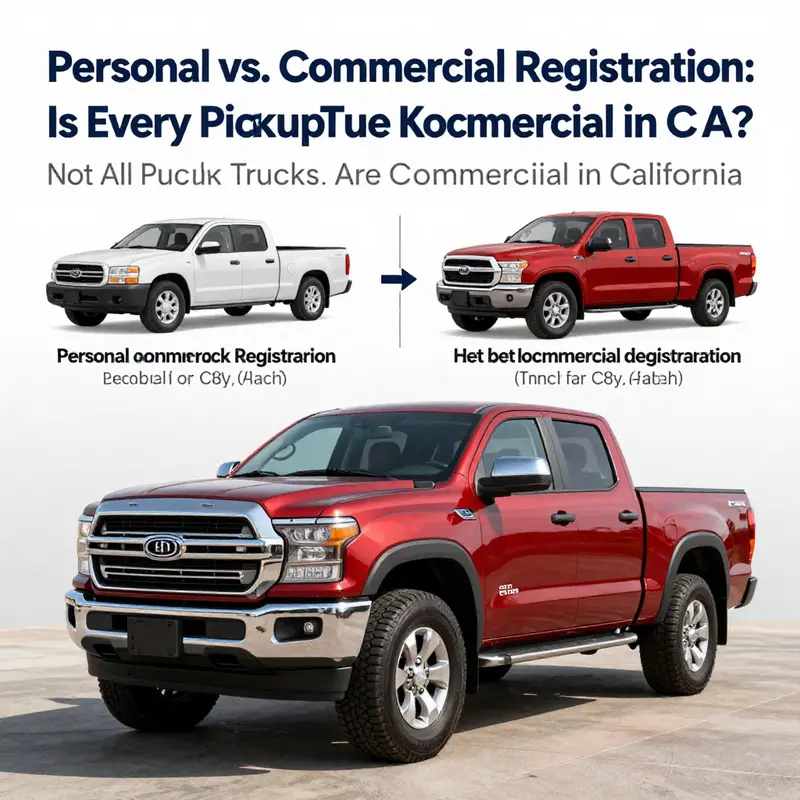
California’s pickup truck registration hinges on use, not just size; the DMV looks at whether the vehicle serves personal needs or supports a business, and registration can shift from private passenger to light commercial or full commercial depending on recurring patterns of deliveries, tools, or crew transport. A truck used mainly for family errands remains private, while regular service calls, job-site tool hauls, or fleet operations push toward commercial registration with higher fees, insurance, and compliance. The line is dynamic: use patterns change with time, so owners should document usage, consult the DMV, and consider future plans to avoid penalties. In practice, many pickups remain private for occasional work, but sustained business use can trigger a reclassification. Regulation aims to balance convenience for households with accountability for workers and safety, environmental standards, and revenue needs, and it emphasizes intent and actual practice over the vehicle’s physical specs. The takeaway: treat registration as aligned with actual and expected use, not with the truck’s bed length or horsepower, and seek guidance when plans change.
How California Decides When a Pickup Is ‘Commercial’: Use, Rules, and Real-World Implications
California treats pickup trucks like tools, not labels. Whether a pickup is registered as a commercial vehicle depends on what it does, not what it looks like. This chapter explains the practical standard the California Department of Motor Vehicles uses, the common thresholds that shift a pickup from private to commercial registration, and the operational consequences owners face when their truck crosses that line.
At the heart of the system is a simple principle: actual use matters. A pickup that carries camping gear, family members, or weekend supplies is functionally a private passenger vehicle. The same model used daily to deliver materials, tow trailers for hire, or transport equipment for a contracting business is treated as commercial. This distinction matters because commercial registration triggers additional obligations: different fee structures, insurance rules, safety and emissions compliance, and sometimes special permits. The rules aim to align regulatory responsibility with risk and public accountability. When a vehicle is contributing to commerce, it must meet higher standards.
Understanding the DMV’s approach starts with recognizing two broad registration categories. One category covers private passenger vehicles. These pickups are registered with plates and records indicating private use and are subject to standard registration fees and typical consumer insurance requirements. The other category covers commercial vehicles. These are registered under classifications that reflect business use. Commercial registration typically requires the owner or operator to demonstrate that the vehicle is insured at commercial levels, to meet certain licensing benchmarks, and to comply with specific weight, equipment, and emissions standards depending on the truck’s gross vehicle weight rating and intended tasks.
Which pickups fall into which category is rarely a mystery in practice, but it can be ambiguous at the margins. Occasional work use does not automatically convert a private truck into a commercial vehicle. A homeowner who uses a pickup to haul mulch or move furniture occasionally usually remains in the private category. The problem arises when the pickup’s day-to-day role is concentrated on business activities. Regular transport of goods, carrying tools as part of a trade, hauling trailers for hire, or operating within a fleet typically requires commercial registration. The DMV looks for patterns: frequency, compensation, and whether the vehicle is integral to a business’s operations.
Owners and operators should pay attention to three practical tests that often determine classification. First, frequency and consistency of business use. A pickup used most workdays to perform tasks for pay is likely commercial. Second, the nature of the cargo or passengers. Transporting goods for sale, delivering materials, or moving paying passengers are commercial activities. Third, the vehicle’s role in the enterprise. If the business could not operate without that pickup because it carries tools, equipment, or inventory crucial to daily operations, the pickup is a commercial asset.
When a pickup becomes commercial under these tests, several consequences follow. Registration fees may increase. Insurance must shift from personal policies to commercial policies that account for business exposure and higher liability limits. Commercial vehicles are also subject to different enforcement priorities and inspections. In some cases, vehicles used in particular trades must meet specific safety equipment standards or carry records demonstrating maintenance schedules or driver qualifications. Emissions standards may be stricter depending on the truck’s weight class and usage pattern, and businesses that operate multiple vehicles may be subject to additional regulatory frameworks.
A practical example clarifies how these rules apply. Consider a midsize pickup owned by a small landscaping contractor. If the contractor uses it daily to haul mulch, tools, and crew members between jobs, that pickup is central to the business. The DMV would expect commercial registration. The owner must obtain commercial insurance that covers employees and worksite risks. The truck may need to comply with heavier-duty emissions and maintenance rules. Now imagine that same pickup used by a hobbyist who occasionally helps friends move furniture on weekends. The hobbyist’s use is incidental and non-commercial, so private registration suffices. The functional difference between the two scenarios explains why the DMV focuses on use, not model.
Another dimension to consider is mixed-use: pickups that serve both personal and commercial roles. Mixed-use situations are common. A sole proprietor might drive a pickup to job sites during the week and take family trips on weekends. California’s approach is pragmatic: if the vehicle is regularly used for business in a way that materially supports the owner’s livelihood, commercial registration is appropriate. Owners in mixed-use scenarios should be cautious. Insurers often exclude business use under personal policies. If a claim arises while the truck is performing commercial work and the vehicle remains on a personal policy, the owner may face denied coverage or reduced payouts. Registering as commercial clarifies coverage expectations and avoids unwelcome surprises.
Business owners should also be mindful of vehicle weight classifications and how they affect regulatory obligations. Light-duty pickups used for simple delivery tasks may trigger fewer additional rules than heavy-duty pickups or chassis designed to carry large loads. Heavier vehicles often face stricter emissions testing and maintenance requirements, and they may require commercial driver qualifications for some operations. The distinction between light and heavy vehicles is technical and based on gross vehicle weight ratings. Owners should check manufacturer specifications and regulatory guidance when evaluating registration needs.
Insurance and liability considerations are among the most immediate reasons to get registration right. Commercial insurance covers exposures that personal policies do not, such as employee injuries on the job, damage to third-party property during business operations, or cargo loss. Many commercial contracts require businesses to present proof of commercial insurance before they accept work. Failing to register and insure a pickup properly can jeopardize a business relationship and expose the owner to financial risk if an incident occurs while the truck is engaged in commerce. The procedural act of commercial registration signals to regulators, insurers, and customers that the vehicle is part of a business operation.
Environmental regulation intersects with registration in important ways. Emissions standards in California are among the strictest in the United States. Commercial vehicles, especially those used frequently and over long distances, contribute more to cumulative emissions than private vehicles used intermittently. As a result, commercial registrations can trigger more frequent emissions testing and require compliance with retrofit or technology requirements. Manufacturers and fleet operators have been engaged in ongoing discussions about the clarity of emissions regulations and compliance pathways. Those conversations matter because they affect both new vehicle design and how existing pickups are retrofitted or repurposed when they become commercial assets. For readers interested in regulatory clarity around emissions, further perspective is available in discussions where original equipment manufacturers seek clarity in emissions rules and compliance expectations.
Registration also links to operational permits and local rules. Municipalities and counties sometimes impose additional requirements on commercial vehicles—such as loading zone rules, business licenses, or special permits for certain types of hauling. A pickup used in construction may need to meet local safety standards for hauling materials and comply with city or county inspection regimes. Businesses operating across multiple jurisdictions must manage a patchwork of rules. Staying informed prevents fines and operational disruptions.
Enforcement of registration rules relies on documentation and routine checks. Law enforcement and state regulators may review registration and insurance records during traffic stops, at checkpoint inspections, or during commercial vehicle enforcement actions. Businesses that ignore registration differences risk administrative penalties and potentially criminal penalties in extreme cases of fraud or willful misrepresentation. In practice, enforcement tends to focus on vehicles that pose evident risks—heavy loads, commercial signage, or frequent commercial activity in public rights-of-way—rather than on sporadic, incidental business use.
The transition from private to commercial use is often a management issue for small business owners. Owners should set internal rules about vehicle tracking, usage logs, and insurance coverage to provide clear documentation. Keeping a record of mileage, purpose of trips, and cargo types can demonstrate the nature of use if questioned. Accounting practices that allocate vehicle expenses between personal and business use also help settle registration and tax considerations. Treating the pickup as a business asset—through depreciation schedules, expense tracking, and formal registration—creates administrative clarity and reduces risk.
Leasing and fleet operations complicate classification further. Vehicles owned by rental companies or leased to businesses are typically commercial by relationship. Fleet operators must manage registration, maintenance, and compliance at scale. The economies of scale in fleet management allow operators to absorb higher regulatory costs while meeting rigorous standards. Smaller operators must balance the cost of commercial registration and insurance against the business benefits of using a pickup in commerce.
Finally, the practical rule of thumb is straightforward: if a pickup is regularly used for paid work, deliveries, or core business transport, treat it as a commercial vehicle. Register it that way, buy commercial insurance, and comply with any relevant emissions, safety, or permit requirements. If the vehicle is primarily for family, recreation, or infrequent tasks without compensation, private registration is appropriate. This rule keeps legal and financial exposure aligned with how the vehicle actually contributes to commerce.
For readers seeking the official standard, the California DMV provides guidance on how they classify and register vehicles based on intended and actual use. Refer to the state’s resources for step-by-step instructions and forms when reclassifying a vehicle or registering a pickup for the first time.
External reference: https://www.dmv.ca.gov/portal/
Internal reference: For further industry context on emissions rule clarity and how manufacturers respond to regulation, see OEMs seeking clarity in emissions regulations: https://truckplusllc.com/oems-seek-clarity-in-emissions-regulations/
Final thoughts
In conclusion, understanding that not every pickup truck in California is classified as commercial is crucial for business owners. The different registration categories, from purely personal use to heavy commercial operations, define not only the vehicle’s use but guiding requirements and costs associated with registration. Being informed about these distinctions allows logistics companies, construction teams, and small business owners to make more strategic decisions regarding their fleet and operations.