
Understanding whether a Penske truck classifies as a commercial vehicle is vital for logistics and construction professionals. With over 440,000 vehicles under its management, Penske Truck Leasing plays a pivotal role in the transportation industry by providing specialized trucks designed for freight and logistics services. Each chapter of this analysis dives deeper: we will clarify what constitutes a commercial vehicle, provide insights into Penske’s specific operations, assess their economic implications, and conduct a comparative analysis against other commercial vehicles. This multifaceted approach will equip business owners and procurement teams with the necessary knowledge to make informed decisions.
Classification in Practice: Are Leasing Trucks from Major Fleet Providers Commercial Vehicles?
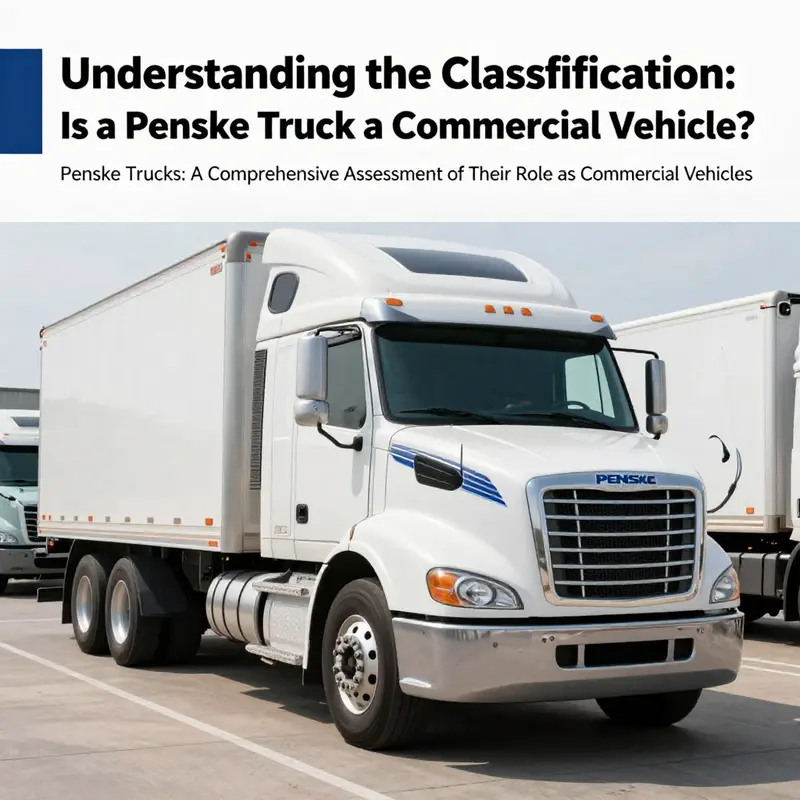
Determining whether a truck used in business is a commercial vehicle hinges on its intended use rather than appearance or ownership. A commercial vehicle is defined by its function within a business’s operations: moving goods, equipment, and materials to support commerce. These vehicles are tools for urban deliveries, regional freight, construction, and maintenance work. The distinction from a personal vehicle becomes clear when examining use cases, occupational purpose, and the regulatory framework that governs driving, insurance, and taxes. In fleets that rely on rental and leasing trucks, the classification matters for day-to-day operations and long-term planning.
A leading global supplier of commercial trucks serves business customers with several vehicle families: box trucks for urban delivery, flatbeds for construction and equipment transport, step-decks for heavier loads, and refrigerated units for perishable goods. These vehicles are designed to carry cargo rather than people and are deployed in service agreements that emphasize reliability, maintenance, and predictable operating costs. In such fleets, the economics shift from ownership to service access. The leasing model—with full-service maintenance, contract support, and flexible terms—enables businesses to scale operations with lower upfront capital. The result is a fleet aligned with commercial use: freight hauling, distribution, and logistics services.
From a policy perspective, commercial driving frameworks hinge on weight, configuration, and use in commerce. A vehicle crossing a defined weight threshold or designed to move goods often triggers commercial motor vehicle status, influencing licensing, compliance and inspection regimes, insurance terms, and tax treatment. Leasing programs reinforce safety and compliance across a large fleet, with maintenance as a core risk-management practice designed to minimize downtime. In large-scale operations, reliable maintenance is essential to safeguard supply chains. When maintenance is part of a bundled service, businesses can focus on core activities—order fulfillment, route optimization, customer service—while trusting the fleet to perform reliably.
A central implication of this classification is access to capital efficiency and modern equipment. Fleet operators gain rapid access to newer machinery, telematics, and standardized configurations without bearing the burden of ownership. By aligning vehicle use with commercial activity, companies can forecast mileage, plan capacity, and optimize routes with greater certainty, supporting stable budgeting and service levels. The scale of typical fleets drives innovations in maintenance strategy and supply-chain logistics, reducing downtime and improving predictability across box trucks, flatbeds, and refrigerated units. Such coherence supports critical operations like storefront deliveries, warehouse replenishment, and outbound distribution.
Ultimately, a truck becomes commercial through its daily work: moving goods, serving customers, and enabling production. It is not inherently commercial because it bears a business name or sits in a large corporate fleet; it becomes commercial through its function in commerce. Leasing arrangements offer flexibility to respond to demand fluctuations while maintaining focus on compliance and safety. The classification therefore connects regulatory definitions to everyday asset-management decisions, risk assessment, and strategic planning.
The Moving Engine of Business: Inside Penske’s Commercial Vehicle Fleet
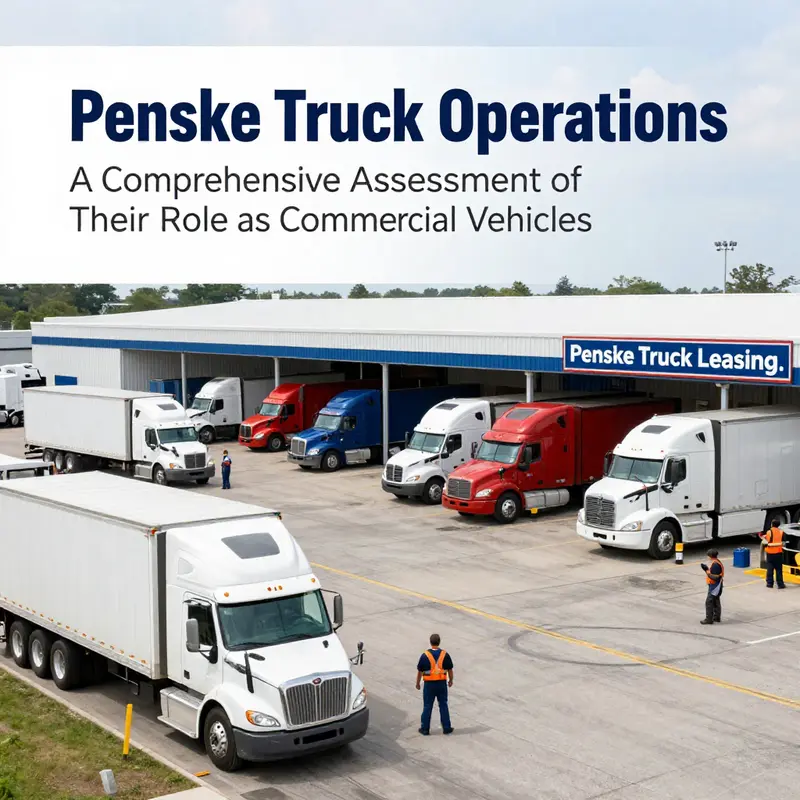
A commercial vehicle sits at the intersection of need and supply. It is a tool built not for leisure or personal use, but to move goods, connect supply chains, and sustain everyday commerce. In this context, a Penske truck is a commercial vehicle by every practical standard. Penske Truck Leasing has crafted a business model around the realities of freight, logistics, and industrial transport, presenting a fleet that reflects the scale and sophistication required by modern commerce. The distinction matters because the economic and regulatory environments surrounding commercial fleets differ from those governing passenger vehicles. When a company chooses to work with Penske, it is choosing not only equipment but a service ecosystem designed to maximize uptime, optimize utilization, and align with the evolving demands of cargo movement. In practical terms, the Penske fleet represents a moving infrastructure—thousands of assets deployed across a broad geography to serve manufacturers, retailers, distributors, and logistics providers who rely on dependable wheeled assets to keep goods flowing from point A to point B and beyond.
As fleets grow and markets shift, the sheer scale of Penske’s operations becomes a central part of the story. By early 2026, Penske Truck Leasing reports a global footprint that encompasses approximately 433,000 vehicles spread across more than 1,300 locations. This is not merely a statistic; it reflects a coordinated system that supports a wide array of services rooted in commercial need. The regional breadth—spanning North America, South America, Europe, Australia, and Asia—enables Penske to offer consistent service standards while adapting to diverse regulatory landscapes, customer requirements, and logistical challenges. The fleet’s geographic dispersion also allows for nuanced capacity planning, enabling customers to scale their transportation needs with confidence, whether they are moving raw materials to a manufacturing floor, distributing finished goods to a network of retailers, or handling last-mile delivery for more complex supply chain configurations.
At the heart of Penske’s value proposition is a carefully curated set of services designed to keep cargo moving efficiently. Full-service truck leasing provides customers with access to equipment, maintenance, and administrative support under a single agreement. Contract maintenance ensures that the vehicle remains in peak condition, reducing unplanned downtime and extending asset life. Commercial and consumer truck rentals offer flexibility for seasonal demand, project-based work, or short-term surges that might overwhelm internal fleets. Used truck sales provide an additional lifecycle option, allowing a customer to refresh or rationalize assets in a way that aligns with capital planning. Finally, transportation and warehousing management binds asset mobility to the broader supply chain, delivering optimization, visibility, and value through a single service ecosystem. Taken together, these offerings illustrate how a commercial vehicle fleet becomes more than a collection of engines and chassis; it becomes a platform for operational resilience and strategic flexibility.
The fleet’s composition and the way it is managed reveal a philosophy that prioritizes reliability, uptime, and predictable performance. Vehicles are selected not only for their immediate cargo-carrying capabilities but for their compatibility with a suite of maintenance services, warranty considerations, and the ability to plug into digital tools that monitor and optimize performance. In practice, this means a cadence of preventive maintenance, timely repairs, and asset refurbishments that keep the overall fleet productive. For customers, this translates into fewer disruptions, more precise cost forecasting, and a cleaner view of total cost of ownership—an essential consideration in industries where margins are tight and timelines are non-negotiable.
What makes this fleet especially significant is how it is being modernized to meet tomorrow’s demands without sacrificing the reliability customers expect today. In February 2026, Penske announced a strategic collaboration aimed at accelerating the adoption of electric long-haul models. While the specifics of individual partnerships can evolve, the underlying aim is clear: to decarbonize long-haul freight and to demonstrate the viability of electric propulsion at scale within a commercial fleet. This is not merely a pilot project or an isolated test; it is part of a broader industry movement toward electrification that acknowledges the environmental responsibilities and cost dynamics facing fleet operators. The move reflects a recognition that sustainability and efficiency can advance in tandem, especially when supported by a fleet with the depth of Penske’s resources, data capabilities, and customer reach. The intent is to equip customers with green options that do not force a trade-off between environmental goals and service levels. Instead, the fleet strategy seeks to integrate electrified assets into the existing mix in a way that enhances reliability, reduces fuel and maintenance costs over time, and aligns with evolving regulatory expectations and customer sustainability commitments.
Although the specifics of each collaboration may differ, the trajectory is consistent: the introduction of electric platforms to a broad and varied fleet, paired with a disciplined approach to maintenance, charging infrastructure, and total cost of ownership. The implications extend beyond individual trips. Electrification—paired with advances in energy efficiency and charging technology—has the potential to reshape route planning, depot operations, and utilization metrics. It also forces a closer look at the compatibility of charging needs with real-world duty cycles. In a fleet as large as Penske’s, even incremental improvements in energy efficiency can translate into substantial reductions in emissions, fuel expenditures, and idling time. Moreover, the push toward electrification is not happening in a vacuum. It sits within a wider industry conversation about emissions regulations, grid capacity, and the development of standard charging interfaces. In this context, Penske’s approach appears as a practical, incremental path toward a lower-carbon asset base that still delivers predictable service and performance for customers.
Beyond electrification, Penske continues to invest in the digital spine that makes a modern fleet more than the sum of its parts. An AI-enhanced fleet management platform—designed to extract actionable insight from streams of data—supports the complex decision-making that characterizes large, dispersed operations. This platform offers predictive analytics, real-time monitoring, and data-driven decision-making capabilities that tighten the feedback loop between asset health, utilization, and customer service. Predictive analytics help anticipate component wear, enabling proactive maintenance scheduling before failures occur. Real-time monitoring provides visibility into vehicle location, performance, and exceptions, creating a more responsive and transparent service experience. Data-driven decision-making translates into smarter routing, better assignment of equipment to jobs, and optimized maintenance windows. All of these capabilities contribute to higher uptime, better asset utilization, and a sharper estimation of lifecycle costs. In a business where a single delayed shipment can cascade into a web of downstream consequences, such enhancements are not luxuries; they are competitive imperatives that reinforce Penske’s role as a trusted partner for businesses that move goods across varied geographies and industries.
The human dimension of a fleet operation often goes unnoticed amid the machinery and software. Yet the purpose of a fleet is deeply practical: to enable people—drivers, dispatchers, warehouse managers, and customers—to do their work with fewer constraints and more confidence. Penske’s scale affords it the capacity to invest in training, safety programs, and process improvements that elevate the day-to-day experience of everyone involved. The fleet operates as a living system, where maintenance cycles, telematics data, and scheduling decisions converge to deliver reliability. When a business relies on timely freight, it is the consistency of the fleet’s performance that underpins manufacturing calendars, inventory planning, and retail deliveries. Penske’s model thus becomes an infrastructural asset of the broader economy, quietly enabling efficiency at every link of the supply chain.
This convergence of electrification, artificial intelligence, and comprehensive service offerings sits within a broader context in which fleet operators navigate a shifting regulatory landscape. Emissions standards, fuel efficiency targets, and other environmental considerations increasingly shape fleet procurement and replacement strategies. In this evolving environment, the question of how commercial fleets define and meet regulatory expectations becomes a shared concern among manufacturers, operators, and policymakers. The conversation is dynamic, with stakeholders seeking clarity on how emerging technologies will interact with existing obligations and future mandates. For readers tracing the implications of these shifts, one compelling thread is the way OEMs seek clarity in emissions regulations, a topic that reflects the ongoing effort to align technology development with policy signals and market expectations. OEMs seek clarity in emissions regulations.
Meanwhile, Penske’s operational footprint remains anchored in physical and organizational resilience. The expansive network of locations supports not only immediate access to equipment but also nuanced coordination across service levels, warranty management, and end-to-end logistics support. The fleet’s breadth allows Penske to respond to regional demand fluctuations while maintaining consistent standards of safety, maintenance, and performance. In practical terms, this means a customer can deploy a mix of assets tailored to evolving needs: a core set of long-haul tractors, supported by regional or local vehicles, and complemented by warehousing capacity and distribution services where needed. The result is a flexible, end-to-end solution that aligns with the strategic objectives of businesses seeking stability in an often volatile market. Within such a framework, the distinction between a simple truck and a strategic asset becomes clear: a Penske vehicle is part of a broader system engineered to sustain flow, reduce risk, and enable scale.
From a strategic perspective, the fleet is also a platform for experimentation and learning. The electrification initiatives, combined with advanced analytics and a deep service network, create opportunities to test new operating paradigms—such as optimized charging windows, dynamic routing to minimize energy use, and proactive maintenance protocols powered by predictive signals. These experiments are not theoretical exercises; they translate into measurable improvements in reliability, efficiency, and total cost of ownership that matter to customers, shareholders, and employees alike. The journey toward a cleaner, smarter, and more resilient fleet is ongoing, shaped by continuous data feedback, collaboration with manufacturers and service providers, and ongoing attention to the realities of commercial transport—the duty cycles, load profiles, and customer expectations that define how goods move through economies. In this light, Penske’s fleet is more than a collection of vehicles; it is a moving system of capability, readiness, and ongoing transformation that underpins modern freight and, by extension, modern business itself.
For readers seeking direct, current information about Penske’s fleet and technology, the official site provides a comprehensive overview of services, capabilities, and updates as they unfold across regions and markets. As the fleet grows and new technologies mature, the story remains one of utility, reliability, and continuous improvement—the essential attributes of any enterprise that relies on moving goods to keep the world’s supply chains productive. The Penske fleet, in its scale and its evolving capabilities, embodies the practical reality that a well-managed commercial vehicle is not just a machine; it is a strategic asset that enables commerce to proceed on time, every day. And in this sense, the question, “Is a Penske truck a commercial vehicle?” resolves itself through the tireless work of the fleet, the ingenuity of its operations, and the steady march toward a more data-enabled, sustainable future.
External resource for further context: https://www.pensketruckleasing.com
The Moving Engine of Commerce: Penske Trucks, Commercial Fleets, and the Economic Pulse of Freight
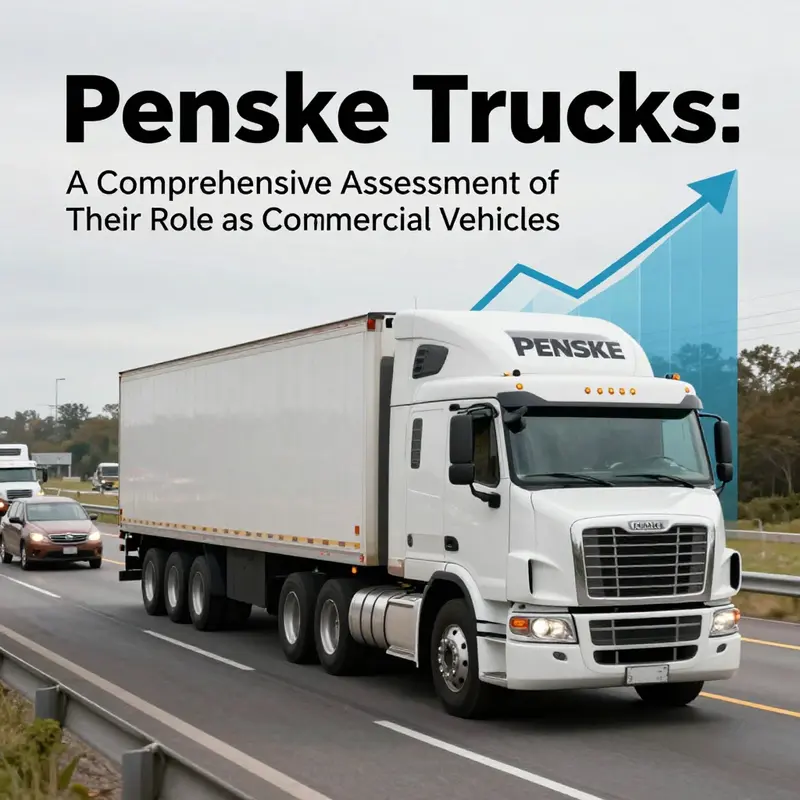
When people ask whether a Penske truck is a commercial vehicle, the answer rests on how the truck is used, not merely how it looks. Penske Truck Leasing operates within a category defined by purpose and function: vehicles built to move goods, serve businesses, and keep supply chains intact. A Penske truck is designed for payload, durability, and uptime rather than passenger transport. It is deployed through full-service leasing, contract maintenance, and rental arrangements that place it squarely in the orbit of commercial logistics rather than personal mobility. In this sense, Penske’s fleet embodies the core characteristics that distinguish commercial vehicles: purpose-built capability, fleet management infrastructure, and a business model that aligns vehicle use with organizational objectives rather than private travel. The evidence for this classification is not merely semantic. Penske’s footprint—operating more than 440,000 vehicles across a global network—reflects a scale of operations that is feasible only when the vehicle is integrated into a business function, not a personal one. The fleet serves a wide array of industries where goods flow through the economy, from raw materials to finished products, and the fleet’s management needs encompass uptime guarantees, maintenance cycles, fuel efficiency considerations, and route optimization that maximize asset productivity. In short, the Penske truck is a tool of commerce, a mobile asset whose value resides in the business processes it enables, not in its appearance or its use as a private conveyance.
Beyond the vehicle itself, the broader concept of a commercial vehicle hinges on how the asset fits into a transport ecosystem that moves goods efficiently and predictably. Penske’s offerings—beyond simply supplying trucks—include fleet analytics, maintenance programs, and scalable mobility solutions that help businesses size capacity to demand. This is particularly relevant for sectors like retail, manufacturing, and e-commerce, where the cadence of orders and the variability of peak seasons require flexible, reliable transportation partners. The integration of leasing with service and technology helps firms convert capital expenditure into operating expenditure, while preserving control over service levels, compliance, and risk management. In the way these services are orchestrated, Penske trucks become not just machines on a highway but nodes in a network that absorbs shocks, adapts to demand, and sustains throughput.
The economic impact of a large, disciplined commercial fleet unfolds across multiple layers. First, there is direct job creation in the broad ecosystem that keeps trucks on the road: drivers, technicians, fleet managers, and dispatch professionals all rely on a steady flow of work. Then there is the expansive network of ancillary services—maintenance shops, parts suppliers, fueling and charging infrastructure, and logistics software—that underpin daily operations. The result is a ripple effect that enhances productivity for customers who rely on predictable delivery schedules and consistent inventory turnover. When a business can depend on timely delivery, it can plan production runs with greater confidence, reduce safety stock, and accelerate time-to-market. In turn, suppliers gain certainty about demand signals, enabling more stable employment and investment in regional economies. The loop is self-reinforcing: a reliable commercial fleet enables leaner inventories, which boosts throughput, which stimulates investment in people and facilities that sustain the fleet’s reliability.
Penske’s model also underscores how technology and services transform the economics of trucking. Modern fleets rely on telematics, route optimization, predictive maintenance, and real-time visibility. These tools reduce downtime, extend the life of assets, and lower the per-mile cost of operation. For operators, the appeal goes beyond the sticker price of a rental or lease. The true value lies in the reduction of unplanned maintenance, the ability to forecast spare parts needs, and the certainty that a vehicle will perform on schedule. Such reliability is crucial in today’s time-sensitive supply chains, where delays cascade through production lines and into consumer delivery windows. In practice, the economics of fleet design evolve from a simple purchase decision into a continuous optimization problem: how to align capacity with demand, how to load factor the fleet for high utilization, and how to balance upfront capital with ongoing service commitments.
Electrification introduces a potent, if complex, layer to this economic calculus. The push toward electrified heavy-duty trucks reflects a broader imperative to reduce emissions and lower long-term operating costs. For Penske and similar fleet operators, electrification is not merely a green project; it is a strategic shift that promises lower fuel expenses and potentially lower maintenance costs over the life of a vehicle. Yet the financial math is nuanced. Upfront capital costs for electric powertrains, charging infrastructure, and depot upgrades can be substantial. The deployment pace depends on the availability of affordable batteries with the needed energy density and durability, as well as the readiness of the grid to supply reliable, fast charging without compromising reliability. Research published in Nature Energy in 2025 emphasizes that decarbonizing trucks via electrification requires a substantial expansion of renewable electricity generation and corresponding grid upgrades. These investments, while transformative, introduce lead times and funding challenges that can affect the timing of fleet renewals and the rate at which operators migrate from internal combustion to electric drivetrains. The resulting economics require careful capital budgeting, long-term planning, and a clear understanding of the total cost of ownership across different propulsion options.
The labor and regional implications of electrification are equally meaningful. As fleets transition, the demand for trained technicians shifts from traditional mechanical roles toward battery maintenance, high-voltage safety, thermal management, and charging-system diagnostics. Regions with dense fleets and strong maintenance networks may see accelerated investment in retraining and new industries, particularly around battery supply chains and charging infrastructure. At the same time, communities reliant on conventional automotive repair ecosystems may need support to adapt to new skills and new equipment. For Penske, this means not only choosing the right moment to electrify but also collaborating with partners and local communities to ensure that the workforce can transition smoothly. The goal is to preserve employment while aligning job growth with the needs of cleaner, quieter, and more energy-efficient freight operations.
These shifts also interact with broader market dynamics. When capacity in the trucking market is uneven—periods of excess capacity followed by tight demand—fleets and shippers alike seek ways to maximize asset utilization and stabilize margins. The tension between capacity and utilization shapes investment strategies, from when to refresh a fleet to how to deploy telematics and optimization tools. This is not merely a cyclical fluctuation; it reflects structural changes in how freight is moved, funded, and managed. Industry analyses discuss these dynamics in terms of capacity, utilization, and timing of equipment purchases, and they illuminate why large operators like Penske pursue integrated solutions that bundle vehicles, service, and analytics into a single, predictable offering. For readers who want a view into these market tensions, the concept of excess capacity in the trucking market insights provides a useful frame: https://truckplusllc.com/excess-capacity-in-the-trucking-market-insights/.
Policy, incentives, and infrastructure also shape the economics of Penske’s fleet decisions. Emissions regulations, safety mandates, and incentives for cleaner technology influence procurement choices, contract structures, and maintenance planning. A contract that includes a future-ready powertrain and charging capability offers protection against regulatory risk while enabling a smoother transition for customers who depend on reliable transportation. The financial impact of these policy environments shows up in pricing models, depreciation schedules, and the timing of fleet replacement cycles. In an ecosystem where customers rely on predictable service levels, the provider’s ability to manage risk through robust maintenance, scalable capacity, and proactive technology adoption becomes a key differentiator.
In weaving together the technical, economic, and social strands, it becomes clear that Penske trucks are more than mere vessels for goods. They are integral components of a broader system that supports job creation, accelerates supply chain resilience, and steers investment toward new technologies and workforce opportunities. The fleet’s scale—global in reach, diverse in application—gives it a unique leverage. It can spur efficiency across multiple industries, influence the cost structure of freight movements, and guide the pace at which cleaner propulsion, smarter logistics, and smarter energy use become standard practice. The question of a Penske truck’s classification as a commercial vehicle thus becomes a doorway into understanding how commercial fleets function as economic engines. They are the interface between physical movement and economic value, translating capital, labor, and technology into reliable services that keep commerce flowing. As the freight system continues to evolve—with electrification, data-driven operations, and shifting labor demands—the Penske model stands as a case study in how a fleet business can balance capital intensity with service quality, adaptability, and sustainable growth.
External resource note: For deeper insight into the economics of electrification and grid impacts on trucking, see Nature Energy Research: https://www.nature.com/articles/s41560-025-02573-9
Fleet Judgment: Navigating the Penske Advantage in the Commercial-Vehicle Landscape
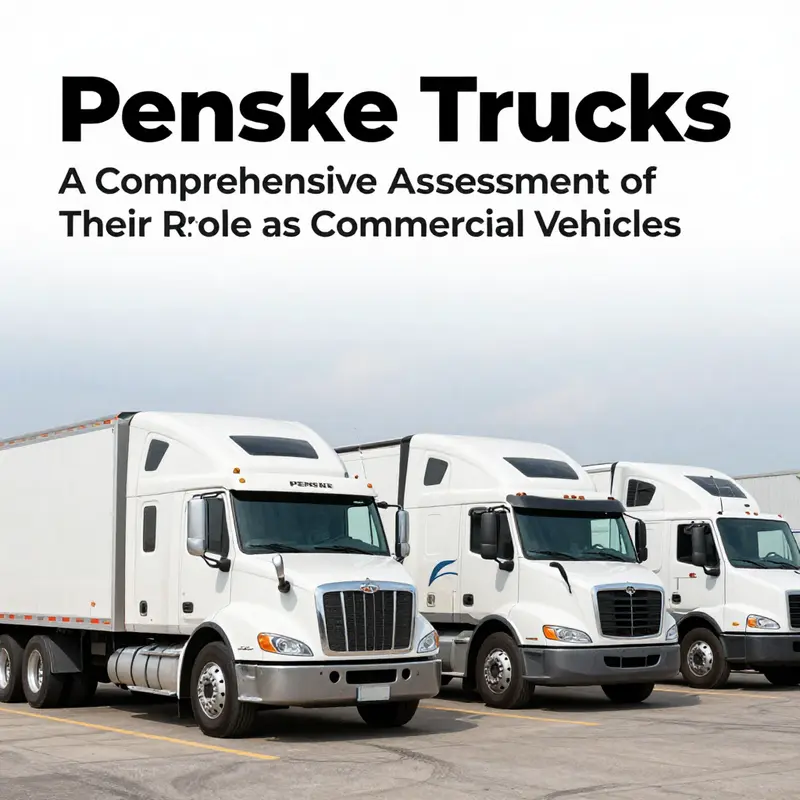
Is a Penske truck a commercial vehicle? The straightforward answer is yes. A Penske truck is built, operated, and priced to serve business needs, not personal transport. A commercial vehicle is defined by its primary use: the movement of goods or people for hire or business, with a design geared toward cargo handling, heavy-duty performance, and regulatory compliance. Penske Truck Leasing positions itself in precisely that space. It operates a vast, modern fleet aimed at freight hauling, logistics, and transportation services for corporate customers, distributors, manufacturers, and other fleet-heavy operations. In practice, tens of thousands of Penske vehicles are deployed across large and small markets, serving as the backbone of supply chains, regional distribution networks, and cross-border operations. The Penske fleet is not a generic vehicle pool; it is a purpose-built tool for moving goods, enabling predictable service levels, and reducing the risk that an unexpected breakdown will cascade into missed deliveries and dissatisfied customers. The driver of this alignment is the underlying business model: a fleet provider that treats uptime as a product, not an afterthought, and that designs its offerings around the continuous flow of commerce rather than ad hoc vehicle rental needs.
Penske Truck Leasing sits at the intersection of fleet ownership, maintenance discipline, and logistics enablement. It is described in materials as a leading global transportation services provider that specializes in commercial vehicles, offering full-service truck leasing, contract maintenance, commercial truck rentals, and related services. The scale behind that description is meaningful: a global footprint and a fleet numbering in the hundreds of thousands, all oriented toward delivering reliable platforms for business teams that depend on predictable capacity, timely service, and compliant operation. This is not merely a rental arrangement; it is a comprehensive service ecosystem designed to keep goods moving. For a business confronting regular delivery windows, seasonal spikes, or multi-site distribution, the value proposition translates into more than just the vehicle. It is the combination of a modern, well-maintained fleet with contract maintenance, 24/7 support, and dedicated account management that makes a difference when downtime is costly and logistics schedules are non-negotiable.
To understand how Penske fits within the broader commercial-vehicle landscape, it helps to consider the practical dimensions of its offering. Fleet customers are not choosing a single asset; they are investing in a complete operating system. The core advantages include 24/7 roadside assistance, a dedicated account manager to coordinate service across locations, and advanced telematics that provide real-time visibility into vehicle health, mileage, fuel use, and location. When a truck is down, the cost can extend beyond a simple repair bill; it can ripple through delivery commitments, customer satisfaction, and contract penalties. Penske’s integrated approach seeks to minimize that ripple by combining preventive maintenance with proactive diagnostics and a network designed to respond quickly across broad geographies. For a business with a national footprint, that level of service integration translates into measurable gains in uptime, predictability, and the ability to scale operations without sacrificing reliability.
Cost structure is another axis where Penske’s positioning matters. The premium service model, with comprehensive maintenance coverage and the depth of logistical support, often results in higher ongoing costs than what some lower-touch rental options can offer. Yet the trade-off frequently appears in the form of reduced breakdown rates, shorter repair times, and more consistent vehicle availability. In markets where reliability directly correlates with on-time deliveries and customer satisfaction, the premium can be justified by the cost of downtime a less robust option would incur. In contrast, budget-conscious operators may find value in more flexible leasing terms or shorter rental engagements elsewhere. Those options can deliver lower headline rates but also come with increased exposure to unplanned maintenance, scheduling friction, and limited local coverage during peak periods. The calculus remains one of risk versus reward and depends heavily on an operator’s tolerance for downtime, the scale of cross-market activities, and the strategic importance of predictable uptime to service level agreements with customers.
Vehicle quality and availability further distinguish Penske in the field. A modern, uniform fleet reduces the complexity that comes with mixed-model operations and variable maintenance histories. While some regional providers may operate older or more varied fleets, Penske emphasizes newer models and standardized maintenance practices, with a national network that facilitates vehicle access across states and provinces. For companies with multi-location requirements or cross-border logistics, this national footprint is a concrete practical benefit. Uniform fleet quality also supports compliance with evolving safety standards and emissions requirements, enhancing not only driver safety but also the company’s public-facing reputation as a reliable transport partner. The result is a logistics backbone that can adapt to shifting demand, new regulatory requirements, and fluctuating fuel economies without compromising service.
Yet any portrait of a large fleet provider is incomplete without considering the human dimension. Employee feedback, including driver experiences, points to important nuance. In commentary captured over recent years, work-life balance and management practices have surfaced as notable pain points for drivers within large, centralized fleets. Ratings on some public platforms indicate a middling perception of work-life balance and managerial responsiveness, raising considerations about scheduling flexibility, home time, and the pace of compensation growth. These factors matter not only to driver morale but to retention, recruitment, and ultimately the reliability and throughput of the fleet. A fleet that struggles to retain experienced drivers may experience higher turnover, more onboarding, and inconsistent maintenance quality—factors that can indirectly influence uptime and service levels. The reality is that a commercial-vehicle provider’s strength is not only the mechanical condition of its trucks but also the stability of the teams behind them and the culture that supports consistent operations.
Taken together, the decision to align with Penske or to explore other providers hinges on a business’s specific needs and risk appetite. For large-scale, multi-site operations where uptime is mission-critical and the budget can absorb premium service, Penske’s integrated, reliable platform offers a compelling value proposition. The bundled maintenance, real-time diagnostics, dedicated account oversight, and the breadth of coverage across a national network can reduce the cascading costs of failures and delays. For operators pursuing more flexible, short-term arrangements or aggressive cost containment, other providers—especially those offering lower upfront rates or more modular terms—may be attractive options. The core consideration is not just the price per mile or per day, but the total cost of ownership over the term of the lease or rental, the level of operational risk the business is willing to absorb, and how critical continuous capacity is to fulfilling customer commitments. In this sense, Penske’s strengths align with businesses that view transport as a strategic function—an area where reliability, scale, and integrated service can yield dividends in service quality and market competitiveness.
Market dynamics also shape how a fleet decision is framed over time. Shifting patterns in trailer orders, capacity utilization, and the pace of asset replacement influence how companies plan capital expenditures and leasing commitments. Understanding these trends is inseparable from evaluating a fleet partner’s value proposition, because the preferred mix of owned versus leased equipment can change as demand cycles evolve. For readers exploring this topic, further reading on how broader trucking trends influence fleet decisions can be insightful in context with Penske’s approach. External resources can illuminate how fleet providers articulate value in terms of uptime, maintenance coverage, and network reach, offering practical benchmarks as you compare options. External reference: https://www.penske.com
Final thoughts
This comprehensive examination reaffirms that Penske trucks are indeed commercial vehicles, designed to support businesses in their transportation needs. Their specialized equipment, extensive fleet management services, and impact on the economy highlight their importance in the logistics and construction sectors. By understanding the operational strategies and economic contributions of Penske trucks, logistics and business owners can make informed choices that enhance their delivery systems and operational efficiencies.