
The classification of fire trucks raises significant questions among logistics and transportation stakeholders. Understanding the nuances of a fire truck’s status as a commercial vehicle is crucial for fleet managers, procurement teams, and small business owners operating delivery fleets. This article dissects key dimensions—defining commercial vehicles in relation to fire trucks, comprehending their roles in emergency services as commercial entities, navigating the regulatory frameworks that govern their operation, and comparing fire trucks with other commercial vehicles on specifications and usage. Each section offers insights that empower the reader to grasp the importance of this classification in operational contexts.
Beyond the Siren: Reconciling Fire Trucks with Commercial Vehicle Regulation on Public Roads
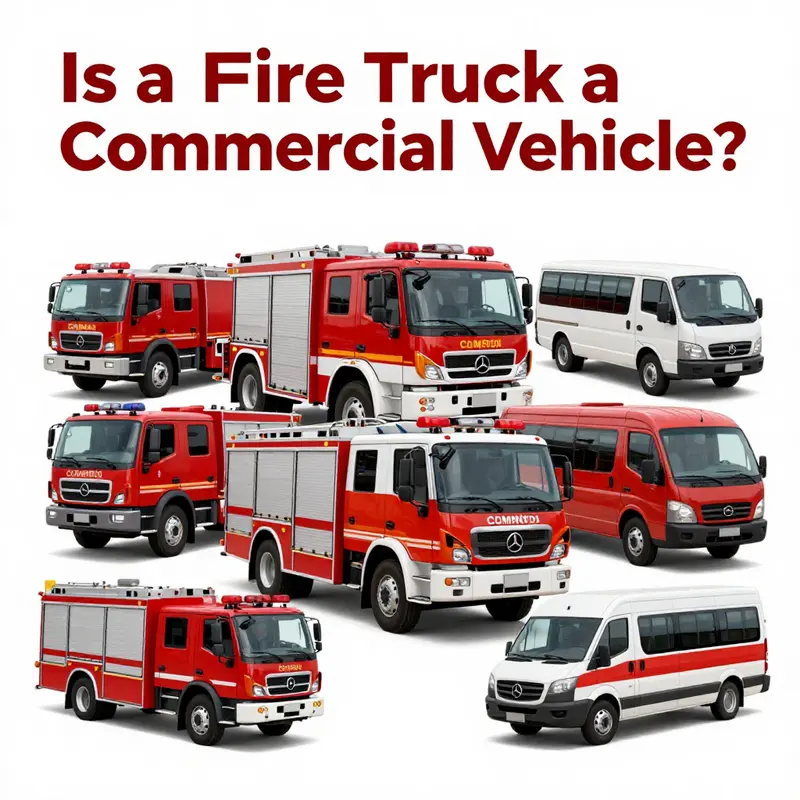
When a fire engine roars into a street, it brings not just a blaze-fighting mission but a long-standing regulatory question: is this vehicle a commercial vehicle, and if so, under what rules must it operate? The answer is nuanced and rests on how regulators define “commercial vehicle” in relation to the practical realities of emergency response. Fire trucks are specialized emergency apparatus built to carry crews, equipment, water, and often pumping capacity. They are constructed on heavy-duty chassis that resemble or exceed the platforms used for many commercial work trucks. Yet their primary purpose is not profit or the movement of goods for pay. This tension—public service versus the commercial vehicle framework—spawned a body of guidance that recognizes the essential safety and logistical demands of emergency response while acknowledging the size and operating characteristics that put these machines on the same roadways as large, weighty commercial trucks. In many regulatory systems, that convergence is not a paradox but a practical reality, and it shapes how fire departments, contractors, and regulators approach training, maintenance, and road safety.
To understand where a fire truck sits in the spectrum of vehicle classifications, it helps to examine a core definition used by the U.S. Department of Transportation and related agencies. A commercial vehicle is often defined by two key criteria: first, a vehicle used to transport people or property for compensation, and second, a vehicle with a gross vehicle weight rating (GVWR) exceeding 10,000 pounds. The first criterion is straightforward for typical for-hire trucking operations, but it becomes more nuanced for municipal fleets that do not charge for firefighting services and do not operate strictly for profit. The weight threshold, however, is a blunt but widely applicable marker. A large fire apparatus frequently exceeds the 10,000-pound GVWR threshold, placing it within the same weight class as many heavy-duty commercial trucks. In practical terms, this means that, for federal regulation purposes, a fire engine can be treated as a commercial vehicle when it is operated on public roads for non-personal use and meets weight or capacity benchmarks. The implication is not that every fire department must treat every mission like a commercial freight run, but that the underlying safety and maintenance standards applicable to CMVs should be considered where these vehicles operate on the general highway system.
The regulatory landscape does not reduce the fire service to a single, uniform box. Jurisdictional nuance matters. Some regions emphasize the emergency purpose and grant exemptions or modified requirements during active operations, while still requiring compliance with core safety standards when the vehicle is in non-emergency status or used to shuttle personnel, equipment, or supplies beyond the immediate incident scene. Others rely on the GVWR demarcation as a practical gating factor for applying CMV regulations. In this view, a fire truck over 10,000 pounds is more likely to be treated as a CMV, with the attendant expectations for vehicle maintenance, inspection cycles, and operator qualifications. The same vehicle, when acting in a strictly internal municipal role or in a scenario where the GVWR is understated or a lighter-duty apparatus is employed, may fall outside certain commercial rules. This fluidity mirrors the broader truth about regulatory definitions: they are designed to accommodate real-world variation, not to insist on an inflexible label that ignores the vehicle’s size, use, and impact on road safety.
One practical frame for understanding these distinctions is to look at how the regulatory bodies enforce and supervise commercial vehicle standards. When fire trucks are classified as CMVs due to weight or non-personal use, they fall under the same umbrella that governs long-haul trucks and freight carriers. This umbrella includes driver qualification standards, hours-of-service rules, routine safety inspections, and periodic maintenance requirements. The logic is straightforward: large, fast-moving vehicles with substantial mass can cause equally serious harm if they are not properly maintained or operated by trained drivers. Busier roads, urban traffic density, heavy turning radii, and the stop-start nature of emergency response all amplify risk, making uniform safety expectations sensible across vehicle classes that share road space. In practice, departments may implement DOT-style training programs or partner with local enforcement to ensure that drivers have the requisite knowledge of vehicle dynamics, braking performance, and tire maintenance. The goal is not to constrain life-saving work but to do it with clear, predictable safety standards that protect responders and the public alike.
In this context, the idea that fire trucks are purely non-commercial because they serve a public safety function does not fully capture the regulatory nuance. The classification is driven less by mission purpose and more by measurable factors like weight, capacity, and how the vehicle is used on public roads. The presence of specialized gear and water-carrying capabilities does not negate the fact that, when on the highway or arterial streets, these machines operate in a space occupied by commercial traffic. The heavy, high-capacity builds that characterize most modern fire apparatus bring them into the same performance envelope as many commercial vehicles, with similar braking demands, acceleration profiles, and the need for robust maintenance regimes. This pragmatic alignment supports the argument that, for regulatory purposes, the fire service often functions within the framework designed for CMVs, even as it retains a unique set of exemptions or adaptations for emergency scenarios.
It is also important to recognize the regulatory ecosystem that shapes oversight. The Federal Motor Carrier Safety Administration (FMCSA) is a central figure in defining and enforcing CMV safety standards. Its framework includes requirements related to vehicle inspection, driver qualification, hours of service, and post-crash reporting, among others. Emergency vehicles—fire trucks included—fit within this broader regulatory architecture because they operate on public roads and pose safety concerns comparable to other large vehicles whenever they are subject to the same road environment. The enforcement perspective might involve highway patrols and state police conducting checks that focus on weight compliance, proper maintenance, and driver readiness. Fire departments, in turn, have an interest in aligning with these standards not only to meet legal obligations but to foster a culture of safety, accountability, and readiness that enhances response effectiveness.
The practical implications of these regulatory considerations reach into everyday operations. When a fire department funds and maintains a heavy apparatus, it faces decisions about eligibility for certain training programs, the cadence of safety inspections, and the schedule for preventative maintenance. If a vehicle is treated as a CMV, those decisions align with broader commercial fleet practices—mechanic certifications, tire wear monitoring, brake system checks, and compliance documentation become routine. On the other hand, emergency exemptions and mission-specific accommodations may relieve some constraints during active responses. The balance between these modes reflects a broader policy aim: ensure that life-saving services are not hindered by bureaucratic rigidity while still anchoring those services in a framework of safety and accountability that protects the public and the responders themselves.
The regulatory conversation also plays into how departments plan for the future. Procurement, fleet management, and budgeting are influenced by the classification because CMV status carries different insurance implications, maintenance expectations, and driver training needs. Fire departments often pursue a hybrid approach, adopting commercial fleet practices for safety and reliability while preserving the critical emergency mission’s flexibility. In this sense, the question of whether a fire truck is a commercial vehicle becomes less about a single label and more about the spectrum of compliance responsibilities the vehicle entails at different times and in different jurisdictions. Such an approach supports consistency across the road network—courtesy of standardized inspection intervals, uniform driver competency expectations, and a common language for reporting incidents and maintenance histories.
As the regulatory docket evolves, a few cross-cutting themes emerge that help connect the chapter’s core ideas to the broader arc of the article. First, the size and weight of modern fire apparatus are not incidental details; they are the primary reasons why many regulators apply CMV-oriented standards. second, the operational reality of emergency response—rapid acceleration, frequent braking, and heavy vehicle dynamics—demands a safety framework that can accommodate high-risk scenarios without stranding critical response capabilities. third, definitions are not static; they shift with changes in technology, fleet composition, and public policy goals. This dynamic underscores why even advisory discussions around emissions or regulatory clarity, such as those reflected in industry conversations about emissions regulations for heavy vehicles, matter to fire departments and the broader public. A single change in how GVWR is calculated, or how a state interprets non-personal use, can ripple through training programs, maintenance schedules, and daily dispatch practices.
The chapter’s synthesis points to a practical conclusion. In most regulatory systems, a fire truck is a commercial vehicle when operated on public roads for non-personal purposes and when it meets the weight or capacity thresholds that trigger CMV rules. Yet, the fire service maintains a distinct identity shaped by public safety obligations, emergency exemptions, and a fleet culture that emphasizes rapid response and resilience. Rather than forcing a binary classification, regulators and fire departments often negotiate a compliant middle ground where safety standards are adopted, responsibilities are clarified, and emergency operations proceed without undue impediment. This approach fosters accountability while preserving the essential agility of fire apparatus in the field. It also highlights a broader truth about road safety: large, purpose-built vehicles that move people and equipment—whether in commerce or in service to the public—benefit from shared standards that reduce risk and improve outcomes.
For readers navigating the intersection of policy, fleet management, and daily emergency response, the practical takeaway is that the commercial vehicle label, while meaningful, is part of a larger regulatory mosaic. Fire trucks sit at the boundary between the public safety mission and the safety framework that governs heavy vehicles on highways. Their classification may hinge on GVWR, use-case, and jurisdiction, but the underlying aim is consistent across perspectives: to ensure that these powerful machines operate with predictable safety, reliability, and accountability. When policy discussions turn to emissions, maintenance standards, or cross-border regulatory alignment, the same core principles apply: safety first, clarity in rules, and a shared commitment to protecting both responders and the communities they serve. This perspective helps explain why emergency vehicle operations often engage with broader regulatory conversations and why, in practice, a fire engine embodies elements of both public service and commercial vehicle regulation.
In the spirit of bridging regulatory theory with field practice, consider the ongoing dialogue around emissions and heavy-vehicle classifications. The industry continuously seeks clarity on how evolving emissions standards intersect with emergency operation needs and fleet modernization timelines. This ongoing conversation—captured in discussions such as OEMs seek clarity in emissions regulations—highlights that definitions are living concepts shaped by technology, policy priorities, and the realities of road use. Embedded within this dialogue is a reminder that the fire service benefits from clear, consistent guidance that aligns public safety imperatives with sound fleet management. The result is a path forward where fire departments can upgrade and maintain their apparatus with confidence, knowing the regulatory expectations are clear, enforceable, and tied to tangible safety outcomes.
For readers seeking authoritative, policy-oriented context beyond the chapter’s scope, the U.S. Department of Transportation provides a foundational framework that underpins these discussions. While the specifics can vary by jurisdiction and incident context, the DOT’s guidance helps illuminate how commercial vehicle definitions apply to emergency vehicles like fire trucks and why the lines between public safety and commercial regulation often blur in practical road use. A deeper dive into these definitions and their regulatory consequences can be found in official DOT materials, which describe how CMVs are identified, inspected, and kept roadworthy across the United States. This external resource anchors the chapter’s conclusions in a broader regulatory landscape and invites readers to explore how weight, purpose, and road safety converge in the real world.
External resource: U.S. Department of Transportation guidance on commercial vehicle definitions and emergency vehicle considerations can be consulted for a broader regulatory frame: https://www.transportation.gov
Internal link reference: For ongoing discussions about how heavyweight regulation intersects with emissions standards and vehicle design, see the industry dialogue around regulatory clarity at OEMs seek clarity in emissions regulations. OEMs seek clarity in emissions regulations.
On the Line: Fire Trucks at the Crossroads of Public Safety and Commercial Vehicle Regulation
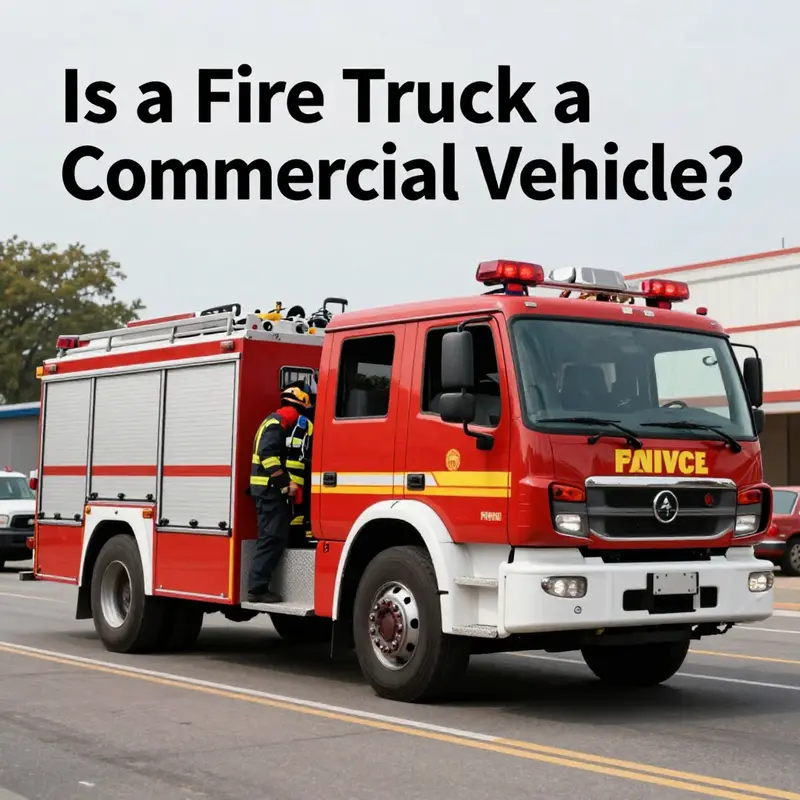
Fire trucks sit at a unique intersection between public service and the road-regulation framework that governs every vehicle with a engine and wheels. They are powered by the imperative to save lives, protect property, and manage complex emergencies. Yet when we ask whether a fire truck is a commercial vehicle, we are not simply engaging in a semantic debate. We are peering into how regulatory systems, safety standards, and practical vehicle design align to support a mission that is both public and technically commercial in nature. The answer is nuanced: in many jurisdictions, fire trucks are indeed treated as commercial motor vehicles (CMVs) for regulatory purposes, especially when used for non-personal, organizational operations and when they meet certain weight or passenger thresholds. But that classification is not a blunt decree carved in stone; it is a living categorization that shifts with context, purpose, and the laws of the land being applied. What remains constant is the function of the vehicle and the choices that design and regulation push the vehicle to make in the field of emergency response. In thinking through this topic, it helps to begin with what a commercial vehicle is meant to capture. The broad intent of CMV regulation is straightforward: it targets vehicles that carry goods or passengers on public roads, with the aim of ensuring safety, reliability, and predictable behavior in mixed-traffic environments. The USDOT and the FMCSA have built a framework around those concerns, prioritizing driver qualifications, hours-of-service, vehicle maintenance, and the performance standards that keep utility and safety in balance when large or heavy vehicles share the street with everyday transportation. Within that framework, emergency response vehicles occupy a special niche: they are designed to do more than transport— they are mobile dispatch centers, water supply hubs, rescue platforms, and command posts, all in a chassis that resembles a heavy-duty commercial truck. The chassis, the drivetrain, and the overall scale of a fire apparatus are not incidental; they are deliberate choices that enable rapid deployment, sustained operation, and resilience under the stress of real-world incidents. The practical upshot is that, in many places, once a fire truck exceeds a certain gross vehicle weight rating (GVWR) or accommodates a required passenger capacity, it falls under CMV safety standards as a matter of federal policy. To illustrate, when a fire apparatus moves beyond the 10,000-pound GVWR threshold, it becomes squarely a CMV in the eyes of federal regulations. This is not just a bureaucratic line; it translates into driver qualification expectations, hours-of-service rules during long incident responses, and a rigid maintenance regimen designed to prevent mechanical or operational failure at the worst possible times. Yet those same standards are tempered by the reality that fire departments operate with a public safety mandate. In many jurisdictions, emergency vehicles enjoy exemptions or special provisions that acknowledge the urgent nature of their mission. The regulatory picture is thus a dance between strict safety requirements and practical allowances that recognize the need for swift, on-demand response. The design ethos of a fire truck reinforces this balance. It is built on heavy-duty commercial chassis, with pumps, hoses, ladders, and water or foam containment systems that enable firefighting and rescue operations at a scene. The equipment load is not incidental either; the vehicle becomes a portable toolkit on wheels, capable of delivering water, power, lighting, stabilization, and life-saving equipment to complex scenes. The same design philosophy that makes a fire truck robust for fire suppression also makes it a challenging vehicle to fit within the standard consumer or small-business vehicle category. In other words, its form and function push the vehicle toward the commercial end of the spectrum, even as it serves a public mission. The regulatory relationship, then, is not merely about weight or possession of a fire department unit. It concerns how the vehicle is used on public roads. When a fire department operates a truck for non-personal purposes, that situates the vehicle squarely within CMV concerns. If the vehicle’s weight or passenger carrying capacity hits regulatory thresholds, drivers are subject to the same safety and compliance expectations as other large commercial operators. This parallel is deliberate: CMV standards address shared risk factors like braking performance, tire integrity, load stability, and onboard systems reliability. A fire truck’s movement through traffic, its haste to reach a scene, and the way it commands the road all elevate the importance of predictable, regulated operation. The symbiosis of regulation and purpose also feeds into how communities perceive and support their emergency fleet. The narrative in many communities extends beyond the mechanics of GVWR or hours of service; it becomes about trust and resilience. The presence of a fire engine signifies a commitment to readiness, a visible symbol that a city or town prioritizes rapid response. Historical anecdotes pepper this understanding with texture: communities fundraising to acquire a new apparatus become part of a larger story about safety, municipal capability, and the social contract that binds residents to public services. In some places, the procurement of a new fire apparatus has been linked to hearings and policy discussions about fire protection budgets, station modernization, and the strategic placement of equipment bays. The vehicle’s symbolic weight mirrors its practical weight: it is a tangible assertion that the town values safety, preparedness, and the ability to respond under pressure. The dual identity of fire trucks as emergency tools and as regulated CMVs helps explain a central tension: the need for robust, specialized design versus the imperative to fit within a broader regulatory matrix that governs heavy road use. Fire trucks illustrate how a single machine can transcend conventional categories. Their design is a blend of freight-like capacity and municipal service, with the mobility and road presence of a large commercial truck and the mission-critical ethos of an emergency response unit. This duality also raises interesting questions about road safety and interoperability. Traffic management during emergencies is a collective endeavor. Police responders, traffic control officers, and dispatch centers coordinate to facilitate the fastest, safest passage for the apparatus. The experience underscores a fundamental truth: safety on public roads is a shared responsibility. When a fire truck approaches, drivers must yield, pedestrians must be alert, and road systems must accommodate the extraordinary demands of an urgent fire or rescue operation. In the best cases, this collaboration reduces the risk of a catastrophe while highlighting the necessity for well-maintained fleets, driver training, and disciplined operational procedures that align with CMV expectations in non-emergency contexts. The discussion would be incomplete without acknowledging the risks that accompany such operations. Fire apparatus are not immune to disaster; the very stakes that motivate their use also expose crews to danger. History includes instances where a fire truck itself is compromised in the wake of a major event, illustrating the fragile balance between rapid response and structural integrity. These examples reinforce why manufacturers, regulators, and field operators relentlessly pursue reliability and resilience in both equipment and governance. The result is a layered discipline: engineers design for extreme performance; regulators codify safety standards to govern road behavior; and fire service leaders train crews to execute with precision. When all three elements work in concert, the outcome is a system that can deliver crucial resources under pressure while maintaining safety for the public and for the responders. The regulatory lens remains central to understanding whether fire trucks count as CMVs. In many regions, emergency vehicles are explicitly included in the CMV umbrella, but with carve-outs or specialized provisions that reflect their unique mission. Those provisions may affect driver qualifications, hours of service, and inspection routines, yet they do not erase the underlying logic that large, heavy, purpose-built vehicles require particular standards for operation on shared roadways. This is not merely about compliance; it is about confidence—the confidence that a town places in its emergency response capabilities and the confidence that responders have in the equipment they depend on. It is also about the governance of cross-border, cross-jurisdictional operations where a fire department may engage in mutual aid, response training, or incident management across boundaries. The delicate balance becomes the backbone of a modern emergency regime: a system that respects local realities while aligning with nationwide safety objectives. For readers who want to explore further how these classifications play out in practice, the topic often touches on broader policy questions about cross-border regulatory issues, an area discussed in related industry conversations. cross-border regulatory issues provide a lens for understanding how different jurisdictions harmonize or diverge in their treatment of emergency vehicles that roam roadways beyond a single municipal or state line. In this sense, the fire truck’s place in the regulatory ecosystem is as much about governance and coordination as it is about iron, water tanks, and hoses. Finally, an informed view must acknowledge external regulatory sources that illuminate the safety expectations for CMVs, including emergency vehicles. The Federal Motor Carrier Safety Administration’s framework recognizes that large response vehicles present unique safety challenges on public roads. The emphasis is on ensuring that any vehicle operating in emergency mode retains predictable handling, reliable braking, and consistent mechanical maintenance. These standards are not obstacles to service; they are safeguards that empower responders to perform their critical functions with reduced risk. In sum, fire trucks are generally aligned with the commercial vehicle category, especially when they function as non-personal, weight-bearing, mission-critical assets that traverse public roads. Their construction, operation, and the regulatory attention they attract reflect the essential kinship between heavy-duty, road-going equipment and the responsibilities of public safety. The nuanced choreography between design, regulation, and real-world use makes the fire truck more than a symbol of courage; it is also a carefully regulated tool whose commercial vehicle identity helps ensure that the road is navigable, reliable, and safe for all who share it. This is the core reason why the question—whether a fire truck is a commercial vehicle—does not yield to a single yes or no answer. Instead, it invites a broader understanding of how public need, engineering excellence, and regulatory discipline intersect to keep communities protected on the move. To read more on how these regulatory conversations unfold in practice, examine cross-border regulatory issues and related discussions that illuminate the practical implications of CMV status for emergency fleets. External links to official safety guidance further anchor this discussion in the real-world standards that govern every mile an emergency vehicle travels on the nation’s highways. FMCSA emergency vehicle safety and regulation guidance.
The Fine Line Between Public Safety and Commercial Status: Fire Trucks Within Regulatory Reach
Fire trucks occupy a curious regulatory space. They are built to respond to emergencies, save lives, and support communities in crisis, yet in many corners of law and policy they resemble the heavy, purpose-built workhorses that dominate commercial fleets. The question “Is a fire truck a commercial vehicle?” does not yield a single, uniform answer. It unfolds as a layered debate rooted in purpose, weight, usage, and jurisdiction. Across regions, the classification shifts with the context in which the truck operates and the rules the vehicle must follow. The result is a nuanced landscape in which the same machine can be treated as something very different depending on where it is, what it is doing, and under which regulatory loom it must operate.
At the core of the discussion lies a straightforward distinction: commercial vehicles are typically defined by their purpose—moving goods or passengers for profit—and by the regulatory framework designed to manage large, high-risk operations on public roads. Fire trucks, by contrast, are mission-driven public safety tools. They are designed to move quickly, carry water or firefighting apparatus, and accommodate crews for rescue and suppression work. In that sense, they bear many characteristics of commercial vehicles. They use heavy-duty chassis, powerful powertrains, specialized equipment bays, and a footprint that requires professional maintenance and operational oversight. Yet the purpose of the vehicle, the context of its use, and the safety framework within which it operates set it apart as a distinctly public safety-focused asset, not a standard commerce-orientated asset.
The primary distinction, as many policy texts frame it, is functional rather than purely mechanical. Commercial vehicles are defined largely by the business activity they support—transporting cargo or passengers for compensation. Fire trucks, in their typical use, transport personnel and equipment to protect life and property rather than to move goods or generate commercial revenue in the ordinary course of business. This difference in intent is not just semantic; it anchors a different regulatory posture. In this view, the vehicle’s public safety mission takes precedence, and that mission drives exemptions or special categorizations that separate fire apparatus from the general class of commercial motor vehicles (CMVs). The result is an implicit recognition that the same vehicle can be trusted to perform under emergency conditions with a different balance of regulatory strictness than a routine freight hauler.
However, the regulatory story is not merely a tale of absolutes. In some jurisdictions, especially when fire apparatus operate outside their usual emergency role or travel into non-emergency contexts, the classification can blur. If a fire truck exceeds a given gross vehicle weight rating (GVWR) or carries passengers in a way that resembles commercial transport outside of an actual emergency, some frameworks may apply CMV-like standards or analogous rules to the vehicle. In such cases, aspects of CMV regulation—such as driver qualifications, hours of service, and maintenance requirements—might come into play, at least in part. The presence of a heavy chassis, specialized water or pumping systems, and a large crew compartment all contribute to the perception that fire apparatus share a kinship with CMVs. The reality, though, is not a monolith; it is a spectrum that shifts with regulatory intent and the precise use case.
This nuance is reinforced by the broader governance architecture surrounding emergency vehicles. A widely cited framework in the United States and many other jurisdictions is that emergency response vehicles fall under a distinct regulatory umbrella designed to address the unique hazards and priorities of public safety operations. In federal terms, some emergency vehicles may be treated as CMVs only when they operate for non-personal purposes and meet thresholds such as weight or passenger capacity that trigger CMV safety standards. But even within that idea, there is a built-in flexibility that preserves the public safety exemption for typical fire service use. The rules acknowledge that the extraordinary speeds, rapid acceleration, and critical decision-making demanded in emergencies require a tailored approach to safety, licensing, and on-road behavior that does not map neatly onto the standard CMV regime.
Safety and performance standards for fire apparatus further illuminate the distinct path they follow. While CMVs are guided by a set of rules crafted for commercial freight and passenger operations, fire trucks and related apparatus are governed by specialized safety and design standards that address firefighting realities. A central reference in this arena is the NFPA 1917 standard, which prescribes the design, construction, and performance expectations for fire apparatus. This standard is not merely about raw horsepower or top speed; it speaks to the reliability of pumping systems, the accessibility of compartments for equipment, the ergonomics of workspaces for firefighters, and the durability of critical components under demanding, often extreme conditions. Compliance with NFPA 1917 helps ensure that a fire apparatus can perform its mission with predictable reliability, even though it does not replicate the detailed CMV-focused rule set used for long-haul trucks or passenger buses.
States and localities often layer their own vehicle registration, inspection, and licensing requirements on top of the NFPA framework. While these requirements may be less stringent than CMV standards in many respects, they are not nonexistent. Fire departments can face annual inspections, certification renewals for drivers and operators, and equipment maintenance audits, all aimed at maintaining readiness and public safety. The regulatory tone here is protective and mission-driven rather than punitive or commerce-focused. In practice, this means that while a fire truck might not be governed by the same hours-of-service rules or driver qualification mandates as a commercial carrier, it remains under a robust system of oversight designed to ensure reliability and safety on public roads.
The question can become particularly intricate when considering non-emergency use. If a fire apparatus is used for training exercises, personnel transport during off-duty hours, or other non-emergency activities, jurisdictions may reframe its regulatory status. In such circumstances, the vehicle could encounter scrutiny under categories that are not strictly CMV-oriented, or under temporary classifications that acknowledge the unusual nature of roadway use outside a firefighting deployment. These scenarios reveal the practical reality that legal classification is not static; it shifts with context and purpose. The vehicle’s core function, not just its physical makeup, matters deeply in determining the appropriate regulatory posture. The aim of the rules remains clear: to safeguard those who operate and share the road with these formidable machines while ensuring that those machines can perform their lifesaving duties when called upon.
Guidance on these matters often points to a broader ecosystem of policy considerations that extend beyond the fire station and into cross-border and interstate domains. The movement of fire apparatus across jurisdictional boundaries can introduce additional layers of complexity. Different states may interpret emergency vehicle privileges, exemptions, and licensing requirements in ways that reflect local road networks, enforcement priorities, and public safety philosophies. In a global sense, the same tension arises in countries with combined emergency services and commercial transport networks. The regulatory conversation, therefore, must accommodate both the universal emergency response imperative and the diverse administrative landscapes that shape how vehicles are registered, inspected, and governed on public roads. For readers navigating these cross-cutting questions, a practical takeaway is that the label “commercial vehicle” is not a universal badge for fire apparatus. The tag a city or state attaches to a given vehicle is powered as much by policy intent as by the machine’s engineering.
In considering the regulatory frameworks around fire trucks, it is also valuable to reflect on how these standards translate into day-to-day operations. Fire departments invest heavily in training, maintenance schedules, and test protocols that align with the NFPA and with local statutes. The hour-by-hour realities of responding to emergencies demand that crews can rely on the vehicle’s systems when every second counts. This operational discipline is part of what makes the fire service’s regulatory framework both practical and protective. It keeps the fleet ready without creating unnecessary administrative drag that could impede response times during a crisis. The emphasis is not simply on ticking regulatory boxes but on ensuring readiness, reliability, and safety at the scene of incidents and along the highway corridors that those units must navigate. The result is a governance approach that recognizes the unique role of fire apparatus and preserves the capacity of fire services to deliver critical functions without being hindered by one-size-fits-all legal categorizations.
For readers seeking a sense of how policy conversations traverse borders and jurisdictions, the topic also serves as a reminder that regulatory ecosystems are living, context-sensitive systems. They adapt as new safety technologies emerge, as fleet compositions evolve, and as the nature of public safety demands shifts in response to demographic and cultural changes. A useful lens is to view fire trucks not simply as a class of vehicles but as a focal point where safety engineering, public policy, and operational pragmatism converge. The practical implication for fleet managers, policymakers, and researchers is to respect the distinction between the vehicle’s mission and its mechanical design while acknowledging that the boundary between public safety and commercial regulation is rarely fixed in stone. As technology, enforcement practices, and public expectations evolve, so too will the ways in which fire apparatus are categorized, tested, and governed on the road.
In this broader narrative, a few guiding considerations emerge. First, recognize that classification is rarely absolute. Second, understand that the NFPA framework provides the engineering and safety guardrails that ensure firefighting effectiveness, even as CMV-specific rules shape other parts of the fleet landscape. Third, appreciate that non-emergency use cases may prompt a reexamination of regulatory alignment, reminding us that context matters as much as construction. Finally, stay attuned to the cross-border and interjurisdictional dynamics that shape how these vehicles move through different legal environments. The fire truck, in its essence, embodies a practical compromise: it is engineered for high-stakes performance and protected by a safety-first regulatory ethos, even as it sits at the edge of commercial classification in many policy schemes.
For readers who want to explore the broader regulatory dialogue beyond a single country, consider how cross-border regulatory issues influence the management of emergency vehicles in varied environments. These considerations illuminate how policy designers balance the urgent needs of public safety with the realities of road safety, maintenance, and workforce implications. The result is a nuanced, ever-evolving system in which the fire truck remains a vital tool for communities while navigating a mosaic of rules designed to keep roads safer for everyone. In the end, the chapter’s central idea holds: the fire truck’s identity as a commercial vehicle is not a blanket truth but a conditional truth that rests on purpose, context, and jurisdiction—and that is precisely what makes the regulatory landscape both challenging and essential to understand.
Internal link for further context on cross-border regulatory dynamics: cross-border regulatory issues.
External reading to deepen understanding of the safety standards guiding fire apparatus design and performance can be found in the NFPA standards resource: https://www.nfpa.org/codes-and-standards/all-codes-and-standards/list-of-codes-and-standards/detail?code=1917
Frontline Beasts on Public Roads: Reassessing Fire Trucks Within the Commercial Vehicle Landscape
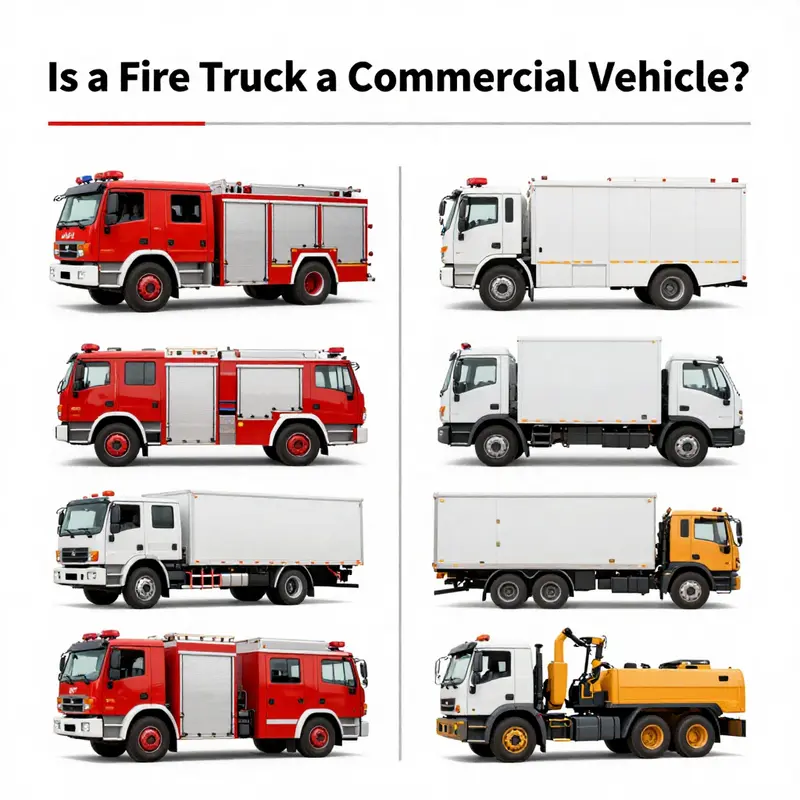
Fire trucks occupy a distinctive niche in the broad fleet of road-going devices. They are tools of urgent public service, yet they share a lineage with the heavy-duty commercial vehicles that routinely traverse highways, urban streets, and rural corridors. This dual identity—public mission anchored in commercial engineering—shapes how authorities classify them, regulate them, and invest in their capabilities. The question is not simply whether a fire truck is a commercial vehicle, but how the vehicle’s mass, purpose, and on-road duties bring it into, or near, the orbit of commercial motor vehicle (CMV) governance. That inquiry invites a careful tour through specifications, use cases, and the regulatory logic that ties heavy apparatus to road-safety regimes designed for the broader commercial transportation sector.
On the chassis and equipment side, fire trucks are built to meet demands that typical freight or service trucks rarely encounter. They must propel a platform capable of delivering water, while supporting hoses, ladders, rescue tools, and personnel in dynamic emergency environments. A representative large fire apparatus sits on a heavy-duty chassis and often exceeds 28,000 kilograms of gross vehicle weight. In common terms, that is well over 60,000 pounds, which dwarfs many standard commercial vehicles that usually operate under 15,000 kilograms (roughly 33,000 pounds). The weight is not merely a matter of heft; it reflects a fully capable on-board system. Water tanks can hold thousands of gallons—typically in the 1,500 to 3,000 gallon range—while pumps, hoses, ladders, and protective gear fill the remaining space in a way that emphasizes readiness over simple payload efficiency. The mechanical heart of these machines often includes a high-torque, high-boost powertrain, a robust transmission with multiple gears, and braking systems designed to control and stabilize a load that shifts as water is pumped and ladders swing into action. Braking responds to the practical demands of stopping a heavy, top-heavy vehicle carrying personnel and equipment; steering must remain precise in tight urban corridors where a firefighting unit may have to cut through traffic amid flashing lights and crowds. These design choices—heavy stiffness, mass distribution, and a suite of specialized systems—illustrate why fire trucks belong to a subset of commercial vehicle engineering that prioritizes resilience and capability over mere economy.
The equipment that accompanies the chassis underscores how fire trucks diverge from ordinary commercial fleets. They carry not only water and pumps but also a suite of systems tailored for firefighting and rescue operations. High-capacity water pumps are a core function, capable of delivering thousands of gallons per minute under pressure. Onboard foam systems extend the truck’s versatility to specific fire types, such as fuel or chemical fires, where foam helps suppress combustion more effectively than water alone. Corrosion-resistant tanks and pumps are essential for durability given the harsh environments and long service life of emergency vehicles. The lighting and siren systems are not mere bells and whistles; they are integral to navigation and safety when every second counts. Inside the compartments, crews find ladders, hoses, couplings, extrication tools, medical supplies, and a spectrum of safety equipment. All of this makes the fire apparatus a self-contained platform that can function as a mobile emergency unit, a temporary command post, and a rapid response engine at once. In contrast, typical delivery trucks or refuse collectors emphasize cargo protection, route efficiency, and cost per mile. The contrast is not only about what they carry, but how they are built to perform under different kinds of stress and urgency.
The use case for a fire truck further sharpens the contrast. Fire apparatus are deployed in emergencies—structural fires, wildland incidents, hazardous material situations, and urban rescues—where speed and readiness are paramount. They must arrive with crews ready to operate, water on hand, and life-saving operations a moment away from starting. This reality shapes not only the design but also the operating doctrine and maintenance culture. A fire truck on a call faces a plethora of challenges: cluttered city streets, narrowing lanes, adverse weather, and sometimes rugged terrain in rural or semi-rural zones. Hydrants may be scarce in some areas, demanding onboard water reserves and mobile pumping units to Establish a reliable water supply. In other environments, the vehicle might need to navigate rural roads or even off-road sections to access a fire front. These wide-ranging requirements lead to a vehicle whose systems must be robust, modular, and quickly serviceable. The result is a machine that looks out of place among routine commercial fleets in appearance and in function, yet remains rooted in the same heavy-duty engineering tradition that governs commercial heavyweights.
This divergence in use also informs regulatory perception. The federal framework in many countries treats emergency response vehicles as CMVs when they operate for non-personal purposes and meet specific weight or passenger thresholds. The standard line is framed around a 10,000-pound GVWR threshold: when a vehicle surpasses that limit, it falls under CMV safety standards that cover maintenance, driver qualification, hours-of-service rules, and vehicle inspection. The practical implication is that a fire apparatus crossing that line is subject to the same categories of oversight as long-haul trucks or passenger-carrying CMVs. That alignment helps maintain road safety as these heavy, high-stakes vehicles traverse crowded cities and highways. Yet the policy landscape is not monolithic. Emergency exemptions exist in many jurisdictions to expedite response times during critical incidents, to accommodate the urgent nature of firefighting work, or to adjust standards for responders who must operate under pressure and varying conditions. The concessions, however, are selective and carefully bounded: they preserve safety while enabling rapid action. The net effect is a nuanced status—the vehicle is both a public-safety instrument and, in terms of regulatory administration, a CMV when mass and use trigger the applicable rules.
The engineering choices that drive these regulatory realities are easy to miss in casual conversation. A heavy-weights-first philosophy often leads to heavier suspensions and more aggressive braking systems, which in turn influence tire selection and drive-axle configurations. A 6×4 chassis is common for large fire apparatus because it offers the balance of traction and payload capacity needed for both water and equipment. The loaded weight, water dynamics, and pump operations all feed back into dynamic performance calculations—how swiftly the vehicle can accelerate, how it handles curves when fully fueled, or how stable it remains when water sloshes or when ladders are extended. The carry-ons—ladders, hoses, cutters, and rescue gear—do not merely add weight; they alter center-of-gravity and require careful weight distribution to preserve handling margins during high-stress maneuvers. In this way, the fire truck embodies a blend of on-road performance and on-scene capability that is rare in standard commercial fleets.
This blend shapes procurement, financing, and fleet management decisions as well. Agencies must weigh the likelihood of CMV regulation exposure against the operational benefits of high-end firefighting capability. Insurers consider the combined risk of a heavy, fast vehicle, the likelihood of on-scene incidents, and the potential exposure of crew and civilians alike. Maintenance regimes must cover pumps, water tanks, and hydraulic systems alongside standard mechanical checks. Training programs emphasize not only driving and operation of emergency equipment but also adherence to safety routines during high-stress, time-critical duty cycles. The result is a resource that is both mission-critical and compliance-intensive, demanding careful coordination between emergency services and regulatory bodies to ensure that life-saving capability does not come at the expense of road safety.
Viewed through this lens, the core question—whether a fire truck is a commercial vehicle—resolves into a layered answer. On one axis, the vehicle is commercial in its construction, road presence, and use on public highways. On another axis, its public-safety mission introduces exemptions and specialized procedures that reflect its life-saving role. The mass, equipment, and purpose anchor it to CMV standards whenever the regulatory framework treats it as a heavy, non-personal-use vehicle. But the firefighting mission also nudges policymakers to accommodate the unique needs of emergency response, ensuring that the rules do not impede critical action when every moment counts. The practical upshot for policymakers, fleet managers, and the public is a recognition that fire trucks inhabit a hybrid space—their commercial vehicle status is real and material, yet their raison d’être is to safeguard lives and property. This nuance helps explain why fire apparatus demand the same safety discipline as other heavy road vehicles while still requiring flexibility to fulfill their non-commercial rescue duties when the situation demands.
For readers consuming this discussion in the broader arc of the article, the takeaway is simple yet substantial: a fire truck is a commercial vehicle in most regulatory senses because it is a heavy, road-going platform designed to move people, water, and equipment on public roads, often under conditions that stress safety and reliability. Its mission, though, is distinct—public safety—so its regulatory treatment is calibrated to preserve rapid response and crew protection without compromising the safety of everyone on the highway. The engineering reality—the heavy chassis, the water-carrying capability, the pump and foam systems, the lighting and signaling apparatus—forms the backbone of this alignment. In the end, the classification reveals a practical truth: the fire truck sits at the crossroads of public service and commercial transport, a convergence that demands both rigorous safety oversight and the operational elasticity that emergency response requires.
External reference: Isuzu Fire Fighting Truck Price Explained: Material Composition, Technical Specifications, and Uses in Industry https://www.isuzu.com/en/vehicles/fire-fighting-trucks/
Note: Throughout this exploration, industry perspectives on regulatory nuance and the evolving design landscape are informed by ongoing conversations about emissions, safety standards, and the evolving needs of emergency services. For a broader industry context on how regulators and manufacturers address these concerns, see the dialogue among stakeholders around emissions regulations and vehicle compliance: OEMs seek clarity in emissions regulations.
Final thoughts
Ultimately, recognizing fire trucks as commercial vehicles is essential not only for compliance with legal regulations but also for making informed decisions in fleet operations, procurement, and regulatory adherence. This classification impacts everything from vehicle maintenance to operational protocols for emergency services. Understanding these intricacies empowers logistics and freight stakeholders to align their practices with regulatory standards, ensuring that safety and efficiency remain at the forefront of their operational strategies.