
In recent years, the alarming rise of human trafficking has permeated various industries, with the trucking sector being particularly vulnerable. As large vehicles traverse vast distances, they have become unwitting accomplices in the grim reality of labor trafficking.
The Joy Smith Foundation, in partnership with local organizations like the Manitoba Trucking Association, has launched a vital campaign during National Trucking Week aimed at raising Human Trafficking Awareness in Trucking. This initiative emphasizes the urgent need for drivers and the broader community to Know the signs. Report the crime.
By educating truck drivers about the indicators of trafficking, such as restricted freedom and wage theft, the campaign seeks to empower individuals to act upon their awareness, ultimately fostering a safer environment for all road users. It is an essential step toward protecting not just the drivers themselves but also the communities they serve.
With the weight of this responsibility resting on the shoulders of the trucking industry, the time to act is now—our collective safety depends on it.
Structure of the Article
-
Hook
Capture the readers’ attention with a powerful statement or question about human trafficking in the trucking industry. For instance: “Did you know that the very trucks you see on the highway could be transporting more than just goods?”
-
Introduction
Discuss the alarming rise of human trafficking within the trucking sector, setting the context for the campaign launched in Manitoba.
-
The Campaign
Detailed overview of the Joy Smith Foundation’s campaign, including its goals, strategies (social media, billboards), and its launch during National Trucking Week.
-
Understanding the Signs
Educate readers on the key indicators of labor trafficking and how truck drivers can contribute to prevention by recognizing these signs.
-
Impact on Communities
Explore the broader implications of trafficking for communities, emphasizing the need for collective awareness and action.
-
Voices from the Trucking Industry
Incorporate quotes and comments from industry stakeholders (e.g., Janet Campbell, Aaron Dolyniuk) regarding the importance of the campaign and the trucking industry’s responsibility.
-
Call to Action
Encourage readers to spread awareness, get involved with local organizations, and report any suspicious activities.
-
Conclusion
Summarize the dire need for awareness and community involvement, restating the message: “Know the signs. Report the crime.”
This structured approach ensures a compelling flow, guiding the reader through awareness of the issue, engagement with the campaign, and encouraging actionable steps toward prevention.
Facts About the Campaign
- Launch Date: The campaign was officially launched during National Trucking Week.
- Campaign Theme: Its powerful theme is “Know the signs. Report the crime.”
- Advice for Drivers:
- Drivers are advised to recognize key signs of labor trafficking, including:
- Lack of freedom to leave a work site.
- Unpaid wages or irregular payment practices.
- Signs of fear or anxiety in individuals present in the vehicle or load areas.
- Unusual cargo or passenger conditions that raise suspicion.
- It is crucial for drivers to be observant and proactive in reporting any potential signs of trafficking to authorities.
- Drivers are advised to recognize key signs of labor trafficking, including:
- Support Organizations: The campaign is supported by local organizations including the Joy Smith Foundation, Manitoba Trucking Association, and Winnipeg Crime Stoppers, which are integral in spreading awareness and providing resources to help combat trafficking.
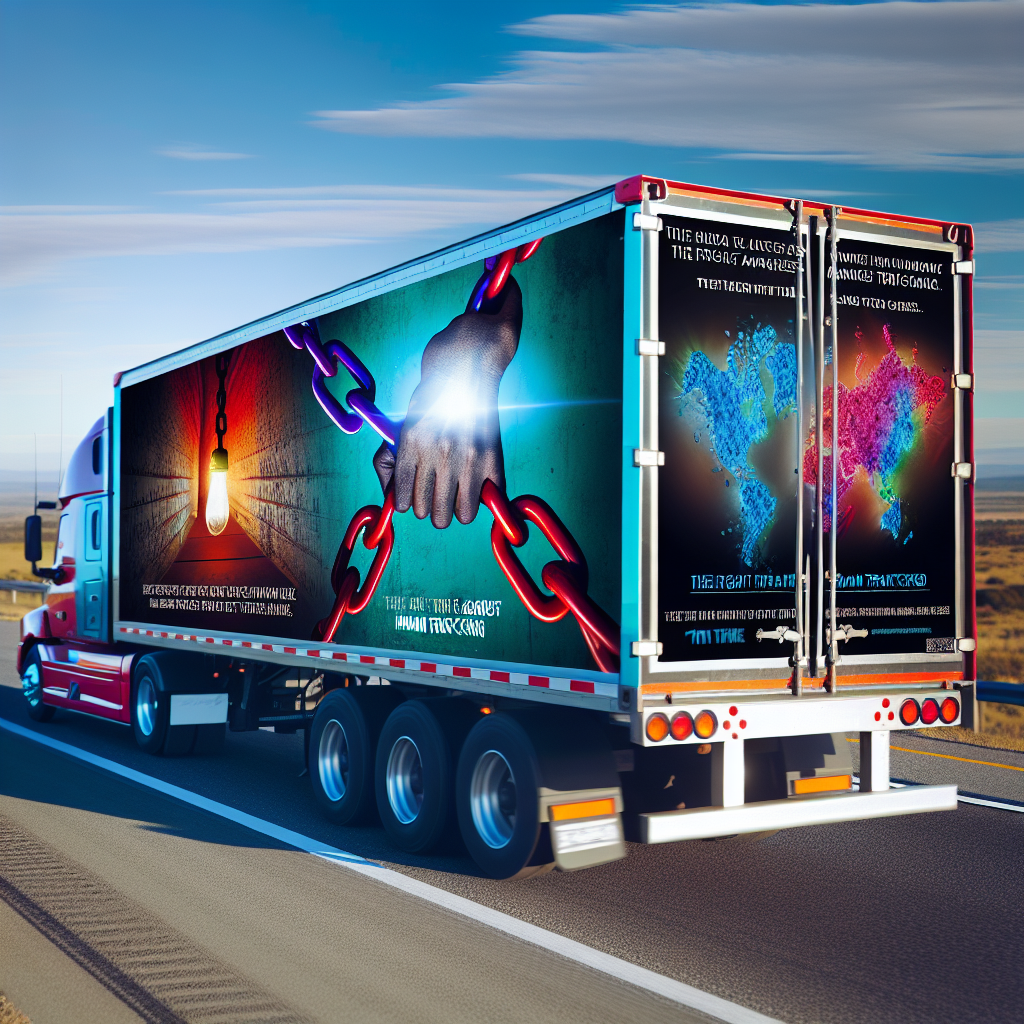
An image depicting a truck driving down a highway with a vibrant awareness campaign poster highlighting human trafficking in the trucking industry.
The Importance of Campaign Awareness in Combating Labor Trafficking
The campaign launched by the Joy Smith Foundation underscores the urgent need for raising awareness about labor trafficking in the trucking industry. Janet Campbell, President and CEO of the Joy Smith Foundation, articulated the power of collective action, stating, “This initiative is the first of its kind in Canada, showing what’s possible when communities and industries unite against human trafficking.” The significance of such collaboration cannot be overstated, as it highlights how unified efforts can effectively tackle complex societal issues.
Furthermore, Campbell emphasizes that protecting truck drivers directly correlates to enhancing community safety. She expressed, “Protecting drivers means protecting our communities. By addressing labor trafficking in trucking, we can stop this crime and make Manitoba’s roads safer for everyone.” Such insights reflect a comprehensive understanding of the intertwined fates of drivers and communities at large, reinforcing the necessity for targeted education and awareness initiatives.
Aaron Dolyniuk, Executive Director of the Manitoba Trucking Association, echoed concerns about the negative implications of labor trafficking on the trucking industry’s reputation and functioning. He noted, “The recent addition of labor trafficking is a significant black eye for us.” This perspective speaks volumes about the impact of labor trafficking not just on individuals but on the entire industry, risking its integrity and commitment to safe practices. Dolyniuk further elaborated, pointing out the real-world repercussions, stating, “It results in untrained drivers, poorly maintained equipment, and a race to the bottom for driver compensation. Unfortunately, the real damage comes at the individual level.”
Together, the insights from Campbell and Dolyniuk emphasize that thorough education and awareness can empower truck drivers and stakeholders to recognize the signs of labor trafficking, thereby safeguarding vulnerable workers and restoring the industry’s honor.
The campaign’s messages resonate loudly, reminding us all that awareness is the first step toward action. By spreading knowledge and encouraging proactive responses from within the trucking community, we can collectively combat the grave issue of human trafficking.
Statistics Supporting the Need for Awareness in Human Trafficking
The issue of human trafficking within the trucking industry is not just an abstract concern but a pressing reality, necessitating the need for targeted campaigns like the one launched by the Joy Smith Foundation in Manitoba. Recent statistics illustrate the urgency of this issue:
- Incidence of Labor Trafficking: The Joy Smith Foundation’s campaign highlights significant statistics regarding labor trafficking in the trucking sector, where 39% of trucking companies enrolled in the Labour Market Impact Assessment program ceased operations from 2019 to 2023, leaving foreign workers’ fates in jeopardy. This points to a deep reliance on vulnerable labor, making trafficking a critical issue that needs immediate attention.
- Hotline Reports: The American Trucking Associations (ATA) reported nearly 2,000 calls to the National Human Trafficking Hotline since January 2018. This led to over 600 possible cases and helped rescue more than 1,300 victims, including 375 minors. These numbers reflect the potential of truck drivers as vital observers in the fight against trafficking, emphasizing their role in identifying and reporting suspicious activities.
- Training Initiatives: In response to the growing concern over human trafficking, major companies like Amazon have collaborated with organizations like Truckers Against Trafficking, successfully training over 5,000 employees in just one year. This ongoing education equips truck drivers and industry professionals with the knowledge they need to recognize and act against trafficking situations.
- Certification Impact: Truckers Against Trafficking reports that more than 1.5 million truckers have completed their anti-trafficking certification programs, enhancing the trucking community’s capability to act against human trafficking. Furthermore, TAT advocates for legislative measures to ensure that all commercial driver’s license holders receive anti-trafficking training, signifying a robust movement towards integrating awareness into industry standards.
These statistics underscore the importance of the campaign led by the Joy Smith Foundation, showing that awareness and education are crucial in fighting human trafficking. By empowering truck drivers with knowledge, we have the potential to create a significant impact in combatting this grievous issue in our communities.
Supporting Sources for User Adoption Data
-
Incidence of Labor Trafficking:
The Joy Smith Foundation’s insights illustrate that 39% of trucking companies in the Labour Market Impact Assessment program ceased operations from 2019 to 2023, endangering foreign workers. This statistic highlights the deep reliance on vulnerable labor within the trucking sector, emphasizing the critical urgency to address trafficking issues. For detailed statistics, refer to the Joy Smith Foundation and the American Trucking Associations. -
Hotline Reports:
According to the American Trucking Associations (ATA), since 2018, nearly 2,000 calls have been logged to the National Human Trafficking Hotline, resulting in over 600 possible cases. These calls, particularly from truck drivers, highlight their critical role as activists in this struggle. More information can be found in reports published by Ryder. -
Training Initiatives:
Collaborations between major companies like Amazon and Truckers Against Trafficking have led to training of over 5,000 employees within a year. Such initiatives equip drivers with the necessary tools to identify and counter trafficking situations effectively. For additional statistics on training details, view Truckers Against Trafficking. -
Certification Impact:
Over 1.5 million truckers completed anti-trafficking certification programs through Truckers Against Trafficking, illustrating significant progress. TAT now advocates for legislative measures ensuring all commercial driver’s license holders receive anti-trafficking training, showcasing a robust movement toward industry-wide awareness. Learn more about their impact on training here.
These credible sources underline the necessity and significance of the campaign led by the Joy Smith Foundation, underscoring that awareness and education are vital in combating human trafficking in the trucking industry. By empowering truck drivers with knowledge and establishing reporting mechanisms, a tangible impact can be made against this pressing issue.
| Campaign Year | Reported Human Trafficking Events | Increased Awareness Activities | Media Impressions |
|---|---|---|---|
| 2022 | 163 | 2,460 law enforcement officers engaged | N/A |
| 2023 | 218 | 3,020 law enforcement personnel | 15.6 million |
| 2024 | 334 | 204 presentations, 692 media contacts | 16 million |
| 2025 | 219 | 267 presentations, 670 contacts | 16 million |
Summary: This table illustrates the progressive increase in reported human trafficking events and the robust awareness-related activities conducted by the trucking industry over the years, reflecting the campaigns’ positive impact on education and reporting mechanisms.
Implications of Labor Trafficking on Safety Conditions in Trucking
Labor trafficking poses serious safety risks within the trucking industry, highlighting the need for heightened awareness and proactive measures to combat this pressing issue. This aligns closely with the campaign launched by the Joy Smith Foundation, which aims to educate drivers and the public on the signs of trafficking and their implications for safety.
Impact on Driver Safety
Exploited drivers often endure poor working conditions, receiving inadequate compensation while facing excessive work hours. Such circumstances contribute to fatigue, directly increasing the likelihood of accidents. Research published in The Economic and Labour Relations Review underscores the significance of fair wages, revealing that a 1% increase in driver wages correlates with a 1.04% reduction in crash rates. Thus, better compensation not only supports drivers but also enhances road safety. Additionally, statistics from OSHA indicate that the trucking sector accounted for 11% of all worker fatalities in 2017, with the majority resulting from transportation accidents. These numbers reinforce the critical need to address both labor conditions and safety protocols in the industry.
Community Safety Concerns
The ramifications of trafficking extend beyond individual drivers, negatively affecting community safety as well. For instance, freight trucking contributes substantially to air pollution, emitting approximately 10% of nitrogen oxides (NOx) and 12% of carbon dioxide (CO₂) in the continental United States. Those in underserved communities, particularly communities of color, disproportionately bear the burden of these emissions, exacerbating existing health disparities. Addressing labor trafficking in trucking not only protects workers but also enhances the overall health and safety of the communities they traverse.
Efforts to Combat Human Trafficking
Organizations dedicated to fighting human trafficking, such as Truckers Against Trafficking (TAT), play a pivotal role in educating drivers about recognizing the signs of trafficking. TAT reports that 41% of calls made to the National Human Trafficking Hotline in the past five years originated from professional drivers, often concerning minors. This statistic highlights the vital role truck drivers can play in identifying suspicious activity and intervening to protect vulnerable individuals.
In conclusion, while comprehensive data directly linking labor trafficking to specific safety metrics in trucking may be limited, the existing research suggests a clear connection between exploitative practices and decreased safety. By addressing these risks through improved working conditions, fair compensation, and robust anti-trafficking training, the trucking industry can enhance both driver safety and community well-being. The campaign’s educational efforts are essential for fostering awareness and encouraging proactive safety measures, ultimately working toward a more secure and just environment for all.
Conclusion and Call to Action
As we conclude our exploration of the Joy Smith Foundation’s campaign to combat human trafficking in the trucking industry, it is essential to underscore the collective responsibility that rests on all of us. The signs of human trafficking are often subtle, yet they can have devastating impacts on lives and communities. We urge you to join the fight against this heinous crime by educating yourself and those around you about the warning signs. Awareness is the first step in prevention.
Community safety starts with vigilance. If you notice any suspicious activities, do not hesitate to report them. Your observations could save a life. Support local organizations and initiatives, such as the Joy Smith Foundation and Winnipeg Crime Stoppers, dedicated to eradicating trafficking and providing resources for those at risk.
Together, we can create a safer environment for all. Remember to embrace the campaign’s crucial message: Know the signs. Report the crime. Your involvement is vital to ensuring that our communities remain safe and that vulnerable individuals are protected from exploitation. Stand with us in this fight; for our collective safety, we must act decisively against human trafficking.
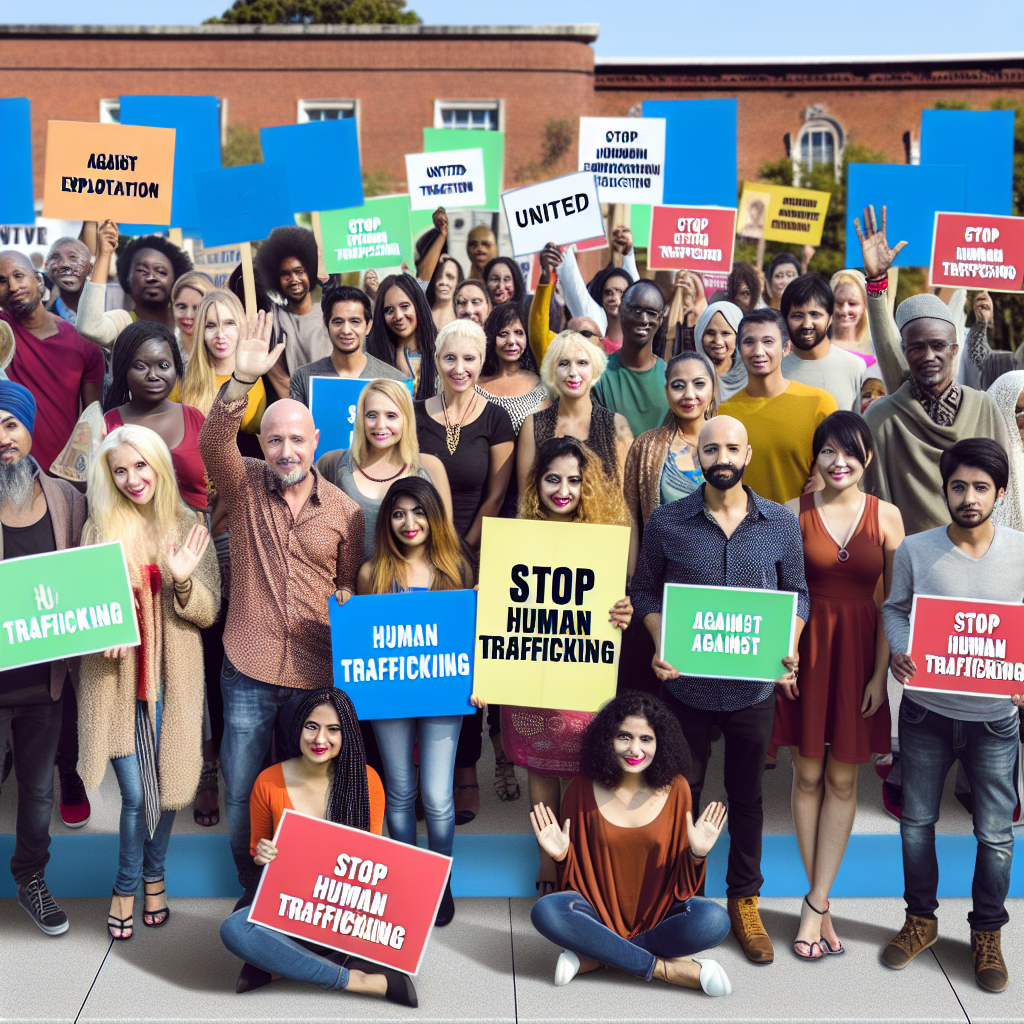
An image showcasing community involvement and support against human trafficking, featuring individuals holding placards and engaging in a supportive atmosphere.
The Campaign Against Human Trafficking in the Trucking Industry
The Joy Smith Foundation has embarked on a critical campaign to combat human trafficking in the trucking industry during National Trucking Week. This initiative seeks to raise awareness not only through concrete strategies such as social media outreach and strategic billboard placements but also through community engagement. At the heart of this campaign is the powerful theme, “Know the signs. Report the crime,” which aims to transform truck drivers into vigilant watchdogs against labor trafficking.
The campaign’s success hinges on educating drivers about the indicators of trafficking, as recognizing these signs can make a significant difference in the industry. With the alarming realities of labor trafficking affecting vulnerable individuals traveling on our roads, it becomes imperative that truck drivers are equipped with the knowledge to identify potential human trafficking situations.
Understanding the Signs of Labor Trafficking
Following the campaign’s key goals, it is essential to delve deeper into what these signs of labor trafficking entail. This educational component is not merely an adjunct to the campaign but a central pillar without which the campaign’s impact could be greatly diminished. Truck drivers, as frequent witnesses to the activities occurring at loading docks and along transport routes, are in a unique position to observe suspicious behaviors or conditions that may signal trafficking activities.
As we transition to understanding these signs, let’s examine the specific indicators that truck drivers should be aware of, as this knowledge empowers them to take action and report any suspicious situations effectively.
Understanding the Signs
Labor trafficking is often hidden, but there are clear signs that truck drivers can look for. Here are some important indicators:
- People who seem afraid or nervous, or who avoid eye contact.
- Workers who do not have the freedom to leave. They might be living in the truck or on the property.
- Lack of proper identification or paperwork.
- Workers not getting paid or being paid very little, sometimes even nothing at all.
- Unusual cargo, such as people packed in a way that seems too crowded or unsafe.
Truck drivers are in a great position to notice these signs. If you see something suspicious, take action by reporting it. Your awareness can help stop trafficking and protect vulnerable individuals.