
Understanding how to become a commercial truck inspector is vital for logistics and freight company owners, construction and mining procurement teams, and small business owners with delivery fleets. This article provides a structured roadmap detailing the essentials—from meeting eligibility requirements to successfully landing a job in this critical role. Each chapter offers insights that build on the previous one, forming a comprehensive guide designed to empower logistics professionals and enhance operational efficiency through compliant vehicle inspections.
Foundations of Eligibility: What It Takes to Qualify as a Commercial Truck Inspector
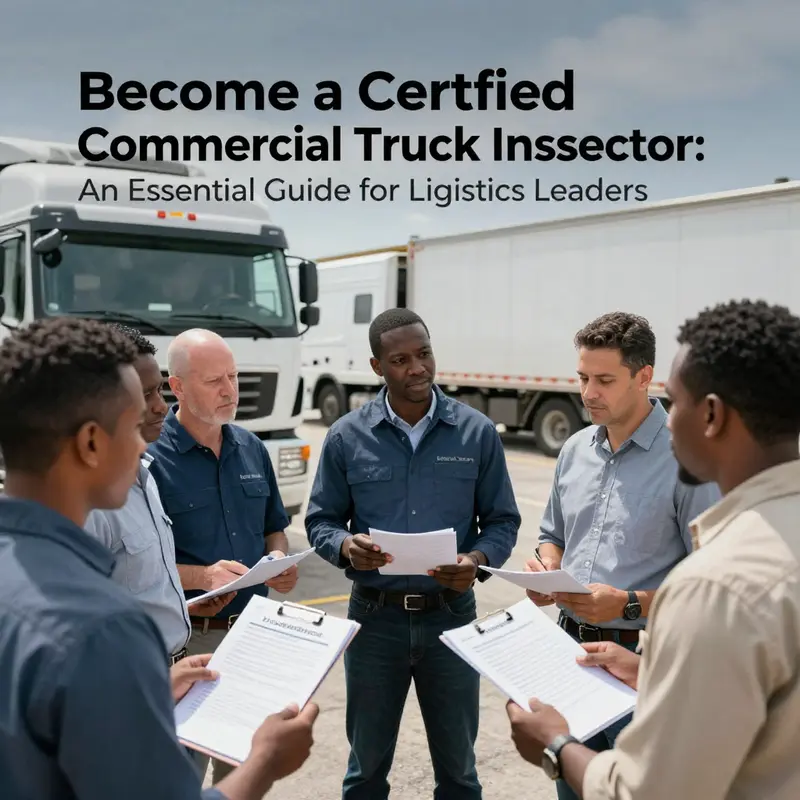
Becoming a commercial truck inspector begins long before the first on-the-road inspection. The role demands a blend of legal standing, physical ability, technical knowledge, and a trustworthy record. Understand these baseline requirements clearly. They form the foundation employers and agencies use to evaluate applicants. Knowing them helps you plan each step of your path, and avoid surprises during hiring and background checks.
The first and most decisive requirement is legal work status in the United States. Most government inspection roles require U.S. citizenship. Some state positions accept lawful permanent residents. Private employers may have more flexibility, but they still need workers authorized to work in the country. If your status is unclear, get documentation that proves your eligibility before applying. If you work across borders or with international carriers, pay attention to cross-border rules and regulatory meetings that affect eligibility and inspections; see the meeting insights on bridging border barriers for context: https://truckplusllc.com/bridging-border-barriers-meeting-insights/.
Age requirements are simple but firm. Many positions set a minimum age of 18, while some federal or specialized roles require applicants to be at least 21. This difference often relates to the ability to operate certain vehicles, access secure facilities, or meet agency hiring rules. Confirm the exact age requirement in the job posting. Don’t assume all inspector roles have the same threshold.
Education and practical experience make you a stronger candidate. A high school diploma or GED is usually the minimum. Employers, however, favor candidates with technical training in vehicle systems, transportation, or logistics. Community college courses, vocational certificates, or on-the-job experience as a mechanic or driver show that you understand heavy vehicles. If you’ve worked as a commercial driver or fleet technician, emphasize specific tasks you performed. Detail brake system work, suspension repairs, or preventive maintenance. Practical experience proves you can spot wear, spot failures, and assess roadworthiness.
A valid driver’s license is essential. Many inspector roles require at least a standard license, while others ask for a commercial driver’s license (CDL) or specific endorsements. Holding a CDL is a strong advantage. It proves you can operate the vehicles you inspect and helps during roadside or enforcement inspections. Even when not strictly required, a CDL signals credibility and operational knowledge. If you plan to pursue a CDL, research the written and skills exams early. Training reduces costly mistakes when you test.
Physical and medical fitness are non-negotiable. Inspectors work outdoors in all weather. They climb into cabs, crawl under trailers, and lift tools or parts. Hiring agencies commonly require a physical exam and may ask for proof of medical fitness. For roles that involve driving, the medical standards align with commercial driver requirements. Prepare for these exams by maintaining good general health and addressing any chronic conditions you have. If accommodations are needed, discuss them during the hiring process while staying mindful of safety expectations.
Background checks and integrity screening are central to selection. Inspectors examine regulated shipments and may have access to sensitive facilities. Employers conduct criminal history checks, employment verifications, and sometimes credit reviews. Felony convictions and serious misdemeanors often disqualify applicants. Lesser offenses may not automatically bar you, but they can lengthen clearance processes or trigger additional scrutiny. Be honest on applications. A transparent explanation of past issues is better than omission, which typically causes rejection.
Knowledge of relevant regulations is a core competency. Applicants must be familiar with federal and state rules that govern commercial motor vehicles. That includes weight limits, hours-of-service rules, and key safety standards. Practical knowledge shows you how to interpret inspection results and cite regulatory violations when needed. Employers test this knowledge during hiring, and inspectors must stay current with regulatory changes. For authoritative guidance, consult the federal agency that sets inspection standards and enforcement priorities: https://www.fmcsa.dot.gov/.
Technical understanding of vehicle systems improves inspection quality. While formal certification may not be mandatory at entry, employers frequently prefer or require candidates with technician certifications or completion of recognized inspector training. Study common failure modes on brakes, tires, steering, and lights. Learn how to use basic inspection tools, and develop a checklist habit. A disciplined checklist approach reduces missed items and improves your credibility when you report faults.
Medical and substance testing policies vary, but many agencies require drug and alcohol screening. Random testing may occur once hired. Some roles require candidates to pass drug tests before starting. A clean testing record is often part of the hiring package. Understand the employer’s policies and be prepared to comply.
References and professional demeanor matter. Inspectors represent regulatory bodies and fleets, and they interact with drivers under stress. Employers expect good communication, patience, and the ability to write clear reports. Provide references who can speak to your honesty, technical ability, and teamwork. Good references often tip the balance between two similar candidates.
There are special considerations for non-citizens and cross-border work. Legal residents may qualify for many state positions, but federal roles commonly require citizenship. If your work touches international shipments or border crossings, expect additional documentation and background checks. Stay informed about policy shifts that affect eligibility for cross-border inspection duties.
Finally, plan for continuing requirements. Once hired, inspectors often need periodic medical recertification, renewed driving credentials, and ongoing training. Maintain records and complete refresher courses. Staying current protects your job and helps you move into advanced inspection roles.
Practical tips to prepare: organize your legal documents and have copies ready. Keep a clean driving record and obtain training certificates that demonstrate your technical skills. If possible, secure a CDL and endorsements relevant to the vehicles you plan to inspect. Practice writing concise inspection reports. Learn core federal rules, and subscribe to updates or training offered by transportation agencies. If you face past convictions, consult legal counsel or your prospective employer about rehabilitation and disclosure strategies.
Understanding these eligibility foundations lets you focus your efforts. They guide where to invest time and money. The best candidates combine lawful status, basic education, physical readiness, a clean background, relevant driving credentials, and regulatory knowledge. Those elements build a record of trustworthiness that hiring agencies and fleets rely on.
Meet these baseline requirements, and you’ll be ready for technical training and certification steps. That next phase builds on eligibility, turning a qualified applicant into a competent, certified inspector ready for responsibility on the roadside and at inspection facilities.
Why a CDL Strengthens Your Path to Becoming a Commercial Truck Inspector
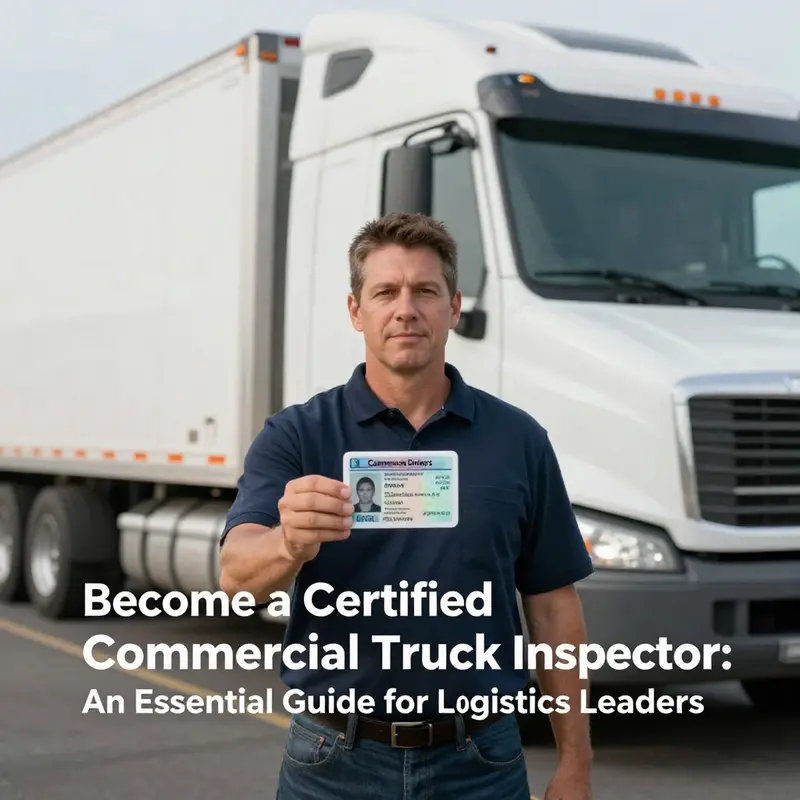
A Commercial Driver’s License (CDL) is more than a driving credential; it is a practical foundation for sound inspections and credible enforcement.
Earning a CDL gives aspiring commercial truck inspectors direct, hands-on exposure to the vehicles they will assess every day. Classroom study teaches rules and checklists. Driving a commercial vehicle embeds those lessons in muscle memory. When you complete pre-trip routines as a driver, you learn to spot loose fasteners, abnormal tire wear, and subtle brake issues before they escalate. That lived experience helps you interpret what you see during an inspection. It sharpens judgment and reduces reliance on theory alone.
Beyond the tactile knowledge, a CDL familiarizes you with operational constraints. You learn how cargo shifts under braking. You feel how suspension responds to different loads. You experience how steering feedback changes with tire pressure. Those sensations inform inspection decisions. For example, a driver-trained inspector recognizes when a vibration is a driveline issue instead of a tire imbalance. That distinction speeds accurate diagnosis. It also builds trust with drivers and carriers, who respect inspectors who understand the challenges of operating large trucks.
Employers and regulators value this credibility. Many state and federal agencies prefer inspectors who hold a CDL. Some positions explicitly require one. A CDL signals that you have passed written exams on vehicle systems and safety regulations. It also shows you have completed hands-on skills testing. Agencies that enforce the Federal Motor Carrier Safety Regulations often view a CDL as a practical qualification for field work. Private carriers too lean toward hiring inspectors with driving experience, especially when inspections occur on yards, on routes, or at border crossings.
A CDL also broadens your career flexibility. Inspectors sometimes need to reposition vehicles for thorough examinations. A CDL lets you move a truck to a safe location for a detailed check. It enables you to perform functional tests, such as observing braking behavior under controlled conditions. These tasks are difficult or impossible without the license. In some enforcement roles, inspectors rotate between inspection duties and short-term driving assignments. Holding a CDL keeps those options open and increases your value to employers.
The process of obtaining a CDL itself is instructive for inspection candidates. Preparing for the written exams forces you to master federal and state safety rules. The skills test reinforces correct vehicle operation and pre-trip inspections. That preparation introduces you to common failure points: improper load securement, inadequate brake adjustments, and egress hazards. By the time you obtain a CDL, you have already practiced the core routines central to inspection work.
Practical knowledge translates into better communication with drivers. Inspectors who hold a CDL speak the same technical language as drivers and fleet technicians. That shared vocabulary shortens conversations and improves compliance outcomes. Instead of a superficial citation, you can explain why a part failed and suggest corrective steps. That collaboration often leads to faster compliance and fewer repeat violations. Carriers respond more positively when an inspector demonstrates operational empathy backed by technical expertise.
Holding a CDL also helps when pursuing certifications that complement inspection duties. Many certification programs expect or prefer candidates with operational experience. For example, certification exams that cover brake systems, suspension, and load securement make more sense to someone who has driven large rigs. The combination of a CDL and trade certifications creates a compelling résumé for state DOTs, federal agencies, and private carriers.
For non-U.S.-born candidates, recent expansions in multilingual testing materials make the CDL route more accessible. Several states offer translated written exams and testing aids. This accessibility lowers barriers for qualified candidates who bring mechanical aptitude and work authorization but lack fluent English. A CDL obtained under these conditions still reflects the same practical competence.
There are, however, practical considerations to weigh before committing to the CDL path. Some inspection positions focus heavily on technical evaluation rather than vehicle operation. For those roles, deep mechanical training or an ASE certification may outweigh the need for a CDL. Time and cost are also factors. Preparing for and acquiring a CDL requires study time, skills training, and testing fees. You should weigh these investments against the specific job requirements of agencies or employers you target.
If you decide to pursue a CDL, approach the process strategically. Choose training that emphasizes pre-trip inspections and safety protocols. Seek instructors with inspection or fleet backgrounds. Practice the full pre-trip routine until it becomes habitual. Familiarity with electronic logging devices, air brake diagnostics, and common fault indicators will make you more effective as an inspector. Document driving hours and hands-on maintenance experience, if any, because many hiring panels consider demonstrated practice important.
Once you hold a CDL, integrate that credential into a broader professional development plan. Combine it with technical coursework in vehicle maintenance or a community college program that covers diagnostic procedures. Aim for industry-recognized certifications that align with inspection tasks. Maintain your CDL and certifications through ongoing training and recertification. The trucking fleet and regulatory environment evolve. Electronic systems, new braking technologies, and updated federal rules require continual learning.
A final practical benefit of a CDL is safety culture alignment. Driving large vehicles reinforces a safety-first mindset. You learn the consequences of overlooked maintenance and the value of thorough checks. That mindset is central to effective inspection work. Inspectors who advocate for safety on the road, and who demonstrate that advocacy through their licensure and actions, tend to be more persuasive and effective in promoting compliance.
A CDL is not an absolute requirement in every inspection role. But it is a powerful asset. It grounds regulatory knowledge in real-world experience. It opens more job options. It improves communication with drivers and technicians. It enhances the credibility of your findings and supports stronger enforcement outcomes. For anyone serious about a long-term career as a commercial truck inspector, obtaining a CDL is a strategic investment that pays dividends in competence, credibility, and career mobility.
For more context on employment trends that affect hiring for inspection and driving roles, see the discussion of 2024 trucking job recovery and stabilization.
Source: Federal Motor Carrier Safety Administration – CDL requirements: https://www.fmcsa.dot.gov/adr/CDL
From Classroom to the Road: Educational Pathways to Becoming a Commercial Truck Inspector
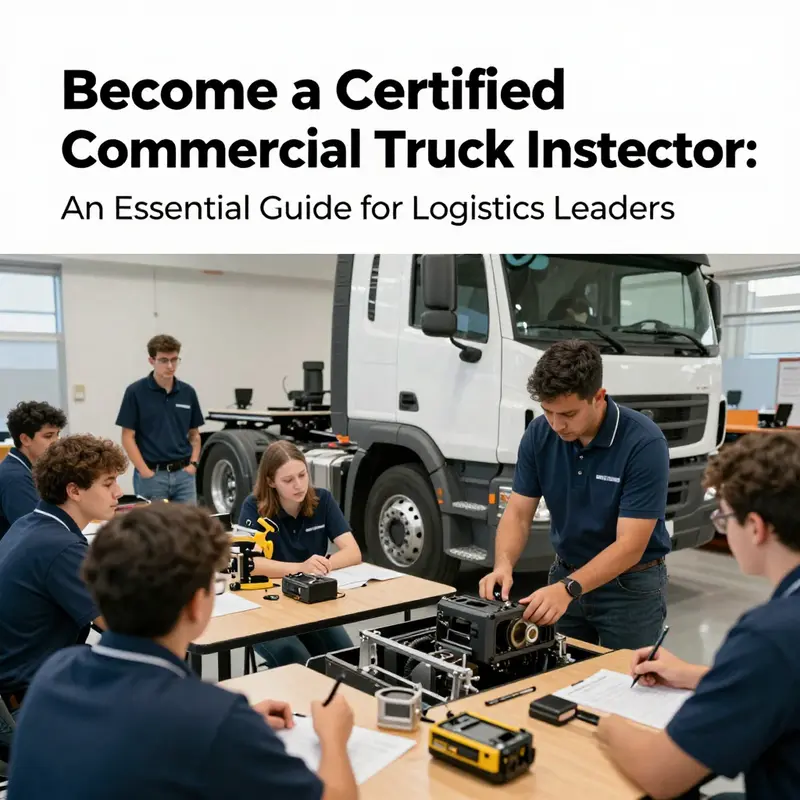
Education is the critical first mile in the journey toward becoming a commercial truck inspector. It is not simply the accumulation of credits; it is the formation of a practical mindset. A strong foundation blends formal schooling with hands-on exposure to the systems that keep heavy vehicles safe on the road. The process begins with the basics of eligibility, then moves into targeted training and certification that together signal to employers that you can not only identify defects but understand the regulations that govern them. In the United States, a clear sequence of steps helps aspiring inspectors chart a credible path—from meeting minimum prerequisites to maintaining credentials as technologies and standards evolve.
Most employers expect a minimum starting point: a high school diploma or its equivalent, coupled with a genuine interest in vehicle safety and regulatory compliance. Beyond that, vocational or technical programs focused on diesel technology, automotive systems, or transportation safety are highly valued. These programs typically weave together classroom instruction with shop-floor experience, giving students the opportunity to practice vehicle inspections, diagnostics, and safety-critical procedures under guidance. The most effective programs are ones that align with national standards and state expectations, potentially carrying formal recognition from agencies that oversee transportation safety. This alignment matters because inspectors must interpret a spectrum of rules—from federal motor carrier safety regulations to state-specific requirements—and apply them consistently in real-world inspections.
A practical orientation to training matters just as much as the classroom content. Prospective inspectors should seek programs that emphasize the full lifecycle of a commercial vehicle: pre-trip inspections, in-service safety checks, and post-incident analyses. In addition to core topics like brake systems, steering and suspension, and electrical/electronic systems, good curricula cover tire integrity, lighting, load securement, and the basics of hazardous materials handling. These elements are not merely checklists; they are integrated into a decision-making framework that inspectors use daily. As you plan your course of study, you’ll likely encounter options approved by authorities such as the National Highway Traffic Safety Administration (NHTSA) or the Federal Motor Carrier Safety Administration (FMCSA). Such approvals signal that the program’s content reflects current federal priorities and inspection procedures.
Certification plays a pivotal role in signaling your competence and commitment. The most widely recognized credential for commercial vehicle inspectors comes from the Automotive Service Excellence (ASE). The ASE Commercial Vehicle Inspection certification tests a technician’s ability to evaluate the safety and compliance of heavy vehicles across several domains, including brakes, suspension and steering, electrical and electronic systems, lighting, and overall inspection procedures. Earning this certification requires passing multiple exams, a process that ensures you have both breadth and depth in areas critical to safety. For many employers, ASE certification is a mark of quality that opens doors to more advanced inspection roles or positions with larger fleets or regulatory agencies. Some states and employers also offer FMCSA-approved inspector training programs. These state-based initiatives align with federal standards and can provide a structured pathway to certification that complements the ASE framework.
While certification is central, the path to eligibility is not limited to a single credential. A CDL—commercial driver’s license—offers a valuable credential that signals a deep familiarity with the vehicle and its operation. Having a CDL is not always mandatory for inspector roles, but it enhances credibility and may broaden job prospects. The process to obtain a CDL—written knowledge tests, followed by a road test demonstrating control of a heavy vehicle—encourages a practical understanding of how truck systems behave in real-world driving conditions. Even when a CDL is not required, the knowledge it represents helps inspectors communicate effectively with drivers, fleet managers, and enforcement personnel. For many applicants, earning a CDL early in their career helps create a well-rounded professional profile that stands out in competitive hiring environments.
Beyond initial training and credentials, ongoing education is essential. The safety landscape is continually shifting as technologies evolve, regulations change, and new safety devices and data-management tools emerge. Emerging inspector roles may intersect with electronic logging devices (ELDs), telematics, brake-by-wire concepts, or advanced driver-assistance systems. A career-focused approach therefore includes a plan for recertification and continuing education, typically on a five-year cycle for many certifications, and more frequent updates for rapidly changing topics. The best candidates treat ongoing learning as a professional habit rather than a compliance obligation. They attend workshops, participate in state or national safety conferences, and engage with professional associations that offer updated inspection procedures, regulatory interpretations, and case studies.
In the job arena, opportunities span state DOTs, federal agencies, and private carriers. State-level inspector positions often live within the DMV or DOT ecosystem and may require passing a state-specific examination and a background review. Federal inspector roles can involve agencies such as FMCSA or border protection authorities at ports of entry, typically demanding higher levels of security clearance and broader knowledge of federal regulations. Private sector opportunities exist within fleets and carrier operations that maintain in-house inspection programs to enforce safety compliance. Regardless of setting, the common thread is a demonstrated ability to assess vehicle condition against a standardized framework, interpret regulatory requirements, and communicate findings clearly to drivers and management. A successful inspector can translate technical observations into actionable recommendations, from immediate safety concerns to long-term fleet improvements.
Career progression often follows a clear ladder. Early roles may focus on performing inspections and maintaining inspection records, but as experience builds, many inspectors assume responsibilities in training, compliance auditing, or regulatory liaison work. Some professionals choose to deepen their knowledge with an associate degree in transportation management, logistics, or safety engineering. These paths do not replace hands-on inspection skill; rather, they broaden the conceptual toolkit—risk assessment, regulatory interpretation, incident analysis, and strategic safety planning—that helps inspectors contribute to broader safety programs within an organization. The investment in higher education can pay dividends in leadership roles, project oversight, or policy development for large fleets and government agencies alike.
A central theme in education is practicality. Coursework, certifications, and on-the-job practice should reinforce one another. If you are formulating a plan, start by confirming you meet basic eligibility: legal U.S. work status, age, and a clean driving record. Then decide whether to pursue a CDL. If you opt for CDL, you gain a strong operational understanding and added credibility; if not, you can still build a robust inspection-focused portfolio through targeted vocational training and a strong certification track. Regardless of the starting point, your early experiences should include hands-on exposure to vehicle inspection procedures, perhaps through internship programs, co-op opportunities, or apprenticeships offered by community colleges, trade schools, and industry associations. Such experiences help you apply theoretical knowledge to the real-world scenarios inspectors confront, from spotting a faulty brake chamber to interpreting a complex FMCSA regulation about hours of service and vehicle compliance.
As you advance, remember that learning is not merely about accumulating credentials. It is about building a reliability profile—a track record of accurate inspections, careful documentation, and clear communication. Your portfolio should demonstrate consistency: the ability to recognize subtle defects, justify safety-critical decisions, and collaborate with maintenance teams to implement corrective actions. This is where the blend of education, training, and certification becomes most powerful. It also helps you stay resilient in an industry subject to regulatory updates, evolving safety technology, and shifts in supply chains that influence how inspections are conducted and what standards apply.
For those who want a more explicit route to knowledge, a simple starting point is a structured resource that emphasizes cross-border regulatory context and recent developments in the field. Consider exploring materials like the Cross-Border Regulatory Issues Event, which can provide insights into how inspectors navigate the interface between federal requirements and state or provincial practices. This kind of resource complements formal training by highlighting real-world complexities that inspectors must resolve when evaluating compliance across jurisdictions. The practical takeaway is to treat education as an ongoing conversation with the regulatory environment, rather than a one-time attainment of a credential.
Ultimately, a successful inspector’s education is a living framework. It starts with formal schooling and targeted technical training, then expands through certification, hands-on practice, and continuous professional development. The result is a professional who can reliably assess safety, interpret the law, and communicate findings in a way that improves fleet safety and regulatory compliance. Within this framework, the Certified Vehicle Inspection pathway—whether through ASE certification, FMCSA-approved state programs, or a combination of credentials—acts as a sturdy anchor that signals competence to employers and regulators alike. And while the specifics of each program may change over time, the core principles endure: mastery of vehicle systems, a clear understanding of safety standards, and a commitment to lifelong learning that keeps pace with a dynamically evolving industry.
External resource: For detailed certification information and study resources, see the ASE Commercial Vehicle Inspection Certification page: https://www.ase.com/certification/automotive/inspection
From Training to NRCI: Navigating Certification on the Road to Becoming a Commercial Truck Inspector
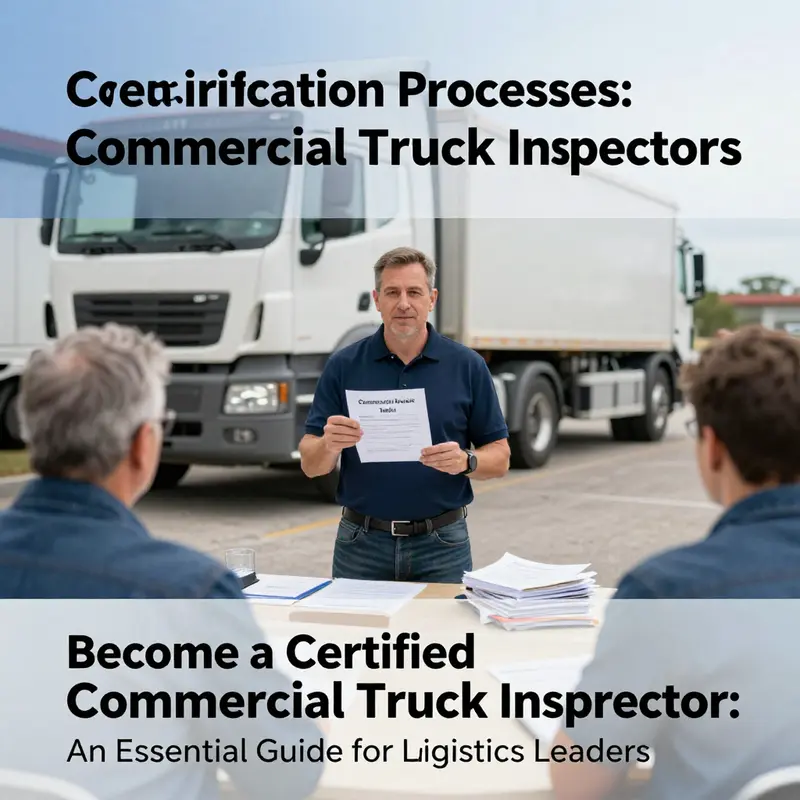
Embarking on the path to become a commercial truck inspector means entering a structured, standards-driven environment where safety, regulation, and hands-on knowledge converge. The certification journey is not a single hurdle but a carefully sequenced progression of training, testing, and credentialing designed to ensure inspectors can consistently identify defects, interpret regulations, and uphold safety across a wide spectrum of trucks, trailers, and operating contexts. At its core, the process aligns with federal expectations set by the FMCSA and reinforced by state requirements, yet it remains fundamentally practical: you must be able to translate a theoretical understanding of safety rules into accurate, fair, and timely inspections in the field. This is not merely about passing a test; it is about building the competence to protect drivers, carriers, and the traveling public, day after day, on highways that never stop evolving.
The first hinge in this door is training. Aspiring inspectors typically enter a program that covers both federal and state regulations governing commercial vehicle inspection, as well as the concrete procedures used on the road. Community colleges, vocational schools, and specialized training organizations offer curricula that dive into the mechanics of the inspection itself: how to perform a Pre-Trip Inspection, how to recognize issues in brake systems, tires, suspension, and electrical/electronic components, and how to interpret the regulatory framework that governs hours of service, hazardous materials handling, and vehicle safety standards. Programs may vary in length, but they share a common target: to provide a solid grounding in how a vehicle should operate, how it should be maintained, and how to document findings with clarity and legitimacy. Within this training, awareness of FMCSR nuances—what is required, what is prohibited, and what constitutes a compliant or noncompliant condition—begins to crystallize. As you absorb these standards, you also gain exposure to inspection procedures in simulated or supervised environments, building confidence before you stand in front of a real truck with a driver who depends on your judgment.
An important practical option in this phase is the decision around a Commercial Driver’s License (CDL). While a CDL is not universally mandatory for inspector roles, earning one can significantly deepen your understanding of the vehicle’s operation, its blind spots, and the everyday realities of the fleets you may inspect. The CDL pathway involves written exams that test knowledge of vehicle systems, safety regulations, and federal guidelines, followed by a skills test to demonstrate proficiency in handling large trucks. Even when a CDL is not required, pursuing one often enhances credibility with employers and provides a broader perspective that translates well when you assess pre-trip conditions, load securement, or defect risk during an inspection. The choice to pursue a CDL can be a strategic boost, especially for inspectors who may later move into roles that combine enforcement with enforcement-adjacent responsibilities or who want to work more closely with fleet operations.
As training progresses, the certification conversation sharpens around a central credential: the National Registry of Certified Inspectors (NRCI). The NRCI is FMCSA-aligned and serves as a marker that an inspector has met recognized federal standards for knowledge and competence. The path to NRCI eligibility typically follows successful completion of a recognized training program and a rigorous examination. Being listed in the NRCI can be a key factor for employers who require a demonstrable, FMCSA-aligned credential to validate an inspector’s capability before they stand at a dock, at a terminal, or at a border crossing. The registry is not merely ceremonial; it represents a commitment to ongoing professional standards and to the public trust that formulaic inspections will be conducted accurately and consistently. In this sense, NRCI is less a final prize and more a milestone in a continuous career arc that includes recertification and regular updates to keep pace with evolving regulations and technology.
Beyond the federal spine of the certification process, state-level requirements layer in additional expectations. States often have their own inspection-related certifications, licensing steps, or audit processes that applicants must navigate in parallel with or after federal certification. For many, the interplay between FMCSA standards and state-specific rules determines the exact job path—whether a candidate becomes a state inspector, works at a federal port of entry, or joins a private carrier’s in-house safety team. This landscape means researching and engaging with the state department of transportation (DOT) or equivalent agency early in the process helps prevent misaligned expectations. It also means that flexibility and adaptability become practical strengths: the inspector of today may need to function in a hybrid role that touches compliance auditing, safety enforcement, and operational consultation across different jurisdictions.
The certification journey does not end with the NRCI or a state credential. Ongoing education and recertification are integral to maintaining trust in the inspector’s judgment as technology and safety concerns evolve. Recertification periods commonly extend every five years for major certifications, and many programs require continuing education or reexamination to stay current with updates in FMCSA regulations, new inspection protocols, and emerging technologies such as electronic logging devices and advanced braking or tire pressure monitoring systems. The cadence of renewal reflects the field’s pace: rules change, enforcement priorities shift, and fleets adopt innovations that alter how vehicles are inspected and what constitutes a compliant condition. The most successful inspectors approach this as a long-term professional discipline rather than a one-time credentialing moment. They integrate regulatory briefings, hands-on refreshers, and scenario-based practice into their routine, ensuring their skills remain sharp even as the road and its rules continue to move.
In this context, a few practical considerations shape how you advance. Language access, for instance, has become more inclusive in recent years. As of 2026, many states have expanded multilingual testing materials for CDL and inspector exams, including options for speakers of Chinese and other languages. This shift lowers barriers for otherwise well-qualified applicants and reflects a broader commitment to public safety by ensuring diverse professionals can demonstrate their competence on equal footing. For someone pursuing certification, it is worth confirming with the relevant exam administrator whether multilingual resources are available and how to access them. Language access, however provided, should not be treated as a loophole but as a means to ensure accuracy and fairness in assessment, which in turn supports reliable inspections on the road.
As you approach the examination phase, remember that a written test often accompanies practical assessment. The written component typically evaluates your knowledge of the FMCSR, inspection procedures, and safety standards, with a blend of multiple-choice items and practical scenario questions that test your ability to apply rules in real-world contexts. Preparation, therefore, should be integrated: study the regulations in tandem with hands-on practice in vehicle systems. The goal is to develop the habit of asking the right questions under pressure, documenting findings with precise language, and presenting your conclusions in a way that is defensible should a carrier or enforcement colleague seek clarification.
Internal considerations also matter. If you plan to work in a cross-border or border-adjacent environment, you may encounter a broader regulatory ecosystem that blends federal, state, and international requirements. For readers seeking context on how cross-border regulatory dynamics influence inspector duties, a related discussion at the TCAS cross-border regulatory issues event provides valuable perspective on how inspectors navigate such complexities in practice. Cross-border regulatory issues event. This kind of external exposure helps frame the certification process not as a stand-alone hurdle but as part of a larger career journey that intersects with fleet operations, compliance programs, and evolving safety cultures across jurisdictions.
The final piece is the external resource that anchors this journey in official guidance. The FMCSA maintains an Inspector Certification resource that details qualifications, testing protocols, and ongoing requirements. This official page serves as a definitive reference as you map your steps—from choosing a training program and preparing for the exam to understanding recertification expectations and how NRCI eligibility is recognized by employers. Engaging with this resource early can clarify timelines, identify the exact exams you will face, and help you plan the sequence of steps that align with your career objectives. External resource: FMCSA Inspector Certification. https://www.fmcsa.dot.gov/regulations/inspector-certification
In sum, the path to becoming a commercial truck inspector is a disciplined blend of education, validation, and lifelong learning. It begins with solid training on the technical and regulatory pillars, continues through a careful progression of written and practical examinations, and culminates in NRCI placement, state alignment, and a commitment to ongoing development. The CDL can be a strategic advantage, but the heart of the career rests on the ability to assess, document, and interpret, with an eye for safety and a respect for the rule of law. If you approach this process with curiosity, rigor, and a readiness to adapt to changing technology and policy, you will find that the certification journey is not merely a credentialing exercise but a pathway into a profession that keeps people and loads moving safely down America’s highways.
Steering Your Career: A Practical Path to Becoming a Commercial Truck Inspector
A career as a commercial truck inspector combines safety standards, technical knowledge, and practical judgment. It is a role built on clear rules, focused training, and the responsibility that comes from helping keep roads safe and freight moving. The journey from interest to competence is gradual, with steps that align education, credentials, and hands on experience with the expectations of state and federal agencies and private fleets. The foundation begins with eligibility: you should be at least 21 and authorized to work in the United States, with a driving history that meets the standards for inspectors. These basics determine who can wear the badge and who must wait for the next opportunity. The road to credibility often passes through a commercial driver license, even if a CDL is not required for every inspector role. A CDL gives practical familiarity with vehicles and helps you understand what inspectors will check. Passing the written tests and the road test demonstrates proficiency and commitment that many other credentials do not. Beyond licensing, you should pursue targeted education in areas such as vehicle inspection, maintenance, transportation safety, or automotive technology. Look for programs aligned with federal safety guidelines so coursework matches current regulations and inspection practices. Key knowledge areas include inspection procedures and the pre trip inspection checklist, FMCSA regulations, and topics such as hazardous materials handling, brake system diagnostics, and tire and wheel inspection. These form the daily toolkit of a truck inspector and the material you will demonstrate on the job. Certification serves as a formal endorsement. The ASE Commercial Vehicle Inspection Technician certification is highly valued and covers systems from brakes to electrical and engine repair. Earning this credential signals that you can diagnose issues across a heavy vehicle. In some places, state departments of transportation offer FMCSA approved inspector training programs. Completing these programs confirms knowledge of federal standards and shows you stay current with practices. Practical experience complements certification. Work in a maintenance shop, a fleet safety department, or a repair facility to gain exposure to how inspectors evaluate brake wear, tire condition, how electronic devices affect vehicles, and how filing reports fits a compliance program. With formal credentials and hands on experience, you become an attractive candidate for roles with state inspectors, port postings, or private fleets that emphasize safety compliance. As you translate training into opportunity, tailor your resume to highlight safety compliance, regulatory knowledge, and inspection procedures. Mention specific guidelines you have worked with and include concrete examples. If you have earned an ASE CVI certification, call it out prominently. If you hold FMCSA approved inspector training, note the program and completion date to show currency. In your cover letter, convey a clear understanding of safety protocols and a commitment to road safety. Describe a time you identified a safety issue, how you documented it, and how you proposed a corrective action aligned with regulations. A concise narrative about reporting and follow up can be more persuasive than a long list of duties. Finding openings involves online job boards that post inspector roles across states, ports, and fleets. Use precise keywords such as commercial vehicle inspector, truck inspector, or dot inspector to refine results. Do not rely on postings alone; apply directly on employer pages when possible. Setting up job alerts helps you stay ahead of new opportunities. In interviews you will discuss technical knowledge and your ability to work in a safety oriented team. Expect questions about inspection procedures, common violations, and how you report findings. The interviewer will assess observational skills, clear communication under pressure, and tact in addressing adverse findings. Practice scenarios in your mind, such as spotting a brake imbalance during a pre trip, documenting it clearly, and proposing a corrective action that aligns with guidelines. Ongoing professional development is essential. Certification and training requirements are updated over time and recertification is often required every few years for many credentials. Staying current means continuing education, attending workshops, and monitoring regulatory changes that affect vehicle safety, inspection procedures, and reporting formats. This is a career arc rather than a single milestone. You may connect with professional networks and resources that share insights on evolving standards. A practical step today is to explore industry context and observe how job opportunities shift with demand for safer fleets. For more on industry trends, read industry reports and job market summaries to time your applications and tailor your narrative. And when you land an opportunity, remember that great candidates combine technical know how with effective communication. They can pinpoint problems, explain risks, and follow through to ensure actions are taken. The blend of education, certification, and practical experience you build will shape every resume update, cover letter, and interview answer. Over time you will find that the truck inspector role is about enabling safe operations, not policing, and you become a key link between compliance and execution. External resources can help you plan. Begin with industry job postings, credentialing bodies, and safety guidance, then supplement with ongoing learning and hands on practice. If you are serious about this career, your plan should be clear, measurable, and aligned with standards that keep transport systems reliable and safe.
Final thoughts
In summary, becoming a commercial truck inspector is an attainable goal that involves meeting specific eligibility requirements, gaining a CDL where applicable, pursuing relevant educational pathways, securing the necessary certifications, and strategically applying for jobs. This comprehensive approach not only supports regulatory compliance but also enhances the safety and efficiency of vehicle operations within the logistics and freight sectors. By investing in this career pathway, stakeholders can significantly contribute to improving standards in commercial transportation.