
The cost of acquiring and maintaining commercial trucks is a pivotal concern for logistics & freight companies, construction, mining enterprises, and small business owners with delivery fleets. Understanding the multifaceted pricing landscape is essential for making informed purchasing decisions. This article delves deep into the factors influencing truck prices, explores types of commercial trucks and their varied costs, compares new and used options, and assesses the broader economic impacts that shape truck valuations. Each chapter builds a comprehensive framework to equip stakeholders with the necessary insights to optimize their procurement strategies.
The Price Equation: How Size, Specs, and Market Realities Determine a Commercial Truck’s Cost
Cost, like a good shipment, travels in layers. The sticker price is just the first stop on a longer journey toward ownership. Buyers must weigh operating demands, regulatory requirements, and the realities of today’s markets. In practical terms, the overall cost of a commercial truck emerges from a blend of budget choices, the truck’s size and capabilities, the reputation and architecture of the maker, and the invisible but powerful forces of fuel economics and emissions compliance. Add in the current market climate—where supply chains, demand, and financing costs influence every quote—and the final number becomes a narrative as much as a figure. For a business evaluating a fleet upgrade or a first dedicated vehicle, this narrative matters because it frames not only what is affordable today but what will be sustainable over three to five years of operation. The numbers that shape this chapter are grounded in current market data, but they also illustrate a broader principle: cost is a moving target that reflects both tangible features and the ecosystem in which the vehicle operates.
Budget choices are foundational. New trucks carry the strongest warranty support, the latest safety gear, and the most advanced fuel-efficiency technologies. They also sit at the higher end of the price spectrum. Used trucks, by contrast, can offer a lower upfront outlay and a quicker path to operating capability, but they bring the risk of higher maintenance costs, potential downtime, and the possibility of older technology that can reduce long-term efficiency. A business that prioritizes cash flow may lean toward a newer, lightly optioned model if the total cost of ownership—fuel, maintenance, downtime, resale value, and insurance—fits more predictably into monthly budgets. Alternatively, if the fleet relies on a predictable cycle of miles and a tight budget, a carefully evaluated used truck might deliver a shorter horizon to cost parity, provided the maintenance plan and parts availability are solid.
Size and class matter, too. In the commercial truck world, the range runs from compact, local-delivery profiles to true heavy-duty machines designed for long-haul freight. The price gradient follows this scale. Larger, heavier-class trucks command higher initial prices because they pack more power, more sophisticated drivetrains, and components designed to carry heavier loads. For regional or local delivery needs, smaller classes offer lower purchase prices and often lower insurance costs, but they may come with higher per-mile operating costs if duty cycles demand more frequent acceleration, braking, and tire wear. When a fleet’s operations involve specialized applications—refrigerated cargo, dump bodies, or other modifications—the price climbs again. Each added feature is a modular decision: it changes the utilization pattern, reduces downtime, or protects payload integrity, but it also adds to the upfront and ongoing costs.
The make and model landscape shapes price through a blend of durability expectations, resale value, and parts availability. In the broader market, well-established brands tend to sit at a premium price point due to recognized durability and a sizable service network. They also tend to retain higher resale value, which can be a meaningful consideration for fleets that eventually cycle assets. In contrast, newer or less common configurations may be priced more aggressively at the outset but can entail higher maintenance costs or limited access to easy-to-find parts. The right choice depends on an operator’s tolerance for risk, the reliability profile of the engine and drivetrain family, and the breadth of the service network near maintenance hubs and major routes.
Fuel efficiency and emissions compliance have become central to the total cost of ownership in recent years. Trucks that meet stringent emissions standards typically require more advanced exhaust aftertreatment or engine technology. These features push the upfront price higher but can deliver meaningful savings through reduced fuel consumption, lower penalties for noncompliance, and, in certain markets, incentives or tax benefits tied to cleaner fleets. The trade-off between upfront cost and long-term savings is not universal. A vehicle operating in regions with high fuel prices or stricter emissions enforcement might justify the premium more quickly than one in a lower-cost environment. Conversely, a buyer with a tight cash position may postpone high-emission specifications and opt for simpler configurations with lower immediate cost, planning to upgrade when the fleet economics justify it.
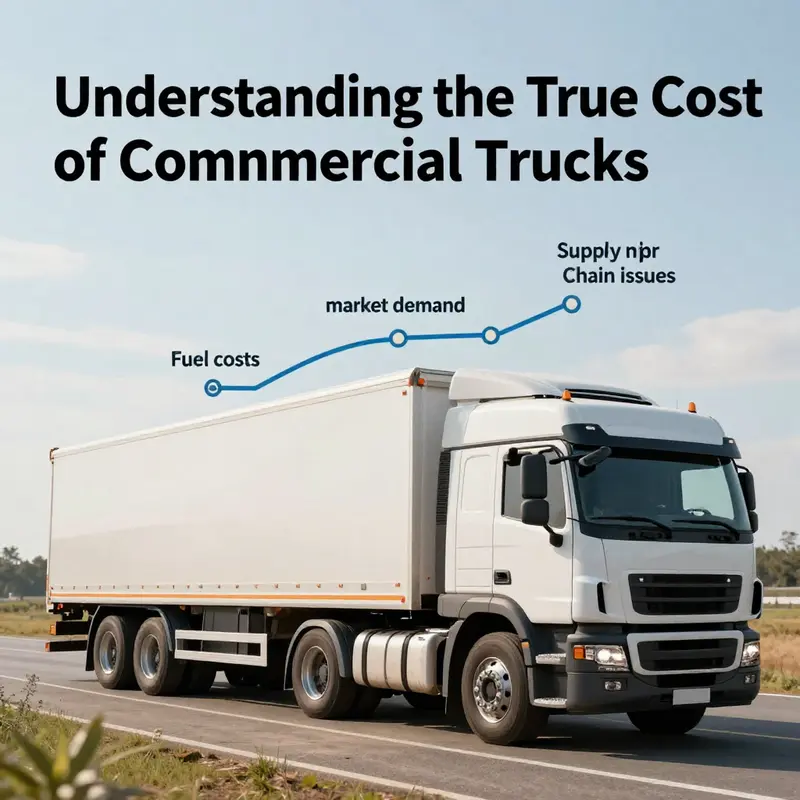
Market conditions add a final, often unpredictable layer. In the years leading up to 2026, the trucking sector has faced sustained pressure from supply chain frictions, fluctuating demand, and shifting financing costs. Price quotes for new stock can vary by region, tariffs, taxes, and the fees charged by dealers or distributors. For buyers who are purchasing single units, the price may be closer to the higher end of the spectrum as the economies of scale that encourage bulk discounts do not apply. For buyers who can commit to larger orders, there is usually some relief on a per-unit basis, particularly for standard, diesel-powered configurations that fit typical regional routes. The reality is that sellers can and do revise prices in response to market shifts, so an accurate quote requires direct contact with suppliers and careful consideration of delivery terms, warranty packages, and after-sales support.
A concrete, if anonymized, snapshot helps anchor these ideas. A budget-friendly new light commercial truck model can be found around the mid-teens in thousands when purchased as a single unit. In a dedicated bulk-buy scenario, a diesel-powered, two-wheel-drive configuration with a modest payload and a compact wheelbase can begin at a lower price point when ordering a dozen or more units, with per-unit costs dropping as volume increases. These figures reflect new production lines and stock positions, but they are highly sensitive to local taxes, import duties, and any added equipment or customization that tailor the truck to a given fleet’s operational realities. For buyers seeking current quotes, direct engagement with suppliers—whether through general procurement marketplaces or regional dealer networks—remains essential. Platforms that connect buyers with manufacturers can help in this regard by surfacing stock, lead times, and the full scope of available options that affect pricing. When approaching this process, it can be helpful to keep a few guiding questions in mind: Which payload range aligns with our typical loads? How important is engine efficiency in our operating corridor? Are we prepared to finance or lease, and what are the long-term cost implications of each path? And how quickly can we expect to realize a return on investment through reduced fuel consumption or lower maintenance downtime?
To understand the broader economics of a purchase, buyers should consider the potential to time a purchase in concert with market rhythms. Observing indicators such as dealer inventory levels, new model launches, and the pace of orders from fleet managers can provide clues about when prices may soften or rebound. Market dynamics also influence the availability of incentives, rebates, or favorable financing terms, all of which can tilt the effective price of ownership. Acknowledging these dynamics is not an exercise in fear of scarcity, but a practical approach to negotiating a fair deal. As active participants in a market where demand often outpaces supply, both buyers and sellers benefit from transparent, data-informed conversations about specifications, total cost of ownership, and expected asset longevity.
The practical implications of these factors crystallize when a buyer moves from theory to a real quote. Consider the potential differences between a single-unit purchase and a bulk acquisition. For a one-off unit, the price tag tends to reflect the base configuration, delivery terms, and basic warranty coverage, with adjustments for regional taxes and any mandatory regulatory packages. In a bulk scenario, the per-unit price often falls as the order size grows, but the total cost of ownership remains a composite of the same drivers: payload capacity, drivetrain design, emissions controls, and the extent of aftermarket support. The same truck configured for a specific use case—such as refrigerated transport or waste collection—will carry additional components that push the price up, yet these components can deliver a more predictable schedule, higher uptime, and lower last-minute operational surprises. The balance of upfront investment against reliability, maintenance cadence, and resale trajectory becomes the core calculus of any fleet decision.
In reflecting on this, it is useful to view cost not as a single fixed number, but as a spectrum shaped by operational needs and market realities. A fleet that runs high-mileage routes with strict uptime requirements may justify a higher upfront investment in a new, fuel-efficient, emissions-compliant model if that choice yields lower total maintenance and fuel costs over time. A regional outfit with predictable, lower-mileage duties might find a suitable balance in a lower-cost, lightly used unit with a sensible maintenance plan and a well-established service network. The key is to map the decision to the actual operating profile, anchored by a clear understanding of total cost of ownership rather than price alone. In this context, a discussion about market dynamics becomes not just about what to pay, but about how to position the fleet for the most economical, reliable operation for the long haul.
For readers seeking a deeper sense of market dynamics, consider the role of systemic factors such as excess capacity in the trucking market. When capacity exceeds demand, pricing pressure tends to increase the competitiveness of offers and the willingness of sellers to provide favorable terms to secure long-term relationships. Conversely, tight capacity can push buyers toward quicker decisions and potentially higher upfront quotes. Understanding this balance helps buyers interpret price quotes not as fixed absolutes but as negotiating positions that reflect the broader ecosystem. Excess capacity in the trucking market insights can provide a useful context for evaluating where a current quote sits within longer-term market cycles and how a buyer might time a purchase for favorable terms. In any case, the best path forward remains a careful, verified comparison of options, guided by realistic projections of total cost of ownership and aligned with the fleet’s mission-critical requirements.
Ultimately, the price of a commercial truck embodies more than the sum of its parts. It encodes the forecast of fuel costs, maintenance schedules, downtime penalties, and the value of strong resale potential. It encodes the confidence a buyer has in the service network available to support the asset over its life. It encodes the expectations of the crew that will operate the vehicle and the regulatory environment in which it will run. It encodes the willingness to absorb risk today in exchange for a predictable cost structure tomorrow. As with any meaningful investment, the most durable decisions come from a synthesis of data, practical experience, and a clear-eyed view of how the asset will perform within the particular rhythms of a fleet’s operation. With that lens, buyers can move beyond headlines about price and toward a decision that supports steady, reliable service for the miles ahead.
External resource for market trends and pricing dynamics can be found at the American Trucking Associations, which offers industry context and policy considerations that intersect with pricing decisions: https://www.trucking.org
From Workhorse to Semis: How Size, Duty Class, and Customization Shape Commercial Truck Prices

Prices for commercial trucks are rarely a single figure. They move with the vehicle’s role, its powertrain, the equipment installed, and the financial terms that come with the purchase. For a fleet manager or a small business owner, the sticker price is only part of the story. The true cost of ownership includes fuel efficiency, maintenance, down payments, financing charges, insurance, and how long the truck remains productive in service. When you pull back from individual units to the broader landscape of truck kinds, a pattern emerges: the more a truck is built to carry weight, endure hours on the road, or perform specialized work, the higher the price tag tends to be. Yet there are meaningful distinctions even within the same broad class, and those distinctions hinge on a set of steady drivers—size, payload, engine choice, and the level of customization required for a given task.
To start with the basics, commercial trucks are commonly grouped by duty class, which is a practical lens through which buyers assess fit and value. Medium-duty trucks sit in a middle ground. They are flexible enough to handle daily delivery routes, utility work, and moderate freight without the ferocity of long-haul hauls. In practice, these are the workhorses that glide through urban corridors and suburban nodes, where maneuverability and reliability matter as much as raw capacity. The stated range for these vehicles often places their gross vehicle weight rating in the neighborhood of roughly 14,000 to 26,000 pounds. That GVWR band makes them affordable enough to be considered cash-light entries for growing businesses, while still capable of handling a broad spectrum of payloads and configurations. The price window typically cited in market observations for medium-duty trucks runs from the mid-thirties up to the low sixties in thousands of dollars. It is a broad range because the exact number hinges on how much body work the buyer specifies, whether the cab is a basic two-seat setup or a more comfortable, feature-rich configuration, and what kind of auxiliary equipment accompanies the chassis—lifts, racks, or refrigeration units, for instance.
Beyond the medium-class zone, heavy-duty trucks occupy the realm where the cost dynamics become more pronounced. These are the machines that power long-haul routes, large-volume freight, and demanding duty cycles. They include tractors designed to pull multi-axle trailers, dump trucks that move aggregate and other bulk materials, and other specialized platforms intended for big, continuous workloads. In this category, the GVWR begins well above the 26,000-pound line and often stretches into ranges that reflect true industrial endurance. The price spectrum broadens accordingly. New heavy-duty models with advanced drivetrain technology, high-capacity transmissions, enhanced safety systems, and stronger emissions-control packages often command anywhere from roughly seventy thousand dollars to well over one hundred and fifty thousand. The upper end of that range is increasingly populated by configurations that marry power with sophisticated driver-assistance suites, telemetry packages, and heavy-duty cooling systems or hydraulic frameworks designed for sustained, high-mileage operation. The result is a practical, real-world truth: as the truck’s job becomes more exacting, the price capture reflects the investment in reliability, uptime, and the ability to meet strict regulatory and operational requirements.
Specialized trucks sit at the outer edge of pricing curves and introduce a different kind of complexity. These vehicles are built to perform a narrowly defined task—yet they must do so repeatedly and safely in often challenging environments. In one case, a dump truck might carry sand or gravel with a hydraulically operated bed; in another, a bucket truck supports utility crews working aloft; in still another, a school bus or a beverage or airport shuttle vehicle serves the public or private sectors with a bespoke interior arrangement. The equipment that makes these trucks fit for purpose—the hydraulic systems, the refrigeration units, the lifting booms, the reinforced frames, the schooling protection standards, the fire-suppression and medical readiness features—adds substantial cost. It is not unusual for specialized units to exceed the six-figure mark, especially when the configuration requires custom engineering, stringent safety compliance, or oversized payload capabilities. In some cases, price tags push past a hundred thousand, and for truly mission-critical fleets the investment can escalate further to align with the exacting standards that customers demand and regulators require.
An important thread that runs through all of these classes is the impact of customization. A base chassis in any category is only the starting point. Buyers often layer on a specific cargo body, specialized equipment, or a series of aftermarket enhancements. The more a truck is tailored to a single business model—say, a refrigerated food service unit, a hazardous-materials carrier, or a municipal contractor with a bespoke public-safety package—the more the unit price diverges from a generic configuration. Custom options are not merely cosmetic; they alter the vehicle’s weight distribution, fuel consumption profile, and maintenance footprint. Even small changes can create meaningful shifts in total cost of ownership over the truck’s lifetime. This is why many buyers face a balancing act: they must weigh the immediate price against the longer-term value gained in uptime, efficiency, and serviceable life. In practice, that means a lower upfront price might be offset by higher operating costs later if the unit lacks the capacity or durability required for the intended workload, while a higher initial investment can yield extended service life and lower incremental costs per mile.
For readers who are scanning the market for entry-level options, there is a consideration worth highlighting—the trade-off between cost and capabilities at the low end of the price curve. Some buyers explore new, basic configurations that deliver essential transportation or delivery capacity without heavy customization. In such cases, the unit price tends to sit in a more accessible range, and the total cost of ownership can be favorable if the business model is tightly aligned with the vehicle’s capacity and reliability. It is also common for fleet operators to negotiate bulk or volume pricing when they order multiple vehicles at once. In practice, bulk purchasing can yield meaningful reductions per unit, especially on simpler configurations that require less specialized equipment. The economics here are straightforward: fewer frills, lower sticker price, and a faster path to ramping up a fleet. Yet even in bulk deals, the decision remains tethered to the same core calculus—what is the vehicle capable of delivering in terms of payload, uptime, and operating life, relative to the business’s revenue-generating activity over time?
As with any substantial capital asset, the decision is rarely about the price alone. Buyers must evaluate the total ownership horizon, including fuel efficiency, maintenance costs, expected mileage, and resale value. Engine technology is a persistent driver of operating expenses, shaping both fuel economy and reliability figures that feed into depreciation and maintenance plans. Transmission choice, axle configurations, and fuel strategy have a direct impact on lifecycle costs. In urban or short-haul deployments, a diesel-powered medium-duty platform with efficient routing and maintenance schedules can optimize cost per mile. In longer-haul operations, fuel efficiency gains and engine durability become even more critical, because even small improvements in miles per gallon or downtime reduction translate into measurable savings across thousands of miles each year.
The pricing picture also reflects market dynamics that are not strictly tied to engineering choices. Regional taxes, import duties, and regulatory compliance costs can tilt the cost of a given configuration in one market versus another. Financing terms—down payment requirements, interest rates, residuals, and lease versus purchase—shape the monthly and lifetime cost of a truck in ways that are sometimes as meaningful as the sticker price. A business evaluating a fleet purchase should explore financing scenarios alongside vehicle specifications, since a favorable finance package can materially affect the total cost of ownership and the time needed to reach a break-even point on a new unit.
To connect theory with a practical footnote that many fleet buyers consider, price research often points to the variability introduced by volume and regional terms. For instance, some manufacturers and distributors offer significant discounts when a buyer commits to a multi-vehicle program or agrees to a certain cadence of orders over a fixed period. Those arrangements can yield per-unit savings that, over a fleet, compound into substantial dollars saved. Conversely, if a business is evaluating a single-unit purchase for a test period or a limited operation, the base price often reflects a less favorable economics story, simply because the supplier cannot leverage scale in the same way. This is one reason why buyers approach the market with a clear view of their intended usage, schedule, and budget, and why many turn to a combination of base models and carefully selected options that maximize uptime and minimize total costs over the asset’s life.
For readers who want to explore how broader market patterns feed into pricing, there is a useful synthesis in industry analyses that connect ordering trends, production capacity, and margins across the truck ecosystem. A detailed discussion on how trailer orders influence truckload margins offers a window into how demand rhythms translate into pricing and availability. Understanding these dynamics can help buyers time acquisitions or structure negotiations to optimize costs over the life of the fleet. See this analysis for a deeper dive into the relationship between ordering patterns and margins: Trailer orders and their impact on truckload margins.
In summary, the spectrum of commercial truck prices maps closely to the intended role and the level of customization required. Medium-duty workhorses offer a balance of cost and capability, with price ranges that reflect standard configurations and practical payloads. Heavy-duty machines command higher prices driven by horsepower, durability, and the demands of long-haul service. Specialized vehicles, while essential for certain industries, carry premium price tags because they bundle purpose-built equipment with compliance considerations and reliability guarantees. The deciding factor for a buyer is not simply the sticker price but the cost of ownership over the asset’s lifetime, informed by usage patterns, maintenance expectations, fuel strategy, financing terms, and the strategic value of uptime. For organizations that plan ahead and negotiate effectively, even modest improvements in efficiency, reliability, or resale value can translate into meaningful long-term savings, underscoring why understanding the cost architecture of truck types matters as much as the initial price tag.
External benchmarks and broader market context can be found in industry references that aggregate manufacturer specifications, pricing benchmarks, and fleet implications. These resources provide additional perspectives on how pricing responds to technology upgrades, regulatory changes, and evolving industry needs. https://www.freightliner.com/commercial-trucks.aspx
When Price Is Only Part of the Equation: A Deep Dive into New vs Used Commercial Trucks and the Real Cost of Fleet Ownership
The sticker price is only the opening chapter in the story of what a commercial truck will cost your business over the life of the asset. For managers steering a fleet through balance sheets, it becomes clear that the question is not simply, “What does a truck cost?” but, more precisely, “What will owning this truck cost me over five, seven, or ten years?” That broader view—upfront investment, ongoing maintenance, fuel efficiency, depreciation, financing terms, and risk—shapes every decision a fleet makes. It also helps explain why the market for trucks is a study in contrasts: a spectrum that stretches from budget-friendly light-duty options to the heavy, capital-intensive workhorses that define long-haul logistics. In this chapter, the focus is on comparing new versus used trucks, with an eye toward practical implications for cash flow, reliability, and long-term value. The numbers that anchor the discussion come from current market data and industry analyses, which together illuminate where price sits in the bigger equation of total cost of ownership.
Upfront purchase price is the most obvious fork in the road. When considering new trucks, the initial outlay tends to be substantial. For example, a typical benchmark for the most demanding segment of the market—the large, heavy-duty tractor-trailer class—shows average new prices in the vicinity of roughly $160,000 in 2025. That headline figure captures the breadth of what modern fleets expect from new models: advanced safety features, multi-year warranties, the latest emissions and telemetry technology, and the peace of mind that comes with factory support. The flip side of this equation is the price tag attached to a well-maintained used model from the same period. In many cases, a used example can be found for around $90,000, delivering a reduction of about 44 percent in upfront cost. It is a stark delta, and it reflects not just wear and tear but the reality that depreciation has already taken a significant bite from the asset. Those figures are more than numbers; they are the initial choices a fleet manager must weigh when budgeting, negotiating financing, and projecting cash flow.
It is also worth noting that the market presents cheaper entry points in other segments, especially for lighter commercial work or smaller fleets. Budget-friendly light commercial trucks can sometimes be found in the range of roughly $12,800 to $13,000 for a single unit, reflecting a category that prioritizes affordability and practicality over maximum payload and long-haul range. This price band is especially relevant to startups or small businesses that need a reliable workhorse without tying up capital in a high-end unit. If a fleet grows and scales up, there are even deeper price concessions available through volume purchases. In bulk, new light-duty options may be offered from about $10,000 per unit when ordering 14 or more units, a structure that shifts the calculus toward utilization rates and financing terms rather than mere sticker price. These price points—low-cost, bulk-discounted, and premium new—illustrate how the market tailors commodity trucks to different operator profiles, whether a company is starting small or expanding rapidly.
Yet price is only the first mile of a long road. Maintenance costs illuminate the second major gap between new and used trucks. New trucks carry the advantage of the latest technology, which can translate into improved fuel efficiency and fewer unexpected breakdowns in the early years. Warranties cover many of the usual maintenance surprises, letting a fleet focus on utilization rather than downtime. The downside, of course, is that the initial outlay remains high, and even with warranties, technology cycles can move at a pace that makes some features briefly state-of-the-art before they become yesterday’s news. In contrast, used trucks bring a different set of realities. A well-maintained used vehicle, particularly one that has accrued low mileage for its age, can deliver predictable operating costs with known maintenance histories. However, the maintenance bill for used equipment often includes more frequent repairs, potential parts wear, and, depending on the engine and emission systems, higher fuel consumption relative to newly engineered powertrains. The gap in maintenance costs is not simply a binary difference between “new vs used”; it is a calculus that depends on maintenance history, current condition, and the reliability profile of the specific model series in question.
Depreciation adds another layer of complexity. In the first few years, new trucks experience the steepest depreciation, which means the asset loses a meaningful portion of its value quickly. This accelerated depreciation creates a pressure on resale value and can influence financing terms, lease structures, and the willingness of lenders to offer favorable rates. Used trucks, by contrast, have already absorbed much of their depreciation, which can translate into a lower annualized cost of ownership—assuming the unit remains dependable and can stay on the road with reasonable repair costs. The catch is that depreciation continues, albeit at a slower pace, and resale markets can swing with fuel prices, maintenance costs, and demand for used equipment in a given region. Fleet managers must forecast not only the present value of the asset but also how its resale value evolves with mileage, age, and market conditions.
When considering total cost of ownership (TCO), the narrative becomes more nuanced. TCO is not a single line on a balance sheet; it is a composite of repair costs, uptime, financing terms, opportunity costs, fuel economy, and residual value. In the early years, new trucks may incur lower repair expenses because of warranties and the absence of aging components. But they also tend to lose value more rapidly due to depreciation. This combination can produce a distinct TCO profile where the cash outlay is high, but the risk of unexpected, large repair bills is comparatively low in the short term. Used trucks, particularly those with documented reliability and low miles, offer the appeal of lower upfront cost and potentially steadier ongoing maintenance expenses, provided the operator accepts a higher probability of repairs and more variable fuel efficiency. The financing environment shapes these outcomes in meaningful ways. New trucks often benefit from lower interest rates and longer loan terms, thanks to lender confidence in the asset’s durability and warranty coverage. This can lower monthly payments and improve cash flow in the early years, even if the total cost of ownership over the life of the loan remains higher due to the larger initial price and steeper depreciation curve. Used trucks, conversely, may attract higher interest rates and shorter terms, increasing monthly payments but sometimes enabling a quicker return on investment if the fleet can extend the useful life of the vehicle without frequent interruptions.
The decision factors extend beyond pure economics into the operational realities of the business. A fleet manager must weigh the needs for payload capacity, reliability, and compliance with evolving emissions regulations. New models often come with advanced driver-assistance systems, more precise telematics, and robust safety features that can reduce accident risk and maintenance downtime. For fleets with heavy compliance burdens or those operating in regions with strict emissions standards, the value proposition of new hardware can be compelling, because newer engines and aftertreatment systems may lower regulatory risk and future-proof the operation. On the other hand, startups or smaller operators facing urgent capital constraints may opt for used equipment to reach critical serviceability quickly while preserving capital for core business needs. If a company’s business model relies on high utilization and rapid duty cycles, the cost of downtime may dwarf the upfront price difference between new and used. In such cases, the reliability of a unit, the availability of parts, and the ease of service become more important than the initial sticker price.
Another layer to consider is market dynamics and the practical realities of procurement. The spectrum of price points discussed earlier highlights how the market accommodates different buying strategies. A buyer who can negotiate favorable terms on bulk purchases may secure a lower per-unit price, even for newer inventory, which can change the TCO calculus in meaningful ways. The broader market environment—availability, lead times, and the level of demand for certain configurations—also impacts price and financing options. To understand how these dynamics can influence pricing trends and bargaining power, readers may explore industry insights on market capacity and its impact on pricing. For a focused glance at that topic, see Excess-Capacity-In-The-Trucking-Market-Insights. This resource helps illuminate how shifts in fleet utilization, capital availability, and demand for equipment can ripple through to the price of both new and used units, shaping decisions that might otherwise seem purely numbers-driven.
The overarching takeaway is that there is no one-size-fits-all answer to the question, “How much does a commercial truck cost?” The optimal choice depends on the operator’s scale, cash flow, risk tolerance, and strategic priorities. For a growing company with capital and a long horizon, a new truck or a small handful of new trucks might deliver long-term reliability and predictable maintenance, translating into lower risk and a favourable TCO over the life of the asset. For an operator that prioritizes lower initial expenditure and can tolerate higher maintenance exposure, a carefully selected used model may deliver a lower price barrier to entry and a quicker path to positive cash flow, provided the vehicle’s maintenance history is transparent and the mileages are reasonable.
The data points from the marketplace reinforce these conclusions. Across segments, the price spectrum is broad enough to accommodate a range of business models, from the cautious start-up eyeing a few budget-friendly light trucks to the large fleet that negotiates bulk discounts on heavy-duty equipment. It is not unusual to see a mix of new and used units within a single fleet, each chosen to complement the others in terms of capability, uptime, and cost efficiency. In practice, the chapter on cost comparison between new and used trucks is not about choosing one path over the other in absolutes. It is about selecting the combination of units that delivers the best balance of upfront affordability, predictable maintenance, and value retention over time. The right mix depends on how a fleet intends to operate, how it measures uptime, and how it translates asset value into service capacity in the face of changing fuel costs, regulatory expectations, and macroeconomic conditions.
For readers seeking a concise principle to carry forward, a practical rule of thumb emerges: treat the truck as an operating asset with associated total costs rather than as a single purchase decision. Evaluate upfront price in the context of a robust maintenance plan, a clear financing strategy, and a realistic projection of resale value. When those components align, the choice between new and used becomes less about chasing the lowest sticker price and more about optimizing uptime, cash flow, and long-term profitability. In many cases, a deliberate combination—new units for high-use routes or top-priority capital projects, and well-vetted used units to cover secondary capacity or peak-season demands—can deliver superior overall performance without sacrificing financial discipline.
External resource for broader context on new versus used trucks and the 2025 landscape can be found in Truck News: New vs Used Trucks: What You Need to Know in 2025, which offers an industry-wide perspective that complements the specifics of this chapter. For readers who want a deeper dive into market dynamics and how they influence pricing and financing terms, the linked reference provides valuable perspective on trends shaping decisions across fleets of all sizes. Truck News: New vs Used Trucks: What You Need to Know in 2025.
Internal link for broader context on market dynamics and pricing strategies is provided here, using an internal resource that aligns with the chapter’s emphasis on how capacity and demand shape cost: Excess-Capacity-In-The-Trucking-Market-Insights. This link anchors a strand of the narrative in practical terms, illustrating how buyers can leverage market conditions to optimize both price and financing terms when assembling a fleet.
In short, the price you see is just the start. The real question is how that price translates into uptime, serviceability, and long-run value. When fleet leaders anchor decisions in total cost of ownership, the choices—not just the numbers—become clearer. The market will continue to offer a spectrum of options, and savvy operators will align their acquisitions with a strategy that marries cash flow discipline to operational resilience. That alignment is what ultimately determines whether a new truck or a used one becomes a smarter investment for the business, and how the fleet will perform when the road gets busy and the calendar turns to peak demand.
null
null
Final thoughts
In summary, the cost of commercial trucks is influenced by a multitude of factors—including truck type, condition, and the economic environment. By comprehensively understanding how these elements interplay, business owners can better navigate the market to make informed decisions tailored to their operational needs. Whether opting for a budget-friendly light commercial truck or evaluating bulk purchase advantages, these insights are essential for optimizing financial strategies in transportation and logistics.