
For logistics and freight company owners, construction and mining procurement teams, and small business owners, knowing the load capacity of a 26-ton commercial truck is crucial for efficient operations. The interplay between axle configuration, permitted total mass, and legal regulations determines how much weight can be legally transported. This article delves into five critical chapters—starting with the importance of axle configuration, followed by the concept of permitted total mass, and exploring legal considerations. We will then conduct a comparative analysis of load capacities and wrap up with best practices for optimizing loads, ensuring you remain compliant while maximizing operational efficiency.
Payload Geometry: How Axle Configuration Defines What a 26-Ton Truck Can Legally Carry
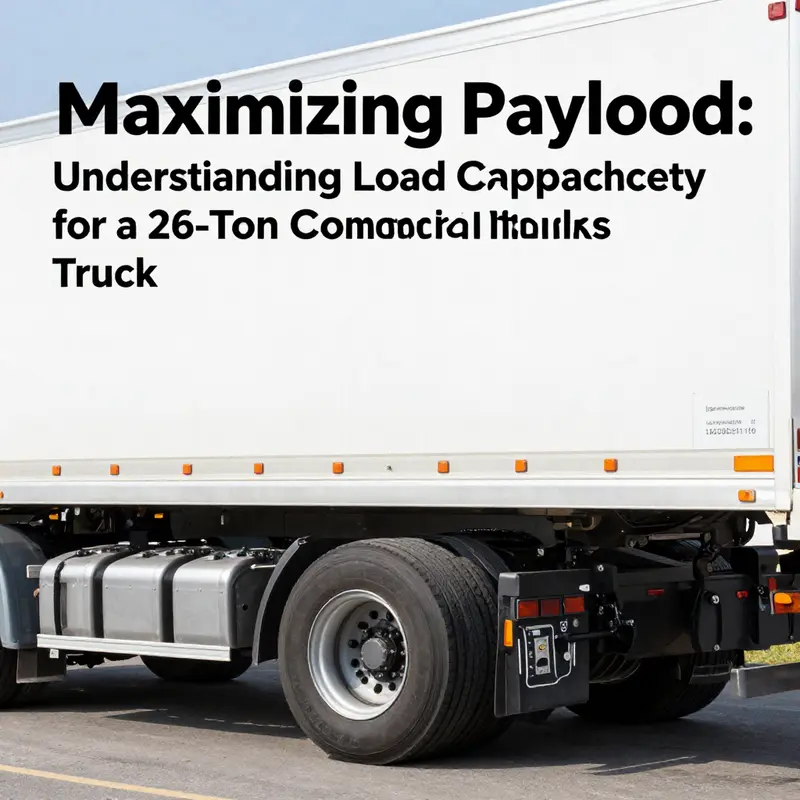
A 26-ton label on a commercial truck is a simplification that hides a more careful balance of weight, structure, and law. In practice, the amount you can carry depends as much on how many axles and what kind of axle arrangement the vehicle has as it does on the nominal weight class. The key idea is straightforward: the vehicle’s legal payload equals what the vehicle is allowed to weigh in total minus the weight of the vehicle itself when empty. The empty weight, or curb weight, sits on the scale with the cargo. If you don’t know the permitted total mass, you could miscalculate and either underload and waste capacity or overstep the legal boundary and risk penalties. That is why the axle configuration matters so much. It defines not only the ceiling for the whole rig but also the way weight is distributed across axles, which is where strict limits come into play. In many regulatory frameworks, the maximum total mass for a vehicle rises with the number of axles, reflecting the greater distribution of load. A three-axle truck, for instance, typically carries a higher total mass ceiling than a two-axle unit, simply because there are more contact points on the road sharing the load. Yet even with a favorable ceiling, each axle has its own limit. A single axle may be capped at about ten tonnes, two axles working together in a tandem can share up to eighteen tonnes, and three axles in a tri-axle arrangement can be allocated as much as twenty-four tonnes in the three-axle group. These per-axle and group weights are the practical brakes on maximum payload.
When you apply this to a 26-ton class, the math relies on two numbers you must verify in the truck’s official papers: the vehicle’s GVWR, or maximum authorized mass, and the curb weight. The GVWR is the manufacturer’s declared ceiling for the sum of the chassis, body, cargo, passengers, and fluids. Subtract the curb weight from that number, and you get the theoretical payload ceiling. But here is where a crucial distinction appears. The GVWR you see on a registration document might exceed the practical ceiling allowed by the vehicle’s axle configuration. In some cases, especially with three-axle configurations, the regulatory maximum total mass is capped at a value like thirty tonnes, even if the GVWR printed on a sticker or certificate is higher. In other words, you must harmonize three factors: GVWR, curb weight, and the axle-based total-mass limit. The registration certificate’s listed “Permitted Total Mass” (or Maximum Authorized Mass) is the definitive figure you must use for legal payload calculations.
To illustrate, consider a 13-meter box-van semi-trailer as a representative 26-ton class example. If the curb weight sits at about 9.3 tonnes and the GVWR is around 31.5 tonnes, a straightforward subtraction suggests a payload potential of roughly 22.2 tonnes. That number, though, sits on another constraint: the axle configuration. If the three-axle arrangement has a regulatory total-mass cap of 30 tonnes, the actual payload must be limited so that the overall weight does not surpass 30 tonnes. In that scenario, the maximum payload would be 30.0 − 9.3 = 20.7 tonnes, not the 22.2 tonnes implied by the GVWR alone. If, instead, the setup is a heavier five-axle trailer with a higher overall cap, the payload ceiling could be closer to 40 or 50 tonnes depending on the national standard, the specific vehicle design, and how the weight is distributed across axles. These are not just theoretical figures. They translate into real-world planning for routes, schedules, and risk management because marginal overloading can trigger fines, damage the vehicle, and raise maintenance costs.
The practical upshot is that a blanket statement like “a 26-ton truck can carry 26 tonnes of cargo” is almost never accurate. The correct calculation begins with the permitted total mass on the registration and the curb weight of the specific vehicle. If a three-axle truck-trailer combination is involved, and its permitted total mass is 30 tonnes, you subtract the curb weight and the remaining figure is your feasible payload. For a four-axle configuration, the ceiling typically expands to around 40 tonnes, which yields a larger payload margin given the same curb weight. A five-axle arrangement can lift even further, commonly up to about 50 tonnes total, again opening more room for cargo. This tiered structure explains why two similarly labeled “26-ton” vehicles can carry markedly different cargo loads depending on how many axles they have, how weight is distributed, and what the paperwork allows.
In real planning, the axle-based limits do not exist in isolation. You must design the load so that no single axle exceeds its maximum, and the tandem axes together do not exceed their combined cap, nor do the three axles in a tri-axle group push the total above the permitted total mass. The distribution challenge is not purely mathematical; it requires careful loading practices. A well-distributed payload will place weight across axles in a way that respects the per-axle and tandem limits while maximizing usable capacity. When cargo sits unevenly, one axle can bear most of the load, risking a violation on that axis even if the overall weight seems compliant. This practical nuance is why many operators monitor axle weights with scales at key points along routes and why route planning often weighs not just distance and fuel but axle-loading risk and regulatory compliance.
For those considering how to optimize payload, a useful mental model is to think about the relationship between the permissible total mass and curb weight as a budget. The budget is the maximum weight you can carry, while the curb weight acts as the fixed expense that reduces this budget. On a three-axle truck with a 30-ton ceiling and a curb weight of 9.3 tonnes, the payload budget sits at 20.7 tonnes. If the same vehicle uses a higher GVWR but the regulatory ceiling remains at 30 tonnes, the payload remains tethered to the 30-ton limit, not the GVWR number. Conversely, moving to a four-axle configuration raises the ceiling to 40 tonnes, offering a larger payload budget even with the same curb weight. In the five-axle case, the budget can grow substantially, again subject to the exact GVWR and the national standards in force. The essential practice is to confirm the exact GVWR and the exact Permitted Total Mass on the vehicle’s registration, then perform the simple subtraction to reveal the theoretical payload. From there, verify the axle-load distribution to ensure no single axle or tandem exceeds its limit.
On the ground, these principles intersect with business decisions. When fleets plan for seasonal peaks or contract loads, they weigh payload capacity against service commitments and margins. This is not just about maximizing weight; it is about sustainable operations, safety, and compliance. The weight you can legally haul on a given rig shapes how many containers or pallets you can move in a single trip, how many trips you must run to meet a deadline, and how often you need to scale up equipment or add trailers. It also influences how you price service and negotiate with customers, especially when road regulations tighten or when axle-load rules undergo updates.
For readers eager to explore the regulatory backdrop and to see how these numbers appear in policy, a practical way to connect the theory to policy is through industry resources that discuss how trailer configurations influence load planning and margins. For example, one practical resource discusses how trailer orders and margins intersect with load planning and equipment utilization. Understanding those dynamics can help you align your equipment choices with what you intend to haul and how often you’ll need to adjust to shifts in demand. (Trailer orders impact truckload margins)
As you digest these considerations, keep in mind the broader takeaway: the exact payload you can carry on a 26-ton class truck is a function of axle count, axle-type limits, GVWR, and curb weight. Always read the vehicle’s registration for the Permitted Total Mass, and then confirm the GVWR and the specific axle-load constraints. The most reliable payload figure emerges from the intersection of these official numbers, not from a rough guess based solely on the label “26 tons.” This disciplined approach reduces fines, protects the vehicle from overloading, and sustains operating performance across routes and seasons. When in doubt, consult the vehicle documentation, and test the distribution under controlled conditions to verify compliance before any heavy-lift assignments.
For readers seeking official corroboration of these standards, refer to the GB 1589-2016 framework issued by the People’s Republic of China Ministry of Transport. The standard outlines the general scaffold for axle-load limits and the total-mass caps that shape legal payload calculations across three-, four-, and five-axle configurations. This reference provides the authoritative context that underpins the practical guidance described here. [External reference: GB 1589-2016 standard] https://www.gov.cn/zhengce/zhengceku/2017-07/11/content_5210891.htm
Internal link note: To explore the operational implications of how trailer configurations influence load planning and margins, see Trailer orders impact truckload margins.
External reference: GB 1589-2016 standard (official document).
Weight Caps Unlocked: How Permitted Total Mass Shapes the Real Payload of a 26-Foot Box Truck
When someone asks how much they can load on a 26-foot commercial truck, the instinct is often to treat “26 tons” as a simple target for cargo. In reality, weight limits are a ceiling built from multiple pieces of the truck’s identity: the Permitted Total Mass (PTM), which is the vehicle’s official maximum weight, and the curb weight, which is the truck’s own mass with no payload. The difference between those two figures is the practical, legal payload you can cart at any moment. To understand what that means for a 26-foot box truck, you need to orient your thinking around PTM rather than a vague sense of total cargo capacity. The PTM, sometimes called the Gross Vehicle Weight Rating (GVWR) or Maximum Authorized Mass, is a single number that anchors every loading decision. It is specified by the manufacturer and appears on a placard inside the driver’s door jamb or in the vehicle documentation. In practical terms, PTM is the maximum weight the truck can safely carry, including its own weight, fuel, passengers, and cargo. The distinction between the PTM and the actual weight is what determines the real payload available for any given trip.
The research materials emphasize that “26-ton truck” is a label that can be misleading without context. In some regulatory environments, a three-axle heavy vehicle can be governed by a GVWR in the neighborhood of 27 tons. That does not automatically translate into a 27-ton payload for every 26-foot box truck, because the curb weight—the empty mass of the vehicle—varies widely by model, chassis configuration, and equipment. A 26-foot box truck with a relatively light chassis and minimal accessories may have a curb weight in the lower end of the spectrum, while a heavier, refrigerated, or tool-heavy configuration will push the curb weight higher and shrink the available payload. The register of your vehicle—its registration certificate—will list the Permitted Total Mass. This is the definitive reference you must consult before loading anything close to capacity. Subtract the curb weight from that figure, and you have your legal payload ceiling for that single vehicle and that trip. Any cargo beyond that limit risks regulatory penalties and safety concerns on the road.
To translate this into practical numbers, consider two commonly cited scenarios that reflect how PTM and curb weight interact. A generic 26-foot box truck might carry a GVWR of about 30,000 pounds (GVWR is sometimes labeled as PTM on manufacturer documentation). If the curb weight is around 14,000 pounds, the straightforward payload calculation yields 16,000 pounds of cargo capacity. That is a representative figure for a standard dry box with modest insulation and equipment. If, however, the same model carries more mass—perhaps due to refrigeration equipment, heavy shelving, or upgraded engines—the curb weight could rise to 16,000 or 17,000 pounds. In that case, the payload drops to 14,000 pounds or less. These numbers illustrate a fundamental truth: the heavier the truck sits when empty, the less it can legally carry in cargo, even if the listed GVWR remains the same.
The mathematics becomes even more important when you compare box trucks to the larger, axle-heavy configurations described in the regulatory overview. The axle configuration matters as much as the total mass. The same total GVWR can be achieved with different axle weights, and those per-axle limits shape how the weight is distributed. For example, a three-axle setup carries weight differently than a two-axle configuration, and the distribution of weight across axles will influence stopping distances, steering responsiveness, and compliance with per-axle maximums. The regulations acknowledge that distributing weight more evenly across axles is safer and easier to manage in practice, yet the fundamental constraint remains: you cannot exceed the PTM, and you must respect per-axle constraints as well.
With these considerations in mind, loading strategies for a 26-foot box truck should start long before the ramp is opened. John, Jane, and their dispatch teams cannot rely on a single number like “26 tons” when planning a route or budgeting a shipment. Instead, they verify the PTM on the vehicle’s placard or documentation, measure the curb weight (often recorded in the vehicle’s specifications or maintenance logs), and then calculate the payload for that specific configuration. This discipline matters for both everyday deliveries and high-value shipments. If you attempt to load up to the gross limit without accounting for the current curb weight, you can end up with a vehicle that sits dangerously close to its maximum mass. Braking efficiency declines, stopping distances increase, and steering response can become unpredictably sluggish. In a worst-case scenario, overloading a truck beyond its PTM or per-axle ratings can lead to mechanical strain, tire failure, or even a loss of control under adverse weather conditions. Those safety risks are paired with legal consequences, including fines and potential impoundment, depending on local enforcement regimes.
The practical take-away is simple but powerful: your available payload is the difference between the PTM and the curb weight, not the total weight you imagine filling. For a 26-foot box truck, this means you must locate and respect the exact PTM on the vehicle’s certificate or placard, subtract the curb weight, and then plan cargo with a buffer to account for fuel, passengers, and any temporary equipment. The buffer is not a luxury; it’s a safety margin that acknowledges measurement tolerances and road conditions. It also helps ensure you stay within the day-to-day operating limits if you encounter an unexpected weight during loading or a temporary fuel surge during transit.
As you navigate these limits, it’s worth keeping a mental image of two key numbers: PTM and curb weight. The PTM is the ceiling you must never surpass. The curb weight is the weight of the truck as it sits when empty. The space between them—when you subtract curb weight from PTM—is the practical cargo you can carry on that particular truck for that day. If you’re a fleet operator or an owner-operator, this means your loading plans should be dynamic. A single transport job could involve different box configurations or added equipment across days, and each variation can shift the payload ceiling. A well-run operation keeps a current record of PTM values for each vehicle, cross-checks curb weights as part of regular maintenance, and uses a loading plan template that makes the difference between a smooth delivery and a regulatory headache.
For readers seeking deeper context beyond the numerical calculations, there is related industry insight worth reviewing. A linked resource discusses how shifts in capacity and market dynamics influence supply decisions and fleet operations, underscoring that weight limits play into broader planning and margins. See the discussion on excess capacity in the trucking market—insights to understand how weight compliance intersects with operational strategy. Excess capacity in the trucking market—insights.
Finally, the broader regulatory framework continues to evolve, and drivers should stay current with official guidelines. The Federal Motor Carrier Safety Administration (FMCSA) outlines weight and safety considerations that complement the vehicle-specific PTM data. For formal guidance, consult the FMCSA resource: https://www.fmcsa.dot.gov. Adhering to these standards protects drivers, loads, and communities while keeping operations compliant and financially sound. The central lesson remains consistent: your maximum payload is the difference between your Permitted Total Mass and your current curb weight, and every loading decision should be grounded in that calculation rather than a single, static “26-ton” figure.
Balancing the Load: Legal Limits, Practical Payload, and Safe Handling on a 26-Foot Box Truck
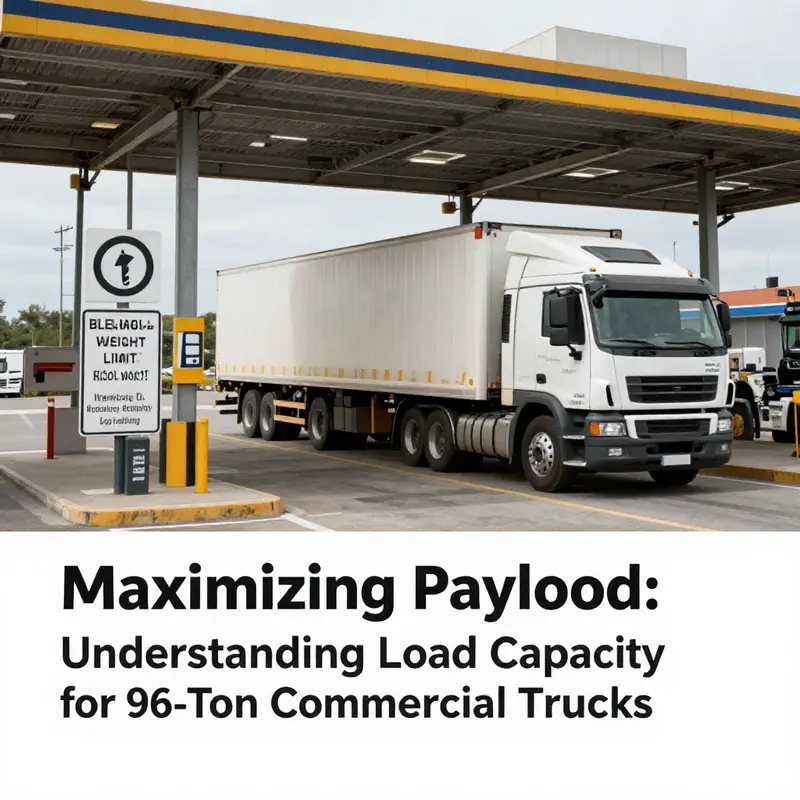
When someone asks, “How much can I load on a 26-foot commercial truck?” the instinct is to grab a number, add it to the truck’s weight, and call it a day. In reality, the question unfolds into a careful balance of legal limits, physical realities, and safety imperatives. The simple math of “truck plus cargo equals total weight” gives way to a more nuanced calculation that protects operators, other road users, and the equipment itself. The chapter that follows unpacks this comprehensively, weaving together the practical steps you must take with the regulatory context that governs everyday trucking. Though the focus here centers on a 26-foot box truck in the United States, the guiding principle remains constant: never confuse a nominal capacity with what the vehicle can legally and safely carry at any given moment.
At the heart of load planning is the Gross Vehicle Weight Rating, or GVWR. This figure is the ceiling for the fully loaded vehicle, including the curb weight—the weight of the empty truck—fuel, passengers, and cargo. In plain terms, GVWR marks the maximum total mass the manufacturer deems safe for highway operation. For a typical 26-foot box truck, you will often encounter a GVWR range from the mid-20 thousands to the low 30 thousands of pounds. The exact number depends on the make, model, drivetrain configuration, and the equipment installed in the box and under the chassis. What changes from truck to truck is not the math but the boundary. You can’t exceed the GVWR, plain and simple.
Payload capacity is the practical counterpart to GVWR. It answers the question: how much cargo can you actually place inside the box, once the truck itself is accounted for? The payload is calculated by subtracting the curb weight from the GVWR. Consider a representative example: if a 26-foot box truck has a GVWR of 33,000 pounds and a curb weight of 15,000 pounds, the raw payload capacity would be 18,000 pounds. This figure is the theoretical limit for cargo. However, real-world payload must be refined further by accounting for fuel weight, crew, and any additional equipment that travels with the vehicle on a given trip. A practical result might look more like 16,000 to 17,000 pounds of cargo if you’re running with a full tank of fuel and a driver plus any other essentials on board. The key takeaway is that the payload is not a fixed number you can routinely rely on; it changes with how much fuel you carry, how many people are in the cab, and what ancillary gear you’ve loaded alongside the cargo.
A crucial but often overlooked element is weight distribution. Even if your total loaded weight remains within GVWR, uneven loading across axles can create unsafe handling and risk regulatory penalties. The front axle and the rear axles each have their own weight limits. Heavier items toward the front of the cargo area, closer to the cab, can help with steering and braking, while a disproportionately heavy rear can overload the drive axle or the rear suspension. Modern box trucks are designed to handle a variety of cargo shapes and sizes, but the effective safety margin hinges on thoughtful placement within the cargo area. A well-balanced load reduces squat on the rear suspension, minimizes the risk of tire overload, and supports stable braking and cornering. In practice, this means planning the load with a goal of even axle weights, avoiding vertical stacks that press down hardest on a single point, and using load bars, pallets, and tie-downs to keep everything aligned during transit.
The logistics of securing cargo are not mere courtesy; they are federally mandated in the United States. Cargo securement rules require that all items remain stable and resist shifting during normal driving maneuvers, sudden stops, and even minor collisions. This is not optional. Straps, chains, nets, and other approved devices must be used according to established standards. The precise methods depend on the type of cargo and its packaging, but the overarching objective is consistent: prevent movement that could compromise vehicle stability, damage the cargo, or injure a driver or bystander. The safety implications of unsecured cargo are severe, and enforcement agencies treat violations as grounds for fines, out-of-service orders, or more serious penalties if a crash results from shifting loads.
In addition to the payload and securement considerations, drivers must be mindful of dimensional and route restrictions. The box’s interior is part of the equation, but the exterior dimensions—height, width, length—also shape what is permissible on any given route. The 26-foot box length defines how much space is available for cargo, but the overall vehicle length, which may be affected by hitch configurations, mirrors, and bumper projections, can push a vehicle over local or state limits. Height restrictions loom particularly in tunnels, under overpasses, and through certain urban corridors that enforce lower ceilings. Most operations fall within established norms, but a mismatch between box capacity and a route’s clearance can trap a truck in a chokepoint or lead to costly detours.
Hazardous materials present another layer of complexity. If a shipment involves hazmat, the regulations become more stringent still. The rules cover packaging, labeling, placarding, driver training, and route planning to ensure hazards are contained and do not endanger people on the road. Even when hazmat is not involved, drivers should be aware of the broader regulatory climate that shapes how cargo is handled, documented, and transported. The weight and dimension checks are complemented by documentation requirements—every shipment speaks to a chain of custody and compliance that starts with the vehicle’s own registration and the cargo manifest.
All of these considerations—GVWR, curb weight, payload, weight distribution, securement, dimensions, and hazmat rules—cohere into a simple practice: verify the vehicle’s registration and placards, calculate payload by subtracting curb weight from GVWR, and then adjust for fuel, crew, and equipment to determine the safe cargo mass. The registration certificate, or the vehicle’s official paperwork, lists the Permitted Total Mass, sometimes labeled Maximum Authorized Mass. Subtract the curb weight from that number to reveal the maximum legal cargo you may carry at any given moment. This arithmetic, while straightforward, is performed with a cautious mindset, because the consequences of getting it wrong range from fines to dangerous driving conditions or a vehicle that is unfit to operate safely.
In the contemporary regulatory landscape, this process is sometimes framed by broader policy shifts and industry discussions. For operators seeking a broader regulatory context, it is worth keeping an eye on evolving standards and guidance that can influence weight and compliance practices. For instance, ongoing discussions about emissions and environmental standards can intersect with trucking regulations in ways that affect how fleets plan routes, equipment acquisitions, and maintenance schedules. Readers who want a broader view may explore resources that cover these regulatory conversations, including updates on emissions regulations and related policy developments. More detail on such topics can be found at policy-focused discussions, and, for those who want a direct take on the subject, a resource dedicated to emissions regulations is available at the following internal link: emissions regulations.
To translate all of this into action on the ground, consider the following pragmatic approach whenever you prepare a 26-foot box truck for a specific load. Start by locating the GVWR on the door jamb placard or in the vehicle registration paperwork. Next, determine the exact curb weight, ideally from the manufacturer’s spec sheet or the vehicle’s own weigh-in data recorded at the time of purchase or at a weigh station. Subtract the curb weight from the GVWR to establish the gross payload capacity. Then account for fuel weight—fuel can be a surprisingly large fraction of the total—along with the driver’s weight and any passengers. This step yields a practical payload ceiling for cargo, which you should not exceed. When loading, distribute weight so that neither the front nor the rear axle bears an excessive share. Heavier items should be organized to preserve balance, with careful use of pallets, load bars, and restraint devices to keep cargo from shifting during transit. After loading, recalibrate the vehicle’s total weight with a scale or weigh stations if a precise reading is required for a particular trip. With this discipline, you minimize the risk of axle overloads, ensure safe handling, and stay within legal limits every mile of the way.
Finally, while the numbers and steps above provide a solid framework, the reality is that every 26-foot box truck is unique. Variations in chassis, the box’s interior configuration, and even the fuel state can tilt the practical payload figure. The most reliable practice is to treat the GVWR as the anchor and the curb weight as the starting line, then adjust with real-world measurements and a safety-first mindset. Compliance is not a one-time check but an ongoing discipline—one that ensures the vehicle remains safe, the operation remains legal, and the cargo arrives intact and on schedule. For readers seeking a broader regulatory context beyond the US, the general principle holds across borders: always verify the official documentation, understand the governing limits, and plan loads with a margin that accommodates the unexpected, whether it’s a heavier-than-expected shipment, a longer route, or a sudden detour.
External resources can provide a broader regulatory framework and the latest standards. For official mileage and safety standards, consult the Federal Motor Carrier Safety Administration (FMCSA) website, which remains a primary reference point for weight, cargo securement, and vehicle operation rules. https://www.fmcsa.dot.gov
Payload Realities Across 26-Foot Trucks: Axle Configurations, Curb Weight, and the Regulation That Sets the Limit
A 26-foot truck is easy to mistake for a simple cargo carrier with a single, universal limit. Yet the truth is more nuanced. The amount you can legally load depends on a careful balance between the truck’s own weight, the weight it is authorized to carry, and the rules that govern how heavy a vehicle may be on the road. In practical terms, payload is the difference between what the vehicle is allowed to weigh in total and what it weighs when empty. This distinction matters because two trucks that look alike on the street can carry very different amounts of cargo if one has a higher curb weight or a higher permissible total mass than the other. For most 26-foot operators, the math is straightforward in principle but variable in practice: determine the permitted total mass from the vehicle’s documentation, measure or estimate the curb weight, and subtract to arrive at the maximum payload you can legally haul on a given trip. The effect of this simple arithmetic is often the most overlooked factor in route planning and cost forecasting, especially in dense urban routes where every mile and every pound counts.
A typical 26-foot dry van is designed for urban and regional distribution, where maneuverability and access often trump sheer volume. In this environment, the payload window is narrow but predictable, and the driver’s daily duties require consistent weight management. In many fleets, a common rule of thumb is that the curb weight—what the truck weighs empty—is around 8,000 pounds for a basic 26-foot box, with a maximum payload around 10,000 pounds. When you add cargo up to that payload limit, the total mass approaches 18,000 pounds. This configuration makes the truck nimble enough to navigate tight streets and loading docks, while still delivering a respectable payload for time-sensitive deliveries. Of course, this is a typical figure, not a universal one. Different trucks may have heavier doors, insulation, shelving, or a liftgate that pushes the curb weight higher and, consequently, reduces the potential payload. In other words, the same 26-foot chassis can be a very different tool depending on the equipment it carries and how it is configured.
Axle configuration is a second hinge in the payload equation. Most 26-foot vans in the United States operate with two axles, which keeps curb weight and the weight carried within a predictable envelope. Some equipment options or regional requirements, however, add a third axle, or manifest as a specialized trailer combination. A three-axle setup often carries more gross weight potential, but it also adds weight itself and alters how the permissible total mass is allocated across axles. That redistribution matters because many jurisdictions regulate how weight is distributed per axle rather than simply the total. The upshot is that a truck with the same curb weight and the same total mass rating as another may present quite different permissible payloads if one uses more axles or employs heavier wheel-end assemblies. This is why a dry reading of a single weight number can be misleading; the real constraint is the permitted combination of mass across the vehicle’s axles, as defined in the vehicle’s registration and local enforcement rules.
The governing documents are the final arbiters of what you may load. The registration certificate, or vehicle registration, shows the Permitted Total Mass, sometimes called the Maximum Authorized Mass. This is the absolute ceiling for any momentary weight across all axles, under all operating conditions. Once you subtract the curb weight from that figure, you obtain the maximum legal payload. In many markets, a typical 26-foot configuration might present a Permitted Total Mass in the mid-teens of thousands of pounds, but the exact total is model- and option-dependent. Heavier components or newer safety systems—such as advanced braking hardware, reinforced frames, or enhanced suspension—can nudge curb weight upward, shrinking the payload unless the Permitted Total Mass is adjusted accordingly. The everyday lesson, then, is not to assume the payload must be the same as the stated capacity on a brochure or a spec sheet. Always verify your truck’s actual, legally permitted numbers on the registration document before loading.
Beyond the mechanical and regulatory details lie practical implications for planning and operations. If you routinely move smaller, time-sensitive loads within metropolitan corridors, the 26-foot class offers significant advantages in accessibility and speed. But the trade-off is that your per-trip cargo volume is often capped by the vehicle’s total mass limit, rather than by a desire to maximize box space. This is especially evident when comparing to larger platforms like the 53-foot trailer, which, while less agile, can deliver substantially more payload per trip and better economies of scale for long-haul distributions. The comparative calculus becomes a matter of context: if the job demands frequent, quick deliveries to constrained urban spaces, the 26-foot truck’s agility and reliable payload under its regulatory ceiling may be ideal. If, however, the objective is to optimize total cargo per trip across region-wide routes, a larger trailer may win on efficiency despite the extra maneuvering challenges.
Regulatory considerations sharpen this picture further. The precise per-axle and total mass limits vary by jurisdiction. The core principle, however, remains shared across regions: you must stay within the permitted total mass at all times, and you must distribute weight according to the vehicle’s axle configuration and the rules in force where you operate. On highways, too much mass beyond the permitted limit can trigger fines, making it essential to align your loading strategy with both the truck’s registration and local enforcement practice. For operators who must balance speed, cost, and compliance, the task is to internalize the relationship between curb weight, permitted mass, and payload, and then translate that into practical loading plans and route choices. The documentation becomes not an abstract compliance task but a live operational tool, guiding decisions from dock-side loading to driver safety checks, and from insurance considerations to fuel efficiency assessments.
In this sense, the discussion moves from theory to practice. A driver or fleet planner who asks, How much can I load on a 26-foot truck? is really asking to know the exact, enforceable limit for that specific vehicle. The model in local fleets often follows a simple workflow: determine the vehicle’s Permitted Total Mass from the registration, measure or estimate the current curb weight with the dock scales or on-board systems, and ensure that the cargo weight does not exceed the difference. This method yields a number that is both legally compliant and operationally sensible. It also illuminates a broader strategic insight: payload capacity is not a fixed attribute of a truck’s size; it is an allocation problem defined by weight, geometry, and law. When planning routes, consider not just how many pallets a truck can hold, but whether those pallets, their packaging, or their stacking height push the weight into a new regulatory tier for a given axle group.
For readers seeking a broader industry perspective, the linked body of work on trailer and load dynamics provides additional context about how market conditions shape equipment choices and loading practices. See the discussion on how trailer orders and truckload margins interact to influence fleet utilization and capacity decisions. Trailer orders impact truckload margins. This broader lens helps explain why some operators opt for particular configurations or new equipment that, while adding weight in the short term, unlocks more favorable long-term load planning and route optimization.
Ultimately, the core takeaway remains straightforward and actionable. On a 26-foot truck, the maximum legal payload is the difference between the Permitted Total Mass and the current curb weight, with the exact numbers dictated by the vehicle’s registration and the axle-based limits that apply in the operating region. In practice, this means that cargo planning must begin with the paperwork, proceed with precise weighing, and then proceed to careful load management that respects the weight distribution across axles. It also means recognizing that a 26-foot truck is a versatile tool, best used within a wider spectrum of fleet configurations where the operator understands the trade-offs between urban accessibility and payload efficiency. For those who want to ground their loading decisions in regulatory certainty and real-world constraints, the next steps are to verify the Permitted Total Mass, confirm curb weight under current conditions, and build a loading plan that respects both the truck’s physical limits and the laws of the road.
For further regulatory grounding and up-to-date guidelines, consult authoritative sources that outline permissible weights and dimensions as they apply to vehicle classes. This ensures that your loading decisions remain compliant across jurisdictions and over time, reducing the risk of penalties and operational disruption. See the Federal guidance on vehicle size and weight limits for a comprehensive overview of the framework that underpins everyday loading decisions and cross-border operations. FMCSA Vehicle Size and Weight Limits.
Measuring the Load on a 26-Ton Truck: Real Payload, Real Rules, Real Profit

If you ask how much you can load on a 26-ton commercial truck, you’ll likely get a number that sounds clear but isn’t precise enough for real operations. The label “26-ton” often represents a rough expectation of capacity, but the legal and practical payload depends on the truck’s axle configuration and its official weight limits. In many regions governed by the same discipline that shapes heavy-vehicle rules, a 3-axle truck, whether rigid or with a trailer, sits at a maximum permitted total mass of about 27 tons. That number, defined as the vehicle’s GVW or gross vehicle weight, is the ceiling for the vehicle’s weight at any moment, including its own curb weight and the cargo it carries. The practical upshot is simple but sometimes overlooked: if your truck itself weighs a lot, your cargo payload shrinks accordingly. You can’t simply add a 26-ton load to a truck that already weighs several tons by itself and expect to stay within the law. This is not a cautionary tale; it’s a reminder that the math behind payload is the math of safety, compliance, and profitability, all rolled into one decision at the loading dock and again on the highway when a weigh station appears on the route. For operators facing fluctuating loads and varying trailer configurations, the distinction between a “26-ton truck” and a “27-ton legal limit” can be the difference between steady utilization and costly downtime or fines. The key is to anchor every load decision in the vehicle’s official documentation and practical handling limits, not in a rough approximation of what “looks like 26 tons.” The definitive source of truth here is the registration certificate, specifically the Permitted Total Mass, sometimes called Maximum Authorized Mass. This number is the maximum legal weight the vehicle may carry at any time, and it floors the payload calculation. Subtract the curb weight—the truck’s own mass without payload—from that Permitted Total Mass to reveal the actual maximum payload. It’s a simple subtraction, but its implications ripple through tare, balance, fuel efficiency, tire wear, brake performance, and, ultimately, the transport margin. If you’re planning a haul with a 3-axle configuration, whether you’re operating a tractor with a semi-trailer or a three-axle rigid, the same principle holds: your total mass must stay under the 27-ton ceiling. In some regions, the same boundary applies to a 3-axle truck-trailer combination. The shared constraint is stability and road safety as much as it is revenue management. When you’re weighing loads, you’re balancing three realities at once: the legal maximum, the truck’s weight in the moment, and the practical constraints of road performance. The weight a truck can bear is not only about the payload; it is also about how that payload is distributed. Heavier items should be located low and near the center of the bed to lower the center of gravity, improve steering response, and reduce the risk of shift or rollover in corners or during emergency maneuvers. Every shipment presents a packing puzzle. Heavier items belong closer to the axles and toward the center of the bed, while lighter, bulky items fill gaps around them to prevent movement. Securement becomes a kinetic art form—tight straps, foam, boards, and bracing to eliminate any “slinging” effect in transit. A well-distributed load also benefits fuel efficiency. When weight is evenly spread, there’s less parasitic drag and smoother tire wear, both of which make the most of every ton carried. Conversely, poor distribution forces the vehicle to work harder to maintain steering and stability, diminishing the payload’s true value through higher fuel use and greater mechanical fatigue. A practical approach begins with a clear calculation: Permitted Total Mass minus curb weight equals maximum legal payload. But weight alone isn’t enough to guarantee efficiency. Consider the packaging that surrounds the cargo. Lightweight, durable materials reduce the gross load without compromising protection. Standardized containers and pallets improve loading speed and reduce empty space. When you can swap heavy wooden crates for lighter composite solutions that still protect the goods, you gain both payload and handling consistency. This is where the concept of space efficiency matters as much as weight. The best layouts use the full vertical and horizontal space without compromising stability. Does that mean you should always push to the legal limit? Not if the distribution becomes unsafe or the road has sharp curves, poor pavement, or unpredictable weather. The regulation’s meaty point is clear: you must stay within the permitted total mass on highways and at weigh stations. Exceeding the limit by even a single ton can trigger penalties, and the consequences scale with how far you stray. For example, if a vehicle’s limit is 27 tons and the operator exceeds it by 1 ton or more, you’re looking at fines proportionate to the excess. In the described framework, an excess of 1.5 tons could lead to a penalty computed per ton over the limit, with a defined maximum. These fines are designed to deter overloading that would endanger roads and drivers. In practice, that means meticulous pre-load planning and real-time checks at loading docks and before departure. The load today’s fleets carry isn’t simply about maximizing the mass that sits on the bed; it’s also about maintaining balance, controlling risk, and preserving the fleet’s operating life. In markets where capacity and demand are tightly coupled, the ability to optimize load becomes a critical competitive advantage. Operators who understand their vehicle’s Permitted Total Mass, know their curb weight, and plan their cargo to maximize the safe payload consistently outperform those who rely on rough estimates. It is in this intersection of compliance and optimization that the craft of loading becomes strategic. For those keen on connecting the dots between capacity and market conditions, the broader industry conversation around excess capacity provides useful context. See the discussion on Excess capacity insights for a sense of how capacity constraints shape loading strategies and route choices in practice. Excess capacity insights. Beyond the numbers and the charts, the real-world discipline of loading a 26-ton truck rests on a simple habit: always verify the truck’s registration documents before loading, and treat the Permitted Total Mass as a hard ceiling rather than a guideline. If you know your curb weight today is around a certain figure, you can estimate an approximate payload by subtracting that from the registered maximum. But the only numbers you can trust in the field are the ones printed on the document and stamped on the compliance plate. If your load hits the fairway and your cab and trailer are tuned to their best, the wheels tell you that you’ve found the sweet spot. In this sense, the question “how much can I load?” becomes a careful balancing act—between the rig’s legal boundary, the practical distribution of weight, and the cost of wasted capacity due to miscalculation. The aim is to keep the truck moving with a payload that is truly optimized for the day’s route, without inviting penalties or compromising safety. To that end, the loading plan should be revisited with every trip, recognizing that curb weights can shift with maintenance, fuel, and seasonal equipment changes. The road teaches that precision matters, and precision begins with knowing the exact permitted mass and subtracting the current empty weight. That is the math of profitability: every ton you legally carry is a ton that supports fuel economy, maintenance intervals, tire life, and driver productivity, all while staying compliant with the law. External and internal voices in the industry underscore this balance between capacity and discipline. For operators seeking broader guidance on efficiency, the fuel-saving driving techniques from industry associations offer practical, field-tested insights that complement load planning with responsible, economical operation. For more on fuel efficiency practices, see the external resource: https://www.trucking.org/fuel-savings-driving-techniques
Final thoughts
A thorough understanding of how much weight you can load on a 26-ton commercial truck is essential for maximizing efficiency and ensuring compliance with regulations. By recognizing the role of axle configuration, total permitted mass, and legal constraints, logistics and procurement professionals can make informed decisions that enhance operational performance. Always refer to your truck’s registration documentation for the most accurate figures and embrace best practices for loading. This knowledge empowers you to maintain a competitive edge while navigating the intricacies of commercial freight transport.