
The efficiency of logistics operations largely depends on specialized vehicles that serve specific functions. One such vehicle is the hostler truck, designed primarily for moving trailers within terminals, depots, and freight hubs. As prominent stakeholders in industries like logistics, construction, and delivery, understanding the classification of hostler trucks as commercial vehicles is vital for optimizing operations. This article provides a comprehensive overview, beginning with the classification criteria of hostler trucks, examining their role in commercial logistics, understanding regulatory frameworks, and offering a comparative analysis with other commercial vehicles. Each chapter will contribute to a holistic understanding of how hostler trucks fit into the broader commercial vehicle landscape, providing insights crucial for decision-makers in the procurement and management of logistics operations.
Moving Within the Yard: The Commercial Status of Hostler Trucks in Modern Logistics
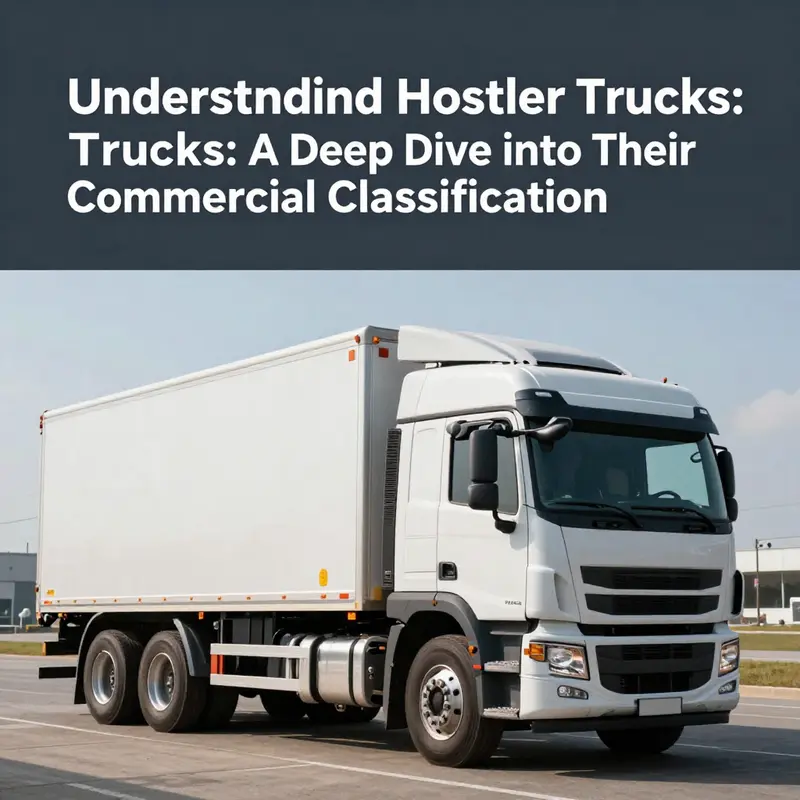
Hostler trucks perform a quiet but indispensable task in the sprawling engines of modern logistics. They shuttle trailers from docks to staging areas, position containers for loading, and set up the precise configurations that allow a port or distribution center to function without the constant bustle of public roads. They are designed for inside the yard, inside the terminal, inside the private property that keeps freight moving. Because of this role they are often thought of as a different kind of vehicle. Yet when the question turns to the formal language of regulation, hostler trucks sit comfortably within the category of commercial vehicles. Their job is not to ferry customers across town; their purpose is to move cargo within a business ecosystem, and that is the core definition of a commercial vehicle in much of the regulatory framework.
The broad classification framework for commercial vehicles in the United States is built around the idea of moving goods or people for commercial purposes. The governing bodies that shape this framework are the U S Department of Transportation and the Federal Motor Carrier Safety Administration. They regulate vehicles based on their weight, or GVWR, and the intended use of the vehicle. When you map a hostler to this system, the weight of the vehicle becomes a key signal. Hostlers typically fall into Class 2b through Class 5, depending on exact GVWR. The spectrum runs from Class 2b with a GVWR of 14 001 to 16 000 pounds up to Class 5 with a GVWR of 26 001 to 33 000 pounds. In practice, yard tractors and similar devices cluster around the middle of that range. They are not highway tractors in the sense of long distance travel, but their mass and the way they handle cargo within a commercial operation align them with the same regulatory language used for larger trucks.
That alignment matters because commercial vehicle status is not a judgment about where the vehicle mostly operates. It is a recognition of how the vehicle is used to move goods in the economy and how much risk it represents in terms of safety, maintenance, and insurance. Even if a hostler is used only inside a terminal or freight yard, the moment it enters a public road under a load or with a connected trailer, the weight thresholds and the safety expectations kick in. The Federal Motor Carrier Safety Administration builds a consistent taxonomy for CMVs, and the yard truck is part of that taxonomy. The same underlying rules that govern a long haul tractor apply to a yard truck when the dimensions and weight require it to be treated as a commercial vehicle. The consequence is that the classification helps determine what kind of licensing is required for operators, what kind of insurance coverage is needed, how vehicles are registered, and what kind of inspections and maintenance are expected.
Within the yard, the classification influences practical decisions as well. Fleet managers weigh the cost of compliance against the efficiency gains gained from a hostler fleet. The vehicle may be small in the sense of city delivery vans or pick up a little larger than a mid range light truck, but the operations demand precise handling, built in safety, and predictable performance for repeated cycles of loading and interchanging trailers. That combination of duties elevates hostlers from simple moving equipment to logistical workhorses in the commercial supply chain. Their constancy and reliability help to prevent the cascading delays that would arise if trailers and containers could not be repositioned quickly and safely. When you think about yard operations, you are thinking about the rhythm of the supply chain itself, and hostlers are a critical beat in that rhythm.
In discussing the regulatory landscape for yard trucks, it is useful to acknowledge the nuance that private property operation introduces. The general rule is that CMV classification follows the vehicle itself, not simply where it is driven. So even though a hostler may spend most days on private terminals the weight and use can trigger CMV considerations. If a yard truck remains on site and never travels on public highways, it may not need a full spectrum of highway compliance. Yet the moment it is used on public roads or loaded for transport to another facility, the operator may be required to hold a commercial driver license if the operation meets the criteria for a CMV. The vehicle must be properly registered, and the operator agents must meet training and safety standards appropriate for their weight class. This distinction matters in how fleets purchase and register equipment, and it shapes the way insurers evaluate risk for a given yard fleet. It also informs maintenance planning. Heavier yard tractors require more robust braking systems, tire management, and chassis inspections to prevent failures that could cause yard incidents and chain-wide delays.
From a business perspective the commercial status carries implications beyond compliance. It informs budgeting and procurement decisions, especially in relation to how the fleet scales with the pace of freight movements. A yard fleet that traverses dozens of cycles in a day must balance the upfront cost of a heavier class vehicle with the ongoing costs of fuel, maintenance, and insurance. It also affects labor planning. Heavier yard tractors demand certain driver competencies and training programs, and the design of the yard itself may be optimized for their turning radius, visibility, and maneuverability. In many facilities, management must coordinate the timing of trailer repositioning with dock operations, truck arrivals, and the sequencing of container moves. That coordination is easier when the tools in use, such as hostler fleets, are clearly defined in the regulatory and operational sense as commercial vehicles. It allows a facility to protocolize tasks, schedule maintenance windows, and set performance benchmarks that reflect the realities of CMV wear and tear inside a controlled environment.
To illustrate how this topic threads into broader industry dynamics, consider how yard operations relate to trailer orders and fleet utilization. The way a facility assigns port or rail yard slots, the cadence of box moves, and the timing of trailer exchanges all feed into the economics of the broader transport network. When a facility explains the balance between stock and turnout of yard equipment, the question of whether hostlers qualify as CMVs enters the decision calculus. A practical reminder of this connection appears in industry discussions that link trailer orders and truckload margins to yard efficiency. These discussions highlight how better control of in yard equipment translates into faster container flows and better utilization of the trailer fleet. See more on that topic in the article on trailer orders impact truckload margins. Trailer orders impact truckload margins.
The interplay between classification and operations becomes clearer when we examine safety and daily practice. Yard operations are not a simple task; they require precise coupling of tractor and trailer, robust communication between dock staff and drivers, and careful adherence to the rules that govern movement within a terminal. Operators must be aware of weight distribution, brake performance, and steering geometry. Even when the vehicle remains within the yard, the consequences of a misaligned coupling or a worn brake drum can create incidents with other equipment, damaging expensive trailers and causing costly delays. The regulatory framework supports these safety priorities by defining the expectations for inspection intervals, maintenance standards, and operator training that align with CMV norms. The result is a safer yard, a more reliable schedule, and a less volatile risk profile for the organization.
The final takeaway is that the classification of hostler trucks as commercial vehicles reflects more than a taxonomical label. It embodies a recognition of the role these vehicles play in sustaining the flow of goods through critical nodes in the logistics network. It explains why yard tractors share the same regulatory language as highway trucks in terms of safety expectations, insurance considerations, and driver qualifications, even while their primary mission occurs away from public roads. It helps explain why fleets invest in robust maintenance schedules, why they plan for weight-based licensing requirements, and why they design yard spaces that maximize maneuverability and minimize risk. As the economy continues to rely on the speed and precision of freight movements, hostler fleets will remain a quiet yet essential element of the commercial vehicle landscape, quietly binding together the stages of loading, staging, and dispatch that keep products moving to markets that rely on them every day.
For readers seeking a precise regulatory reference, the FMCSA maintains a comprehensive guide to vehicle classifications that anchors these definitions in law and policy. It is a reliable resource for understanding how GVWR thresholds map to class designations and how those classifications translate into licensing, registration, and safety expectations. You can consult the official vehicle classifications resource to verify the categories and wording used in the regulatory framework. External reference: https://www.fmcsa.dot.gov/regulations/vehicle-classifications
Shuttling Power on Private Ground: Reframing Hostler Trucks as the Cornerstone of Commercial Logistics
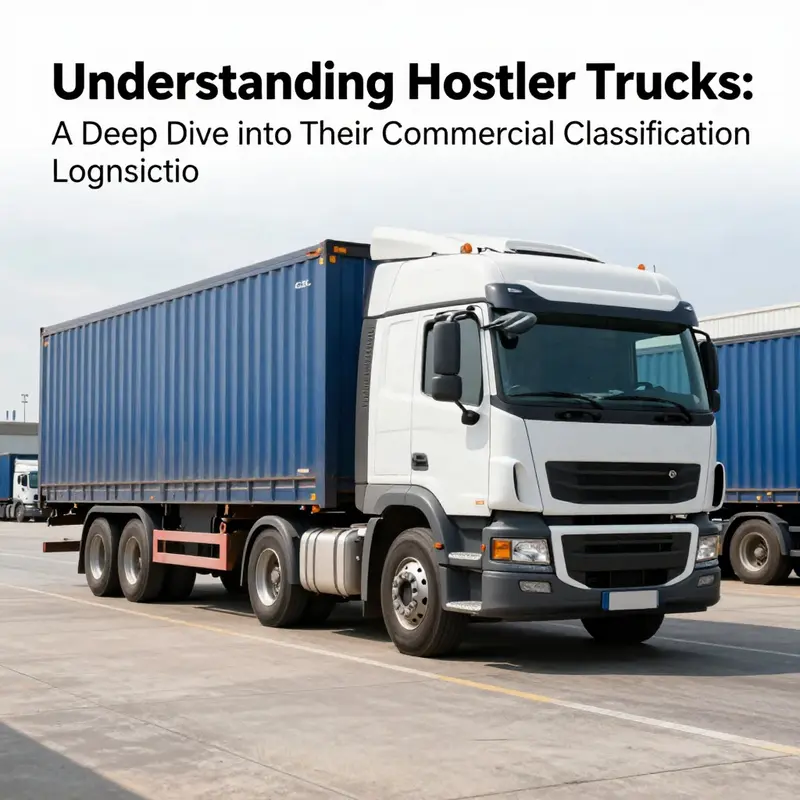
In the busy heartbeat of modern logistics, hostler trucks move with a quiet efficiency that often goes unnoticed. These yard and terminal workhorses are purpose built to relocate trailers and containers within tight spaces—ports, rail yards, distribution centers, and other freight hubs where rapid, precise repositioning is essential. They shuttle the fleet, align chassis with doors, and set the stage for the next leg of a shipment. This is not a vehicle designed for public highway travel but a specialist tool for business operations. Yet the rationale for calling it a commercial vehicle is straightforward: its function exists to move goods for commerce, to support a business process, and to keep the supply chain moving in a world of time-sensitive deliveries and intermodal transfers. The classification is not just about where the vehicle travels, but about what it enables in the economy. By design and by use, hostler trucks participate in a system that converts raw movement into reliable, schedule-driven outcomes, and that is precisely why they sit within the broad umbrella of commercial vehicles under most regulatory definitions.
A key element of understanding their status lies in recognizing the specific work they perform. Hostlers are not merely smaller versions of on-road trucks. They operate in confined yards where space is at a premium, and precision governs every turn. They couple and uncouple trailers, reposition empty or loaded units, and stage equipment for loading or transfer between modes. In that sense, they function as the internal logistics engineers of a terminal. The tasks they perform have direct implications for dwell times, warehouse throughput, and the speed with which a shipment can switch from one leg of its journey to the next. Because this work is tied to business operations and the movement of freight, hostler trucks are anchored in the commercial vehicle category. They are designed to support commerce rather than to offer long-haul travel or passenger services, and their equipment needs—telematics, maintenance cycles, safety systems—are aligned with the requirements of business fleets.
The regulatory dimension is equally important. In the United States, the USDOT and FMCSA recognize yard and terminal trucks as commercial motor vehicles when they meet certain weight and operation criteria, even if their use is confined to private property. The practical effect is that these vehicles must adhere to the same overarching safety and operational standards that govern commercial fleets. This classification acknowledges that the economic value of the activity is not diminished by geography; a vehicle that anchors a port or a rail facility to the broader freight economy is part of a regulated, commerce-driven system. Freight handling, trailer movements, and the orchestration of intermodal transfers hinge on these machines just as much as the more visible long-haul tractors that traverse state lines. In this sense, the yard is not a void zone but a microcosm of the wider transportation network, where the hostler is a central node that keeps the chain from stalling.
Beyond the regulatory and functional dimensions, the story of hostler trucks is increasingly shaped by the evolving needs of sustainability and efficiency. One notable development is the growing integration of sustainable energy solutions at major logistics hubs. A vivid example comes from a leading port where a five-year plan targets solar panel installations across facilities to offset electricity demand driven by electrification efforts in drayage trucks, hostlers, and other cargo-handling equipment. The aim is to generate power that can support operations much as the energy grid does for factories or offices, offsetting rising consumption while maintaining reliability. Port leadership has framed this shift as a strategic alignment of environmental goals with operational demands, a move that signals how yards and terminals can become testing grounds for green logistics. The implication for hostler operations is meaningful: when a yard is powered in part by solar energy, the opportunity exists to rethink equipment charging, battery management, and peak load strategies. In practical terms, this means fewer emissions per move, a quieter yard, and the potential for lower operating costs over the lifecycle of a fleet that increasingly relies on electric or hybrid solutions. The executive perspective from the port authority highlights a broader lesson: hostler operations do not exist in isolation. They are part of a larger transition toward cleaner, smarter logistics, where energy use and equipment performance must be coordinated across a network to sustain throughput while decreasing environmental impact.
For fleet managers and logistics providers, the changing role of hostlers demands attention to maintenance, operation, and technology integration. A well-run yard hinges on reliable equipment, qualified operators, and disciplined maintenance practices. The day-to-day realities of operating a Class A yard hostler involve inspecting hydraulic systems, ensuring braking performance, scheduling regular chassis maintenance, and monitoring tire wear in a harsh, curb-heavy environment. These maintenance demands are not incidental; they directly influence uptime, safety, and the ability to meet tight schedules. Telematics and data analytics have become indispensable tools in this space. Real-time data on fuel use, idling, and charge cycles for electric yard trucks help fleet managers optimize duty cycles and reduce total cost of ownership. In this sense, hostler operations mirror the broader fleet management discipline, but with a sharper focus on the micro-mcheduling challenges that occur within a facility’s four walls.
The human element remains central as well. Class A yard hostler operators require specialized training to navigate crowded yards, perform precise coupling and uncoupling, and communicate effectively with dock workers, crane operators, and intermodal handlers. The job is physically demanding and cognitively complex, demanding situational awareness and quick decision-making. As industries seek to raise safety standards, the operator’s role gains even more significance. Proper training translates into fewer accidents, less equipment damage, and smoother transitions between modes of transport. The interdependence of people, equipment, and processes in yard environments underscores how hostler trucks are not isolated assets but integral components of a collaborative logistics ecosystem.
Interoperability within the broader supply chain remains a central theme in conversations about hostler trucks. It is no longer enough to consider these vehicles merely as yard shuttles. Their efficiency affects the entire network, from inbound raw materials to outbound finished goods. The way trailers are staged around a terminal influences the speed of cargo handling and the reliability of downstream connections with rail and ship. This integration is why attention to trailer supply and the sequencing of moves matters. When the pace of trailer arrivals and the cadence of yard moves align with back-office planning, the entire operation tightens into a predictable, repeatable rhythm. For businesses seeking to optimize margins and asset utilization, the yard becomes a strategic space where small improvements in hostler scheduling and handling can yield meaningful gains in throughput and cost efficiency. The relationship between trailer orders, yard capacity, and overall truckload margins is real and mathematical. A more predictable yard reduces wait times for drayage, improves chassis utilization, and lowers detention costs for customers. In this sense, the hostler is more than a vehicle; it is a critical lever in the economic calculus of logistics. For readers exploring the financial implications of fleet decisions, the link between yard efficiency and margins is worth examining closely. See this discussion on how trailer orders influence trucking margins to understand the economic frame around yard operations: trailer orders and trucking margins.
Looking ahead, the trajectory of hostler trucks will be shaped by ongoing advances in electrification, automation, and data-driven management. As ports and distribution centers pursue cleaner energy profiles, hostler fleets will increasingly rely on electric or hybrid drives, with charging infrastructure planned around peak activity windows. Automation, in the form of guided vehicle systems or semi-autonomous features, may begin to influence yard layouts, lane programming, and dock sequencing. While full autonomy remains a longer-term goal, the current trend toward electrification and smarter yard management aligns with broader objectives: lower emissions, reduced fuel costs, and more predictable yard operations. These developments will require a careful balance of investment, retraining, and retrofit planning, ensuring that hostler operations remain compatible with existing intermodal interfaces and safety standards.
In sum, hostler trucks occupy a pivotal space in commercial logistics. They translate the need for dynamic, high-density trailer movements into a reliable, regulated, and increasingly sustainable capability. Their role as a commercial vehicle is not merely a label but a reflection of their function within the business of moving goods. They connect yards to the broader freight network, enable faster turnarounds, and support a logistics ecosystem that is evolving toward cleaner energy and smarter operations. As supply chains adapt to changing demand, regulatory expectations, and environmental imperatives, hostler trucks will continue to be essential partners in keeping freight moving with the precision and reliability that modern commerce demands. For readers seeking a practical lens on how these dynamics intersect with trailer demand and margins, exploring the relationship between trailer orders and trucking margins can provide valuable perspective on the economics fueling yard operations. And for ongoing context on energy and sustainability in logistics, the external reference to port level solar initiatives offers a window into how yards are reimagining power in a modern, low footprint framework: https://www.hdtnews.com/industry-news/port-of-los-angeles-launches-solar-energy-initiative-to-power-logistics-facilities-1922.
Navigating the Yard and the Rules: How Regulations Define Hostler Trucks as Commercial Vehicles
Hostler trucks, often seen gliding along the perimeters of ports, rail yards, and distribution centers, perform a quiet but essential duty. They reposition trailers, connect and disconnect units, and choreograph the flow of goods from dock to loading bay and back again. In many ways, their work mirrors the more visible freight tractors, but their arena is the yard rather than the highway. Because hostlers exist to move goods for business purposes within controlled facilities, they sit squarely in the world of commercial vehicles. Yet the regulatory frame that governs them is layered, nuanced, and frequently counterintuitive. It blends federal safety standards with private-property operations and local rules, creating a landscape where the same vehicle can be treated differently depending on how and where it is used. To understand whether a hostler is a commercial vehicle, one must trace how authorities classify and regulate vehicles that enable commerce while operating primarily in spaces designed to manage and store assets rather than to carry passengers or general freight on public roads.
In the United States, the Federal Motor Carrier Safety Administration (FMCSA) anchors the discussion in a framework where commercial motor vehicles (CMVs) are defined by purpose, weight, and potential road involvement. The key threshold is a gross vehicle weight rating (GVWR) of 10,001 pounds or more. If a yard truck meets that weight criterion, it falls squarely within CMV considerations. The question, then, becomes not merely whether the vehicle can move a trailer inside a terminal, but whether its operation triggers CMV safety regimes. If hazardous materials are involved in quantities requiring placarding, additional regulatory layers are layered on top. These criteria ensure that even vehicles operating largely within private facilities remain subject to the same basic safety guarantees that protect the public when CMVs traverse public roads. Thus, the commercial identity of a hostler in U.S. regulation is not merely a function of location but of the vehicle’s design, capacity, and use in a business context.
With CMV status comes a suite of FMCSA requirements designed to safeguard operators and the broader logistics system. Hours of Service (HOS) rules cap the time drivers can spend behind the wheel and mandate rest periods to prevent fatigue from compromising safety. While a yard driver may rarely venture onto public highways, the HOS framework can apply if the operation involves any movement that falls under CMV activity beyond private property lines or if the company’s fleet routinely interfaces with public-road operations. Vehicle maintenance standards require pre-trip inspections, ongoing maintenance, and documentation of defects. Those records are not mere bureaucratic rituals; they are practical safeguards that prevent brake failures, tire blowouts, or steering issues from creating yard accidents that can escalate into terminal disruptions or injuries. The driver qualification process also matters. A holder of a Commercial Driver’s License (CDL) typically has to demonstrate medical fitness, knowledge, and safe driving history. In practice, many hostler operators carry a Class B or Class C CDL endorsement, reflecting the vehicle’s configuration, its payload, and the local operational needs. Yet there is nuance here as well. Some hostlers are lighter than the CMV threshold and operate under private-property exemptions. In those cases, the letter of the law may permit operation without a CDL, but the broader safety and employer policies often still require formal training, familiarization with terminal rules, and adherence to internal safety procedures.
The U.S. framework, therefore, draws a line between what is permitted within a terminal under CMV standards and what remains permissible under private-property exemptions. Administrators and fleet managers must understand where their operations sit on that line. It is a difference with real consequences: maintenance regimes, accident reporting, driver qualifications, and even insurance coverage can hinge on whether a hostler is treated as a CMV on the day-to-day schedule. The practical implication is that yard operations are not immune to regulatory scrutiny simply because they occur away from public roads. CMV classifications influence the design of training programs, the cadence of inspections, and the expectations for safety performance. In turn, those expectations ripple through procurement choices, vehicle configuration, and the way a terminal coordinates with adjacent facilities and inland transportation modes.
Across the Atlantic, the European Union frames yard truck regulation through a broader road-safety and environmental lens that still recognizes the commercial purpose of these vehicles. The EU’s regulatory regime includes the Whole Vehicle Type Approval (WVTA) system, which ensures that vehicles sold and used in member states meet standardized safety and performance criteria. For hostlers, the WVTA is significant because it aligns the design and construction of yard trucks with a common baseline for crashworthiness, emissions controls, and general safety features. Beyond WVTA, the General Safety Regulation (GSR) embodies Europe’s commitment to a comprehensive safety architecture, covering electronic stability, advanced braking systems, visibility, and occupant protection. Although yard operations largely occur within private premises, the EU’s emphasis on vehicle performance and risk reduction translates into practical requirements for yard trucks that move heavy trailers in and out of terminals, often in high-risk settings where pedestrians and other equipment share crowded spaces.
Emissions and environmental responsibility are central to EU policy as well. Yard trucks, like their road-going counterparts, are subject to standards that govern exhaust limits and energy efficiency. In terminals within the EU, where fleets may move between facilities or cross borders in the course of business, these standards affect the selection of powertrains, the adoption of electric or hybrid variants, and the maintenance cycles that keep emissions within permitted bands. The regulatory architecture also touches working hours and driver fatigue, which in the EU translates to rules for drivers operating CMVs on public roads and, in many jurisdictions, requirements around rest breaks and logs for professional drivers. When hostler tasks involve any road movement in the course of a terminal-to-terminal transfer or a cross- facility run, those working-time rules can become operative, and operators must ensure compliant scheduling, restful periods, and accurate recording of duty status. In recent years, the EU has been actively exploring how advanced technologies—especially those related to automation and connected vehicle systems—will interact with existing frameworks. The regulatory conversation around these technologies is ongoing, signaling that the yard of tomorrow may be shaped as much by policy as by engineering.
A particularly relevant thread in Europe concerns platooning—the idea of tightly coupled trucks communicating to optimize drafting and fuel efficiency. Although platooning may seem distant from the day-to-day tasks of yard work, its regulatory implications are material for terminal operators contemplating automated or semi-automated equipment alongside traditional hostlers. The European Commission has published materials outlining how emerging technologies will be integrated into the regulatory fabric, addressing issues such as liability, interoperability, safety validation, and the compatibility of new systems with established WVTA and GSR requirements. For a detailed overview of the current EU regulatory framework affecting truck platooning, refer to the official European Commission publication: EU Regulatory Framework on Truck Platooning.
Within this evolving context, industry players often seek clarity on how emissions regulations apply to yard trucks and how new powertrains, whether battery electric, hydrogen, or hybrid, will be treated under both tradition and innovation. In discussions about compliance, it is common to encounter the sentiment that the yard is a testing ground for broader regulatory adaptation. This tension is reflected in dialogue between regulators, manufacturers, and fleet operators, who grapple with questions about who bears responsibility for emissions, how to verify conformity of a yard truck’s propulsion system, and what data must be captured to demonstrate ongoing compliance. It is not a purely theoretical concern. The choices a terminal makes about fleet composition—whether to prioritize low-emission yard tractors, to invest in electrified shunter fleets, or to pilot autonomous or remotely monitored equipment—depend on how regulations assess the tradeoffs between safety, cost, and environmental impact. The regulatory framework thus becomes a guide and a constraint, shaping capital budgets, maintenance planning, and the pace at which new technologies are adopted.
As the regulatory picture firmed up in both the United States and the European Union, operators began to appreciate that the term “hostler” hides a broader truth: these vehicles are integral to the efficiency and reliability of the freight system, irrespective of where they operate. Even if a hostler does not routinely travel on public roads, its design, its maintenance schedule, and its safety features must meet the same core expectations that safeguard the movement of goods across borders and through busy urban corridors. The shift toward greater standardization across jurisdictions reduces the friction of cross-border operations and supports a smoother logistics chain. It also reinforces the understanding that the commercial purpose of hostler trucks places them firmly within the regulatory realm that governs all cargo movement, whether conducted on a highway or within a terminal’s fenced perimeter.
Beyond the narrow question of whether hostler trucks are commercial vehicles lies a broader policy question: how the regulatory environment accommodates the ever-changing technologies that touch yard operations. Is a yard tractor with an advanced propulsion system simply a different flavor of CMV, or does it require an entirely new category for risk assessment and oversight? The reality today is a continuum. The base criteria—weight, purpose, and potential for road involvement—still anchor CMV status. The methods of compliance expand and adapt as technologies evolve. In practice, fleet operators benefit from engaging early with regulators, not as a compliance burden but as a mechanism to ensure that safety, efficiency, and environmental objectives can be met in tandem. The yard, with its unique mix of human and machine activity, serves as a practical testing ground for how policy can keep pace with the operational realities of modern logistics.
To ground these considerations in the day-to-day decision-making that shapes terminal operations, managers should align procurement and training with the regulatory expectations described above. This means selecting hostler configurations that meet weight and safety criteria, establishing robust maintenance and inspection routines, and implementing driver qualification and training programs that reflect both CMV standards and internal safety cultures. It also means staying attuned to regulatory developments, particularly around emissions and automated technologies, so that investments today do not become stranded by changes in the rules tomorrow. It is a disciplined approach that recognizes the hostler’s role as more than a cul-de-sac in a terminal’s workflow; it is a critical link in the chain that moves goods from the producer to the consumer, securely and efficiently.
For readers who want a tangible lens on how these regulatory currents unfold in practice, consider how emissions and environmental requirements are discussed in industry circles. The topic often surfaces in regulatory summaries, and it shapes how fleets plan their equipment mix and maintenance regimens. The broader question remains: as technology advances, will yard operations increasingly resemble standard CMV operations on public roads, or will they carve out distinct regulatory pathways that acknowledge their specialized environment? The answer likely lies in a hybrid approach where core safety and performance standards are harmonized across settings, while adaptive rules account for theyard-specific use cases and the evolving capabilities of modern, connected, and potentially autonomous equipment. This is the frontier where the regulatory framework and the operational realities of hostler trucks converge, ensuring that the devices designed to move trailers within controlled spaces continue to do so with the highest possible standards of safety, efficiency, and environmental stewardship.
Internal link to related industry discussion: OEMs seek clarity in emissions regulations.
External resource for further reading: EU Regulatory Framework on Truck Platooning: https://ec.europa.eu/growth/industry/automotive_en
Hostler Trucks: The Yard’s Commercial Vehicle Core
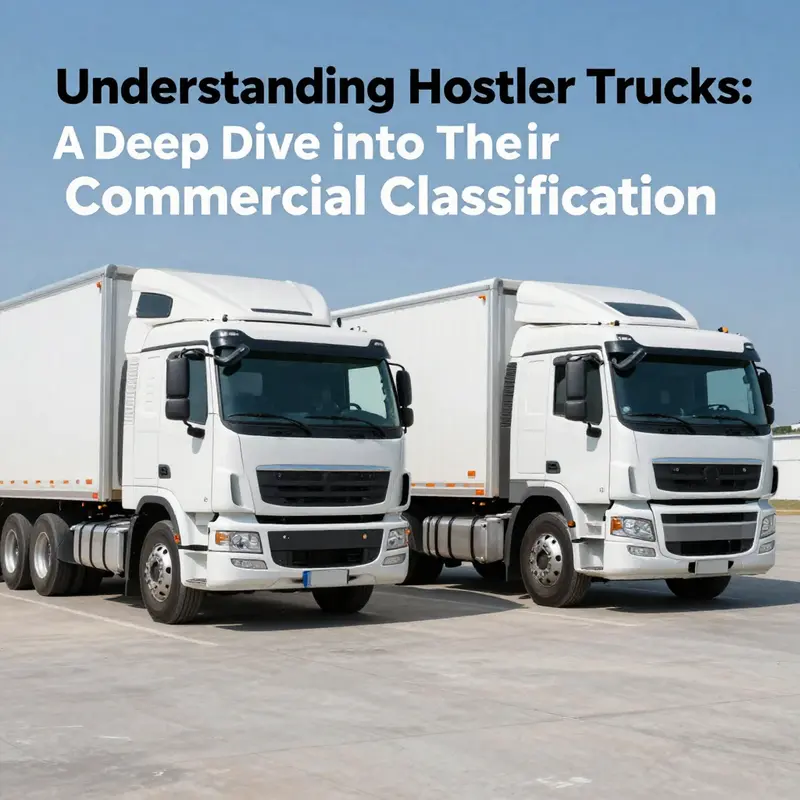
A hostler truck is a compact, maneuverable vehicle used to reposition trailers inside ports, railyards, and distribution yards. Its purpose is to move trailers quickly and safely within a confined space, not to perform long-haul transport. This makes hostlers a specialized form of commercial vehicle, even though their work often occurs on private property. The broader category of commercial vehicles covers those designed to move goods or passengers for business purposes, and hostlers fit this definition by enabling efficient yard operations, accurate trailer placement, and safe handling around loading docks and equipment.
In practice, the hostler’s design emphasizes tight turning radii, precise steering, good visibility, and reliable coupling with different trailer configurations. Its duty cycle favors rapid hook-and-unhook cycles, predictable handling, and resilience to the demanding conditions of a busy yard, rather than high payload or highway performance. As terminals adopt automation, telematics, and centralized dispatch, hostlers become embedded in a data-driven system that coordinates thousands of movements while upholding safety standards. Thus, their classification as CMVs reflects their regulatory and safety obligations as part of the wider commercial transportation ecosystem.
Final thoughts
Hostler trucks are more than just specialized equipment; they are essential components of the commercial vehicle sector. As elucidated in the chapters above, understanding their classification, role, regulatory landscape, and comparison with other trucks enhances their strategic importance in freight and logistics. Businesses that leverage these insights into hostler trucks can optimize their operations, improve efficiency, and ultimately, drive greater profitability in their logistics processes.