
In the competitive landscape of logistics, construction, and delivery services, the choice of vehicles plays a crucial role in efficiency and reliability. The Ford F-150, prominently featured in the WeatherTech commercial, represents a blend of capability and brand credibility. This article delves into the Ford F-150’s specifications and popularity, sheds light on its durability and performance, examines the role of WeatherTech products in enhancing vehicle functionality, and analyzes how this commercial influences consumer perception and marketing strategies in the industry. Each chapter builds a facet of understanding that equips logistics and procurement teams to make informed decisions.
Is That Iconic American Pickup in the WeatherTech Commercial? An Electric Powerhouse Explained
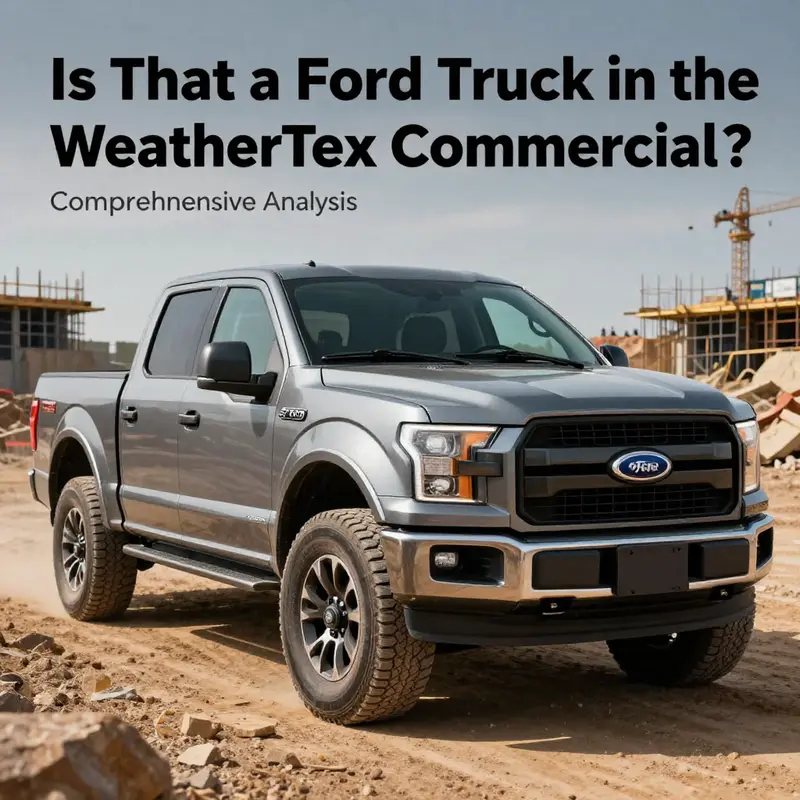
The latest scene in a weathered, sunlit landscape shows a familiar shape pulling through rain-slicked pavement and churned dirt. A pickup with the squared-off silhouette and broad stance that have defined a generation of work trucks stands as the focal point, while rugged mats shield the cabin from a cascade of mud, splashes, and damp debris. The visuals are straightforward in intent: toughness meets practicality, and the interior under those heavy mats is the quiet heart of the machine, a space designed to absorb the demands of outdoor labor and weekend adventures alike. What makes the moment compelling is not just the image of a truck doing what trucks do best, but the instrument that powers it—an all-electric drivetrain capable of marshaling prodigious torque, surprising agility, and the promise of lower emissions under hard use. In the commercial, the truck moves through environments that test grip, reliability, and endurance. The message lands with clarity: you can have the rugged, utilitarian DNA associated with a legendary American pickup and pair it with electric propulsion that opens a new chapter in capability and efficiency.
To understand what the audience is seeing, one can focus on the concrete characteristics that the sequence implies. The vehicle is powered by a fully electric powertrain, which changes the way it behaves in ways that resonate with both traditional truck buyers and newer entrants curious about electrification. The powertrain delivers a substantial amount of horsepower and a stout amount of torque, allowing quick acceleration from a standstill and confident, controlled performance when pulling or climbing through uneven ground. Range is a key consideration for buyers who rely on such a truck for long days on the job or extended weekends away from mainline charging. The numbers—an EPA-estimated range that sits comfortably around the low to mid-three hundred miles, with a peak power output that makes rapid passing and steep grades less daunting—signal that electric propulsion can meet or exceed the expectations of someone who spends hours in the cab. The cargo bed remains a focal point; the truck’s chassis and suspension are tuned to handle heavy payloads and a demanding workload, attributes that are strongly associated with the pickup’s heritage of toughness.
The commercial also emphasizes capability in towing and payload, two criteria that are central to the truck’s practical appeal. Though the exact figures are not shouted in the short film, its messaging hints at a dual-motor, all-wheel-drive setup that can distribute torque precisely to each wheel. The result is a balance of traction and stability—a factor that becomes especially valuable when traversing wet ramps, gravelly slopes, or muddy trails. When a vehicle can shuttle energy between drivetrain components and the battery pack while maintaining grip, it invites confidence. That confidence translates into a quiet, guided focus for the driver, who can concentrate on steering choices and load management rather than worrying about wheel slippage or torque steer in less predictable conditions. The interior, though often overlooked in a fast-paced TV spot, plays an essential role in the narrative: a roomy cockpit with an advanced, responsive infotainment system, supportive seating, and controls that remain legible and accessible in the heat of a job site or rainstorm. This combination of space, technology, and tactile feedback is the real engine behind the commercial’s message: a rugged workhorse that is not only capable but also economical to operate in the long haul.
The mats that appear in the cabin are more than mere props or visual shorthand. They symbolize a practical commitment to protecting the interior as a workspace. In the field, a pickup is routinely exposed to mud, water, ice, salt, and the grit of outdoor ecosystems. Indoor protection matters as much as engine efficiency when a vehicle is expected to return to a dealership or a kitchen remodel site with its finish intact and its resale value preserved. A mat system designed to trap moisture and keep debris from seeping into the carpet helps maintain cabin comfort and reduces recurring maintenance costs. The film’s emphasis on this detail suggests that the production team understands the realities of life with a pickup: it is a tool, and tools demand durability, reliability, and thoughtful protection. In a broader sense, the mat’s presence foregrounds a philosophy of practical preparedness—one that aligns with an electric pickup’s appeal to buyers who prize not just speed and torque but also reliability and ease of use in demanding environments.
The electrified pickup at the heart of the commercial belongs to a class that has historically defined American truck culture: a vehicle built to work hard, roam free, and carry meaningful loads across rough terrain. Reframing this archetype with electric propulsion has implications beyond a single marketing moment. The switching on of electric power changes the driving experience in meaningful ways. There is immediate torque, a palpable sense of immediacy as the accelerator is pressed, and a calm, controlled surge that can feel more predictable than the hesitations of internal combustion when cold or under heavy load. The dual-motor design promises balanced response, maintaining traction across the wheelset as the road or trail surface shifts beneath. The electric platform also introduces a broader conversation about energy efficiency at work and the potential to power tools or job-site equipment through integrated electrical outlets. In a broader sense, the commercial hints at an integrated ecosystem in which the vehicle can act as a mobile power source, enabling workshops to run off the grid of a busy day in the field and yet return to base with a full battery ready for another mission.
The popularity of such a vehicle within the market is not a single-number phenomenon but a trend that reflects evolving consumer preferences. On the one hand, the classic American pickup spirit—rugged capability, spacious interiors, and a generous bed for cargo—remains central to buyer demand. On the other hand, there is a growing appetite for electrification, with buyers seeking lower operating costs, quieter cabins, and the potential for new power-management possibilities. The blend of these factors is what helps explain why this particular electric pickup has drawn attention. It is not merely a novelty; it sits at the intersection of tradition and transformation, a point where durability and sustainability converge in a single, practical package. This convergence appeals to a broad spectrum of buyers, from workers in construction and trades who value dependable performance to outdoor enthusiasts who prize quiet operation and reduced fuel cost during long excursions. The narrative being conveyed is simple and persuasive: a truck that can bear the weight of a heavy day’s work while also offering modern energy efficiency and on-road refinement is a compelling evolution of the pickup blueprint.
The commercial’s choice to foreground interior protection and power management speaks to a broader, interconnected set of consumer concerns. People who spend days in trucks want interiors that stay clean enough to work in but also comfortable enough to keep them focused on the task at hand. Weatherproofing, material durability, and easy-to-clean surfaces contribute to lower total cost of ownership and longer vehicle life, while interior technological features—like a modern digital cockpit with responsive navigation, driver-assist tools, and a robust connectivity suite—make daily operation easier and safer. The narrative then arrives at a practical synthesis: a vehicle that can handle rough environments, keep cabin interiors clean, and provide a flexible energy footprint for on-site tasks. In this sense, the commercial does not merely celebrate a new powertrain; it showcases a holistic user experience that marries capability with convenience and resilience with efficiency.
From a market perspective, the emergence of mass-market electric pickups signals a shift in how manufacturers approach product development, partner ecosystems, and dealer networks. The early traction of these vehicles reveals a market sophistication that blends the needs of traditional truck buyers with the curiosity of early EV adopters. When sales data begin to reflect sustained demand, it is not simply about a single model selling well; it is about the broader acceptance of a new technology in a sector that has long been dominated by mechanical reliability and familiar performance metrics. For buyers who have long trusted a particular pickup lineage, the electric version offers a familiar form factor with a new and compelling powertrain. For others, it opens the door to a different kind of ownership experience—one that promises lower operating costs, potential for on-site power, and a reduced carbon footprint without compromising the intrinsic virtues of a workhorse. The commercial, then, becomes a cultural signal as much as a technical showcase: a reminder that the backbone of American mobility—durable, capable, and endlessly adaptable—can evolve without discarding its essential identity.
To situate this moment within the broader trucking ecosystem, it helps to consider how the industry is reshaping its expectations around capacity, logistics, and cross-border flows. The electrified pickup highlights how fleets and individual operators might recalibrate their operations to accommodate new energy realities. The prospect of electrified pull power, integrated charging, and the ability to run on-site tools off the vehicle’s power system could influence planning, scheduling, and even the way trucks are deployed in peak-travel or peak-demand periods. This is not solely about a more efficient powertrain; it is about the potential to reorganize the rhythms of work, travel, and commerce in ways that improve resilience and reduce exposure to traditional fuel-price volatility. The discussion around such dynamics naturally invites readers to explore related market analyses, including how capacity and margins interact with equipment and route planning in a world that is increasingly influenced by electrification and new energy policies. In this context, the broader narrative of the commercial becomes a microcosm of a larger shift toward smarter, more adaptable trucking operations—an evolution that customers can observe first-hand in a familiar, trusted form factor that remains as recognizable as ever, even as its propulsion changes beneath the hood.
For readers who want a deeper dive into how market dynamics are shaping the trucking sector today, the conversation about capacity and margins offers a useful lens. In a landscape where demand for effective transportation solutions continues to fluctuate, understanding excess capacity, utilization, and the interplay with new vehicle technologies becomes essential. The story told by the commercial aligns with these broader trends: a vehicle that blends rugged capability with electric efficiency presents not only a compelling product but also a hint at how fleets might optimize their capital spending and operating costs in the years ahead. It is a reminder that the transition to electrification in this segment is not simply a matter of replacing fossil fuels with batteries; it is about rethinking the entire work sequence—from how power is generated at the point of use to how it is consumed during long hauls and how downtime is minimized by smarter, more resilient design choices. This is the kind of shift that can ripple across the supply chain, affecting not only buyers but lenders, insurers, and service networks that support heavy-duty vehicles in daily operations. As such, the moment captured in the commercial serves as a touchstone for understanding how electric propulsion is becoming a practical, scalable solution for the workhorse of American mobility.
In sum, the scene of a robust, mud-splattered interior and a modern, electric drivetrain embodies more than a marketing moment. It reflects a convergence of enduring truck values with a new technological era. The vehicle’s design communicates strength; the drivetrain communicates capability and efficiency; the interior protection and smart features communicate practicality and reliability. The result is a narrative that feels both familiar and forward-looking. For anyone who has watched a long line of weather and road tests, the message lands with a quiet confidence: the electric pickup does not abandon the identity of the American workhorse; it expands it, offering new ways to get the job done, stay comfortable while doing it, and even harness energy for on-site needs. The moment is less about a brand or a model and more about a shift in what a capable pickup can be in a world where sustainability and ruggedness are no longer mutually exclusive.
External resource: https://www.ford.com/electric-trucks/f-150-lightning/
Internal reference for further industry context: excess capacity in the trucking market insights
Rugged Power on Display: A Full-Size Pickup Takes Center Stage in Weather-Ready Marketing
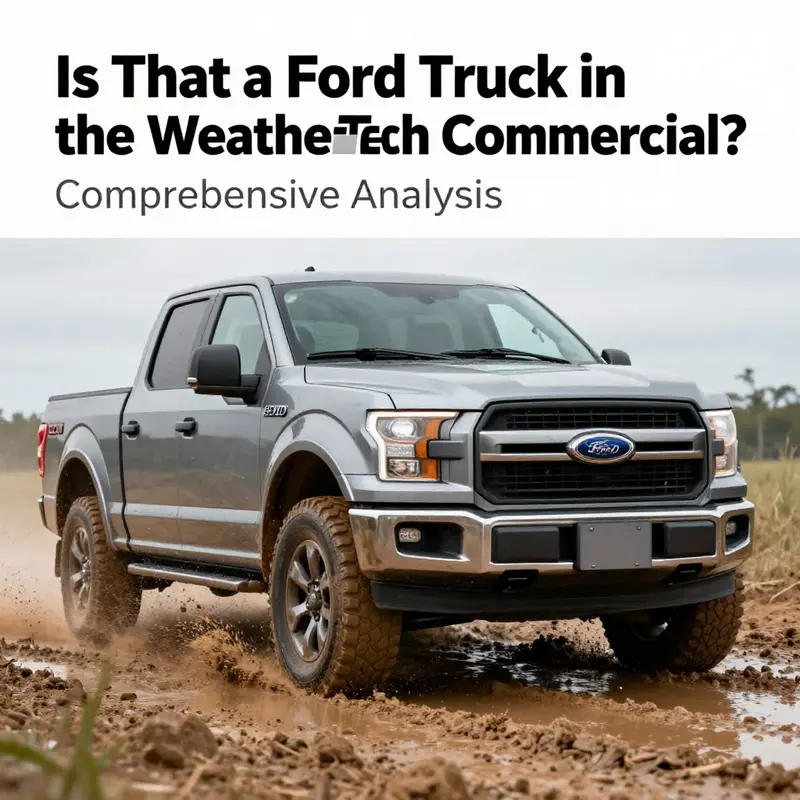
A modern marketing moment often frames technology as the quiet backbone of the everyday, but a certain weather-ready showcase makes durability feel almost cinematic. In this spot, a popular full-size pickup appears not as a mere work tool but as a versatile platform designed to endure and adapt when conditions turn hostile. The narrative takes hold not through glossy close-ups of chrome or the speed of acceleration, but through a clear, unglamorous promise: the vehicle can handle mud, rain, snow, and the kind of grime that would overwhelm lesser machines, while keeping the interiorprotected and ready for any task. Read as a single, continuous scene, the piece invites a reader to imagine themselves behind the wheel, negotiating slush, gravel, or slick riverbank crossings with a calm confidence that comes from a well-engineered foundation. In this interpretation, the point of the commercial is not only to showcase a rugged exterior but to illuminate how modern engineering translates into practical reliability on the interior as well. The mat or liner that sits on the cabin floor, designed to trap moisture and debris, is presented not as an afterthought but as a natural extension of the vehicle’s core purpose: to guard the cabin against the elements while preserving a space that remains conducive to work, family, and the everyday unpredictability of life on the road. The visual language of the spot emphasizes resilience without forsaking efficiency, a balance that sits at the heart of what a durable, purpose-built pickup offers in real-world use. This approach mirrors a broader industry shift toward powertrains and chassis configurations that blend capability with resourcefulness, enabling operators to tackle demanding conditions without sacrificing fuel economy or daily practicality. Even as the scene emphasizes the vehicle’s rugged demeanor, it never loses sight of the interior’s responsibility. A floor system designed to collect and contain mud, water, and debris is shown working in tandem with the exterior’s engineering strengths. It’s a deliberate reminder that durability is a system property, not a single feature; the exterior shell, the powertrain, the traction management, and the interior protection all contribute to a cohesive owner experience that makes rough weather less a hindrance and more a manageable variable in a workday that never stops. The ad’s pacing mirrors this philosophy. It sweeps from the worst weather conditions to the simplest daily tasks, suggesting that reliability is most valuable when it remains invisible in routine moments. The vehicle navigates a range of terrain and weather cues—potholes, muddy ruts, rain-slicked pavement, and a light dusting of snow—without dramatizing the struggle. Instead, it frames the driver’s confidence as the true metric: a sense that the hardware can be trusted to behave as expected, leaving the human operator free to focus on planning, timing, and the next job on the schedule. In this framing, it is easy to see how the carmaker’s engineering philosophy aligns with the practical needs of a broad spectrum of users, from contractors to outdoor enthusiasts, from service professionals to weekend explorers. The underlying message is not that the vehicle is invincible, but that it is reliable enough to keep pace with real life’s demands. This distinction matters because durability in engineering is rarely a single leap forward; it’s often the culmination of several smaller, well-integrated design choices that reinforce one another. Consider the exterior architecture: a body built with high-strength materials balances lightness against rigidity, contributing to improved resistance to dents and corrosion over time. This choice supports longevity and reduces the likelihood of deformations that would otherwise complicate maintenance or diminish resale value. It also ensures that the vehicle can endure exposure to road salt in winter and to seasonal moisture without losing structural integrity, which makes the cabin’s protective systems all the more crucial. The same logic extends to the propulsion system, where a hybrid powertrain delivers a blend of robust torque and efficient energy use. The idea here is not only to accelerate away from a muddy corner or drag a heavy load up a grade but to do so with a level of efficiency that makes long, weather-strewn trips practical rather than burdensome. In the spot, the engine’s electric assist is framed as a strategic tool rather than a gimmick: it smooths power delivery when traction is uncertain, supports steady climbing in challenging terrain, and preserves fuel for those stretches where fuel stops would otherwise interrupt a project timeline. This combination of power and economy resonates with a growing cohort of buyers who value performance but can’t afford to overlook operating costs. Beyond the powertrain, the vehicle’s off-road control systems play a pivotal role in translating capability into predictable behavior. A control framework designed to modulate speed and stabilize footing on uneven surfaces gives the operator a sense of command across a spectrum of conditions. Rather than suggesting brute force, the ad emphasizes calculated maneuvering: the driver sets a pace, and the vehicle adheres to it, modulating torque, wheel slip, and throttle input to maintain traction and momentum. Such systems are not mere extras but essential enablers for practical tasks in rain-slick fields, ungraded construction sites, or snow-dusted backroads. When these features factor into the user experience, they also influence the perception of interior protection. If the cabin remains dry and orderly after a day of bad weather, the floor mats or liners must perform as promised. The imagery in the commercial reinforces this by showing soils and moisture being contained, with the mats acting as a first line of defense that makes cleaning quick and straightforward. A tidy interior, in turn, supports cognitive clarity for the driver, reducing friction when the workday demands rapid decision-making under evolving weather conditions. This is not coincidence but a deliberate design decision. The people behind the ad are highlighting a value proposition that runs deeper than raw capability. They are signaling that robust engineering reduces the cognitive load associated with uncertain weather: fewer concerns about the interior, fewer interruptions to the task at hand, and more consistent comfort for the driver across the day’s various challenges. In a broader sense, the marketing narrative touches on a cultural expectation in the industry: durability and performance should translate into predictable, day-to-day reliability, not only spectacular feats. The ad invites viewers to consider how a vehicle’s outer shell, its energy management, and its interior protections coalesce into a dependable companion for daily work. It is a reminder that the most valuable innovations often appear in quiet ways—through resilience that you don’t notice until you need it most. If you look closely, the piece also nods to a larger ecosystem in the transportation and logistics world, one where equipment readiness and cost-efficient operation intersect under shifting conditions. The industry has seen demand for vehicles that can handle longer duty cycles, with lower emissions and better fuel economy, without compromising the ability to perform tough tasks when required. In this context, the marketing message aligns with a current thread in the market: the strategic move toward flexible, efficient powertrains and smarter traction solutions that empower operators to meet tight schedules, weather variability, and remote work sites with confidence. It is not accidental that the ad places weight on the balance between exterior durability and interior protection. The surface may be rugged, the payload capacity impressive, and the on-road manners composed, but the user experience depends on maintaining comfort and cleanliness inside the cabin. A floor protection system that traps moisture and debris supports a longer life for the interior materials, reduces maintenance time, and minimizes downtime—factors that can translate into tangible savings across a broad set of fleets and individual owners alike. As this logic unfolds in the commercial, it invites a broader reflection on how the industry communicates value. A consumer’s first impulse might be to measure a vehicle by its power or its looks, yet a closer look reveals a more subtle calculus: the interplay between rugged capability, efficient operation, and practical interior protection. When all three are presented together, the message becomes more credible, more actionable, and more resonant for people who rely on their equipment to keep projects moving and to protect the investment at every turn. In the same vein, the ad’s treatment of weather and terrain underscores a genuine identity for the vehicle family as a whole. The full-size pickup emerges as a versatile platform—capable of hauling, towing, and navigating rough terrain, while still offering a cabin that feels prepared for the kinds of daily tasks that demand focus rather than fatigue. This is the essence of its appeal: not a single feature, but the orchestration of multiple systems that work in concert to support a goal—the seamless continuation of work under adverse conditions. For readers tracing the thread from marketing to practice, the message is clear: the most durable and capable vehicles are those whose engineering choices recognize that reliability is a composite outcome. They are designed to perform when needed, to protect during the journey, and to do so with an efficiency that makes ongoing use sustainable. In this sense, the WeatherTech-commercial scenario becomes more than a commercial moment; it becomes a case study in how modern mobility tools are designed to reduce risk and increase predictability in environments where weather and terrain would otherwise complicate operations. It invites further inquiry into how similar approaches are adopted elsewhere in the industry, encouraging buyers and operators to evaluate not just the horsepower or the payload numbers but also how well a vehicle safeguards the cabin, how efficiently it uses energy, and how well its traction and stability features handle shifting surfaces. The dialogue this narrative invites can extend beyond advertising into the real-world decisions that fleets and individuals must make when choosing equipment for uncertain climates and demanding tasks. For additional context on how industry dynamics shape the choices around durable, efficient equipment, consider the broader discussion on truckingEconomic trends affecting trailer orders, which connects market conditions to how manufacturers balance capability with cost and efficiency. Trucking Economic Trends Affecting Trailer Orders. As readers explore these interconnected themes, they gain a more nuanced understanding of why a vehicle that looks capable in a commercial can also be a prudent daily tool for a diverse range of users. The chapter closes with a reminder that durability in this sense is less about spectacle and more about consistency, resilience, and the confidence that comes from knowing that the machine under the driver’s control is designed to meet the weather and terrain with predictable performance. The image lingers: a cabin that stays clean, a powertrain that revs smoothly without waste, and a chassis that maintains footing when the ground wants to slip away. In such a moment, the line between marketing and reality blurs, and what remains is the fundamental truth that dependable engineering makes the difference when things get tough. External resources provide a complementary lens to this discussion, inviting readers to explore the broader design and engineering choices that underpin these capabilities. For a deeper dive into the brand’s approach to durability and performance, see the official vehicle overview and specifications on the manufacturer’s site. External resource: https://www.ford.com/trucks/f-150/
Is That the Right Pickup? Decoding a Brand-Building Moment in a Popular Truck Ad
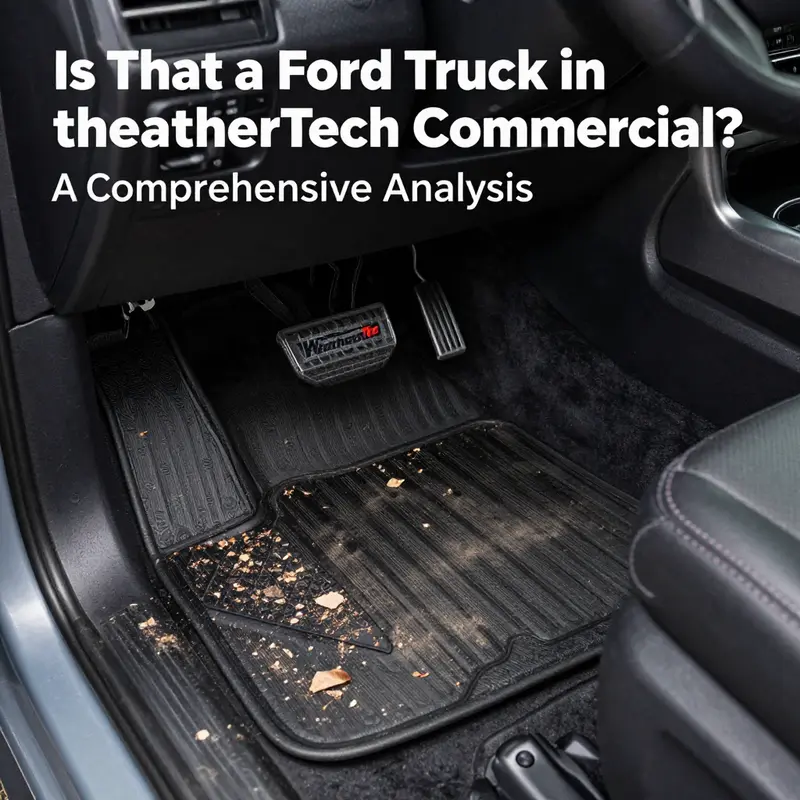
A brand narrative often hinges on a single recognizably rugged image. In a recent campaign built around a widely seen pickup, a question lingered in viewers’ minds: is that the familiar model we know from work sites and rural lanes? The scene is less about a specific badge than about a shared cultural signal. It leans into the reliability and practical swagger that define a flagship pickup in the American landscape. Within that frame, the interior protection accessories on display play a quiet, authoritative role. They don’t shout their presence; they demonstrate it through action. The camera lingers on the mats, the raised lips along the floorboard, the way mud and water collect rather than penetrate. The point is not merely to showcase a clean interior but to communicate a philosophy: a vehicle that earns its keep deserves interior gear that earns its own keep as well. The ad uses a known workhorse to anchor trust, then pairs it with products designed to extend the life of the cabin with minimal fuss and maximal payoff.
In many consumer categories, a catchy slogan or a glossy shot can spark interest, but long-term allegiance comes from reliability in daily use. The decision to feature a popular pickup in this particular campaign is more strategic than cosmetic. The vehicle base represents a broad, enduring lifestyle—one that includes commuting, weekend projects, and the occasional job-site muddy trek. That audience is highly sensitive to fit and finish, to the way a protective add-on integrates with the vehicle’s geometry, to how easily the product can be cleaned after a long day outdoors. The narrative thus shifts from a mere demonstration of coverage to a demonstration of compatibility. The interior-protection line is not presented as an afterthought but as a natural extension of the vehicle’s rugged persona. A mat that hugs the footwell, a liner that rises to meet the curve of the door sills, a shield that guards the most vulnerable seams—these aren’t features in isolation. They reinforce a broader claim about durability, value, and the ease of maintaining a usable, clean interior regardless of the environment the truck must endure.
This approach taps into a deep cultural current: pickup ownership is frequently tied to identity as much as to utility. The campaign, by foregrounding a trusted model, signals a bridge between aspiration and practicality. It invites current owners to imagine a seamless partnership between the vehicle and the protective accessories that safeguard it. The message is not that the gear is merely compatible with the truck; it is that the gear is purpose-built for the truck’s everyday realities. The emphasis on a custom-fit alignment—how the mats contour to the floor, how their surfaces resist moisture, how their edges seal against debris—addresses the precise pain points that drivers encounter after a long, rain-swept, mud-splattered day on the job or at the trailhead. The campaign’s touchpoints work together to craft a narrative of partnership: the truck does the heavy lifting; the interior protection gear takes care of what the truck carries, protecting both resale value and daily usability.
From a production standpoint, the decision to spotlight fit and finish rather than sheer capacity is telling. The truck’s capabilities are evident in the visuals—a chassis designed to endure, a cab built for comfort after hard use. What the audience notices—and what lingers in memory—is less the engine’s power and more the sense that the interior will stay livable, no matter how harsh the surroundings become. The mats and liners appear as silent partners, not flashy add-ons. They are shown in the moments when mud meets rubber, when a splash of water beads and then disappears, leaving a clean, dry surface beneath. In those frames, the notion of “custom-fit” materializes as a tangible guarantee: the product is engineered to match the truck’s interior geometry with precision, minimizing that awkward slipping or slipping that can undermine confidence in heavy-duty protective gear. The effect is practical and persuasive: if the interior can survive a muddy day with little effort, the driver’s daily routine becomes easier, and the investment in protection more justifiable.
The ad’s structure also reflects a careful balance between aspiration and practicality. It never pretends that protection is a glamorous feature. Instead, it leans into the truth that owners want to protect their investment from the kind of wear that accumulates after months of hard use. The narrative frames ownership as stewardship: the vehicle is a trusted tool, and the interior gear is a straightforward ally in preserving that tool’s value and comfort. The result is a compact, persuasive argument about why custom-fit accessories matter. When a mat is designed to align with the exact contours of a cab floor, the user experiences fewer inconveniences—less shifting, less cleanup, fewer worries about moisture seeping into the fabric or seams. This is not simply about aesthetics; it is about long-term usability. A cabin that remains clean and dry translates into more time and energy for the owner to focus on work, family, or adventure. The campaign nudges viewers toward a practical inference: protect what you use, maintain what you own, and you’ll enjoy a smoother, more reliable ownership experience.
Economically, this approach resonates with broader market dynamics in the trucking and vehicle-accessory ecosystems. The choice to anchor the narrative in a widely popular pickup model has implications beyond branding. It signals a commitment to fit and compatibility that can reduce returns, improve customer satisfaction, and encourage repeated purchases. In a marketplace where aftermarket decisions ripple through supply chains and pricing strategies, the emphasis on a model-specific fit can be a strategic asset. It reduces guesswork for the consumer and streamlines installation for the retailer. A tangible, model-specific fit tends to yield higher perceived value because the consumer experiences a direct correlation between the product’s features and the vehicle’s geometry. A driver who notices a secure fit and a simple maintenance routine is more likely to recommend the product to peers, creating a network effect that extends beyond the initial purchase. In this way, the ad serves not only as a display of capability but as a catalyst for trust in the entire ecosystem of interior-protection solutions.
The narrative also touches on an essential aspect of modern marketing: measuring the utility of a product through real-world, relatable performance. The visuals capitalize on the moment when ordinary chores become extraordinary demonstrations of durability. A muddy mat might begin as a problem, but in the sequence of the commercial, it becomes a proof point—that cleaning a vehicle interior after a rough outing can be a quick, manageable routine rather than a dreaded task. The storytelling reinforces a practical ethos: durability is not merely a function of the fabric or the material; it is about how quickly a user can return the cab to its clean, ready state and get back on the road. The audience can see that the gear is designed for speed, for resilience, and for a straightforward maintenance process. This resonates with owners who are juggling family life, professional obligations, and outdoor passions. It is a compelling synthesis of function and lifestyle that moves beyond mere product demonstration to a believable, usable experience.
Within this broader context, the chapter of the ad that many viewers notice, even if subconsciously, is the quiet assertion of reliability. The pickup is presented not simply as a vessel for cargo but as a companion that demands thoughtful care. The interior-protection gear is positioned as a tool that extends the truck’s utility, preserving its interior’s integrity under conditions that would test any lesser system. The result is a narrative that appeals to both pragmatic buyers and aspirational viewers. For those who rely on a truck for daily tasks, the message offers a reassurance that their investment will be safeguarded against the elements and wear. For outdoor enthusiasts and weekend voyagers, it promises a cabin that remains hospitable after long hours on a rough road, a note of optimism about continuity and readiness. The adframes thus function as a compact case study in how to translate practical protection into emotional resonance—an approach that can inform future campaigns across vehicle segments and accessory categories.
As the scene continues to unfold, the implicit question—whether the truck shown is a specific, iconic model—ceases to be the point of curiosity. Instead, the focus shifts to the values the campaign is signaling: durability, compatibility, and ease of use. The exact badge matters less than the clarity with which the brand promises a seamless integration of vehicle and protective gear. The viewer walks away with a mental checklist: a well-fitting accessory that protects the interior, a tractable maintenance routine, and a vehicle that remains a dependable partner no matter the weather or terrain. In that light, the campaign achieves something more enduring than a momentary impression. It builds a rationale for why model-specific alternatives matter, why careful design matters, and why the experience of the owner—whether a contractor, a family commuter, or an off-road hobbyist—benefits when the line between vehicle and protection becomes a natural, almost invisible seam rather than a visible seam of compromise. The next phase of this exploration will extend the inquiry into how such alignments influence consumer expectations and how marketers calibrate the balance between recognizability and practical demonstration in campaigns across the broader automotive ecosystem. In the meantime, the revelation that a familiar pickup anchors the ad’s credibility remains a quiet but powerful takeaway: the interior is not an afterthought, and the interior remains within reach of everyday resilience.
External reference: the official ad can be viewed on the brand’s YouTube channel: https://www.youtube.com/@WeatherTech. For related industry insights that echo the practical implications of fit and compatibility in vehicle-related products, consider the broader market dynamics discussed in this piece: Trailer Orders Impact Truckload Margins.
Screen-Driven Toughness: How the Ford F-150 in a WeatherTech Commercial Reframes Durability for Consumers
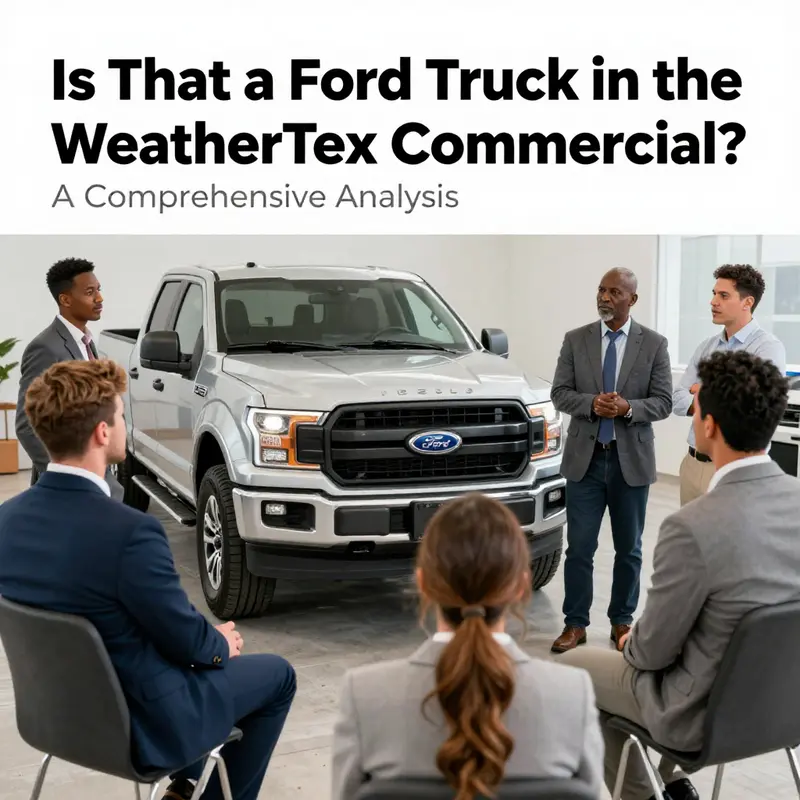
The image of a rugged pickup slicing through gravel and mud, the camera lingering on the interior as rain pours and wheels churn, is more than a visual trope. It is a carefully cultivated promise. In the WeatherTech spot, the presence of a quintessential American workhorse—the Ford F-150—does more than showcase a vehicle. It anchors the message in a cultural shorthand that many buyers instinctively trust: durability, reliability, and a willingness to endure whatever the road or weather throws at you. WeatherTech’s floor mats and cargo management solutions don’t merely exist as accessories; they become extensions of that rugged ethos. When a consumer sees the mats snugly protecting the floor from a torrent of sludge or spilt liquids, the product is cast not as a mere add-on but as a practical shield for a lifestyle defined by logistics, grit, and daily unpredictability. In that moment, protection becomes a performance metric, and functionality earns its appeal through experiential demonstration rather than abstract claims. The ad thus operates on two levels at once: a visual celebration of an enduring vehicle and a tactile argument for interior protection that aligns with the truck’s own reputation for capability.
The choice of the Ford F-150 as the vehicle in question is not incidental. It is a deliberate alignment with a symbol many American drivers associate with hard work, high resale value, and a long lineage of capability in harsh conditions. The F-150’s standing in the market—already tied to a perception of toughness and practical engineering—transfers some of that aura to WeatherTech’s product lineup. This is correlation with intent: the ad designer leverages the truck’s credibility to bolster WeatherTech’s own message about protecting interior surfaces under duress. In practical terms, this is branding leverage. WeatherTech does not have to prove its mats can perform in every scenario from first principles; the F-150’s established persona provides a short-hand guarantee that resonates with a broad audience: if a vehicle known for ruggedness trusts these accessories to keep its interior pristine, then the accessories themselves gain credibility by association. The consumer reads the scene through a familiar cultural lens, and that lens colors the perception of WeatherTech’s offerings with a shade of reliability and resilience.
From a marketing strategy standpoint, the pairing of WeatherTech’s protective products with a sought-after, durable truck is a case study in how to stage a cross-category endorsement without explicit cross-brand sponsorship. There is a subtle economy at work: the ad signals that durability is a shared value, not a campaign gimmick. The truck’s rugged silhouette and the weather-beaten environment are more than set dressing; they function as narrative scaffolding. They tell a story in which the interior protection is not an optional upgrade but a foundational necessity for serious drivers who navigate rain, mud, snow, and the detritus of daily life. This is a narrative that translates into purchasing intent because it answers the unspoken question many shoppers have: what happens to my investment if the environment turns hostile? The answer the ad offers is concrete and reassuring: you protect your gear, your tools, and your livelihood with products designed to meet the demands of real-world use. In this sense, WeatherTech’s protection is not a luxury; it is a tool that completes the vehicle’s capability story.
The consumer psychology at work here hinges on credible source associations and the transfer of trust from a well-known vehicle icon to a line of utilitarian accessories. The ad’s visual grammar—heavy tires gripping wet asphalt, exhaust barely audible over rainfall, the gleam of a durable mat underfoot—crafts a sensory impression of reliability. Viewers who identify with the values associated with pickup ownership—self-reliance, practicality, and the preparation to tackle whatever the day asks—are primed to see WeatherTech’s products as integral to their own performance narrative. This is not merely about selling a floor mat; it is about selling peace of mind. The marketing logic is straightforward: if the audience believes the vehicle can handle anything thrown at it, then the peripherals that extend the vehicle’s life must be similarly capable. The F-150’s presence functions as a credibility multiplier, one that reduces perceived risk for a potential buyer assessing WeatherTech’s protective solutions.
The ad’s storytelling cadence reinforces the message with a cadence of motion and texture. The camera lingers on materials—rubber, carpet, plastic trim—then returns to the mats that shield those surfaces. The sequence mirrors a common buyer journey: observe a product in action, infer its utility, imagine it in your daily grind, and finally feel the comfort of prevention rather than the sting of cleanup. In this progression, WeatherTech’s offerings are framed not as discretionary upgrades but as essential components of a driver’s toolkit. The narrative reframes interior protection from an afterthought to a core element of vehicle ownership. The F-150’s role in this story is less about a brand cameo and more about a cultural catalyst; it signals that toughness and practicality are not abstract ideals but actionable attributes that can be protected by well-engineered products. In such a context, the consumer does not merely purchase a mat; they invest in the continuity of their routine, their gear, and the environments they navigate.
The broader marketing implications extend beyond the immediate campaign. For manufacturers and marketers operating in the same space, this case demonstrates how a strong vehicle archetype can anchor a product category that people often treat as ancillary. A durable vehicle builds demand for durable accessories because the story is coherent across categories. The messaging invites cross-sell opportunities: owners who value protection for the floors are likely to appreciate cargo management solutions, weatherproof storage options, and other ruggedized conveniences that complement a vehicle built to operate in variable climates. The alignment also offers a blueprint for future campaigns: identify a vehicle with a widely recognized reliability profile, then pair it with an accessory line whose strengths reinforce that profile—protection, durability, and ease of maintenance. In a media landscape crowded with flashy features and instant gratification, this approach leverages a slow-burn trust-building mechanism—consistency of character across product ecosystems—that can yield durable shifts in perception over multiple campaign cycles.
From a financial and strategic vantage point, the ad’s undercurrent is not just about brand affinity but about reinforcing a market narrative that resonates with a particular consumer segment: the serious driver who values long-term protection and practical functionality. This is a demographic that tends to invest in enduring equipment and accessories, rather than disposable or trend-driven items. The WeatherTech-Ford pairing, therefore, speaks to a customer who plans for the long haul and understands that a protective mat is not merely a line item but a component of a road-ready system. The result is a marketing message that feels less about sales pitch and more about shared values. Consumers sense that WeatherTech understands their daily realities—the mud that accompanies job sites, the rain that follows outdoor adventures, the wear and tear that comes with constant use—and that the brand offers solutions designed to withstand those realities. In that sense, the ad does not merely promote products; it validates a lifestyle and, by extension, the decision to purchase within that lifestyle ecosystem.
Of course, a campaign built on cross-brand symbolism must navigate potential pitfalls. The risk lies in overreliance on the vehicle’s reputation to tell the entire story. If weather or weathered imagery dominates the narrative, the deeper value proposition of WeatherTech’s products risks getting buried in the spectacle. To avoid this, the campaign must continuously translate the vehicle’s toughness into tangible product benefits: water repellence, stain resistance, ease of cleaning, long-term interior protection, and the preservation of resale value. The narrative must consistently return to the consumer’s practical questions: Will this mat prevent water damage on a rainy worksite? Will it shield the carpet from tracked-in mud after a weekend off-road trip? Will it endure the constant friction from heavy gear and frequent ingress and egress? When the brand can answer these questions with evidence from real-world use, it solidifies the bridge between perception and value. The Ford F-150 in the WeatherTech commercial provides an effective accelerant for that bridge, but the onus remains on WeatherTech to sustain it with credible demonstrations, testimonials, and performance data across channels.
The case also underscores how vehicle-centric branding interacts with media planning and audience targeting. A spot that leans into a well-known truck brand can be particularly effective in markets where pickup ownership is high, where weather and terrain are significant concerns, and where professional and recreational drivers alike seek products that promise durability under demanding conditions. The ad’s resonance may be reinforced by supporting content—how-to videos, installation guides, and maintenance tips—that show the mats in action in real-life scenarios. Integrated campaigns that connect TV spots with digital tutorials, user-generated content, and dealer demonstrations can amplify the perception of WeatherTech’s products as practical, reliable, and indispensable across a range of use cases. In this integrated approach, the Ford F-150 serves not only as a star but as a bridge between storytelling and demonstrable value. The result is a holistic message that travels beyond the screen into the customer’s daily decision-making process.
As industry observers consider the implications of this approach, it is helpful to situate the WeatherTech-Ford pairing within broader market dynamics. The truck market continues to influence perceptions of utility and durability, shaping expectations for accessory manufacturers about what it means to deliver credible solutions. Trade press and consumer analysts alike tend to look for campaigns that demonstrate consistency between vehicle identity and product function. In such evaluations, the most persuasive campaigns do not merely claim protection; they show it in action, through scenarios that mirror everyday life. The ad’s strength lies in its ability to convert a recognizable vehicle image into a narrative of practical reliability, a transfer that strengthens WeatherTech’s position as a go-to brand for those who demand performance under real-world pressures. The synergy also implies a potential advantage in the supply chain: when a popular vehicle model is featured, it can elevate the perceived value of related accessories, encouraging cross-category purchases and longer product lifecycles. In the end, viewers are left with a simple, confident takeaway: the right protection, paired with the right vehicle persona, means you can rely on your gear when the going gets rough—and that reliability is worth investing in.
The implications for future campaigns are clear. Marketers should consider whether the most effective way to communicate durability is to anchor a product in the persona of a vehicle that embodies that durability, provided the alignment feels authentic to the audience. This means not simply placing a well-known truck on screen, but creating a narrative that makes the connection between vehicle capability and product performance credible and persuasive. When done with integrity, such campaigns can transform a routine purchase decision into a confidence-affirming pledge: protect your interior so you can keep pursuing the work and adventures that define your routine. In this sense, the WeatherTech spot with the F-150 is a reminder that in a crowded marketplace, the strongest messages are those that translate a vehicle’s visceral reputation into everyday, tangible benefits for the consumer’s life. For readers who want to explore related industry dynamics and how they shape marketing strategy, the broader conversation around trailer orders and margins offers a useful lens on how demand signals influence brand investments and campaign composition. See the discussion here: trailer orders impact truckload margins.
External context can deepen this understanding. A deeper look at the media strategy behind WeatherTech’s Ford truck spot is explored by The New York Times, which illuminates how major brands coordinate cross-channel storytelling to maximize impact and authenticity in a single creative frame. For context and further analysis, see: https://www.nytimes.com/2024/06/12/business/media/weather-tech-ford-truck-ad.html
Final thoughts
The Ford F-150’s presence in the WeatherTech commercial encapsulates a confluence of vehicle reliability, effective product partnerships, and a targeted marketing approach. By highlighting durability, user-friendliness, and superior performance, the commercial not only strengthens Ford’s brand image but also enhances the visibility of WeatherTech products. This analysis serves as a guide for logistics and procurement teams, shedding light on the importance of vehicle choice and product integration in optimizing operational efficiency and consumer trust.