
Flatbed trucks are more than just vehicles; they are pivotal to numerous industries, functioning as essential commercial vehicles designed for transporting various goods. As businesses in logistics, construction, and mining navigate the complexities of their supply chains, it becomes imperative to understand the classification of flatbed trucks within the commercial vehicle framework. This article delves into the nuances of this classification, outlining the operational significance of flatbed trucks across specific sectors, the legal landscape surrounding commercial vehicles, their economic implications, and their societal contributions. By the conclusion, you will gain a comprehensive insight into why flatbed trucks are integral to the commercial transportation ecosystem.
Why a Flatbed Truck Is Unmistakably a Commercial Vehicle: Purpose, Use, and Regulatory Context
Why a Flatbed Truck Is Unmistakably a Commercial Vehicle: Purpose, Use, and Regulatory Context
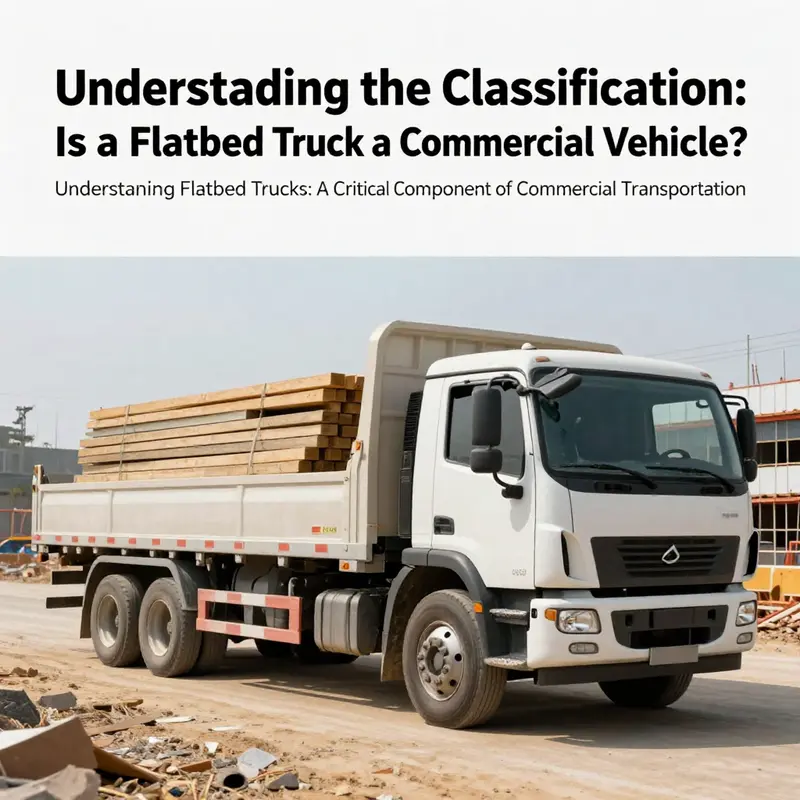
A flatbed truck meets the textbook definition of a commercial vehicle because its primary purpose is moving goods for business use. Unlike passenger cars or personal pickups, flatbeds are engineered to carry cargo that is heavy, oversized, or irregular in shape. Their open, level decks make loading and securing such freight practical and efficient. This single design feature drives most of the ways regulators, insurers, and businesses treat these trucks—treatments anchored in the reality that flatbeds exist to support commerce.
The classification of any vehicle as commercial rests on three linked ideas: intended use, common industry practice, and regulatory definitions. Intended use is straightforward: if the vehicle carries goods, materials, or equipment for a business purpose, it is commercial. Industry practice confirms this: construction firms, equipment haulers, freight carriers, and manufacturers rely on flatbeds every day to move items that would not fit inside enclosed trailers. Regulatory definitions echo both of these points by focusing on the vehicle’s use and how it operates within commerce.
From a practical standpoint, flatbed trucks show up where work happens. They transport steel beams and lumber to construction sites, move heavy machinery between job locations, and shift oversized components that cannot be boxed in a van or container. This versatility is why flatbeds are central to sectors that anchor local and national economies. Their role goes beyond mere transport; they solve specific logistical challenges—loading by crane, securing straps around unusual shapes, and accommodating varying lengths and widths. Those operational realities are what make flatbeds indispensable to business operations and thus firmly commercial.
Regulatory frameworks tend to reinforce what practice already shows. Agencies that monitor vehicle types and highway usage define commercial vehicles by purpose and often by weight thresholds. When a vehicle is used to haul goods or equipment for compensation or as part of business operations, it is treated under commercial rules. Those rules cover driver qualifications, insurance minimums, safety requirements, and reporting standards. For example, heavier flatbeds can trigger additional licensing or compliance obligations, because the potential risk to public safety and infrastructure increases with mass and cargo profile. The presence of these targeted regulations underscores the commercial classification.
Insurance and liability considerations further solidify the flatbed’s commercial status. Insurers underwrite commercial policies with different exposures in mind: cargo liability, higher physical damage risks from shifting loads, and third-party liability when oversized items create roadway hazards. These tailored coverages differ from personal auto insurance in both scope and cost because the business use of the vehicle changes the risk profile. For a business owner, recognizing a flatbed as a commercial asset informs choices about coverage levels, risk management, and compliance strategies.
Operational rules for flatbeds reflect their commercial purpose. Drivers often need specialized training to secure loads properly and to understand weight distribution. Routing may be restricted for oversize loads, requiring permits, escorts, or time-of-day limitations. Loading techniques differ from enclosed trailers; chains, binders, tarps, and blocking are common tools used to prevent shifting. These practices are not incidental; they represent industry-established standards intended to protect goods, drivers, and the public. When a vehicle type requires this level of operational oversight, classifying it as commercial is a natural fit.
Economics also explain why flatbeds are commercial assets. A single flatbed can carry a wide variety of freight, making it economically attractive for businesses that move different types of loads. This flexibility supports higher utilization rates and integrates well with supply chain models that value adaptability. Fleets balance flatbeds alongside other trailer types to meet customer needs, optimize route planning, and manage capacity. The market signals—demand for flatbeds, pricing for haulage, and fleet composition—mirror the vehicle’s commercial identity.
It helps to consider a few common scenarios to see the classification in practice. A contractor transporting steel beams between suppliers and job sites is clearly operating a commercial service. A rental company moving heavy machinery to a customer’s location is providing a commercial activity. Even when a business uses a flatbed on its property to reposition equipment, the use is internal to the enterprise and not personal; many regulations and internal controls will still treat the asset as a commercial vehicle in reporting and safety planning.
There are edge cases, but they rarely change the overall picture. An individual might own a flatbed-equipped truck for a hobby such as restoring vintage tractors. If that truck never carries goods for compensation and remains strictly personal, certain commercial rules may not apply. However, once that same owner begins contracting to haul materials, the vehicle’s legal and practical status shifts. The transition is not mysterious; it follows the central criterion of business use.
Understanding this classification matters for organizations and individuals alike. It affects compliance obligations, insurance costs, driver hiring and training, maintenance schedules, and risk management. Recognizing a flatbed as a commercial vehicle helps decision-makers align resources with regulatory expectations and operational realities. For businesses managing fleets, staying attuned to market signals and industry developments is essential; for example, shifts in trailer orders and truckload economics can influence fleet strategies and equipment choices, including the balance between flatbeds and other trailer types. For an industry perspective on how equipment orders influence operations, see this discussion of trailer orders’ impact on truckload margins.
Viewed through the lenses of design, use, regulation, insurance, and economics, the classification is clear. A flatbed truck is built to move goods for business, appears where commerce needs it most, and triggers the legal and operational frameworks that apply to commercial vehicles. That clarity simplifies decision-making for fleet managers, contractors, and regulators, and it helps align safety and financial practices with the vehicle’s real-world function. For definitive regulatory perspective, refer to the federal overview of vehicle classifications provided by the Federal Highway Administration: https://www.fhwa.dot.gov/ohim/140387.cfm
Open Deck, Big Reach: The Flatbed Truck as a Core Commercial Vehicle in Modern Freight
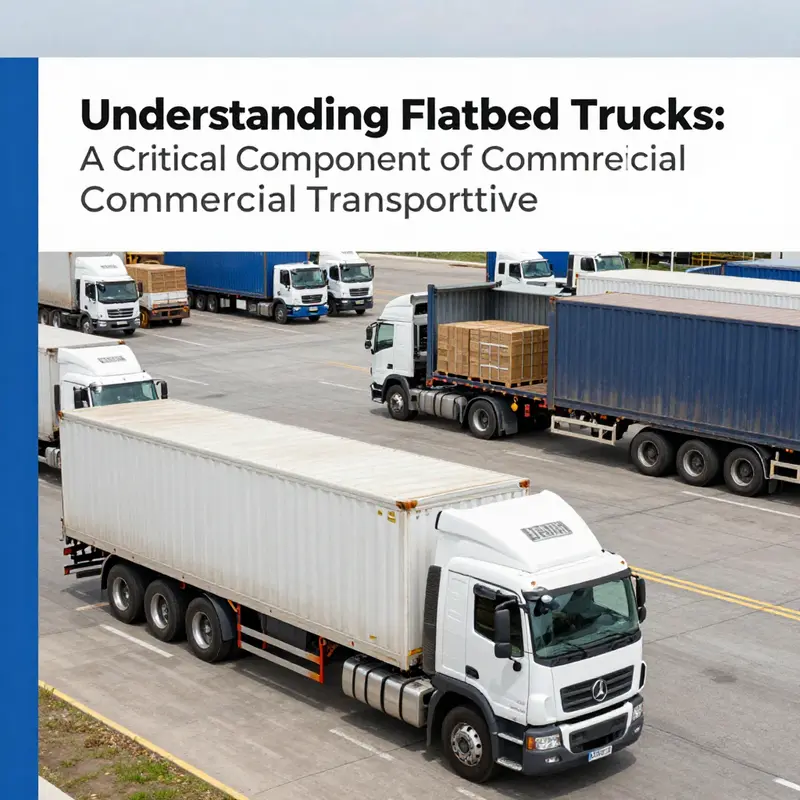
A flatbed truck presents itself as a field instrument rather than a passenger carrier. Its flat, open platform—unadorned by sides or a roof—invites a different kind of interaction with freight. When a job requires cargo that simply cannot fit within enclosed trailers, the open deck becomes not a luxury but a necessity. In this sense, the flatbed truck is not just a vehicle; it is a deliberate business tool engineered to move goods, time and again. And because its primary function is the transport of cargo for a price, the most straightforward conclusion is that a flatbed is a commercial vehicle. Yet the reasoning runs deeper than a simple yes. It encompasses the way the vehicle is designed, how it operates within supply chains, and the regulatory and economic ecosystems that shape fleet decisions across industries that routinely move heavy, oversized, or irregular loads.
The open deck is more than a feature; it is a design philosophy. Without fixed walls or a roof, the flatbed can accommodate loads that would be awkward, if not impossible, to secure within an enclosed trailer. The absence of enclosing sides delivers two practical advantages. First, it enables rapid loading and unloading using cranes, forklifts, or other on-site equipment, a critical factor when schedules hinge on tight windows and on-site constraints. Second, it allows for flexible securing strategies. Tie-down points and ratchet straps, placed and adjusted with the load in mind, give shippers the ability to immobilize heavy beams, long piping, prefabricated components, or even oversized machinery. The result is cargo handling that is faster, more versatile, and often safer when managed with a disciplined load-securing plan. These operational traits align with a commercial mission: to move goods efficiently, reliably, and with the flexibility needed to accommodate a diverse slate of freight.
From a classification standpoint, the flatbed’s status as a commercial vehicle follows from its use case. Commercial vehicles are defined by their intent to support business activities centered on moving goods or people for compensation. Flatbeds, by design, prioritize goods movement—often for industrial sectors where the cargo is heavy, irregular, or unexpectedly shaped. This means inspections, licensing, insurance, and safety programs tailored for commercial fleets, rather than private-use obligations. It also means that a fleet’s maintenance, fuel strategy, and driver training are engineered around the realities of high-load, on-site operations. The open deck becomes a canvas for practice: how loads are staged at origin, how they are secured for transit, and how they interact with road conditions, weather, and the ever-present demand for timeliness.
Industries that rely on flatbed trucks illustrate the versatility of the category. In construction, flatbeds haul lumber, steel, concrete components, and large equipment when necessary. In manufacturing, they serve as movable arteries between facilities and job sites, transporting raw materials or finished components that require careful handling and securement. Event production and staging add another dimension, where flatbeds move oversized sets, lighting rigs, or sound systems that demand precise, on-site positioning. Even in specialized freight services, adjustable and compliant load-securing practices enable carriers to transport materials that warrant careful handling, such as hazardous substances when regulations permit and are followed. The market signals supporting this versatility show up in demand for durable, adaptable platforms and in the broader ebb and flow of infrastructure development, e-commerce fulfillment, and the need for efficient last-mile solutions in complex logistic networks.
Engineering and innovation in flatbed design reflect a balance between durability, safety, and efficiency. Modern frames—often constructed from high-strength steel or aluminum—provide the resilience needed to resist dynamic forces during transit and to withstand the rigors of loading from ground level, docks, or off-road sites. Suspensions are tuned to improve ride stability under heavy loads, keeping cargo secure and reducing wear on the vehicle. Integrated tie-down points, along with advanced restraint systems, support securement that can adapt to a range of freight sizes. Beyond the fundamental deck and chassis, digital technologies now play a meaningful role. Telematics and GPS tracking enable fleet managers to monitor location, utilization, and, crucially, cargo conditions. Real-time data supports route optimization, proactive maintenance, and heightened accountability across the supply chain. In this sense, the flatbed is not static gear but a platform for continuous improvement in fleet operations.
Investment decisions in flatbed fleets reveal how operational realities translate into financial strategy. When a business evaluates replacing or expanding its flatbed capacity, it weighs reliability, cost per mile, and the ability to service high-value, time-sensitive loads. The decision is seldom driven by a single factor; rather, it emerges from a constellation of supply-chain pressures: capacity constraints in trucking markets, the need to meet project deadlines, and the desire to minimize downtime through better equipment. In this environment, capacity planning and equipment procurement are tightly linked to market signals. For fleet managers, understanding how trailer orders translate into truckload margins can illuminate the trade-offs involved in scaling operations. A practical takeaway is that strategic investments in flatbed capability often reflect a broader assessment of how to preserve throughput, protect cargo integrity, and maintain service levels in a competitive market. See how these dynamics influence fleet decisions through discussions around trailer orders and margins. Trailer orders impact truckload margins.
Another layer of consideration concerns safety, regulation, and training. Because flatbeds can carry hazardous materials only when properly secured and compliant with applicable regulations, operators must maintain rigorous loading protocols and continuous safety training. The open deck demands meticulous attention to load distribution and tie-down technique, because a shift in weight or an overlooked lash point can translate into instability on the highway. This emphasis on securement extends to the driver’s workflow: pre-trip inspections, pallet handling, and coordination with site personnel to ensure that the cargo is staged, loaded, and secured in a manner consistent with best practices. In many respects, the flatbed’s openness is a reminder that responsibility scales with load size and complexity. The safer the process, the more reliable the transport, and the more protected the business in a sector where downtime, damages, and safety incidents carry real costs.
This chapter circles back to the central question with a pragmatic clarity. A flatbed truck is a commercial vehicle because its primary function is to move goods for business. Its open deck is not a liability; it is a design choice that expands what can be moved, how quickly it can be loaded, and how securely it can be transported. The employment of this vehicle in construction, manufacturing, and events underscores a core truth about modern logistics: success hinges on flexibility, quick adaptation to varying freight profiles, and the ability to meet tight schedules without compromising safety or cargo integrity. The ongoing evolution of materials, aerodynamics, and digital fleet management continues to refine the flatbed’s role, expanding its reach within the supply chain while preserving the essential business nature of its operation. For practitioners, the takeaway is clear: invest in capability that matches the cargo, train crews to respect the load, and leverage data to continuously optimize routes, loads, and margins. In doing so, the open deck remains not merely a platform for freight but a strategic asset in a dynamic, efficiency-driven economy.
External resource for further reading: https://www.transwest.com/used-trucks/flatbed-trucks/
Open Deck, Clear Status: Defining Flatbed Trucks as Commercial Vehicles Under U.S. Regulation
Is a flatbed truck a commercial vehicle? The straightforward answer hinges not only on what the truck looks like, but on how laws define use, weight, and purpose. In most practical terms, a flatbed is a workhorse of business, a vehicle designed to move goods rather than people, and it sits squarely within the realm of commercial transportation. Yet the precise determination depends on the regulatory framework that governs every mile a truck travels and every load it carries. At the heart of that framework is a federal standard that anchors whether a vehicle qualifies as commercial, a standard built to ensure safety, accountability, and reliability across a vast network of operators, shippers, and roadways. The conversation about flatbeds, therefore, begins with the Federal Motor Carrier Safety Administration’s (FMCSA) definition of a commercial vehicle and then expands to how specific vehicle designs, such as open-deck platforms, interact with that definition in daily operations and legal compliance.
The FMCSA defines a commercial vehicle as any motor vehicle used in commerce to transport passengers or property, with certain benchmarks that lift a vehicle into the commercial category. A GVWR—gross vehicle weight rating—of 10,001 pounds or more places a truck squarely in the commercial tier. If the vehicle is designed to transport 16 or more passengers, including the driver, it also falls into the commercial bracket. And if the vehicle is used to transport hazardous materials in quantities requiring placarding, that activity alone triggers commercial regulatory standards. These criteria are intentionally performance-based rather than appearance-based. They focus on what the vehicle does, not merely what it looks like on a showroom floor or alongside it on a lot. Flatbeds, by their design and purpose, frequently meet at least one of these criteria, most often through GVWR and the nature of the loads they carry. This makes the flatbed a common, recognizable member of the commercial vehicle family.
The open-deck design is more than a feature; it is a functional statement about how these vehicles operate in commerce. A flatbed’s deck is exposed, without permanent sides or a roof, which facilitates loading and securing large or irregular cargo. The kinds of loads that rely on flatbed platforms—construction materials such as steel beams or concrete blocks, heavy machinery that requires careful placement at a worksite, shipping containers, and oversized or uniquely shaped freight—underscore the business purpose at the core of the commercial classification. The design enables efficient engagement with loads that otherwise would require specialized equipment or multiple moves. Because the deck is exposed, the driver and the loading crew must rely on robust cargo-securement practices to prevent shifting, tipping, or loss during transit. The regulatory framework recognizes these operational realities by imposing standards that address not just training and licensing, but the mechanics of securing and transporting freight.
In practice, the intersection of flatbed design and commercial status manifests in several layers of regulation that interact with the day-to-day realities of trucking. One central layer concerns driver qualifications. Operators of flatbed equipment typically require a Commercial Driver’s License (CDL), a credential that certifies the operator’s competence to manage heavy weight and complicated rigs on public roads. This requirement aligns with the broader purpose of the regulatory system: to ensure that professionals who handle high-stakes freight possess the skills to maneuver safely, even when the cargo is large, heavy, or irregularly shaped. Hours-of-service rules further reinforce safety by curbing fatigue, a critical consideration for drivers who must secure loads through long days and tighten timetables that demand vigilance.
Beyond the driver, the vehicle itself must meet maintenance and inspection standards. Regular inspection protocols, including nationwide inspection initiatives, ensure that braking systems, lights, tires, and securing devices are in good working order. The emphasis on maintenance is particularly relevant for flatbeds, where the absence of fixed sides or a roof shifts more responsibility onto the securing system and deck condition. Cargo securement standards, codified in regulations governing how loads are tied down, brace, and covered, provide a precise framework for preventing movement that could cause accidents or damage. The requirement to use appropriate tie-downs, chains, straps, and tarps is not merely a matter of best practice; it is a legal obligation designed to minimize on-road risk.
State-level considerations add another layer of nuance. While the federal definition provides a broad, consistent baseline, states may impose additional licensing, registration, or operational rules that reflect local priorities and infrastructure. Weight limits, route restrictions, and permitting processes for oversize or overweight loads are common examples of state-specific rules that shape how flatbed operations are conducted. A truck that qualifies as commercial under federal criteria will generally be subject to these state provisions when traveling within or across state lines, further reinforcing the connected landscape of regulations that govern flatbed work.
In the context of cargo, the nature of a flatbed’s open deck has important consequences for risk management and insurance considerations. The same design that makes loading straightforward also requires heightened attention to securement accuracy and load distribution. Improperly secured loads lead to hazards for the driver and other road users, potentially resulting in violations, fines, or more severe consequences. The regulatory emphasis on securement is not incidental; it is a core safety measure tied to the vehicle’s fundamental purpose—moving goods efficiently and reliably from origin to destination.
This regulatory reality also spills into broader industry dynamics. The role of flatbed trucks in construction, manufacturing supply chains, and logistics networks means that a significant share of regulated traffic on the nation’s roads consists of commercial flatbed operations. This reality intersects with ongoing regulatory dialogue, including conversations among manufacturers and policymakers about emissions standards and fleet-wide compliance. For readers seeking to track these conversations, one internal perspective highlights how stakeholders—including equipment manufacturers and regulatory bodies—seek clarity on evolving emissions regulations. A discussion of those developments can be explored through insights from industry sources that map regulatory clarity against market adaptation. OEMs seek clarity in emissions regulations
Within this landscape, flatbeds remain a quintessential example of how form follows function in commercial transport. The open deck is not merely a design choice; it is a statement about the types of freight that drive the economy. The ability to haul heavy, oversized, or irregular cargo in a single trip is a hallmark of the operational efficiency that commercial regulation aims to safeguard. The standards that govern these vehicles—GVWR thresholds, passenger limits, or hazardous material requirements—are the scaffolding that keeps the system coherent as loads evolve, routes expand, and technology changes. The result is a regulatory ecosystem that recognizes the flatbed truck as a work vehicle designed to serve business needs, while mandating clear responsibilities for drivers, carriers, and shippers alike.
For those seeking the most authoritative, current definitions and standards, the FMCSA remains the official reference. It is the primary source of the formal criteria used to classify and regulate commercial vehicles, including flatbeds, across federal and state jurisdictions. As regulations continue to adapt to new safety insights, load types, and market realities, the core premise endures: a vehicle that moves goods for commerce, under a framework of training, inspection, and securement, is a commercial vehicle by design and by law. External resources from the FMCSA provide the latest rule sets and interpretations that guide how flatbed operations are planned, licensed, loaded, and governed on the road. For readers who want to delve deeper into the formal definitions and compliance requirements, consult the FMCSA site: https://www.fmcsa.dot.gov.
How Flatbed Trucks Drive Industry Growth: The Commercial Backbone for Oversized and Specialized Freight
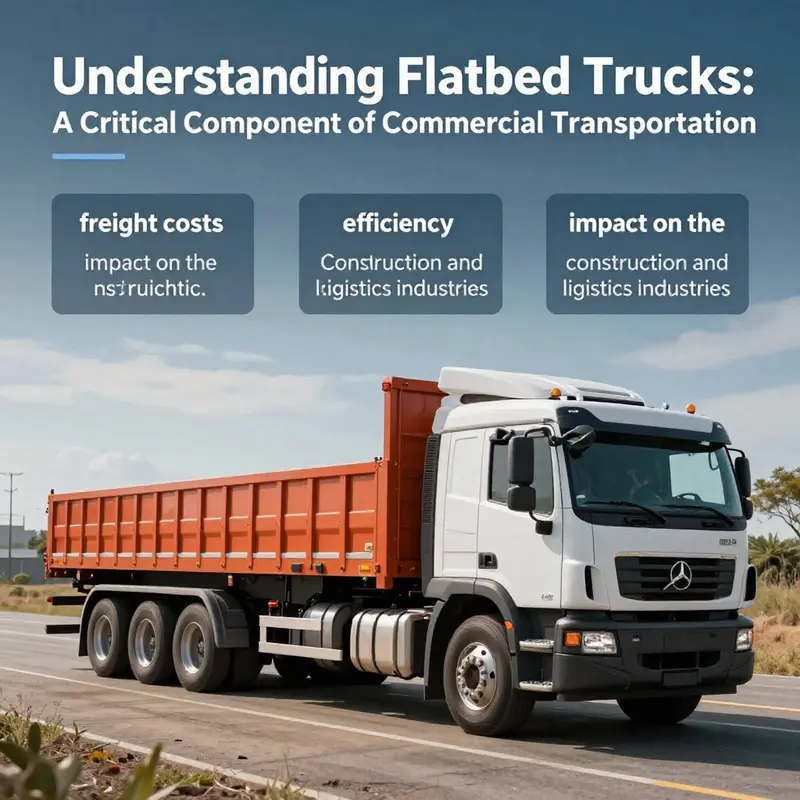
Flatbed trucks are more than a vehicle class; they are an economic instrument that enables modern industry. Designed to carry oversized, heavy, or irregular cargo, flatbeds connect raw materials, critical machinery, and finished components to sites where enclosed trailers cannot reach. That structural difference — an open deck and adaptable tie-down points — turns a single truck type into a versatile tool across construction, manufacturing, energy, and logistics. The result is tangible economic value, visible in supply chain performance, capital investment, labor markets, and technology adoption.
Across major projects, the utility of flatbed trucks is straightforward. They haul steel beams, concrete forms, heavy machinery, piping, and prefabricated modules. These loads are central to infrastructure development and industrial expansion. When a construction schedule depends on a timely delivery of structural steel, a delay is not merely a late shipment. It is idle labor, stalled equipment, and cascading schedule risks. Flatbed trucks reduce those risks by providing the right platform for nonstandard freight, making them linchpins for projects that stimulate local employment and multiplier effects in adjacent services.
The market data reflects that strategic role. A substantial market valuation and strong projected growth highlight rising demand for flatbed capacity. That growth translates to capital flowing into truck manufacturing, trailer production, maintenance networks, and associated supply chains. Investment in trucks and trailers supports factory workers, technicians, and parts suppliers, and it supports families in regions where heavy transport is a major employer. Equally important, growth in flatbed demand signals broader confidence in sectors that rely on them, such as construction and manufacturing. Investors, insurers, and financiers watch these trends because flatbed activity often presages physical investment on the ground.
Specialized industries show how flatbeds support high-value economic activity. When transporting precision equipment, large industrial modules, or renewable-energy components, the margin for error is small. Damage in transit can erase margins, delay commissioning, and threaten warranty claims. Specialized flatbeds, built to exacting standards, reduce those risks. Their technical specifications — reinforced decks, specific loading geometries, and adaptable securing systems — protect capital goods during long hauls. This protection keeps production lines moving and prevents downtime that would otherwise ripple through supplier networks and customer schedules.
Labor market dynamics are tightly linked to flatbed operations. Skilled drivers who can secure complex loads, comply with weight and dimension regulations, and execute safe long-haul movements are essential. A shortage of such drivers tightens capacity and raises freight rates. That, in turn, affects project budgets and can slow procurement cycles. Training programs and recruitment efforts that target flatbed competencies therefore have outsized returns. They increase throughput, improve safety, and help stabilize prices for industries that rely on regular deliveries of large materials.
Flatbed trucks also shape the economics of fleet management and trailer orders. Fleet owners weigh purchase and retrofit decisions against utilization rates and expected lifecycle costs. When trailer orders spike, manufacturers increase production, but supply chain bottlenecks for components can create delays. These delays influence truckload margins, capital allocation, and cash flow across carriers and shippers. For a practical look at how such orders affect carriers, see this analysis of trailer orders and truckload margins: trailer orders impact truckload margins. The interplay between orders, manufacturing capacity, and freight demand is a key mechanism by which flatbed economics feeds through to broader transport markets.
Innovation in flatbed design is another economic lever. Lightweight materials and modular construction reduce tare weight and improve payload capacity. This increases revenue per trip and improves fuel efficiency. Innovations that standardize modules and simplify repair also reduce downtime and maintenance costs. When fleets adopt such advances, they lower per-mile operating costs, which can make certain projects feasible that were previously marginal. Over time, efficiency gains measurable at the fleet level aggregate into lower costs for construction, manufacturing, and distribution.
Environmental and regulatory pressures reinforce the economic relevance of flatbed evolution. Lighter trailers and improved aerodynamics reduce emissions and fuel spend. As emissions regulations tighten and operators face stricter reporting, fleets that adapt early gain cost advantages. These savings are partly direct, in fuel and taxes, and partly indirect, through eligibility for green financing or procurement preferences from environmentally conscious customers. Thus, upgrades to flatbed fleets become investment decisions with measurable returns beyond immediate transport savings.
The presence of flatbed capacity influences project feasibility in emerging sectors. Renewable energy installations, for example, depend on transporting oversized components like turbine blades and nacelles. Manufacturing locations choose suppliers and plant sites with an eye to available transport solutions. Regions with robust flatbed services attract projects that require heavy-lift logistics. That creates a geographic clustering effect: suppliers locate near reliable transport corridors, maintenance providers establish shops, and training centers arise to build the necessary skills. This clustering fosters resilience and reduces the frictional costs of large-scale industrial activity.
Risks remain. Labor scarcity, regulatory complexity, and episodic supply chain shocks can constrain flatbed availability. Price volatility in steel and other inputs affects trailer cost and fleet expansion. Cross-border operations introduce compliance challenges that add time and cost. Still, the baseline is clear: industries that rely on oversized freight view flatbeds as critical infrastructure. Where flatbed capacity is constrained, projects slow and costs rise. Where capacity is plentiful and modern, projects accelerate and margins improve.
Seen through this lens, flatbed trucks deserve classification as commercial vehicles not just by definition, but by economic function. They are mobile enablers of capital projects, facilitators of high-value manufacturing, and drivers of regional employment. Their market growth, technological evolution, and operational impacts all feed into the larger commercial ecosystem. The size of the market and its projected expansion reflect more than transport demand; they reflect ongoing investment in sectors where large, specialized freight is essential. For a detailed market perspective and growth projections, consult the industry report at Grand View Research (https://www.grandviewresearch.com/industry-analysis/flatbed-truck-market).
Carrying the Framework of Modern Life: Flatbed Trucks as Essential Commercial Vehicles and Their Societal Impact
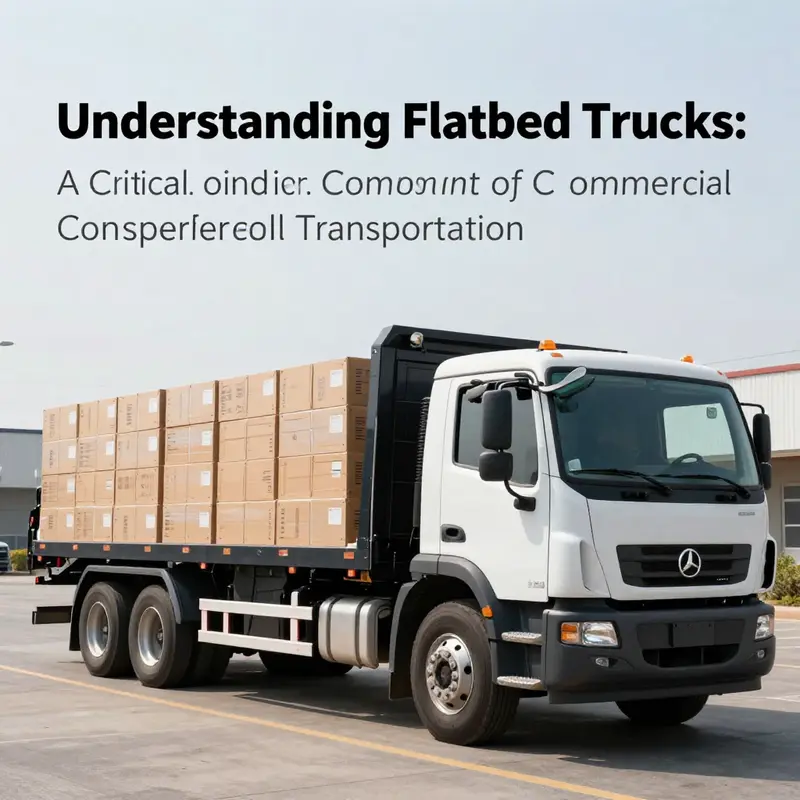
The question of whether a flatbed truck qualifies as a commercial vehicle is not merely a definitional exercise; it touches the backbone of how goods move, how cities grow, and how services we rely on every day stay resilient. A flatbed truck, by design and purpose, is squarely a commercial vehicle. It is built to move cargo for businesses rather than to transport passengers, and its role centers on carrying material, equipment, and components that enable infrastructure, manufacturing, and services to function. The flat, open deck of these trucks is not a casual feature but a deliberate engineering choice that increases versatility. It allows securement of bulky, heavyweight, or irregular loads that would be impractical or impossible to haul with enclosed trailers. In this sense, flatbeds are not a niche tool; they are a flexible workhorse for industries that rely on timely, precision delivery of critical freight.
Thus, the everyday utility of flatbed trucks extends far beyond their physical form. They support the project sites where steel beams rise into frameworks, where drywall sheets await installation, and where piping threads its way through buildings and landscapes. They handle cranes, excavators, and other heavy machinery that cannot be compacted or disassembled for standard transport. They also take on shipping containers and oversized loads that test the limits of roadway and loading dock logistics. The result is a transportation modality that links the end user with raw materials, components, and equipment in ways that keep supply chains moving and construction schedules on track. The open deck is not merely a feature; it is an enabling technology for efficient freight handling, rapid reconfiguration of loads, and the secure mounting of diverse payloads. In practice, this translates to fewer trips required for certain cargo types, improved utilization of assets, and more predictable delivery windows for manufacturing plants, distribution centers, and construction projects alike.
Beyond the cargo, flatbed trucks sustain a broader societal function by supporting essential services and public safety. Utility companies rely on reinforced flatbed service trucks to deploy transformers, power cables, and pipe systems critical to maintaining electricity, water, and communications networks. In disaster response and emergency operations, flatbeds carry heavy rescue equipment, temporary shelters, and mobile generators that can be deployed to affected areas with speed and reliability. In rural or remote regions, the same vehicles enable agricultural and energy supply chains, ensuring that farms and power systems continue to function through seasonal demands and maintenance cycles. Specialized variants of flatbed trucks—often equipped with robust winches, lifting systems, and adjustable tie-downs—extend their usefulness to towing operations and roadside assistance. The result is a fleet capable of maintaining road safety and rapid scene stabilization during incidents, which underscores why flatbeds are not a luxury but a practical necessity in many fleets.
Economically, the presence of flatbed trucks reverberates through industries that build and maintain the physical world. They facilitate the movement of large and irregular loads that could otherwise stall projects and increase risk. This capability strengthens infrastructure development, manufacturing throughput, and the maintenance of critical networks. The ripple effects extend to employment, as fleets require drivers, mechanics, load securement specialists, and service technicians who keep these vehicles ready for demanding tasks. In a modern economy, the ability to anticipate and meet the demand for heavy, oversized, or irregular cargo directly influences supply chain resilience. When goods and equipment reach their destinations on schedule, downstream operations—from steel mills to retail distribution—gain stability. In this way, flatbed trucks function not only as conveyances but as enablers of productivity that support consumer access to goods, energy security, and urban expansion.
The societal footprint of flatbed trucks also intersects with industry dynamics and market expectations. The research landscape notes that the market for flatbed service trucks reflects steady demand tied to construction, maintenance, and logistics activities. While the exact volumes fluctuate with public works budgets, commodity cycles, and cross-border trade patterns, the underlying logic remains clear: as long as there is a need to move heavy or irregular freight efficiently, flatbed trucks will be a central instrument in freight fleets. This is why they show up in municipal planning documents, corporate fleet strategies, and regional development agendas. They are not merely a transport solution but a strategic asset that aligns with broader goals of infrastructure renewal, energy projects, and resilient supply chains.
In discussing the societal contributions of flatbed trucks, it is also useful to consider how the market for these vehicles is evolving. The open-deck design, combined with reinforced frames and securement systems, appeals to fleets seeking flexibility and speed. Fleets can adapt to shifting cargo profiles without requiring wholesale trailer replacements. This adaptability matters when load profiles swing between construction materials, industrial machinery, and heavy utility components. It also matters when regulatory and environmental pressures push fleets toward efficient operation and safer load handling. The result is a vehicle class that remains relevant as industries modernize, diversify their freight, and respond to both growth opportunities and disruptive events. The broader implication is clear: the continued relevance of flatbed trucks in national freight, energy delivery, and public safety missions hinges on their status as commercial vehicles designed for goods movement, with a performance envelope well suited to the demands of a dynamic economy.
To connect this with real-world implications, consider how a market’s vitality is often measured not only by the number of units on the road but by the breadth of tasks those units can perform. A flatbed can secure steel beams for a high-rise, transport a generator to a hospital retrofit, or haul long lengths of pipe to a municipal water main project. This versatility reduces logistical friction and contributes to project timelines, budgets, and the safety of handling heavy loads. It also means that communities benefit from steadier construction activity and improved resilience of critical infrastructure. In a society that relies on continuous access to power, water, and transport, the role of these vehicles encapsulates a practical truth: commercial vehicles are the gears behind everyday life, and flatbeds are among the most adaptable gears in that system.
For readers seeking a broader policy and industry perspective, deeper technical standards, properties, and performance analyses are available through specialized industry reports that compile field data, testing outcomes, and case studies. These resources underscore that the open-deck design, compatible tie-down methods, and weight distributions are not cosmetic choices but essential design considerations that influence safety, efficiency, and regulatory compliance on the road. In practical terms, this means fleets invest in robust load-securing practices, appropriate axle configurations, and maintenance programs to preserve the integrity of both cargo and roadway infrastructure. The societal value of flatbed trucks, then, rests on a combination of transport flexibility, service delivery, and the steady capacity to mobilize the heavy, oversized, or irregular freight that underpins urban development and public service delivery.
From a fleet-management perspective, this chapter’s synthesis points to a clear conclusion: flatbed trucks are commercial vehicles because their primary mission is freight movement for business purposes. Their societal contributions arise from their ability to move the unmovable, support essential services, and sustain the cycles of construction, energy delivery, and disaster response that keep communities functioning. The broader economy benefits when projects proceed on time, when critical materials arrive where they are needed, and when the heavy work of building and maintaining infrastructure can proceed with confidence. That confidence rests, in part, on a simple mechanical truth: an open deck is not just a platform; it is a flexible platform that accepts a wide range of loads, secures them safely, and delivers them where they must go. In this sense, the flatbed’s value extends beyond freight to the stability and growth of the modern built environment. For fleets navigating margins and capacity, this versatility helps explain why inbound demand for flatbeds remains intertwined with broader trailer and trucking market dynamics, including orders, utilization, and the pace of fleet renewal. See the analysis linked here for a focused look at how trailer orders influence truckload margins: Trailer Orders Impact Truckload Margins.
External resource: For a deeper, technical exploration of standards and performance analysis in industry applications, explore the detailed report at Madison Hill: https://www.madisonhill.com/flatbed-service-truck-industry-analysis-2026
Final thoughts
Flatbed trucks undeniably occupy a key position within the realm of commercial vehicles, underpinned by their capacity to transport diverse goods essential to various industries. Their classification as commercial vehicles highlights their utility in logistics, construction, and the broader freight sector, ultimately contributing to economic growth and societal welfare. Engaging with the regulatory frameworks that govern their operation ensures that businesses can leverage their benefits while maintaining compliance. As logistics evolve, flatbed trucks will continue to be instrumental, affirming their vital role as commercial vehicles. Understanding this classification is essential for industry stakeholders looking to optimize their operations.