The trucking industry in Canada is at a crossroads, with the Driver Inc investigation shedding light on a practice that many consider one of the most damaging threats to fair competition and compliance. As independent contractors increasingly adopt the Driver Inc. model, issues surrounding labor rights, insurance premiums, and tax obligations have come to the forefront. The Canadian Trucking Alliance (CTA) has championed a federal study, urging policymakers to take a closer look at the implications of this scheme. This investigation represents a pivotal step toward reforming a sector that underpins the national economy, ensuring that all carriers play by the same rules. In a landscape marked by challenges, the insights from the upcoming federal study could drive meaningful political action and stabilize the trucking industry’s future.

Federal Study Aims and Goals: Addressing Trucking Labor Rights and Canada Trucking Regulations
The federal study on Driver Inc. aims to investigate the implications of this controversial model within the trucking industry, focusing on key concerns that have surfaced regarding labor rights and compliance with existing regulations. As the transport committee prepares to conduct detailed inquiries through a series of formal meetings, the study seeks to shed light on how Driver Inc. impacts insurance premiums and creates disparities in fair competition among trucking companies.
This investigation is expected to address significant issues such as payroll deductions, employment standards, and the legitimate use of independent contractors. By analyzing these aspects, the study envisions formulating recommendations that will foster a fairer and more equitable environment in the trucking industry, safeguarding compliant carriers and protecting worker rights. Ultimately, the expected outcomes include driving meaningful political action, enhancing regulatory compliance, and achieving more effective enforcement of labor laws. Through the insight gained from this study, the trucking sector may witness necessary reforms that ensure sustainability and fairness for all stakeholders involved.
| Feature | Compliant Carriers | Driver Inc. Practices |
|---|---|---|
| Payroll | Standard payroll deductions applied | No payroll deductions; workers classified as independent contractors |
| Employment Standards | Adheres to national labor laws and standards | Often sidesteps labor laws and employment standards |
| Insurance | Comprehensive insurance coverage provided for employees | Limited or no insurance coverage for contractors |
The Driver Inc. Model in Canada’s Trucking Industry
The Driver Inc. model in Canada’s trucking industry involves companies misclassifying employee drivers as independent contractors. This practice has significant repercussions for the industry and taxpayers.
Impact on the Canadian Trucking Industry:
-
Unfair Competition: Companies employing the Driver Inc. model can reduce payroll costs by up to 35%, giving them an illegal competitive advantage over compliant businesses.
Source -
Safety Concerns: The model has been linked to a decline in safety standards, with untrained or poorly licensed drivers and unsafe equipment on the roads. Marco Beghetto, VP of Communications at the Canadian Trucking Alliance (CTA), stated, “Essentially, we know that companies that routinely cut corners when it comes to tax and labour compliance will most definitely do the same in all areas of their operation, including disregarding public safety.”
Source
Impact on Taxpayers:
-
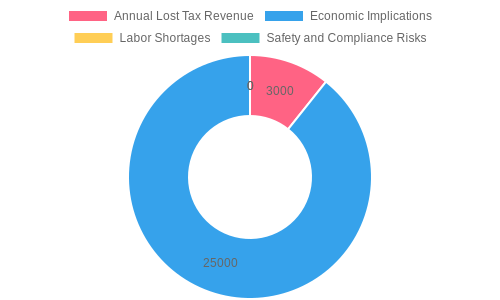
Lost Revenue: The Driver Inc. scheme costs the Canadian government over $5 billion annually in lost tax and benefit contributions, undermining funding for public services.
Source -
Evasion of Payroll Taxes: Companies using this model avoid paying payroll taxes like CPP and EI, leading to significant financial losses for the government. The CTA estimates that these firms can undercut legitimate carriers by 25% to 30% per driver, translating to between $20,000 and $30,000 per year per driver.
Source
Statements from Stephen Laskowski, President of the Canadian Trucking Alliance:
-
Laskowski has identified Driver Inc. as the biggest current threat to the industry, stating, “We have worked and pleaded with governments to address it, and the reality is they are starting to, but nowhere near to the level that needs to be done. Nowhere near.”
Source -
He emphasized the need for enforcement, noting, “We need the Canada Revenue Agency and the Labour Program to tackle these issues with the enforcement resources this crisis needs. We need substantial audits on carriers involved in the Driver Inc. scam.”
Source
The CTA continues to advocate for stricter enforcement and regulatory measures to address the challenges posed by the Driver Inc. model.

Strong Enforcement of Labor Rights in the Trucking Industry
Strong enforcement of labor rights in the trucking industry is crucial for ensuring driver safety, reducing turnover, and enhancing overall operational efficiency. Insights from industry leaders and recent studies highlight several key points:
- Enhanced Safety and Reduced Accidents: Research indicates a direct correlation between driver compensation and safety. A study analyzing data from 13,904 intrastate trucking companies found that a 1% increase in driver wages is associated with a 1.04% decrease in crashes. This suggests that better pay, often a result of strong labor rights enforcement, leads to safer driving practices. Source
- Addressing Labor Shortages and Turnover: The trucking industry faces significant labor shortages and high turnover rates. Investing in better communication, flexible schedules, competitive pay, and career development opportunities can build loyalty and reduce attrition. Organizations like the Women In Trucking Association emphasize the importance of workforce engagement to keep the wheels of commerce turning. Source
- Legal and Financial Implications: Non-compliance with labor laws can lead to hefty fines, loss of operating licenses, and damage to a company’s reputation. Adhering to safety standards minimizes the risk of accidents and subsequent legal actions, safeguarding the company’s assets. Source
- Supply Chain Accountability: Utilizing the influence of large assemblers to enforce labor standards among suppliers exemplifies a strategic approach to leveraging supply chain dynamics for labor compliance. This initiative promotes a culture of compliance and improved labor practices industry-wide. Source
In summary, robust enforcement of labor rights not only protects drivers but also contributes to a safer, more efficient, and legally compliant trucking industry.
Strong enforcement of labor rights in the trucking industry is crucial for ensuring driver safety, reducing turnover, and enhancing overall operational efficiency. Insights from industry leaders and recent studies highlight several key points:
- Enhanced Safety and Reduced Accidents: Research indicates a direct correlation between driver compensation and safety. A study analyzing data from 13,904 intrastate trucking companies found that a 1% increase in driver wages is associated with a 1.04% decrease in crashes. This suggests that better pay, often a result of strong labor rights enforcement, leads to safer driving practices. Source
- Addressing Labor Shortages and Turnover: The trucking industry faces significant labor shortages and high turnover rates. Investing in better communication, flexible schedules, competitive pay, and career development opportunities can build loyalty and reduce attrition. Organizations like the Women In Trucking Association emphasize the importance of workforce engagement to keep the wheels of commerce turning. Source
- Legal and Financial Implications: Non-compliance with labor laws can lead to hefty fines, loss of operating licenses, and damage to a company’s reputation. Adhering to safety standards minimizes the risk of accidents and subsequent legal actions, safeguarding the company’s assets. Source
- Supply Chain Accountability: Utilizing the influence of large assemblers to enforce labor standards among suppliers exemplifies a strategic approach to leveraging supply chain dynamics for labor compliance. This initiative promotes a culture of compliance and improved labor practices industry-wide. Source
In summary, robust enforcement of labor rights not only protects drivers but also contributes to a safer, more efficient, and legally compliant trucking industry.
In conclusion, the ongoing investigation into Driver Inc. practices represents a critical juncture for the Canadian trucking industry. The Canadian Trucking Alliance (CTA) has successfully called attention to the detrimental effects of this model, which not only undermines compliant carriers but also poses significant risks to safety and public revenue. As Stephen Laskowski highlighted, there is a pressing need for political action and enhanced enforcement measures to address the challenges arising from Driver Inc.
The forthcoming federal study aims to deliver thorough insights into these issues, with hopes of developing actionable recommendations that promote fairness and accountability in the industry. By advocating for stricter regulatory compliance and the enforcement of labor rights, the CTA seeks to fortify the foundation of the trucking sector, ultimately ensuring a sustainable and equitable future for all stakeholders involved. With cooperation from policymakers and industry leaders, meaningful change is attainable — safeguarding the interests of drivers, carriers, and the Canadian public alike.
User Adoption Data on Driver Inc. Practices in the Trucking Industry
Prevalence of Adoption:
The Driver Inc. model remains a significant practice within the Canadian trucking industry. A 2021 survey conducted by the Canadian Trucking Alliance (CTA) revealed that over one-third of truck driver applicants expressed a preference for misclassification as independent contractors. In Ontario, this figure was particularly alarming, reaching nearly 50%, showcasing the widespread adoption of this model in the province.
Industry Challenges:
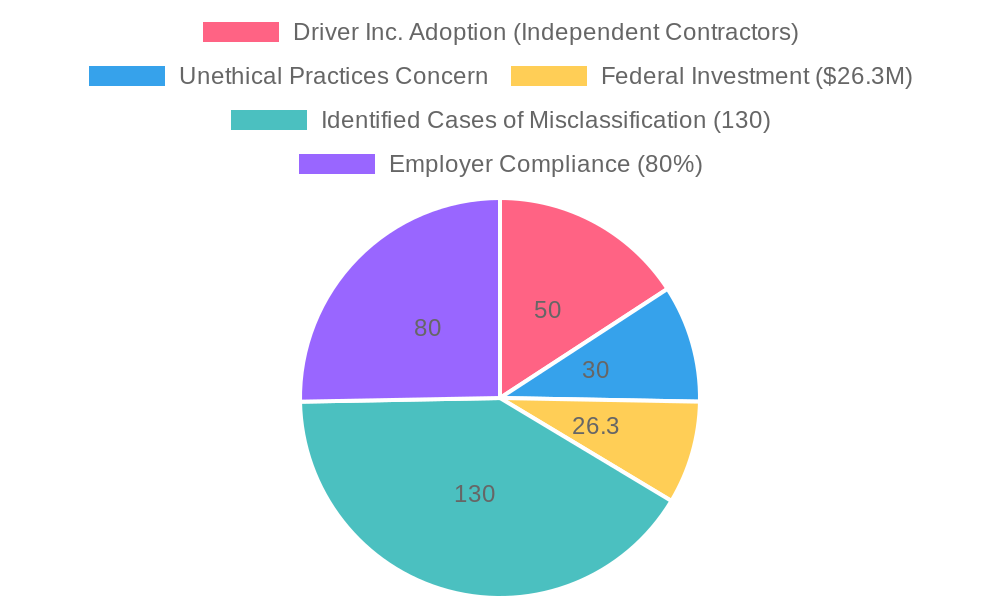
Recent surveys highlight serious concerns within the industry regarding unethical practices. In a 2024 survey, 30% of trucking executives reported that unethical business practices, such as those associated with Driver Inc., were their foremost concern. The escalating costs and labor shortages ranked after that, underscoring the urgency of addressing these issues.
Government Response:
To tackle these challenges, the federal government granted $26.3 million in 2023 specifically aimed at combating misclassification in the trucking sector. This funding facilitated investigations into 650 employers, revealing around 130 instances of misclassification. Notably, about 80% of identified non-compliant employers complied with regulatory mandates by reclassifying their drivers appropriately.
Economic and Safety Implications:
The Driver Inc. model contributes to significant safety risks as it often involves poorly trained drivers and maintenance of substandard equipment. This lax approach not only endangers public safety but also leads to immense tax revenue losses, with estimates indicating that billions of dollars are lost annually due to unpaid taxes and contributions. The growing persistence of Driver Inc. practices highlights the necessity for robust enforcement of labor rights and regulatory oversight to protect both workers and compliant businesses in the Canadian trucking landscape.

Transition: Real Experiences Highlighting Industry Challenges
Understanding the statistics surrounding the adoption of the Driver Inc. model is just the beginning; the human experiences behind the numbers reveal the harsh realities faced by many truck drivers. For instance, Arshdeep Singh, a driver from Brampton, shared how misclassification forced him to shoulder significant financial burdens, like paying for essential truck repairs that should have been covered by his employer. He remarked, “I feel like I am working for free, just to keep my truck on the road.”
Karanveer Singh, an international student, learned firsthand about the exploitation rampant in this system after two companies he worked for failed to pay him. Despite securing a Labour Board order for nearly $40,000, he remains uncertain about ever receiving that money, reflecting the grim outlook many face under the Driver Inc. model.
Moreover, safety is a critical concern as highlighted by Véronique Gagnon, who reported observing dangerous practices among Driver Inc. drivers, revealing a troubling trend of negligence that puts the entire industry at risk. The testimony from truck drivers underscores the urgent need for regulatory oversight and enforcement to address these profound challenges in the trucking sector.
User Adoption Data on Driver Inc. Practices in the Trucking Industry
Prevalence of Adoption: The Driver Inc. model remains a significant practice within the Canadian trucking industry. A 2021 survey conducted by the Canadian Trucking Alliance (CTA) revealed that over one-third of truck driver applicants expressed a preference for misclassification as independent contractors. In Ontario, this figure was particularly alarming, reaching nearly 50%, showcasing the widespread adoption of this model in the province.
Industry Challenges: Recent surveys highlight serious concerns within the industry regarding unethical practices. In a 2024 survey, 30% of trucking executives reported that unethical business practices, such as those associated with Driver Inc., were their foremost concern. The escalating costs and labor shortages ranked after that, underscoring the urgency of addressing these issues.
Government Response: To tackle these challenges, the federal government granted $26.3 million in 2023 specifically aimed at combating misclassification in the trucking sector. This funding facilitated investigations into 650 employers, revealing around 130 instances of misclassification. Notably, about 80% of identified non-compliant employers complied with regulatory mandates by reclassifying their drivers appropriately.
Economic and Safety Implications: The Driver Inc. model contributes to significant safety risks as it often involves poorly trained drivers and maintenance of substandard equipment. This lax approach not only endangers public safety but also leads to immense tax revenue losses, with estimates indicating that billions of dollars are lost annually due to unpaid taxes and contributions. The growing persistence of Driver Inc. practices highlights the necessity for robust enforcement of labor rights and regulatory oversight to protect both workers and compliant businesses in the Canadian trucking landscape.