
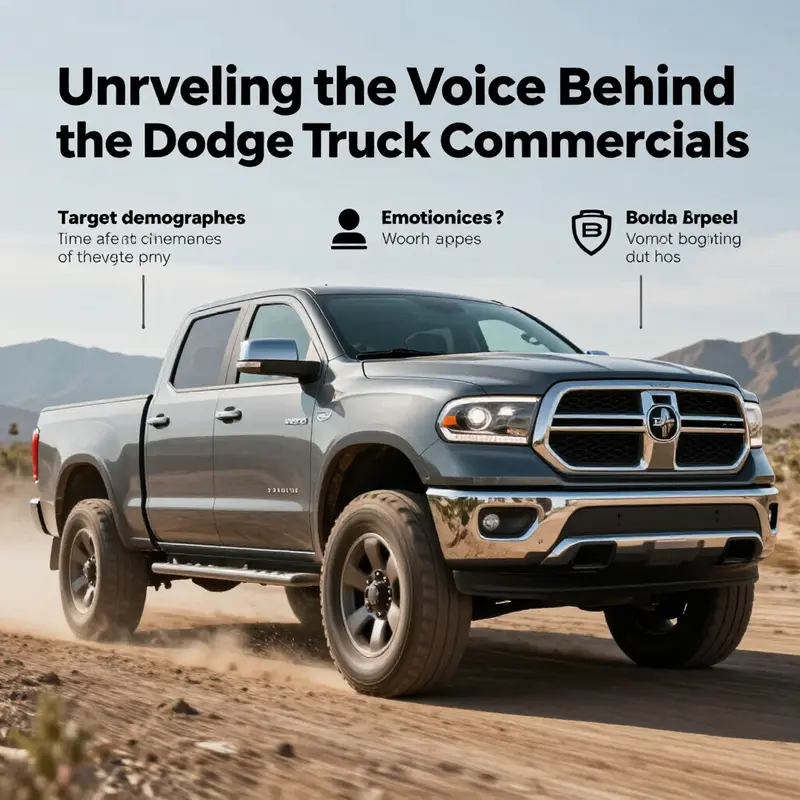
The Dodge truck commercial features a jingle that has captured public attention, thanks in large part to a viral TikTok video. This article explores not only who sings this catchy theme but also the broader implications of its cultural resonance and marketing strategy. Each chapter delves into aspects that relate to the vibrant relationship between music, advertisements, and the brand identity of Dodge trucks, ensuring that Logistics & Freight Company Owners, Procurement Teams in Construction and Mining Enterprises, and Small Business Owners with delivery fleets gain a comprehensive understanding of this modern commercial phenomenon.
The Dodge Truck Theme: Voices Behind the Roar
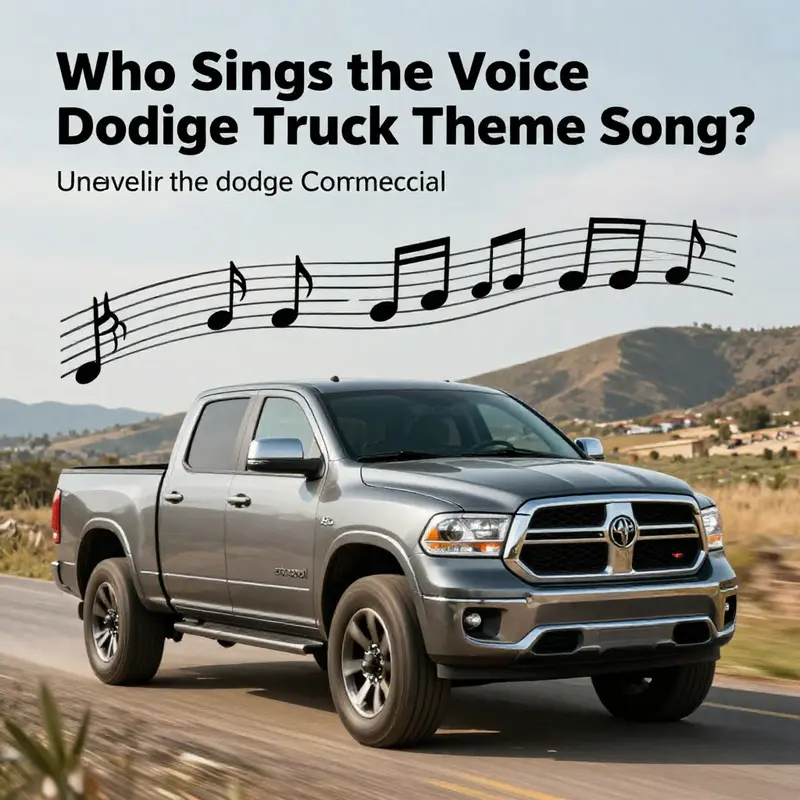
When a heavy pickup appears on screen, the soundscape guiding the moment often shapes how audiences feel about the vehicle. In the Dodge truck campaign, the auditory signature blends a familiar rock anthem with newer, meme driven variants. The official track is the enduring recording from a classic film that has traveled into advertising, sports arenas, and viral clips, carrying themes of grit and forward momentum. The 2023 spot introduced a variant of that same tune, prompting questions about who performs the updated version and how it relates to the original. Licensing, rights management, and context shape the answer more than a single name. The original recording anchors the campaign in cultural memory, while fresh social media edits invite new listening experiences without displacing the canonical performance. Practically, the sonic identity acts as a storytelling tool that signals power, resilience, and reliability, while the meme layer expands reach and conversation. For practitioners, the lesson is that enduring music in advertising balances tradition with novelty, ensuring the brand message stays clear as the audio landscape evolves. To compare the versions, listeners can hear the canonical performance beside the 2023 adaptation and notice how context shifts emotional nuance. External reference notes Survivor’s Eye of the Tiger is often cited in industry discussions, and licensing explanations clarify why a single artist may not always occupy every moment of a campaign.
Viral Frequencies: How a TikTok Parody Turned a Truck Ad into a Cultural Moment
A single burst of digital alchemy can turn a long-running advertising beat into something strangely intimate and enduring. In this chapter, we follow that alchemy as a viral TikTok moment reframed a legendary automotive advertisement for a new generation. What began as a cheeky parody—born from a Malaysian creator who sang a playful mishearing of the jingle—found a resonance far beyond the original campaign. The parody, rooted in a robust streak of humor and a love for dramatic advertising tropes, carried with it cadence, rhythm, and a sense of scale that fans immediately recognized. The result was less about the product being sold than about the feeling the ad could conjure: a cinematic sweep, a booming voice, and a promise of power that audiences could imitate, remix, and own in their own feeds. This is the anatomy of how a brand moment becomes a community moment, and how a global audience, armed with smartphones and a quick wit, reframes marketing as a shared experiential artifact rather than a one-way message. The Malaysia-originated clip—featuring the performer whose online persona is Blue Dodo—became a touchstone not for the specific vehicle in question but for the audacious, almost theatrical energy at the heart of the original ad. The voice, the tempo, and the brassy bravado of the soundtrack were the magnets; the parody offered a mirror in which thousands could see themselves reconstructing the awe-inspiring drama of a grandiose commercial within their own digital living rooms. In a sense, the viral phenomenon distilled the essence of modern advertising: reverence for craft fused with the democratizing power of remix culture. The chorus of responses—from delighted giggles to mock impressions—generated a communal experience in which viewers felt both nostalgia and permission to participate. This is central to the chapter’s thread: virality here isn’t just about a clip being shared; it’s about a culture building around an advertising moment, reinterpreting it, and, in the process, giving the moment new shapes and new meanings.
The mechanics of this cultural remix are surprisingly straightforward, even as the outcome feels almost orchestral. TikTok’s format invites quick reimaginings, rapid cuts, and punchy punchlines. The original audio—an audacious, cinematic cadence paired with a riff on the brand’s iconic sonic identity—becomes raw material. Creators add their own visuals, swap in comedic reactions, or layer unexpected twists that shift the story the ad is telling. The effect is a kind of sonic storytelling where the familiar beat invites recognition, while the novelty of each creator’s take invites laughter, surprise, or awe. The Malaysian performer’s vocal performance—simultaneously earnest and playful—provided a bright, singable thread that others could latch onto. The line between homage and parody blurs, and audiences tend to celebrate both: the appreciation for the craft that produced the original ad and the ingenuity of those who translate it into new, shareable moments. The sense of scale in the original jingle—its cinematic feel, the deliberate tempo, and the way the voice soars—lends itself to exaggeration, which is precisely what many memes crave. When a moment feels large, it invites fans to magnify it in their own distinct ways, making a single advertisement feel less like a commercial and more like a communal shorthand for a certain emotional register.
Within this ecosystem, a few threads repeatedly surface as accelerants of sharing. First is nostalgia, not simply for the product but for the era of big, muscular advertising narratives. The throwback tone—grandiose narration, sweeping camera moves, and a sense of serious ambition—resonates with viewers who recall the late 20th-century ad aesthetics. Second is humor that respects the gravity of the original while bending it into playful forms. The parody thrives on the tension between the awe the ad once commanded and the silly risks of replicating it with a tongue-in-cheek wink. Third is the participatory instinct: audiences crave opportunities to contribute, not just consume. When a single video offers a doorway to countless remixes, the loop becomes self-sustaining. The Malaysian creator’s performance is especially potent here because it provides a memorable vocal hook—something easy to imitate, easy to memorize, and easy to pair with a wide range of visual riffs. It is not incidental that the sound travels widely; it travels because it is adaptable, punchy, and easily integrated into new contexts—from reaction videos to dramatized captions, to playful visual gags that mine the same emotional core.
From the brand’s perspective, the public reaction to such remixes rarely feels like a threat and more often reads as a form of ongoing engagement. The official accounts associated with the campaign or the broader brand family tend to acknowledge the enthusiasm with a light touch, sometimes re-sharing the most clever riffs or nodding to the humor in the comments. This kind of engagement matters because it validates the audience’s impulse to participate. When the source of the joke is treated with a mix of humor and respect, the conversation stays creative rather than devolving into mockery or hostility. The digital landscape rewards authentic participation, and in that sense the remix culture around this particular ad has functioned much like a long-running, shared re-release of a classic piece of media. It’s less about controlling the narrative and more about curating a space where fans feel welcomed to contribute. In those spaces, the line between fan and stakeholder blurs; people begin to see themselves as co-authors of the ad’s ongoing cultural footprint.
This dynamic spills from the social sphere into real-world industry conversations, as well. The ripple effect of a viral moment can touch how trucking communities talk about branding, campaigns, and the role advertising plays in shaping public perception of heavy-duty machines. The same energy that fuels memes can also illuminate the ways in which campaigns connect to workplace cultures, technician pride, and the timeless allure of performance. In industry analyses, there’s growing recognition that viral campaigns create a kind of soft equity for brands: they remind audiences of the capabilities and the character of the machines without forcing a hard sell. The interplay between culture and commerce becomes a case study in how modern marketing leverages shared digital rituals to keep a brand relevant in a crowded landscape.
For readers who want to situate this moment within a broader context, the thread of industry dynamics matters. Long before the latest meme, industry observers were watching how consumer attention could be a driver of demand, how social chatter could turn a simple feature highlight into a cultural cue, and how a single jingle could carry emotional gravity across generations. This is why the phenomenon deserves attention beyond a single catchy clip. It offers a lens on how audiences today participate in marketing ecosystems: by remixing, reinterpreting, and representing the same core experience in endlessly diverse ways. The conversation also invites a broader reflection on the relationship between nostalgia and novelty, tradition and innovation, seriousness and satire. In that tension sits the power of the viral moment—the way a familiar ad becomes a canvas for fresh personality, the way a song and a voice become tools for communal storytelling, and the way a brand moment endures because people keep returning to it, not just to consume but to contribute.
In the end, the phenomenon illustrates a core truth about contemporary advertising: longevity comes not from a single placement, but from a living dialogue with an audience that refuses to let a moment disappear. The Blue Dodo parody and its kin show how a piece of media can become a shared language, a set of inside jokes, a repertoire for expression. It is this communal repertoire—crafted by fans, amplified by the algorithm, and sometimes nudged by official accounts—that sustains a viral cycle long after the original campaign has faded from the primary media spotlight. The result is a distinct form of cultural currency, earned not by gatekeeping the message but by inviting everyone to speak the same tonal dialect in their own unique voices. The dialogue continues, not as a monologue from a brand, but as a chorus of contributors who re-sound the advertisement’s energy in ways that feel personal, current, and endlessly inventive.
To explore a related industry angle that frames these cultural shifts within production and logistics realities, consider how trailer orders and other supply-chain dynamics influence margins and market opportunities. This context helps explain why brands invest in enduring, adaptable campaigns that can travel across platforms and generations. See more at Trailer orders impact truckload margins.
External resource: For an authentic look at the original era’s ad, the classic clip can be viewed here: https://www.youtube.com/watch?v=2vK8Y7XeJ5Q
Voices on the Open Road: The Cultural Soundtrack Behind Truck Commercials
Music has always been the unsung co-pilot of automotive advertising, a force that can turn a product into a presence in the listener’s imagination. In the open road world, where ruggedness meets reliability and individualism becomes a storytelling currency, a single track can become a cultural memory, weaving itself into conversations long after the screen goes dark. This chapter follows that thread, tracing how the soundscape that accompanies truck narratives travels from elite cinematic moments to everyday feeds, and how a melody can carry more than tempo or mood — it can carry a nation’s feeling about power, freedom, and identity. What begins as the choice of a brand to set a scene can evolve into a shared cultural artifact, mutating as fans, critics, and casual viewers remake it in their own image across platforms and generations. The journey is not simply about music in ads; it is about music as a signpost of how audiences interpret consent to dream, to conquer terrain, and to belong to a story larger than themselves.
One landmark example of how sound can anchor culture in a high-stakes advertising moment is the decision to pair a decades-old, high-energy rock signal with a modern, monumental visual. The track’s tempo, its electric guitar bursts, and its sense of unbridled momentum created an auditory cue that felt both nostalgic and immediate. It evoked the wide, shifting landscapes of a country’s heartland while also hinting at a frontier that is always just beyond the next bend. The emotional resonance was not merely about speed or force; it was about a promise. The music suggested that driving a capable machine was more than transportation; it was a declaration of independence, a personal statement delivered with the roar of a well-tuned engine. The visual drive—the vehicles cutting through deserts, urban canyons, and after-dark treks—was amplified by the music, so that viewers did not simply see power; they felt it in their chests and heard it in their memories.
That combination helped catalyze a broader shift in how brands think about sound. Rather than a functional layer that sits under dialogue, music began to function as a narrative protagonist, a partner to the imagery that could carry weight long after the commercial ended. Audiences began to measure the ad not only by the spectacle of the vehicle but by the stamina of the soundtrack, by the way a chorus could linger in a social feed and invite remix, mash-up, or reference. In this sense, the ad becomes cinema-level storytelling, where music acts as a co-architect of mood and meaning. This cinematic ambition reshaped expectations both within the industry and among viewers who came to anticipate that a memorable automotive spot would deliver not only product attributes but an entire emotional itinerary. It is telling that conversations about the ad’s impact extended beyond purchase intent; they traveled into conversations about taste, era, and taste’s relationship to memory. If an ad can conjure a mood with such clarity, it can cultivate a shared language that extends into playlists, film soundtracks, and even the rhythms of daily life on the road.
The ongoing dialogue between past and present is particularly visible in how current audiences interact with the soundtrack’s legacy. A turning point in recent years has been the rise of user-generated content that foregrounds a certain playful irreverence: small clips of a parody or remix can redefine a song’s meaning and, unexpectedly, a brand’s place in culture. A Malaysian creator who offered a witty parody of the commercial’s jingle—renaming the chant with a playful mishearing—illustrates how a voice outside the corporate ecosystem can become a widely recognized vessel for the same memory. The original audio’s contours were reframed in the hands of everyday creators, and the line between advertisement and art blurred as fans shared, imitated, and reinterpreted the melody in their own contexts. When audiences shape the resonance of a track, the sound stops being merely a tool for selling a vehicle and becomes a cultural texture that people borrow, reshape, and carry forward.
This dynamic also reveals a practical lesson for industry professionals. The music that travels with a truck narrative does not only serve as a mood setter; it becomes a vehicle for brand storytelling that can outlive the campaign itself. A powerful, flexible track that can survive reinterpretation and still feel anchored to a sense of epic road narrative gives a campaign a longer shelf life. As audiences produce variants and share them widely, the music becomes a living extension of the brand’s mythos, capable of entering new conversations about design, performance, and the meaning of freedom on the road. In the modern media ecosystem, where audiences are both consumers and co-creators, a successful soundtrack is less about a single moment of impact and more about a durable signal that can be read in different ways by different viewers. The result is a sound identity that transcends a one-off commercial and anchors a wider cultural vocabulary around trucking culture as it intersects with popular taste, social media humor, and collective memory.
Within the industry, these shifts have prompted savvy practitioners to rethink how music licensing and creative development operate. Rather than treating a song as a fixed asset, producers now cultivate a sonic ecosystem: a core motif that anchors the ad’s emotional throughline, paired with a landscape of instrumental textures, lyrical fragments, and melodic hooks that can be repurposed for social media, behind-the-scenes content, or follow-up campaigns. The ability to deliver a soundtrack that scales from a dramatic 60-second spot to a multi-channel experience speaks to a broader trend in marketing: sound as a strategic asset that can travel across platforms, contexts, and audiences while remaining tethered to the core story of power, resilience, and the road as a canvas for personal ambition. The ethical and legal sides of this strategy—licensing, rights clearance, and compensation for creators—also reflect a maturing understanding that the music in ads is not a disposable background feature but a valued creative input that can circulate in the cultural bloodstream long after the campaign’s prime.
For readers seeking a concrete sense of how one landmark moment reshaped industry expectations, the period around the mid-2010s is especially instructive. The campaign’s ambition to fuse cinematic music with product storytelling set new standards for what an auto-related narrative could feel like on a national stage. It demonstrated that the combination of classic rock’s enduring propulsion and modern visual storytelling could elevate a vehicle into a symbol of a broader social ideal—one that celebrated individual agency, adventure, and the allure of the open road. As digital platforms amplified reception and response in real time, marketers learned to read audience sentiment not just in sales spikes but in the texture of comment threads, meme culture, and playlist curation. This is the cultural engine behind the sound: a reminder that a melody, when paired with a powerful set of moving images, can become a shared language that speaks to several generations of road-trippers and dreamers alike.
The conversation around these dynamics is ongoing. As audiences increasingly expect authenticity and artistic ambition in branded content, the music choices of highway narratives will continue to serve as a bridge between nostalgia and novelty. The evolving landscape invites marketers to think not only about how a song makes a moment feel but about how it can sustain a moment’s relevance across evolving cultural ecosystems. It invites critics and fans to listen for how a soundtrack negotiates memory, aspiration, and humor, and to consider how a simple jingle, when imagined as a living thread, can stitch together disparate experiences into a coherent, energizing sense of movement on the road. In that sense, the road itself becomes the chorus, and the voice behind it—whether a studio director, a legendary riff, or an anonymous social media creator—contributes to a chorus that remains ready to accompany new journeys.
For a broader view of how market dynamics intersect with capacity and industry rhythms that shape all moving parts in trucking, see the discussion on Excess Capacity in the Trucking Market Insights. https://truckplusllc.com/excess-capacity-in-the-trucking-market-insights/ And for a deeper read about how an iconic ad moment transformed advertising standards, consult The New York Times’ exploration of the era’s standout automotive storytelling: https://www.nytimes.com/2015/02/01/business/media/dodge-ram-super-bowl-commercial-sets-new-standard-for-auto-ads.html
Echoes of Power: Tracing the Voice and Sound Design at the Heart of Dodge Truck Ads
The question of who sings the Dodge truck commercial might invite a simple answer, but the truth sits at the intersection of viral culture, studio craft, and brand storytelling. In recent years, a particular audio moment has circulated online that underscores how a single voice and a carefully engineered soundscape can become inseparable from a vehicle’s image. A Malaysian TikTok performer, known to many as Blue Dodo, created a playful parody of a car commercial jingle. Her performance, with its cheeky Blue Dodo refrain, proliferated across feeds and forums, sparking conversations about the way a tune can travel beyond a single production. The audio that accompanies the Dodge visuals in many campaigns borrows from that viral energy, even as the corporate version is meticulously reworked in the studio. The result is a layered auditory identity: a recognizable voice echoing through a landscape of raw engine tones, reinforced by a brand music language built to outlast fleeting memes. The chapter that follows traces how this blend of public melodrama and professional sound design functions to shape perception of the trucks themselves, from Ram 1500 pickups to the heavier Ram Heavy Duty lines. It also considers what the sonic approach reveals about Dodge’s broader strategy for communicating power, reliability, and freedom through sound as much as through steel and torque.\n\nWhen you listen to a Dodge truck commercial, you are not just hearing a soundtrack; you are being invited into a sonic world where the vehicle’s capability is measured in decibels as much as in horsepower. The commercial sound design is not accidental. It is a deliberately orchestrated mix of deep, resonant engine roars—often augmented or synthesized—to emphasize the raw performance of the line. Low-frequency bass acts as a sonic anchor, a reminder that these are machines built to work as hard as they can, whether that work is towing a heavy load, traversing rough terrain, or simply asserting presence on a desolate highway. Every rumble is calibrated. The engine notes, filtered and sometimes augmented through digital processing, are placed to cue the audience’s attention at crucial moments—during launch, during a climb, or as a transition into a climactic reveal. The sound design leans on a core principle: the power of restraint. The music tracks chosen for these spots tend to be minimalist and rhythmic, offering driving momentum without competing with the mechanical storytelling. The audience hears the Ram growl, not a busy orchestral score, so the vehicle’s own acoustics carry the emotional load of the scene. This choice is not merely aesthetic; it is strategic. It ensures the viewer’s focus remains anchored on what the truck is doing—the way it grips the road, the length of its wheelbase, the weight behind the hitch—so the visual narrative about capability remains inseparable from the auditory signal.\n\nWithin that sonic framework, the iconic signature of the Dodge brand—the Ram growl—plays a pivotal role. This distinctive engine note, sometimes intensified by digital processing, acts as a recurring auditory cue that the brand can call upon at key transitions and peak moments. It functions like a shared memory across ads, a sonic shorthand that immediately signals Dodge even when the on screen action is sparse or suggestive. The Ram growl is not a one off trick; it is a carefully maintained motif that aligns with the emotional arc of the commercial. It provides a sonic throughline that supports the visuals’ narrative of toughness and reliability. The choice of a sparse musical bed, when present, serves as a quiet engine to accompany the imagery rather than overshadow it. Think of a scene with heavy duty torque or a truck straining over an obstacle: a subtle percussive rhythm or a soft bass line nudges the tempo, while the dialogue remains clear and the mechanical sounds are allowed to breathe. These decisions create a multisensory experience in which sound and image are synchronized to communicate a single, confident message: these trucks are built for work and adventure, and the soundscape makes that proposition feel tangible.\n\nA layer of nuance emerges when we consider the cultural fact of the viral audio that travels beside the official branded track. The Malaysian parody, with its playful mishearing of Dodge as Blue Dodo, embodies a moment when user generated content interacts with corporate production in a way that feels almost symbiotic. In the original TikTok, the performer’s voice and timing became a reference point, a tonal fingerprint that fans could attach to the brand even as the ad team reinterpreted the material for a formal campaign. The studio version that lands in commercials is not a reproduction of the parody, but a reimagining—one that preserves the spark of familiarity while grounding it in the brand’s sonic ecosystem. This dynamic illustrates a broader trend in advertising: brands mine the energy of viral moments, then reframe it with professional craft to ensure consistency with product messaging and visual pacing. The audience experiences a sense of continuity between what they found entertaining online and what they see on screens during prime time or digital streams, a continuity that strengthens recall without sacrificing the seriousness of the product’s claims about horsepower, capability, and endurance.\n\nOf course, any discussion of sound in automotive advertising must contend with real world constraints. A new factor in the sonic equation is the regulatory context—noise and emissions standards that govern how loud a vehicle can be, what frequencies are permissible, and how much processing can be applied before the sound becomes indistinct or artificially overwhelming. In this environment, OEMs seek clarity in emissions regulations, a topic that increasingly intersects with how brands sculpt their sonic identity. The challenge is to preserve the immediacy and visceral impact of the Ram growl while staying compliant and respectful of neighbors and communities. The solution often involves a combination of authentic sound capture from engine sessions, precise digital augmentation, and a careful mix of space and texture in the soundtrack. The result is a sound that feels real and powerful without crossing the line into unreal or distracting amplification. This balancing act speaks to a broader industry practice in which sonic branding must be adaptable yet consistent, powerful yet compliant, memorable yet efficient. The Dodge approach—leveraging a signature engine tone, layered with selective percussion and restrained musical cues—offers a blueprint for how a brand can cultivate a distinct auditory presence while navigating regulatory boundaries.\n\nAs a narrative strategy, sound in these Dodge campaigns also serves to evoke the human elements of work, grit, and resilience that many buyers associate with pickup trucks. The engine’s voice, the gravel under tires, the metallic creaks of a chassis flexing under load—all these tactile cues extend beyond raw horsepower to create a sense of lived experience. The voice that traveled from a viral TikTok moment into a branded sonic signature becomes a kind of cultural bridge. It reminds audiences that these vehicles are not just machines in a showroom; they are tools in the hands of people who rely on them for daily labor, weekend adventures, and everything in between. In this sense, the sound design does more than sell a feature list. It sells a lifestyle built around freedom, capability, and a durable, dependable presence on the road. The result is a brand myth told through aural texture as much as through the image of a truck crossing rough terrain or hauling a heavy load.\n\nFor readers seeking a deeper dive into the technical and strategic underpinnings of Dodge’s approach, the broader industry discussion around how sound design is developed and deployed within automotive advertising is essential. The analysis synthesizes studio technique, brand storytelling, and the cultural resonance of a viral voice into a cohesive portrait of modern sonic branding. The case study of the Dodge truck ads demonstrates how an aural identity can grow from a spontaneous Internet moment into a sustained, branded experience that adds depth to the product narrative. It is a reminder that when a commercial speaks in the language of power and endurance, its voice may come from a chorus that began far from the gym of a marketing studio—a chorus that was, in the end, refined to serve the road ahead. Further reading and related industry perspectives shed light on the practical realities behind these choices, including the nuanced craft of balancing engine realism with the thrills of a compelling rhythm and the editorial choices that guide transitions, climaxes, and pauses across a campaign. To appreciate the broader context of how these sonic strategies are realized, see the external reference on Dodge truck sound design for an industry-informed perspective. Autoblog – Dodge Truck Sound Design
null
null
Final thoughts
The Dodge truck commercial’s theme song, distinguished by its catchy jingle and viral roots, signifies more than just a marketing tactic; it is emblematic of how contemporary advertising can capture the zeitgeist through engaging sound. From its origins on TikTok to its transformative impact on brand identity, the jingle showcases the dynamic interplay between culture and commerce. For professionals in logistics, construction, and small business delivery sectors, understanding such trends can inform strategic decisions in brand engagement and consumer outreach.