
Parking commercial trucks on residential driveways presents significant risks to the structural integrity of cement. This article delves deep into the mechanics behind these impacts, evaluates specific risks tied to prolonged truck parking, and offers actionable strategies for protection. Logistics and freight company owners, construction and mining procurement teams, and small business owners with delivery fleets must recognize how heavy loads can deteriorate driveway surfaces over time, making informed decisions essential. Each chapter provides insights that collectively underscore the importance of proactive measures in safeguarding cement driveways from potential damage.
Weight That Lingers: How Parking Commercial Trucks on Residential Driveways Undermines Concrete Integrity
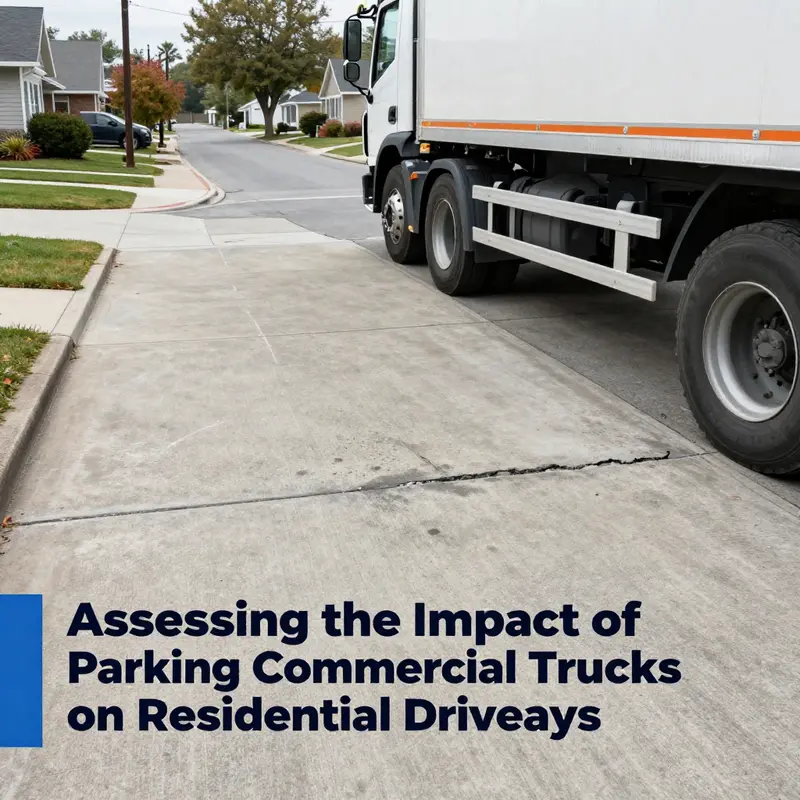
On quiet mornings and late evenings, a driveway is a threshold between a home and the hustle of the road. It bears more than the shadow of a vehicle; it bears the possibility of cumulative damage that can sneak up over years. When a commercial truck—whether a delivery rig, a freight tractor, or a service vehicle—occupies a residential driveway for hours or days, the weight and the way that weight is transferred through the pavement begin to matter in ways that most homeowners do not anticipate. The central truth is simple: concrete driveways are designed to carry the loads of passenger cars and light trucks. They are not typically engineered as parking pads for heavy commercial vehicles, and the difference between a light-duty and a heavy-duty load is not merely a matter of scale. It is a matter of the pavement’s structural capacity, the strength of the base beneath it, and how long the stress is applied. When those conditions align unfavorably, the risk to cement integrity is real and cumulative, not instantaneous and isolated. This is especially true in residential settings where driveways often sit on marginal soils, with limited space for a thick, reinforced base, and with joints that may not accommodate repeated heavy-loading cycles. The dynamics of load transfer—the way weight from a tire is distributed across the concrete, into the sub-base, and down into the soil—are the invisible mechanics behind a visible hairline crack or a sudden drop in surface flatness. The phenomenon should not be understood as a single event but as a sequence of stresses that, over time, erode the pavement’s ability to perform as a durable, smooth, safe platform for vehicles, pedestrians, and the home itself. The weight of commercial trucks, which can range from tens of thousands to well over eighty thousand pounds when loaded, concentrates force on relatively small contact patches where the tires meet the concrete. A single, well-inflated tire imposes a high point load that, if not evenly distributed, can create microcracks at the surface. Concrete is strong in compression but relatively weak in tension. When a truck sits on a slab, the tire’s footprint can create a stress concentration. If the slab is thick enough, well-supported by a robust sub-base, and properly jointed, the pavement may resist this stress for a period. But many residential driveways are not built with those conditions in mind. A driveway that is only four inches thick, placed on soil that is not adequately compacted, and designed to carry passenger vehicles is not a guaranteed firewall against heavy vehicle parking. The distinction between four inches and six inches of concrete is not casual. An extra two inches can dramatically alter the pavement’s bending capacity and its ability to distribute loads across a wider footprint. When a truck remains parked for hours, the static weight does not fluctuate with vehicle dynamics that occur when a car traverses slowly or accelerates away. The static condition increases the duration of stress, allowing microcracks to propagate and, crucially, to interact with any underlying settlement or soil movement. Over time, those microcracks can link up, forming longer cracks that align with joints or align with the path of the tires. Spalling—where fragments of surface concrete flake away—can occur around the edges of high-stress zones. Joint integrity—the resilience of expansion joints designed to accommodate thermal movement and slight shifting—becomes compromised as the pavement experiences repeated high-load events. The effect is not uniform. It depends on how the driveway was constructed, the quality of materials, the condition of the sub-base, drainage, and how long heavy vehicles occupy the space. If the base beneath the slab is poorly prepared or if there is poor drainage, the combination of weight and moisture can accelerate deterioration. Water in the sub-base can act like a lubricant that undermines soil stability. When the ground beneath a driveway compresses or shifts, the concrete above it settles unevenly. This misalignment can create a tilt that worsens cracking, making the surface less even and more susceptible to further damage as loads continue to be applied. The pattern of damage is telling. Cracks may appear first along joints or at the edges of slabs where the concrete is most exposed to stress concentrations. Over time, cracks can widen, and the surface may begin to feel bumpy when traversed. A sag or low spot can emerge, inviting a cycle of additional damage as water pools and freezes in the depressions during colder months. These processes are not dramatic in isolation; they are gradual and cumulative, often overlooked by homeowners who expect a driveway to simply withstand the occasional heavy vehicle. The reality, supported by structural guidance, is that a driveway’s resilience to heavy loads rests on a chain of design decisions made long before a truck appears in the driveway. The thickness of the slab matters, but so does the strength of the concrete, the type and compactness of the sub-base, and the presence of a properly engineered drainage system. A four-inch slab on poor soil is more vulnerable than a six-inch slab with reinforced concrete and a well-prepared base. A driveway that includes properly spaced expansion joints can better accommodate movement without transferring large stresses to any single patch of concrete. When joints are tight and intact, stress can be distributed along the length of the pavement. When joints fail or degrade, the risks multiply. The integrity of the joint system itself is an important line of defense against the kind of progressive cracking that heavy loads can precipitate. The moment a joint fails, the potential for water intrusion, freeze-thaw damage, and differential settlement increases. In addition to the structural considerations, the duration of the parking plays a crucial role. A truck that uses the driveway briefly while loading or unloading for a few minutes may have a limited impact, especially if the rest of the driveway is designed to handle such use. But extended occupancy—overnight or for days on end—transforms a temporary loading event into a sustained stress condition. The longer the truck remains in contact with the pavement, the longer the sub-base is subjected to sustained compression, and the greater the likelihood that any minor underlying irregularities become permanent deformations. The cumulative effect of these loads is subtle but inspectable. Residents may notice the formation of hairline cracks that trace along joints, followed by minor spalling at wheel paths or near the edges where the slab meets ties or butt joints. Over time, those patterns can grow and coalesce into more conspicuous surface defects. In some cases, the driveway may begin to settle on one side or sag toward the center, creating a dip that can collect water and promote a cycle of deterioration with each freeze-thaw cycle. The risk is not purely hypothetical. The literature on pavement performance under heavy loads emphasizes that pavements designed for light-duty traffic are not suitable for frequent heavy vehicle use. A 2024 report by the American Concrete Institute underscores the difference between light-duty pavement and structures that encounter high static loads. It notes that repeated exposure to heavy vehicles on residential driveways significantly increases the risk of structural failure. This is not a condemnation of concrete itself, but a reminder that the design assumptions embedded in typical residential driveways do not align with the realities of heavy truck parking. The practical implications for homeowners are straightforward. If a property is expected to host a heavy vehicle for any significant period, a structural assessment is prudent. A professional can determine whether the existing driveway can safely bear the load, consider reinforcing options, and discuss strategies to distribute weight more evenly. One practical approach is to place load-bearing pads or mats under the vehicle when parked, which can help disperse weight across a larger area and reduce pressure on any one point. However, this is not a cure-all. Pads and mats should be used as a temporary measure, not as a substitute for proper design. In some instances, the only viable long-term solution is to upgrade the driveway itself. This can involve increasing slab thickness, adding reinforcement such as steel rebar or fiber reinforcement, improving the base course with a properly compacted aggregate, and ensuring adequate drainage and ventilation to prevent moisture accumulation. In other cases, the solution may include designing a designated parking zone that uses a different section of the property where the ground and base are suitable for heavy loads, or installing a structurally separate pad that can be loaded by the truck without transferring excessive stresses to the main driveway slab. For homeowners who anticipate occasional heavy vehicle use, there are practical steps that can reduce risk without a full-scale renovation. First, ensure that the driveway has a proper slope and drainage so water does not pond near wheel paths. Standing water can amplify deterioration by promoting freeze-thaw cycles. Second, monitor the surface for early signs of distress, such as hairline cracks along joints or small spalls. Early detection can prevent more extensive damage and guide timely maintenance. Third, limit parking duration when possible. If the truck must be left on the driveway, rotate the parking area to avoid stressing the same spot repeatedly. And finally, consider professional evaluation before a truck is granted indefinite parking rights on the driveway. A structural engineer or concrete specialist can quantify the load-bearing capacity of the existing slab, analyze the sub-base’s condition, and propose concrete or base improvements that are cost-effective and minimally disruptive. These steps are not merely about preserving the pavement’s appearance; they are about maintaining structural safety and preserving property value. A driveway that begins to crack and settle can create hazards for pedestrians and vehicles alike. It can also complicate future construction or renovation plans if replacement becomes necessary. The decision to reinforce or repave should consider the long-term use of the driveway, the expected frequency of heavy-vehicle parking, and the local climate and soil conditions. When homeowners seek to understand the broader context, it helps to look at industry dynamics that influence how fleets use space and schedule operations. The trucking sector has seen shifts in capacity, demand, and utilization patterns that affect how often commercial vehicles might occupy residential driveways. This is not a direct cause-and-effect relationship, but it frames the question of practicality and risk. In some markets, excess capacity in the trucking industry translates to more idling and idle time for trucks, which can increase the likelihood that a vehicle will occupy a residential driveway for longer durations as fleets stage and wait for the next assignment. In a broader sense, the decision to park on a driveway is not made in isolation; it is part of a network of logistics, fleet utilization, and urban infrastructure decisions. Homeowners who are aware of these dynamics may partner with local professionals to plan for durable solutions that align with their property’s layout and climate. The central takeaway is that the integrity of concrete driveways is a function of design, materials, workmanship, and usage patterns. A driveway that is four inches thick, built on weak soil, with limited compaction and poor drainage is more vulnerable to the stresses of heavy vehicle parking. A driveway that is six inches thick, with proper reinforcement and a well-prepared base, is more resilient, though not invulnerable. The most important thing is to anticipate the possibility of heavy vehicle presence and to plan accordingly. This is not a universal rule, but the guidance that emerges from structural principles and field experience: respect the load path from tire to slab to base to soil. Respect the joints and the drainage that helps manage moisture, and respect the duration of loading. In practice, homeowners should approach the issue with a balanced view that weighs convenience and function against long-term maintenance costs and safety. If a truck must routinely use the driveway, the prudent course is to engage a professional to assess whether the existing design can accommodate that use over the long term. The assessment will consider the concrete’s thickness, the quality of reinforcement, the condition of the sub-base, and the reliability of drainage. It will evaluate whether load distribution measures—such as pads, mats, or a dedicated heavy-load parking area—are appropriate and whether any structural reinforcement or resurfacing is warranted. The goal is not to vilify heavy vehicles but to acknowledge the physical realities of pavement systems. A driveway is a made object, engineered to serve a particular set of loads and environmental conditions. When those conditions change—when heavy trucks are parked on it for extended periods—the pavement responds in ways that are predictable to engineers but not always obvious to a lay observer. The payoff for proactive planning is clear: a driveway that maintains its levelness, a smooth surface that remains free of dangerous cracks, and a property that retains its curb appeal and functional value. For homeowners who wish to delve deeper into the topic and understand how professional guidance translates into practical prevention, the broader context is worth exploring. The trucking industry’s evolving landscape—its shifts in capacity, regulation, and technology—offers background on how fleets manage space and how drivers adapt to the realities of modern infrastructure. This equilibrium between industry dynamics and household infrastructure is one of those things that gain clarity only when viewed together rather than in isolation. A well-informed homeowner can partner with engineers and contractors to craft a plan that aligns with the home’s unique soil profile, climate, and long-term goals, such as increasing curb appeal, preserving resale value, and maintaining safe access for family and guests. The principle remains unchanged: load compatibility is a real and measurable factor in pavement performance. When you ask whether a driveway can safely support a heavy vehicle, you are asking not only about a momentary parking choice but about how that choice interacts with the ground beneath, the concrete itself, and the environment that surrounds them. The evidence is consistent. Short-term exposure might not yield dramatic failure, but repeated, prolonged, or poorly planned use increases the likelihood of cracking, settlement, and joint deterioration. The practical implication is straightforward. If you expect to use the driveway to accommodate a commercial truck, plan for a design that accounts for the load—whether by upgrading the slab, strengthening the sub-base, or creating a separate, purpose-built parking area that keeps the main driveway in its original, durable condition. This is a thoughtful approach that recognizes the architecture of the driveway system and respects the reality that heavy loads require a correspondingly robust support structure.
Heavy Tread, Fragile Ground: The Hidden Toll of Commercial Trucks on Residential Driveway Cement
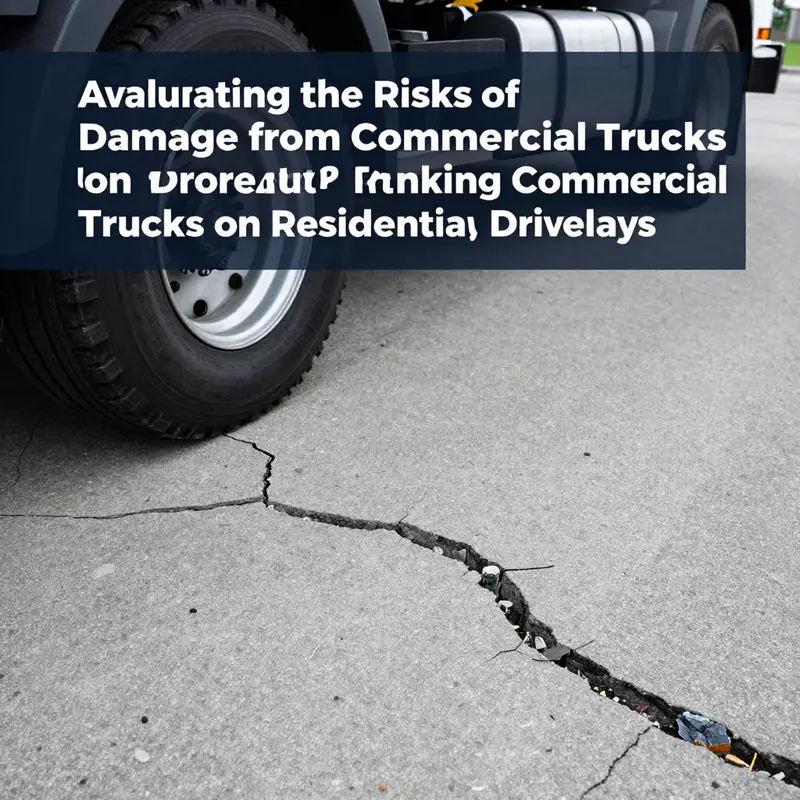
When a driveway is asked to bear the weight of a commercial truck, the turning point is not just a matter of surface appearance. It is a test of whether the ground beneath, the slab itself, and the joints that hold it together were designed to absorb a load far beyond that of a typical car or SUV. For homeowners who rely on a driveway to park a work vehicle or who occasionally host a temporary fleet vehicle, the question of safety is not merely about convenience. It is about structural integrity, long-term costs, and the quiet, steady process by which heavy wheels can translate into visible cracks, uneven surfaces, and, ultimately, a damaged pavement system. The core issue is straightforward in principle: heavy trucks deliver more force over smaller contact areas than lighter vehicles, and concrete, even when well poured, has limits to how much tension and shear it can sustain before microcracking expands into larger problems. The story behind driveway damage, therefore, unfolds at the intersection of weight, distribution, material properties, and the often imperfect geology that underpins every slab small and large alike. The driveway’s ability to tolerate a truck hinges on several interacting factors, not a single variable. One of the most important is axle load—the weight carried on each axle—because pavement damage is less about the truck’s total mass and more about how that mass is distributed across the pavement surface. A heavy truck with a high gross vehicle weight impresses a concentrated line of force on two or more axles, and each axle can press with tens of thousands of pounds, depending on the configuration and load. This condition is worsened when the tire contact area is tiny relative to the load. Tire pressure compounds the problem: high inflation keeps the contact patch small, focusing weight into a smaller footprint and magnifying the stress that can initiate microcracks at the surface or around joints where the concrete is already vulnerable. The speed at which the vehicle traverses the driveway also matters. A rapid acceleration or a sudden stop can cause impact-like stresses, especially when the surface has minor flaws or the underlying sub-base is inconsistently compacted. The physics here are not mysterious. A heavy wheel passing over a crack can widen it; a joint that has settled or shifted can become a weak point that propagates further under repeated cycles. This dynamic is particularly dangerous for driveways built primarily to handle passenger vehicles. The reinforced section that might be adequate for a 4,000 to 6,000-pound car becomes a more fragile pedestal when asked to support 10,000 pounds on a single axle or more. The thickness of the concrete slab is a primary determinant of resilience. A standard residential driveway often sits at four inches of concrete, with a base that may not be adequately reinforced or properly compacted. When a slab is only four inches thick, the stress from a single heavy axle can cause microcracking that invites moisture infiltration, freeze-thaw damage, and eventual spalling—where concrete chips flake away near the surface. In contrast, slabs that are thicker, say six inches, and that incorporate proper reinforcement, such as steel rebar or fiber mesh, provide a more forgiving tensile strength. They distribute loads more evenly and resist cracking more effectively under repeated heavy loading. Yet even a six-inch slab is not an invincible shield if the base beneath is weak or if drainage is poor. The sub-base serves as the foundation that transfers loads from the surface to the soil. When soil is soft, clay-rich, or poorly compacted, the load path can sink or shift over time. This can lead to settlement and an uneven surface that exaggerates stress concentrations at joints or along the wheel paths. In such circumstances, a driveway may begin to sag in the middle or near the edges, inviting a cycle of cracking and more moisture infiltration. The structural weaknesses are rarely visible at first glance. Cracks can be hairline and perfectly harmless looking in the short term, yet they create pathways for water that reach the base layer. Water is a silent ally of degradation. It penetrates through microcracks, expands within confined pockets during freezing, and undermines the bond between the concrete and its underlying materials. The repetitive freeze-thaw cycle can pry apart small sections, widen joints, and gradually erode the surface. Over time, this process can culminate in pothole formation or misalignment of the surface, which further distorts weight distribution and accelerates deterioration. The story, therefore, is a layered one. Surface cracking may be the first sign, but the deeper structural compromise can become evident only after years of heavy vehicle presence. The joint system—the gaps that allow concrete to expand and contract—also plays a critical role. If joints are undersized, poorly designed for heavy loads, or have begun to deteriorate, a truck’s weight can drive water down into the base and accelerate joint failure. When joints fail, the slab can settle unevenly or crack along the joints, allowing movement that makes the driveway feel uneven to drive or park on. All these effects are not merely cosmetic. They translate into practical concerns: the risk of water pooling near foundations, reduced slope for drainage, and the potential for further damage as weight concentrates along the same wheel paths. This is why engineers and concrete professionals stress not just the slab but the entire system—surface, reinforcement, base, drainage, and connection to the surrounding ground. The practical approach to preventing damage begins with careful assessment. In many residential settings, a driveway that will support heavy vehicles needs a robust design. The concrete thickness should be appropriate for the expected load and the quality of the sub-base must be verified and, if needed, upgraded. A common recommendation for driveways intended to carry occasional heavy loads is to consider a thicker slab with internal reinforcement and a well-prepared base. Reinforcement, whether in the form of steel bars or polymer fibers, helps distribute loads more evenly and adds tensile strength to the concrete. Fiber reinforcement, in particular, can reduce the tendency of cracks to propagate, though it does not replace the need for proper base preparation or adequate slab thickness. In addition to the concrete itself, ensuring proper drainage is crucial. Water that pools or drains slowly near the surface or near joints can undermine the base and promote crack widening. A slope that directs water away from the foundation and into adequately designed drainage channels or infiltrating surfaces is essential. The environmental context matters as well. Soil type, moisture content, and subsurface conditions influence how loads are transmitted and how the ground responds to sustained pressure. Poor soil conditions—uncompacted fill, expansive clays, or soils with high moisture content—diminish the driveway’s capacity to distribute loads without deforming. The cumulative effect of these factors means the decision to allow a commercial truck to park on a driveway is rarely a single calculation. It is a risk assessment that weighs the truck’s expected frequency and duration of parking, the driveway’s current condition, and the likelihood of deterioration given local climate and soil characteristics. In some cases, the prudent path is to avoid parking heavy vehicles on the residential surface entirely or to designate a separate, purpose-built pad designed to handle such loads. Temporary measures can also help. When a vehicle must be parked for a short, defined period, weight distribution devices—temporary steel plates or heavy-duty mats—can help spread the load and reduce the concentration of stress on any one point. These devices are not a substitute for a structurally sound design, but they can lessen risk during short-term use. The best practice, however, remains proactive evaluation. Homeowners contemplating long-term or frequent heavy-vehicle parking should seek a professional assessment from a structural engineer or a concrete specialist. An expert can determine whether the existing driveway can safely support the load, estimate remaining life expectancy, and propose concrete improvements if necessary. Such a consultation may reveal options ranging from upgrading to a thicker, reinforced slab to adding a reinforced ring or edge beam that better distributes loads, to redesigning the base with properly compacted sub-base materials. The conversation with a professional also encompasses drainage and joint design. Adequate joints, proper joint spacing, and high-quality sealants protect against water infiltration and help manage expansion and contraction cycles. When a driveway is near the end of its service life or shows early signs of distress, a professional can help develop a plan that minimizes disruption and extends the pavement’s life. It is worth noting that these considerations do not exist in a vacuum. They intersect with broader questions about traffic, property value, and safety. If a family intends to live with heavy vehicles, the driveway’s design should reflect that reality from the outset, with an appropriately engineered plan that accommodates the expected loads. If the decision is to retrofit an existing driveway, the scope of work may include removing and replacing the surface, installing a deeper base, or incorporating reinforcement that was not originally present. The cost implications can be substantial, and the decision often hinges on a balance between the driveway’s current condition, the level of use, and the homeowner’s willingness to invest in long-term durability. Even with a well-planned upgrade, maintenance remains essential. Cracks should be sealed promptly to prevent water ingress, joints should be inspected for deterioration, and any signs of settlement or spalling should be addressed without delay. Regular inspections after adverse weather, particularly in climates with freeze-thaw cycles, can catch problems early and prevent more extensive and expensive repairs. There is also a practical, policy-oriented dimension to this issue. If a neighborhood experiences more frequent commercial traffic, or if landowners are considering using their driveways as part of a business operation, there are benefits to looking beyond the driveway itself. Design standards, local regulations, and community guidelines may govern the acceptability of heavy vehicle parking on residential pavement. In some cases, routes, signage, or designated parking areas can be formalized to reduce wear on individual properties. This broader framing helps translate the technical details into everyday decision-making for homeowners who chase a balance between convenience and structural prudence. For readers seeking a broader perspective on how policy and industry shifts shape such decisions, consider the discussion surrounding cross-border regulatory issues in the trucking context, which can influence access and scheduling decisions for fleets that must operate through or near residential zones. TCAs cross-border regulatory issues event. The linkage between policy and pavement may seem indirect, but it highlights how choices about where heavy vehicles park can have ripple effects on infrastructure planning, maintenance priorities, and community safety. The practical takeaway is straightforward: understand the load path from wheel to ground, ensure the slab and base are designed to accommodate the expected loads, and maintain vigilance through regular inspections and preventive maintenance. If there is any doubt about whether a truck can be accommodated safely, a professional assessment and, if needed, a calculated upgrade, will be a worthwhile investment. The result is not only a longer life for the driveway but also a clearer sense of security for homeowners, tenants, and visitors who rely on that surface every day. An informed approach acknowledges that the driveway is part of a system rather than a single layer of material. It is not merely a resting place for wheels but a carefully engineered interface between vehicle weight, ground conditions, water management, and seasonal cycles. In that sense, the question is not simply whether a heavy vehicle can be parked on the drive—it is whether the entire system is prepared to absorb the stress, keep moisture at bay, and preserve a smooth, safe surface for years to come. As the discussion evolves, the next steps often involve mapping out a realistic usage plan, identifying when a professional opinion is needed, and weighing the cost of potential upgrades against the long-term benefits of preserving structural integrity. The concrete, after all, is a material designed to endure, provided it is given the right design, the right base, and the right maintenance mindset. External resources such as comprehensive pavement design and maintenance guidelines can offer deeper technical grounding for those who seek it, helping homeowners translate the principles discussed here into concrete action and informed decisions. For more technical depth on pavement durability and maintenance, see the Federal Highway Administration’s Pavement Management and Maintenance Guidelines at https://www.fhwa.dot.gov/pavement/.
Guarding the Gateway: How Heavy Trucks Challenge Cement Driveways and How to Protect Yours
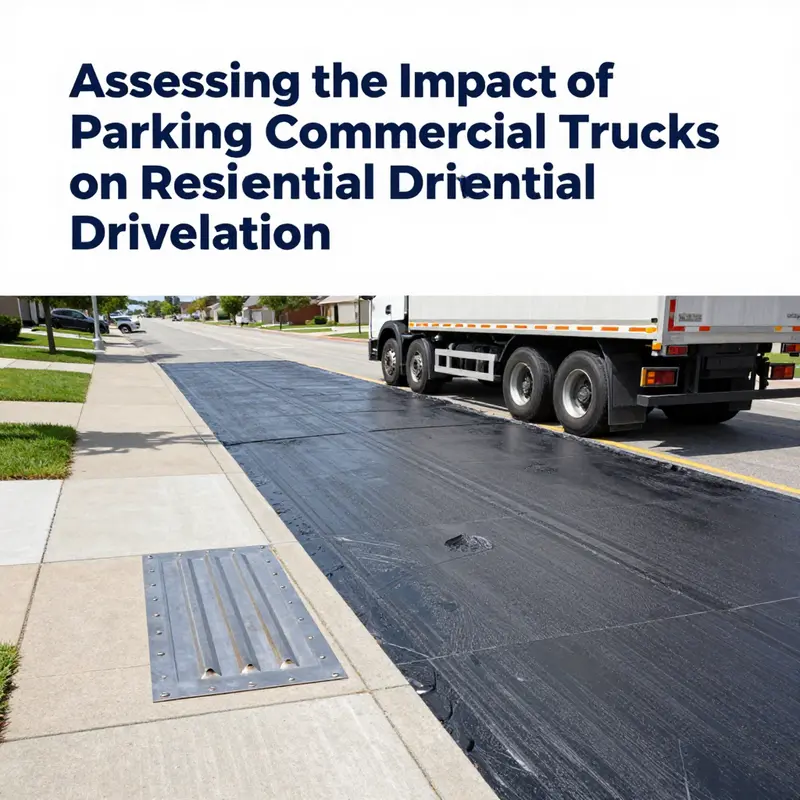
A residential driveway bears a heavy responsibility: it must tolerate routine car traffic and, occasionally, the presence of a heavy truck. The weight and footprint of a heavy vehicle concentrates forces where tires contact the surface, and over time this can promote cracking, spalling, and base disturbance if the slab is too thin or placed on poorly prepared sub-base. The risk increases with longer parking durations and poor drainage.
From a materials perspective, thickness matters. Four inches is common for many driveways, but heavy-truck use may require more robust detailing: thicker slabs, better reinforcement, and a stronger base. Proper joints and sealants help manage movement. If the base beneath the concrete is weak, or drainage is inadequate, cracks can form, water can infiltrate, and freeze-thaw cycles can accelerate deterioration.
A practical plan combines assessment, reinforcement, and load management. A structural engineer or concrete professional can test load-bearing capacity, recommend thickness and reinforcement, and identify needed base improvements. When occasional access is allowed, temporary load-distribution measures such as boards or heavy mats under tire paths can help, and limits on how long a truck remains on the surface reduce risk. For more frequent use, consider strengthening the base, adding a heavier top slab, or installing a dedicated load pad. Where possible, route trucks to designated areas away from vulnerable zones.
Maintenance is essential. Sealing cracks promptly, keeping joints clean, and ensuring drainage remains effective will extend the life of the driveway. Regular inspections help catch problems early before they require costly repairs. In short, durable driveway design and careful use are about balancing convenience with respect for the surface and its foundation.
For further context on market dynamics that influence access decisions, industry analyses note that changes in trucking capacity can affect how often drivers need access to private properties. If a property owner wants to explore these dynamics, resources on trucking capacity provide useful context.
In closing, the key message is practical: protect the surface through load distribution, manage access to minimize stress concentrations, and stay proactive with maintenance. A professional consultation tailored to the site, climate, and expected truck use can translate these ideas into concrete recommendations. The Portland Cement Association offers guidance on cement-based pavements and long-term performance as a reference point.
Final thoughts
In conclusion, the impact of commercial truck parking on residential driveways can be significant and should not be underestimated. Factors such as the truck’s weight, the driveway’s construction, and the duration of parking all contribute to potential damage. By understanding these risks and implementing protective strategies, logistics and freight company owners, procurement teams, and small business owners can maintain the integrity of their cement driveways. Awareness and preparation are critical to ensuring that the valuable investment in driveway infrastructure is safeguarded against the imposing weight of heavy trucks.