
In the evolving landscape of the food service industry, commercial kitchen food trucks have carved a niche that marries mobility with culinary creativity. However, a critical aspect that often goes overlooked is the requirement for a commissary—a central hub necessary for compliance and operational efficiency. This article will delve into the pivotal role commissaries play in aiding food trucks in adhering to health regulations. Additionally, we’ll explore the operational advantages they provide, enabling food trucks to maximize efficiency and effectiveness. Lastly, we’ll clarify the legal and health regulations that reinforce the need for commissaries within the food truck sector, offering insights that can guide logistics and procurement decision-makers, ensuring adherence to compliance and operational excellence.
Base of Operations: How Commissaries Anchor Compliance and Efficiency for Mobile Kitchens on the Move
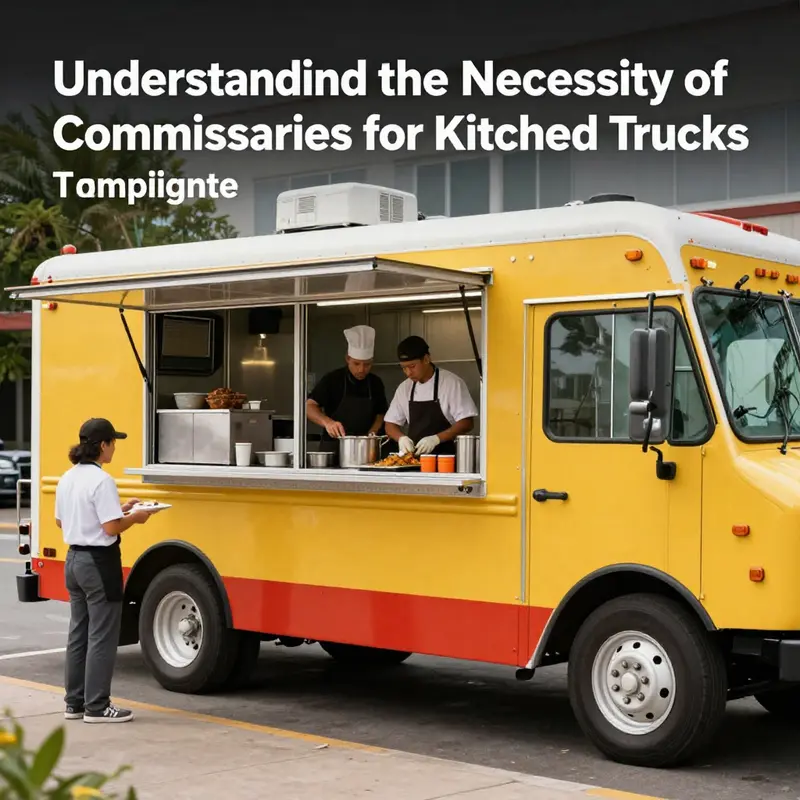
Commissaries provide a licensed base where mobile kitchens can rest, clean, store, and recalibrate between events. This central hub enables temperature-controlled storage, dedicated prep and cleaning areas, and regulated waste handling, all of which support safe, consistent food service on the move. Health codes, the FDA Food Code, and state regulations often require or strongly encourage this model because it reduces the risk of temperature abuse, cross-contamination, and improper waste disposal.
The commissary model also changes the economics of scale: shared refrigeration, equipment, and sanitation facilities allow fleets to access high-grade resources without reproducing them in every vehicle. This arrangement lowers capital and maintenance costs, supports broader menus, and can extend operating hours since the base facilities are reliable and predictable.
Beyond safety, commissaries support consistency and trust with customers and regulators; they provide documentation trails for permits, inspections, and audits, making compliance more predictable and auditable. Centralized recordkeeping and standardized cleaning protocols help inspectors verify routine actions and corrective actions, reducing surprises during visits.
With urban regulation intensifying, operators who plan for a commissary-based strategy can expand into new markets while maintaining rigorous standards. The base becomes the backbone of a mobile food economy that balances mobility with safety, accountability, and growth.
Central Kitchens, Strong Compliance: How Commissaries Power Profitable Food Truck Operations
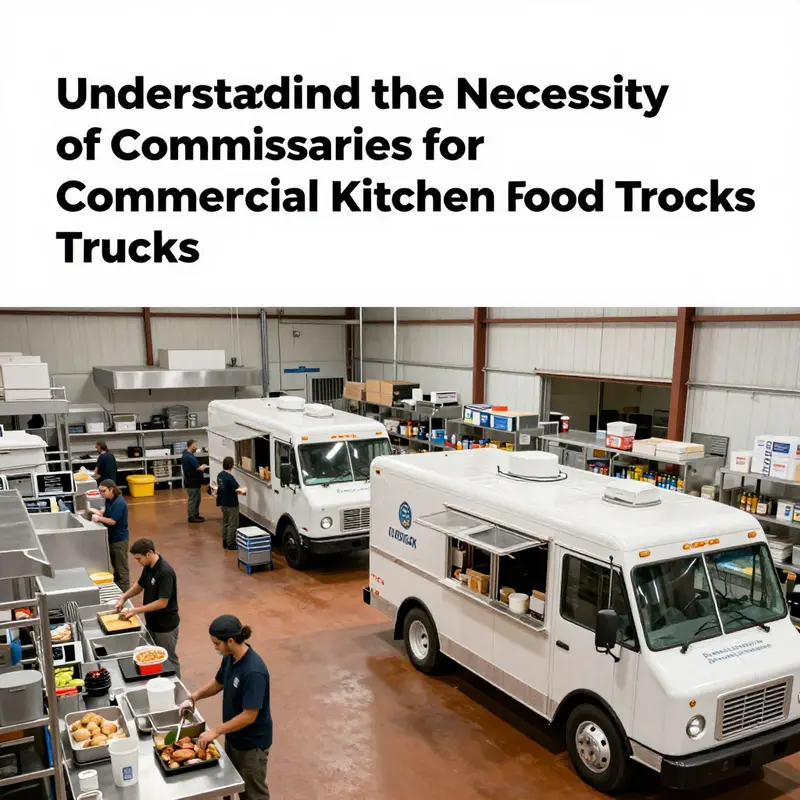
In the world of mobile food, the kitchen is rarely a fixed, single room. It travels on boards and wheels, yet the backbone of every successful food truck operation is a steady, compliant base from which it can plan, prepare, and serve. A commissary acts as that base. It is more than a location; it is a hub where legality, sanitation, efficiency, and growth converge. When operators ask whether commercial kitchen food trucks need a commissary, the answer is not only about meeting minimum standards. It is about creating a durable platform that turns daily hustle into repeatable, scalable success. The logic is grounded in regulatory expectation and practical necessity. Health authorities, guided by frameworks like the FDA’s Food Code, consistently emphasize that mobile units must access licensed facilities that can support critical functions that trucks cannot safely sustain on their own. Cleaning and sanitizing big, heavy equipment, maintaining safe storage temperatures for perishable ingredients, disposing of waste properly, and performing routine maintenance all demand a space designed for high throughput and strict control. In many jurisdictions, this is not optional; it is a prerequisite for legal operation.
The administrative and regulatory landscape shapes the commissary model as much as the kitchen itself. Health departments require that food safety practices be authenticated by physical infrastructure, including commercial-grade refrigeration, appropriate handwashing stations, durable dishwashing capabilities, and reliable waste management systems. Some tasks—such as blast chilling, large-scale dishwashing, or controlled preparation of high-risk foods—are simply impractical on a compact mobile unit. A commissary provides the environmental controls that prevent cross-contamination, maintain cold chain integrity, and sustain a culture of cleanliness that inspectors expect to see repeated over time. In short, the commissary is where standards are proven, not merely prescribed. This is why many regulatory guides, including the latest FDA Food Code, anchor mobile food operations to a licensed base that can be audited, documented, and maintained with predictable discipline. For readers seeking a primary reference, the FDA’s 2024 Food Code outlines the requirements and illustrates how mobile units fit within broader public health expectations. The code emphasizes structure, equipment, and procedures that ensure food safety at the point of service, and it recognizes commissaries as essential infrastructure for many operators.
Beyond compliance, the commissary is a practical response to the realities of running a mobile kitchen. The challenges of space and weight on a truck collide with the demands of modern menu complexity and customer expectations. Fresh produce, dairy, meat, and prepared gravies require temperature-controlled storage. Large pots, mixers, and heavy-duty cookware demand proper shelving, drainage, and floor drainage that are often impractical to install on a truck. A central facility can absorb this heavier equipment load, keeping the mobile unit lean and nimble for service. In addition, a well-run commissary reduces the risk that equipment downtime or inadequate sanitation will spill into service. When a kitchen is clean, organized, and properly equipped, a truck can move with confidence from one event to another, confident that the base is ready to support the day’s demands. The operational implications extend to the speed of service. Batch prep—where items are prepared in advance at the commissary and brought to the truck for finishing or assembly—can dramatically cut service times during peak periods. The result is not just faster service; it is more consistent quality across locations, a reliability customers can taste and trust.
The centralization of inventory is another enduring advantage of the commissary model. Centralized stockrooms can hold a broader range of ingredients under controlled conditions, reducing the confusion and waste that frequently accompany decentralized storage on multiple trucks. When a commissary manages the core inventory, operators gain visibility into what is on hand, what is aging, and what needs to be reordered. This improves procurement planning and helps maintain uniformity across the fleet. Batch preparation at scale also minimizes the risk of last-minute substitutions that could alter flavor profiles or texture. For gourmet or craft menus, where consistency is part of the product and the brand, the commissary acts as a control point that preserves the recipe integrity across multiple trucks and events. The centralized model makes it easier to coordinate deliveries, align with suppliers, and manage perishables within safe timeframes. In many cases, this translates into less waste, fewer stockouts, and stronger margins.
The regulatory and sanitation advantages weave tightly with the everyday operational realities. A commissary is not simply a larger kitchen; it is a facility that supports the specialized workflow of mobile units. The reliable wastewater disposal and grease management systems that come with a licensed facility shield operators from compliance risk. Dishwashing stations and mechanical ventilation designed for heavy-duty cleaning reduce the chances of indoor air quality issues and residual contamination. Temperature-controlled storage, including separate spaces for frozen, refrigerated, and dry goods, ensures that ingredients perform as expected, preserving their texture, flavor, and safety. The ability to perform routine maintenance in a controlled environment—maintaining hood systems, calibrating thermometers, inspecting refrigeration units—also contributes to longevity and safety. All these capabilities collectively reduce the friction between regulatory compliance and day-to-day service, turning what could be a constraint into a reliable operational advantage.
Crucially, the commissary model supports growth and resilience in a way that aligns with evolving business goals. As a food truck operation scales, the need for additional trucks, more complex menus, or more frequent events becomes apparent. A central base makes expansion logical and manageable. It provides a fixed anchor for training staff, validating new recipes, and refining standard operating procedures. This is where a brand can learn to scale without losing consistency or safety. Training conducted at the commissary can be standardized and then disseminated to all mobile units, ensuring that each truck adheres to the same procedural standards, cooking times, and plating methods. That consistency matters not only to compliance auditors but also to customers who expect a familiar experience wherever they encounter the brand. In the volatile world of food service, a predictable product and a reliable process are often as valuable as a successful recipe. A commissary, therefore, becomes the infrastructure that makes growth practical rather than daunting.
There is a real economic calculus at play as well. The centralization of storage and prep can shift cost structures in meaningful ways. While leasing a commissary space adds a fixed overhead, it can lower variable costs tied to on-truck equipment, energy consumption, and staffing. Bulk purchase discounts, reduced spoilage, and improved labor efficiency all contribute to tighter margins and more predictable cash flow. The economics are not just about today’s bottom line; they also shape strategic choices for the next year or two. A truck fleet that uses a commissary can optimize scheduling to maximize utilization of shared spaces and equipment, ensuring fewer idle periods and better capital allocation. In turn, this strengthens the business case for adding more trucks, extending service hours, or entering new markets where local regulations might otherwise deter expansion.
The decision to operate with a commissary does not imply abandoning the convenience and freedom that draw operators to food trucks in the first place. Rather, it reframes those advantages through a disciplined lens. Offloading high-risk, space-intensive tasks to a licensed, purpose-built facility preserves the benefits of mobility while ensuring safety and compliance. It is a pragmatic fusion of mobility and structure—a way to keep the speed and flexibility of a truck with the control and reliability of a kitchen. For operators who are contemplating the next step in their business, the commissary represents a feasible, sustainable path forward. It is the infrastructure that makes consistent quality, compliant operation, and scalable growth not just possible but practical. The regulatory expectations set the boundaries, but the commissary framework defines the boundaries as a platform for success rather than a barrier to entry.
To tie the practical to the strategic, consider the logistical choreography involved in today’s bustling food scene. An operator may begin with a single truck serving festival crowds and a handful of weekly markets. As demand grows, that same operator might add another truck to cover a second event calendar, or pilot a nighttime route in a busy district. Each step increases the complexity of supply, storage, and sanitation. A commissary-based model helps manage that complexity by centralizing the non-negotiables: sanitation, cold storage, and waste disposal. It also provides a reliable staging ground for equipment maintenance, ensuring that each truck hits the road with the same performance standard. The consistency created by a disciplined base thereby underpins customer trust and repeat business, two essential elements in a market where competition is fierce and consumer choices are abundant. In this sense, the commissary becomes a strategic asset, not merely a required facility.
For readers who want a concrete reference point on how commissaries operate within the regulatory framework, the FDA Food Code offers guidance on mobile food units and the expectations around base facilities. It is the anchor for understanding why a licensed commissary is often a prerequisite, why equipment and sanitation standards matter, and why the waste and water management systems in these facilities are central to safe operation. While the code is broad, its implications for commissaries are clear: provide a controlled environment where food safety, storage, cleaning, and maintenance can be executed to a consistent standard. This is exactly what a well-designed commissary delivers. The responsible path for any operator, then, balances regulatory clarity with practical efficiency, ensuring that food quality, safety, and business vitality reinforce one another rather than compete for attention. For those who want to explore the regulatory basis directly, the FDA’s 2024 Food Code is the authoritative resource that ties together the reasons above with concrete requirements and scenarios.
The business of operating multiple trucks often takes place in a landscape of evolving expectations and opportunities. In many cities, events are booked weeks, sometimes months, in advance, and the ability to quickly adapt to weather, crowd sizes, and availability of power and water is a competitive differentiator. A commissary provides not only a physical space but a cadence—a predictable rhythm of prep, storage, and maintenance that matches the tempo of events. This rhythm yields operational discipline, which translates into dependable service and fewer mishaps on the service line. For example, when a festival extends its schedule into an extra hour, trucks backed by a well-supplied commissary can respond with confidence, knowing that the base has already prepared the components needed for a timely refresh. When supply chains experience volatility, commissaries help absorb shocks. Ingredient substitutions can be managed in a way that preserves flavor profiles and safety margins, without forcing last-minute changes that could undermine quality. The end result is a more resilient business, capable of weathering uncertainty while still delivering a consistent customer experience.
The internal logistics of a commissary-anchored operation also invite reflection on how to structure partnerships and location strategies. Choosing a commissary is, in effect, choosing a central point of operational gravity. Operators must consider distance to event sites, hours of access, nearby suppliers, and the reliability of the base’s utilities. A well-chosen commissary aligns with the brand’s geography—placing the center where most events occur and where the volume of work can best justify the fixed costs. The relational aspect—relationships with the facility’s management, the staff who run the shared kitchen, and the neighboring tenants—can influence day-to-day performance as much as the equipment or the water pressure. In practice, this means evaluating not just the physical plant but the ecosystem around it. A commissary that fosters collaboration, offers flexible scheduling for prep work, and maintains a predictable maintenance rhythm will deliver dividends in both reliability and morale. The crew at the truck level benefits from predictable routines, and the kitchen leadership gains a platform for consistent training and process refinement.
With all these considerations, it is useful to recognize that not every jurisdiction requires a commissary in the same way, and some operations explore hybrid models. In certain regions, limited pre-prep or cold-food handling may be permissible directly on mobile units under strict conditions. In others, entire menus must be prepared in a licensed base, while a handful of assembly steps can be performed at the truck. However, even when regulations allow partial on-truck prep, many operators find that the economics and risk management favor the commissary approach. The savings from reduced equipment wear, longer service life for the truck’s own systems, and improved waste handling often offset the additional logistics of moving ingredients to and from a central location. Moreover, as consumer expectations rise for consistent flavor and specialty offerings, the ability to standardize recipes at the commissary becomes a tangible competitive advantage that pure on-truck prep cannot deliver. The narrative here is not about a rigid formula but about a thoughtful, compliant, and scalable model that leverages the strengths of both mobility and centralization.
To connect this discussion to the everyday challenges and decisions faced by operators, consider how the commissary model reshapes risk. Food safety incidents can derail a business as surely as a dip in foot traffic. A licensed base with reliable sanitation protocols and calibrated equipment reduces the likelihood of such events. It also streamlines the audit process. When regulators inspect the operation, they are not evaluating a single truck in isolation but a system—the commissary, the fleet, the supply chain, and the workflows that tie them together. A well-run system earns trust with inspectors, suppliers, and customers alike. It signals that the business treats food safety as a core capability, not a cost of doing business. As markets evolve, operators who invest in this core capability position themselves to respond to new regulatory expectations, pass inspections with ease, and sustain growth without compromising safety or quality.
For readers who want to explore the functional dimension of this topic further, a practical touchpoint occurs in how commissaries manage the economics of fleet expansion. The centralization of preparation, storage, and maintenance can reshape cost curves in ways that make adding trucks financially viable rather than prohibitive. The interplay between fixed costs of the commissary and variable costs across the fleet highlights the strategic value of the base. Operators who methodically plan expansions, test new menus at scale, and train staff for brand consistency can navigate growth more smoothly. In a world where events, markets, and supply chains can shift abruptly, the commissary stands as a stabilizing force that enables deliberate, data-informed decisions rather than reactive moves. The result is a business that remains nimble on the streets yet disciplined in the back end, a combination that many successful operators describe as the essence of sustainable growth.
As a closing reflection, the commissary is more than a facility; it is a disciplined operating philosophy that aligns safety, efficiency, and growth. It supports the core reasons customers return: reliable quality, safe food handling, and respectful service. It helps operators convert seasonal or event-driven demand into a steady, scalable business model. It creates a safe harbor where recipes can be refined, staff can be trained, and equipment can be maintained without disrupting mobile service. In that sense, the answer to whether commercial kitchen food trucks need a commissary is not a simple yes or no. It is an argument about the kind of business you want to build: one that thrives on control and predictability, or one that survives on improvisation and risk. Most successful food truck operators choose the former, recognizing that the commissary is not a crutch but the engine that powers consistent, compliant, and scalable growth. For those seeking a deeper regulatory anchor, the FDA’s 2024 Food Code remains the touchstone for understanding how the mobile unit interfaces with licensed facilities and what standards must be met to keep customers safe and the doors open. As this chapter has suggested, those standards translate into a practical, value-creating model when applied with intentional design and vigilant execution. The commissary thus becomes the quiet but crucial partner behind every successful truck story, the place where safety, quality, and ambition meet and stay aligned. For readers who want to explore the practical, real-world logistics of this model and its economic implications, consider how trailer orders impact truckload margins and the strategic decisions that follow. More on this topic can be found in industry-focused analyses that examine how centralization shapes fleet efficiency and profitability.
Internal link reference: trailer orders impacting truckload margins
External resource: For those who want to drill into the regulatory rationale behind commissaries and mobile food units, an official, practice-oriented resource is available at the FDA’s Food Code page, which provides up-to-date guidance on food safety standards for mobile operations. See https://www.fda.gov/food/fda-food-code/2024-food-code and consult the relevant state and local health department guidance for your area.
The Commissary Imperative: How Health Regulations Shape the Mobile Kitchen
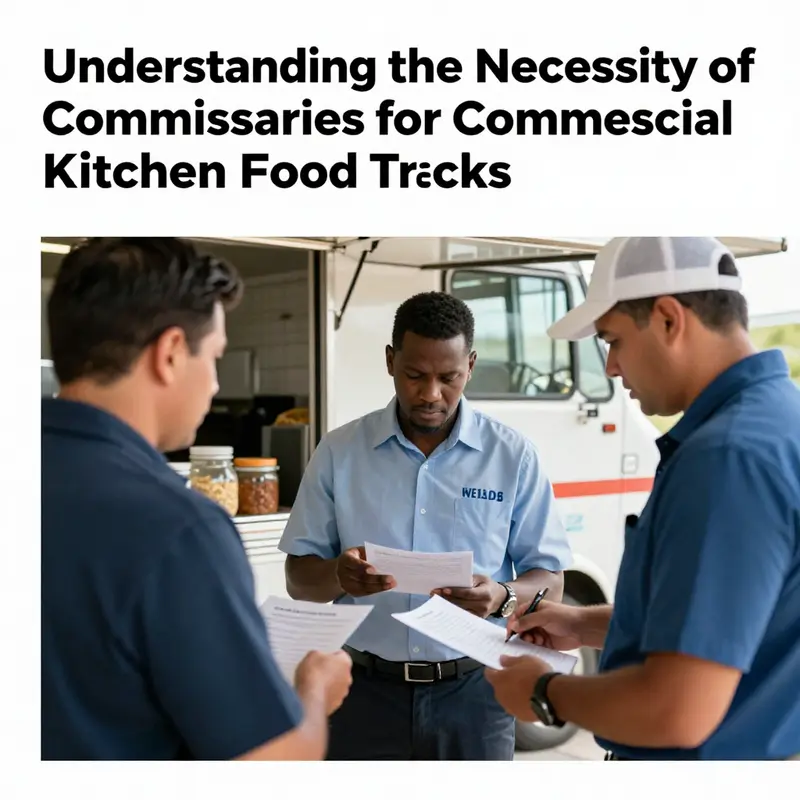
A food truck operates at the intersection of appetite and accountability. It tempts with the promise of fresh, hot meals served from a sleek roving kitchen, yet it must also prove it can keep food safe in every mile traveled and every service window opened. The question of whether commercial kitchen food trucks need a commissary is more than a logistics puzzle; it is a core regulatory question that underpins every successful route, every menu, and every permit held by a mobile operator. In many jurisdictions, the answer is yes, and the reason is not merely tradition or convenience, but the legal architecture that governs how food is prepared, stored, and disposed of away from a fixed restaurant. A commissary, in practice, is the centralized backbone that aligns a mobile operation with safety standards, sanitation requirements, and traceable accountability. It is the facility that transforms a truck’s potential into a compliant, sustainable business model, allowing operators to navigate the intricate web of federal, state, and local rules that govern modern food service.
At the heart of this arrangement is a simple but powerful truth: food safety does not bend to time or weather. The U.S. Food Code, developed as a model for state and local health departments, codifies the minimum standards for handling, preparing, and storing food in all settings, including mobile units. The Food Code, along with the FDA’s broader Food Safety Modernization Act (FSMA) framework, places a premium on controlled environments, clean equipment, and verifiable procedures. While the specifics can vary by jurisdiction, the underlying expectations are consistent: trucks must access facilities that provide reliable sanitation, safe storage, and appropriate waste management. In practical terms, a commissary provides a licensed, inspected space where a mobile operation can perform essential activities that a standalone vehicle cannot be deemed safe or compliant to perform on the street alone.
To understand why commissaries matter, it is helpful to picture the daily lifecycle of a mobile kitchen. Before service, perishables require refrigeration or freezing, and nonperishables must be stored under conditions that prevent cross-contamination. Raw and ready-to-eat foods must be kept separate, with dedicated prep areas and handwashing stations that meet sanitary standards. Utensils, cookware, and contact surfaces demand rigorous cleaning and sanitizing, with documented cleaning logs that demonstrate consistency. A commissary is where these routines find their rhythm: it is the space where large-volume cleaning can occur, where highly regulated equipment can be maintained, and where operational routines can be audited and refined. For operators, this is not just about meeting a rule; it is about creating a predictable system for production, service, and compliance that scales across days, seasons, and multiple service locations.
Regulatory oversight adds a layer of complexity that is easy to underestimate. The primary federal actors—USDA for meat and poultry, and the FDA for most other foods—set expectations that cascade down to state and local health departments. The FSMA elevates prevention, requiring food businesses to implement risk-based preventive controls and to maintain documentation such as hazard analyses, critical control points, and corrective action plans. In this framework, the commissary becomes the operational hub that supports not only the daily handling of food but also the administrative backbone of food safety. The ability to demonstrate compliance—through inspection-ready facilities, calibrated refrigeration, proper waste disposal, and meticulous record-keeping—can influence everything from the speed of permit approval to vulnerability to enforcement actions. The stakes are high: violations can trigger fines, temporary suspensions, or in severe cases, permanent loss of licensing.
What, then, does a commissary actually deliver that a mobile unit cannot? First, robust sanitation infrastructure. A commissary typically offers commercial-grade cleaning sinks, accessible hot water for sanitizing, and space and equipment designed to sanitize utensils and surfaces efficiently. Second, dependable food storage. Perishables must be kept at precise temperatures, with back-up power options and monitoring systems that capture temperature data. Third, reliable water access and waste management. Complying with potable water requirements and disposing of grease, oil, and wastewater through approved systems is crucial; a commissary makes this possible at scale and in a manner that aligns with local ordinances and environmental codes. Fourth, equipment maintenance and space for prep. Large or specialized equipment that a truck may not house safely can be maintained or operated in a commissary, ensuring that repairs do not compromise safety mid-service. Fifth, operational discipline. Commissaries offer space for staff training, routine inspections, and the documentation necessary to demonstrate ongoing compliance, an essential feature in FSMA-era food safety culture.
Across jurisdictions, the regulatory landscape shapes how commissaries are used. Some places require that a licensed commissary be the designated base for a mobile unit between service windows, effectively anchoring the business in a fixed location for health and safety reasons. Others permit mobile or satellite facilities that can be used temporarily or during peak periods, provided they meet specific criteria and maintain traceable records. Still others advocate proximity rules, suggesting a relationship between where a truck operates and where it can access a commissary, to ensure timely cooking, cooling, and cleaning while reducing the risks associated with long-distance food handling. This patchwork of rules means operators must not only secure a space that meets basic sanitation and storage needs but also become adept navigators of local permitting processes, inspection cycles, and scheduling realities. The commissary, therefore, is not just a physical space; it is a compliance ecosystem that supports a business model while protecting public health.
A critical dimension of this ecosystem is the risk-based preventive controls framework that FSMA infuses into every food operation. Comissaries must be capable of supporting a documented food safety plan, which includes hazard analyses and critical control points. The physical design of the space matters, but so does the administrative discipline. Cleaning logs, temperature logs, employee training records, and incident reports all become part of a narrative that inspectors review to determine whether a truck is operating with a credible safety program. The commissary must be designed and operated in a way that makes this narrative easy to verify. In practice, this means that a commissary should offer predictable workflows for receiving, storing, prepping, cooking, cooling, and transporting foods, with clearly delineated areas for raw and ready-to-eat items and well-documented procedures for sanitizing equipment after each use. When a truck pulls into a commissary, it should feel like stepping into a backstage area of a well-run restaurant, where processes are standardized, and disruptions are minimized.
This is not a sterile, one-size-fits-all requirement. The types of foods a truck may handle, the frequency of service, and the geographic footprint of operations all influence the nature of the commissary needed. High-risk items—such as seafood slated for raw handling, unpasteurized dairy products, or ready-to-eat meats—demand more stringent handling procedures and more sophisticated temperature control, sometimes requiring advanced refrigeration, temperature monitoring systems, and robust separation of raw from cooked products. In other cases, a truck that focuses on fully cooked, ready-to-serve items may lean more on controlled reheating environments and careful cross-contamination precautions, yet still rely on a licensed facility for cleaning and storage. The common thread is that the commissary provides a controlled environment where the most critical risk factors can be consistently managed, documented, and audited.
Beyond the square footage and the equipment, the human element matters deeply. A well-run commissary is as much about routines and culture as it is about hardware. Training staff to follow hygienic practices, handshake-clean policies, and proper glove use are fundamental. The recurring chore of validating that handwashing stations are stocked and accessible, that surfaces are sanitized at defined frequencies, and that waste containers are emptied in a timely, sanitary manner is where compliance stays alive day after day. The establishment of routine, auditable procedures reduces the variance that can creep into fast-paced service environments. In this way, commissaries become not just facilities but catalysts for disciplined thinking about food safety across the lifecycle of a mobile operation—from dawn prep to late-night service and the subsequent off-hours risk management tasks like cleaning and equipment maintenance.
Operationally, the proximity and availability of a commissary influence strategic decisions. Operators often weigh the trade-offs between owning or leasing space, the costs of facility fees or shared-usage models, and the convenience of location relative to their primary service areas. Some operators chase a centralized commissary that serves multiple trucks, pooling resources for cleaning, refrigeration, and waste management. Others opt for decentralized, satellite arrangements that enable faster service in high-demand locales. Each model has implications for scheduling, route design, and inventory management. The math of these choices extends into insurance premiums, fuel consumption, and labor costs, all of which are moderated by how reliably a commissary can provide the essential services. In practice, choosing a commissary or a network of facilities becomes a strategic decision that can determine a truck’s ability to scale, seasonality resilience, and the pace at which it can expand into new markets.
The regulatory framework also shapes these economic calculations. Because many jurisdictions require commissary access or validation as part of the operating license, the cost and availability of compliant spaces can become a gating factor for entry into a market. Conversely, where rules are more permissive or where mobile or satellite facilities are recognized, operators may gain additional flexibility but still face compliance challenges that demand systematic record-keeping and ongoing verification. The tension between flexibility and safety is not about hampering entrepreneurship; it is about ensuring that growth happens within clear, reproducible safety protocols that protect consumers. The commissary, in this sense, anchors entrepreneurship to public health through a steady line of sight from the kitchen to the inspection hall and, ultimately, to the consumer’s plate.
In practical terms, a well-structured commissary strategy supports a broader business narrative. It provides predictability for production planning and menu design, because operators can approximate batch sizes, refrigeration needs, and sourcing plans with higher confidence when a reliable base of operations is available. It helps in risk mitigation by reducing last-minute improvisation around cleaning or storage and by creating a centralized system for waste and water management that complies with environmental codes. It also enables more robust staff training and continuity, since a commissary space often comes with a schedule for maintenance, inspections, and supplier coordination that keeps the entire operation aligned. For customers, this translates into consistent quality, safer food handling practices, and a business model that can endure regulatory changes and the evolving expectations of health departments.
The chapter of the regulatory arc that governs commissaries is not static. It shifts with advances in food safety science, changes in FSMA implementation, and evolving municipal codes. Yet the core logic remains steady: a mobile kitchen is most responsibly operated when it sits within a controlled, inspected environment that makes safe food handling practical and verifiable. That is why many operators view the commissary not as a constraint but as a prudent investment in long-term viability. The presence of a licensed, well-equipped base reduces the friction of daily operations, supports rigorous safety practices, and signals to regulators and customers alike that the business is committed to accountability as an ongoing practice rather than a one-off obligation.
The regulatory chorus also includes the potential for satellite or mobile service arrangements, which some regions permit under carefully defined conditions. In those cases, a commissary might be a fixed facility that serves as the primary base, complemented by temporary or transit-ready setups that comply with distance, sanitation, and monitoring requirements. This flexibility is valuable for operators chasing events, festivals, or shifts in demand, but it does not absolve the operator of the need for a compliant backbone. The commissary remains the anchor where critical records are kept, where staff training is formalized, and where the business demonstrates its commitment to safe operations. The alignment of operation, regulation, and public health is not a bureaucratic ritual; it is a practical framework that makes the difference between a thriving, scalable mobile kitchen and a risky venture that can quickly encounter enforcement action.
For operators who are building or refining their commissary strategy, the road map is straightforward but exacting. Start with an honest assessment of local regulatory expectations: confirm whether a licensed commissary is mandatory for your type of operation, what distance or proximity rules apply, and what facilities must be available on-site or off-site. Then evaluate potential spaces not only for cost but for capability: cleanability, water supply and wastewater handling, refrigeration capacity, and the ability to maintain cooling integrity during peak service windows. Investigate interoperability with inspection regimes—how easily can you document what you do and when you do it? Plan for staff training that integrates with the commissary’s routines, so your team moves through the workflow with minimal cross-contamination risks. Finally, design a risk management approach that treats the commissary as a living part of your safety culture: regular audits, transparent record-keeping, and continuous improvement loops that adapt to new guidelines and lessons from incidents.
Evidence from industry conversations and regulatory summaries underscores that the commissary is a practical, enforceable, and essential element of compliant mobile food service. It is not an optional amenity but a requirement in many places for operators who want to serve high-quality, safe food while maintaining the agility that drew them to the mobile format in the first place. When operators approach the commissary with a mindset of compliance and optimization, they can craft a business that satisfies health authorities and delights customers. If the goal is a mobile kitchen that endures, the commissary is the quiet, reliable engine that makes every service possible, every audit manageable, and every menu confidently produced under a system of proven controls.
For readers seeking additional context on regulatory considerations that influence commissary models, industry discussions often explore how different jurisdictions translate federal guidelines into local practice. This cross-jurisdictional conversation—often framed around how rules adapt to event-driven demand, urban versus rural supply landscapes, and cross-border operations—highlights that while the letter of the law can vary, the essential need for a controlled base remains consistent. Cross-border regulatory issues, in particular, illuminate how operators navigate varying standards when expanding into new markets, reinforcing the view that a strong commissary strategy is not a regional nicety but a scalable necessity for national or transregional growth. Cross-border regulatory issues event. To ground these discussions in a federal reference, the FDA Food Code offers a foundational lens on sanitation, cross-contamination prevention, and temperature control that informs local interpretations and day-to-day practice across commissary-enabled operations. In the end, what matters is the alignment of on-the-ground routines with a regulatory framework that protects health, sustains public trust, and enables operators to innovate within safe boundaries.
For a deeper federal baseline, see the FDA Food Code: https://www.fda.gov/food/fda-food-safety-modernization-act-fsma/fda-food-code
Final thoughts
The necessity of a commissary for commercial kitchen food trucks cannot be overstated—serving as a vital backbone for compliance, operational efficiency, and adherence to health regulations. By understanding the critical services provided by commissaries, food truck operators can ensure they remain competitive and compliant, navigating the complexities of the food service landscape effectively. This holistic view can empower logistics and procurement teams to develop more streamlined operations and support their vendors in adhering to essential standards.