
The cowboy persona presented by Jason Jones in the 2023 Ram Truck commercial plays a significant role in shaping the narrative surrounding modern ruggedness and utility. As logistics and construction enterprise leaders increasingly seek connections to values like authenticity and reliability in commercial branding, understanding the figure of Jason Jones within this context becomes imperative. Each chapter will delve into who Jason Jones is, the narrative significance of his cowboy role, how this portrayal impacts Ram Trucks’ brand identity, and the reception by audiences that interconnects these themes.
Glen Powell as the Cowboy of the Super Bowl Ad: Reimagining Rugged Authenticity for an Electric Era
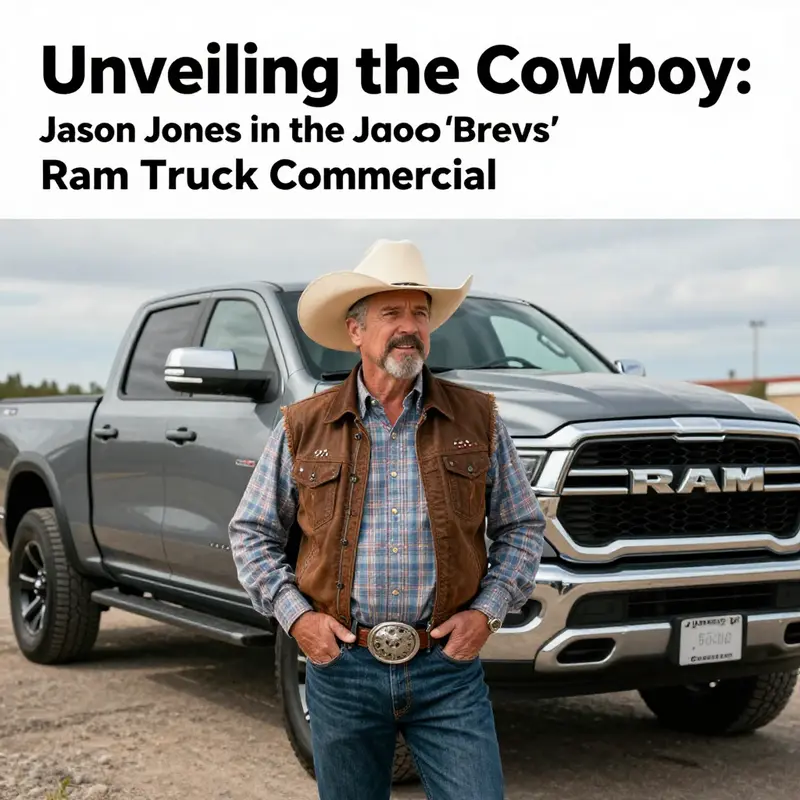
The cowboy in the latest high-profile truck commercial arrives not as a relic of a bygone era but as a bridge between two promises: the unyielding grit that defined a landscape and the quiet certainty that technology can advance it. In the cinematic arc of the spot, a lone rider threads through a sun-burnished vista, a silhouette carved against rock and range, and the camera lingers on the details that make the image feel both familiar and new. The figure at the center of this moment is Glen Powell, an actor whose presence channels the essence of a modern action hero while still tipping his hat to the enduring myth of the American West. This pairing—Powell’s star power with a archetypal cowboy character—creates a narrative mosaic that invites viewers to consider how tradition can coexist with invention, how the land’s hard-won wisdom can guide a future built on cleaner power and smarter engineering.
Powell’s casting signals more than a celebrity cameo. It signals a deliberate alignment with a public longing for authenticity. The cowboy, in its most resonant form, stands as a representation of hard work, resourcefulness, and an honest, if tough, approach to problem-solving. In contemporary advertising, that archetype is often invoked to reassure audiences that progress won’t erase the fundamentals—grit, self-reliance, and a respect for the land. Powell embodies that posture with a modern tilt. His screen persona—confident, capable, and capable of delivering a line or a moment with a wry undercurrent—translates into a knowing trustworthiness on screen. When he moves through the landscape, the implication is that the product he represents is similarly practical, capable, and designed to meet the real-world demands of people who work hard and expect performance to show up when it matters most.
The advertisement itself unfolds with a balance of spectacle and restraint. On one hand, the imagery leans into the epic—wide-open skies, dust kicked up by a capable engine, the tactile textures of metal and road. On the other hand, there is a grounded, almost intimate sense of purpose. Powell’s cowboy does not simply pose—he performs. He navigates a landscape that feels earned rather than manufactured, echoing the brand’s intention to emphasize durability, reliability, and a readiness for whatever a job might demand. In this sense, the character functions as a conduit for a broader message: modern energy and modern logistics do not require a retreat from the values of hard work and self-reliance. They require a new vocabulary to express the same steadfast commitments, a vocabulary that blends sonic boom and stillness, torque and restraint, speed and responsibility.
The concept of a cowboy as a marketing beacon is not new, but its execution here is notable for how it leverages Powell’s distinctive appeal. He carries a filmic confidence that translates well into a commercial space that seeks to reach diverse audiences—car enthusiasts, outdoor enthusiasts, and everyday drivers who value practicality as much as personality. The charisma is not merely about charm; it is about presence. When Powell speaks or moves, viewers perceive a tacit promise that the vehicle—without naming brands in this discussion—will stand up under pressure. The campaign’s rhetoric, intent on conveying rugged authenticity yet forward-looking capability, finds its visual echo in Powell’s timing and posture. The result is a compact narrative about resilience in an era where sustainability and performance no longer need to be presented as antagonists but as allies.
In this light, the ad becomes less a performance about a product and more a portrayal of a philosophy. The cowboy embodies a tradition of problem-solving that has always found a way to adapt to changing landscapes. It’s not a retreat from innovation; it is a recontextualization of it. The electric dimension—implied rather than shouted—invites viewers to imagine that the next frontier for this archetype is not a Western prairie only, but a modern, intelligent, electrified working environment where the land remains central even as the powertrain evolves. Powell’s portrayal reinforces the narrative that progress does not require surrender to novelty; it invites a rethinking of speed, efficiency, and stamina through the lens of character and craft.
Beyond the cinematic frame, commentators and industry observers have begun to map what such campaigns say about contemporary audience appetites. A campaign that leans into a cowboy persona while presenting a technologically progressive product signals a broader cultural preference: authenticity paired with capability. People want stories that feel earned, not manufactured, and they want technologies that feel trustworthy because they appear in contexts that resonate with real-world labor and grit. The cowboy figure—reliable, steady, unfazed by uncertainty—provides a narrative scaffold for audiences to project themselves into the experience of the product. Powell’s performance ensures that the scaffold remains sturdy; it lends the story both gravity and a spark of humor, a balance that helps the commercial sit comfortably within the cultural moment of a global broadcast event and in the long tail of digital sharing where moments of authenticity are valued over mere spectacle.
From a production standpoint, the synergy between Powell’s star trajectory and the campaign’s ambitions is instructive. Powell has built a profile as a magnetic leading man who can carry scenes with minimal exposition while letting the audience infer the stakes through what he does rather than what he says. That skill translates cleanly to a television spot that must communicate complex themes—durability, efficiency, capability—within a tightly choreographed sequence. The Cowboy character becomes a mnemonic anchor: viewers remember the rugged image, then translate it into a perception of the vehicle’s endurance and adaptability. In a media environment saturated with quick cuts and loud slogans, a calm, assured presence can be more persuasive than a barrage of claims. Powell’s persona provides that anchor, inviting viewers to engage with the narrative not as a consumer of a product but as a participant in a shared, aspirational ethos.
Of course, any high-profile campaign runs the risk of misattribution or confusion, especially in an era of rapid online discourse. Early chatter about who embodies the cowboy can spiral into misremembered associations, particularly when a talent pool includes several prominent figures who might plausibly fill such a role in various campaigns. What emerges from careful review is a correction that matters for reputation and for the integrity of the narrative: Glen Powell stands as the cowboy in this particular commercial. This clarification matters not as a trivia note but as a recognition of the precision that marketing at this scale requires. It also underscores a broader editorial lesson about how audiences absorb and disseminate information in the digital age. The story travels faster than the clock on the screen, and accuracy becomes part of the storytelling itself.
For readers tracking industry dynamics, the moment is also a reminder that campaigns of this magnitude sit at a nexus of brand storytelling and logistics realism. The markets have always cared about speed, reliability, and the ability to perform under pressure. What this campaign foregrounds is the idea that a company can translate a cultural symbol—the cowboy—into a strategic asset that speaks to the same concerns that move fleet managers and independent operators alike. The narrative invites a parallel conversation about how innovation in propulsion, energy efficiency, and vehicle intelligence can be told in terms that resonate with the workaday needs of people who must rely on dependable machines for the daily grind. In other words, the cowboy on screen becomes a catalyst for conversations about how far a brand is willing to push its horizons without compromising the virtues that built trust in the first place.
From the standpoint of storytelling craft, this approach also reveals the potency of casting against the grain yet aligning with the collective memory of a culture. Powell’s cowboy is not a mere caricature; he is a conduit through which viewers can project their own values—steadiness, courage, responsibility—onto aproduct in a new age of energy and engineering. The advertisement’s texture—sun-bleached light, dust, the tactile realism of metal and road, a quiet confidence in the face of vast, empty landscapes—invites a form of immersion that invites long-form reception beyond the momentary, headline-driven experiences that often dominate social feeds. In this way, the campaign becomes less about selling a vehicle than about narrating a shift in how people think about work, place, and power.
As this chapter threads toward synthesis, it is worth acknowledging the wider ecosystem that frames such campaigns. The public’s appetite for authenticity, the industry’s pursuit of efficiency and sustainability, and the evolving aesthetics of prestige advertising all converge in a single, cinematic moment featuring Glen Powell as the cowboy. The juxtaposition of a time-honored figure with a forward-looking propulsion story invites viewers to imagine a future where the physical landscape remains central even as the mode of movement becomes cleaner and smarter. It is a narrative built not on the rejection of the old but on the confident integration of the old with the new. And in that integration, Powell’s cowboy stands as a guide—clear-eyed, unpretentious, and ready for whatever the road ahead may hold.
For readers who want to dig deeper into the industry context that underpins this kind of cross-pollination between culture and commerce, there is a broader conversation about how trucking and logistics trends influence consumer perception of heavy equipment and the vehicles that support the most demanding work. Industry observers frequently point to the ways in which macroeconomic conditions, supply chain realities, and fleet dynamics shape how brands tell their stories. A recent analysis notes the importance of aligning brand narratives with sectoral trends, such as how trailer orders and freight demand interact with the adoption of newer propulsion technologies. See the discussion on trucking economic trends affecting trailer orders for context on how these signals inform marketing choices in campaigns that aim to speak to both professionals and general audiences.
External source: Glen Powell’s emerging role in automotive advertising and his portrayal as a modern-day cowboy in the latest truck campaign is explored in depth by automotive media outlets, which analyze how his action-hero persona translates to advertising psychology and brand storytelling. https://www.roadandtrack.com/cars/a41357986/glen-powell-ram-truck-commercial/
Riding the Modern Legend: The Cowboy, Jason Jones, and the Quiet Power of a Brand Narrative in a Super Bowl Ad

The cowboy figure in the recent Super Bowl spot operates not as a mere character, but as a living metaphor for a set of enduring values. Across this single, carefully staged narrative, a Canadian comedian steps into the boots of a solitary host riding the edge of a story that feels ancient and recognizable at once. Jason Jones plays a fictional late-night host who guides the audience through a mythic arc about origin, labor, and loyalty. The motor behind the whole piece is not only a vehicle moving through a rural landscape but a broader storytelling intention: to fuse rugged, time-honored ethics with the questions and technologies of a rapidly changing world. In this sense, the commercial asks viewers to consider what a truck represents beyond propulsion—an extension of a person’s character, a partner in work, and a witness to a landscape that remains stubbornly real even as life grows more interconnected and digital.
From the opening frame, the visuals lean into archetype. The rider is tall and lean, a figure who does not shout but commands attention through posture and presence. The costume—well-worn denim, a brim that catches the sun, a quiet, unassuming drawl—signals a life spent in the service of something larger than the self. The landscape around him is not merely backdrop; it is a canvas that speaks of soil, weather, barns, fences, and the kinds of chores that accumulate into a workable rhythm. This is not a modern, hyper-polished fantasy; it is a representation of labor anchored in place. The cowboy’s movements—measured, economical, almost ceremonial—invite spectators to slow down and observe the way a disciplined routine frames a complex life. In this sense, the ad functions as more than advertisement. It is a compact myth of work and belonging, a modern fable that asks viewers to consider how a vehicle can be the instrument through which a person inhabits a long-standing social role.
The choice to cast Jason Jones adds another layer of meaning. Jones is known for his capacity to blend humor with a grounded presence, a combination that serves the spot well when the narrative stance is both intimate and aspirational. His performance as host within the ad creates a bridge between entertainment and earnest storytelling. He offers a tone that can be witty without breaking the gravity of the moment, a balance essential to a narrative that risks tipping toward nostalgia if not handled with care. The host premise also works to democratize the myth. Viewers who might be resistant to a pure frontier romance can still invest in the humor and humanity Jones brings to the role. The result is a hybrid figure: a modern trickster who respects the heritage he narrates, a comic voice who knows when to listen to the quiet, stubborn truth of the land. This blend matters because it mirrors the broader strategy of the brand narrative: to present a product not as a gadget but as a conduit for a certain way of life—one that refuses to surrender to the pace of screens and notifications yet remains open to the possibilities of new technologies.
The messaging rests on a deliberate tension between authenticity and progress. On one axis, the campaign elevates the cowboy as a symbol of self-reliance, resilience, and an intimate tie to the land. The image of riding alone, working with one’s hands, solving problems through steady effort, reinforces a worldview in which the work is moral as much as mechanical. On the other axis, the narrative nods to modernity by underscoring the vehicle as a capable partner in real work—an instrument that amplifies the rider’s capacity rather than replacing it. In this framing, the technology is not a shiny abstraction but a practical extension of character. The ad’s quiet insistence that the machine serves the labor, not the other way around, resonates with a generation wary of grand promises and eager for trust in durable, honest tools. It’s a message that speaks to a desire for steadiness in a world that often feels unsettled, a longing for continuity in the face of rapid change.
A key aspect of the campaign’s success lies in its ability to braid heritage with contemporary sensibilities. The cowboy figure appears as a counterpoint to urban velocity and digital saturation, offering a counter-narrative to the clutter and distraction that define much of modern life. In the ad’s storytelling logic, the rider’s calm focus becomes a critique of how easily attention can fracture in a networked environment. The cowboy’s quiet strength—his preference for action over bravado—invites viewers to imagine a different mode of presence. This is not a rejection of progress but a selective embrace: progress that respects the soil, the work, and the personal integrity required to get things done. In this light, the narrative is a meditation on pace and purpose, a proposition that a brand can stand for something more meaningful than speed or flash. The figure embodies a way of life that values discipline, honesty, and a steady commitment to craft—a difficult, imperfect, but enduring standard.
Another dimension to consider is how the host’s commentary within the spot frames this myth for a broad audience. The late-night host persona functions as an approachable guide who can translate a complex cultural legacy into something accessible. The device of storytelling—unfolding the myth through dialogue, reflection, and humor—lets viewers encounter a durable national myth without feeling preached at. The strategy leverages familiar storytelling rhythms: an origin tale, a hero’s journey, a moment of revelation that reframes the reader’s understanding of labor and loyalty. In doing so, the ad channels a long-standing advertising tradition that uses narrative arcs to foster emotional resonance. The effect is not merely recall of a product category but a sense that the brand understands a particular social mood—the desire to feel anchored, to belong to a lineage, and to trust in the character of the person behind the wheel.
Beyond the performance and the messaging, the spot articulates a cultural archaeology of the cowboy myth. The cowboy as archetype has long symbolized independence, moral grit, and a direct, unembellished work ethic. In a modern economy that prizes connectivity and efficiency, these attributes function as a form of ballast. The advertisement leans into that ballast, suggesting that true innovation does not erase the past but makes room for it to persist in new forms. The land remains a character in its own right, not a distant backdrop but a site of learning, testing, and reward. The rider’s dialogue and nonverbal cues imply a reciprocity with this land: the land testifies to the rider’s devotion; the rider, in turn, is defined by his relationship to what must be tended, weathered, and moved forward through steadfast effort. It is here that the narrative earns its emotional weight, weaving a sense of responsibility into the machinery that promises to support it.
The campaign’s subtler, almost subversive trick is to cast the cowboy as both a relic and a resource for contemporary life. The myth, which might be expected to retreat into sentimentality, instead becomes a functional argument about what it means to live with purpose in a world of options. If the audience feels a pang of longing for a simpler, steadier path, the sponsor counterbalances that ache with a clear, practical promise: the vehicle can be a reliable partner in the daily work that defines a person’s life—work that still matters, whether it unfolds on a ranch, on a rural road, or in a bustling urban perimeter where commuters dream of escape. This posture matters because it reframes a consumer decision as an ethical choice: to invest in something that can withstand time, weather, and use, rather than chase the newest feature without regard for how it will serve a day’s long labor.
The narrative’s broader resonance is reinforced by critical reflections in the cultural press. Analysts describe it as a deliberate legacy project—an intentional revival of mythmaking that situates a brand within a lineage of American storytelling while still speaking to a global audience. The idea that this kind of advertising is a modern extension of an older myth—one in which the cowboy embodies reliable labor and an intimate rapport with the land—offers a framework for understanding how brands attempt to anchor themselves in a shared emotional vocabulary. In this light, the commercial is less about selling a single product category than about inviting people to participate in a story that feels timeless yet relevant. It suggests that owning a certain kind of vehicle is not only about what the vehicle does, but about what the owner becomes through the act of using it: a person who honors craft, respects limits, and remains capable of adapting to new tools without surrendering core values.
Within this carefully calibrated storytelling economy, the inclusion of Jason Jones helps ensure that humor and humanity sit comfortably side by side. The host’s voice, his timing, and his capacity to land a line with warmth without undercutting the grave beauty of the landscape create a cadence that many viewers instantly recognize. Humor, when deployed with nuance, can soften the implications of a myth and make it feel accessible rather than distant. The result is an advertisement that invites empathy rather than mere admiration. It becomes a story that viewers carry beyond the screen, influencing how they talk about work, resilience, and the meaning of progress in their own lives. The campaign thus acts as a social artifact, a compressed narrative that captures a moment when audiences seek both continuity and adaptation—the desire to feel anchored while still imagining better tools for moving forward.
For readers who want to situate this advertising moment within a broader discourse on industry and mythmaking, a contemporary analysis notes that this kind of storytelling forms a lineage of American mythmaking that continues to shape consumer attitudes toward work, land, and technology. The rhetoric of the cowboy—quiet strength, capable solitude, an ethic of labor—receives a modern update when paired with a narrative voice that can cross cultural and national lines. The ad becomes a focal point for discussing how brands craft identities that feel ancestral yet fresh, rooted yet portable across audiences who may never have lived in open country but who still crave a sense of place and purpose. This is not a nostalgia trap; it is a deliberate, contemporary retelling of a familiar myth, retooled to speak to people who live in an era of rapid change and digital abundance.
The internal economy of the storytelling—how the narrative threads weave together performance, landscape, humor, and ethical messaging—offers a blueprint for understanding why audiences respond to myth-anchored branding. When the rider speaks of work done with integrity, when the landscape holds the weight of history, and when the host guides the audience with a balance of wit and reverence, the result is a resonant experience that lingers in memory. It is a reminder that a brand’s value proposition can be more than the sum of its features; it can be a cultural invitation to participate in a story that feels both earned and necessary. In this sense, the cowboy is not simply a figure to be admired; he is a conduit for a shared sense of possibility—a way to imagine how advanced machines can coexist with enduring human traits like perseverance, responsibility, and a deep, unhurried respect for the land.
For scholars and industry observers, this approach offers fertile ground for exploring how advertising narratives travel across borders and how they adapt to changing media landscapes. The blend of self-reliance and modernity, humor and gravitas, local landscape and global audience demonstrates the power of myth to endure when it remains flexible enough to address present concerns. The cowboy, once a strictly regional symbol, becomes a universal language of work, loyalty, and ethical progress. The host who narrates this journey anchors the story in a contemporary cultural moment, ensuring that the myth stays legible to viewers who might not recognize the ranching life but recognize the values it represents. The advertisement thus becomes a case study in how to honor a tradition without capitulating to nostalgia between the lines of a fast-moving, ever-connected public sphere.
In the end, what lingers is less a figure on wheels than a narrative pattern—a pattern of how stories about labor and land can travel into households through a single, crafted moment on a national stage. The cowboy remains a reliable signpost, pointing toward a mode of living that values steadiness, honesty, and the right kind of progress. And by pairing that signpost with a host capable of guiding viewers through the emotional terrain with warmth and wit, the campaign achieves something more durable than a memorable ad. It births a continuing conversation about what it means to work well, to care for the land, and to choose tools that respect that care. The mythology endures not because it repeats the past but because it translates it into a living promise for today—and perhaps for tomorrow as well.
Internal note for readers seeking to connect these ideas to broader industry conversations: the resonance of this narrative is reinforced by discussions about how trailer orders, market dynamics, and margins shape the trucking ecosystem. See Trailer Orders Impact Truckload Margins for related industry context and implications. Trailer Orders Impact Truckload Margins
External reference for further reading on mythmaking and branding in this space: https://www.bloomberg.com/news/articles/2023-05-16/ram-trucks-cowboy-advertising-is-a-legacy-of-american-mythmaking
Rugged Echoes: The Cowboy, the Super Bowl Truck Ad, and the Reframing of Brand Purpose
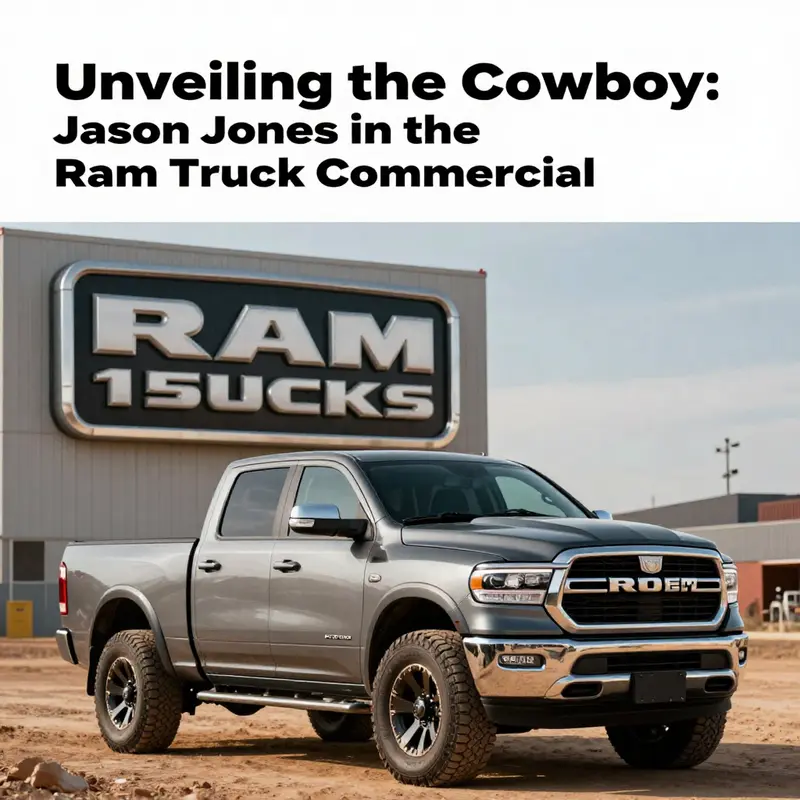
The cowboy in the Super Bowl truck ad is not merely a rider in a desert tableau; he is a constructed memory whose weight travels across time, linking labor, independence, and a utilitarian calm to a modern landscape of analytics and mass reach. The choice to cast a comedian who is also a familiar late night host as the narrator signals a deliberate pivot in how a legacy brand speaks to today’s diverse audience. Jason Jones functions as a bridge between two kinds of viewers: those who crave immediacy and humor, and those who respond to a solemn, almost ritual cadence of rural work ethic. Through him, the ad folds humor into reverence and reverence into a smile, delivering a message that this brand honors its past while pursuing thoughtful innovation.
What follows is a narrative built less on spectacle and more on the economy of image. A lone rider traverses vast, open landscapes where the horizon acts as an emotional canvas. Silhouettes settle into shapes that feel like memory more than moment, and the soundscape settles into a minimal, haunting quiet. Power here is quiet by design; it is the steady force of a machine built to endure, to haul, to weather. The rider’s gait is unhurried, reflecting a workday measured by duty rather than the clock. This is not about flashy drama; it is about staying power and the dignity of steady progress, a note of restrained confidence that lets the brand speak through atmosphere rather than volume.
The casting of Jason Jones adds connective tissue to the commercial’s philosophy. A comedian by trade, he brings linguistic ease and timing that lands jokes without undermining the scene’s dignity. He is not merely there to entertain; his persona translates a myth into plausibility for a modern household that wants authenticity with a wink. The hosting voice invites a subtle flexibility: tradition can endure while curiosity about the future persists. In this dual register of reverent storytelling and hostly patter, the cowboy feels relevant to people who may never have driven a truck through a ranch lane yet recognize labor, resilience, and self-reliance as core values.
The campaign also nods to a broader cultural conversation with a nod to the origin story of farming and hard work. Without dwelling on slogans, the spot suggests that progress can grow from the same soil that produced pioneers. The electric pickup is framed not as a rupture from history but as an evolution of it, a different kind of power that emphasizes durability, reliability, and environmental responsibility. The juxtaposition of quiet power with a noisy world creates a paradox audiences intuitively understand: sometimes the best forward motion comes from restraint and steadiness rather than spectacle.
Beyond iconography, the campaign presents a strategic alignment of language with audience aspiration. It speaks to rural Americans, veterans, and blue-collar workers who prize honesty and grit, while also appealing to urban and younger buyers who equate rugged practicality with authenticity. The appeal rests on restraint rather than data sheets; it offers companionship and a sense of shared adventure, portraying a future where technology enhances work without erasing the creed that has long defined the brand.
From a wider industry lens, the spot illustrates how storytelling can shape automotive branding in a shifting market. Heritage and archetypes become a differentiator when positioned as durable brand equity rather than nostalgia. The hero is not a hyperbolic icon but a figure whose worth is measured in grit, reliability, and stewardship of resources. This approach helps the brand weather changes in emissions concerns, durability expectations, and evolving consumer values, suggesting that the enduring story of hard work and responsibility can coexist with innovation.
For readers seeking context, the piece places heritage-driven branding within a broader discussion of how narrative strategy influences perception and value in the automotive sector. The enduring appeal of independence, resilience, and land remains a powerful frame for conversations about durability and loyalty, inviting audiences to feel a connection with the brand that goes beyond a single advertisement. The cowboy’s quiet cadence, the host’s measured humor, and the landscape’s expansive calm together craft a memory that lingers long after the screen fades, a reminder that authentic storytelling can guide a brand toward a future where power, restraint, and responsibility walk hand in hand.
Riding into the Spotlight: How Ram’s Cowboy Narrative Captured Viewers and Shaped a Brand Moment

The figure of the cowboy in a branded truck spot has long carried more weight than a single product pitch. It taps into a shared memory of the open road, late hours, and the steady, stubborn work that makes communities possible. In the recent Ram-branded Super Bowl moment, the cowboy is not just a prop; he is a vessel for a national mood about authenticity, grit, and the value of doing hard things well. The performer who steps into that booted persona matters, of course, and in the 2023 showcase, that person was Jason Jones, a Canadian comedian and actor. He brings a measured warmth and a sly, self-aware humor to a narrative that could have drifted into cliché. Instead, the campaign leans into a lived-in sensibility: a late-night host voice that invites viewers to hear a story in a way that feels intimate, familiar, and surprisingly anarchic for a commercial moment that is, at its core, about a truck.
From the outset, the ad signals a link to a storied past. The same brand had, years earlier, used the image of a rugged farmer and a night-and-star tableau to tell a parable about labor, faith, and the agricultural backbone of the country. That earlier piece—often remembered as the “God Made a Farmer” spot—became a touchstone for viewers who saw in it a reverence for the people who harvest, haul, and hustle. It wasn’t merely a commercial; it was a rite of storytelling that invited audiences to see a farm through the lens of a brand that valued endurance and faith in daily labor. In that sense, the 2023 presentation is not starting from scratch but re-scripting an arc audiences already recognized. It leans into shared symbolism—the silhouette of a truck against a broad landscape, a voiceover that sounds like it could be your neighbor’s sermon or a late-night monologue, and a cowboy’s quiet assurance that action, not talk, builds a life worth admiring.
Jason Jones’s performance is central to this continuity. He plays a fictional host of a late-night talk show, a metatextual device that adds humor while placing the cowboy archetype within a contemporary frame. The persona—cool, jocular, a touch mischievous—serves as a bridge between the old vaquero mythos and the modern American appetite for innovation and electrified mobility. The host narrates the story with a wink, guiding viewers through scenes that combine intimate farm-life vignettes with the expansive scale of highway and horizon. The juxtaposition between rural authenticity and cutting-edge technology is not incidental; it’s the engine of the ad’s tension. The cowboy embodies a stubborn dedication to craft, while the electric pickup signals a pivot toward a future that still values grit but expects new kinds of power, durability, and environmental stewardship. The performance anchors the commercial in human scale. It says: this is not a glossy vehicle ad; it is a human story about resilience and responsibility—a story that audiences can recall long after the frame fades.
The reception among viewers reflects that deliberate blend of reverence and humor. A significant portion of audiences gravitated toward the emotional resonance of the rural-works narrative, the same emotional current that made the earlier farmer’s ode so shareable. In social spaces online, conversations swirled around whether the ad paid homage to real life or merely performed it. Yet even as some viewers debated the nuances, many communicated genuine appreciation for the storytelling cadence, the visual poetry of the landscape, and the familiar cadence of a hero who keeps faith with the land and with those who till it. The comedic thread did not distract from the core message; it amplified accessibility. Humor invites broad audiences to lean in, and it softens the moment when a brand asks viewers to invest in a future where tradition and technology coexist. The cowboy’s silhouette becomes a memory cue, a shorthand for a set of values that feel both aspirational and practical: work ethic, responsibility, and a sense of community tied to the land.
That sense of community is part of why the ad resonated beyond general entertainment. It echoed a broader cultural script in which rural and farming identities are celebrated as foundational to national character. For many Christian viewers and others who place a premium on reverence, the advertisement’s framing felt authentic rather than manufactured. It evoked a familiar cadence of gratitude for hands that labor, roots that hold tight, and a faith that sustains through long days. The interplay between faith and work is not new in brand storytelling, but the way this campaign stitched that interplay to a modern technological leap gave it extra weight. The ad’s rhetoric—resilience in the face of change, respect for the land, the promise of progress backed by hard-won experience—spoke to a broad audience that recognizes both the pull of tradition and the push toward innovation. Viewers did not merely watch; they re-narrated the experience in their own feeds, turning a commercial moment into conversations about identity, memory, and the shared vocabulary of American and Canadian rural life.
The engagement around the cowboy figure extended into debates about taste, representation, and the potential for a brand to carry moral undertones. Iconography matters in advertising, and a cowboy in a Ram-branded vehicle is not just a scene; it’s a symbol that carries years of audience memory. The hat, the stance, the open road—these elements cohere into a visual shorthand for strength tempered by humility. The late-night host framing adds a modern, meta layer. It asks viewers to consider how stories are told in the age of streaming, where a single spot competes with a litany of online content for attention. Humor, when done well, becomes a form of hospitality; it invites viewers to stay and listen, to lean into a narrative that feels both intimate and expansive. In that sense, the cowboy becomes not only a character but a conduit for a brand’s longer conversation about endurance, responsibility, and the willingness to chart a new course without abandoning the ground beneath one’s boots.
Brand storytelling scholars and industry observers often note that the strongest campaigns harvest audience participation. This Ram moment invited viewers to replay the story, to quote lines in comments, and to share stills and impressions that memorialize the cowboy’s image. The social-media life of the ad—memes, looped clips, and thoughtful commentary—transforms a fleeting cultural event into a longer-lived touchstone. The shared laughter and collective reflection become part of the ad’s enduring footprint. Yet the engagement goes deeper than entertainment. It anchors the brand in a value system that many consumers already claim as their own: the idea that hard work creates a platform for innovation, that faith and family provide ballast, and that respect for the land is inseparable from a respect for the people who work it. In times when public discourse can feel fragmented, that sense of common ground becomes uniquely valuable for a brand seeking to be remembered for more than a single spectacular moment.
A further layer of resonance comes from associating the cowboy with a specific industry moment—the transition to electrification and a broader push toward sustainable mobility. The ad makes a careful argument: you can celebrate ruggedness and independence while embracing a technology that reduces environmental impact. The cowboy’s independence meets a different form of power—a reminder that strength can be redefined, not erased. This reframing matters because it invites diverse audiences to see themselves in a story that has traditionally foregrounded rural identity and masculine archetypes. The host’s wit, the landscape’s grandeur, and the implied narrative of progress are not in tension; they are harmonized in a way that makes the story accessible to urban viewers who may not have grown up on a farm, while still honoring the values held dear by rural communities. In a media environment crowded with flashy, ephemeral content, the ad’s lasting appeal lies in its ability to be heard as a human story rather than a sales pitch.
As the piece lands in memory, it also invites viewers to think about what it means to be responsible in a changing world. The cowboy’s endurance is not about resisting change but about stewarding tradition through innovation. The late-night host voice creates a bridge between storytelling as ritual and advertising as a contemporary dialogue. The result is a narrative that feels less like a billboard and more like a shared bedtime story that arrives during a much-anticipated event. That blend—humor, reverence, and a forward-looking philosophy—helps explain why audiences invited the character into their social spheres, invited his story to unfold in comments and shares, and treated the ad as something more than a moment in a commercial break. The reaction was not uniform, of course. Different audiences heard different tones, but the core reception rested on a sense that the cowboy figure offered something genuine: a voice that could be trusted to tell a story about strength and resilience without exploiting pain or nostalgia. This is the kind of reception that memory makes possible, shaping how viewers remember the ad long after the screen fades.
Beyond the immediate chatter, the campaign also invites a closer look at how brands translate symbolic power into tangible action. The link between storytelling and social responsibility is not incidental; it is a strategic choice that reinforces credibility. When a campaign builds identity around sturdy, honest work, audiences expect that the brand’s actions align with that identity in real life. The industry has increasingly rewarded brands that demonstrate consistency between image and impact. In this regard, a chapter of Ram’s narrative—through the cowboy’s mouth and the host’s cadence—becomes more credible when paired with campaigns that show real-world commitments to communities and causes. A recent example in the broader industry landscape is the continued emphasis on corporate initiatives that support families and communities touched by trucking and rural life. For example, campaigns like Trucks for Change supports Habitat for Humanity offer a parallel pathway for brands to translate cultural storytelling into community impact. This connection between narrative and action helps audiences feel that the cowboy’s values are not merely performative; they are lived principles that inform the company’s broader outreach. Trucks for Change supports Habitat for Humanity.
In sum, the reception and engagement around the cowboy in the Ram-branded commercial are best understood as a convergence of memory, humor, and aspirational identity. Jason Jones’s performance anchors the moment in human fallibility and warmth, while the visual language anchors it in the land’s expansive, honest realism. The narrative’s tension—between an enduring cowboy ideal and a future powered by electric technology—becomes a conversation about who we are when we look to the horizon. The audience’s engagement is not a one-time spike; it becomes part of a longer discourse about values, craft, and the courage to move forward without losing sight of where the story began. For readers seeking to understand how one figure can carry a brand through a pivotal cultural moment, this Ram spot offers a compact case study: it demonstrates that a successful narrative sticks because it feels both earned and shareable, a story that can travel across borders, across faiths, and across the many lanes of a country that still cherishes the road as a place where life is lived with impact. External resource: https://www.cbsnews.com/news/god-made-a-farmer-ram-trucks-super-bowl-ad-2013/
Final thoughts
In analyzing the character of Jason Jones as the cowboy in the Ram Truck commercial, we uncover a multifaceted approach to branding that resonates deeply with audience values. Jones effectively represents tradition and ruggedness while modernizing the narrative around electric vehicles—an important shift for today’s businesses, particularly in logistics and construction. This commercial not only promotes a product but creates a relatable symbol that logistics and freight companies can appreciate. The cowboy’s journey highlights resilience and authenticity, key attributes that business owners prioritize in their operations. Engaging with this narrative demonstrates the potential to forge stronger connections with your audience in a competitive landscape.